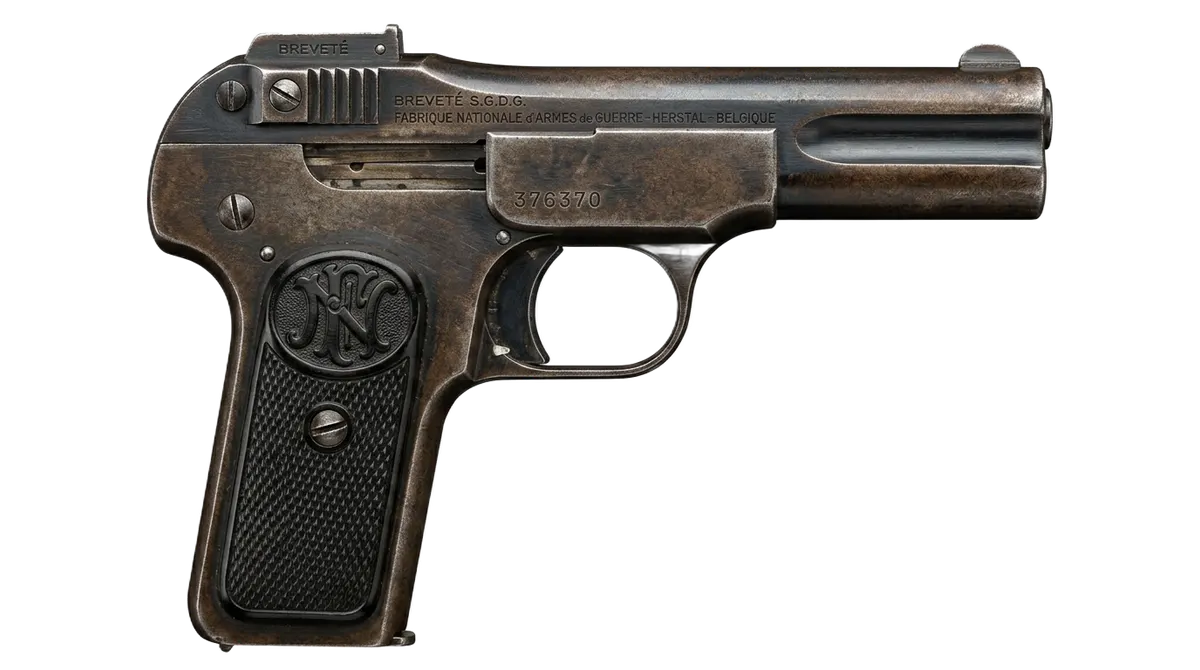
 1900Belgium
Pistola
FN M1900
The world's first commercially produced semi-automatic pistol, designed by John Moses Browning and chambered for the new .32 ACP.
Massa battenteOpen sheet →

A visual journey through the catalog systems, grouped by historical eras.
From the legacy of WWII emerge the first modern assault rifles: the intermediate cartridge reshapes infantry doctrine.
1900BelgiumThe world's first commercially produced semi-automatic pistol, designed by John Moses Browning and chambered for the new .32 ACP.
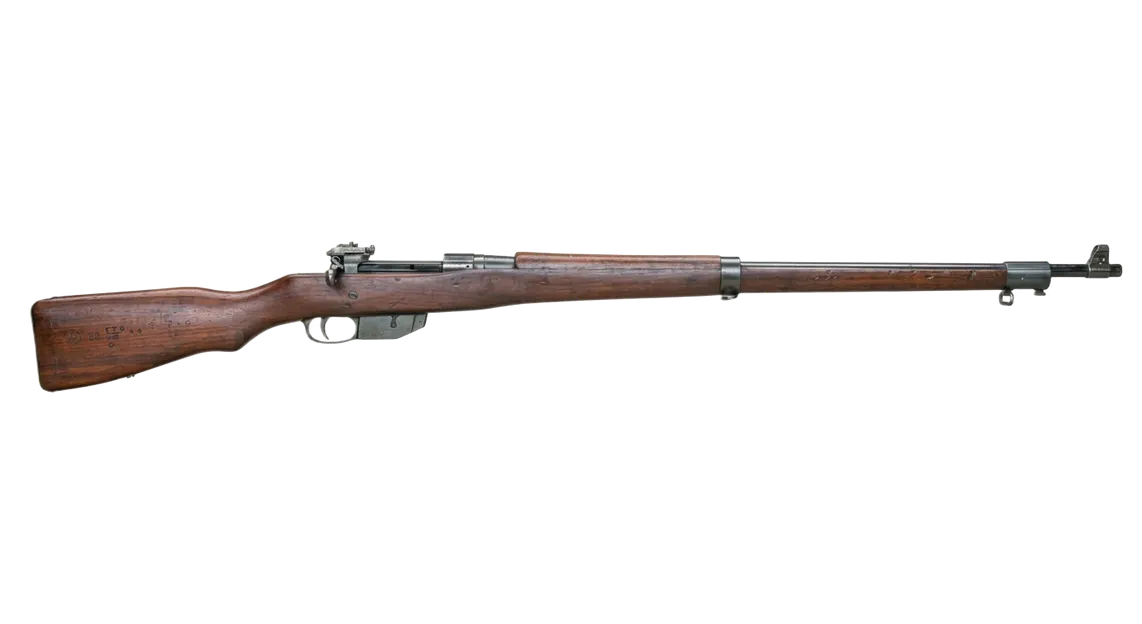 1903Canada
Canadian straight-pull bolt-action rifle in .303 British, adopted by the Dominion of Canada militia in 1903; renowned for long-range accuracy but infamous for jamming in trench conditions.
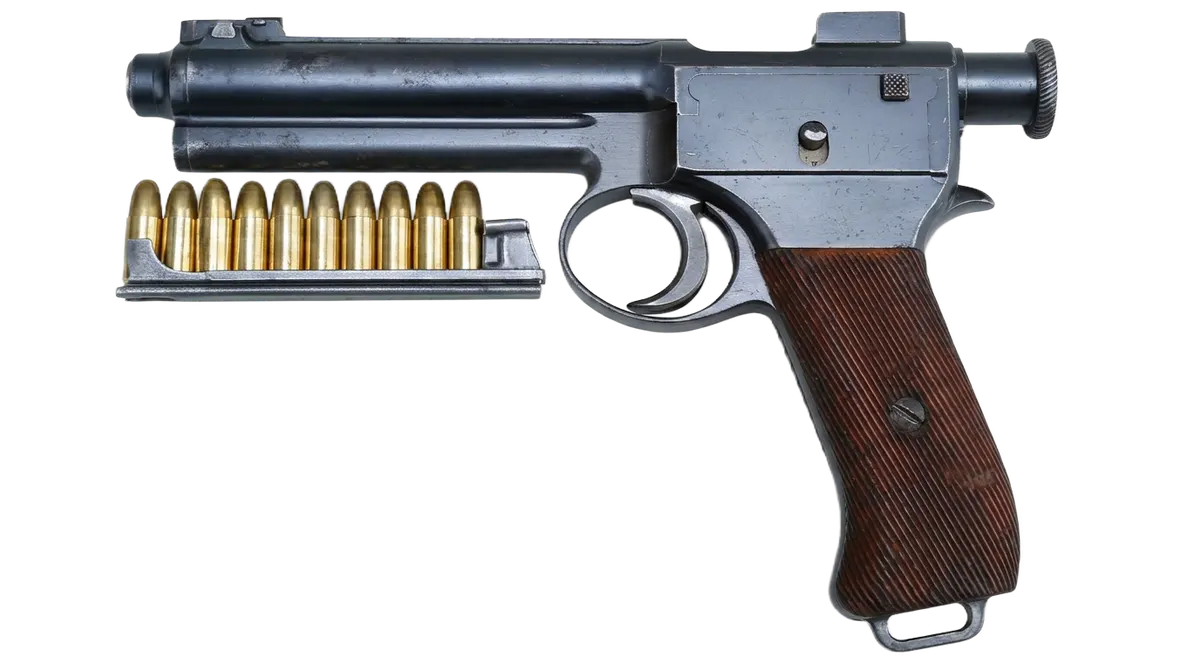 1907Austria
Semi-automatic pistol adopted by the Austro-Hungarian cavalry in 1907, considered the first semi-automatic pistol to enter regular military service in the world.
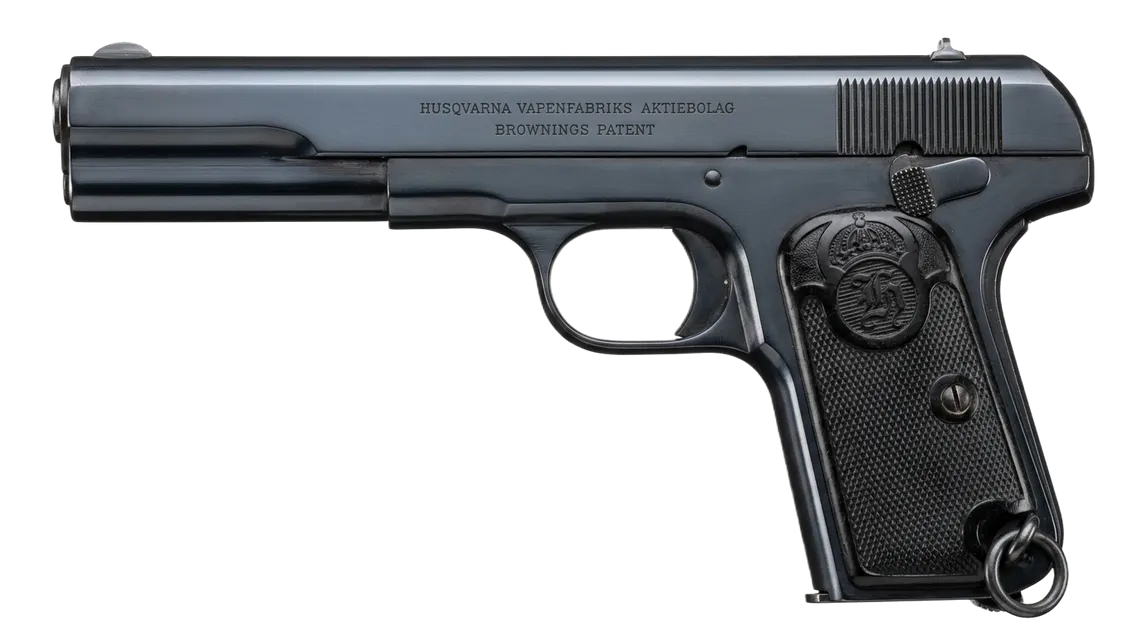 1907Sweden
Swedish 9×20 mm Browning Long semi-automatic pistol, a licensed copy of John M. Browning's FN Mle 1903; Sweden's service sidearm until 1940.
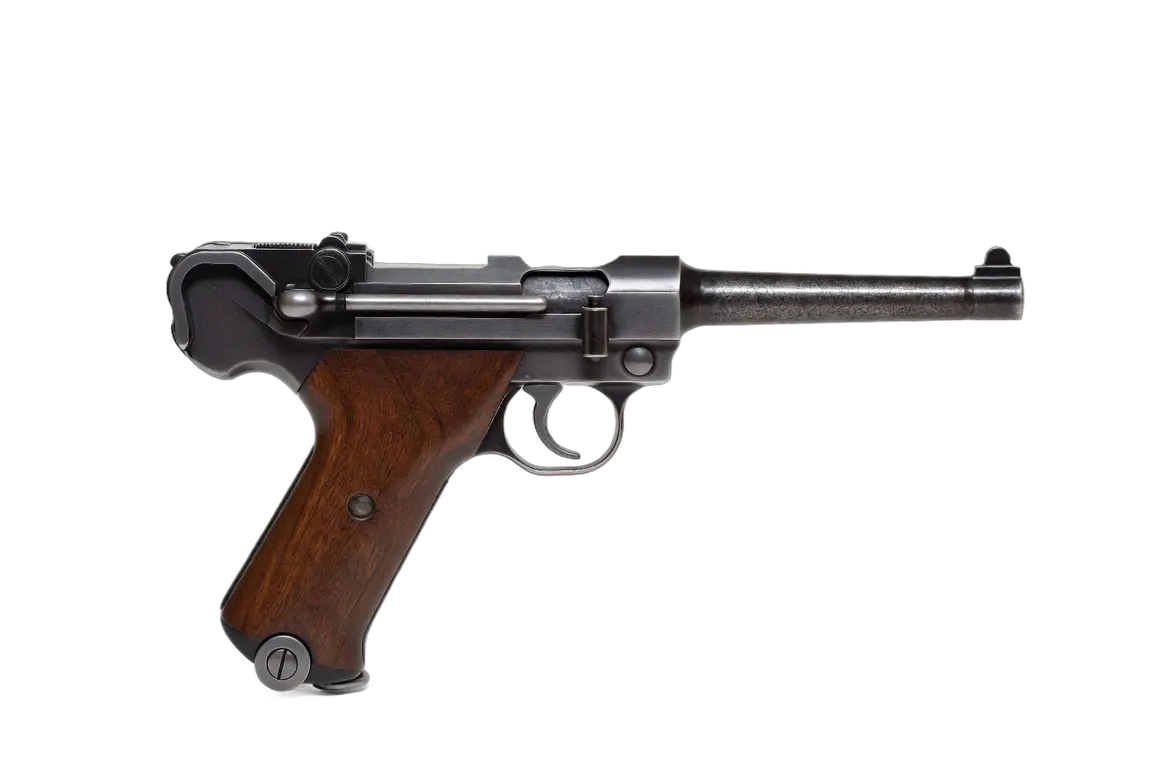 1908Germany
Recoil-operated semi-automatic pistol with a toggle-lock action, chambered in 9×19 mm Parabellum: standard sidearm of the German army in both World Wars and an icon of 20th-century handgun design.
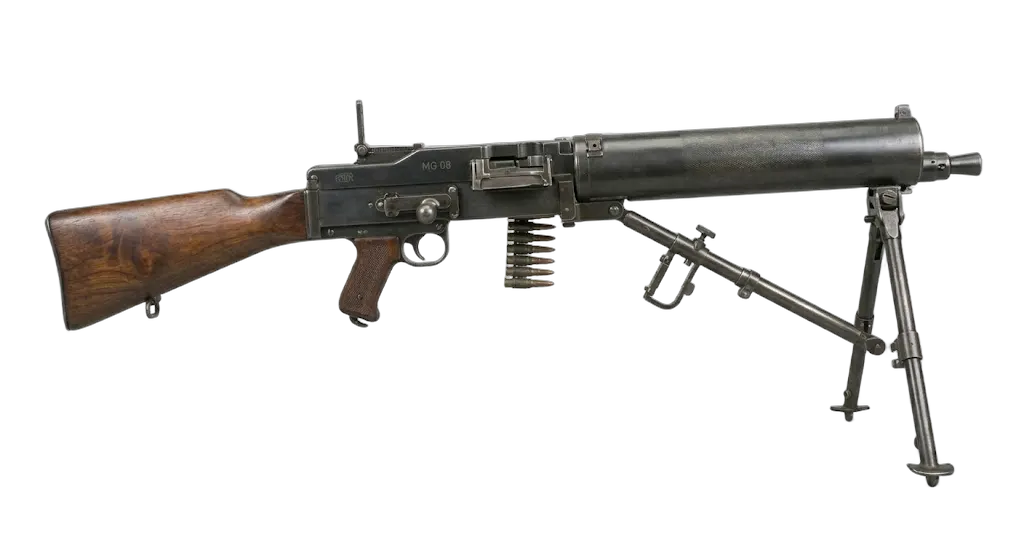 1908Germany
Water-cooled heavy machine gun derived from the Maxim patent: standard machine gun of the Imperial German Army in World War I, chambered in 7.92×57 mm Mauser and fed by 250-round cloth belts.
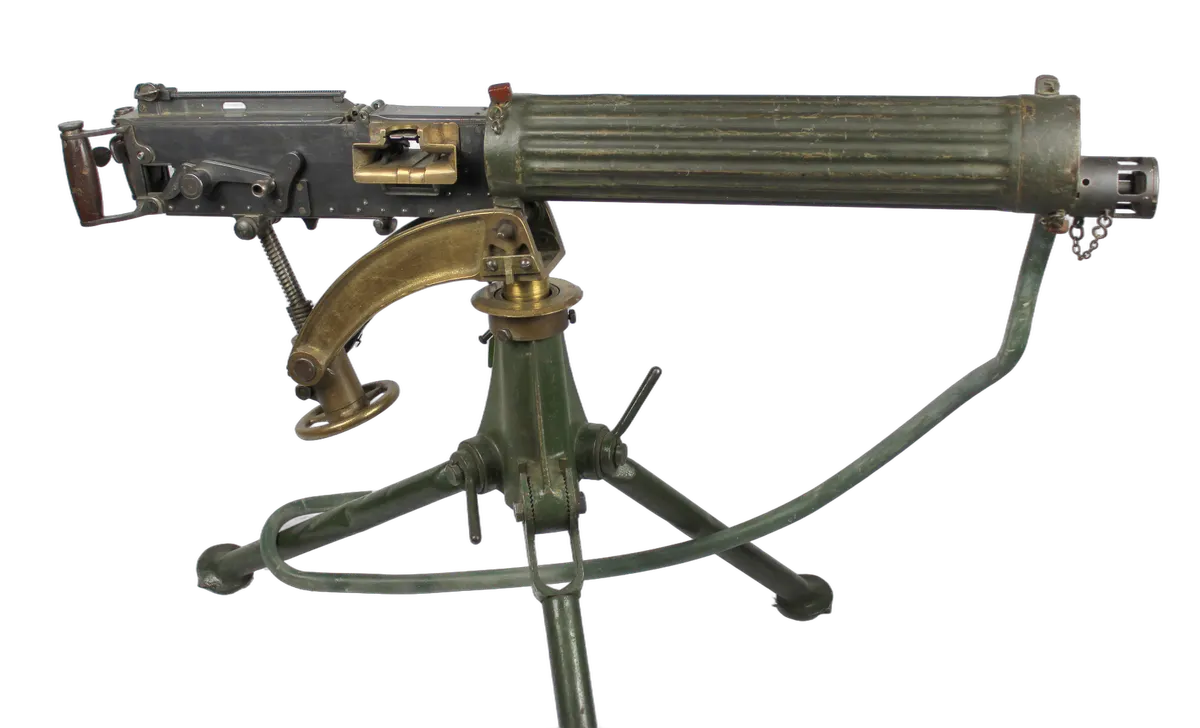 1912United Kingdom
British water-cooled medium machine gun in .303 British, evolution of the Maxim. Iconic for legendary reliability: sustained fire for days in WWI trenches.
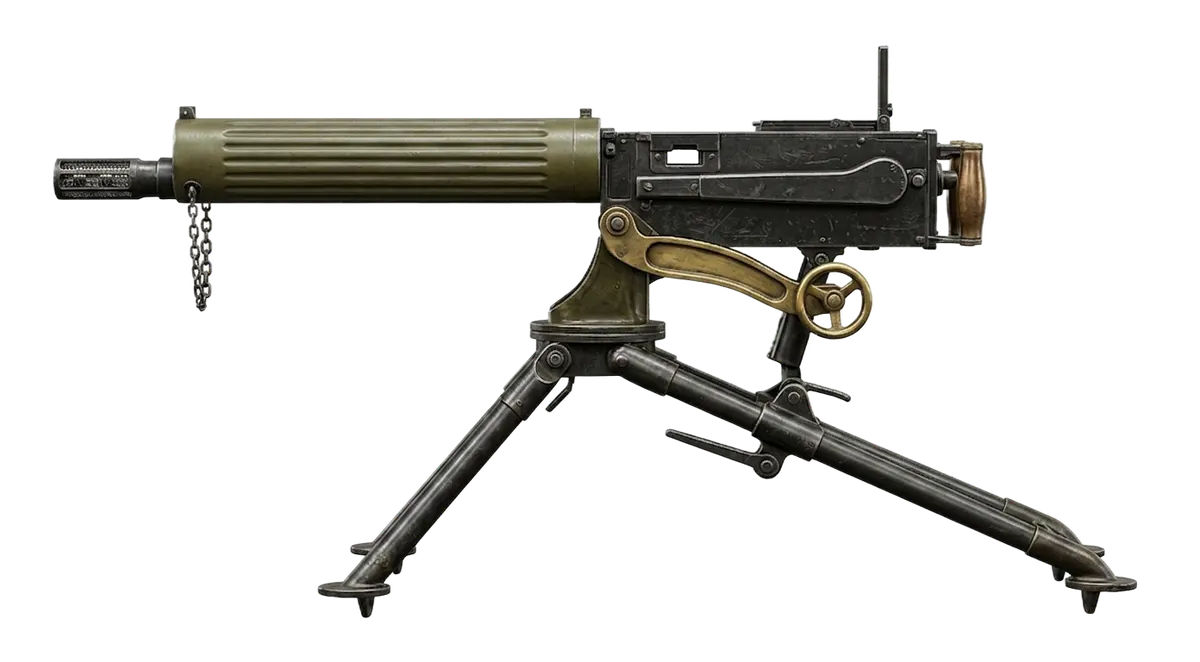 1912United Kingdom
Water-cooled .303 British medium machine gun derived from the Maxim but much lighter; in British service for 56 years (1912–1968), legendary for reliability.
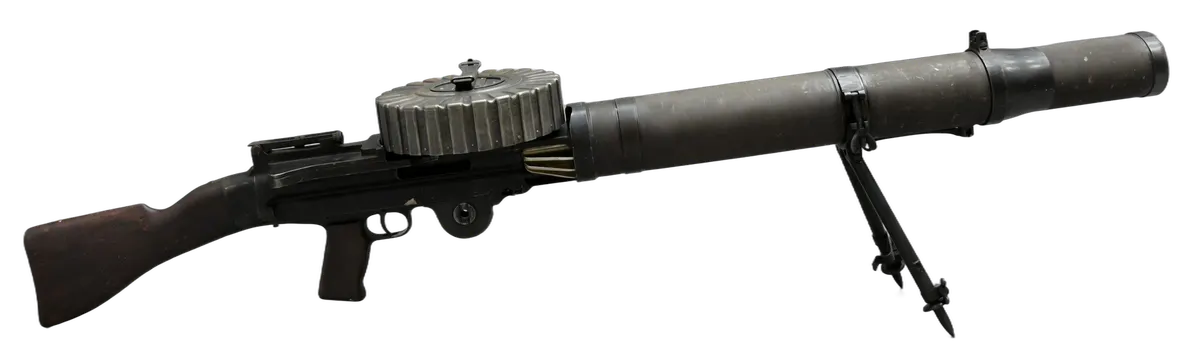 1914United Kingdom
Air-cooled .303 British light machine gun with a 47/97-round pan magazine on top. Recognizable by its wide finned radiator around the barrel. WWI standard.
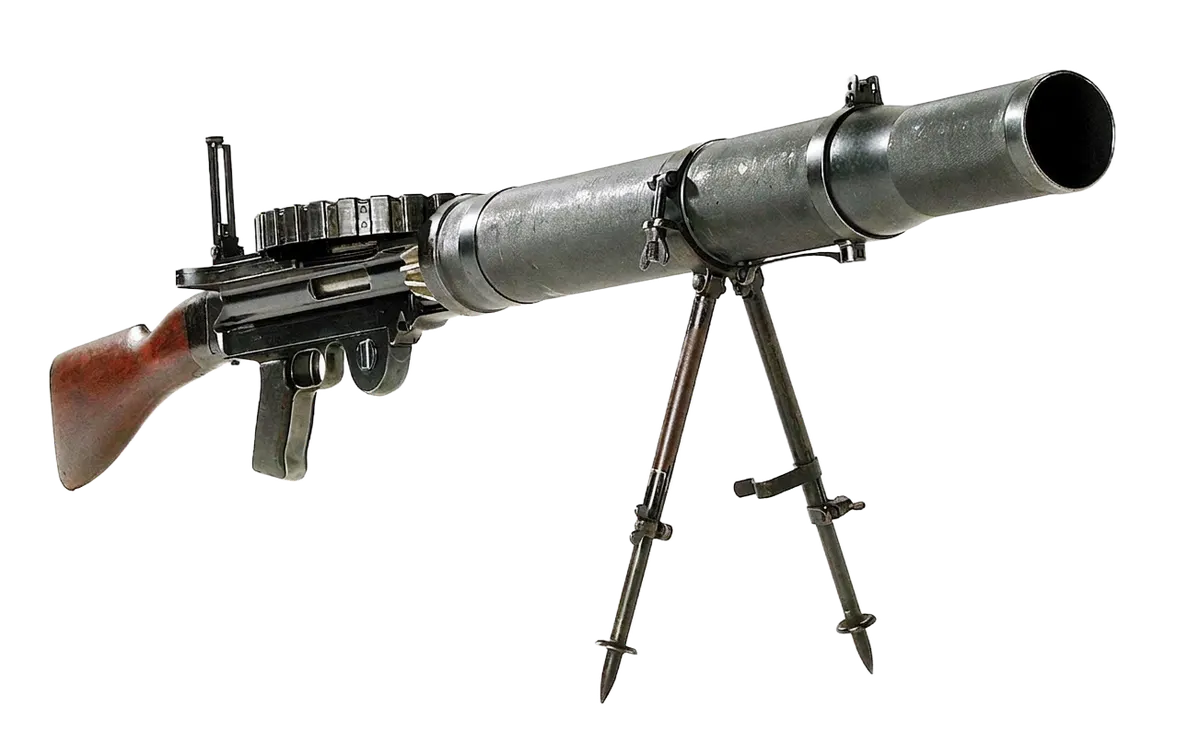 1914United Kingdom
Air-cooled light machine gun with aluminum radiator shroud and pan magazine of 47 or 97 rounds; Commonwealth standard in WWI and secondary armament on Allied aircraft.
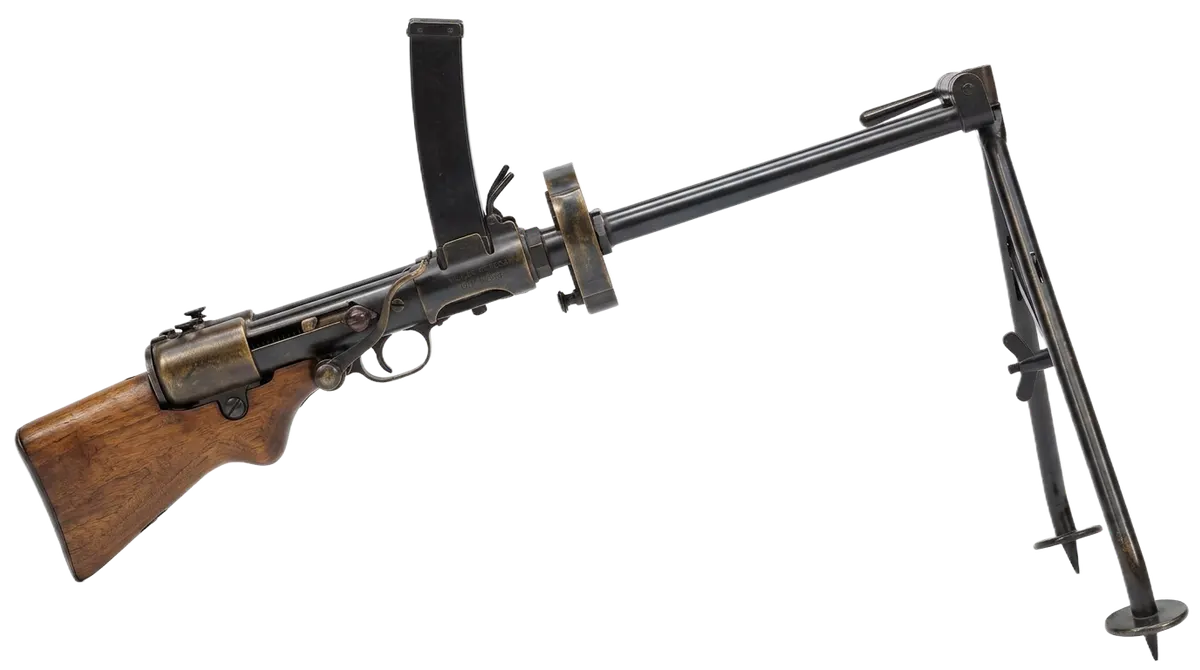 1915Italy
Italian 1915 automatic weapon considered the first submachine gun in history: twin pistol-caliber barrels, top-mounted curved magazines and a bipod/tripod.
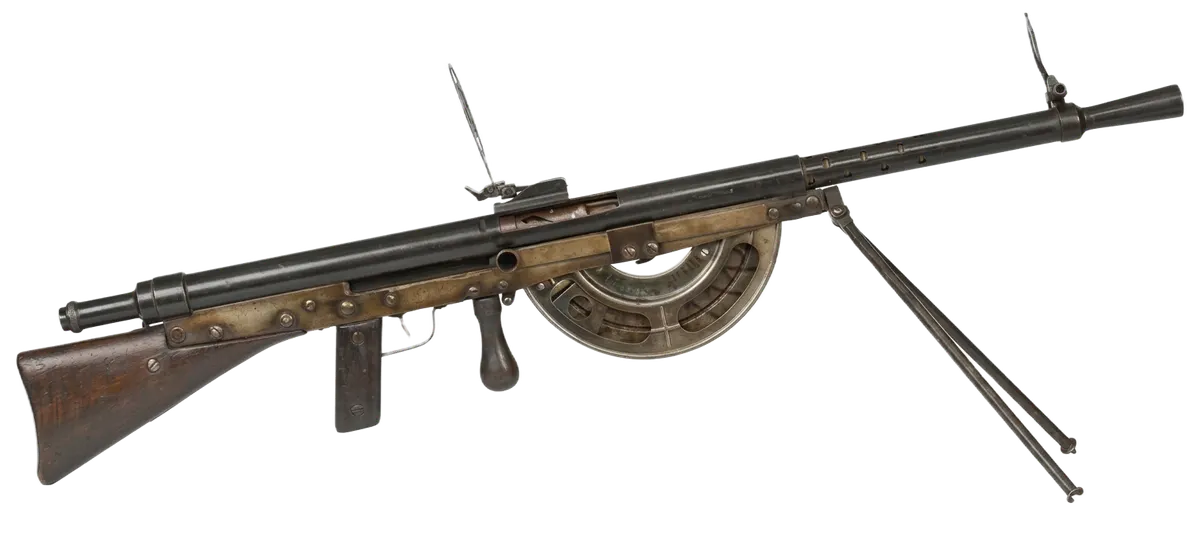 1915France
French long-recoil light machine gun in 8×50R Lebel with 20-round half-moon magazine; infamous for reliability issues but produced in over 260,000 units, the first mass-produced LMG.
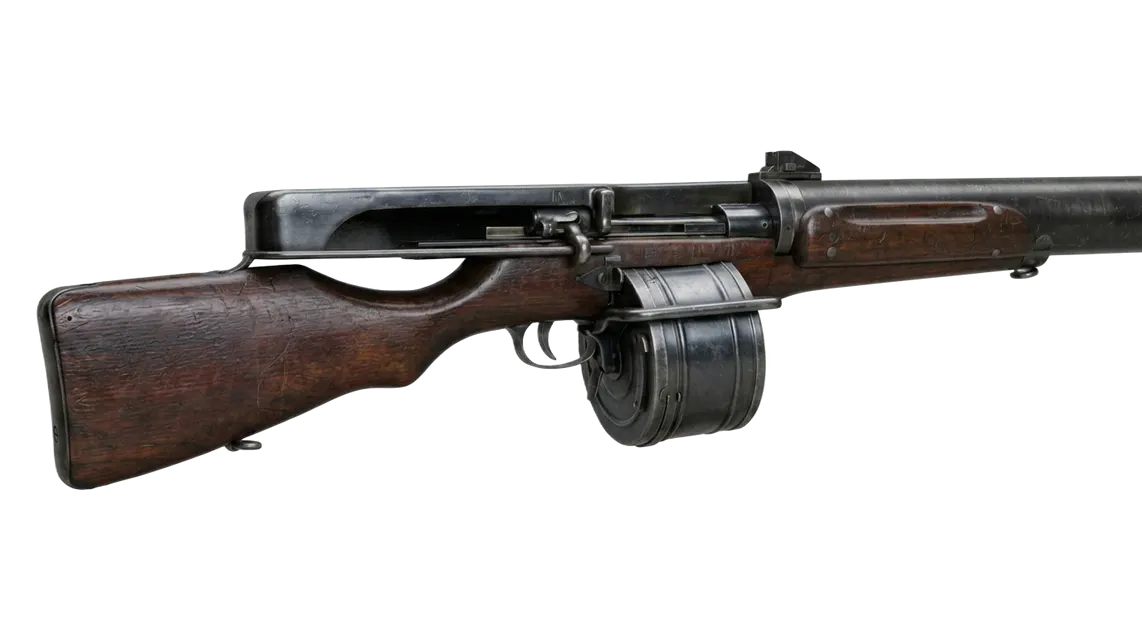 1916Canada
Automatic conversion of the Ross Mk III into a drum-fed (25-round) light machine gun, developed in Canada in 1916 to repurpose Ross rifles withdrawn from the front.
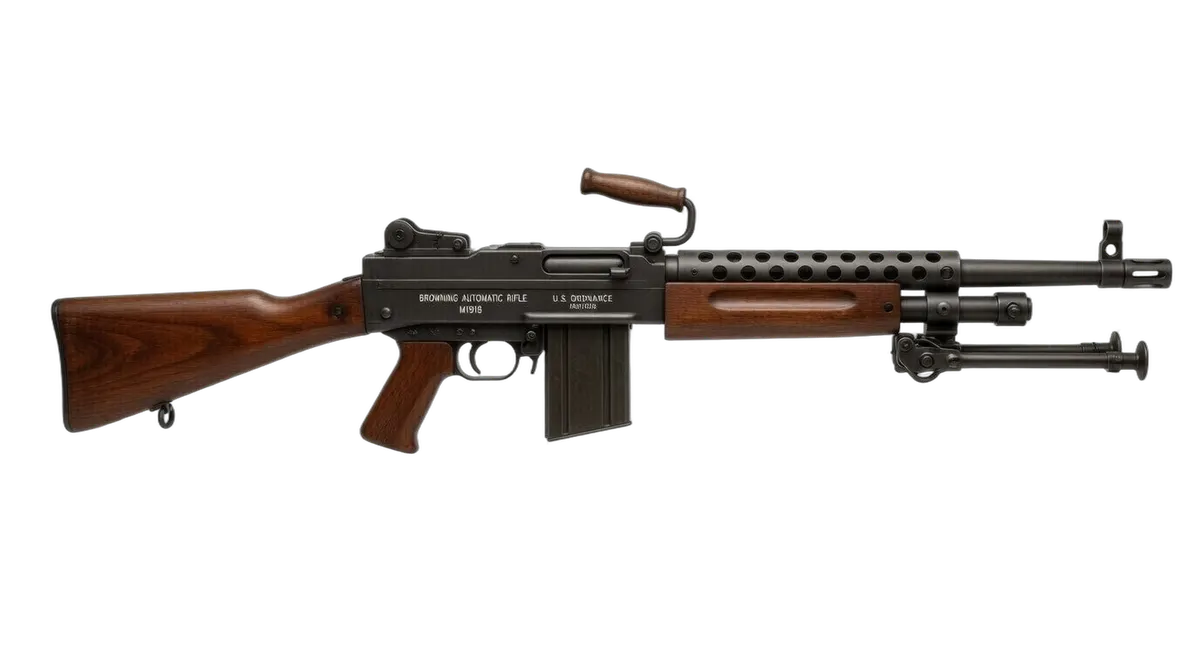 1918United States
John M. Browning's .30-06 automatic rifle, designed to give the individual infantryman automatic firepower in World War I.
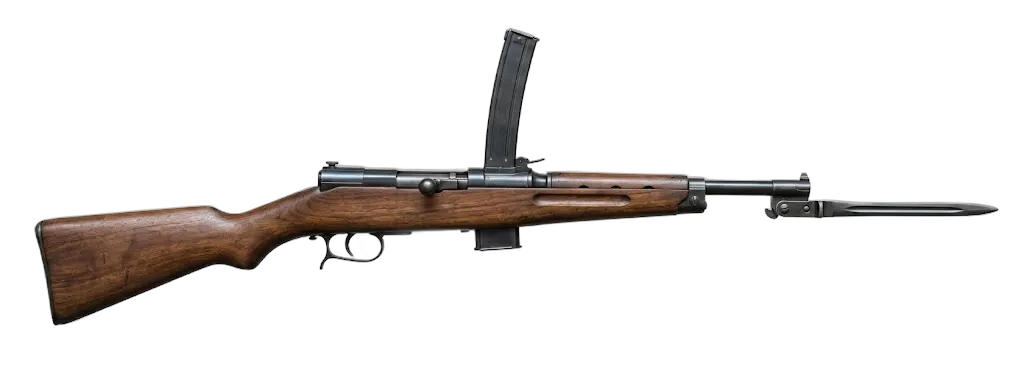 1918Italy
One of the first submachine guns in the world, derived from the Villar Perosa machine pistol: 9 mm Glisenti caliber, 25-round top-mounted magazine and a folding blade bayonet under the barrel.
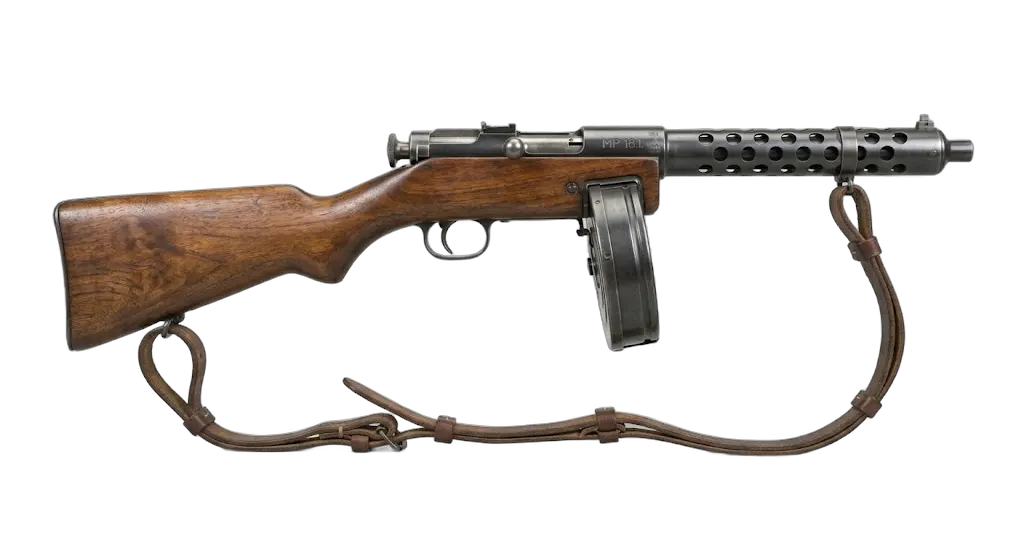 1918Germany
The first operational submachine gun in history: designed by Hugo Schmeisser for German stormtroopers in World War I, chambered in 9×19 mm Parabellum and fed by the 32-round Trommelmagazin 08 snail drum.
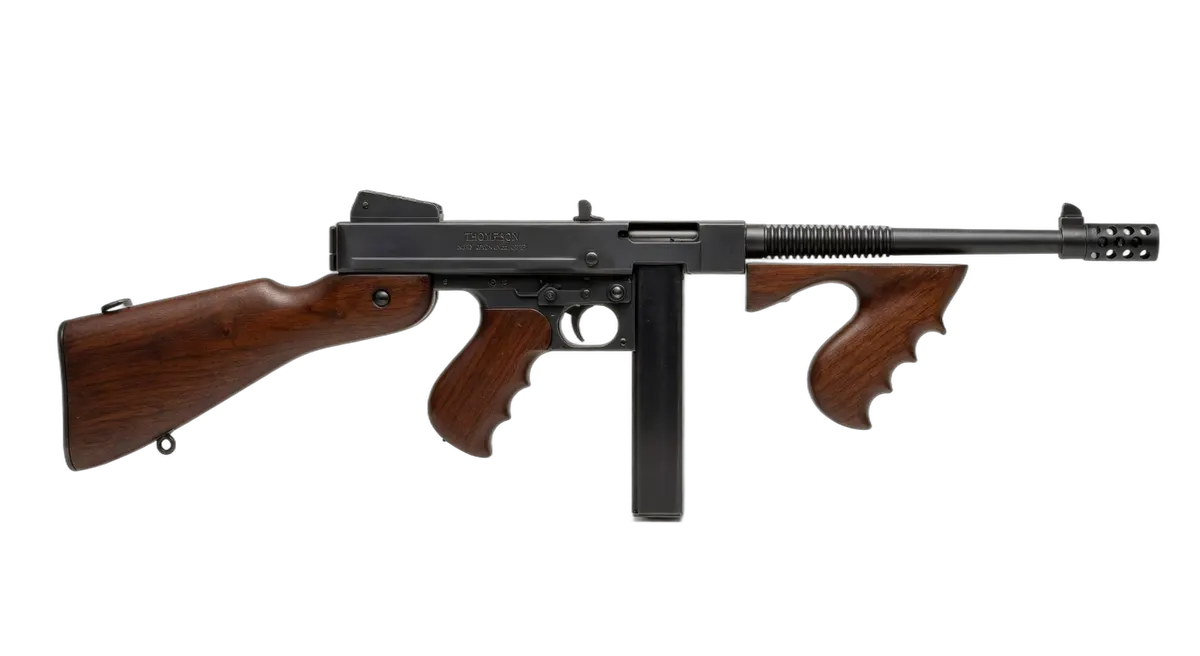 1921United States
American .45 ACP submachine gun, icon of the Prohibition and World War II: blowback action, drum or box magazine and wooden stock.
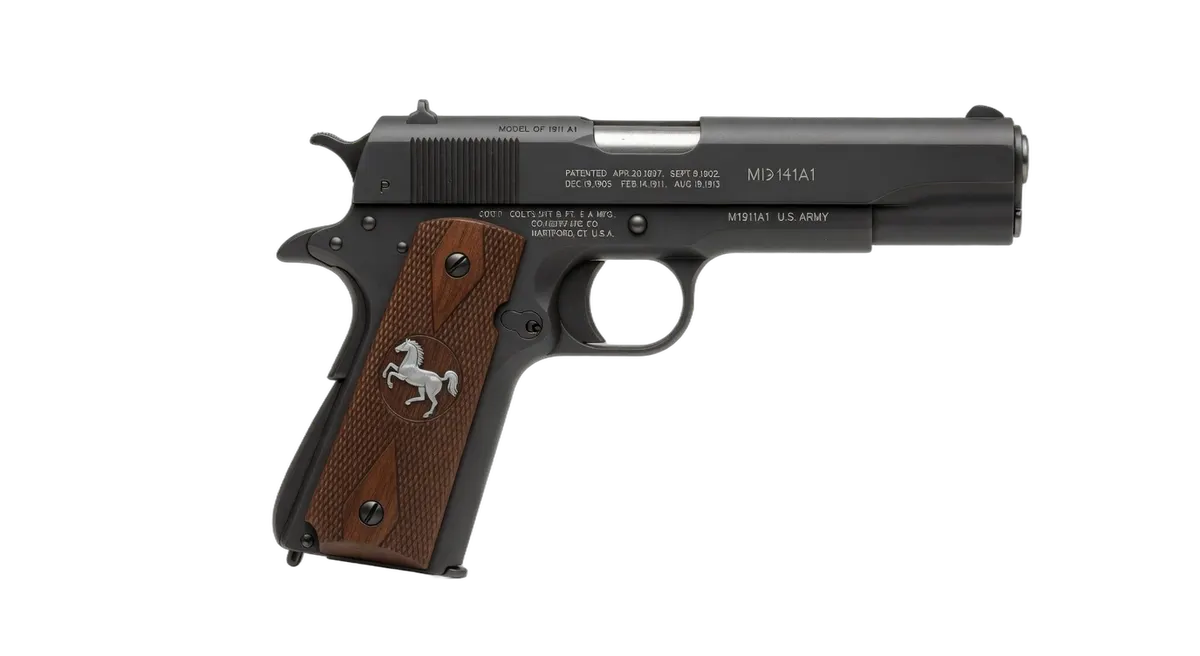 1924United States
Semi-automatic .45 ACP pistol designed by John Moses Browning, issued to U.S. armed forces for over 70 years and still the basis of countless derivatives today.
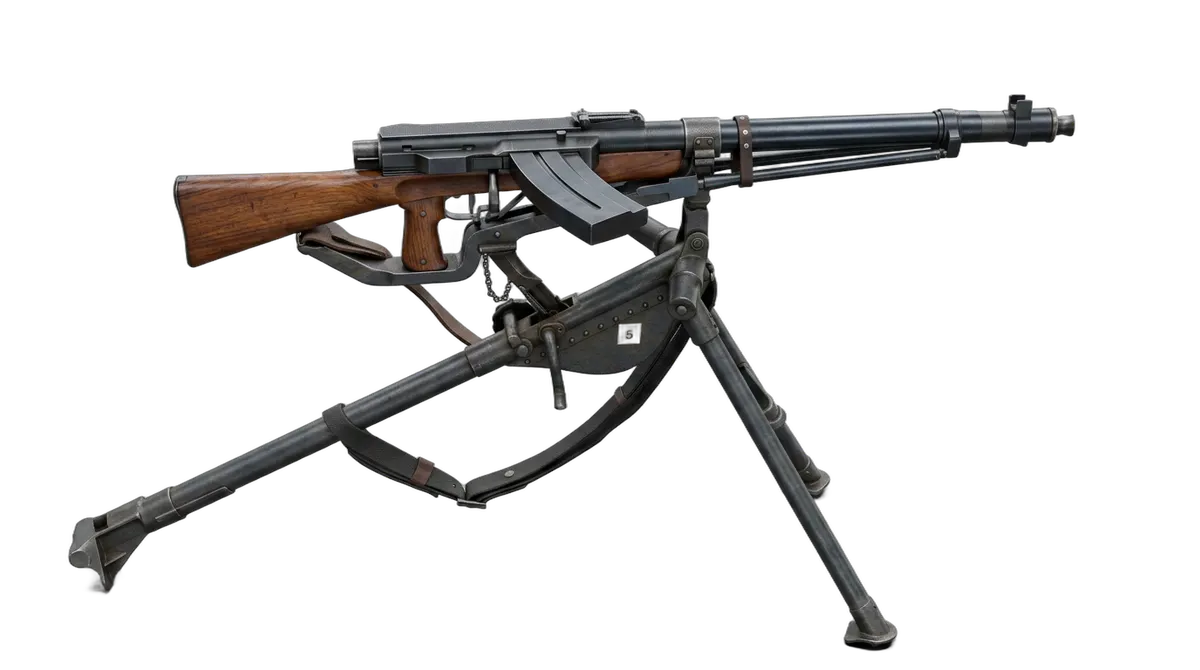 1925Switzerland
Swiss light machine gun in 7.5×55 mm Swiss designed by Adolf Furrer, known for its sophisticated short-recoil toggle-lock system derived from the Luger and for use on bipod or light mount.
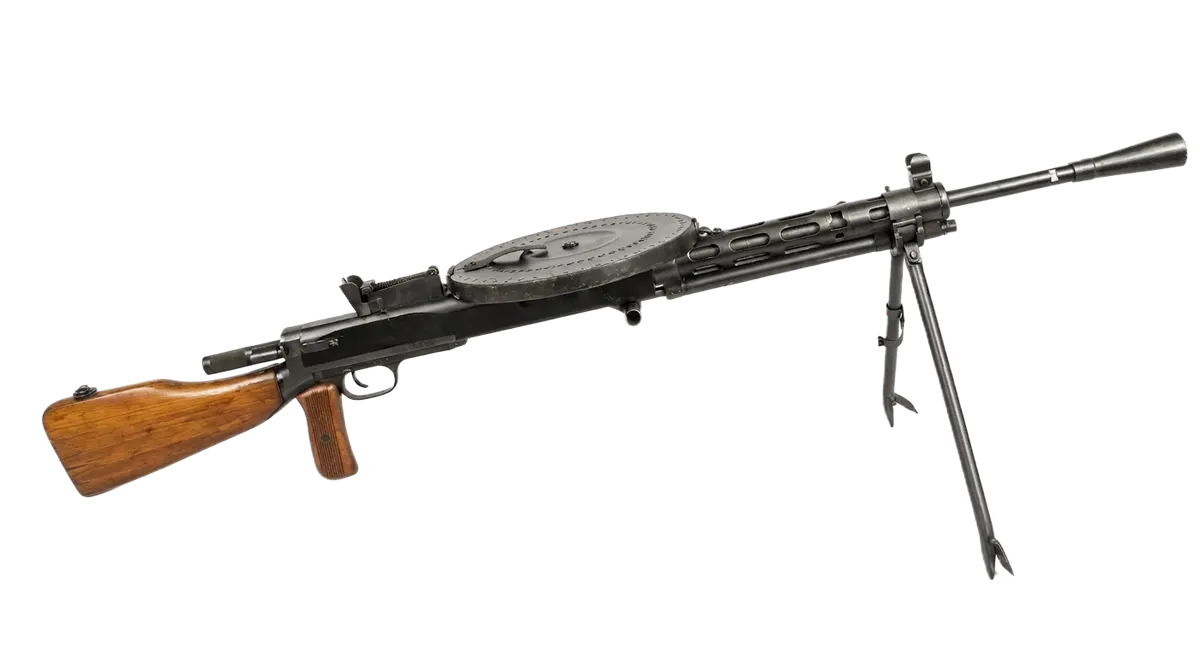 1928Russia
Soviet 7.62×54R mm light machine gun designed by Vasily Degtyaryov; 47-round pan magazine atop the receiver, nicknamed 'record player' by German soldiers.
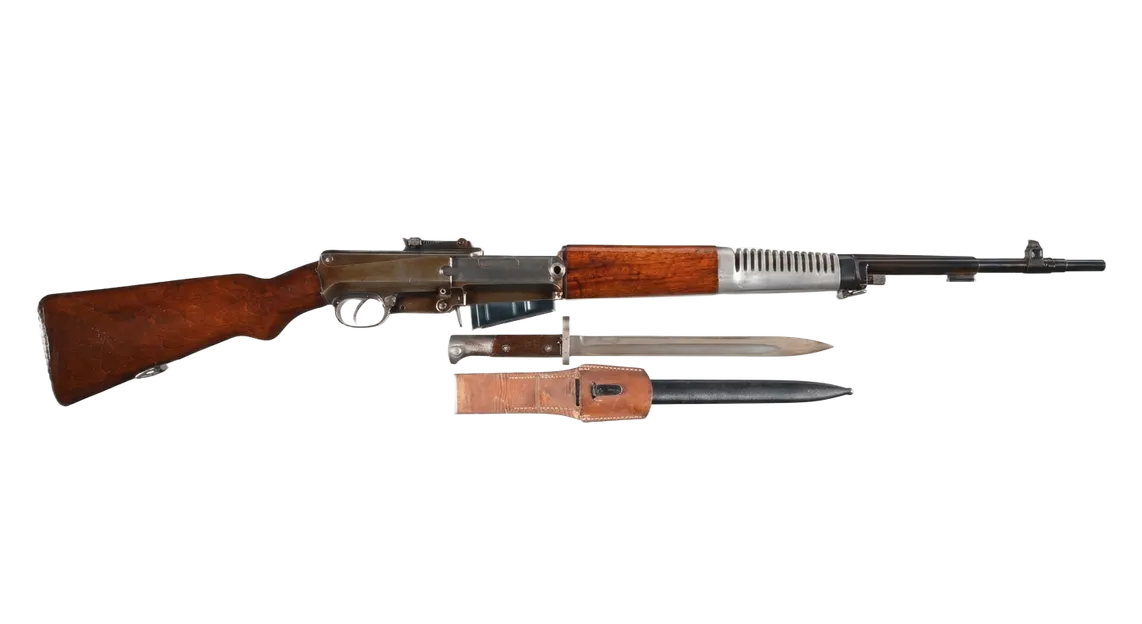 1929Czech Republic
Czechoslovak semi-automatic rifle designed by Emanuel Holek in the 1920s, chambered in 7.92×57 Mauser. One of the world's first operational semi-automatic rifles, exported in small batches to China, Ethiopia and Siam.
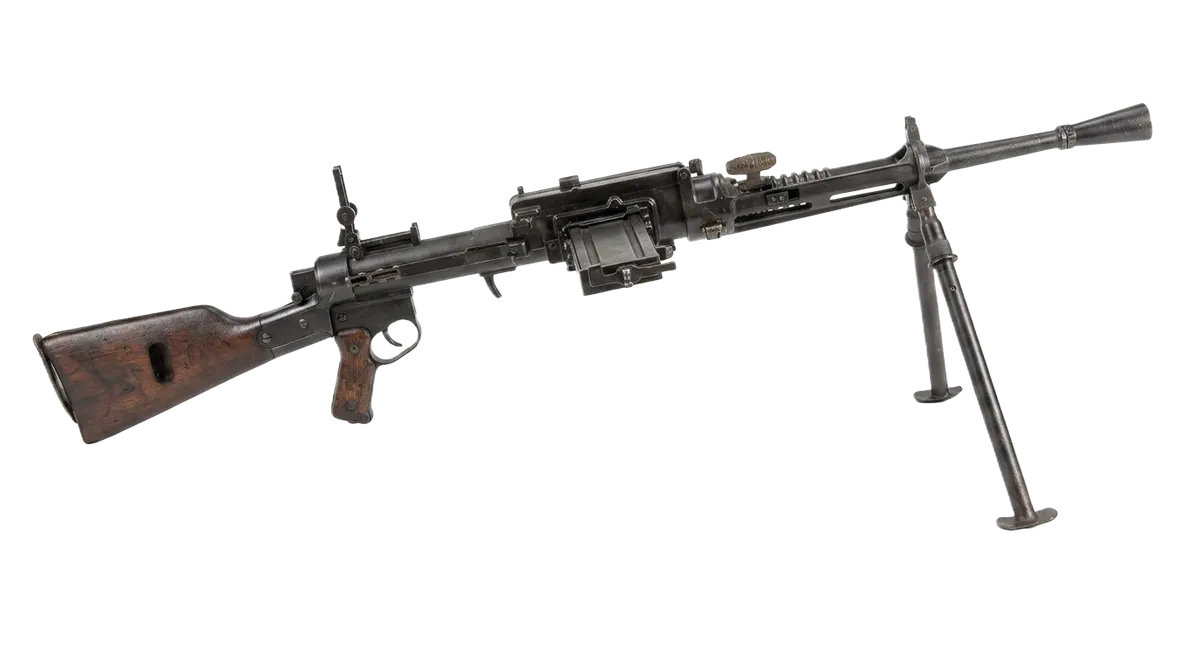 1930Italy
Standard light machine gun of the Royal Italian Army during World War II, recognisable by its fixed 20-round side-loading magazine.
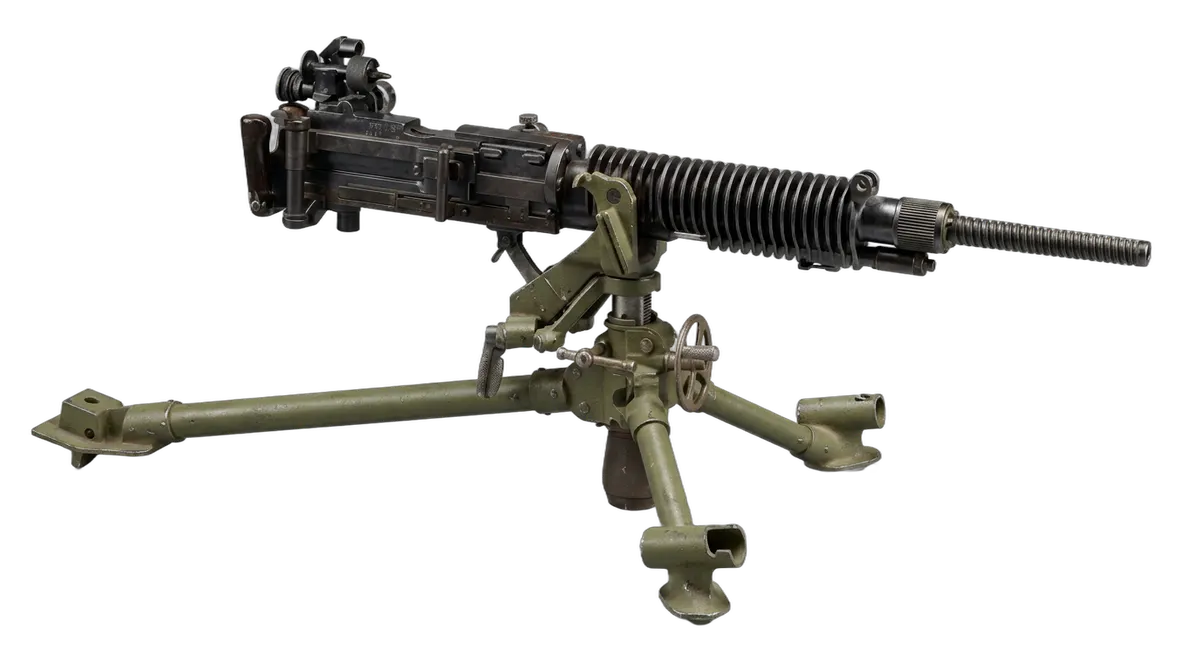 1932Japan
Famous Japanese World War II heavy machine gun in 7.7×58 mm, nicknamed 'Woodpecker' by the Allies for its relatively slow and steady rate of fire.
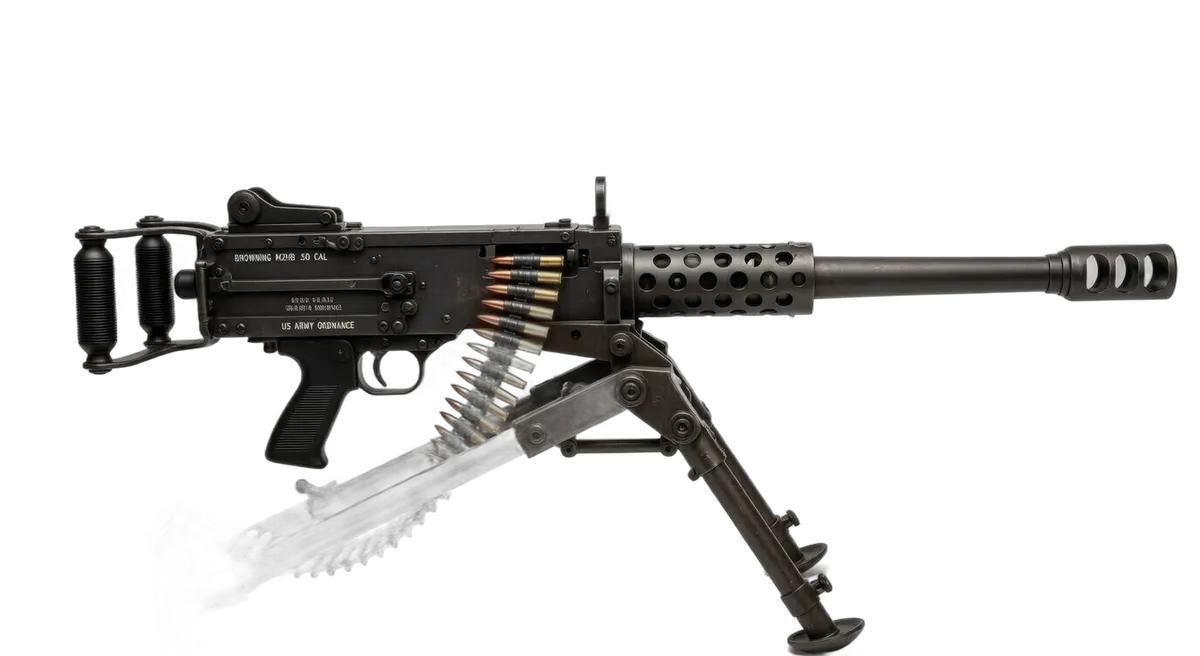 1933United States
John M. Browning's .50 BMG heavy machine gun: in continuous service since 1933, mounted on vehicles, aircraft, ships and tripods.
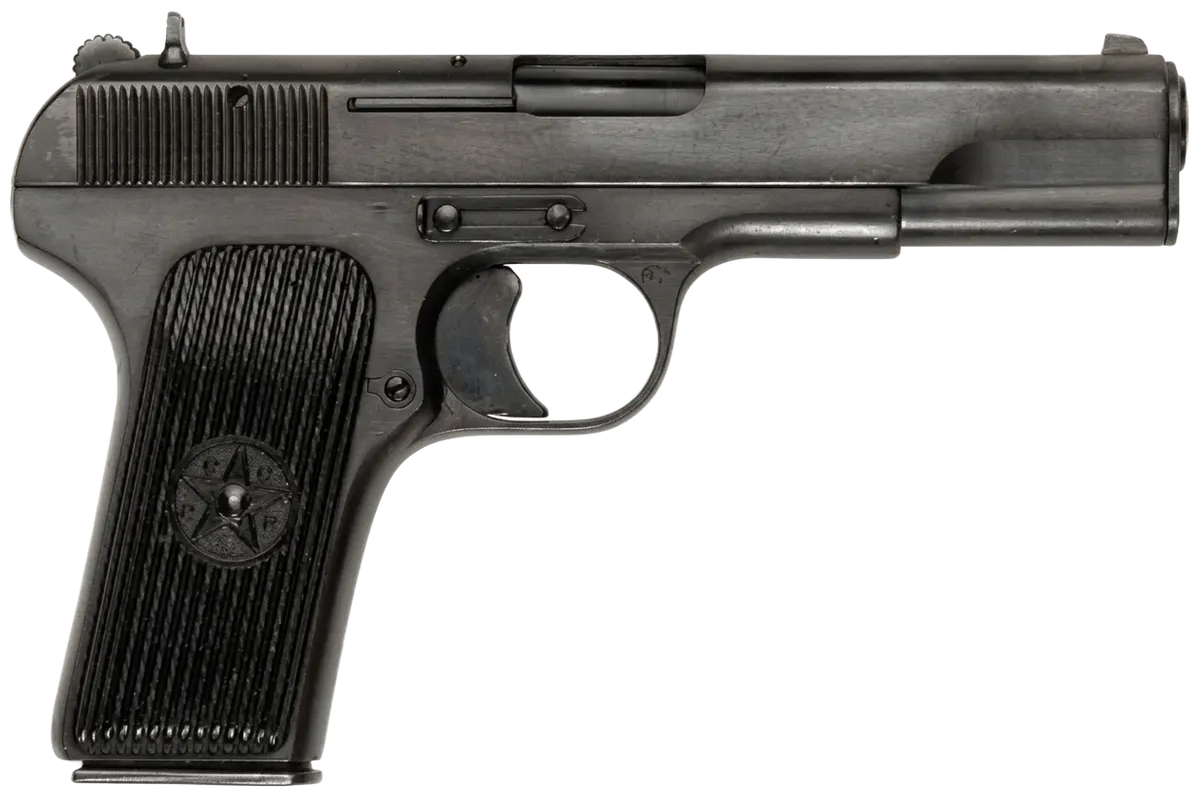 1933Russia
Soviet 7.62×25 mm Tokarev short-recoil semi-auto pistol derived from the Colt M1911 with a simplified locking system and a removable modular hammer/trigger group.
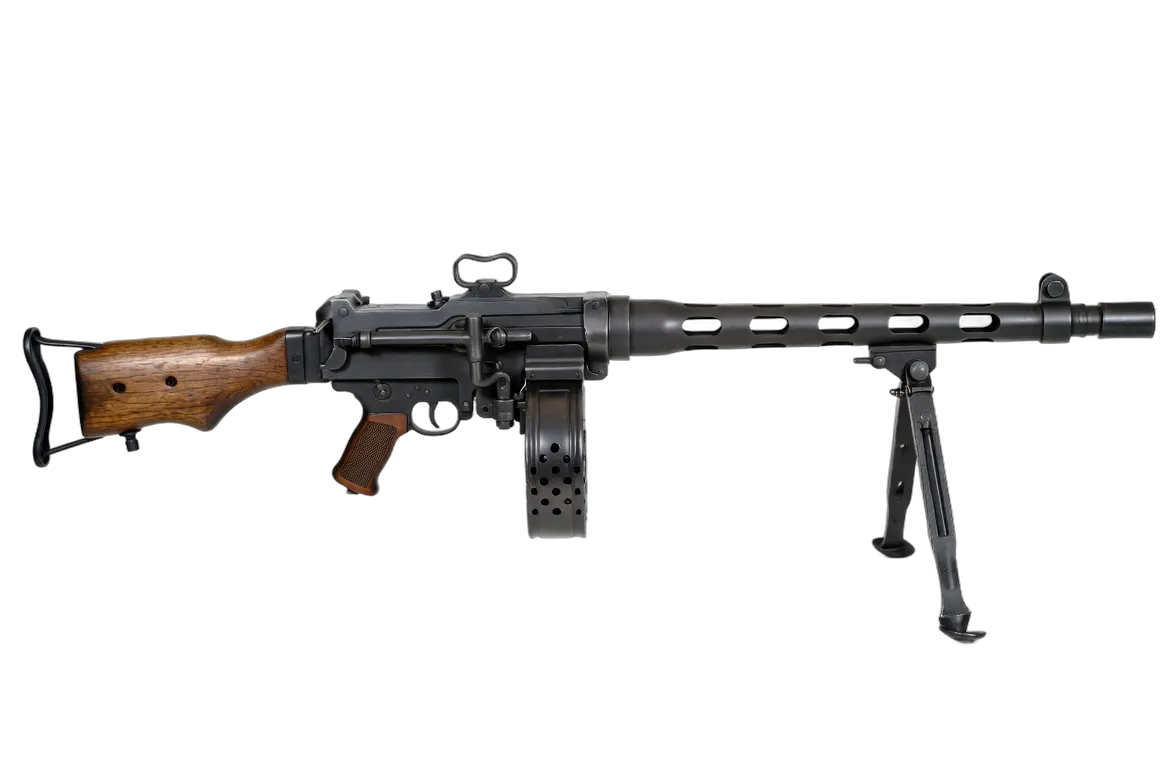 1934Germany
The first true general-purpose machine gun in history: chambered in 7.92×57 mm Mauser, air-cooled with a quick-change barrel and a cyclic rate of around 800–900 rpm, it could serve as a light machine gun on a bipod or as a medium/heavy machine gun on the Lafette 34 tripod.
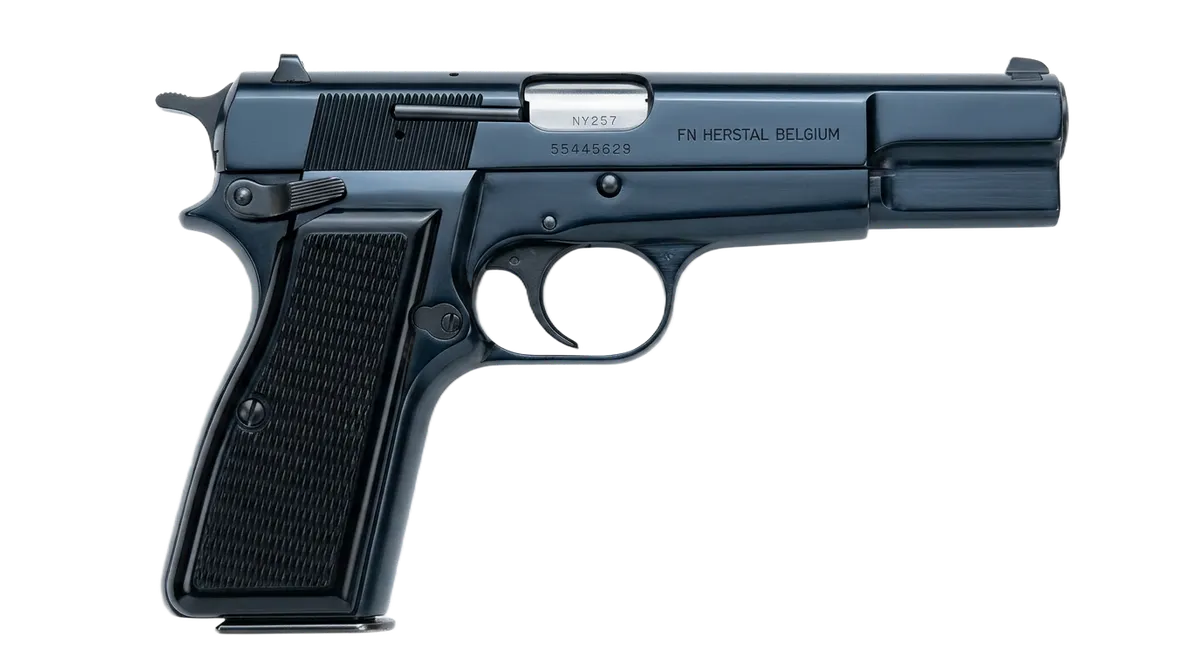 1935Belgium
9×19 mm semi-automatic pistol designed by John Moses Browning and finalised by Dieudonné Saive: the first true high-capacity pistol in history, in service for over 80 years.
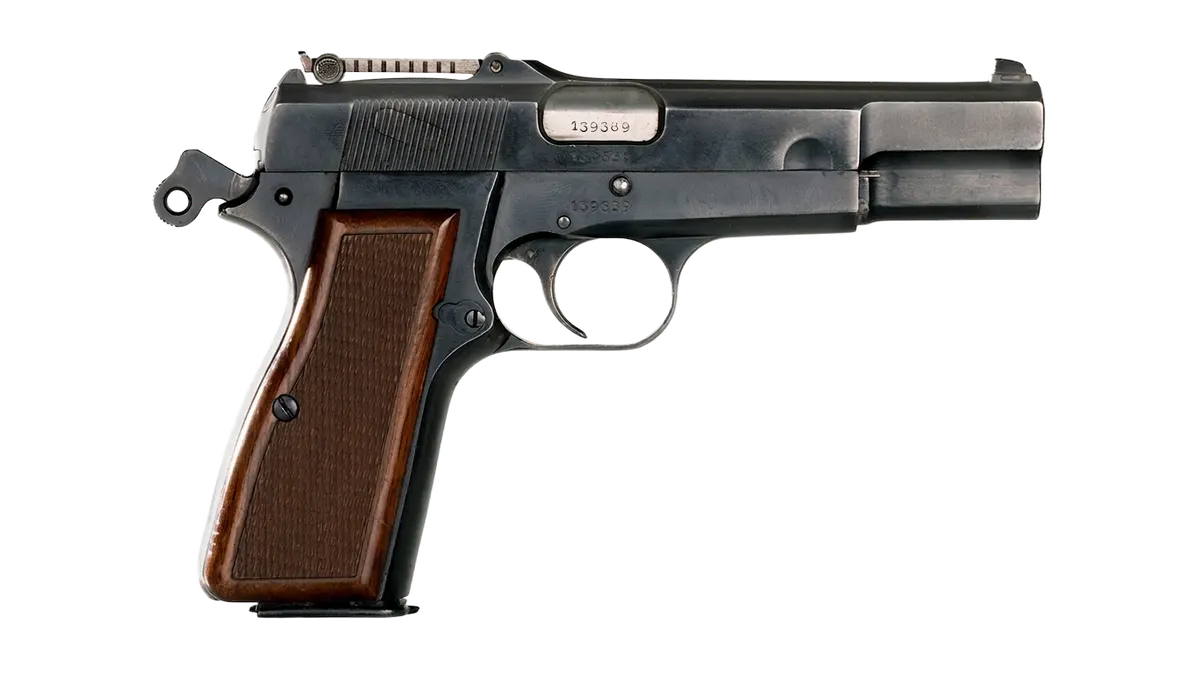 1935Belgium
Belgian 9×19 Parabellum short-recoil semi-auto pistol with 13-round double-stack magazine; the last design of John Moses Browning, completed by Dieudonné Saive.
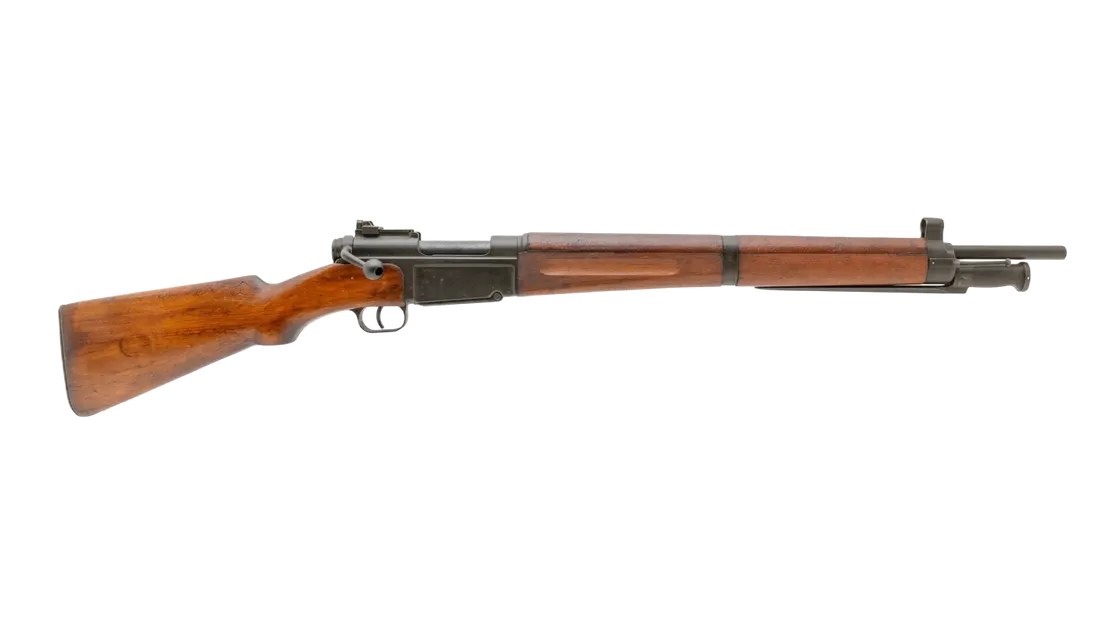 1936France
French bolt-action rifle in 7.5×54 mm MAS, adopted in 1936 as the standard rifle of the Armée de Terre on the eve of World War II.
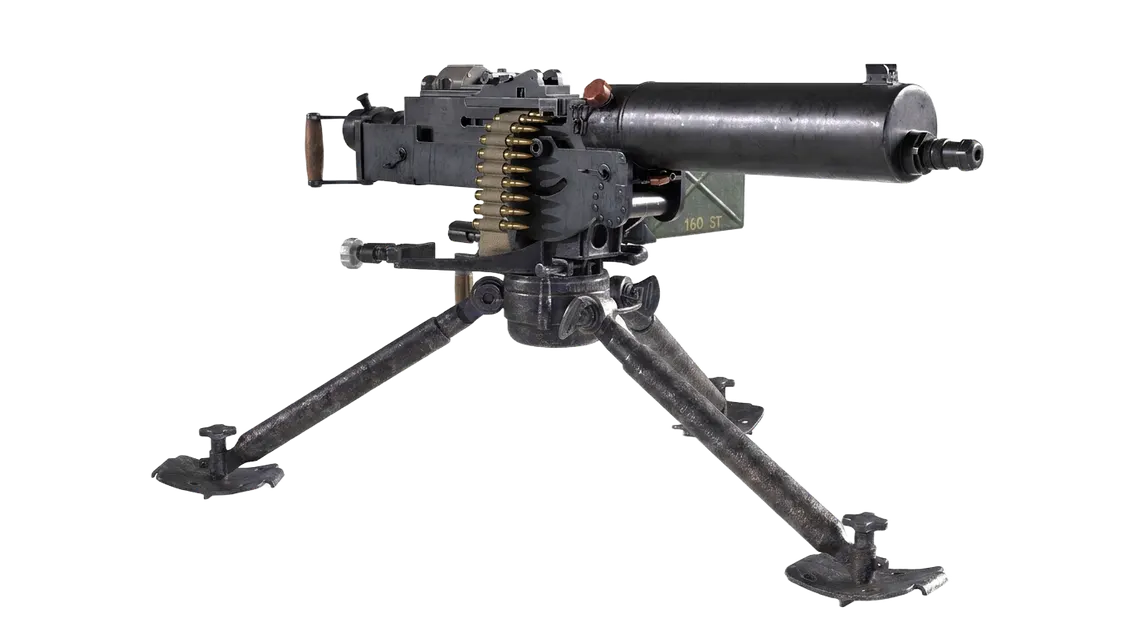 1936Sweden
Swedish version of the water-cooled Browning M1917 in 6.5×55, produced under licence at Eskilstuna for fixed defence and ground vehicles.
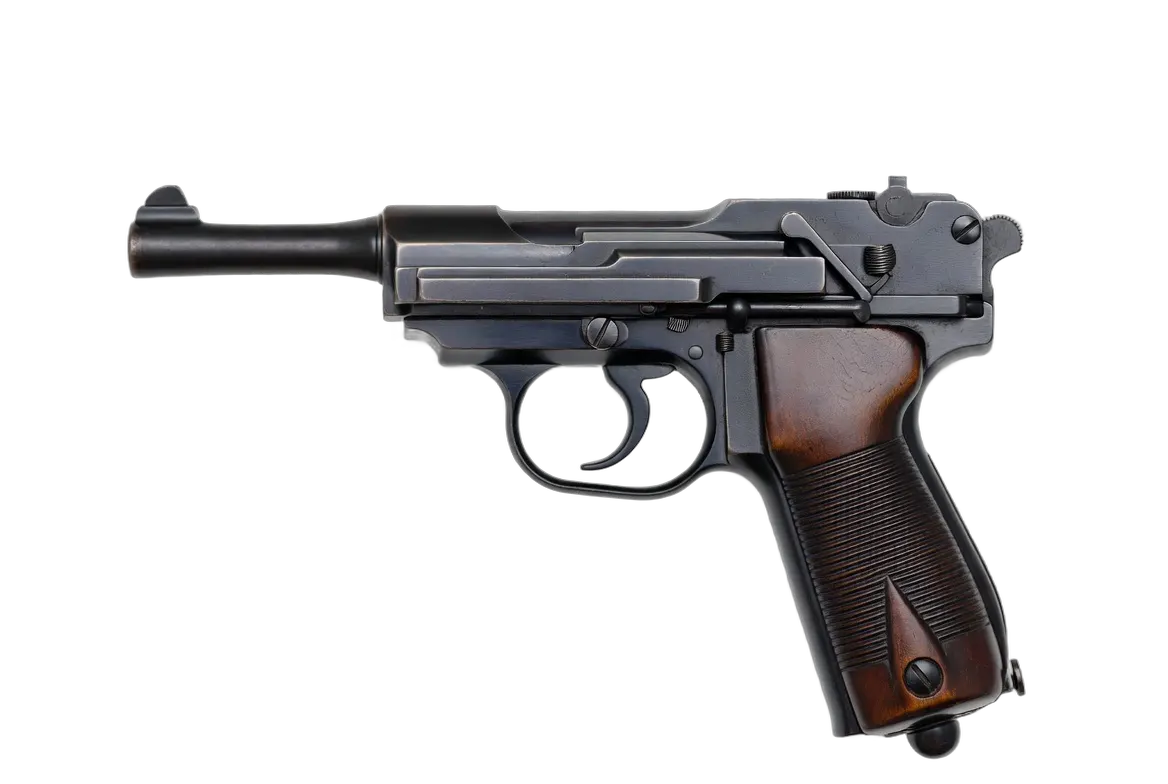 1938Germany
Semi-automatic 9×19 mm Parabellum pistol with short-recoil, falling-block locking and a double-action / single-action trigger: adopted by the Wehrmacht in 1938 to replace the more expensive Luger P08, it stayed in Bundeswehr service as the P1 until the 2000s.
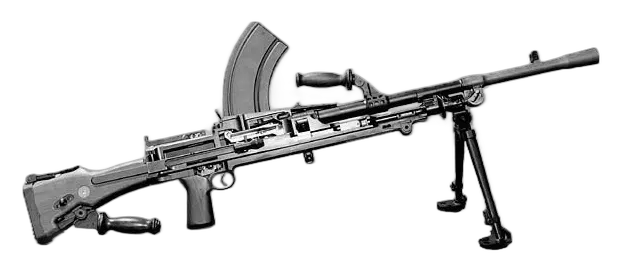 1938United Kingdom
British light machine gun in .303 British (later 7.62 NATO L4), derived from the Czechoslovak ZB vz.26. Top-mounted 30-round magazine, bipod, quick-change barrel.
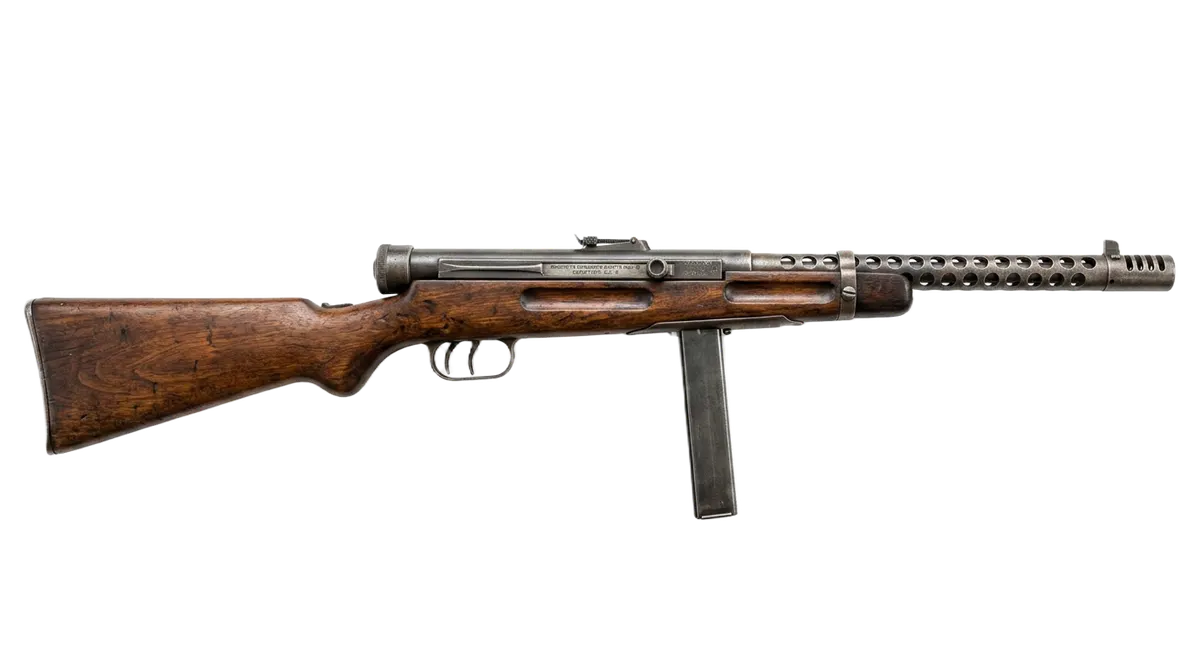 1938Italy
Italian 9×19 mm Parabellum submachine gun, one of the most refined and reliable weapons of the Second World War.
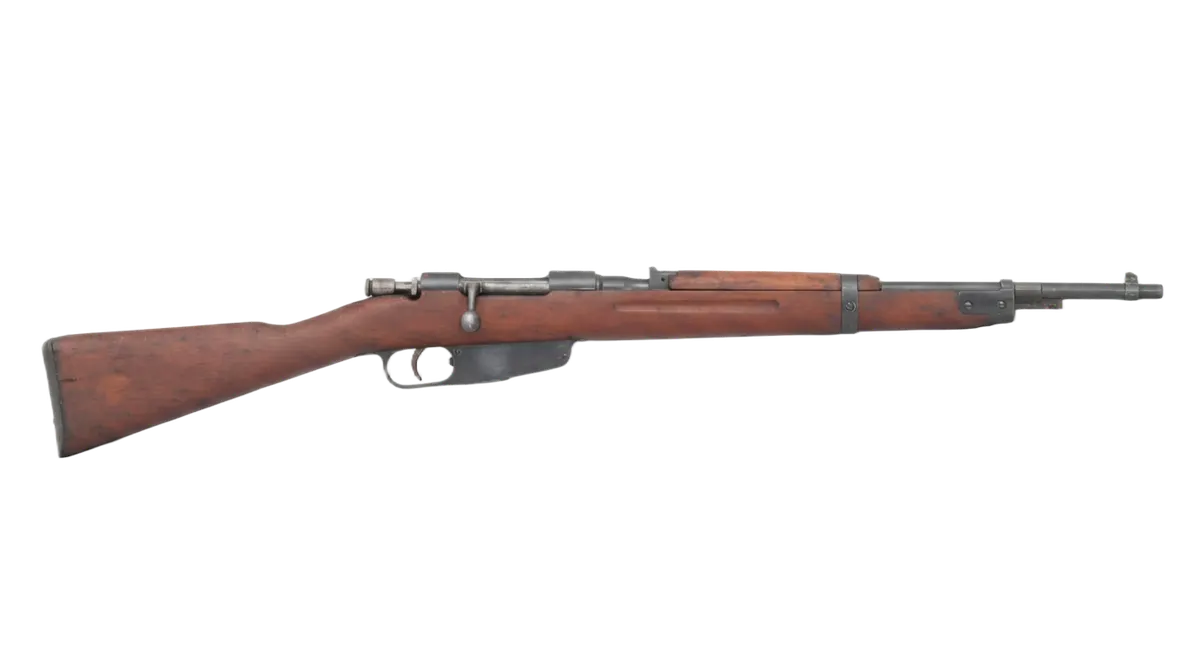 1938Italy
Shortened version of the Carcano Mod. 91, adopted in 1938 to unify rifle and carbine in a single, more handy weapon.
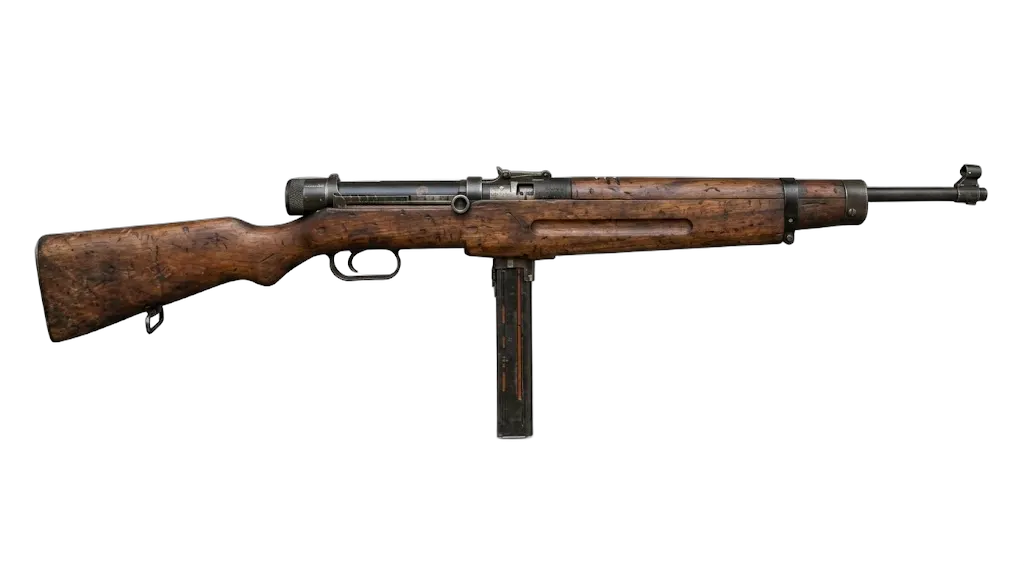 1939Hungary
Hungarian World War II submachine gun in 9×25 mm Mauser, designed by Pál Király with a side magazine that folds forward into the stock.
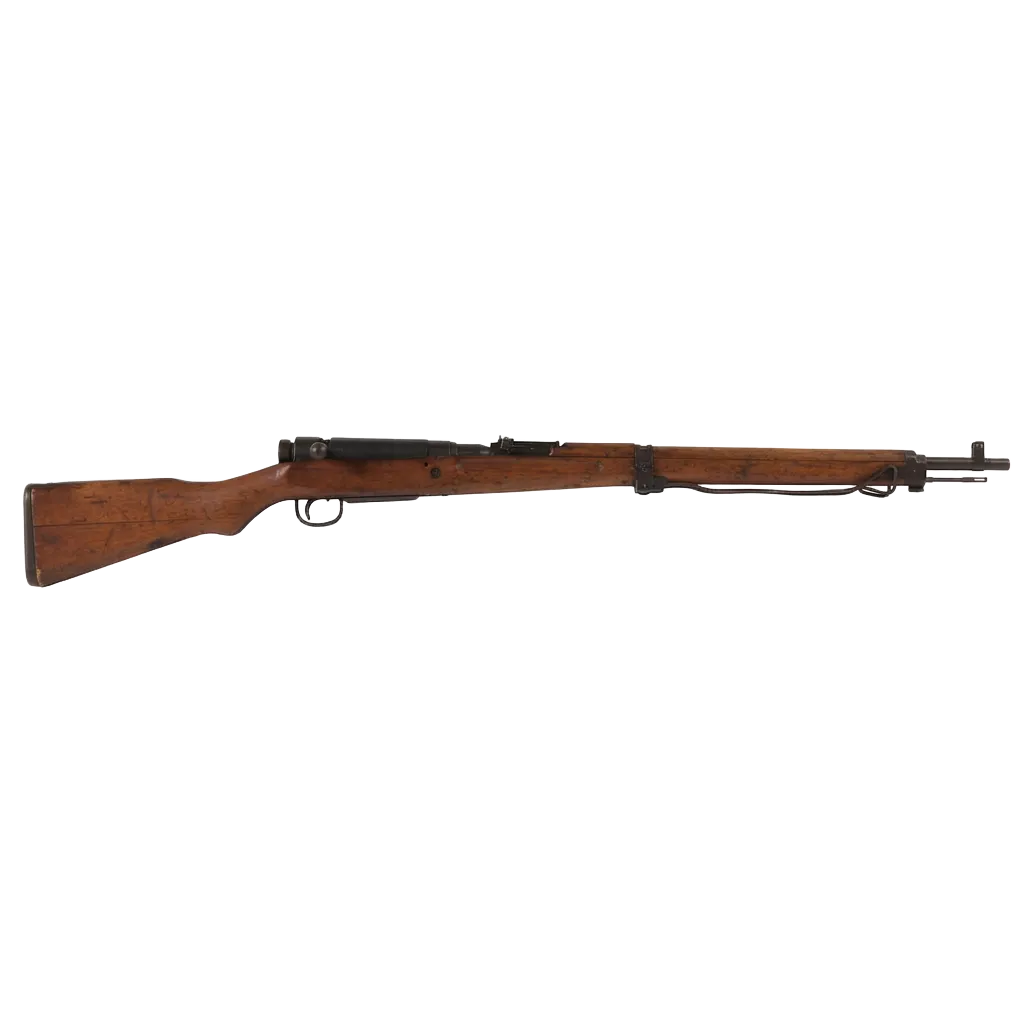 1939Japan
Japanese bolt-action rifle in 7.7×58 mm Arisaka, evolution of the Type 38 in a more powerful caliber; standard issue of the Imperial Japanese forces in WWII.
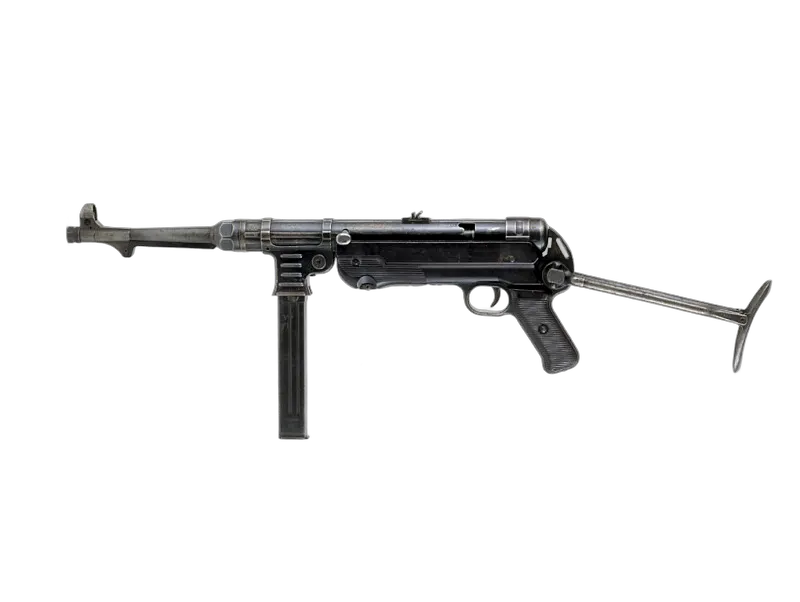 1940Germany
9×19 mm Parabellum open-bolt blowback submachine gun produced in over one million units: a symbol of German WWII infantry and the first large-scale military weapon built around a stamped receiver and a folding metal stock.
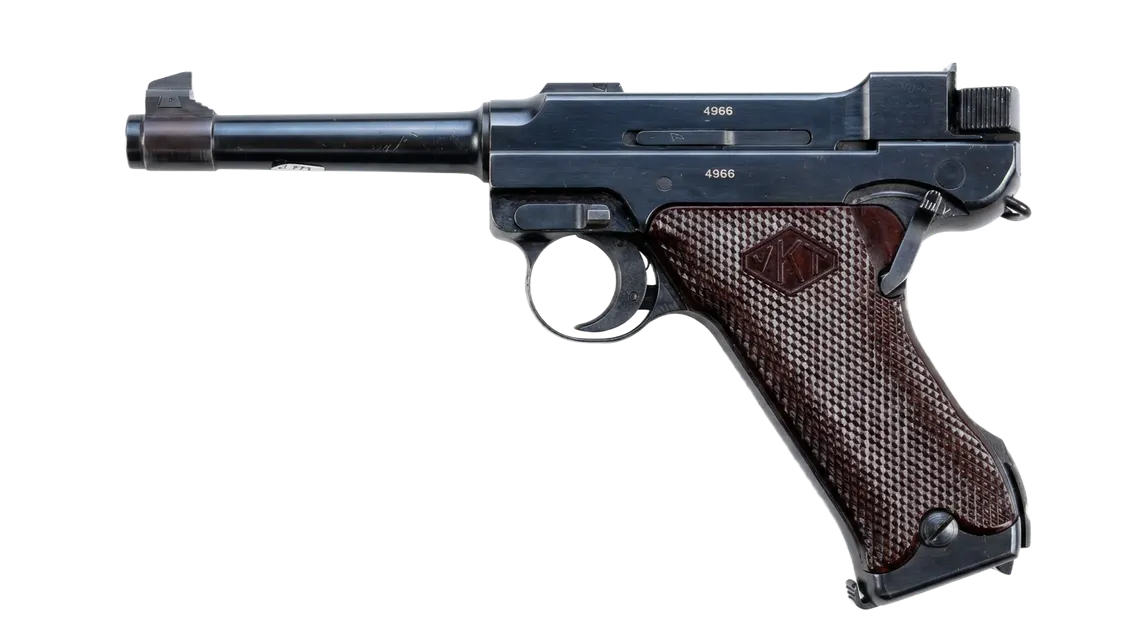 1940Sweden
9×19 semi-automatic pistol derived from the Finnish Lahti L-35, built by Husqvarna as Sweden's service sidearm from 1940 to 1988.
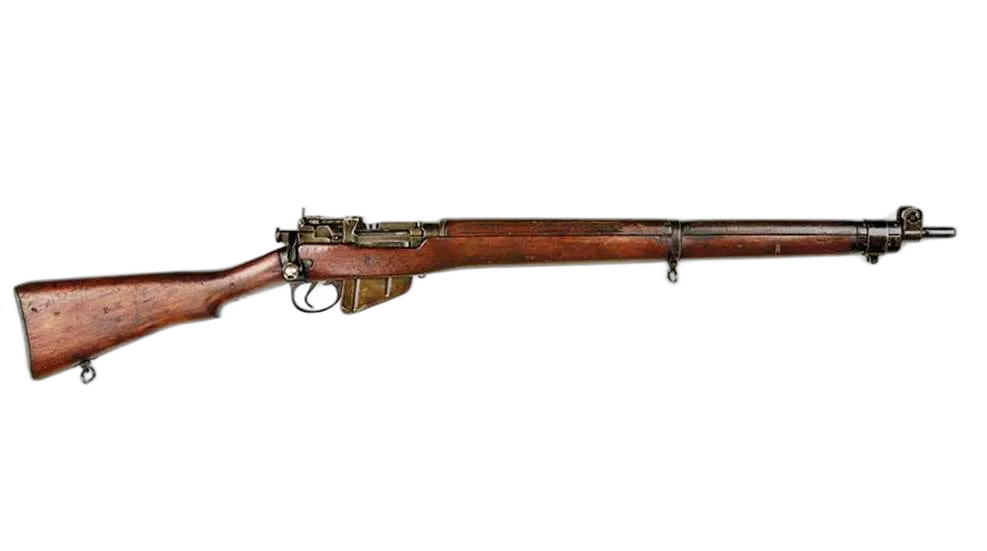 1941United Kingdom
British bolt-action rifle in .303 British, Commonwealth standard infantry weapon in both World Wars. Famous for its fast action ("mad minute") and 10-round magazine.
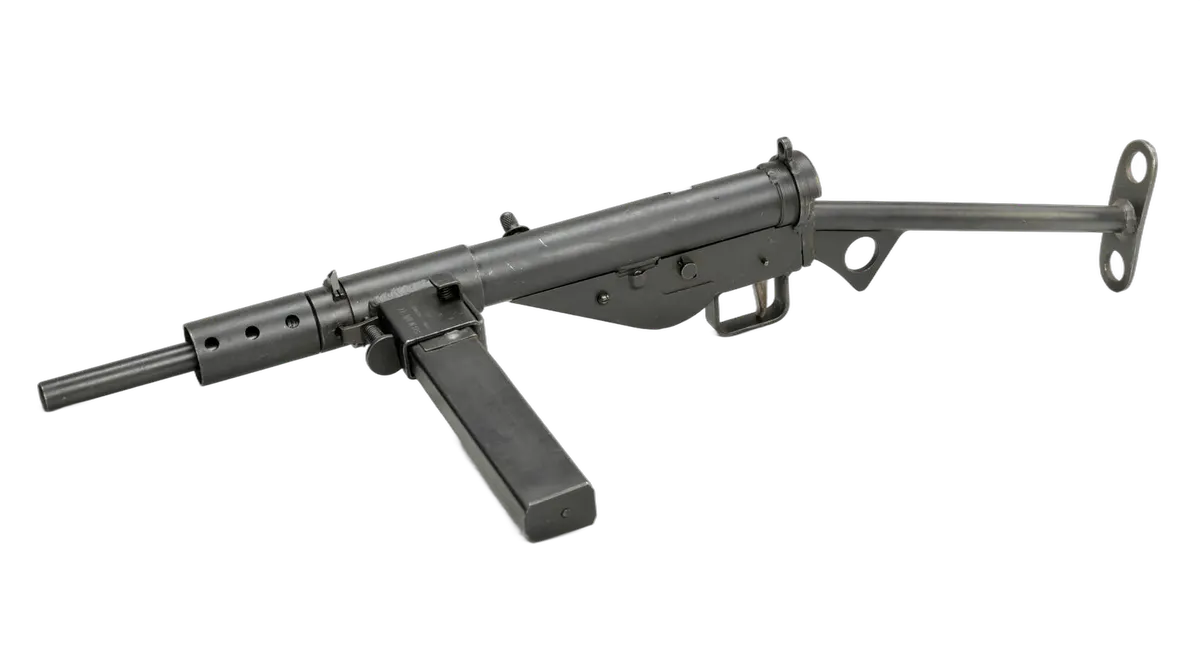 1941United Kingdom
British WWII submachine gun in 9×19 Parabellum: designed for emergency production with stamped and brazed components, extremely low unit cost.
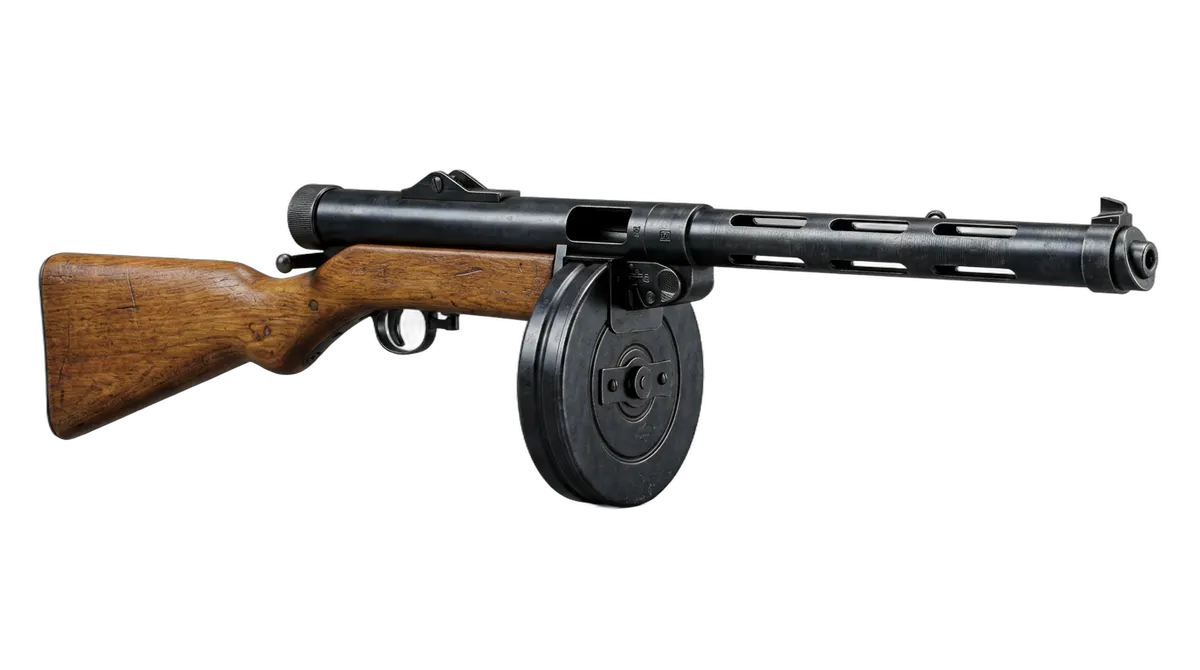 1941Switzerland
Swiss submachine gun in 9×19 mm Parabellum designed by Adolf Furrer and produced by Waffenfabrik Bern. It uses the complex short-recoil toggle-lock system typical of the Luger, side-mounted, with a 40-round drum.
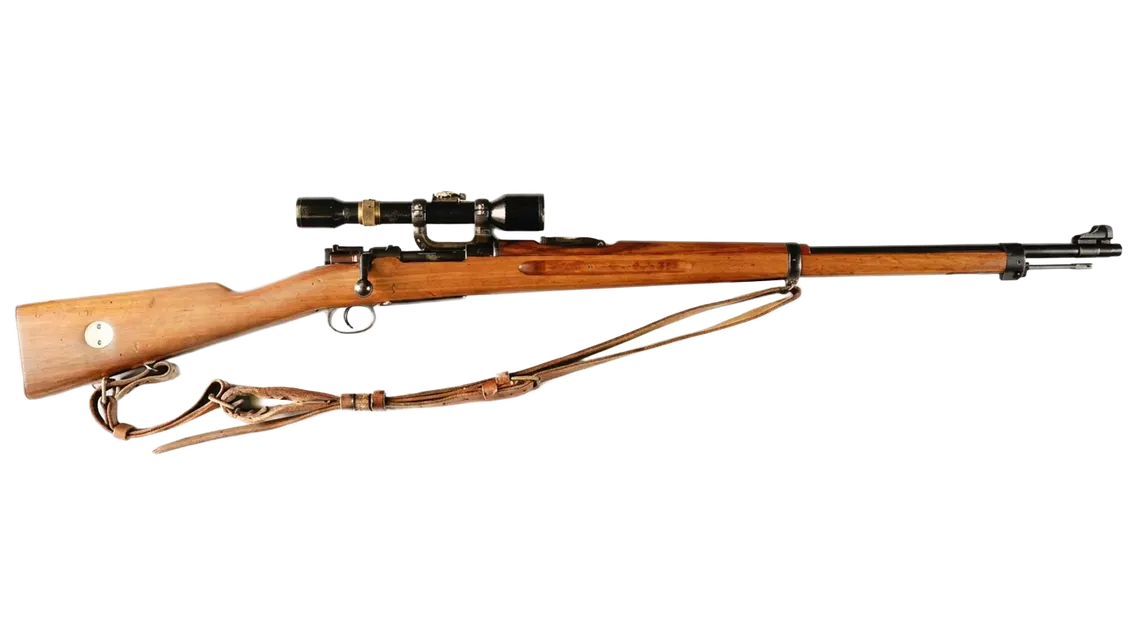 1941Sweden
Sniper variant of the Swedish Mauser m/96 fitted with an AGA m/41 (later m/42 and m/44) telescopic sight and a bent bolt handle to clear the eyepiece.
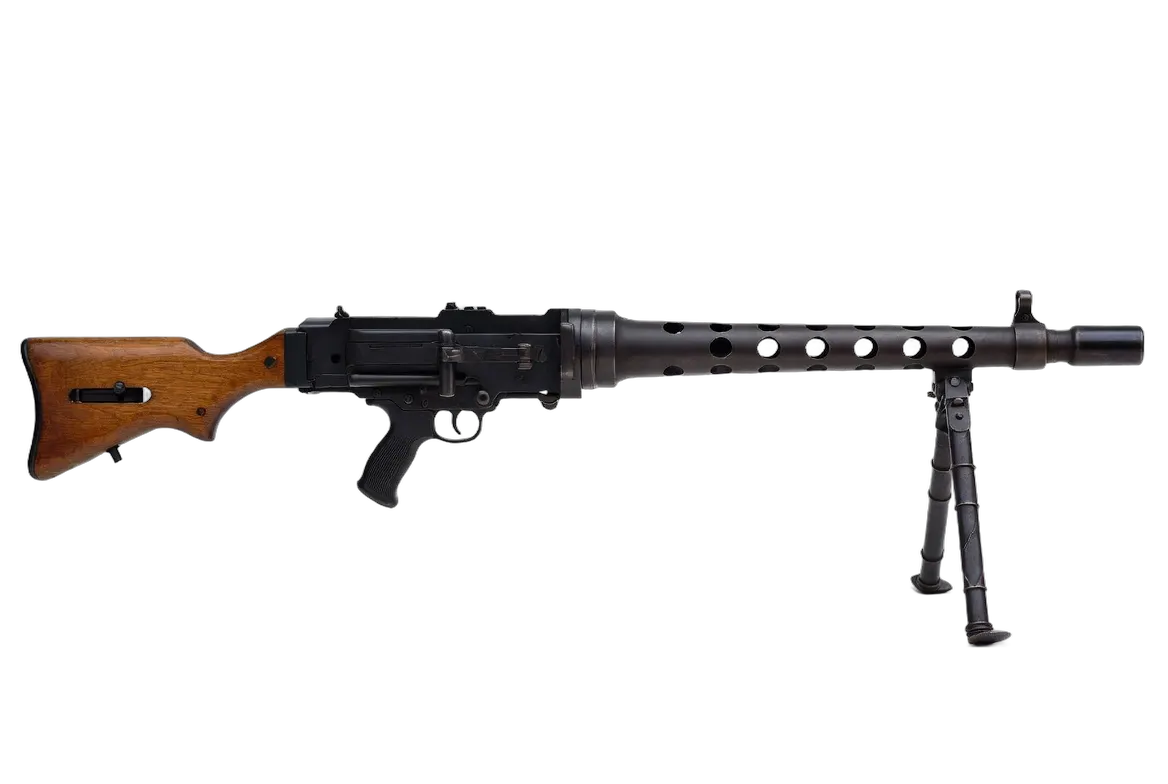 1942Germany
General-purpose machine gun in 7.92×57 mm Mauser with a cyclic rate of 1,200–1,500 rpm: its tearing sound earned it the Allied nickname 'Hitler's Buzzsaw'. Direct ancestor of the MG3, still in service today.
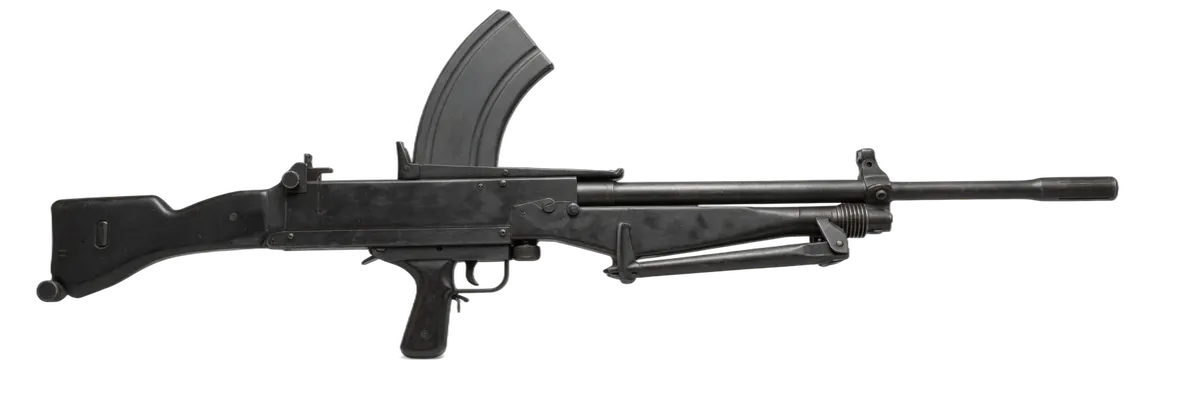 1942United Kingdom
British emergency light machine gun in .303 British, developed by BSA during WWII as a fallback in case Bren production was destroyed by bombing.
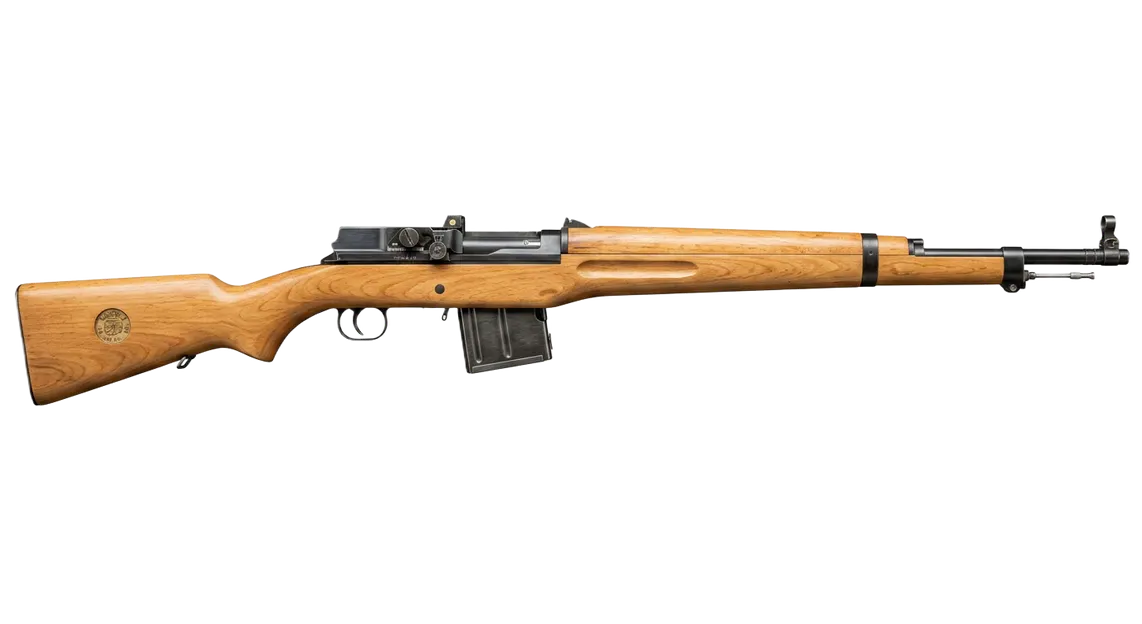 1942Sweden
Swedish 6.5×55 semi-automatic rifle designed by Erik Eklund along Ljungman's lines: pioneer of the direct-impingement gas system later adopted by the AR-15.
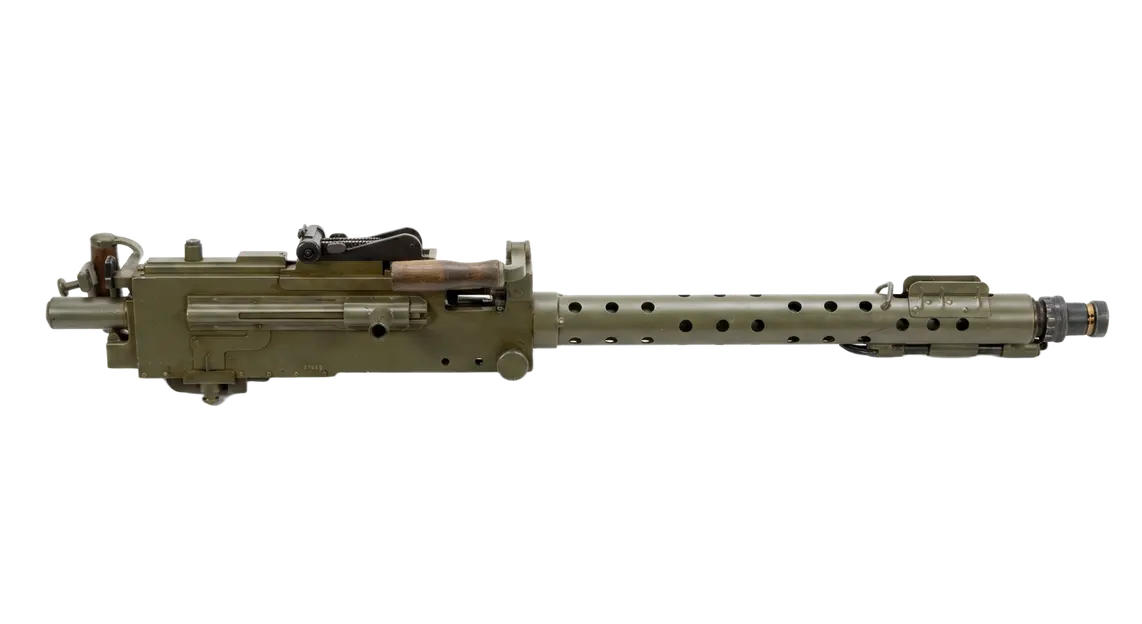 1942Sweden
Swedish air-cooled version of the Browning M1919A4 in 6.5×55 (later 8×63 and 7.62 NATO), used on tripods, vehicles and aircraft until the 1960s.
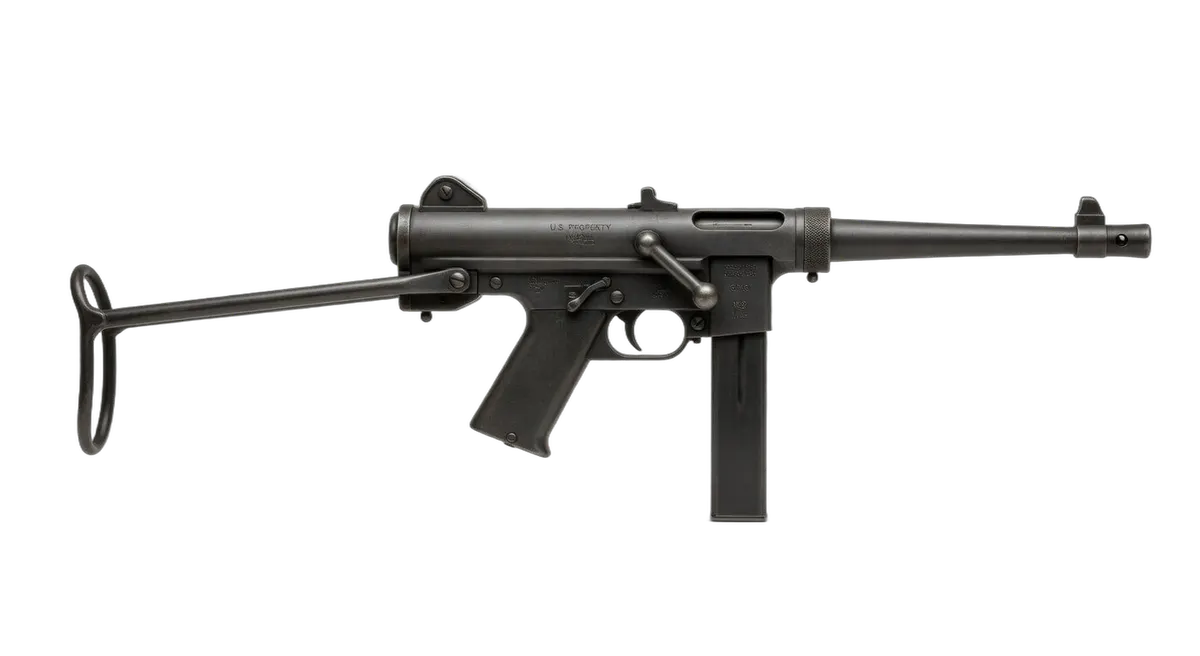 1943United States
Low-cost .45 ACP submachine gun introduced in 1943 to replace the Thompson: stamped sheet metal, wire stock and reduced rate of fire for better control.
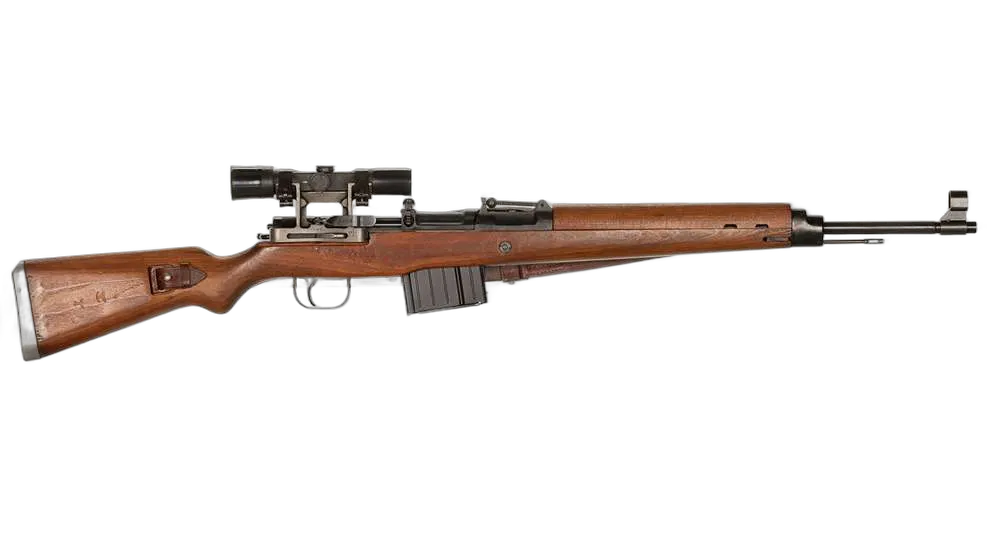 1943Germany
Semi-automatic rifle chambered in 7.92×57 mm Mauser, developed by Walther as the German answer to the Soviet SVT-40; widely used by the Wehrmacht with the ZF4 optic as a designated-marksman rifle.
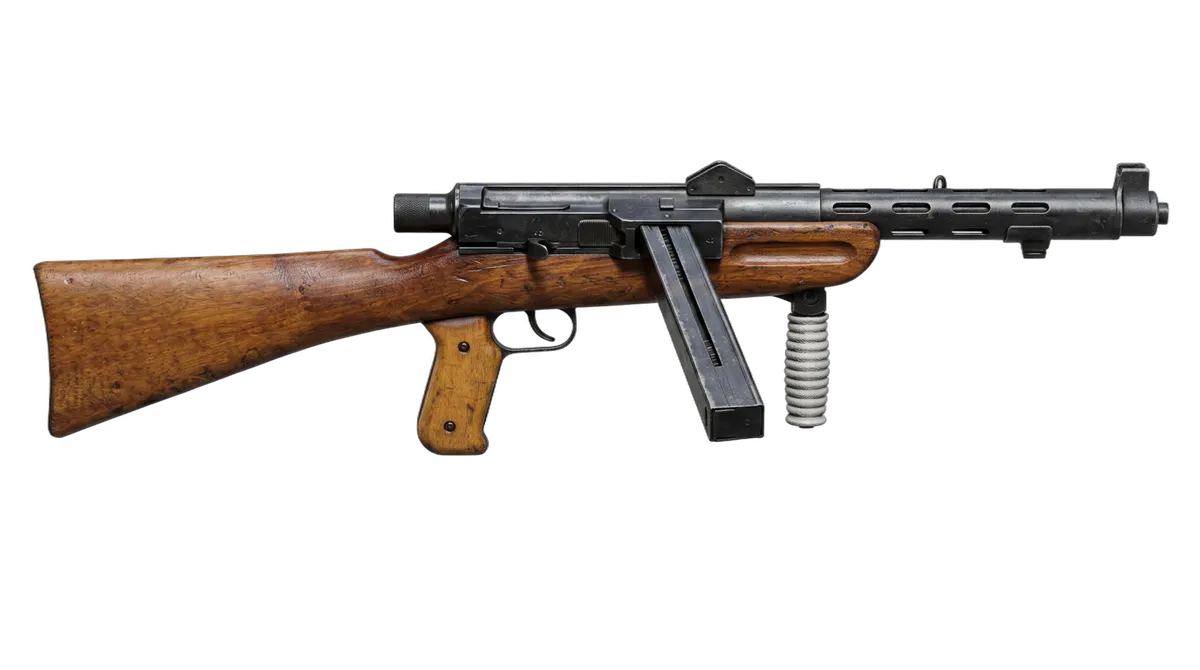 1943Switzerland
Swiss license-built version of the Finnish Suomi KP/-31, manufactured by Hispano-Suiza in Geneva in 9×19 mm Parabellum. Full wooden stock, 50-round coffin magazine and the distinctive spring-style foregrip.
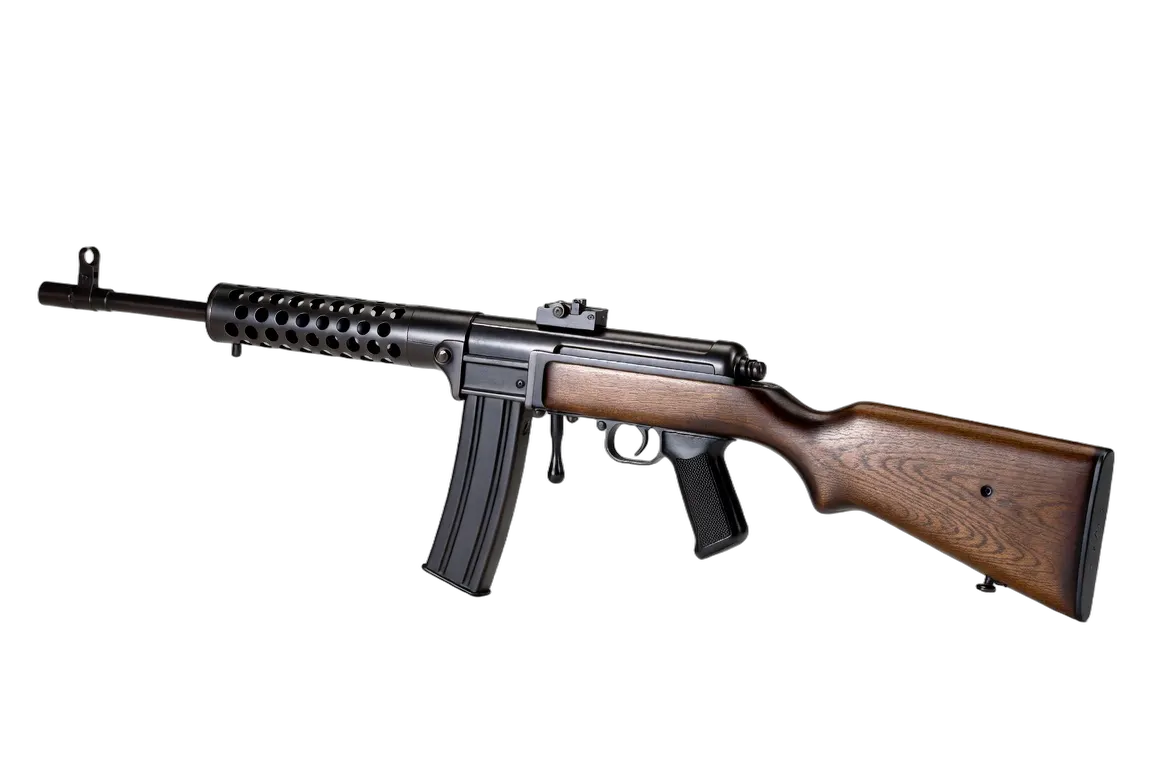 1944Germany
Widely regarded as the first true assault rifle: chambered in the 7.92×33 mm Kurz intermediate cartridge, it combined automatic firepower, manageable weight and effective range up to 300 m — conceptually anticipating the AK-47 and every modern assault rifle.
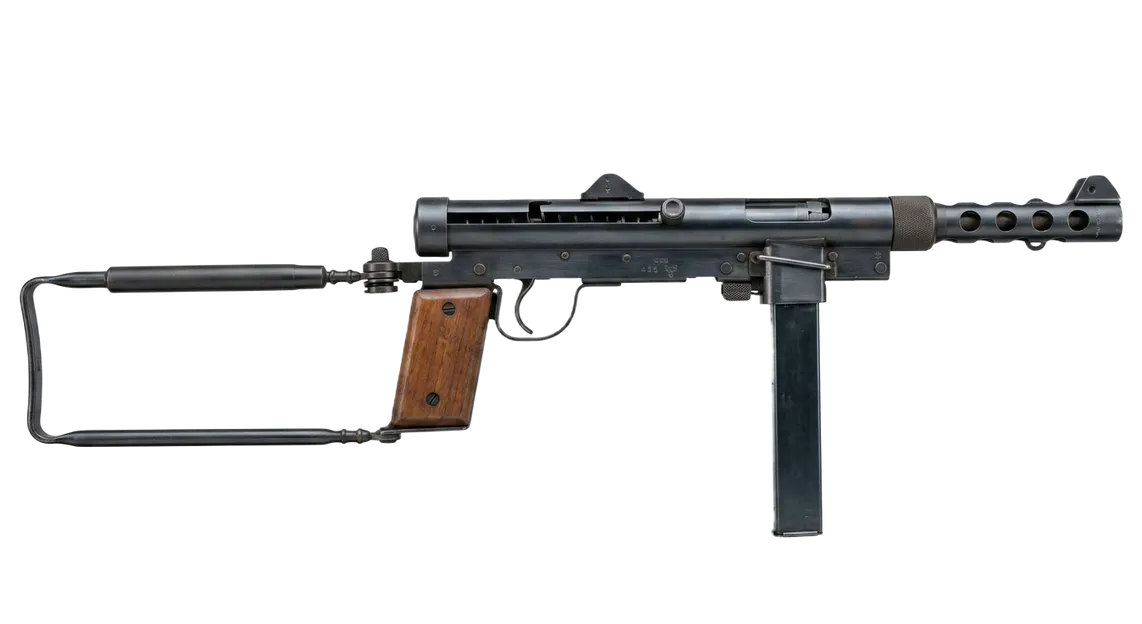 1945Sweden
9×19 submachine gun in stamped steel with a folding wire stock: Sweden's standard SMG until 1965, copied from Vietnam to US special forces.
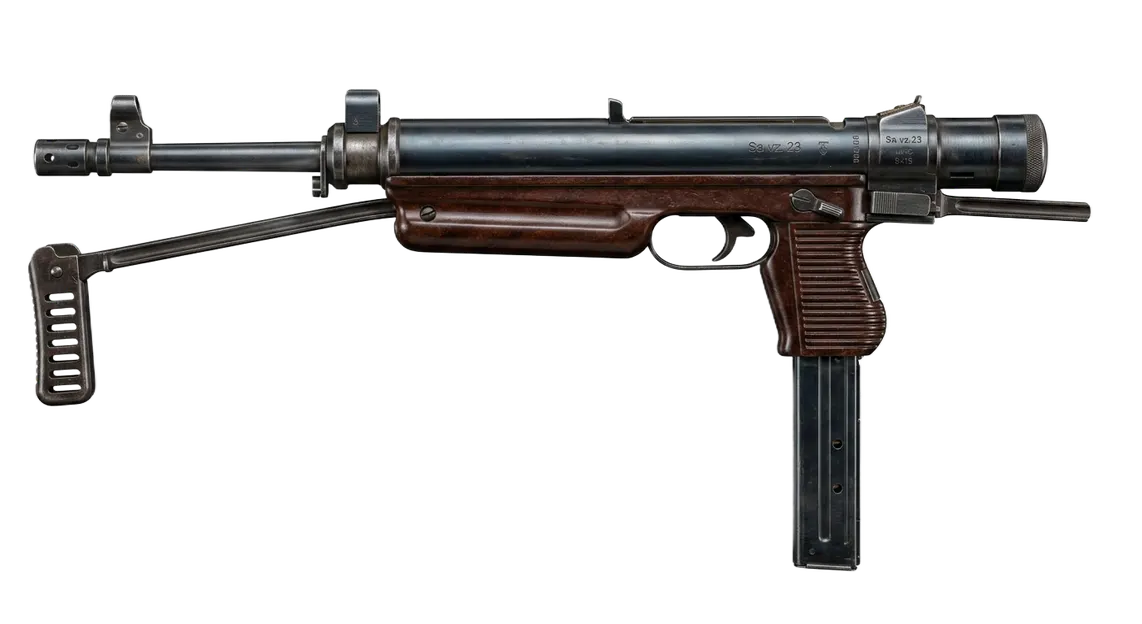 1948Czech Republic
Family of postwar Czechoslovak submachine guns chambered in 9×19 Parabellum (vz. 23/25) and 7.62×25 Tokarev (vz. 24/26). Pioneers of the wrap-around (telescopic) bolt and magazine-in-grip layout.
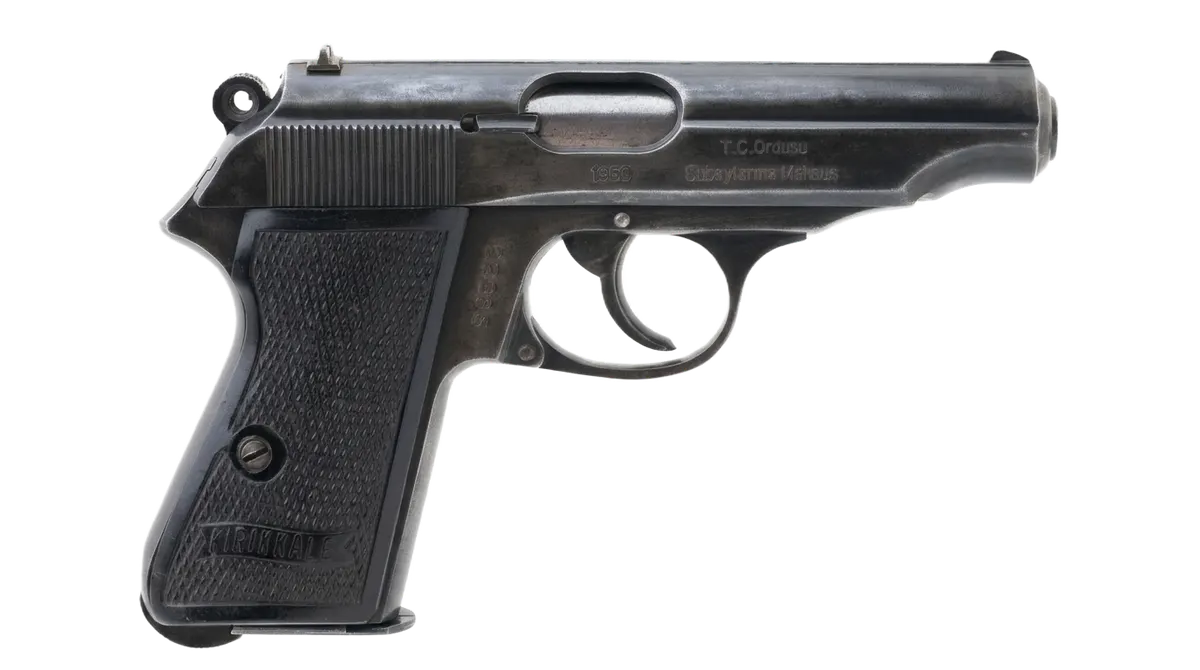 1948Turkey
Turkish semi-automatic pistol in 7.65×17 mm Browning (.32 ACP) produced by the MKE arsenal at Kırıkkale from 1948, a direct copy of the Walther PP for officers and police.
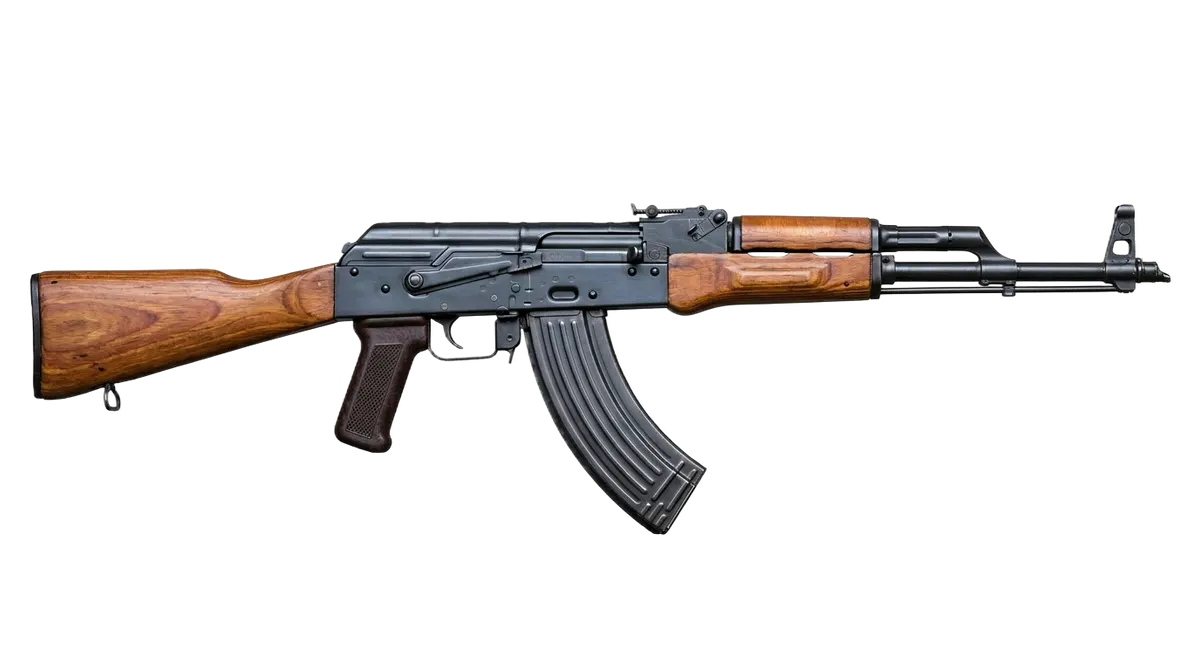 1949Russia
Soviet assault rifle, icon of the Cold War. Rugged and reliable in any environment.
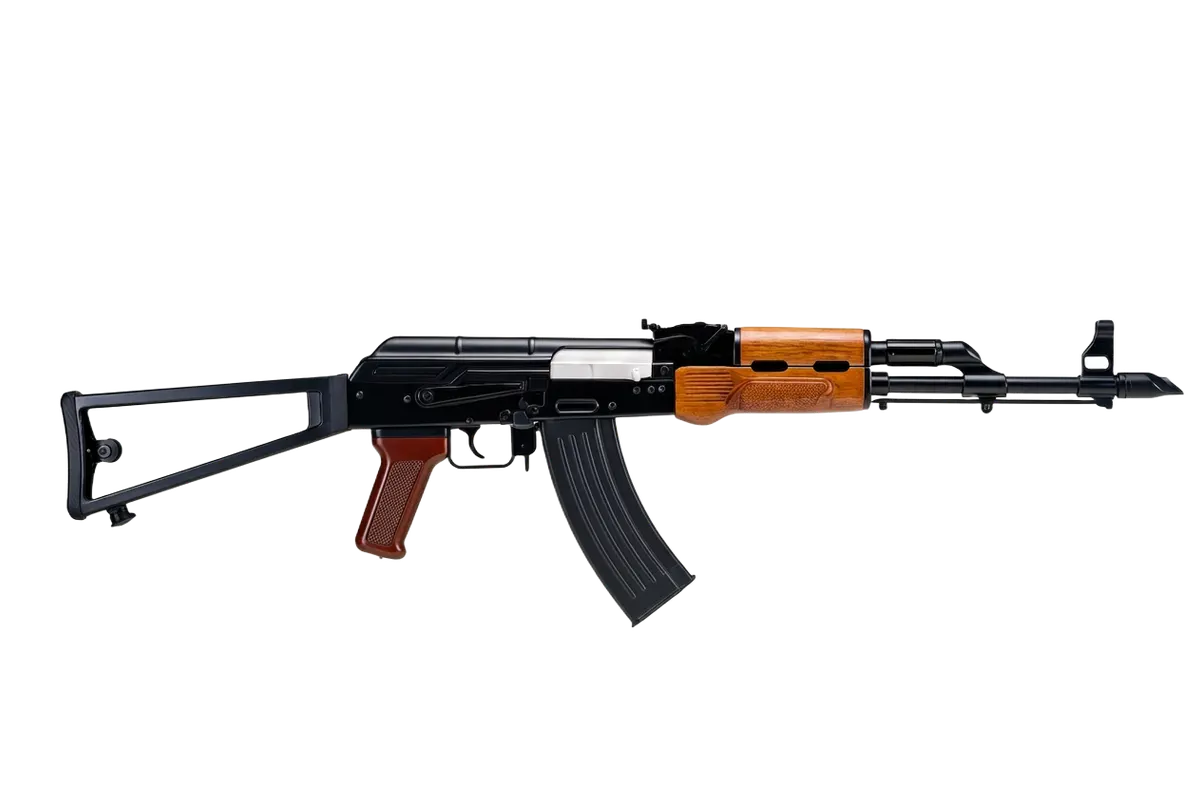 1949Russia
AK-47 variant with a metal under-folding stock, developed for airborne troops and vehicle crews.
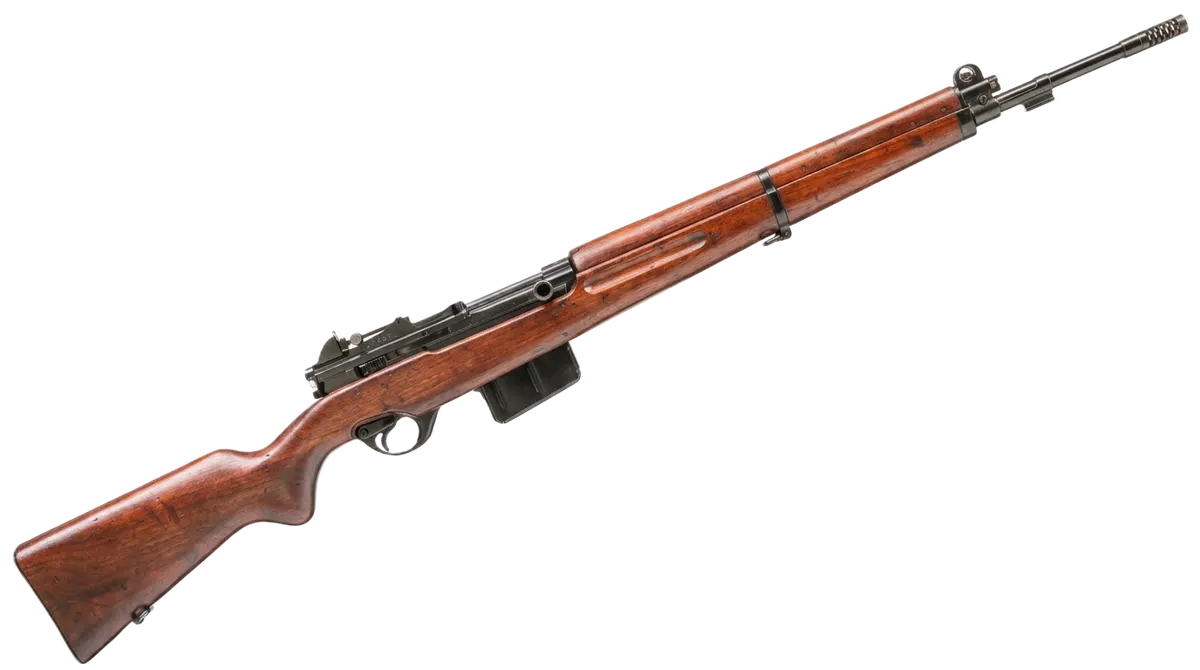 1949Belgium
Gas-operated semi-automatic rifle designed by Dieudonné Saive, a historical bridge between WWII carbines and the modern FAL battle rifles.
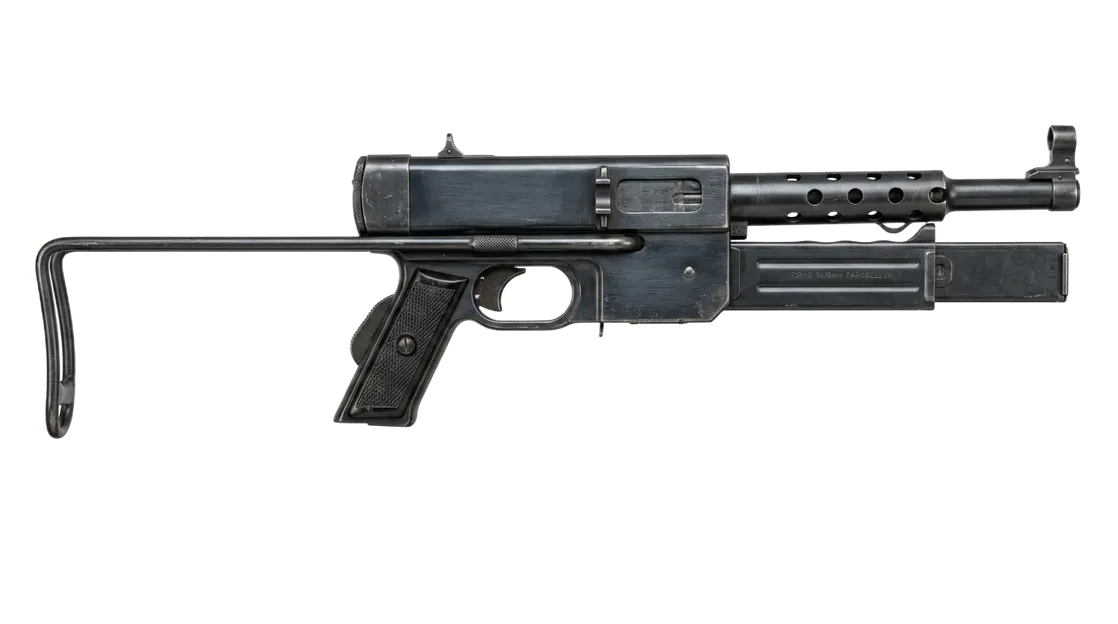 1949France
French 9×19 mm Parabellum submachine gun with retractable wire stock and forward-folding magazine well, a symbol of France's colonial conflicts.
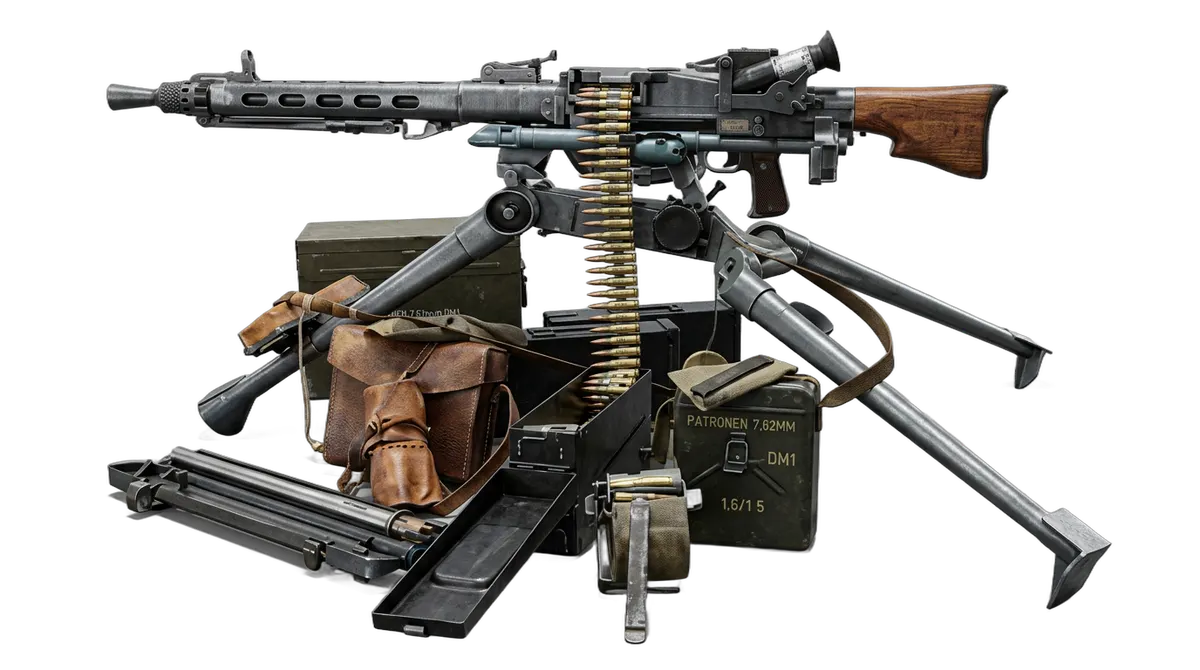 1951Switzerland
Swiss general-purpose machine gun in 7.5×55 mm Swiss developed after World War II, robust and accurate, belt-fed and used on bipod, tripod or vehicle mount.
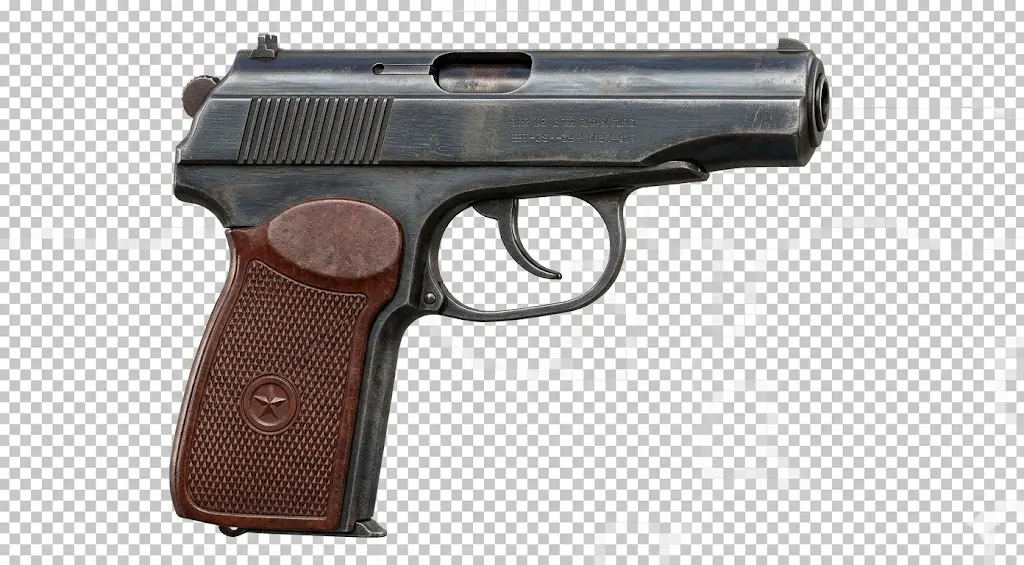 1951Russia
Soviet 9×18 mm Makarov blowback semi-auto pistol, DA/SA hammer-fired; standard sidearm of the Red Army and Warsaw Pact security services for over 40 years.
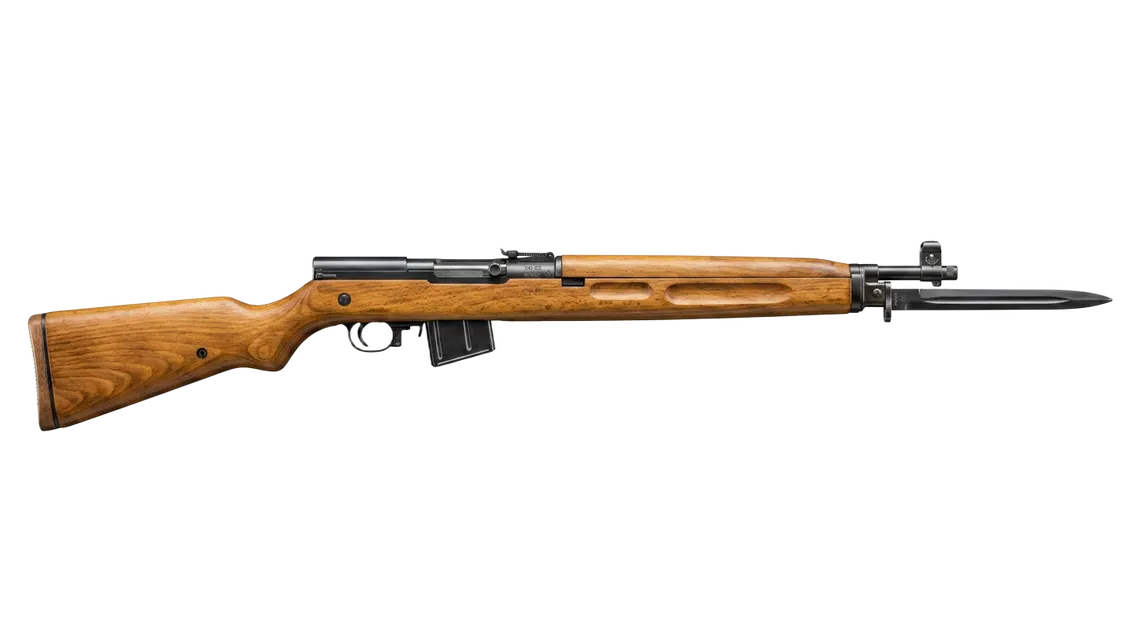 1952Czech Republic
Postwar Czechoslovak semi-automatic rifle originally chambered in 7.62×45 mm vz. 52, later converted to 7.62×39 mm (vz. 52/57). It equipped the Czechoslovak Army until the introduction of the vz. 58.
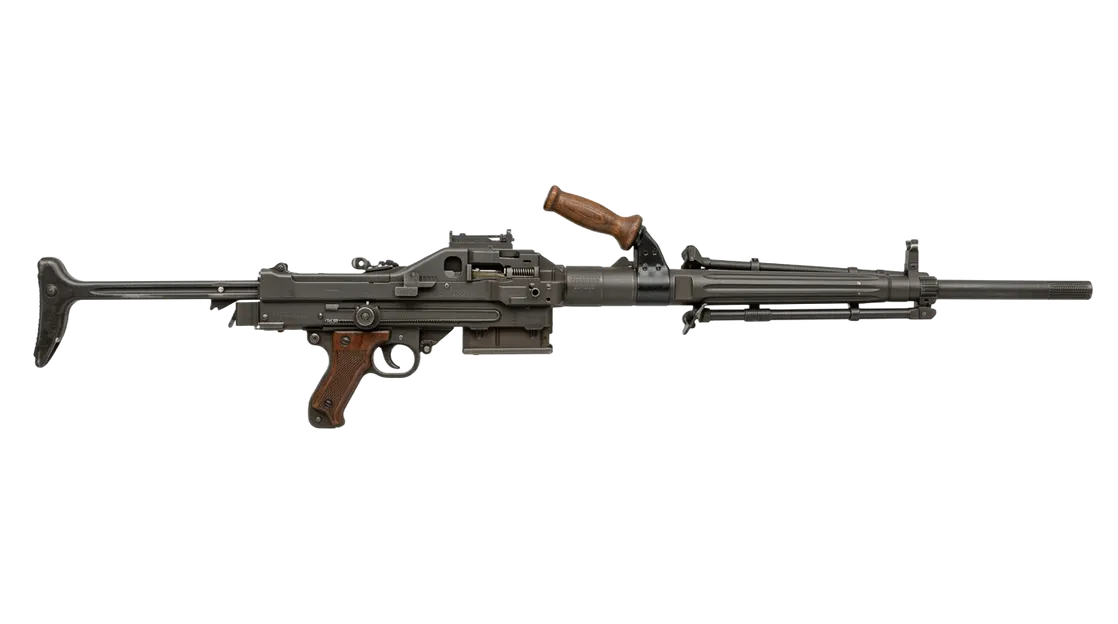 1952France
French general-purpose machine gun with lever-delayed blowback action, originally chambered in 7.5×54 mm and later rebarreled in 7.62×51 NATO as the AANF1.
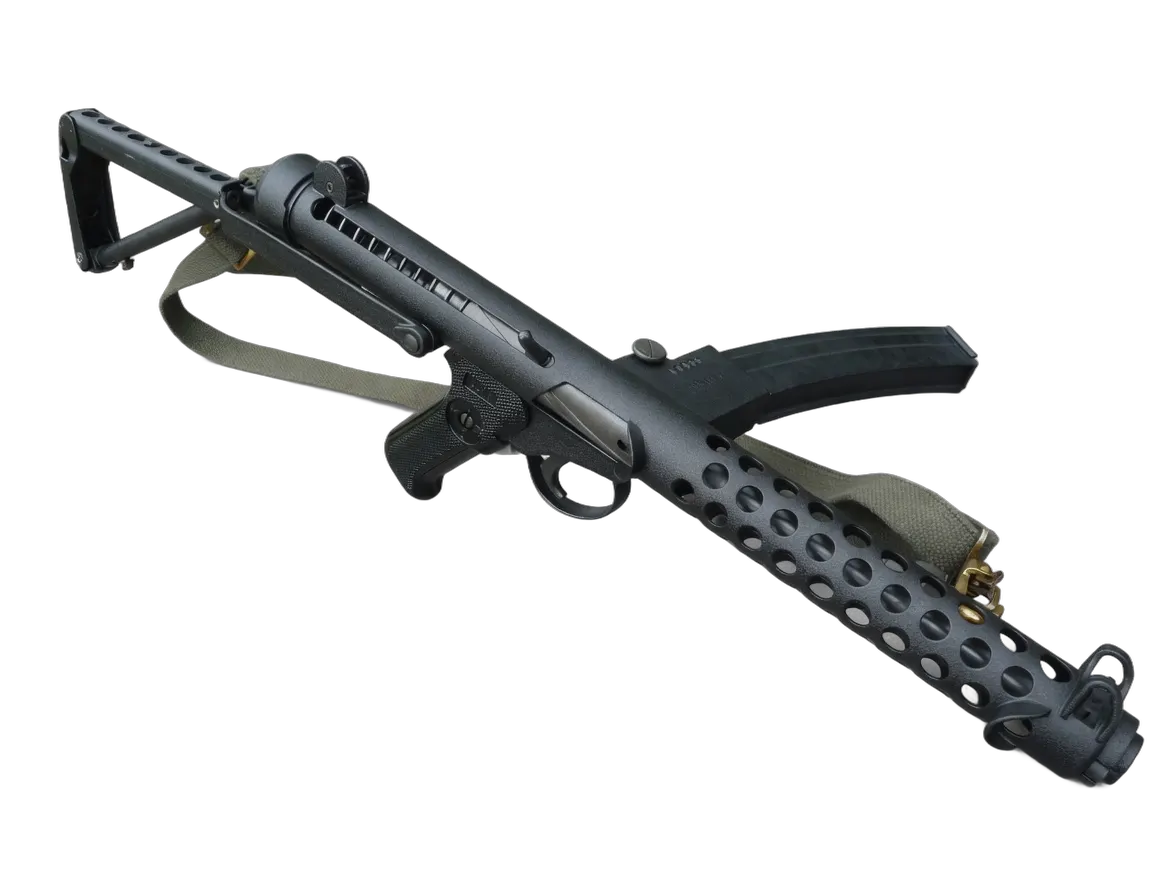 1953United Kingdom
British 9×19 submachine gun, successor to the Sten but far better finished: perforated barrel shroud, folding metal stock, curved 34-round magazine. In British Army service from 1953 to 1994.
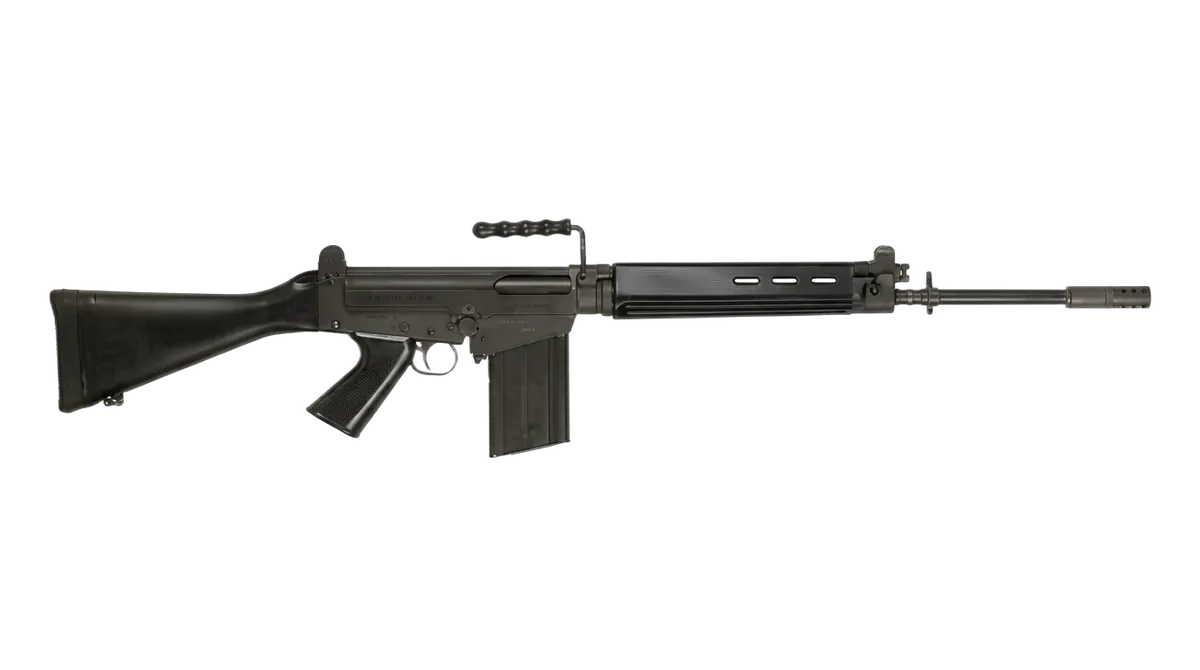 1953Belgium
7.62×51 mm NATO battle rifle, nicknamed the "right arm of the Free World" for its widespread adoption among NATO forces during the Cold War.
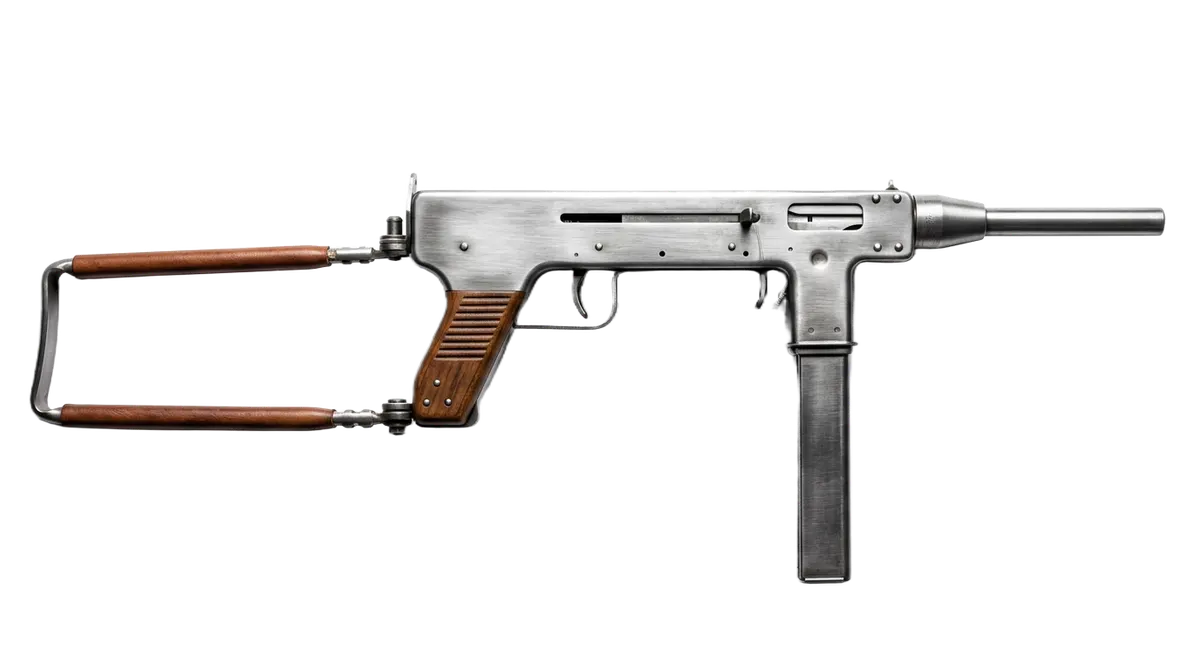 1953Brazil
Brazilian .45 ACP submachine gun produced under Madsen M/50 licence by INA of São Paulo from 1953, in service with the Brazilian Army until the 1970s.
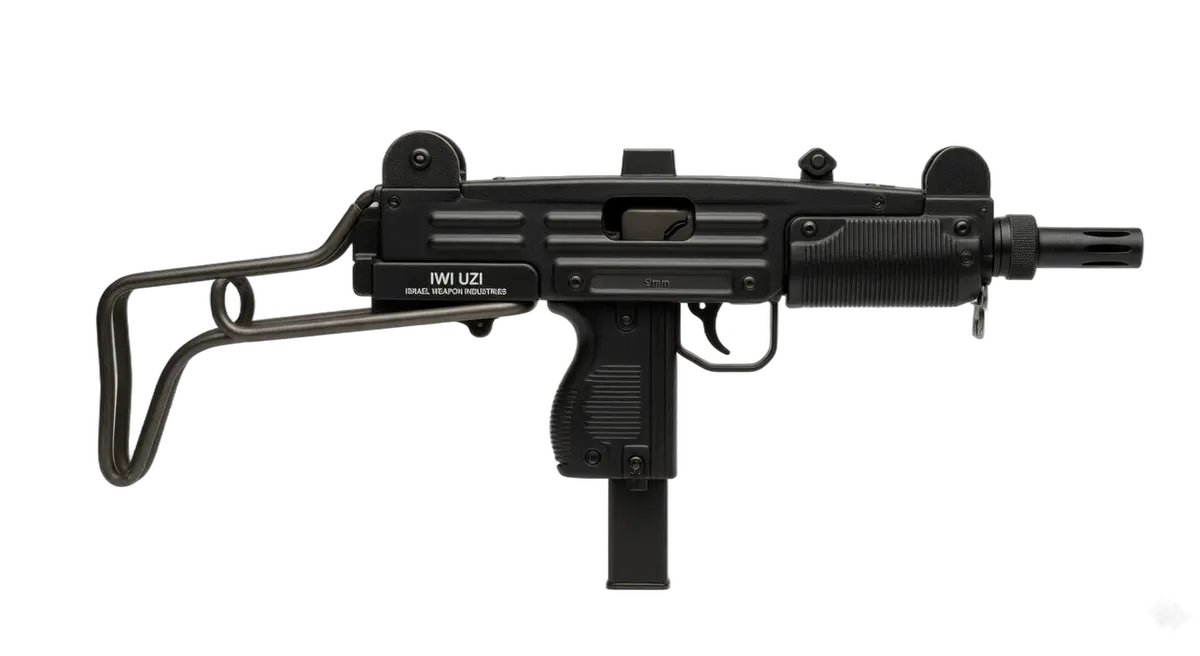 1954Israel
Israeli 9×19 submachine gun with a telescoping bolt wrapping around the barrel: compact, rugged and a symbol of the Israeli arms industry.
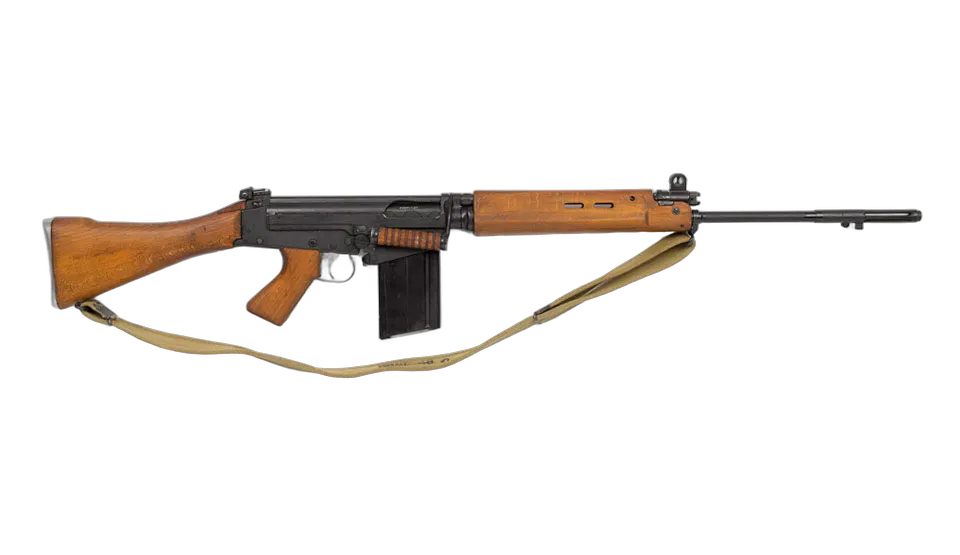 1954United Kingdom
British inch-pattern version of the FN FAL in 7.62×51 NATO, produced under licence and restricted to semi-auto by British doctrine. Commonwealth standard rifle from 1954 until the SA80.
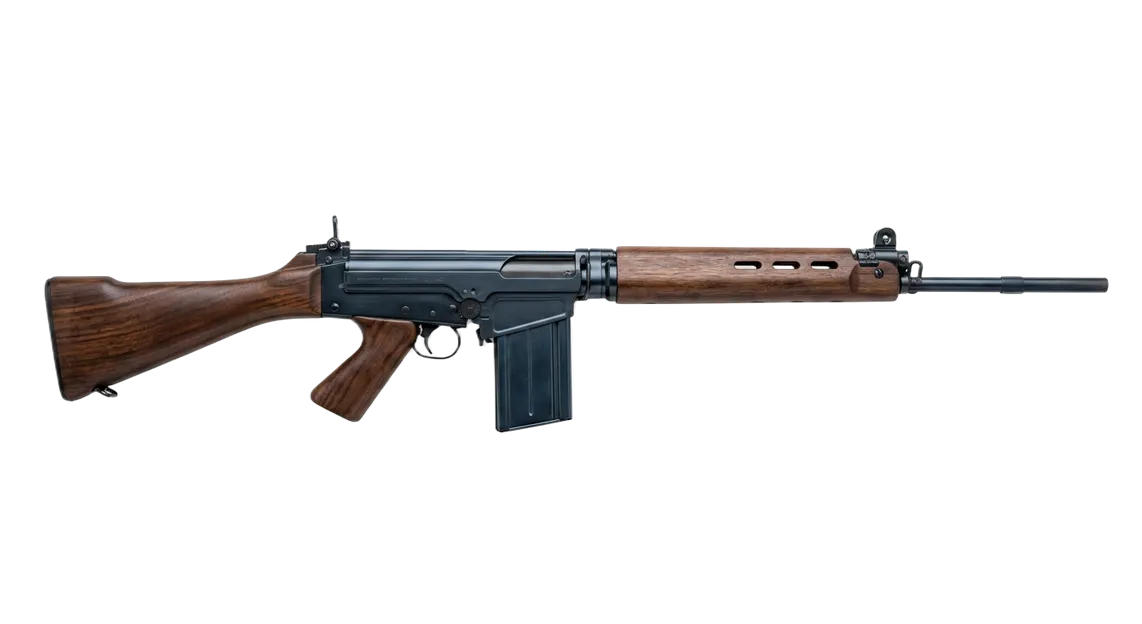 1954Sweden
Trial batch of the FN FAL evaluated by the Swedish Army between 1954 and 1957 for 7.62×51 NATO; not adopted, rejected in favour of the Ak 4 (HK G3).
The bipolar standoff standardises two weapon families — AK and AR — set to dominate the decades to come.
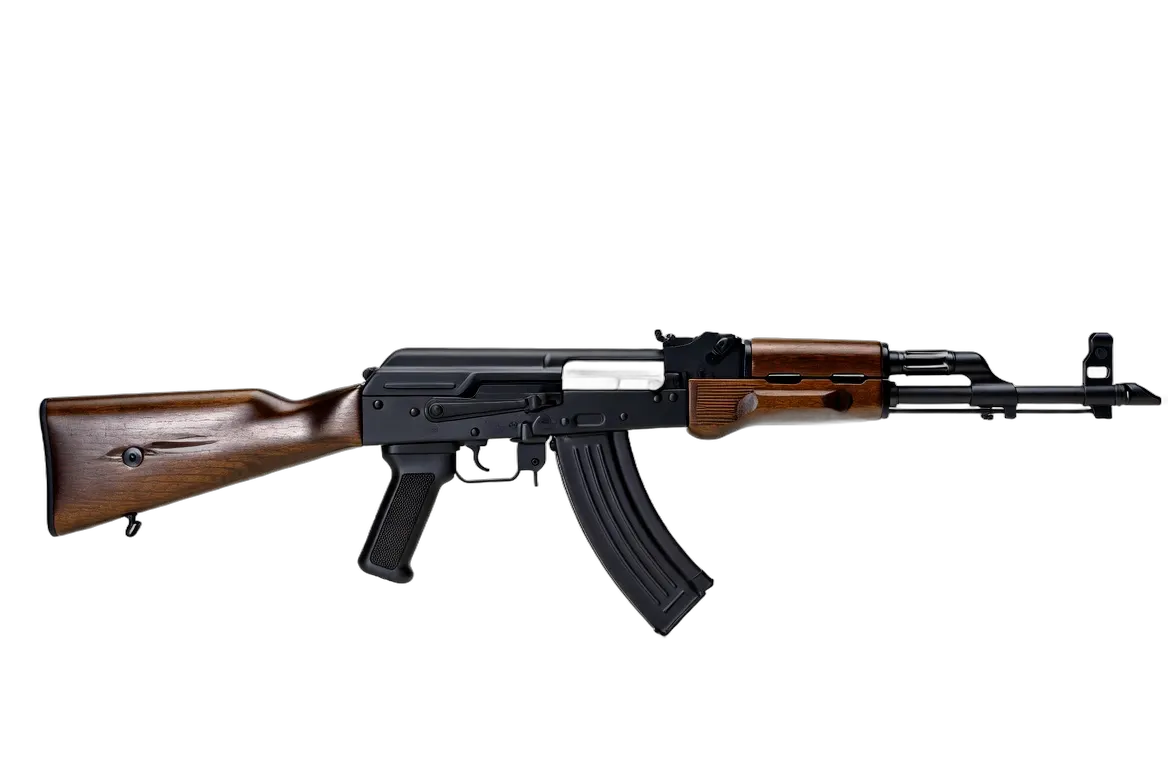 1956China
Chinese copy of the Soviet AK-47 produced from 1956 in over 10–15 million units: exported throughout the communist bloc and across Africa, Asia and the Middle East.
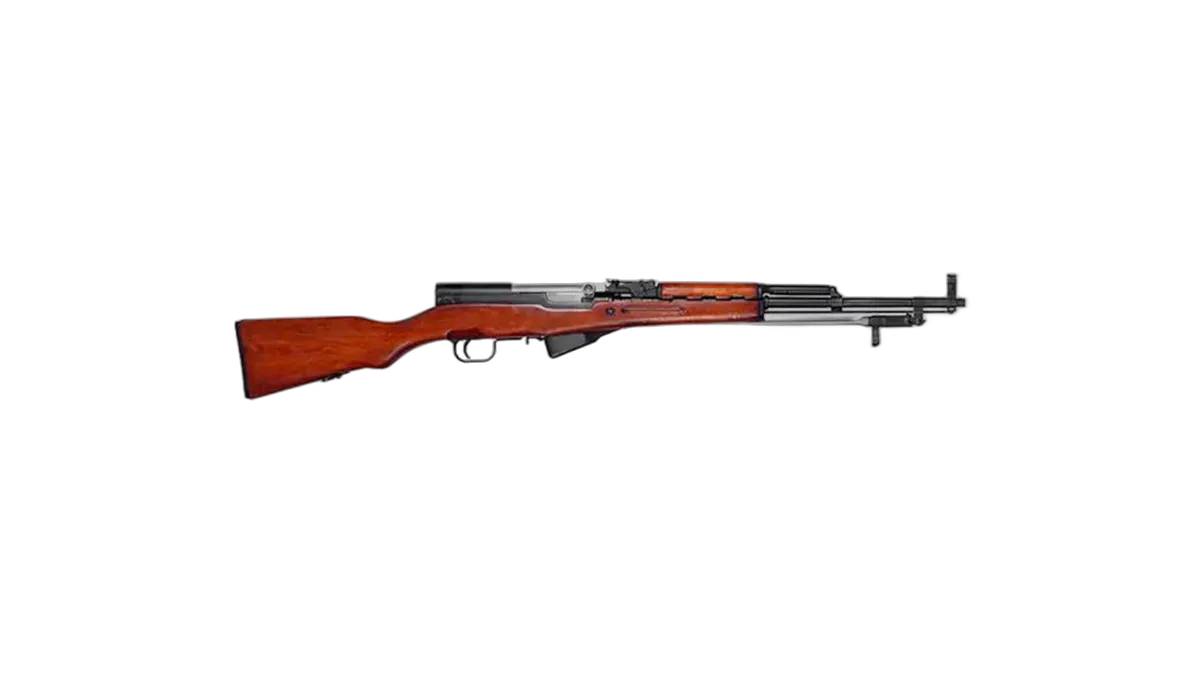 1956China
Chinese copy of the Soviet SKS: semi-automatic carbine in 7.62×39 mm with a fixed 10-round magazine and a folding spike or blade bayonet.
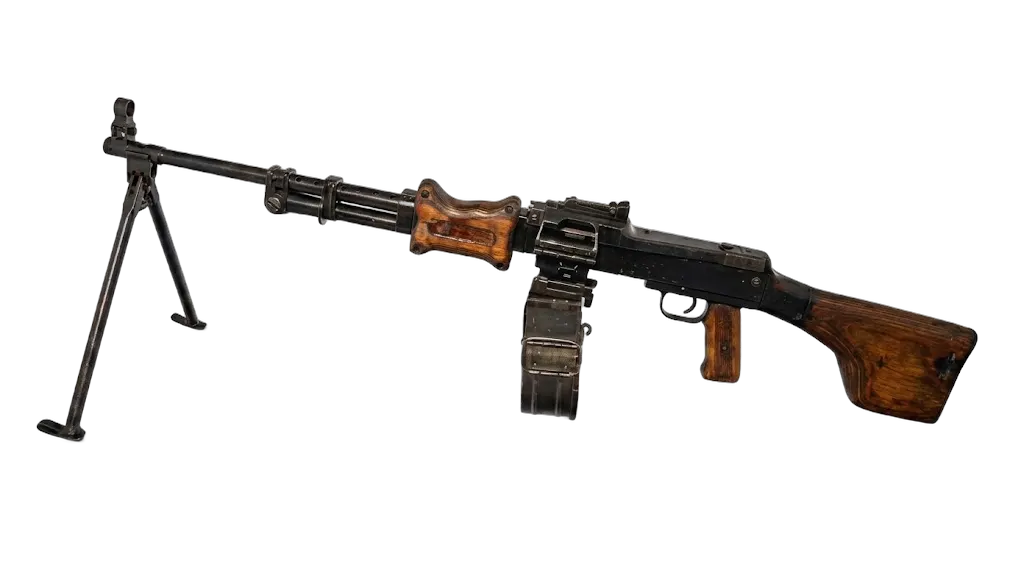 1956China
Squad light machine gun chambered in 7.62×39 mm, Chinese copy of the Soviet RPD, fed from a drum-housed belt and issued to the PLA from the 1950s to the 1980s.
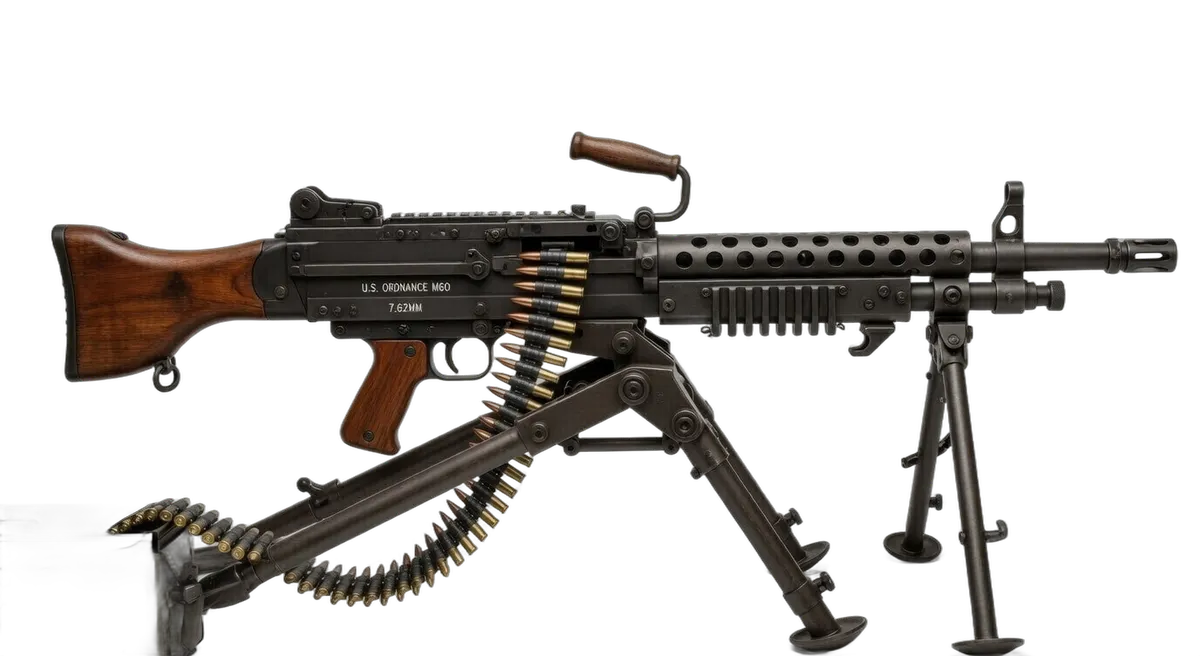 1957United States
7.62×51 NATO general-purpose machine gun, an icon of the Vietnam War; inspired by the German MG42 and FG42, fed by disintegrating belt.
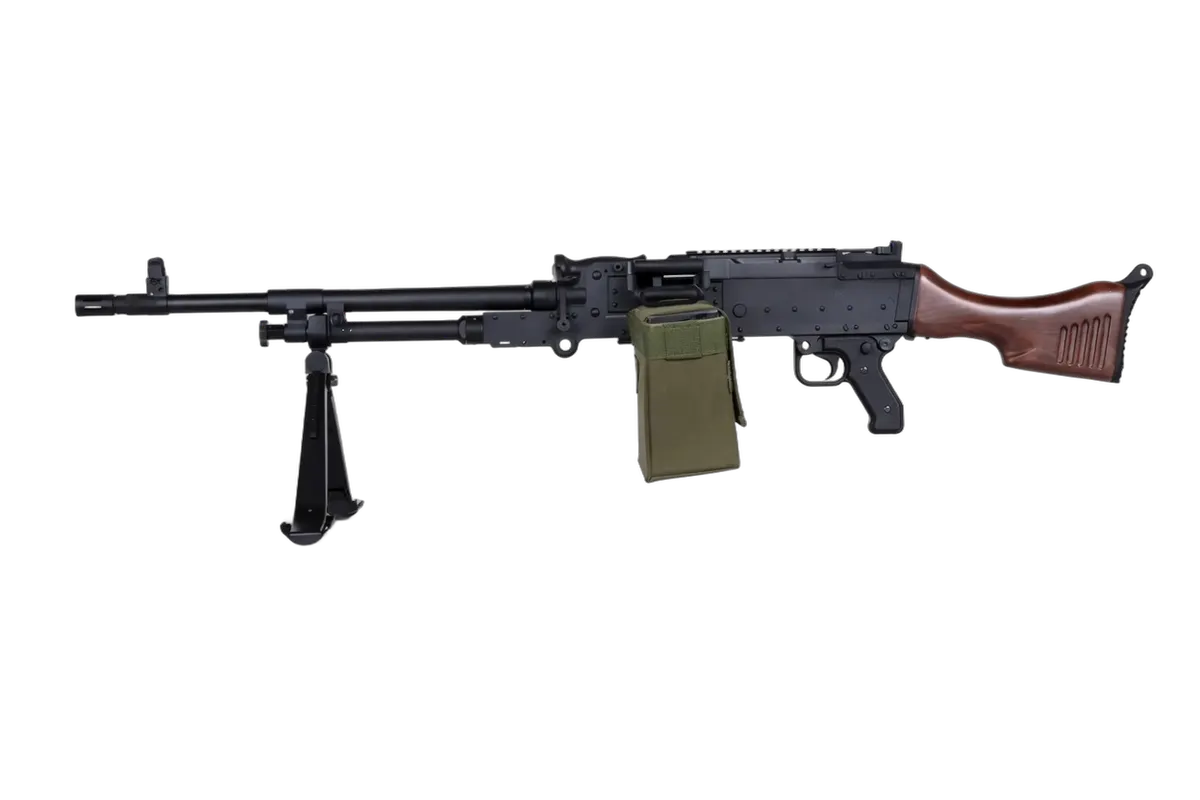 1957United Kingdom
British version of the Belgian FN MAG, a belt-fed 7.62×51 NATO general-purpose machine gun. "Gimpy" to British soldiers: backbone of fire support since 1957.
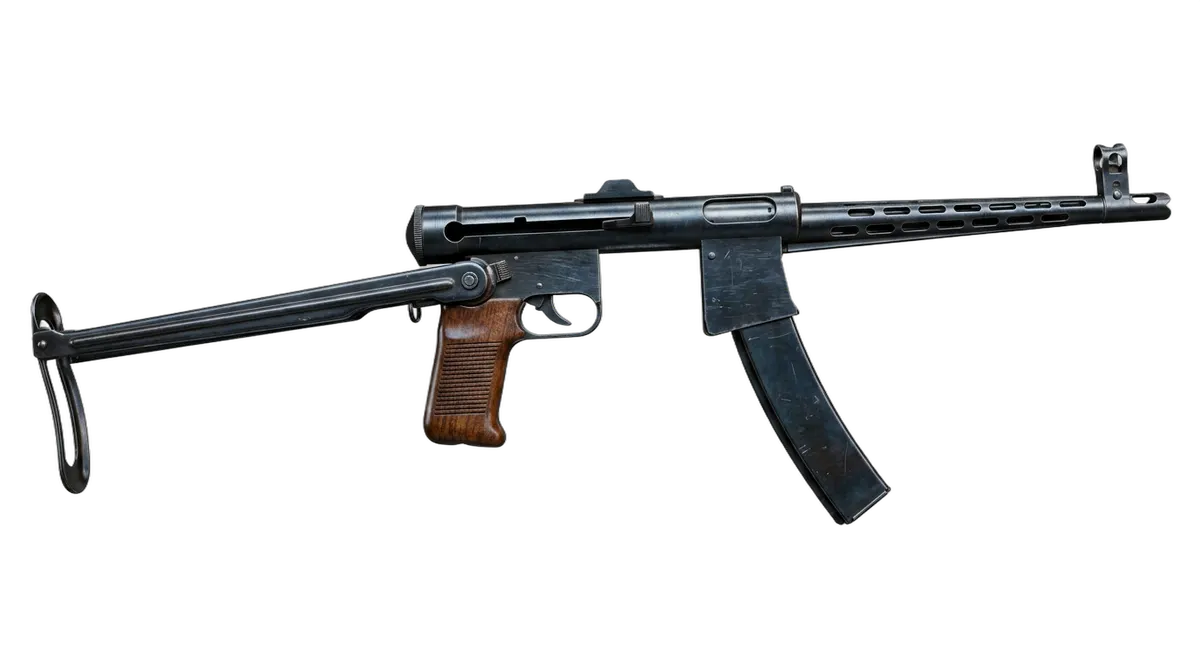 1957Poland
Polish prototype submachine gun in 7.62×25 mm Tokarev designed by Mieczysław Kucher in the 1950s, conceptually derived from the PPS-43 with a folding metal stock and wooden pistol grip.
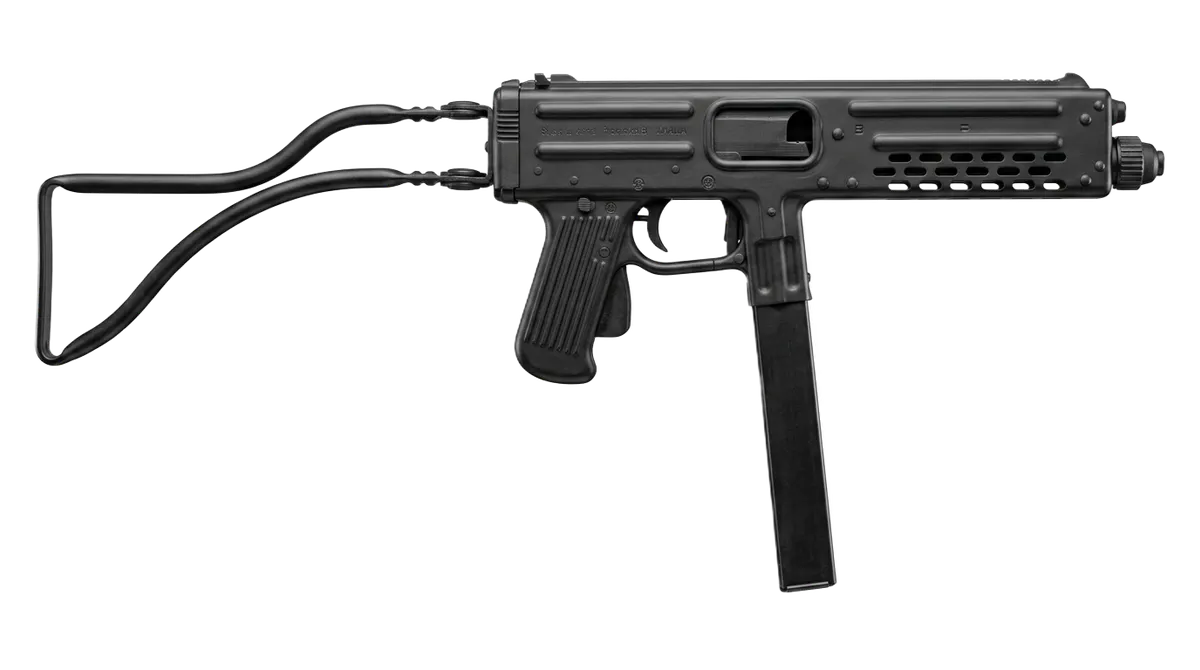 1957Italy
Italian 9×19 mm stamped-sheet submachine gun, compact, with a folding triangular metal stock.
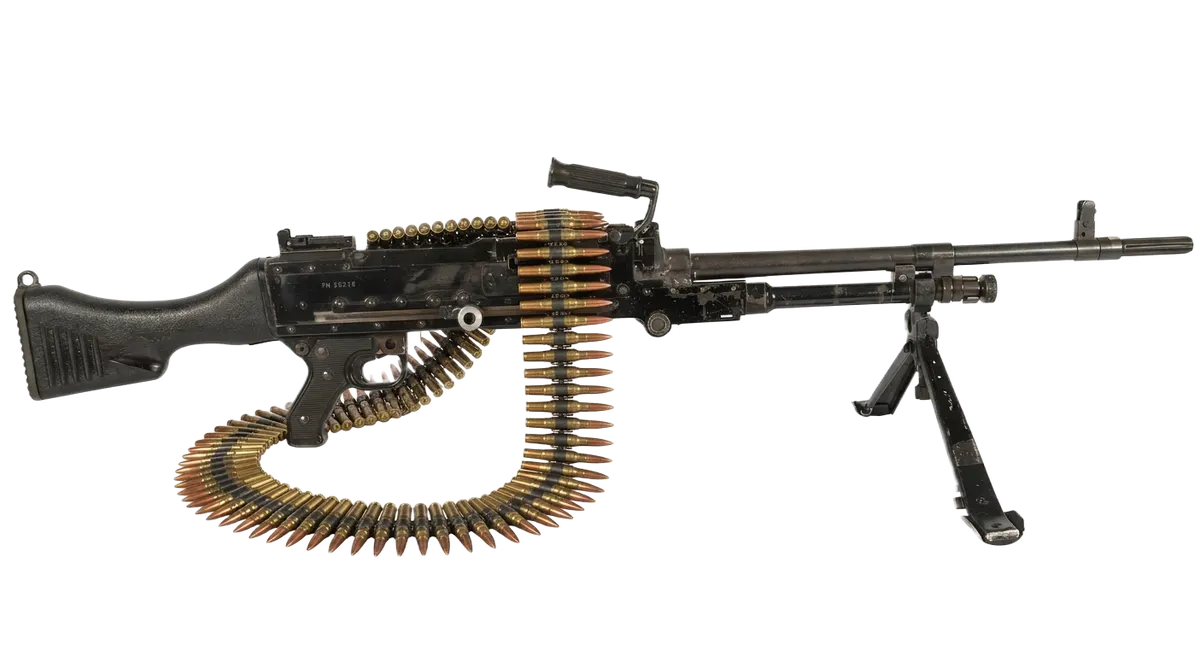 1958Belgium
Belgian 7.62×51 NATO general-purpose machine gun, belt-fed; one of the most widespread and cloned designs in the world, in service in over 80 countries as M240 (US), L7 (UK), and others.
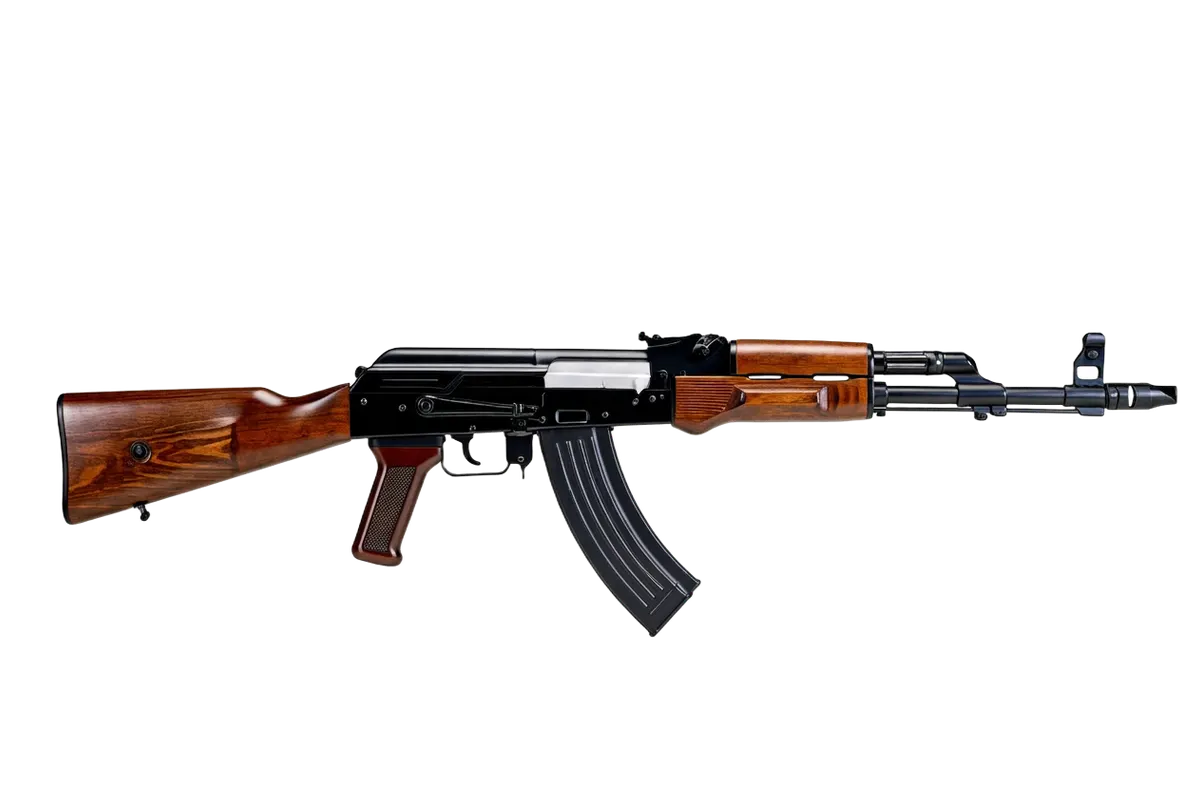 1959Russia
1959 modernization of the AK-47: stamped sheet-metal receiver, reduced weight and slanted muzzle compensator.
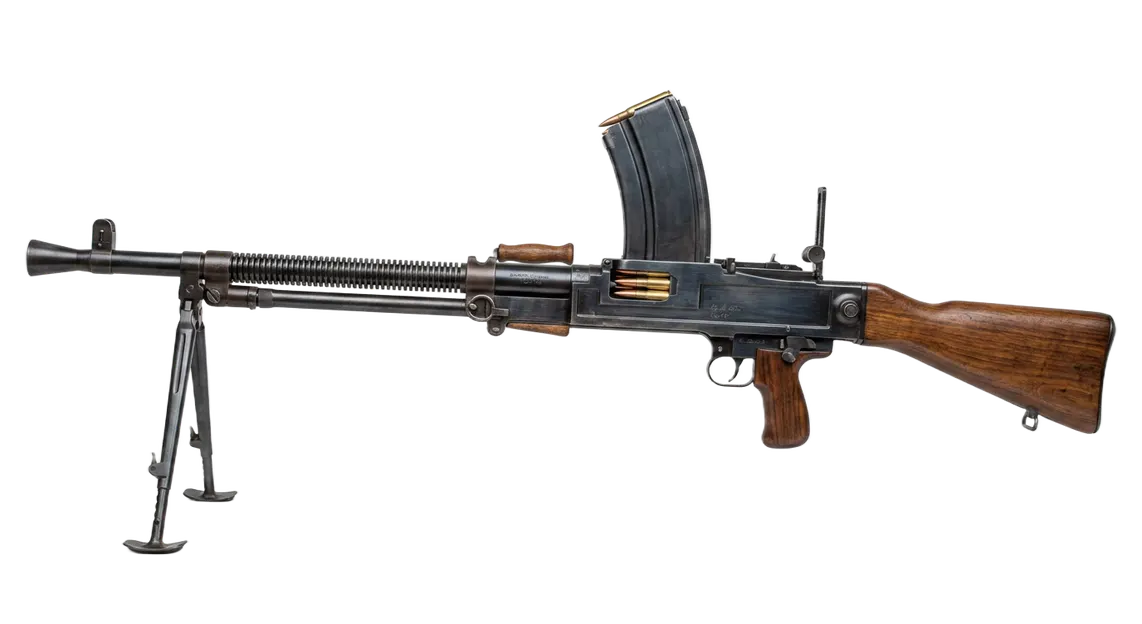 1959Czech Republic
Czechoslovak general-purpose machine gun chambered in 7.62×54R mm, belt-fed, in service from 1959 with the Czechoslovak People's Army.
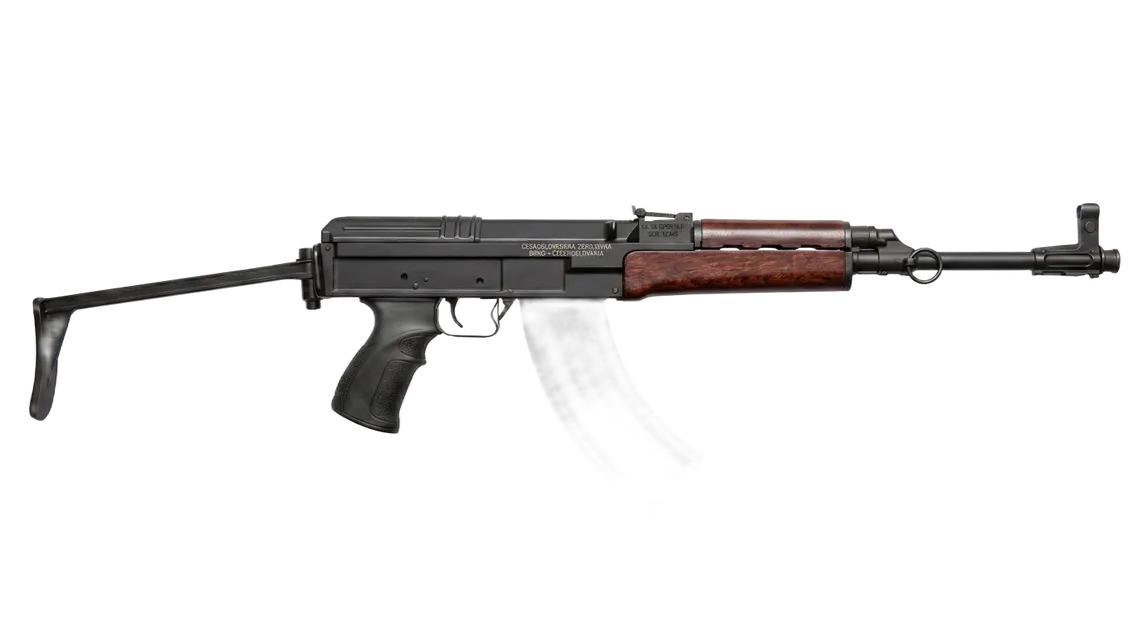 1959Czech Republic
Czechoslovak assault rifle chambered in 7.62×39 mm. Visually similar to the AK but mechanically entirely distinct: linearly tilting bolt and milled receiver. Standard rifle of the Czechoslovak Army from 1959.
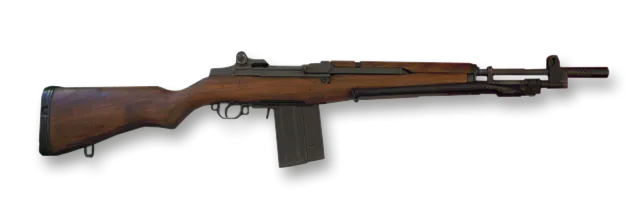 1959Italy
Italian 7.62×51 NATO battle rifle derived from the M1 Garand; standard service rifle of the Italian Army from 1959 until the 1990s.
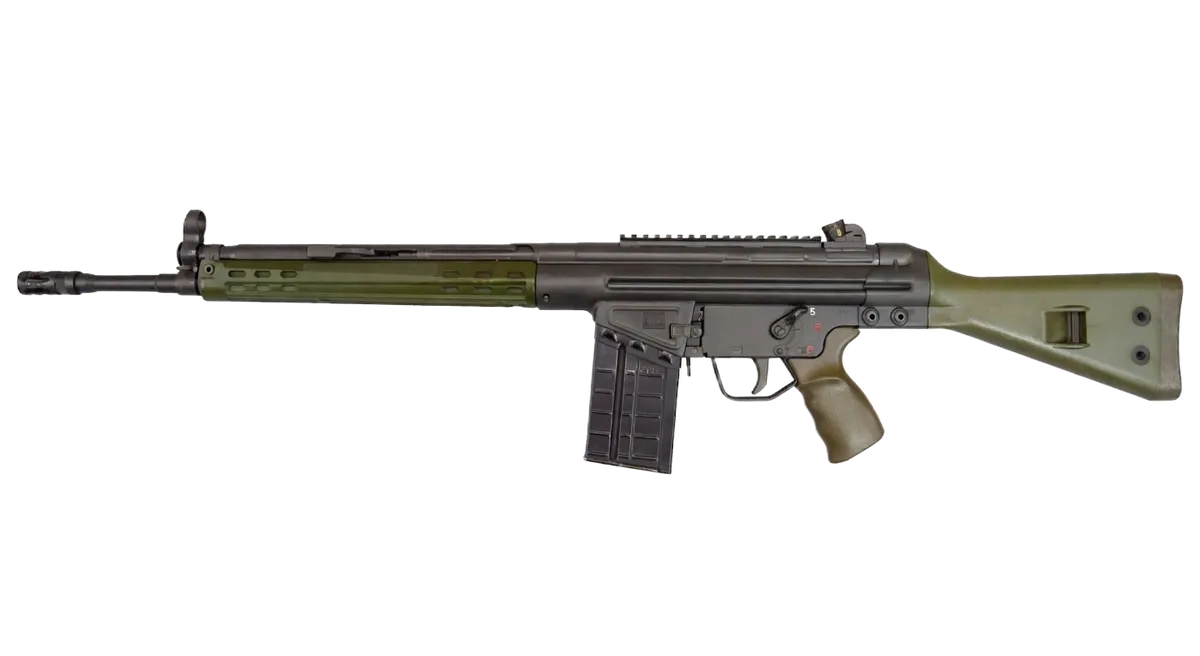 1959Germany
German 7.62×51 NATO battle rifle with roller-delayed blowback action; Bundeswehr standard issue for 38 years (1959–1997) and used by over 60 countries.
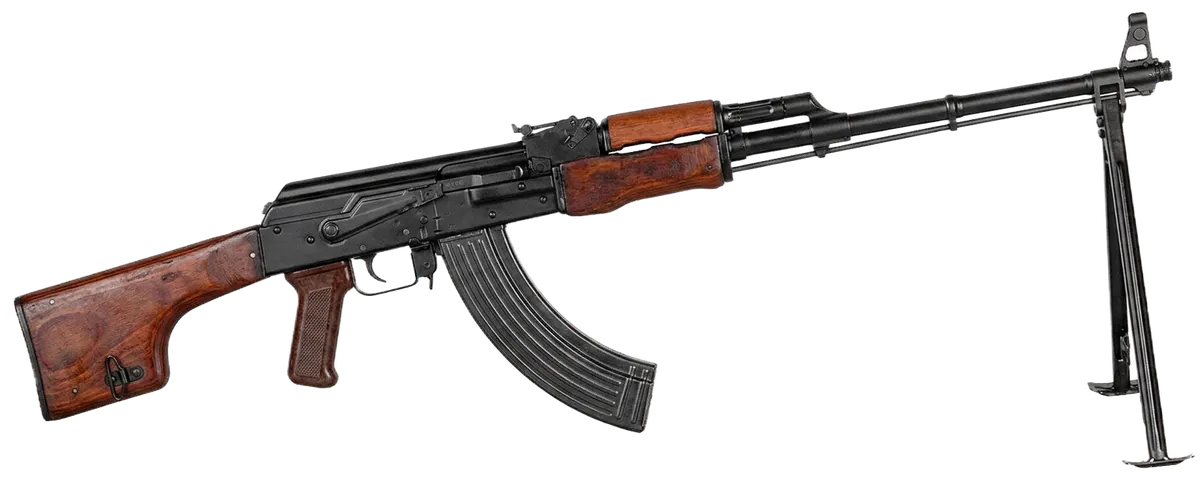 1961Russia
Squad light machine gun derived from the AKM: longer heavy barrel, folding bipod, high-capacity magazines.
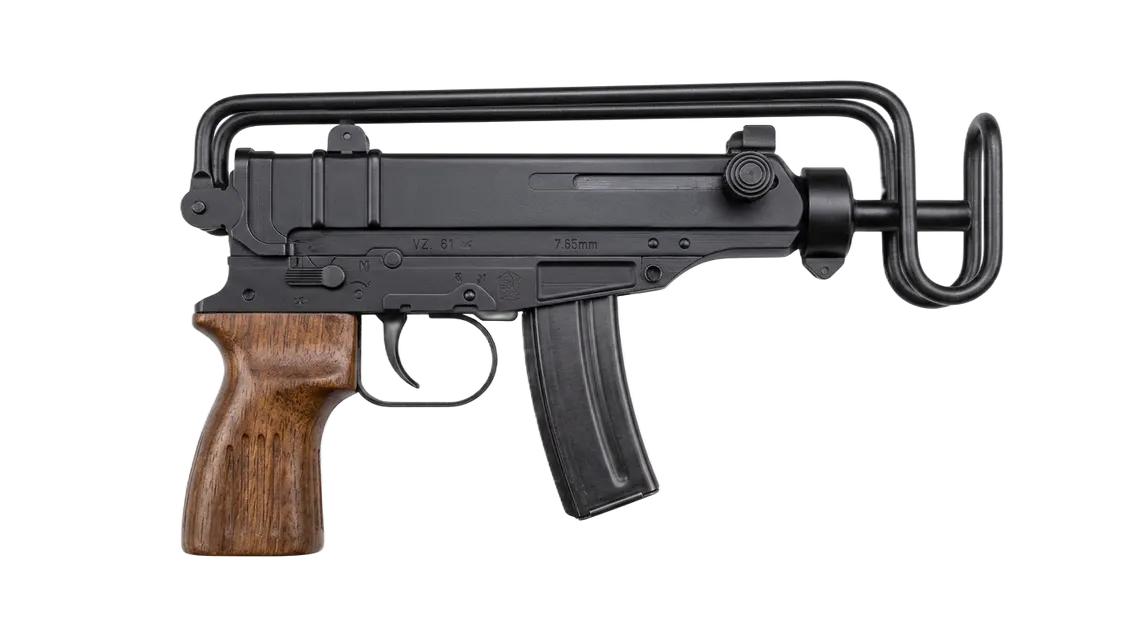 1961Czech Republic
Compact Czechoslovak submachine gun chambered in 7.65×17 mm Browning (.32 ACP), with metal stock folding over the receiver. Widely used by special forces and terrorist groups in the 1970s–80s.
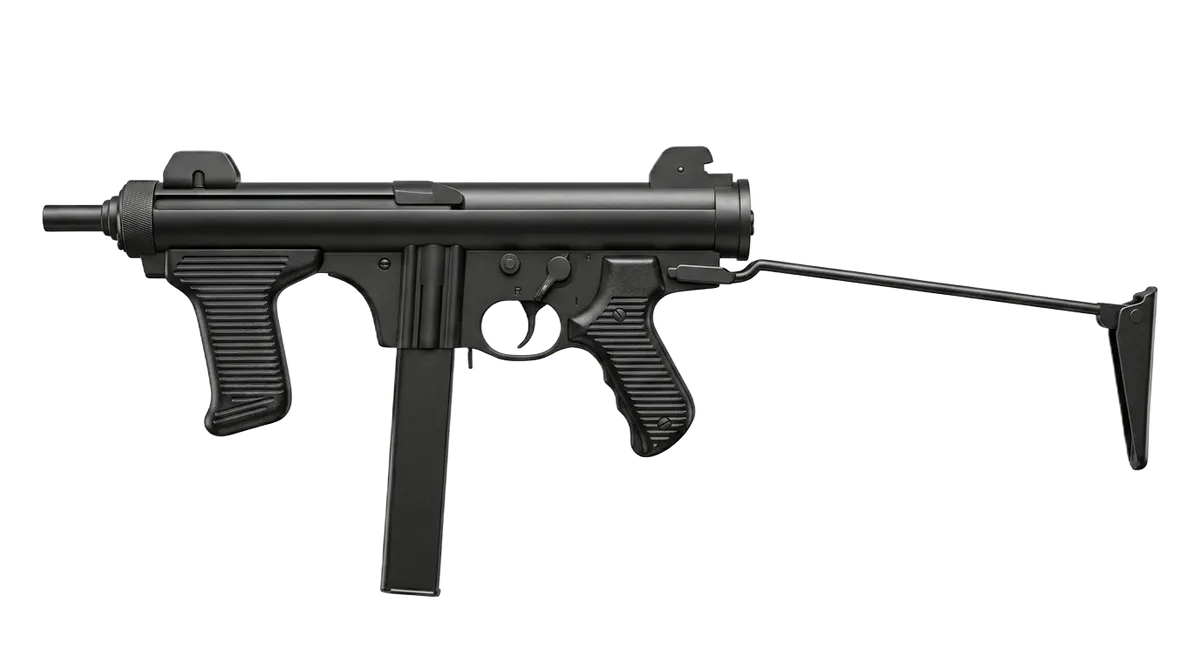 1961Italy
Italian 9×19 mm submachine gun with telescoping bolt, folding metal stock and dual vertical grips.
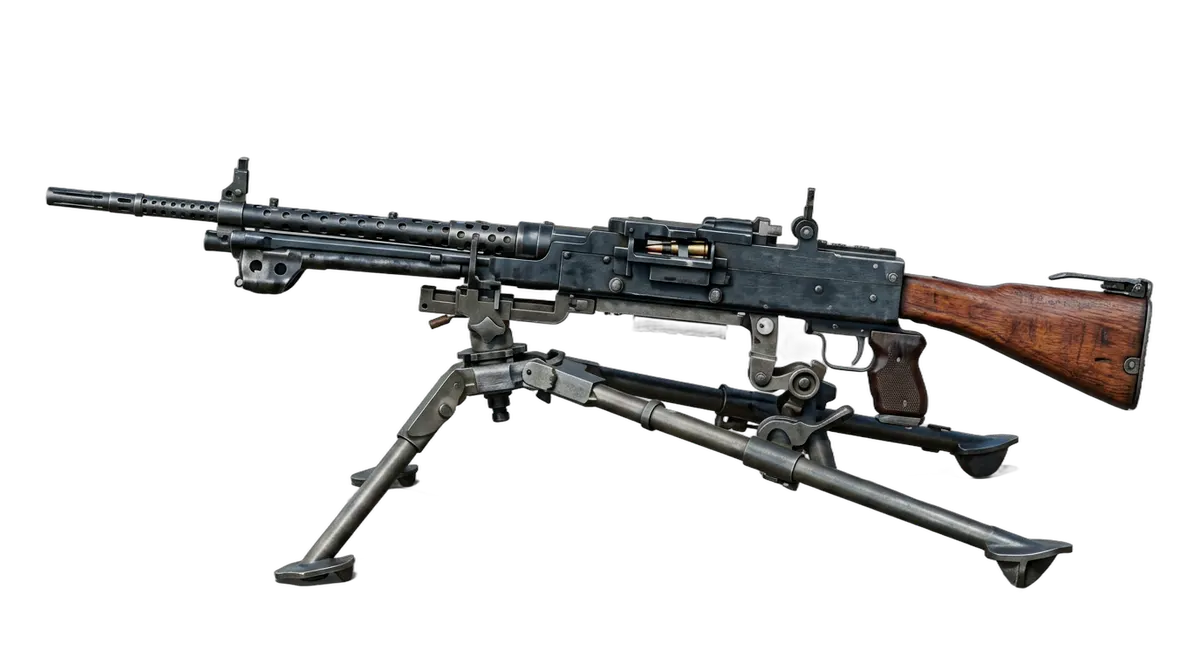 1962Japan
Japanese 7.62×51 mm NATO machine gun with wooden stock and integral bipod, developed as a lightweight squad automatic weapon for the JSDF in the early postwar era.
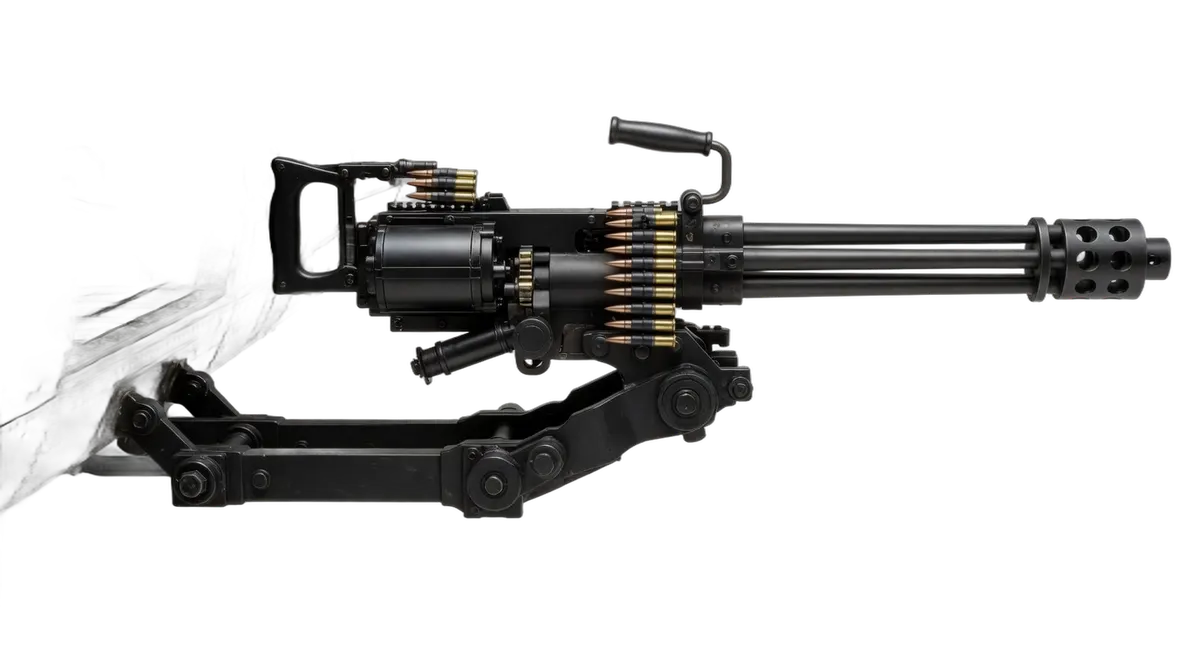 1963United States
Six-barrel rotary Gatling-type 7.62×51 NATO machine gun, externally driven by an electric motor: rates of 2,000-6,000 rpm for airborne and vehicular use.
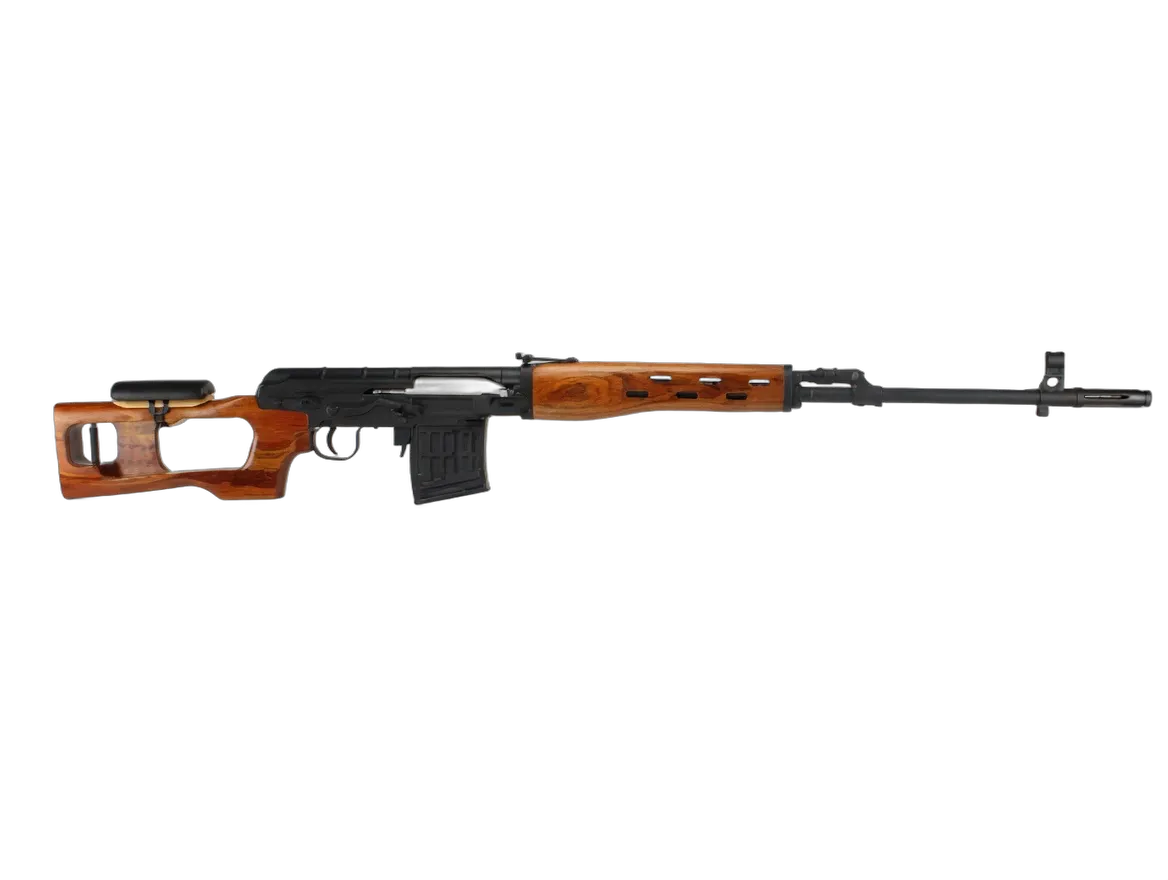 1963Russia
Soviet semi-automatic designated marksman rifle in 7.62×54R: designed to extend the infantry squad's effective range beyond 600 m with a fast, rugged weapon.
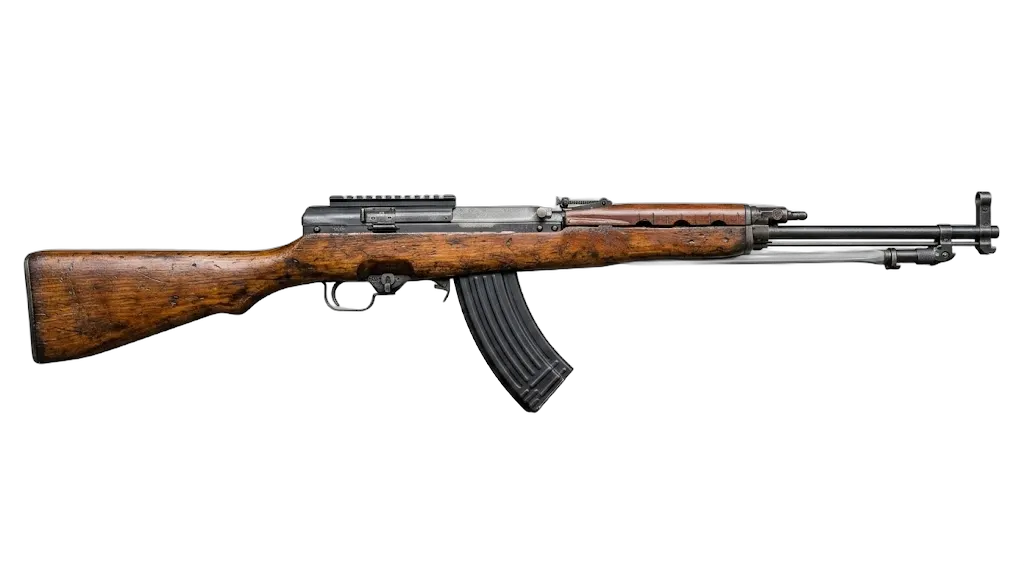 1963China
Chinese hybrid rifle combining the ergonomics of the SKS with the gas-operated mechanism and detachable magazine of the AK, chambered in 7.62×39 mm. Designed to merge semi-automatic accuracy with automatic firepower.
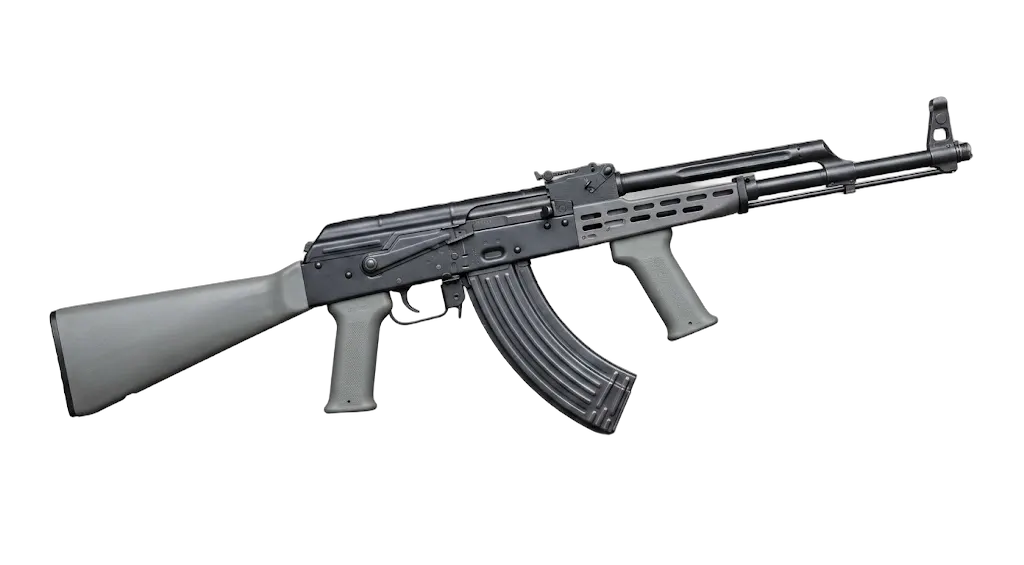 1963Hungary
Hungarian AKM variant in 7.62×39 mm with an auxiliary forward grip under the handguard and grey plastic stock, issued to the Hungarian People's Army from the 1960s.
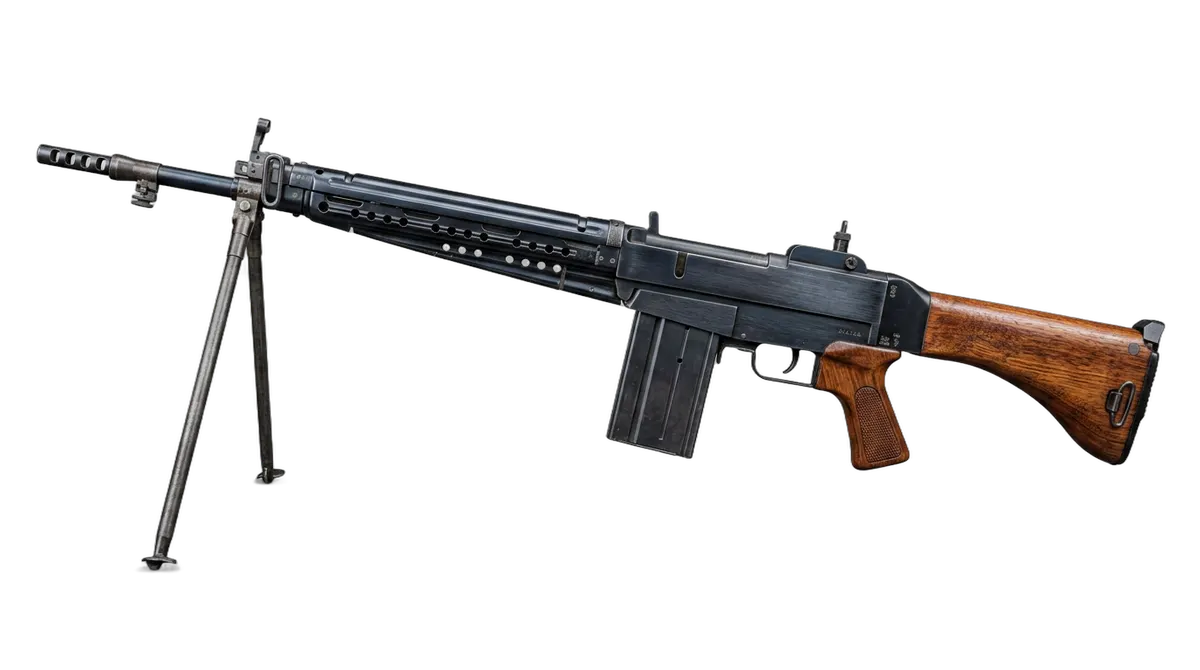 1964Japan
Japanese battle rifle in 7.62×51 NATO with reduced load, designed for the build of JSDF soldiers. Selective fire, integral bipod and adjustable gas regulator for full-power cartridges.
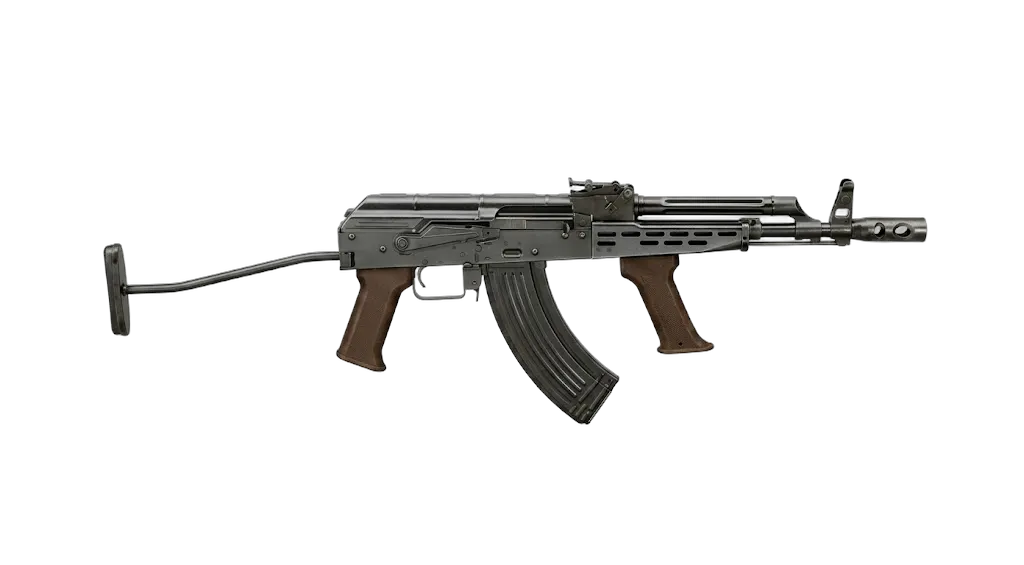 1965Hungary
Hungarian shortened AKM variant in 7.62×39 mm, identifiable by its short barrel with muzzle brake, auxiliary front grip and side-folding metal stock.
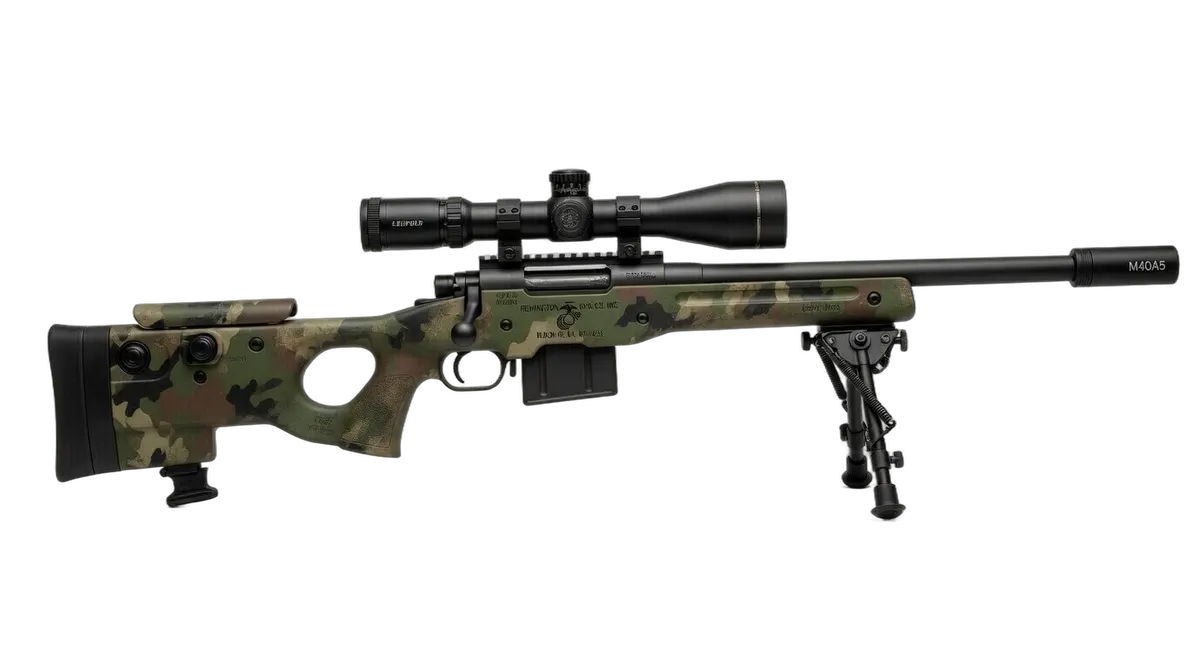 1966United States
U.S. Marine Corps bolt-action rifle based on the Remington 700 short action: in service through successive versions (M40A1/A3/A5/A6) from Vietnam to today.
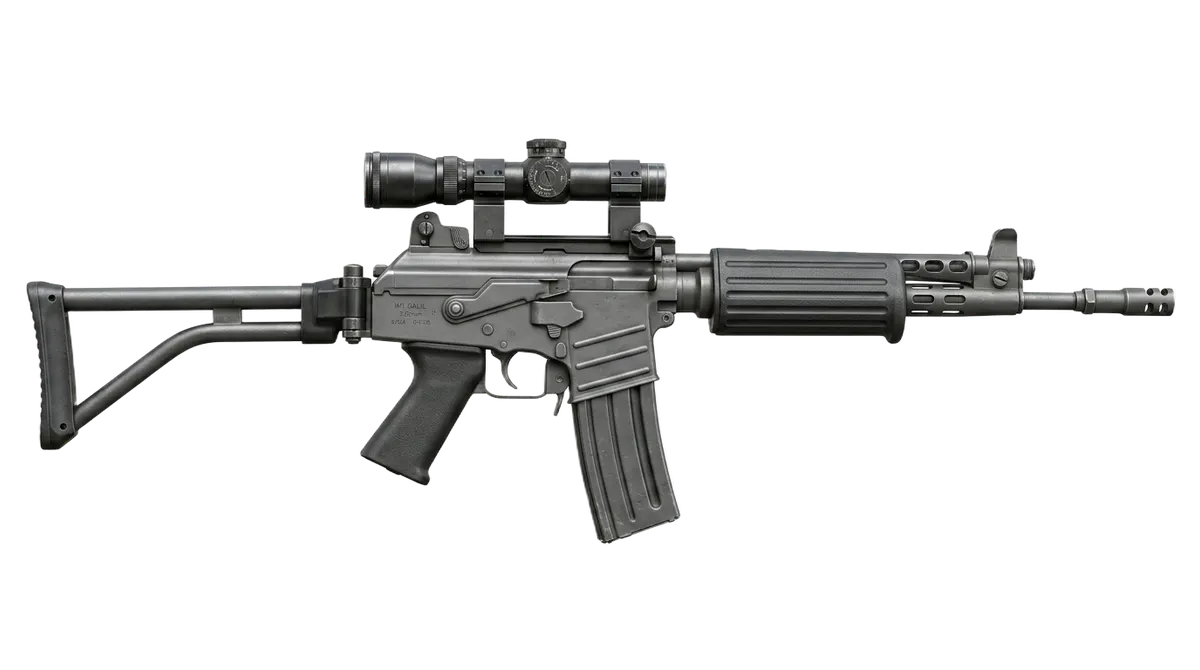 1966Belgium
FN's first 5.56×45 mm assault rifle — a commercially unsuccessful precursor to the later FNC but the technical forerunner of FN's modern line.
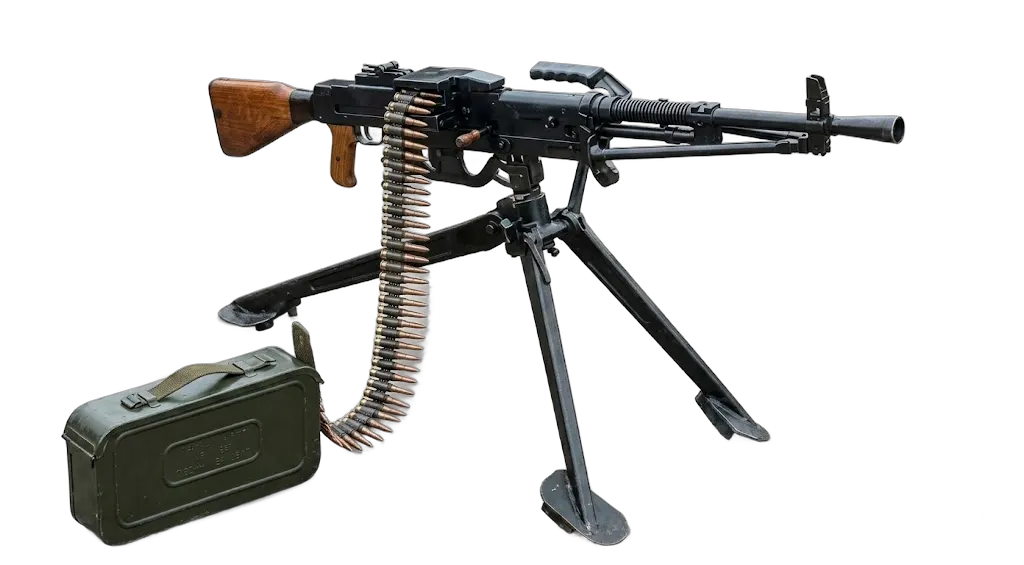 1967China
Chinese general-purpose machine gun in 7.62×54R, designed by combining features from the RPD, SG-43, DPM and Maxim to provide a light, reliable squad/platoon weapon.
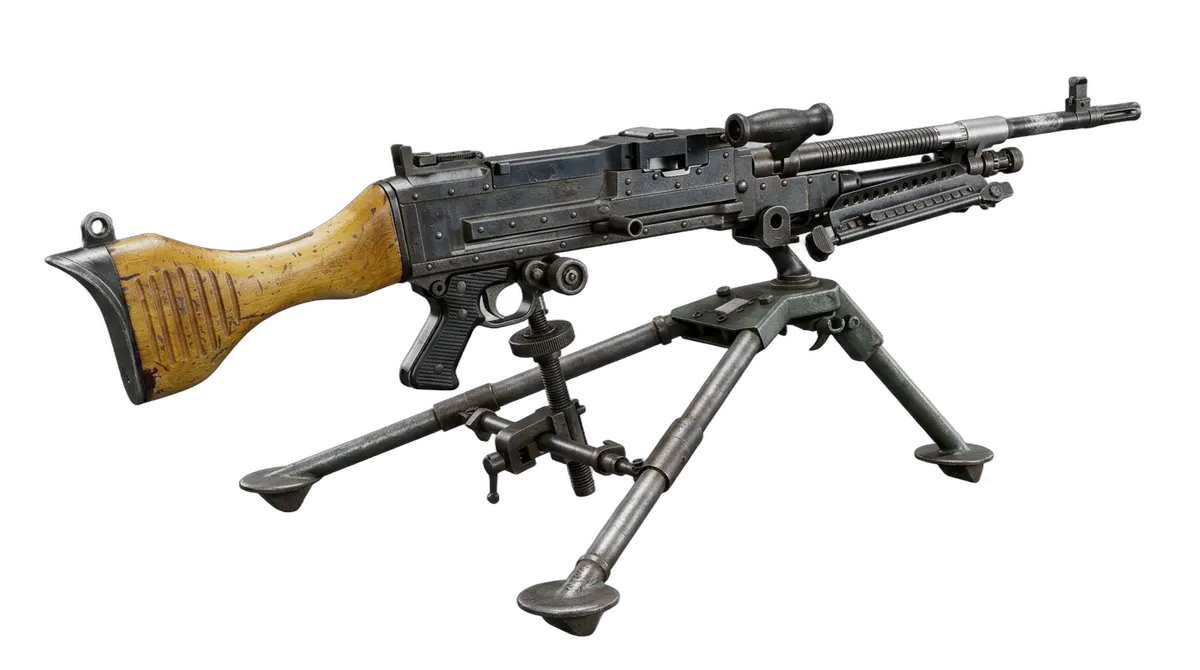 1967Japan
Japanese 7.62×51 mm NATO medium machine gun on tripod, conceived as a general-purpose support weapon for mounted, vehicular and sustained-fire roles.
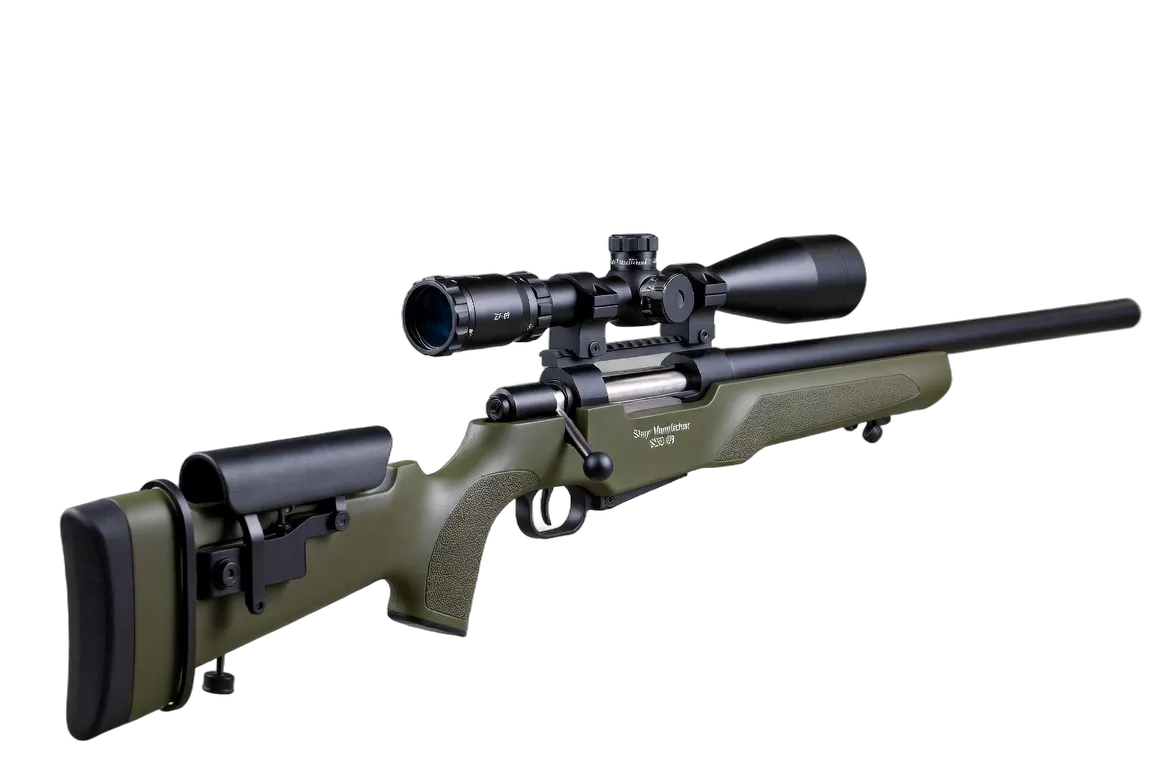 1969Austria
Bolt-action sniper rifle adopted in 1969 by the Austrian Federal Army: rear-locking lug action, synthetic stock and 5-round rotary magazine in .308 Winchester.
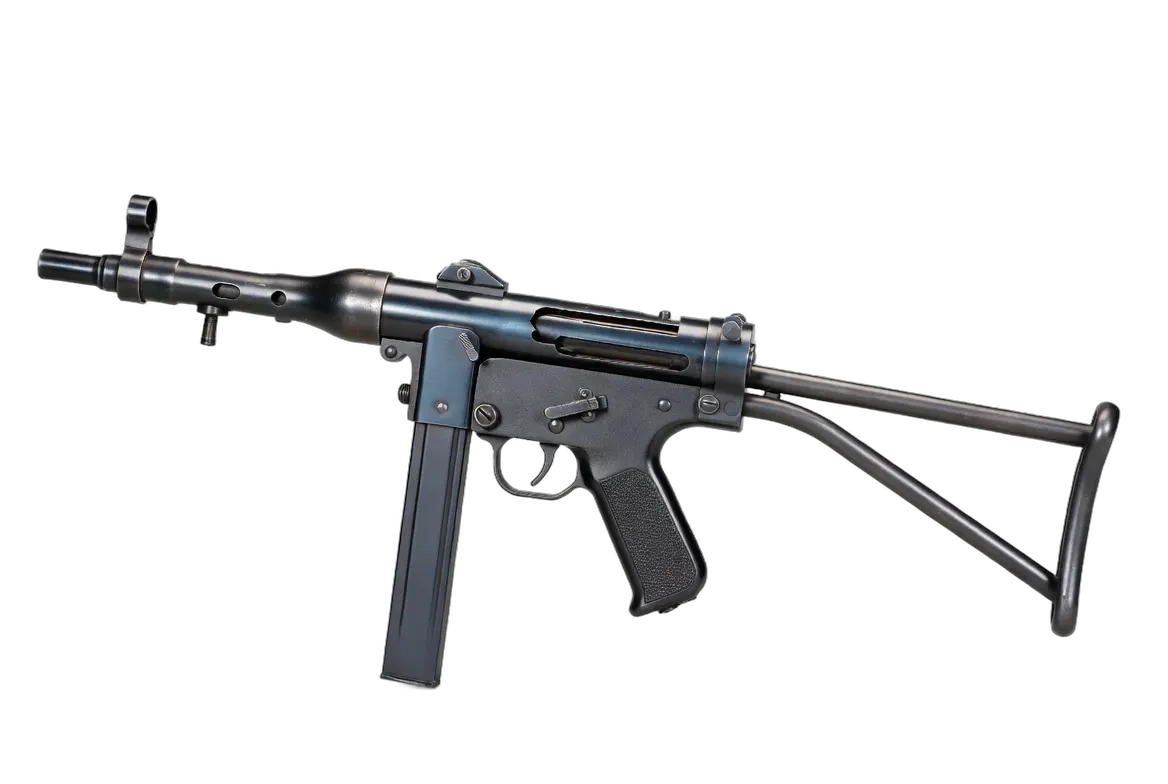 1969Austria
Austrian 9×19 mm submachine gun with tubular receiver, telescopic bolt and magazine housed in the pistol grip: standard Bundesheer issue from 1969.
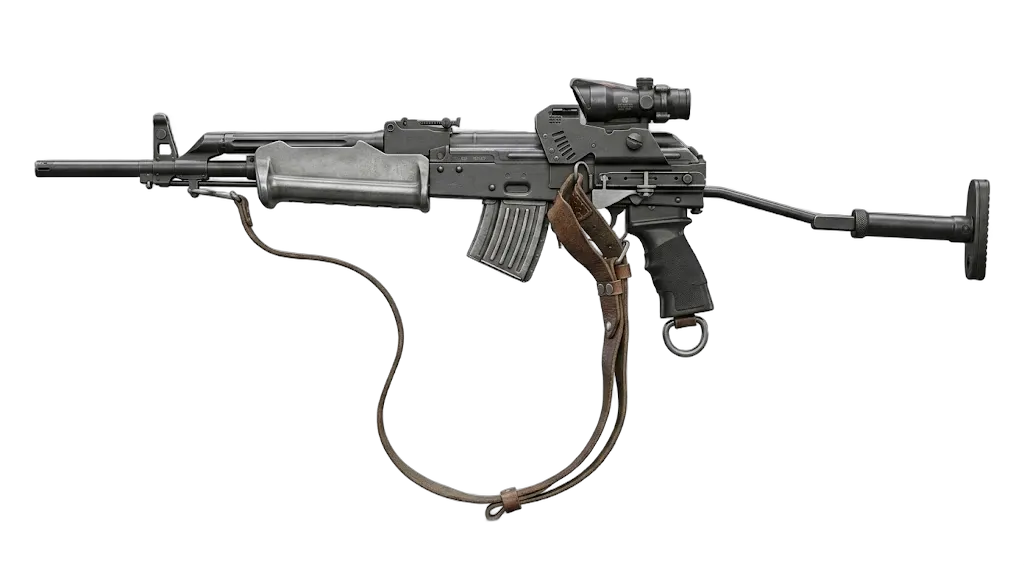 1969Hungary
Hungarian AKM variant specialised in launching rifle grenades in 7.62×39 mm, with a folding wire stock and a barrel adapted for indirect-fire accessories.
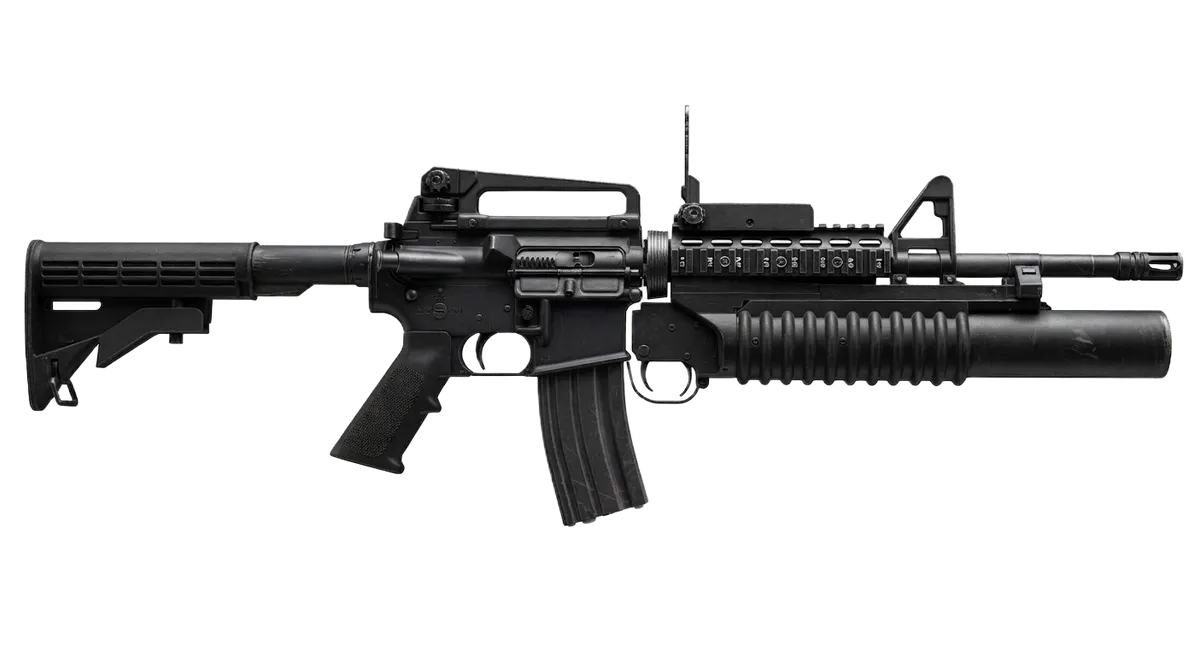 1969United States
Single-shot 40×46 mm SR grenade launcher, mounted under M16/M4 rifles; sliding-forward barrel for loading (pump-action style). NATO standard for over 50 years.
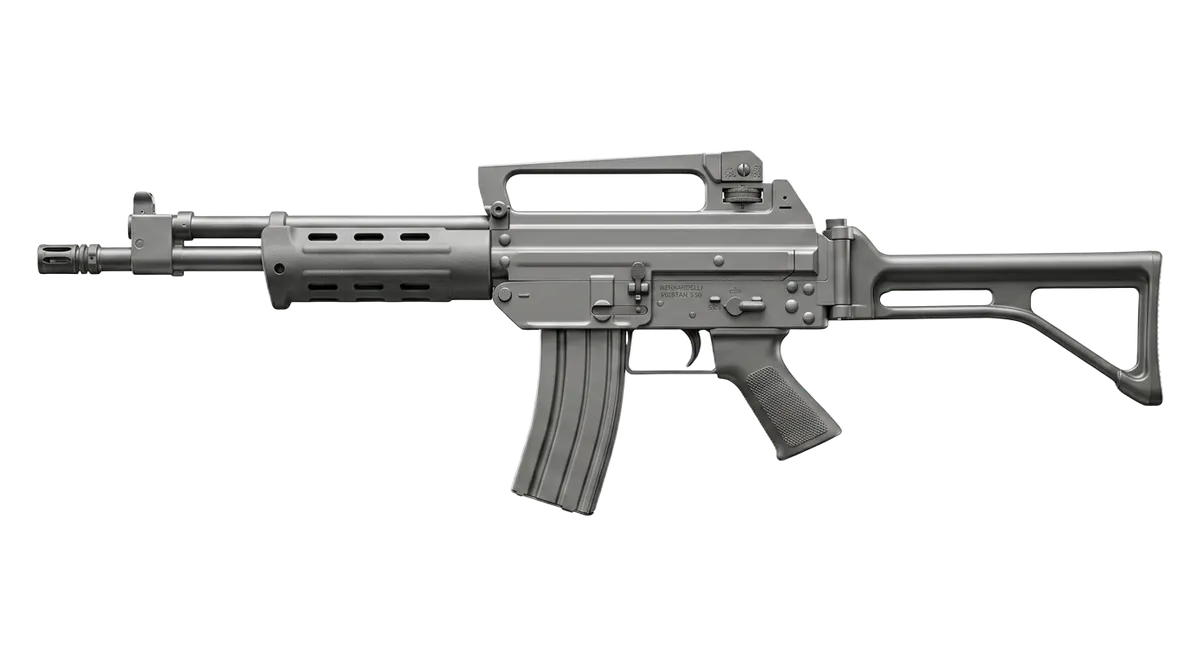 1972Italy
Italian 5.56×45 mm assault rifle, first generation of the AR70 family developed jointly by Beretta and SIG on a shared platform.
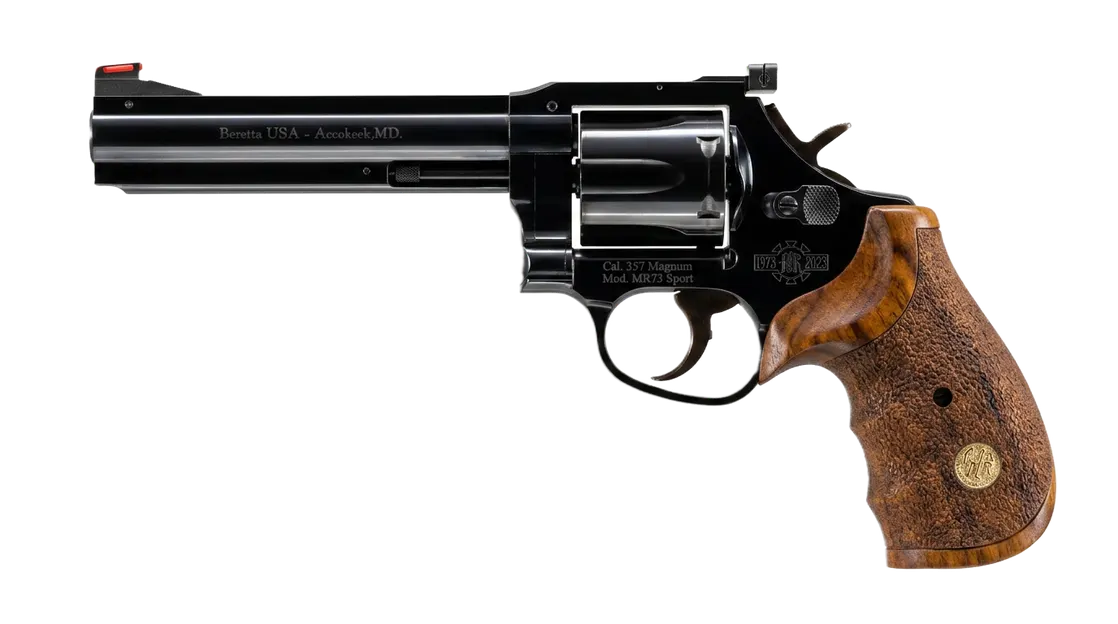 1973France
French .357 Magnum revolver considered one of the finest in the world for build quality, adopted by GIGN, RAID and Gendarmerie for over 50 years.
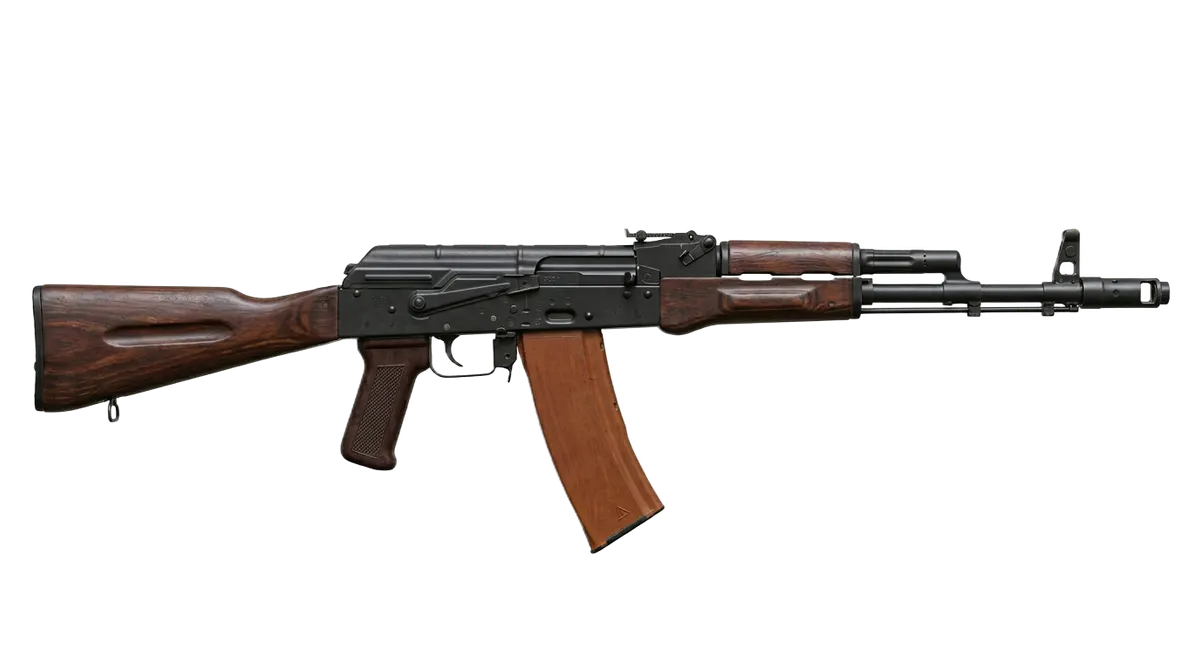 1974Russia
Evolution of the AKM in 5.45×39 mm: reduced recoil, greater accuracy, distinctive muzzle brake.
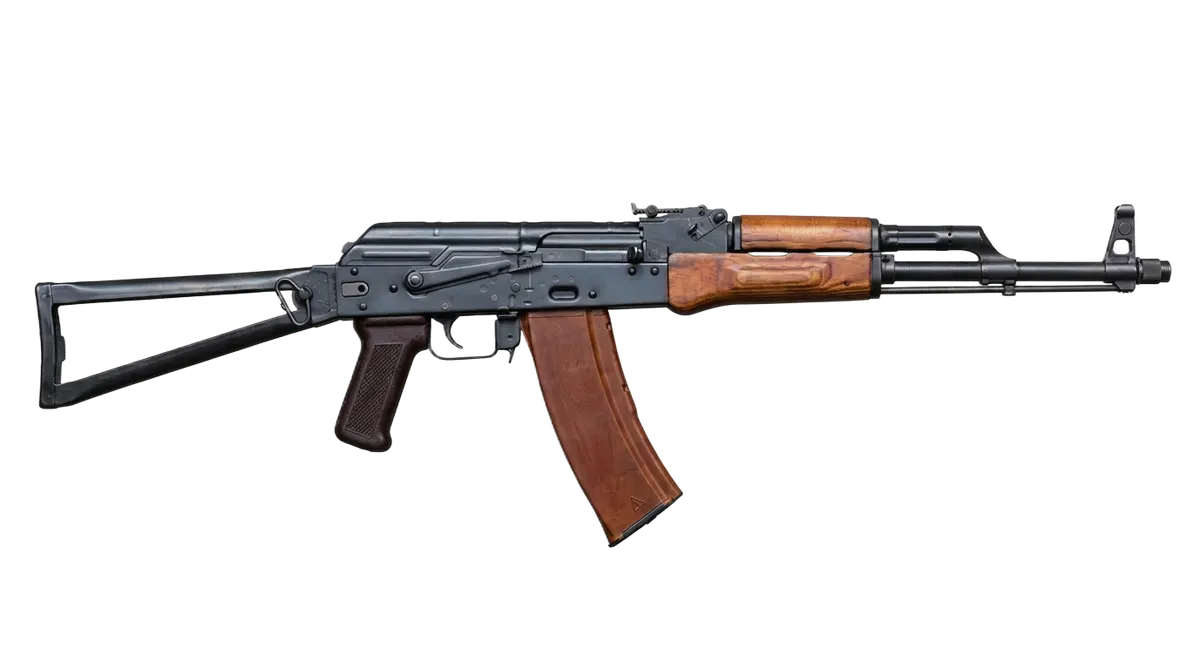 1974Russia
AK-74 variant with a tubular metal side-folding stock, developed for VDV airborne troops and armored vehicle crews.
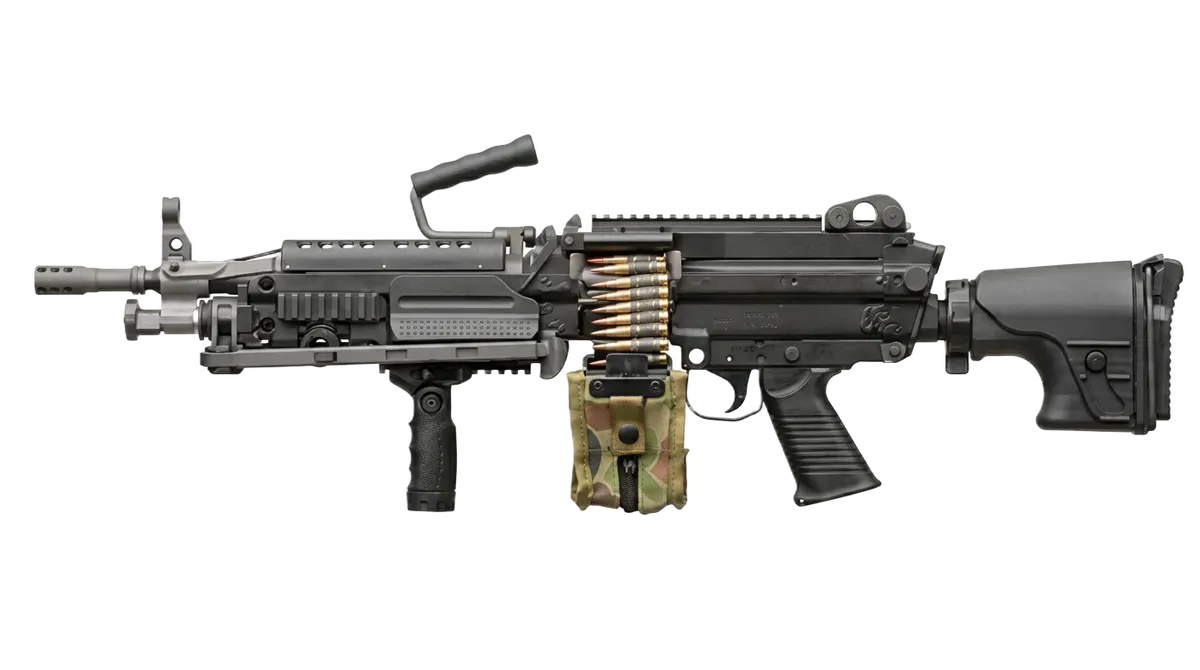 1974Belgium
5.56×45 mm NATO squad automatic weapon, belt- or magazine-fed, the de facto NATO standard for over four decades.
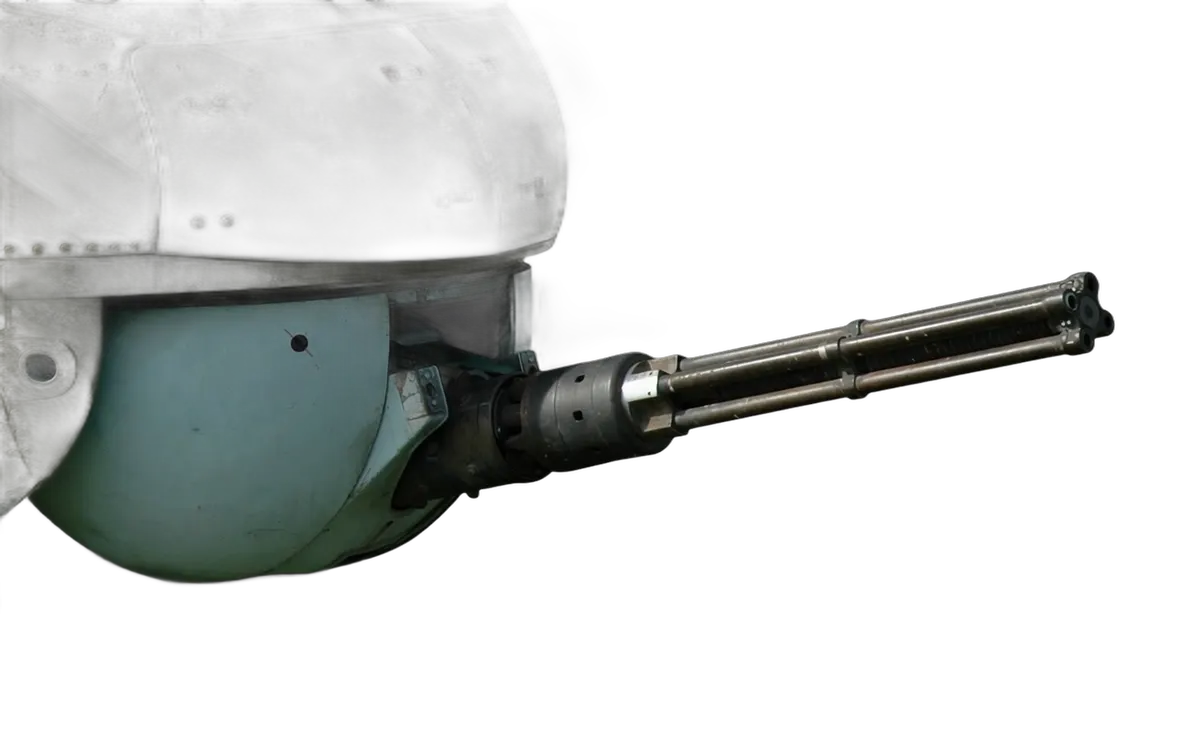 1975Russia
Four-barrel heavy aircraft Gatling-type machine gun in 12.7×108 mm, designed by Yakushev and Borzov for the USPU-24 remote turret of the Mi-24.
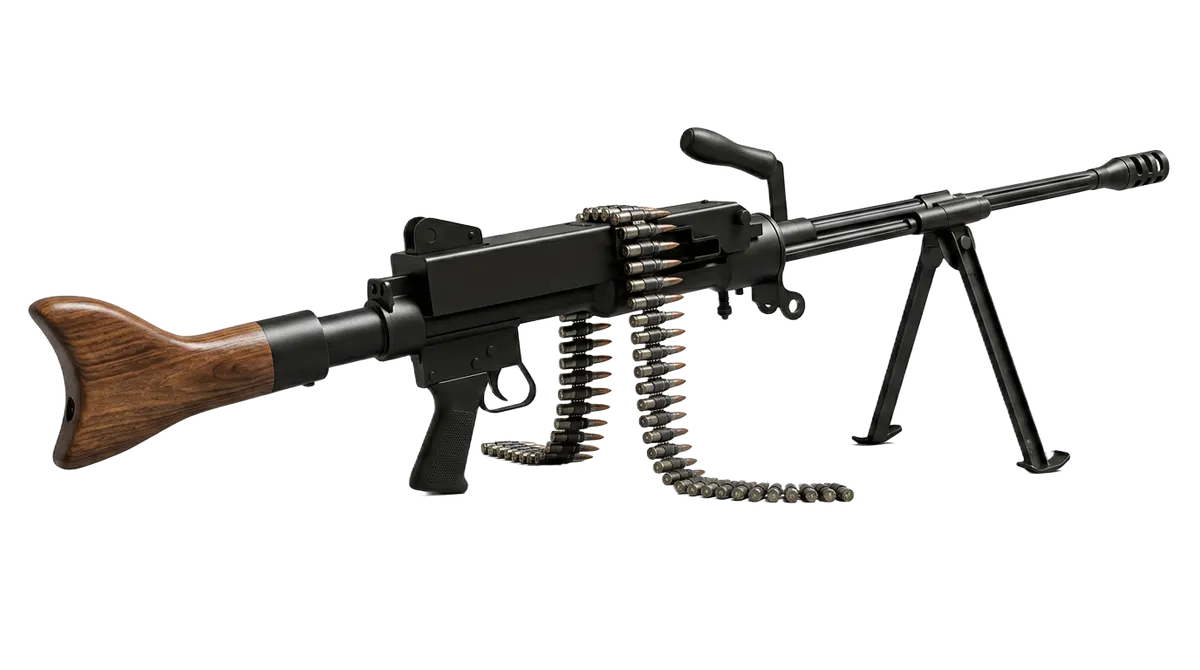 1975Brazil
First fully Brazilian medium machine gun, in 7.62×51 NATO, developed in the 1970s by Mekanika of Rio de Janeiro for the Brazilian Army.
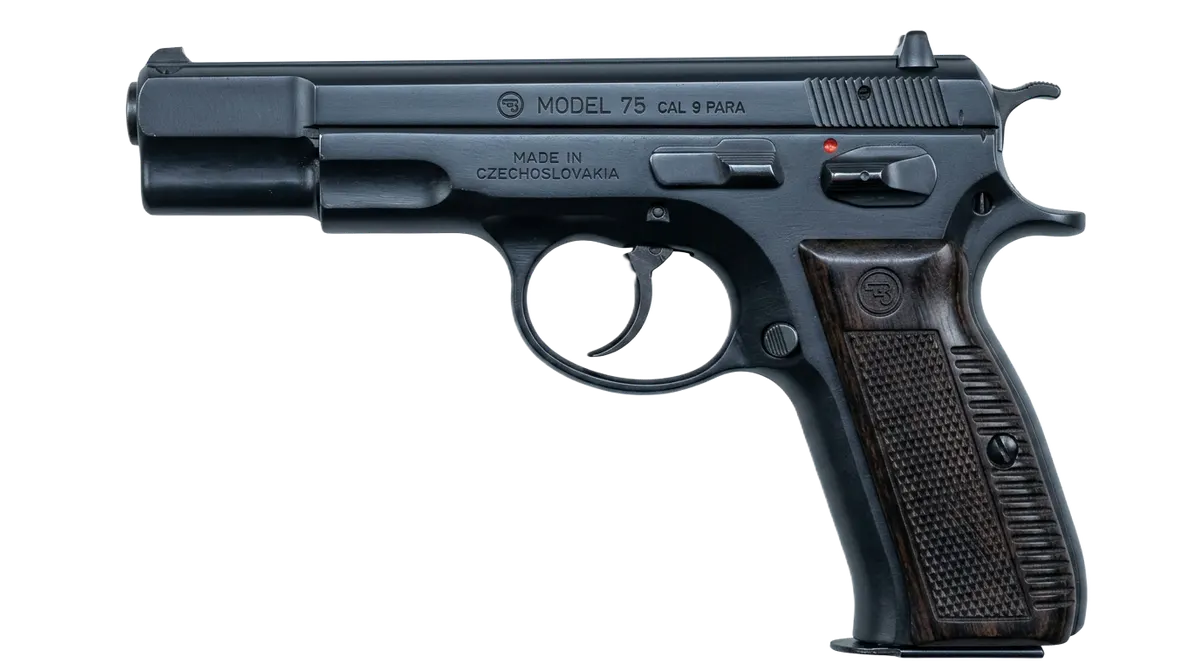 1975Czech Republic
Czechoslovak 9×19 Parabellum short-recoil semi-auto pistol with slide rails inside the frame, DA/SA trigger and 15–16-round double-stack magazine; one of the most cloned designs in the world.
Polymers, bullpups and integrated optics: the infantry rifle becomes lighter, modular and more ergonomic.
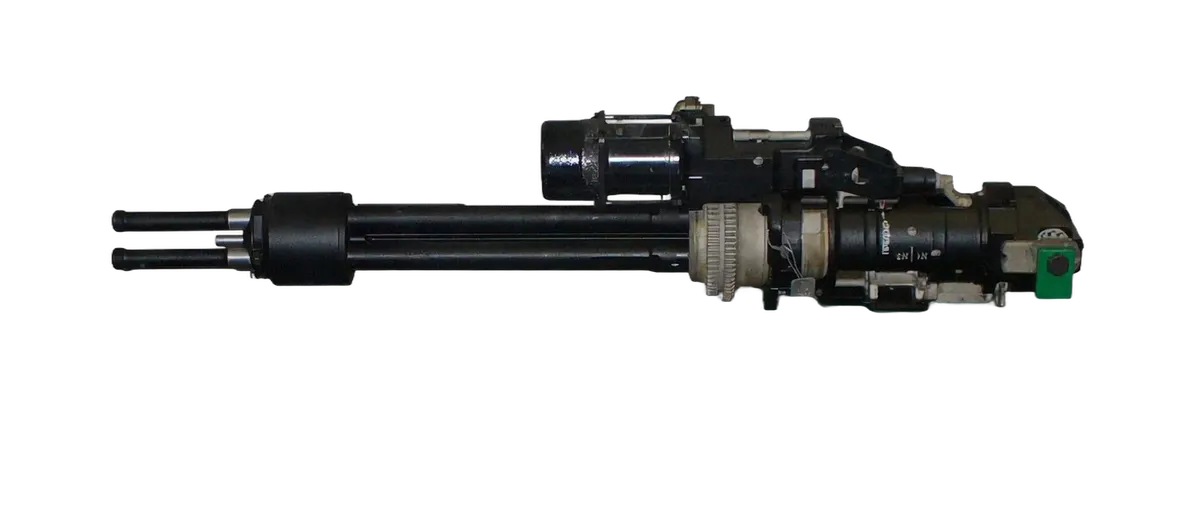 1976Russia
Four-barrel Gatling-type aircraft machine gun in 7.62×54R designed by Gryazev and Shipunov, mounted on Mi-24 and Ka-29 helicopters with a rate of fire up to 6000 rpm.
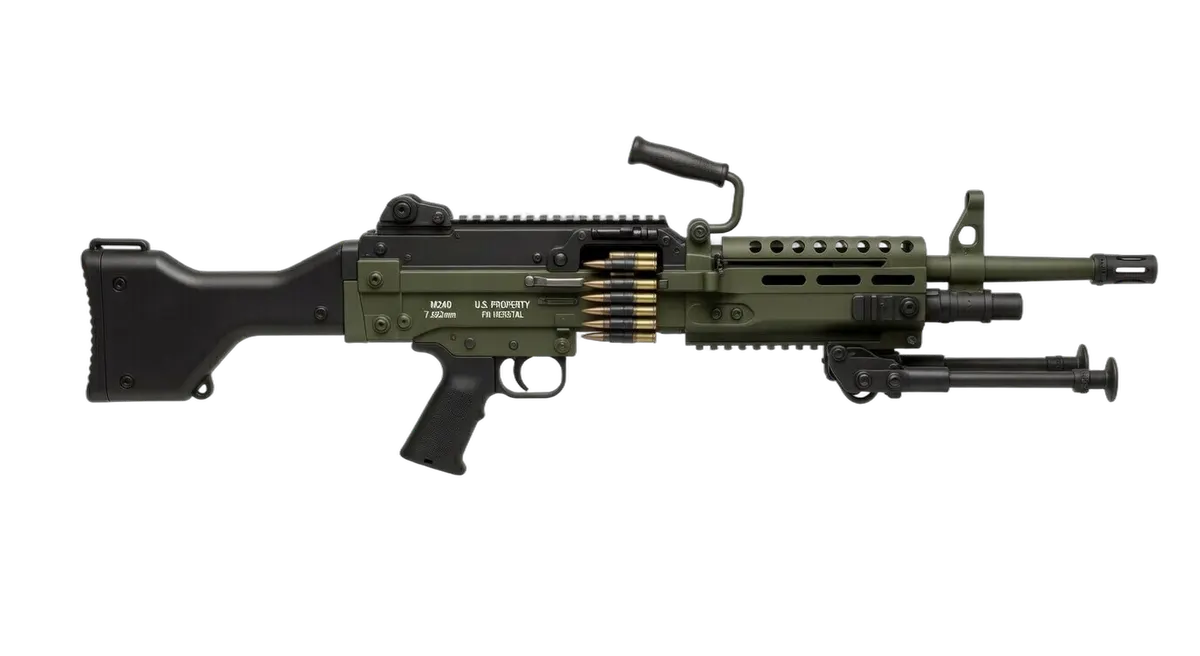 1977Belgium
7.62×51 NATO general-purpose machine gun derived from the FN MAG 58: NATO standard on vehicles and tripods, replacing the M60 in U.S. Army and USMC service.
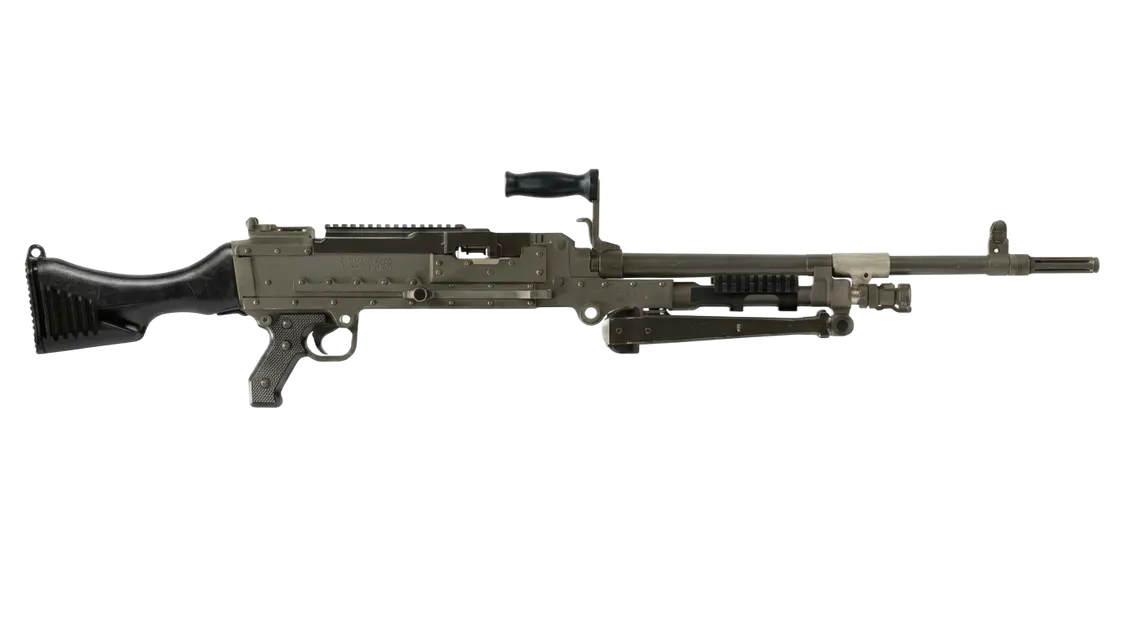 1977Canada
Canadian designation for the FN MAG 58 in 7.62×51 NATO; general-purpose machine gun adopted in 1977 by the Canadian Armed Forces at platoon level, on tripods and on vehicles.
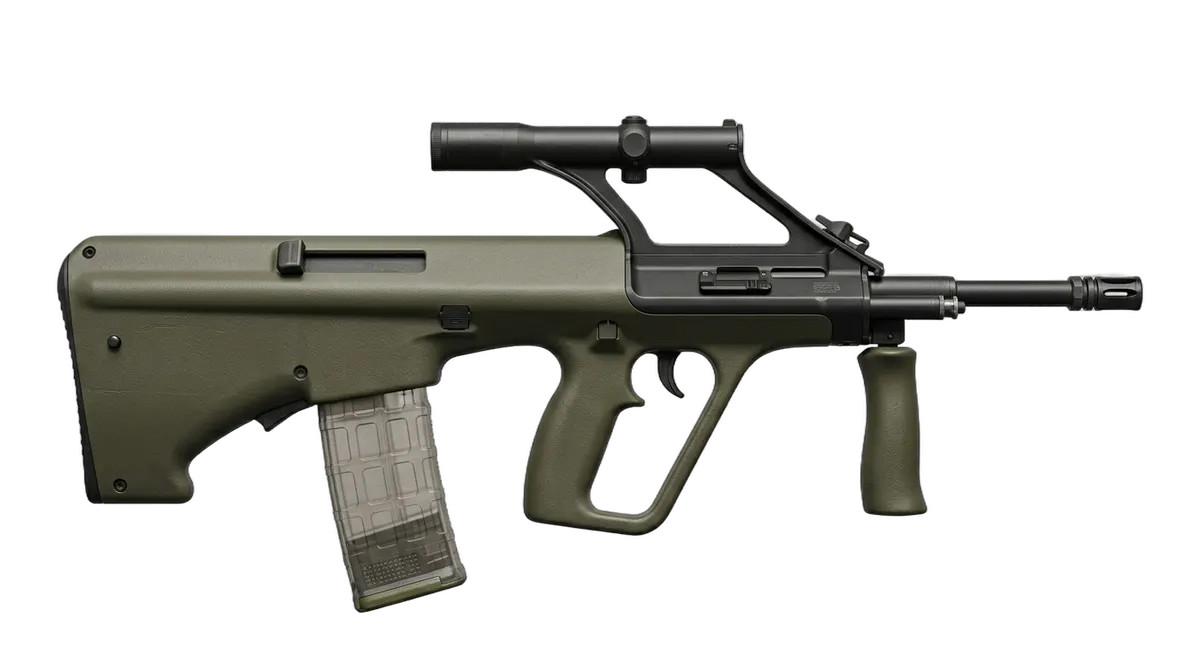 1978Austria
First widely adopted bullpup: polymer shell, integrated 1.5× optic, modular trigger group.
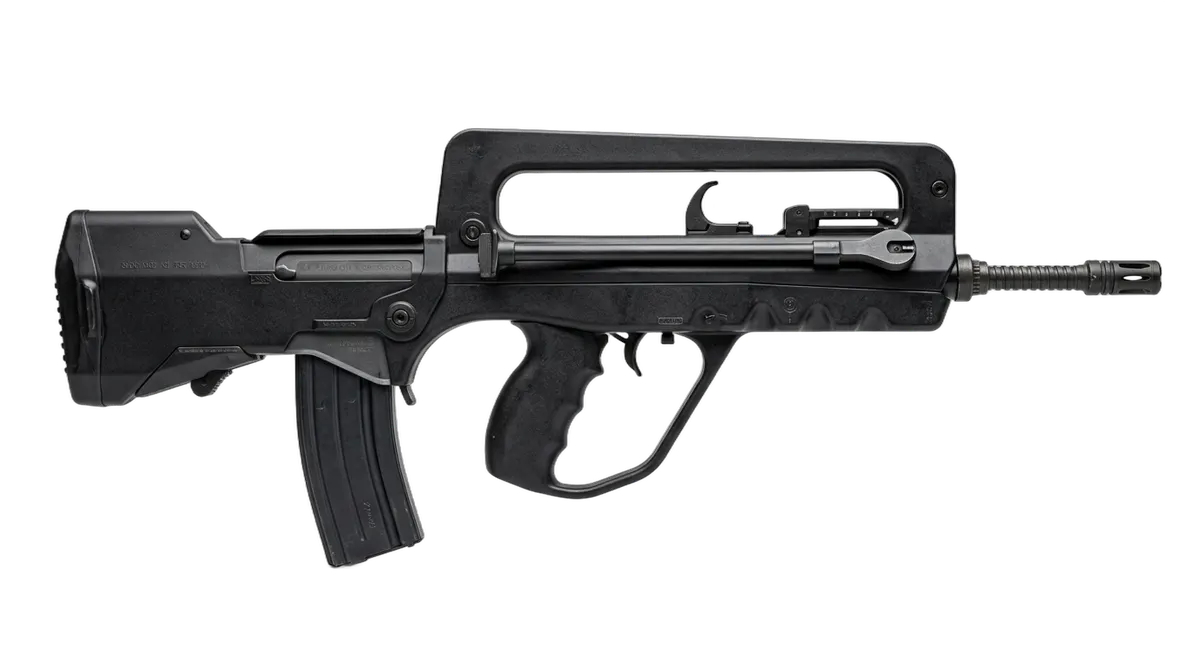 1978France
French bullpup nicknamed «the bugle» for its large carrying handle. High rate of fire, lever-delayed bolt system.
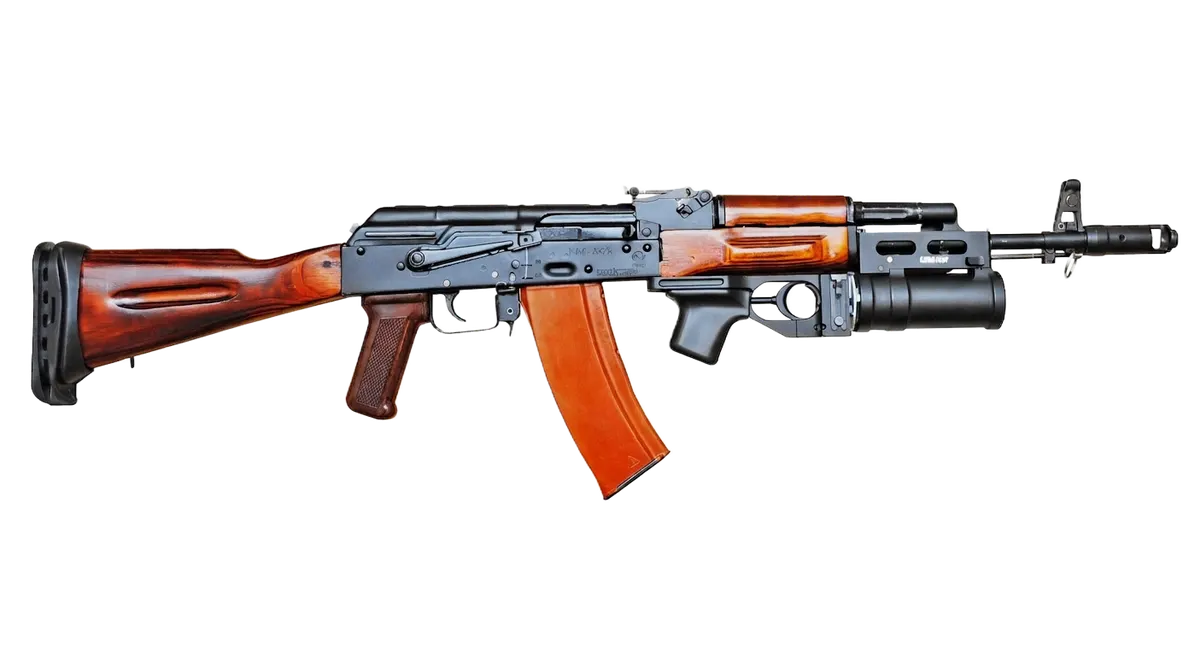 1978Russia
Soviet 40 mm caseless grenade launcher mounted under AK-74/AKM; rifled muzzle-loaded barrel, tangent quadrant sight; nicknamed 'Kostyor' (bonfire).
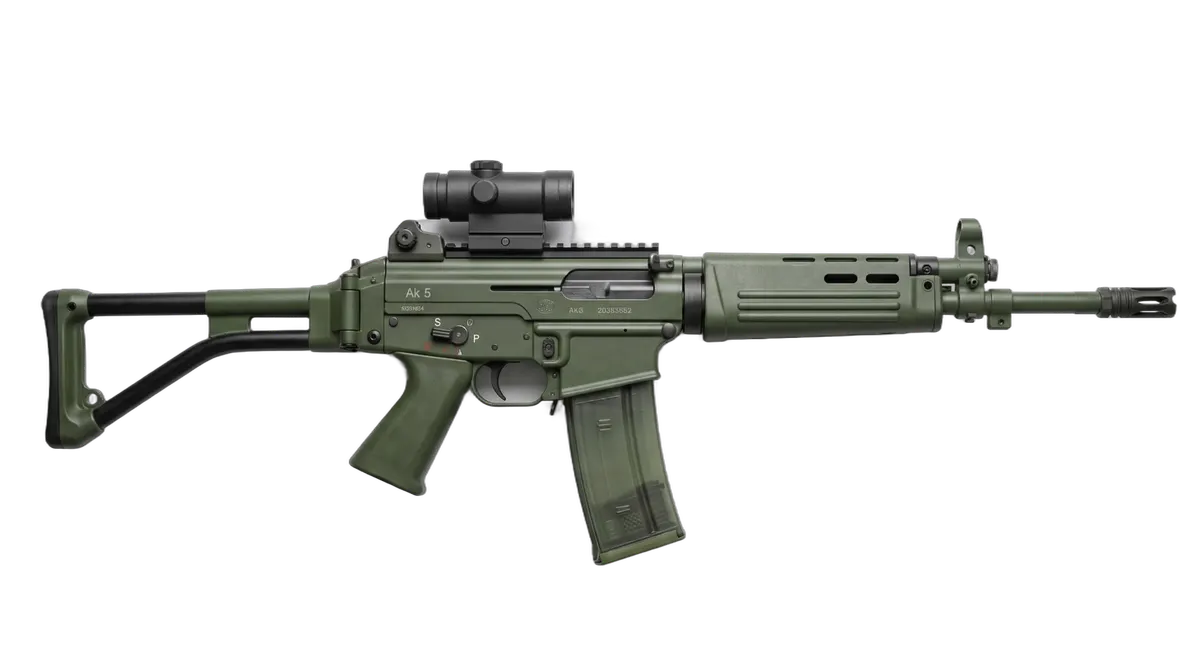 1979Belgium
Belgian 5.56 NATO assault rifle derived from the CAL, adopted by Sweden as the Ak 5 in a Bofors-modified version for the Nordic climate.
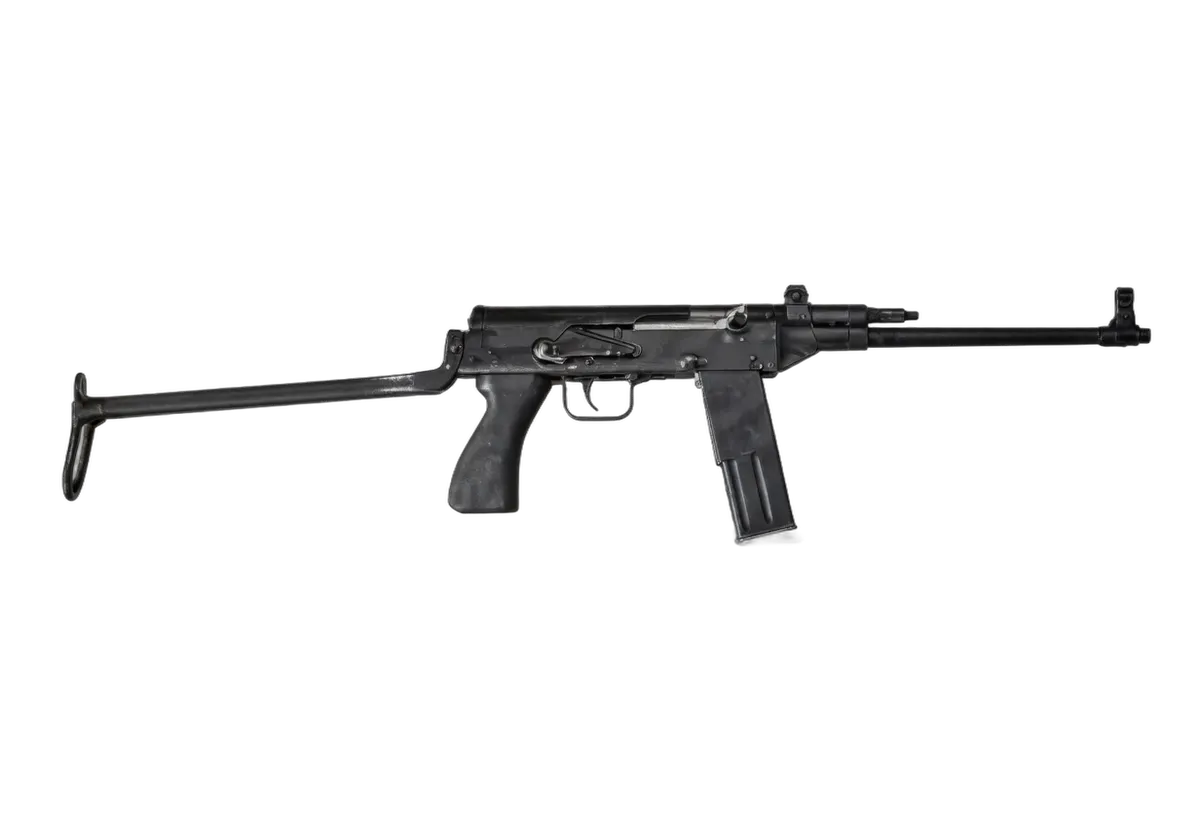 1979China
Compact Chinese submachine gun in 7.62×25 mm Tokarev, with gas-operated system and folding metal stock. Developed for police, paratroopers and vehicle crews.
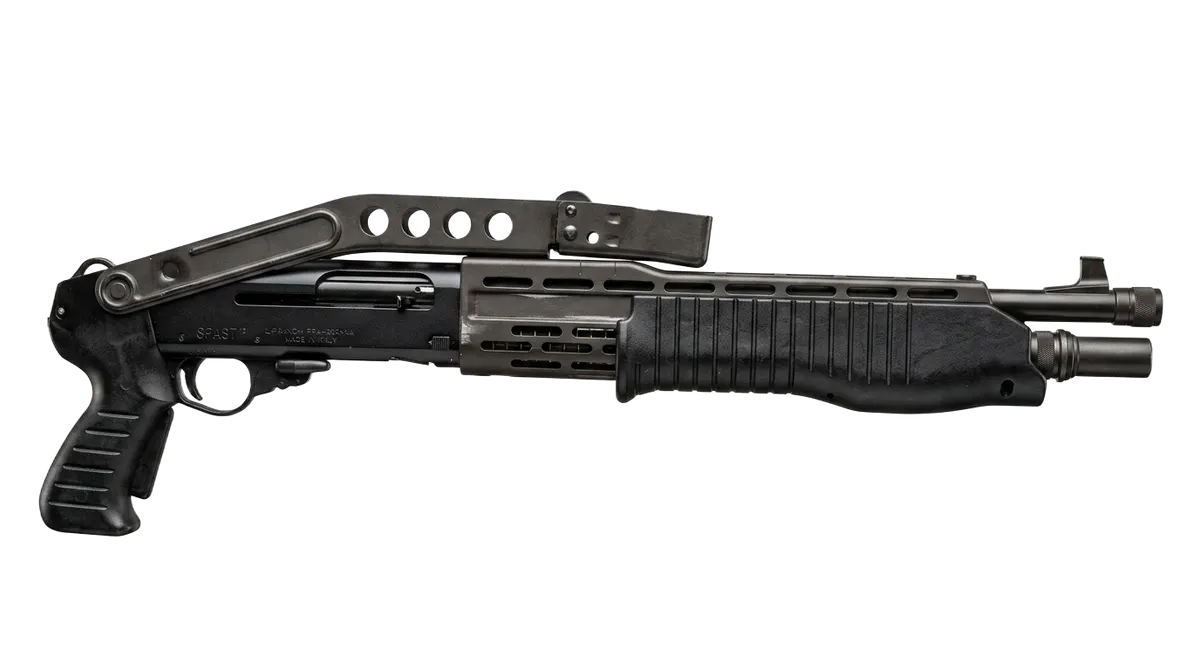 1979Italy
12-gauge combat shotgun with dual action (pump / semi-automatic) produced by Franchi in Brescia.
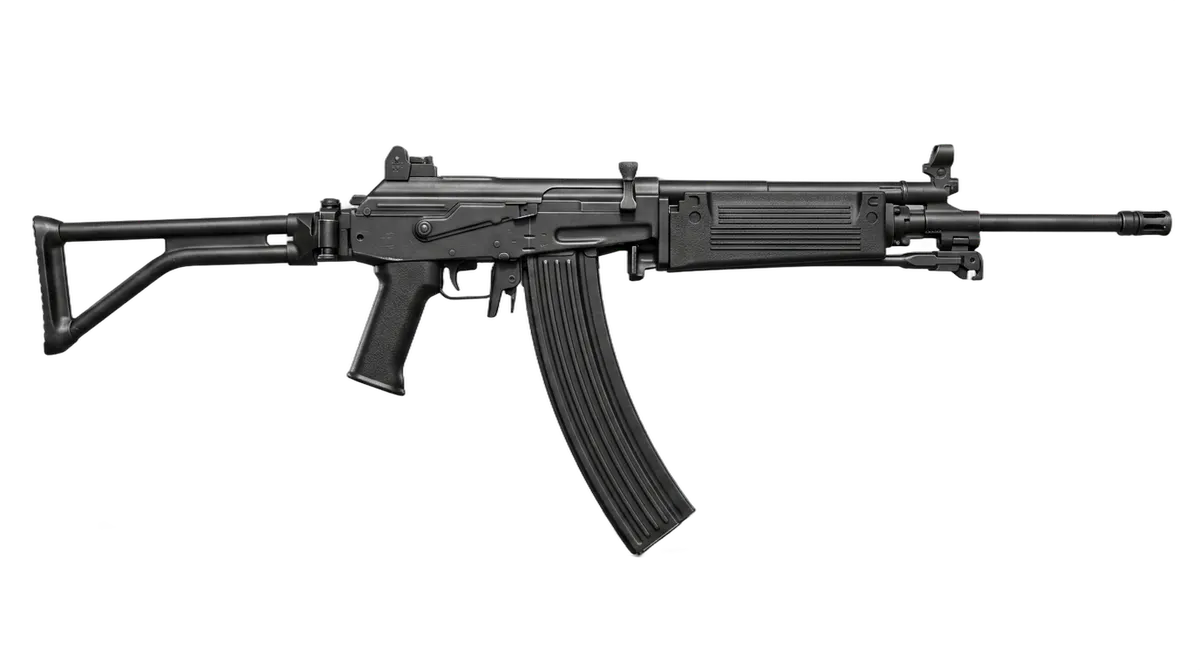 1980South Africa
South African 5.56×45 mm NATO assault rifle derived from the IMI Galil ARM, adapted to hot and arid climates with a side-folding metal stock and integral bipod.
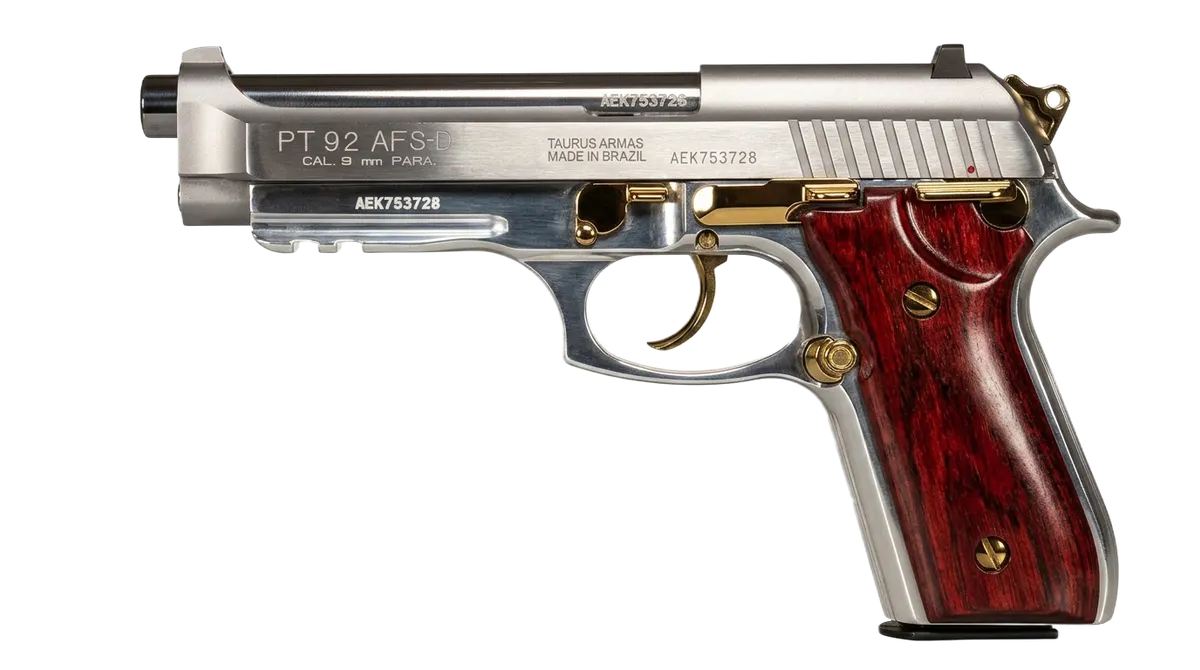 1980Brazil
9×19 mm semi-automatic pistol derived from the Beretta 92, produced by Taurus since 1980: sidearm of many Brazilian police forces and widespread on the export market.
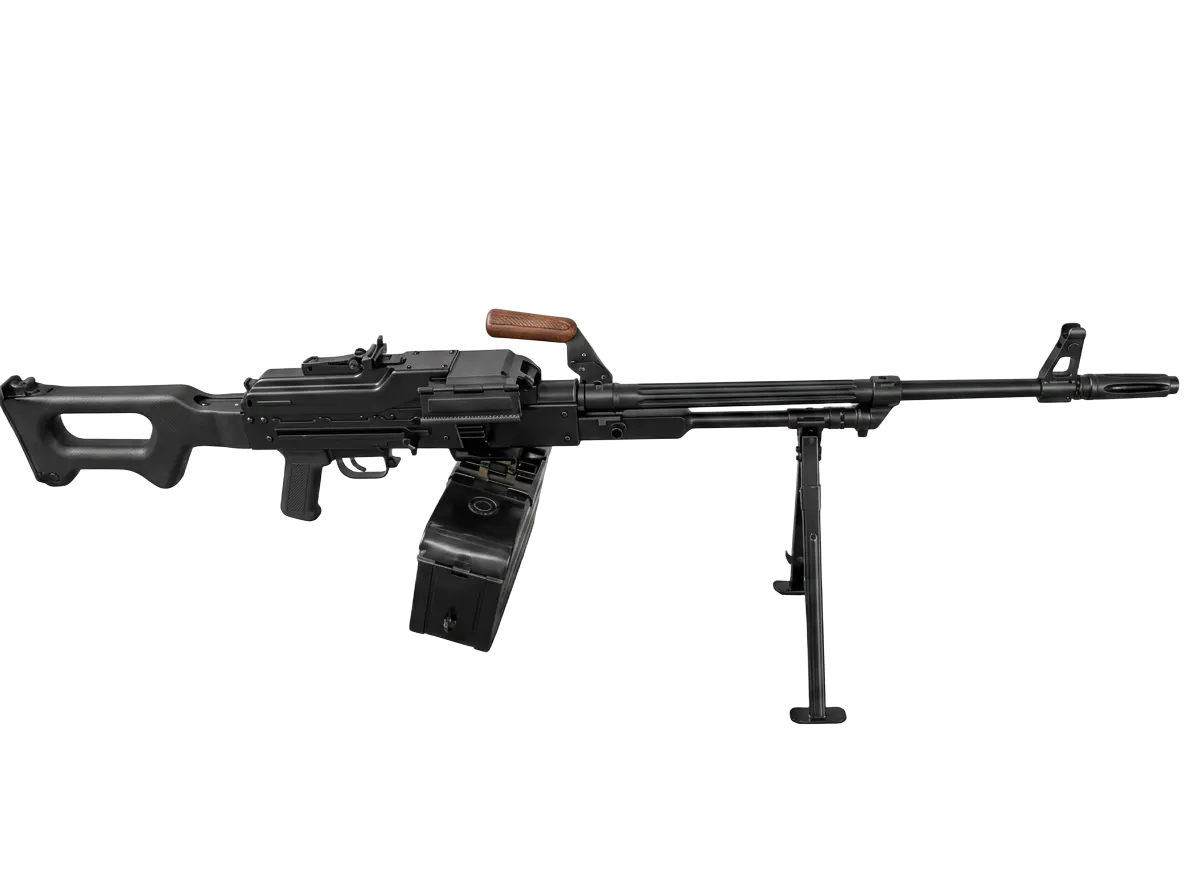 1980Iran
Iranian-built version of the Soviet PKM in 7.62×54R: same long-stroke gas-piston action with rotating bolt, skeleton stock and folding bipod, produced domestically since 1980 as a squad/platoon GPMG for Iranian ground forces and the IRGC.
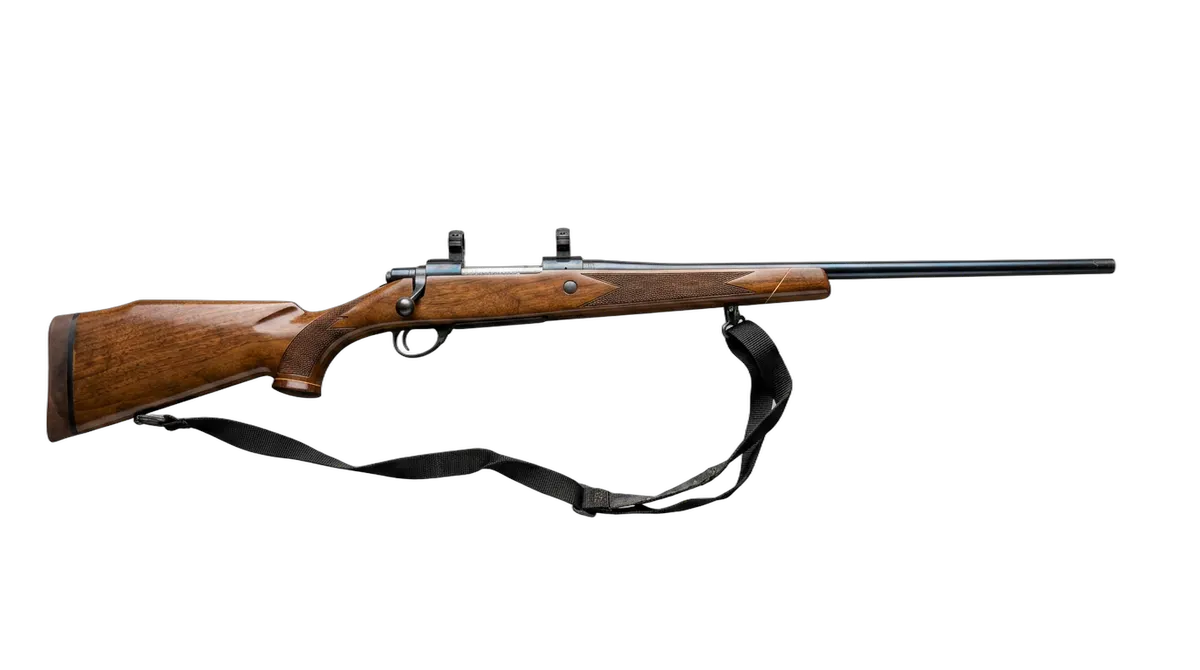 1981Finland
Finnish bolt-action hunting and precision rifle with a blued finish and wooden stock, belonging to Sako's robust AV long-action series.
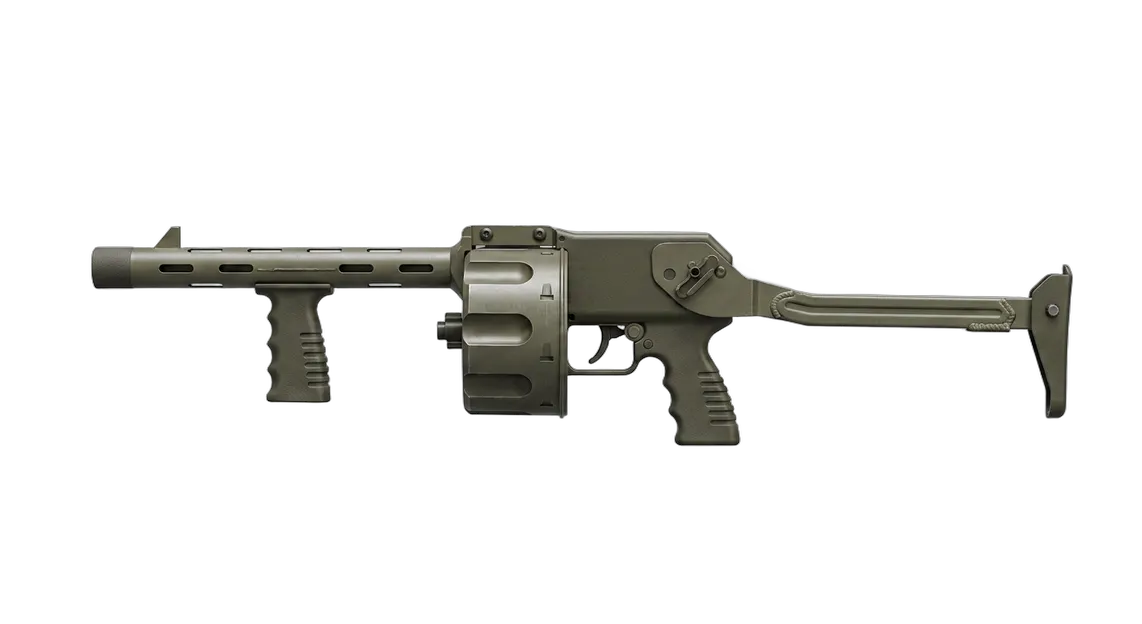 1981South Africa
South African 12-gauge revolver shotgun with a 12-round rotating cylinder, developed by Hilton Walker. Clockspring-driven cylinder rotation and folding metal stock.
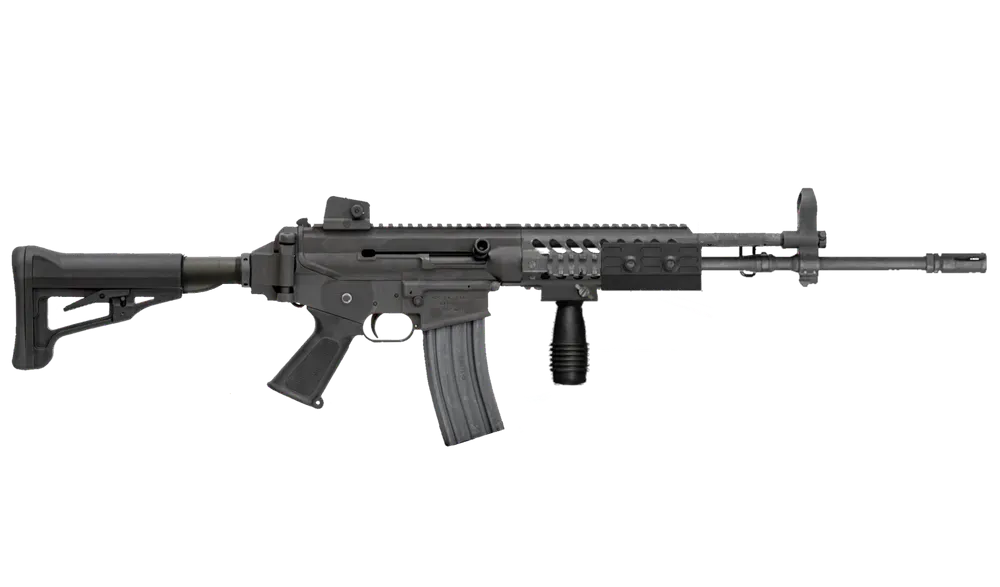 1981South Korea
South Korean 5.56×45 NATO compact carbine derived from the AR-15/AR-18 family, developed for paratroopers and vehicle crews; wire telescoping stock and short barrel.
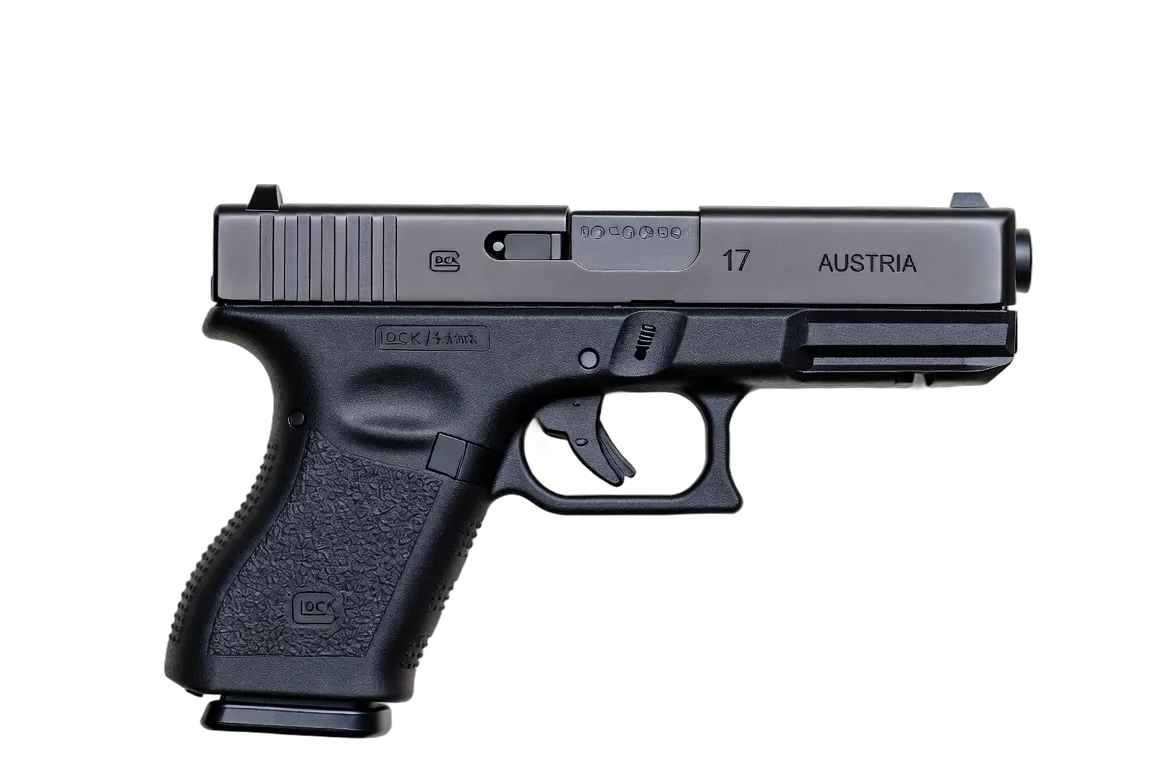 1982Austria
Striker-fired semi-automatic pistol with polymer frame and 17-round double-stack magazine in 9×19 mm: standard sidearm of the Austrian Army since 1982 and of hundreds of military and law-enforcement agencies worldwide.
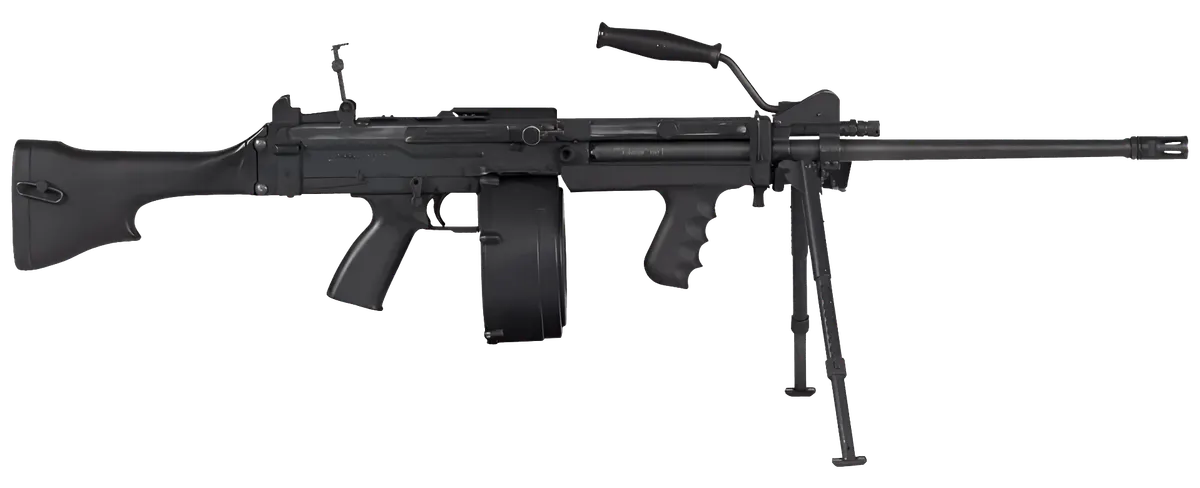 1982Singapore
5.56×45 NATO squad automatic weapon designed by L. James Sullivan, famous for its constant-recoil system which drastically reduces felt recoil and allows highly controllable automatic fire.
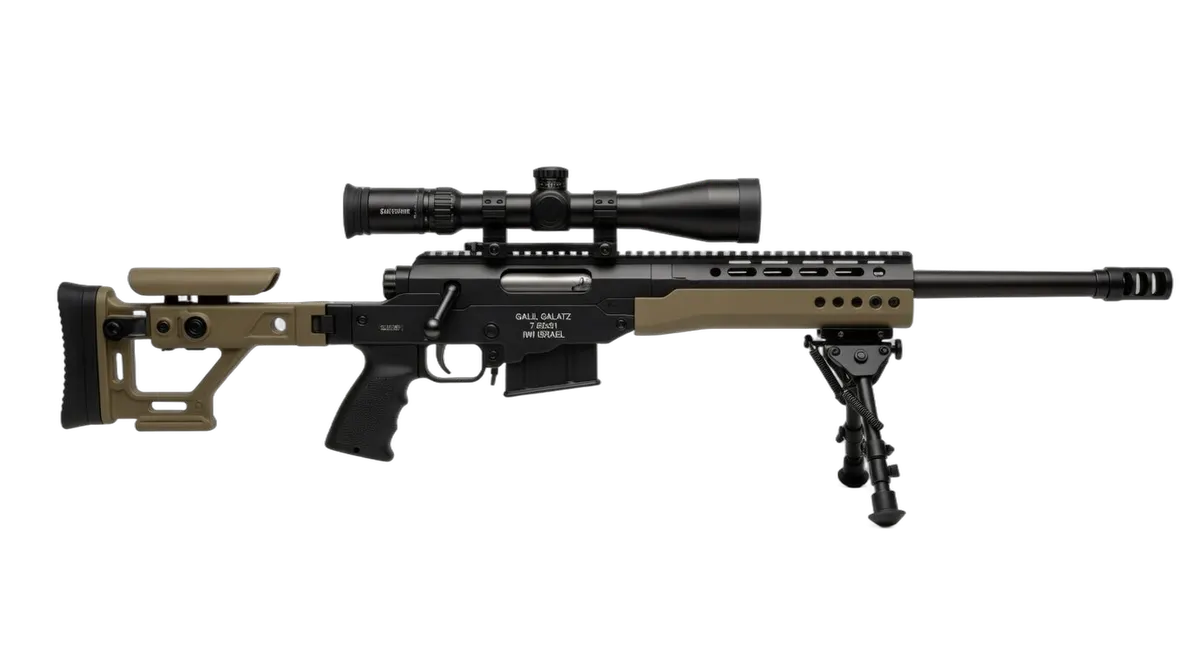 1983Israel
Israeli semi-automatic DMR in 7.62×51 NATO derived from the Galil: heavy free-floated barrel, muzzle brake and folding bipod, issued to IDF designated marksmen.
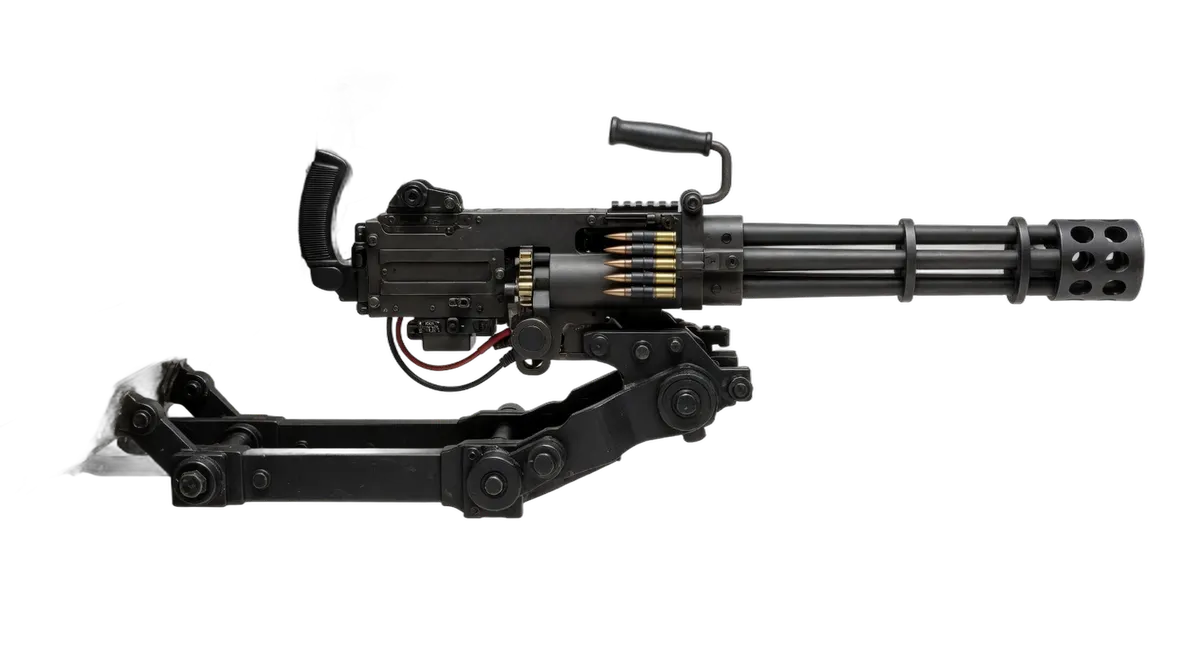 1983United States
Three-barrel rotary Gatling .50 BMG machine gun: a lighter alternative to the M2 with up to 2,000 rpm rate of fire, mounted on helicopters and vehicles.
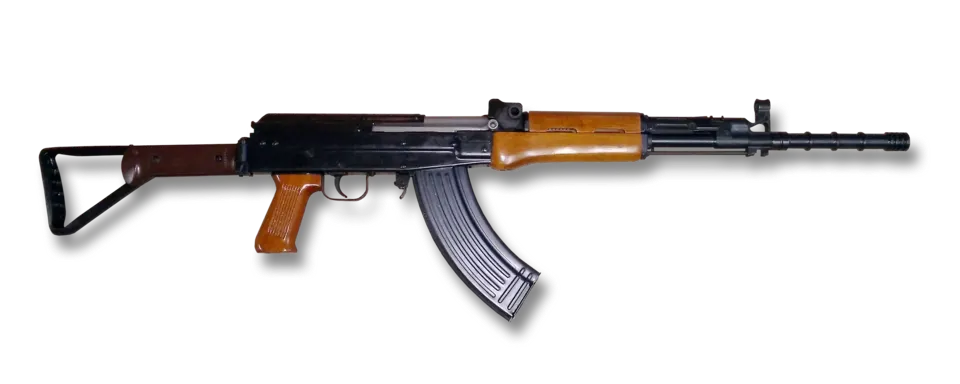 1983China
Chinese assault rifle from the 1980s blending the SKS operating system with AK ergonomics: superior accuracy compared to the Type 56 and a cyclic rate tuned for aimed fire.
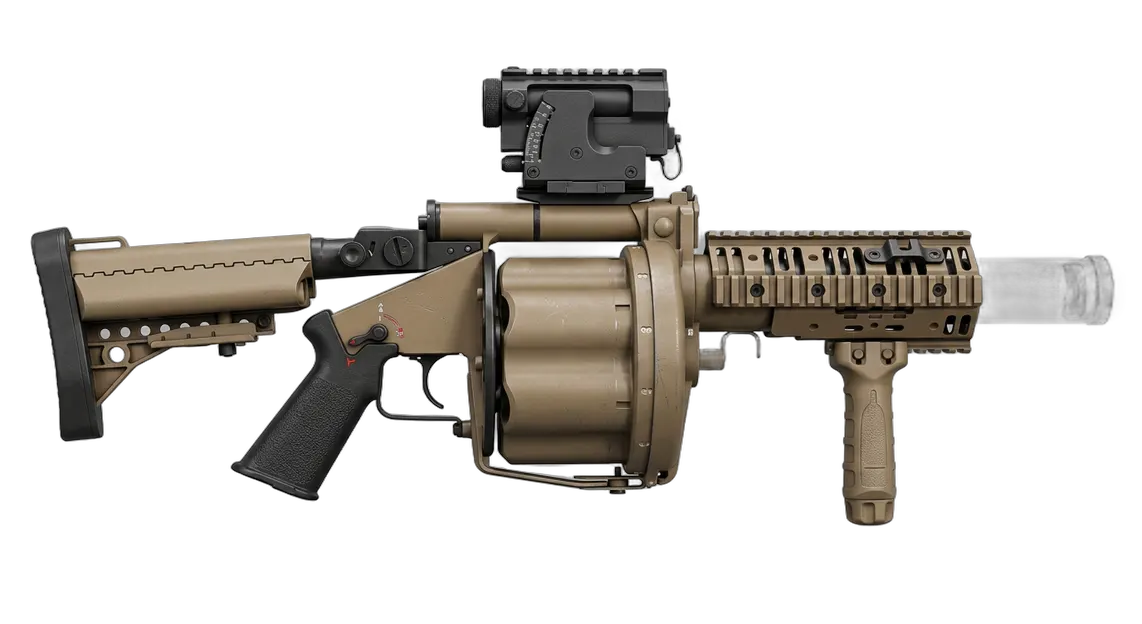 1983South Africa
South African semi-automatic six-shot revolver-type 40×46 mm grenade launcher, powered by a clockspring-driven rotating cylinder. The pioneering man-portable revolver grenade launcher.
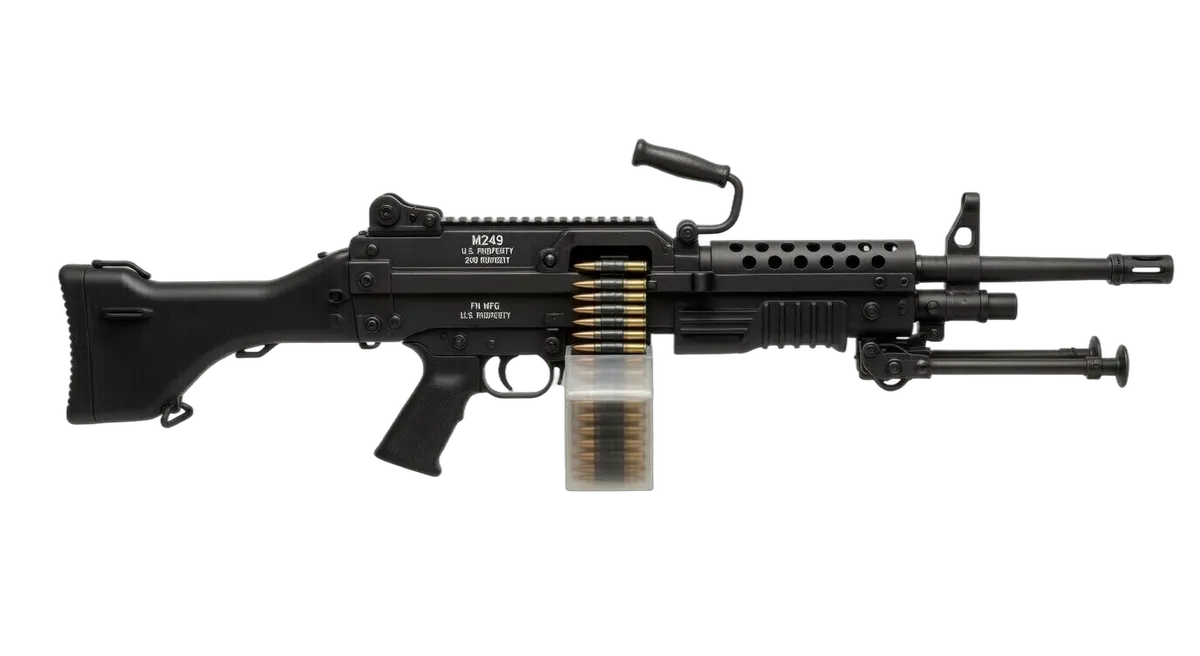 1984Belgium
FN Minimi-derived 5.56×45 NATO light machine gun: dual feed (disintegrating belt or STANAG magazine), issued as squad automatic weapon by the U.S. Army and USMC.
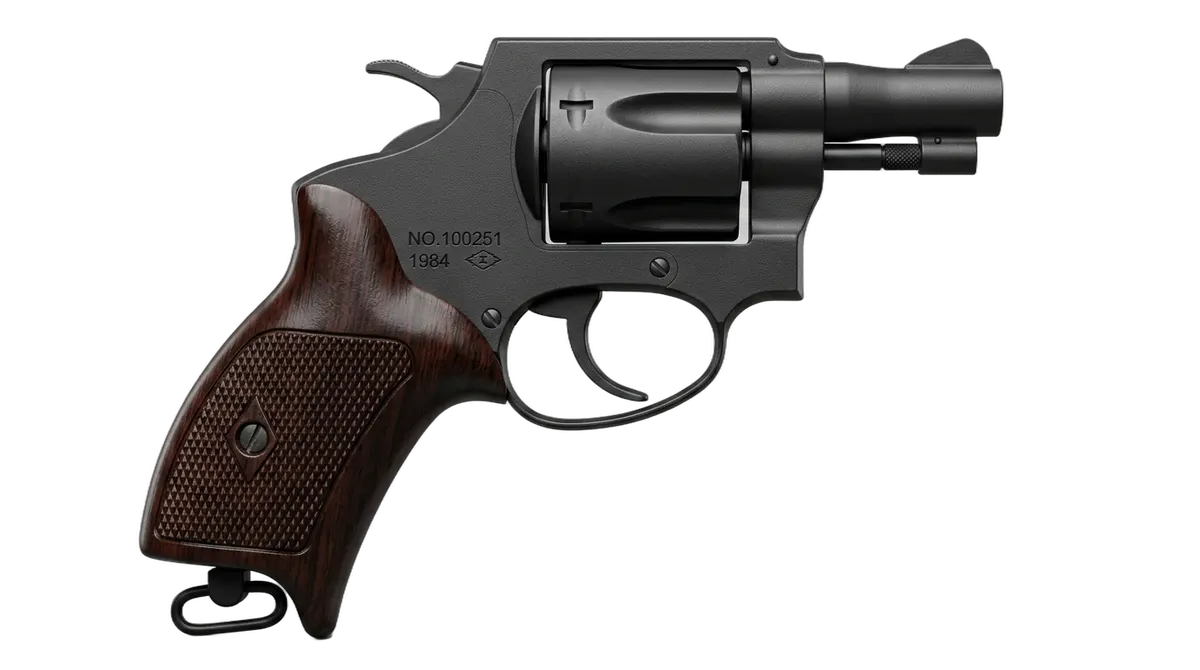 1984Czech Republic
Small .22 LR snub-nose revolver in a 1980s Czechoslovak style, with a compact frame, short barrel and wooden grips, intended for discreet carry and close-range civilian or service defense.
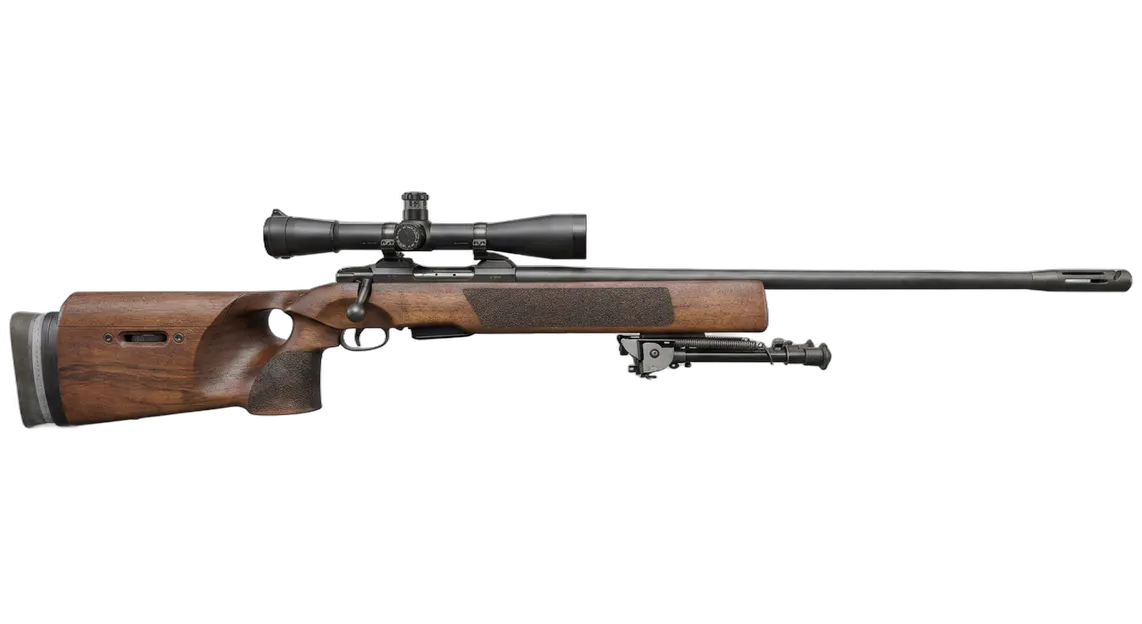 1984Switzerland
Bolt-action precision rifle jointly developed by SIG (Switzerland) and J.P. Sauer & Sohn (Germany) for the police and special-forces market. Walnut thumbhole stock and heavy barrel with muzzle brake.
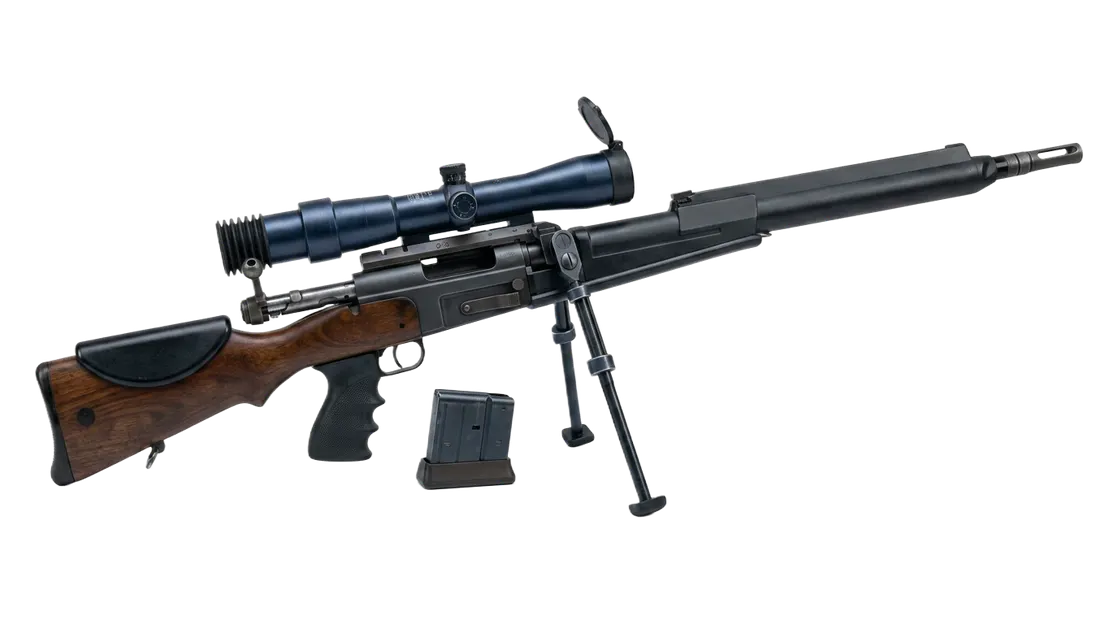 1984France
Bolt-action precision rifle in 7.62×51 NATO, an evolution of the FR-F1 with a free-floating shrouded barrel and integral bipod.
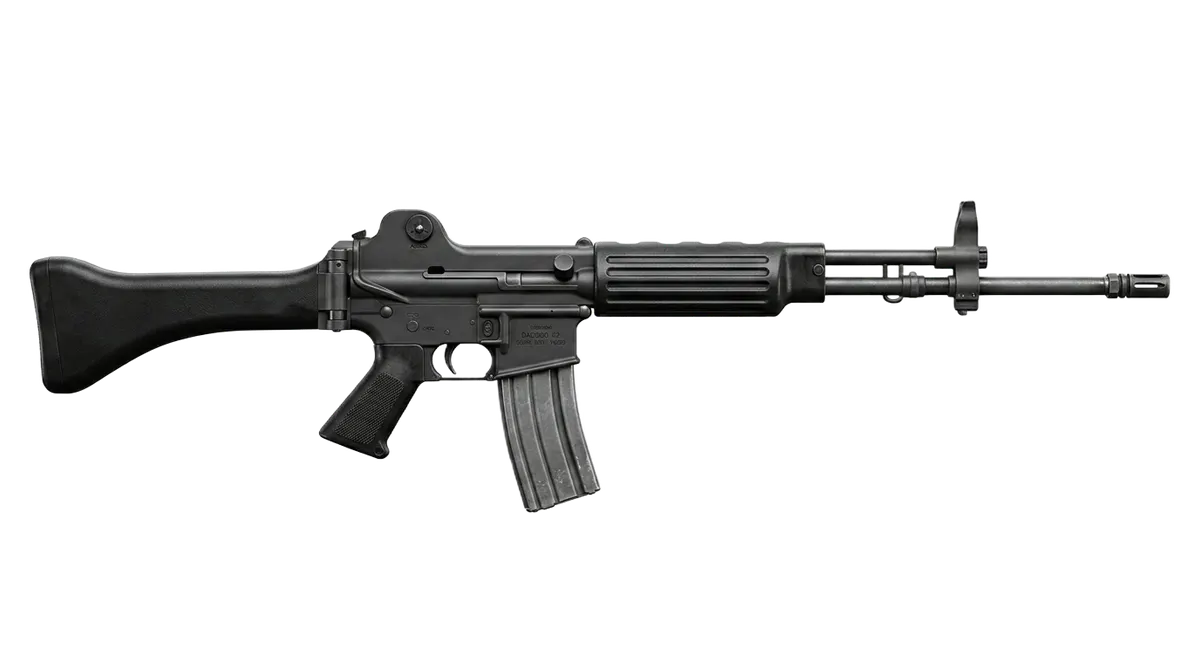 1984South Korea
Standard South Korean assault rifle in 5.56×45 NATO, based on the AR-18 short-stroke piston system with a polymer side-folding stock.
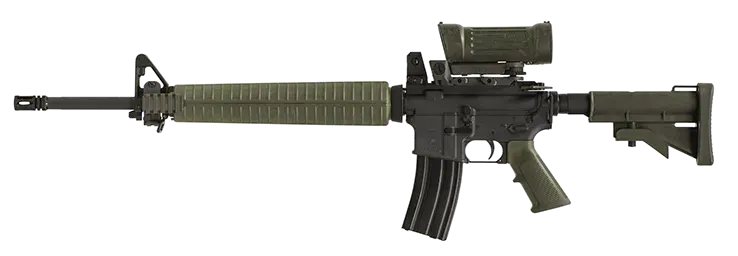 1984Canada
Canadian 510 mm long-barrel variant of the M16A2 produced under licence by Diemaco (now Colt Canada) in Kitchener, Ontario; adopted in 1984 as the standard rifle of the Canadian Armed Forces.
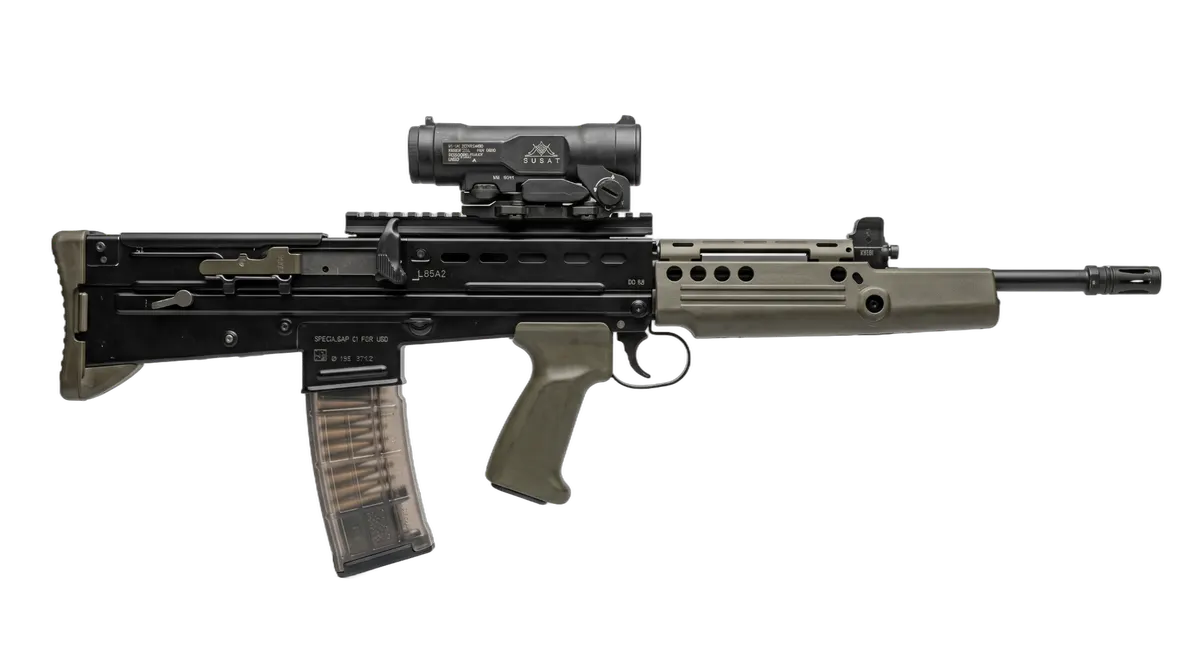 1985United Kingdom
British bullpup assault rifle in 5.56 NATO, compact layout with the SUSAT optic as standard issue. The A2 variant was reworked by H&K after the L85A1's reliability problems.
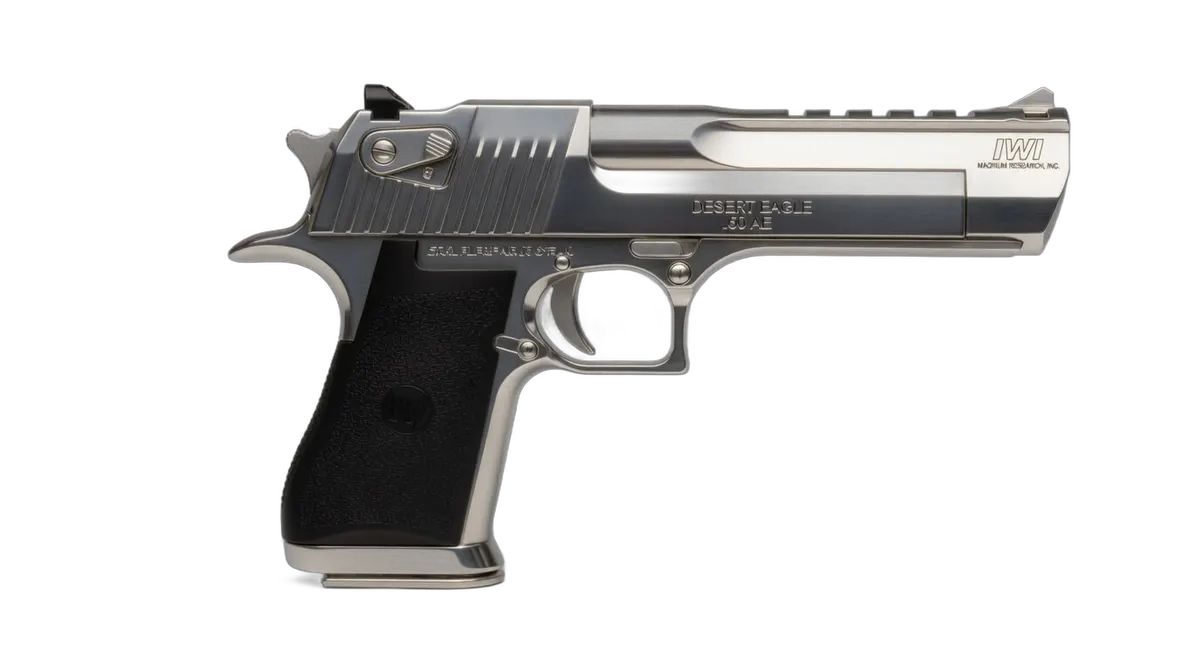 1985Israel
Gas-operated semi-automatic pistol in magnum calibers (.357, .44, .50 AE). Originally designed by the U.S. firm Magnum Research, historically manufactured and finished in Israel by IMI/IWI.
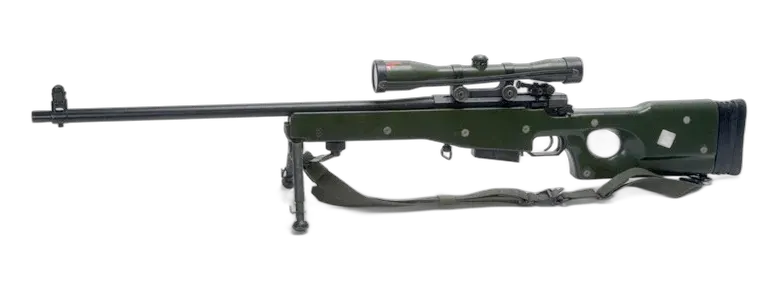 1985United Kingdom
Bolt-action sniper rifle in 7.62×51 NATO, the first AI model adopted by the British Army in 1985. Aluminium chassis with green polymer skin, foundation of the later AW family.
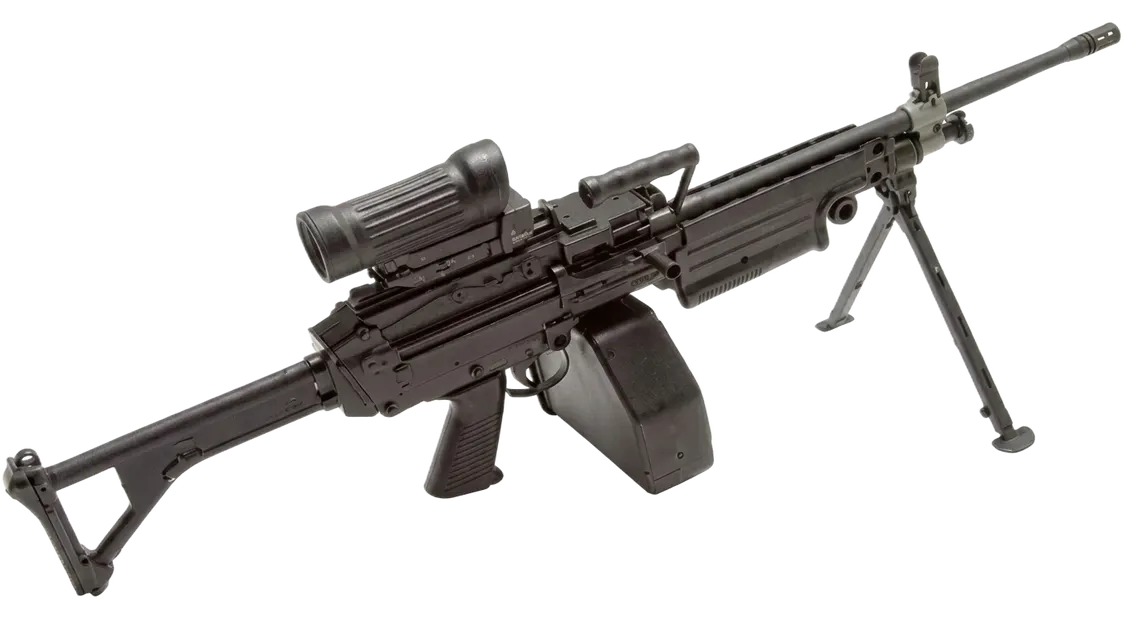 1985Canada
Canadian designation for the FN Minimi (US M249 SAW) in 5.56 NATO; adopted in 1985 by the Canadian Armed Forces as the section automatic weapon. The C9A2 (2005) adds Picatinny rails, telescoping stock and a short barrel.
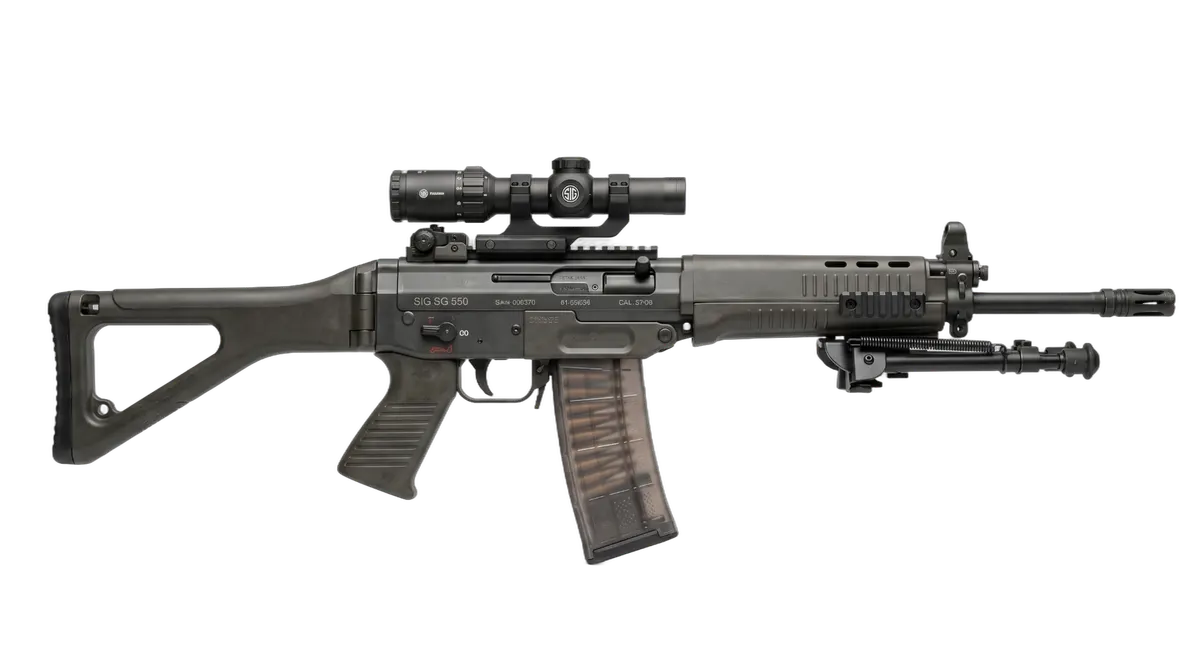 1986Switzerland
Swiss 5.56 NATO (GP 90) assault rifle, adopted by the Swiss Army as the Sturmgewehr 90. Known for accuracy, build quality and the translucent magazines that can be clipped together.
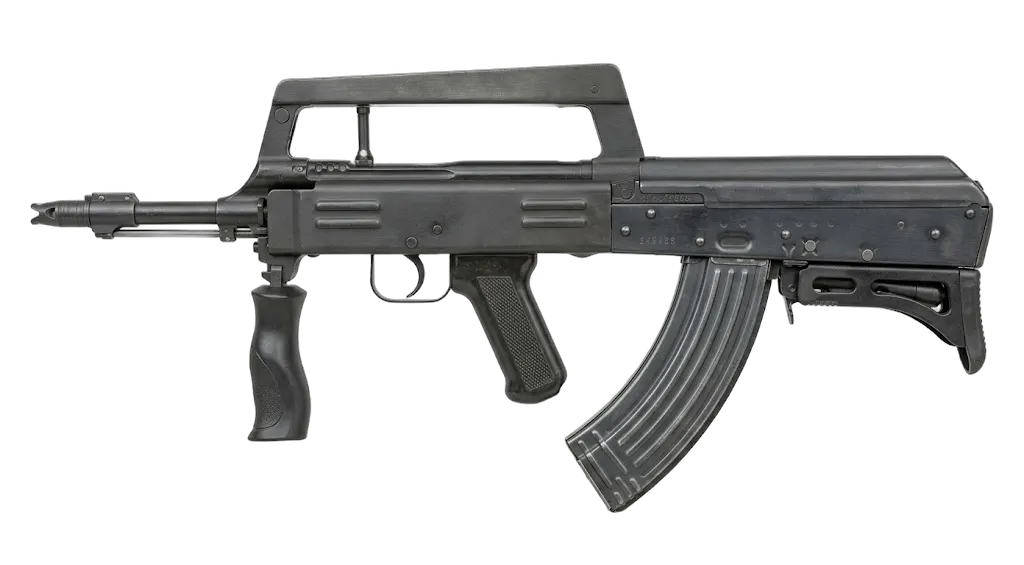 1986China
Chinese bullpup conversion of the Type 81 rifle in 7.62×39 mm, developed for the export market and short-range specialist use.
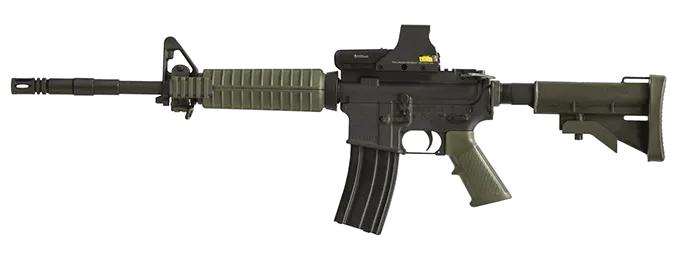 1986Canada
Canadian 370 mm short-barrel carbine derived from the C7 (Diemaco's M4 equivalent); telescoping stock, produced from 1986 by Colt Canada and widely used by NATO special forces (UKSF, KSK, Dutch Korps Mariniers).
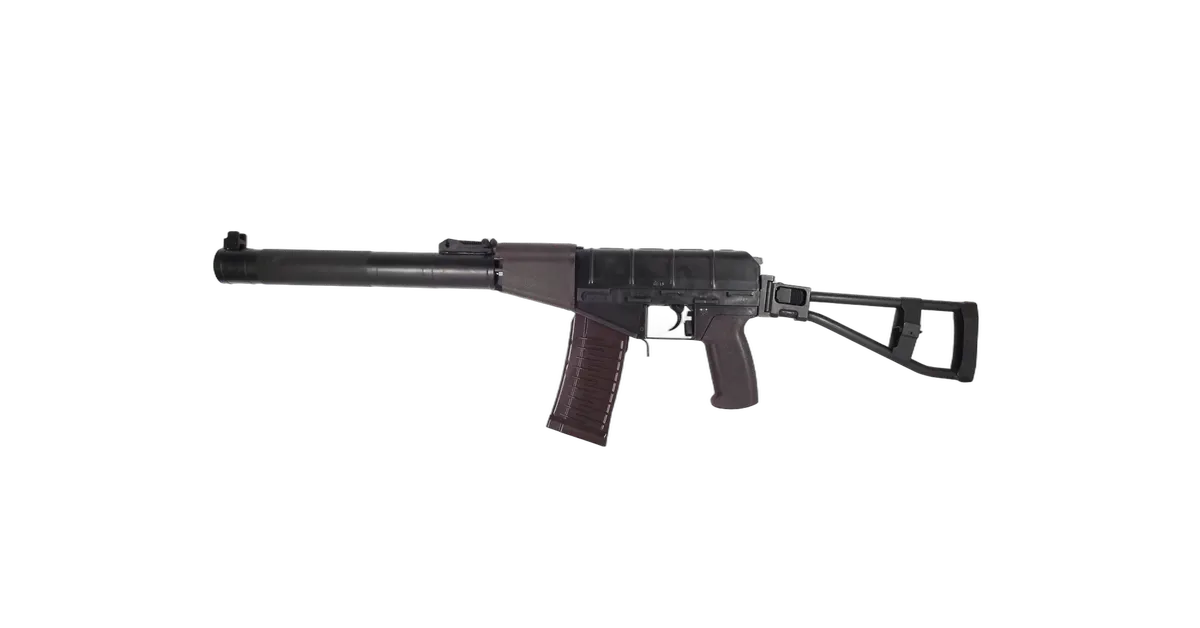 1987Russia
Soviet/Russian suppressed assault rifle in 9×39 mm SP-5/SP-6: integral suppressor, tubular folding stock and heavy subsonic projectiles able to defeat body armour at 400 m.
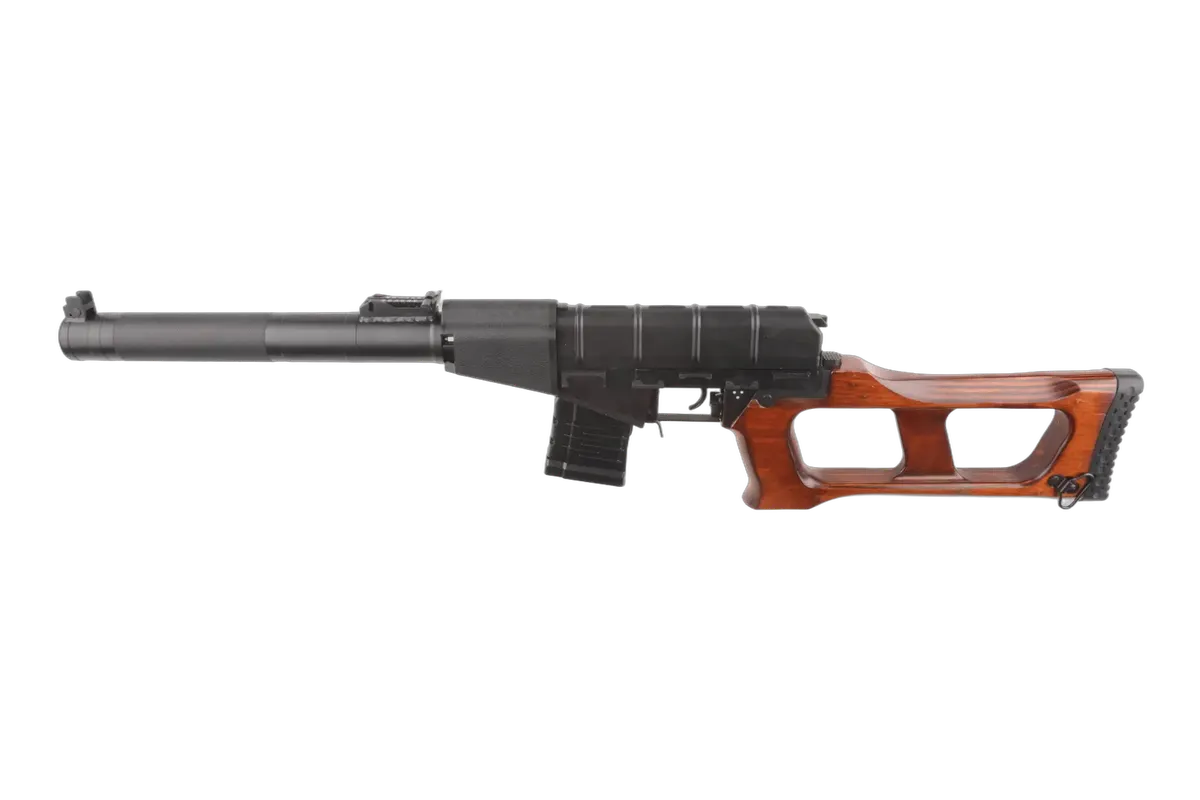 1987Russia
Soviet/Russian suppressed marksman rifle in 9×39 mm, sister weapon of the AS Val. Integral suppressor, wooden skeleton stock and PSO-1 optic: designed for stealth engagements within 400 m.
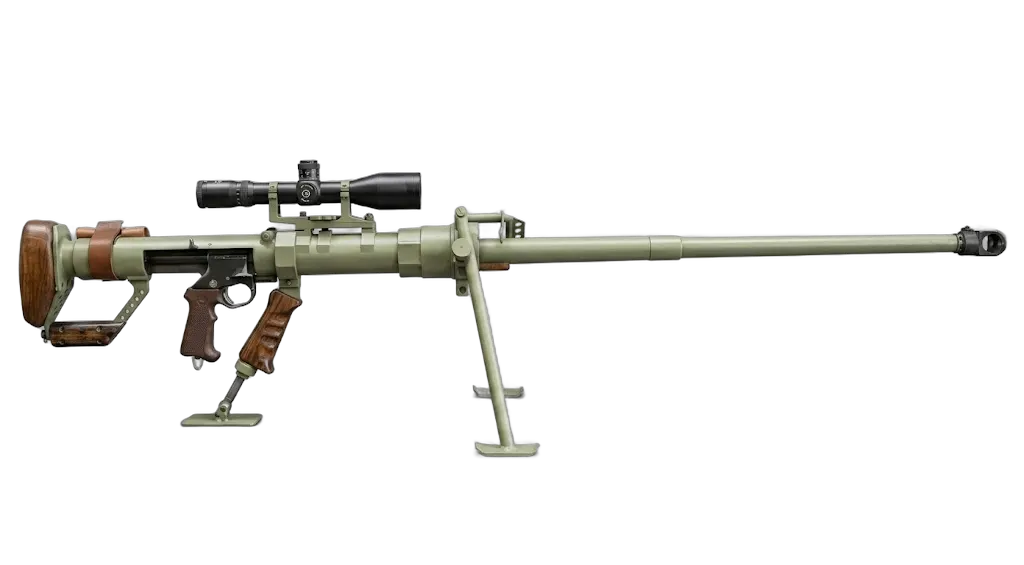 1987Hungary
Hungarian single-shot anti-materiel rifle in 12.7×108 mm, developed in the 1980s for long-range engagements against light vehicles, radars and point targets.
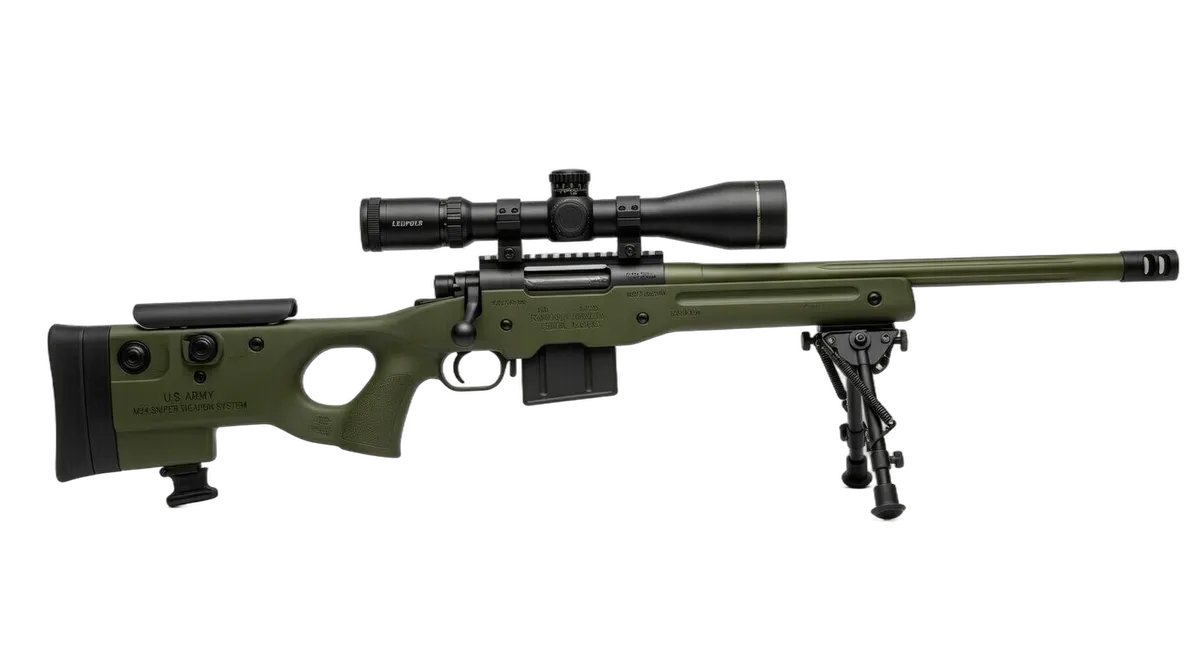 1988United States
Bolt-action sniper system adopted by the U.S. Army in 1988, derived from the Remington 700: a long-range standard for over three decades.
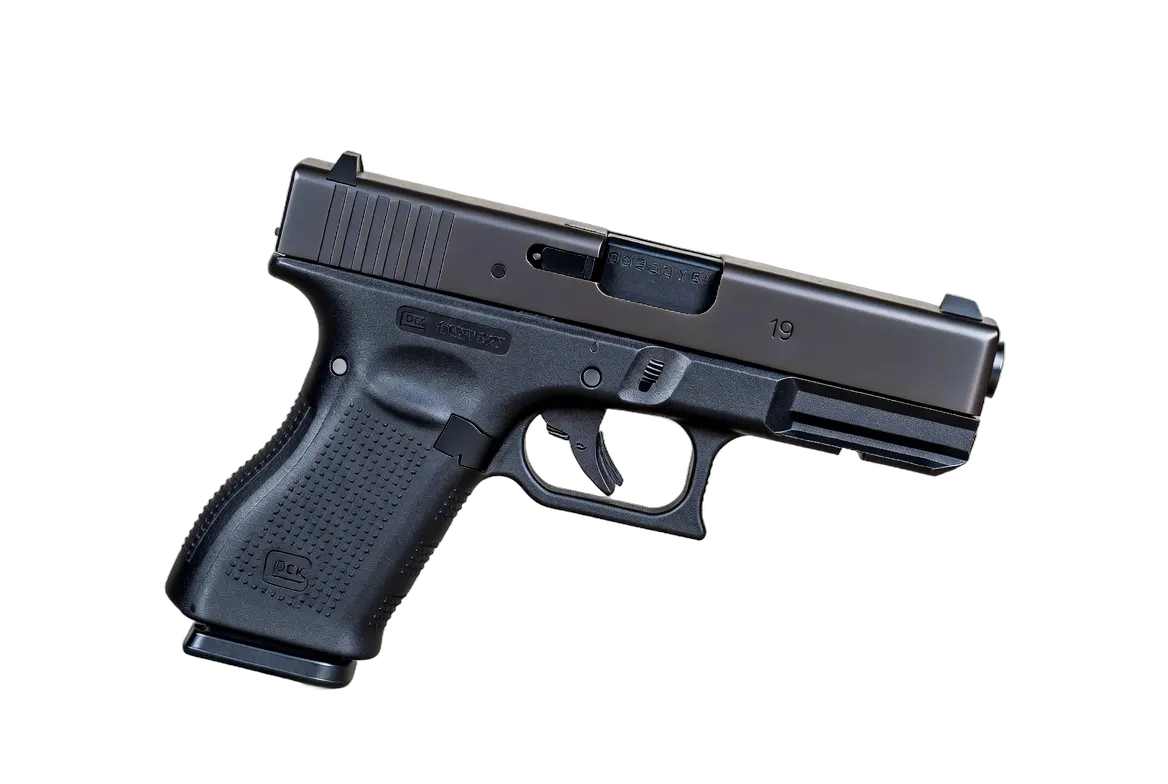 1988Austria
Compact version of the Glock 17 in 9×19 mm: shortened slide and barrel, 15-round double-stack magazine, widely adopted as a service, backup and concealed-carry sidearm.
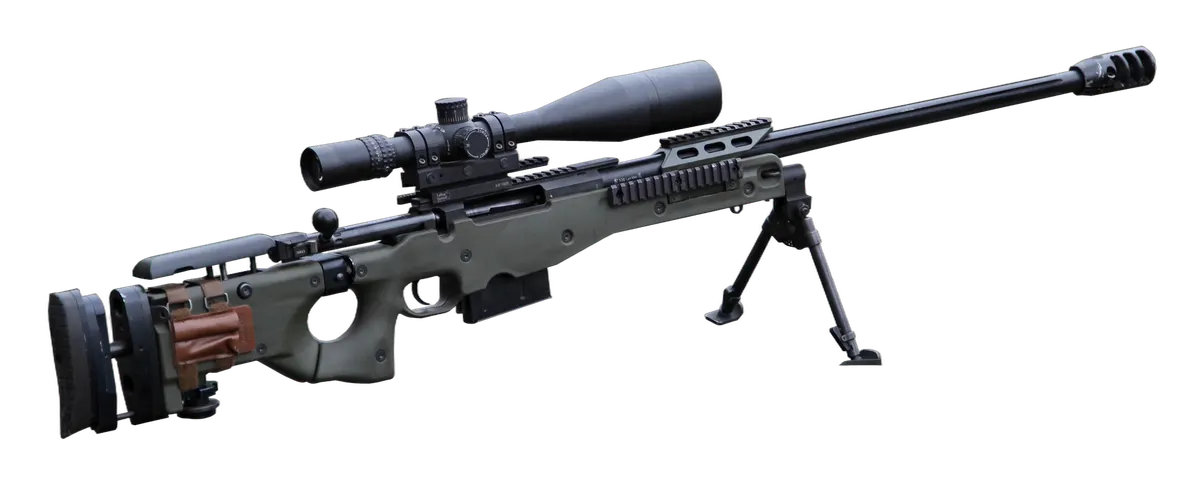 1988United Kingdom
Family of bolt-action sniper rifles evolved from the L96A1, designed for arctic climates (special lubricants, anti-freeze bolt). Calibres from 7.62 NATO up to .338 LM with the AWM.
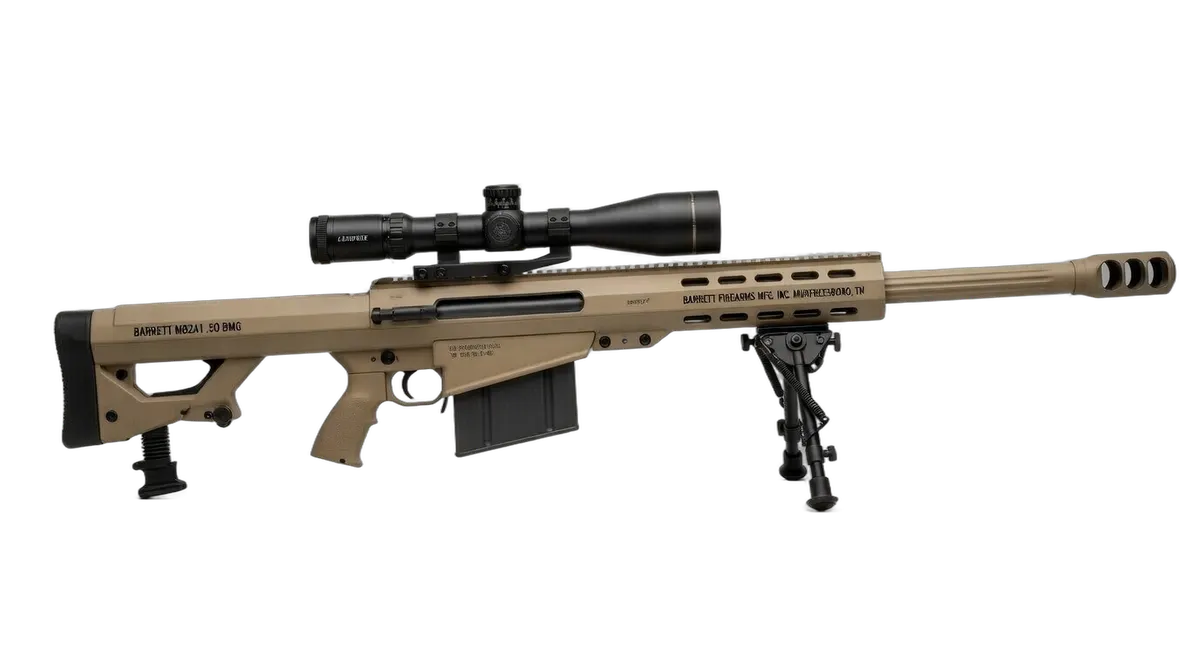 1989United States
Semi-automatic .50 BMG anti-materiel rifle: the first weapon of its class adopted on a large scale, capable of engagements beyond 1800 meters.
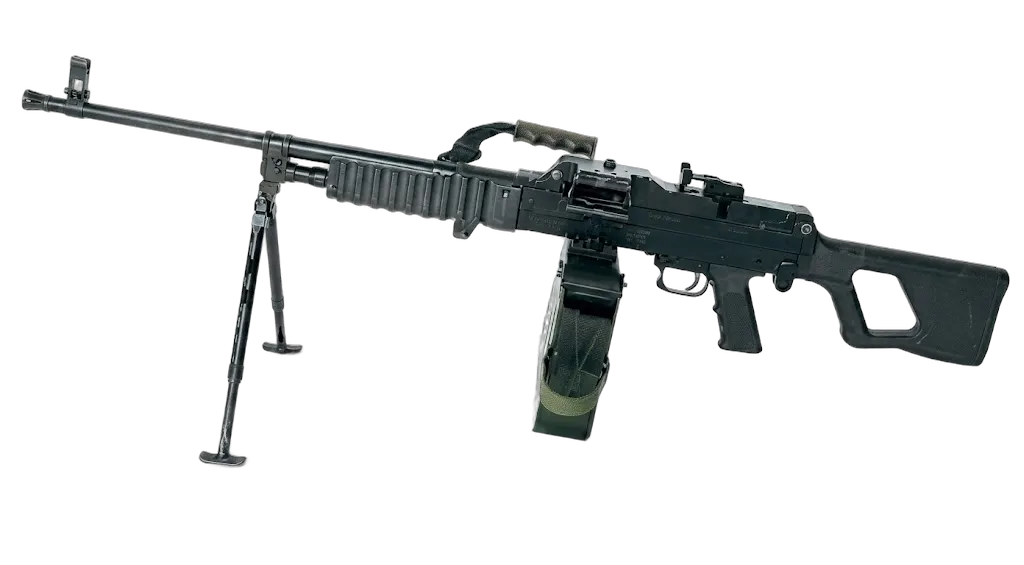 1989China
Chinese general-purpose machine gun in the proprietary heavy-load 5.8×42 mm caliber, the first PLA GPMG optimized for squad and platoon fire out to 1000 meters.
 1989China
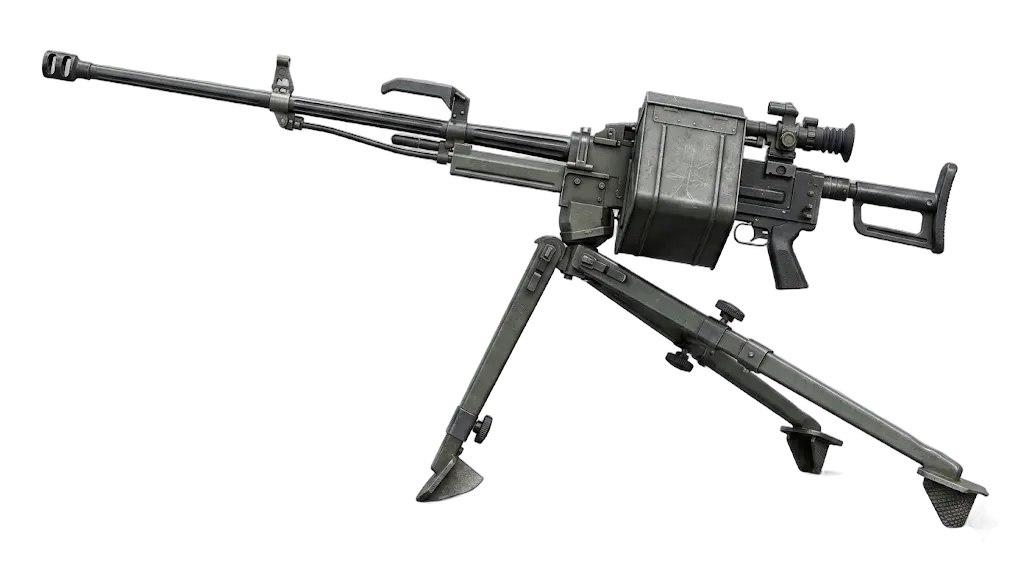
Chinese 12.7×108 mm heavy machine gun, one of the lightest in its class worldwide, designed to be operated by a single soldier in the anti-infantry and light anti-vehicle role.
 1989Hungary
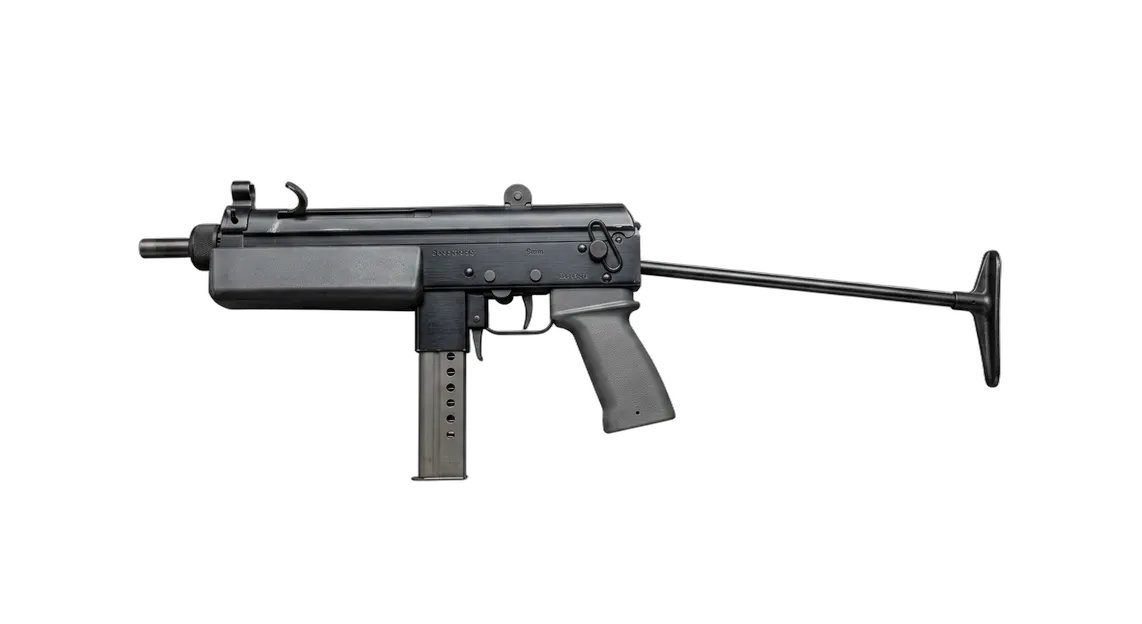
Hungarian 9×19 mm Parabellum submachine gun developed by FÉG in the late 1980s, clearly inspired by the Uzi/MAC family, with a telescoping wire stock.
 1989Japan
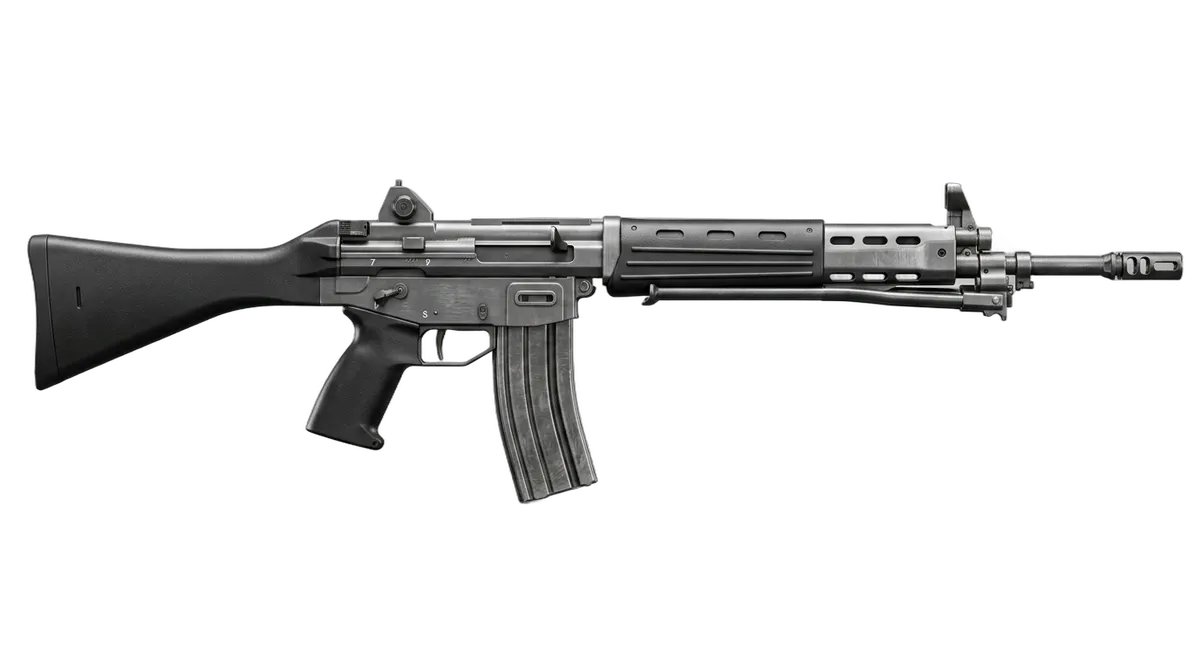
Japanese standard 5.56×45 mm NATO assault rifle, a local evolution beyond the Type 64 with lighter construction, a three-round burst option and high reliability in JSDF service.
 1989Austria
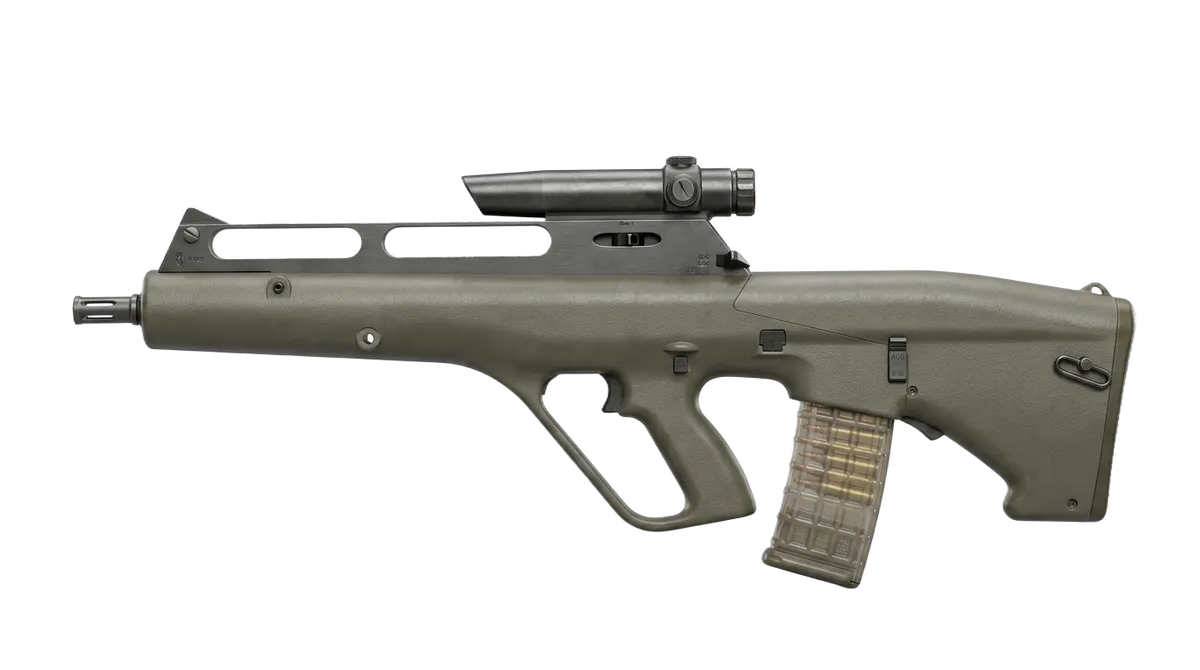
Bullpup prototype developed for the U.S. Army Advanced Combat Rifle programme, chambered for 1.5 mm flechette ammunition in a polymer case.
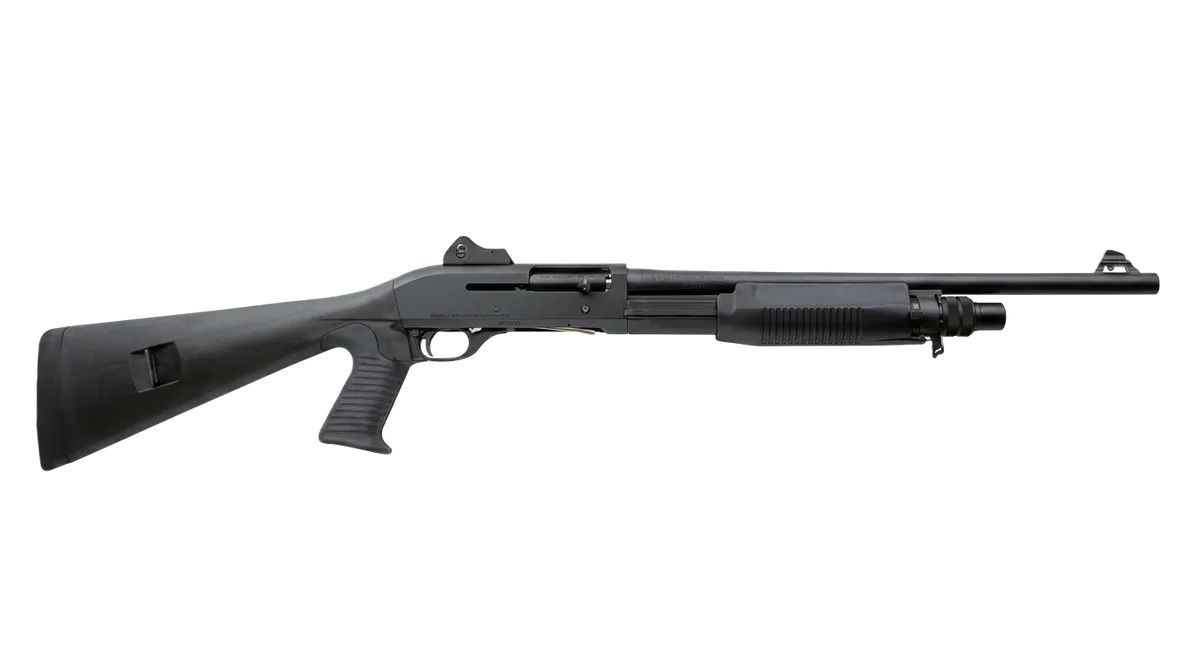 1989Italy
Dual-mode combat shotgun: switchable by the operator between gas-operated semi-auto and manual pump-action.
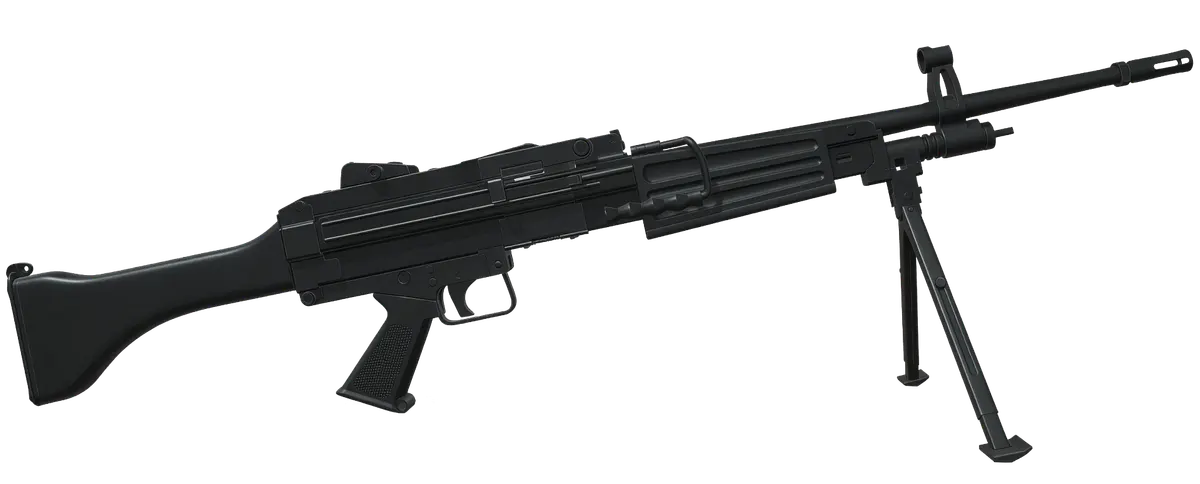 1989South Korea
South Korean 5.56×45 NATO squad automatic weapon (SAW), inspired by the FN Minimi: belt or magazine fed, integrated bipod and quick-change barrel.
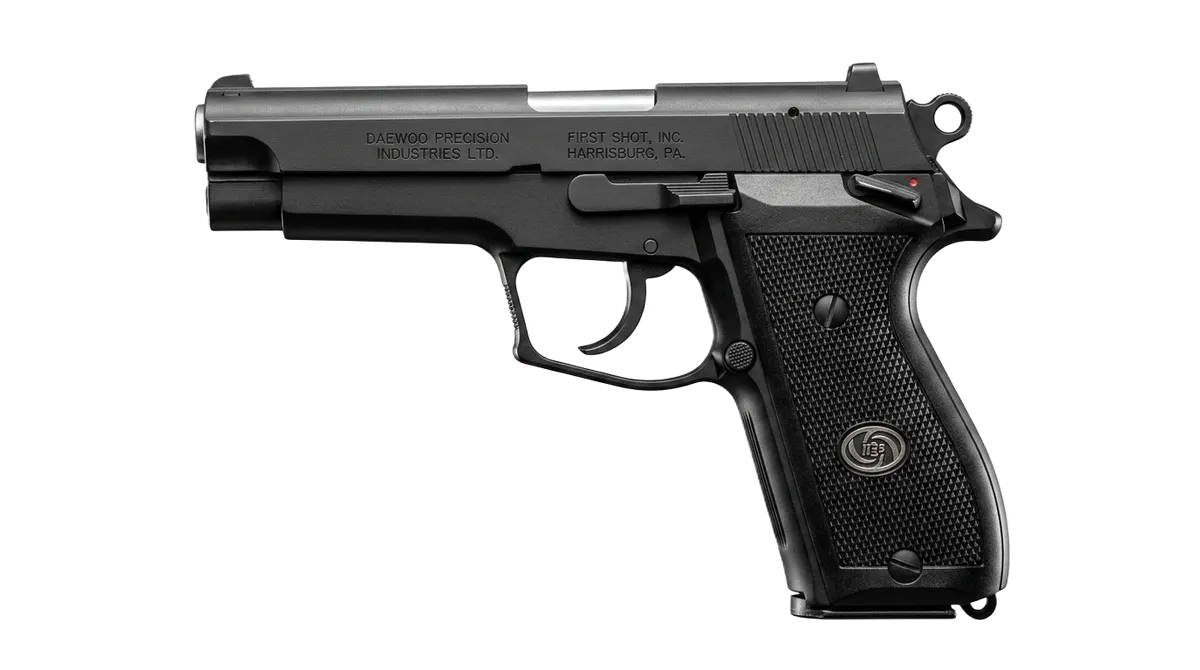 1989South Korea
South Korean 9×19 mm Parabellum semi-automatic pistol, the ROK Army service pistol; notable for its unique 'fast action' (triple action) safety system.
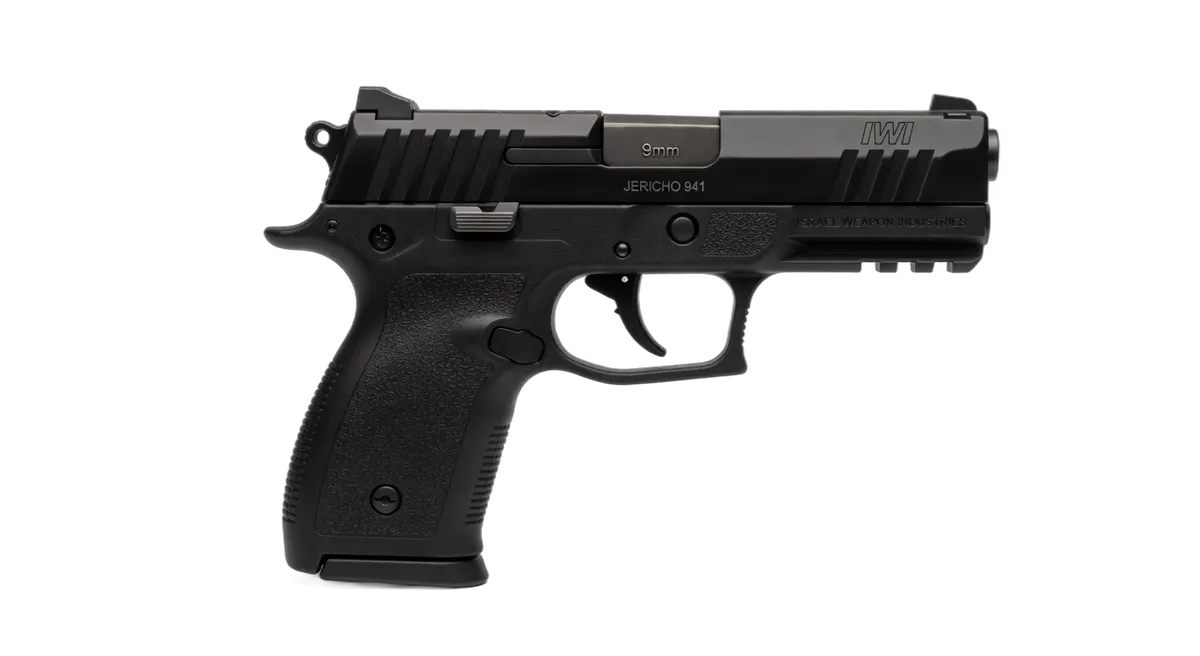 1990Israel
Israeli semi-automatic pistol derived from the CZ 75: short-recoil locking, 9×19 and .40 S&W calibers, issued to Israeli police and many security forces.
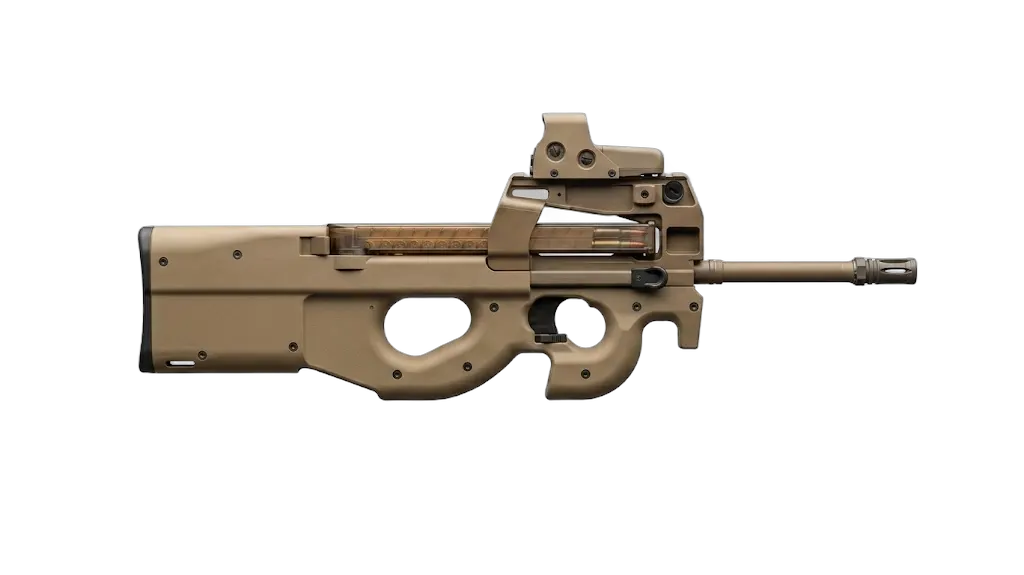 1990Belgium
Bullpup Personal Defence Weapon in 5.7×28 mm with a 50-round translucent top-mounted horizontal magazine: designed for vehicle crews and rear-echelon personnel, capable of defeating CRISAT body armor.
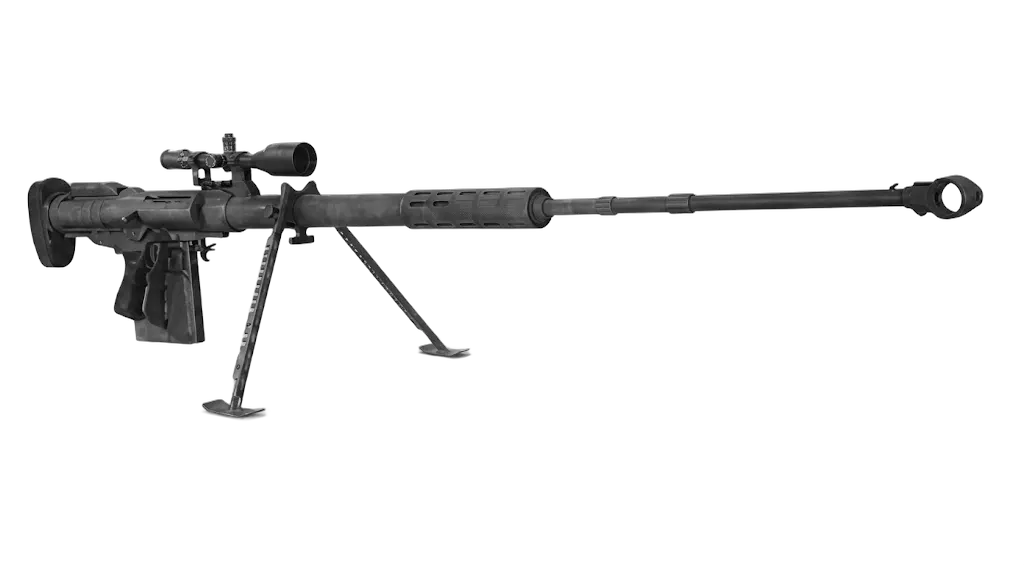 1990Hungary
Hungarian semi-automatic anti-materiel rifle in 14.5×114 mm, able to neutralise lightly armoured vehicles and bunkers at long range.
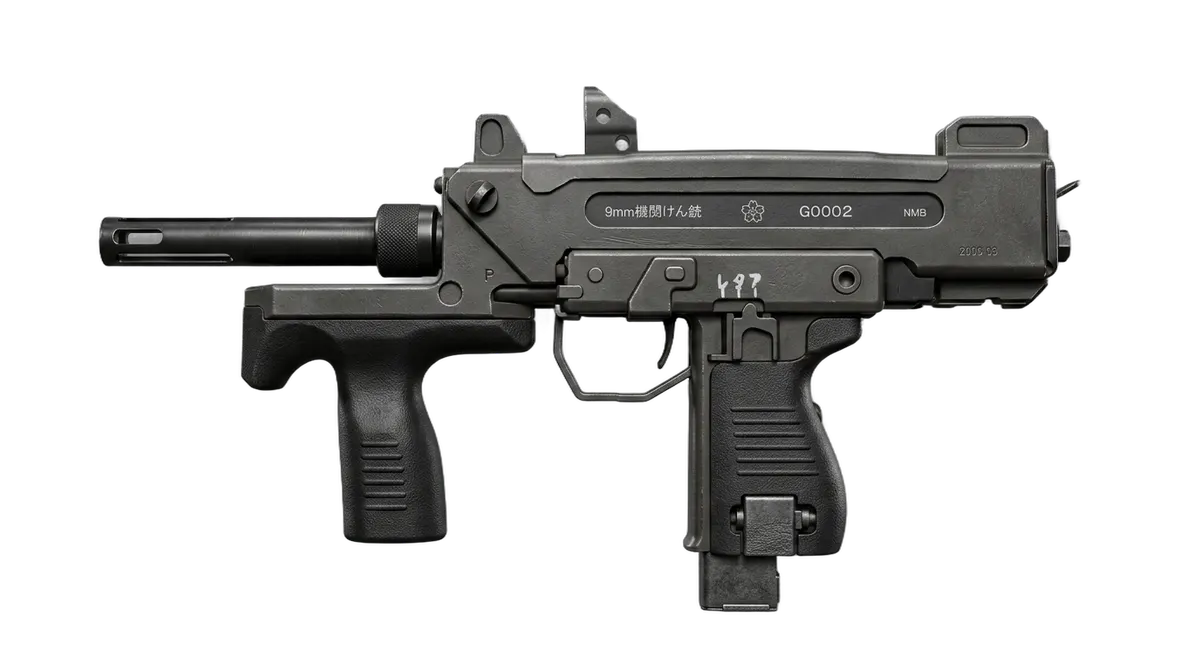 1990Japan
Compact Japanese 9×19 mm submachine gun derived from the Mini Uzi, license-produced to equip vehicle crews, military police and security units of the JSDF.
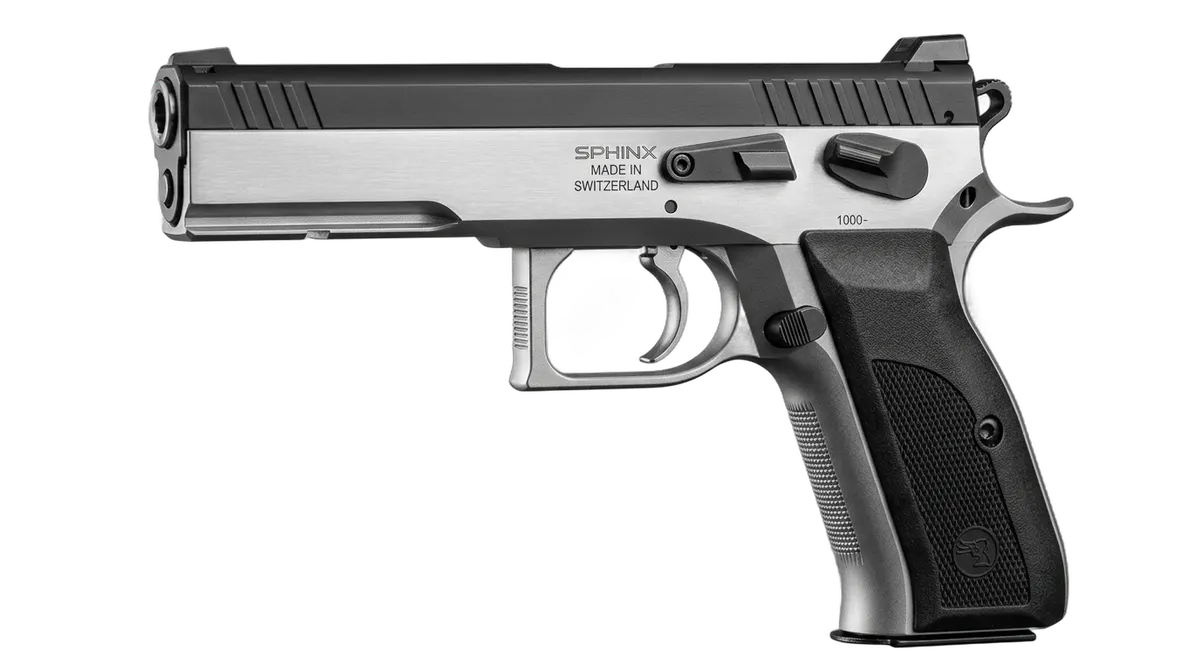 1990Switzerland
High-end Swiss semi-automatic pistol conceptually derived from the CZ 75, built with very tight tolerances and premium finishes for sport shooting, defence and professional use.
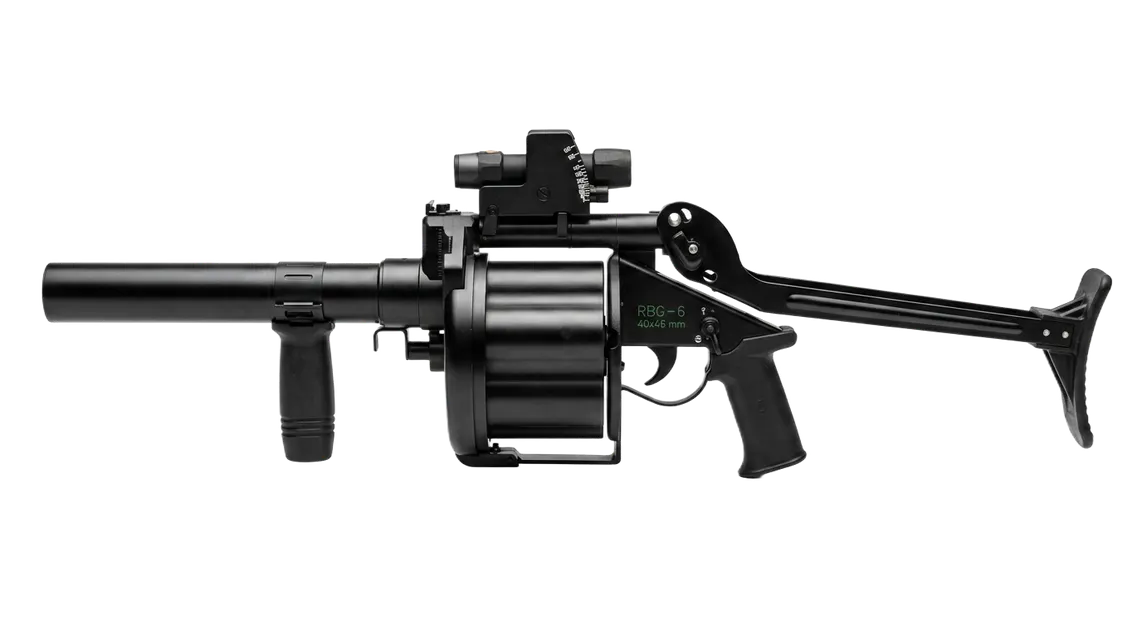 1990Croatia
Croatian 40×46 mm revolver grenade launcher, inspired by the South African Milkor MGL: six rounds in a rotating drum.
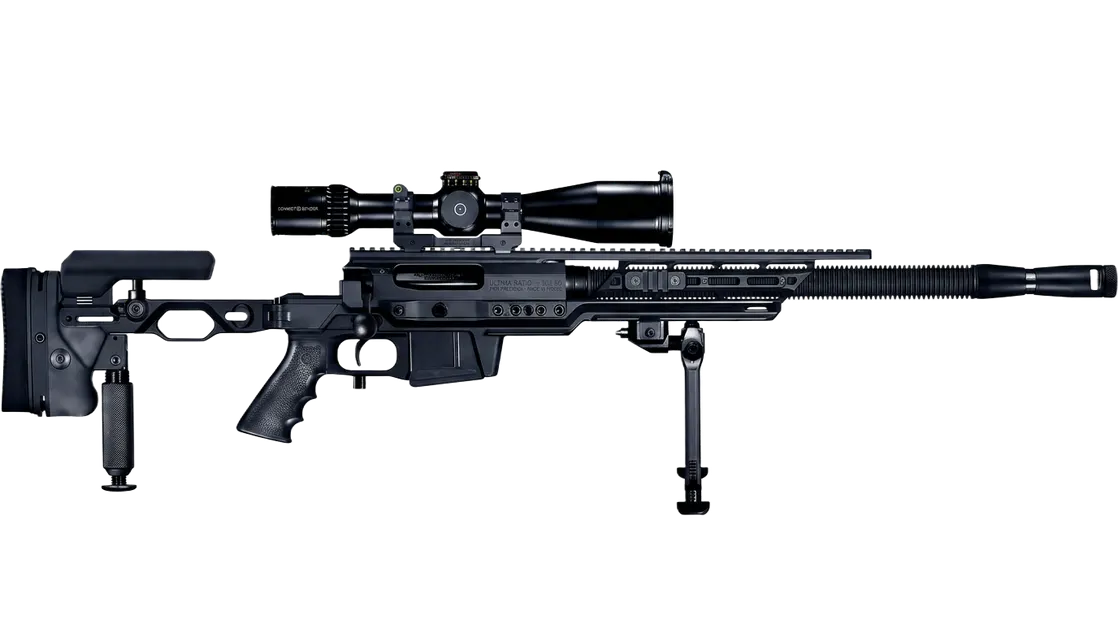 1991France
Modular bolt-action precision rifle in .308 Winchester adopted by French special forces and gendarmerie units (GIGN, RAID).
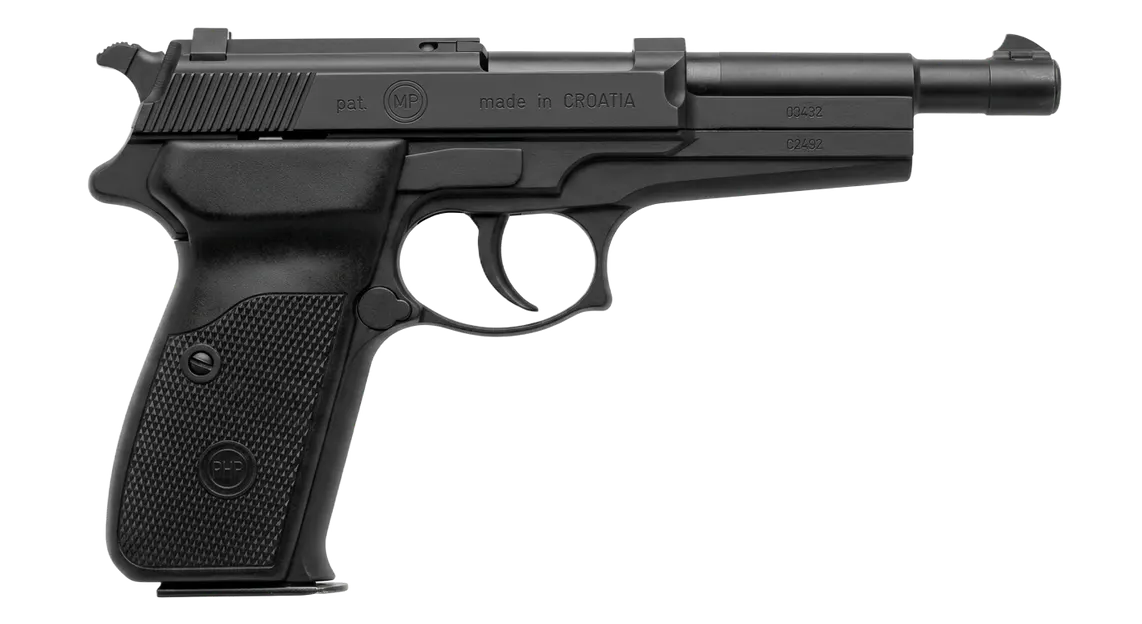 1991Croatia
First Croatian semi-automatic pistol, urgently developed in 1991 along the lines of the Walther P38 / Beretta 92.
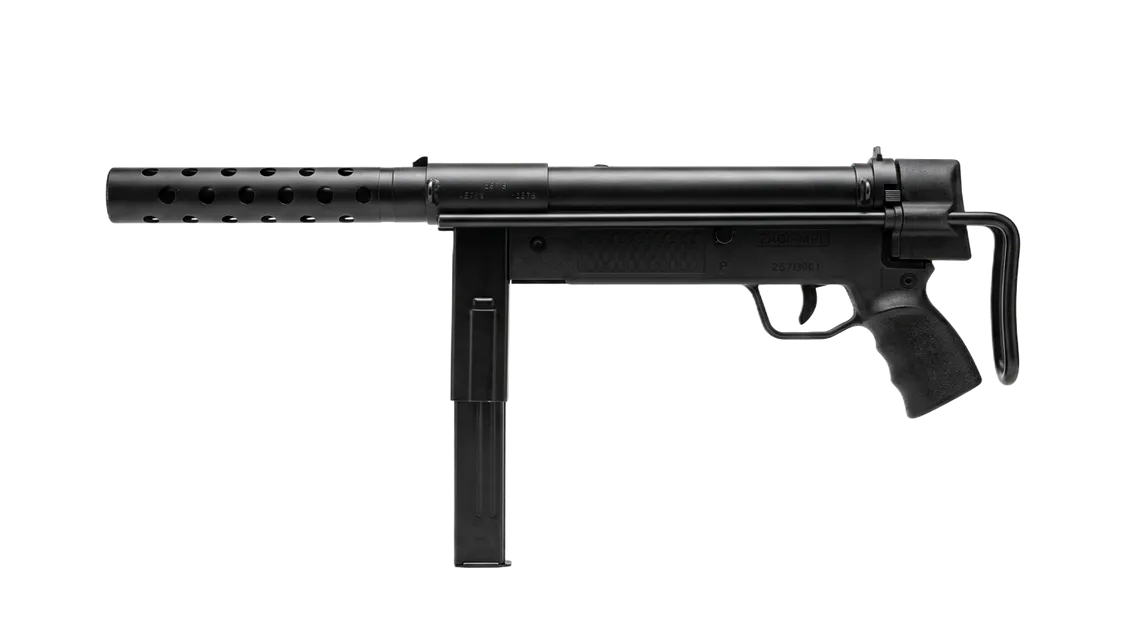 1991Croatia
Croatian submachine gun derived from the MP40 and the Yugoslav M56, produced ad hoc in 1991 for irregular forces.
With the end of the USSR come compact carbines, modular systems and a renewed focus on urban combat.
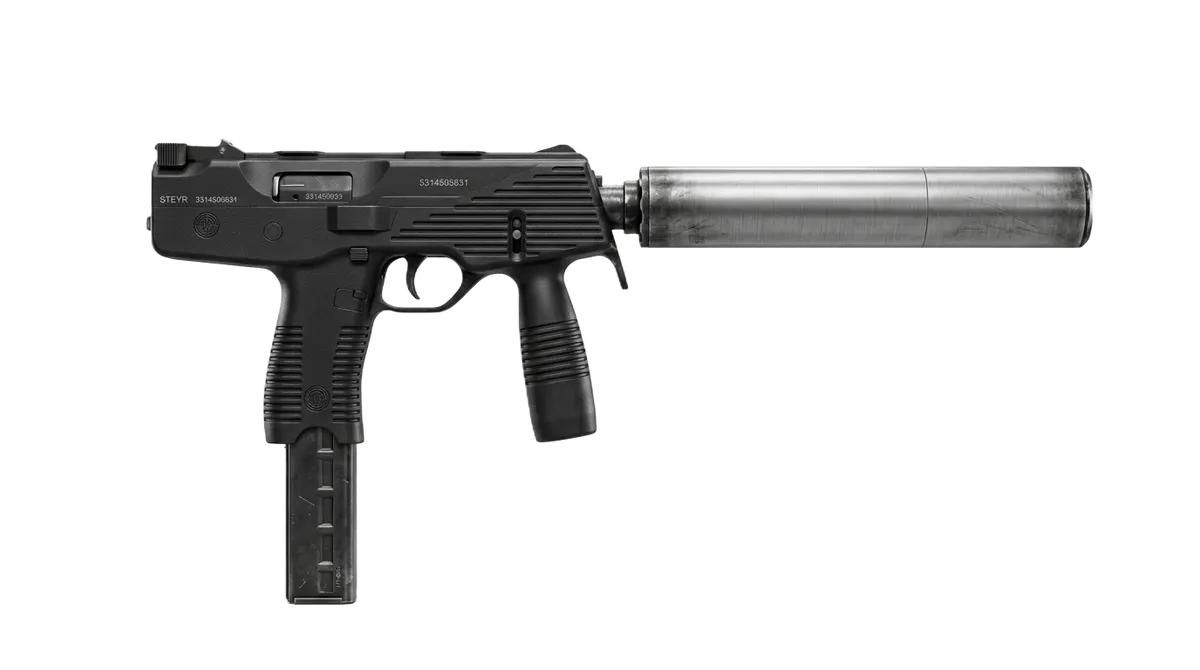 1992Austria
Compact 9×19 mm machine pistol with a futuristic all-polymer design and a vertical foregrip.
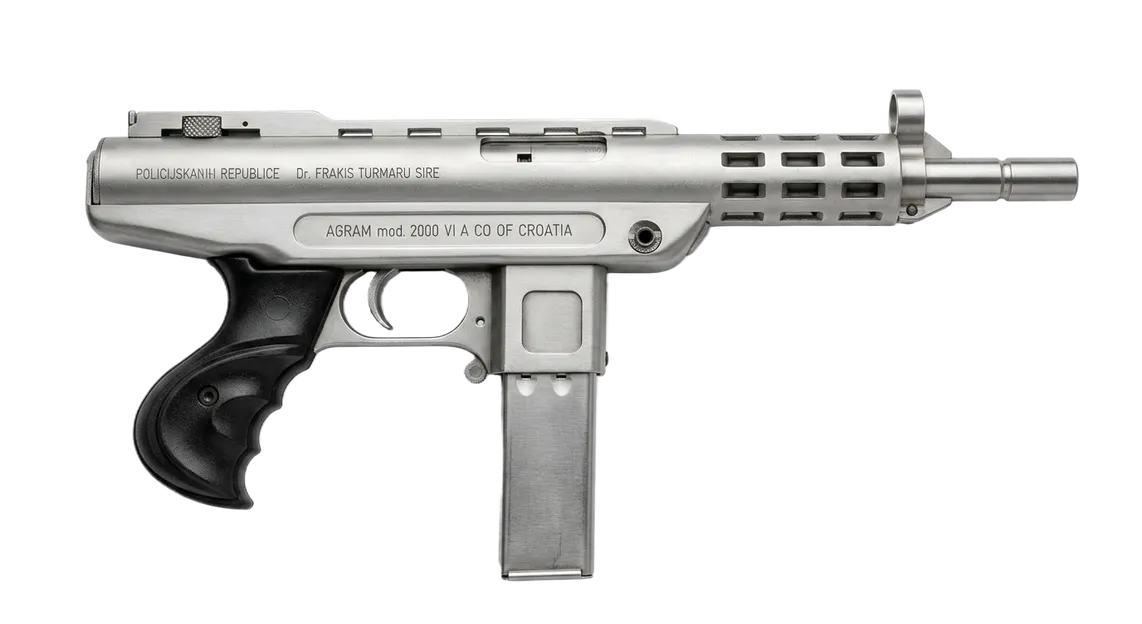 1992Croatia
Compact Croatian submachine gun derived from the Beretta M12, produced during the Croatian War of Independence.
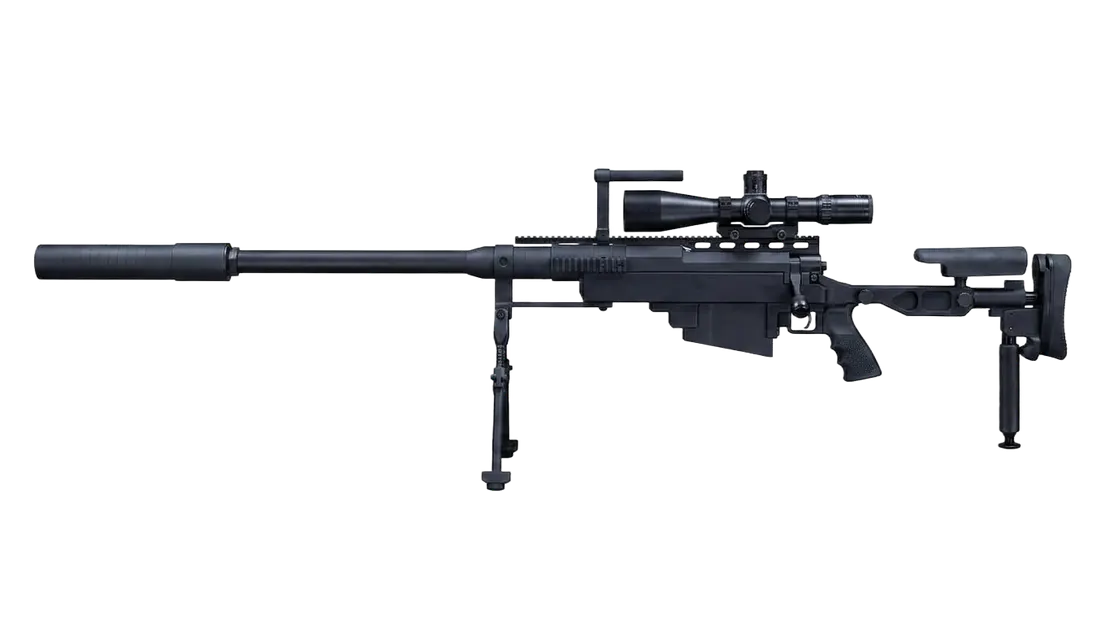 1993France
French anti-materiel rifle in .50 BMG, adopted by the Armée de Terre as the FR-12.7 for long-range engagements against vehicles and hardened targets.
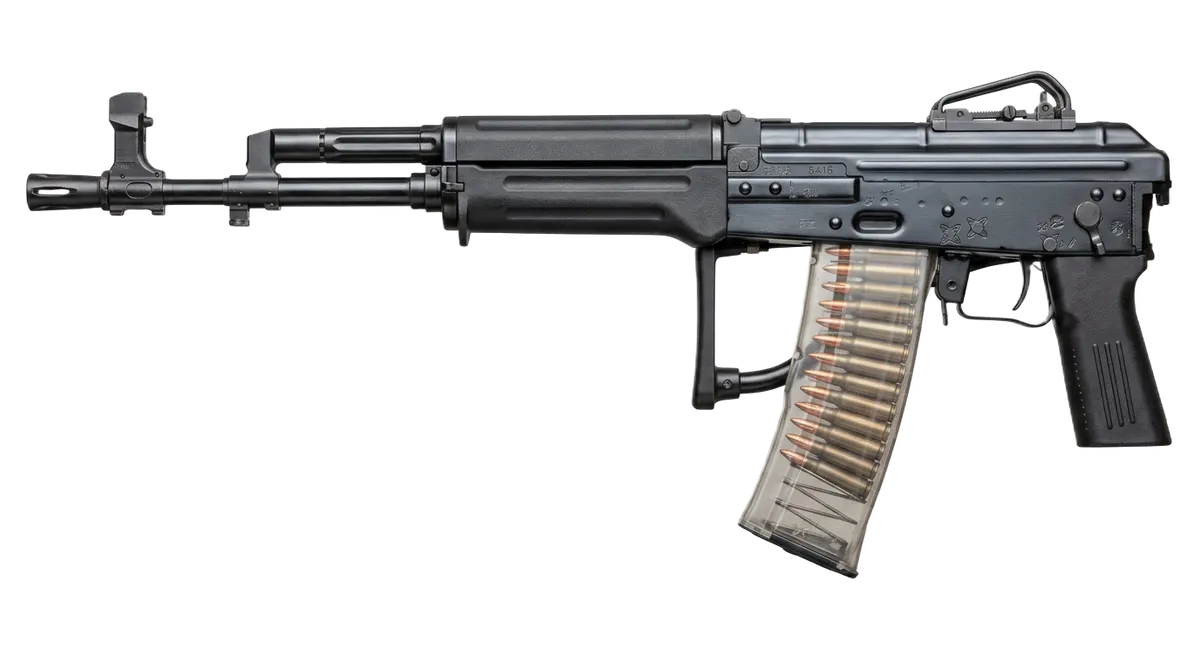 1993Czech Republic
Czechoslovak/Czech modular family of small arms derived from the AK in 5.45×39 mm (later 5.56 NATO): assault rifle, short carbine and LMG with heavy barrel, side-folding steel stock.
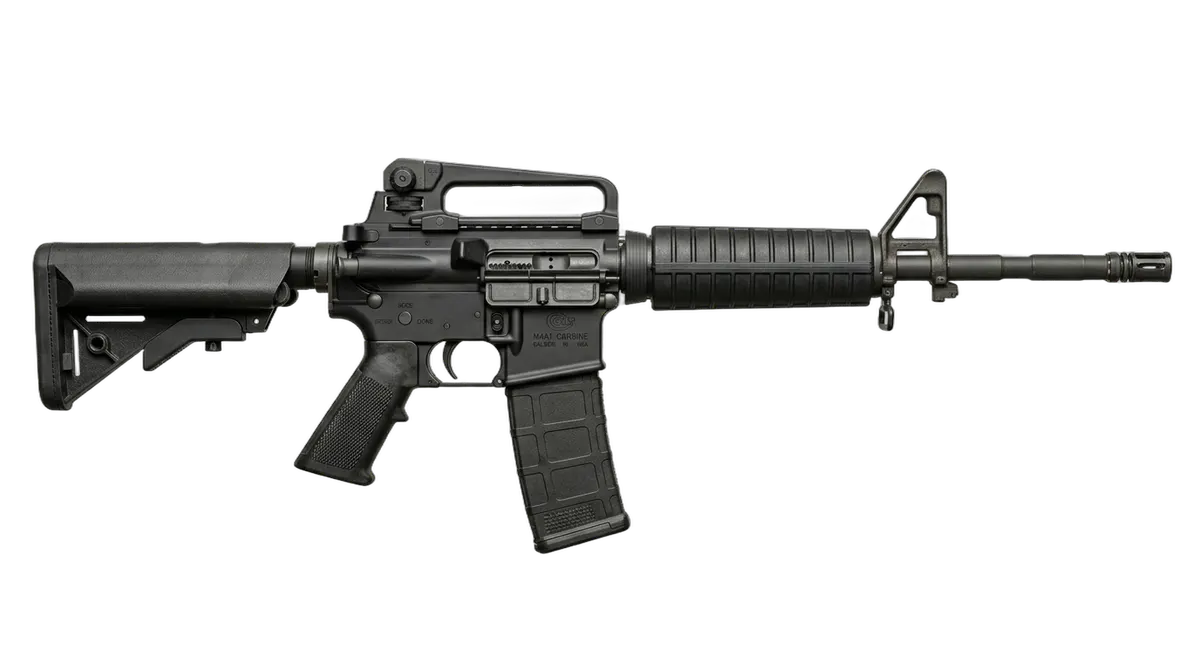 1994United States
M16-derived carbine with telescoping stock and short barrel. Standard for US special forces and infantry.
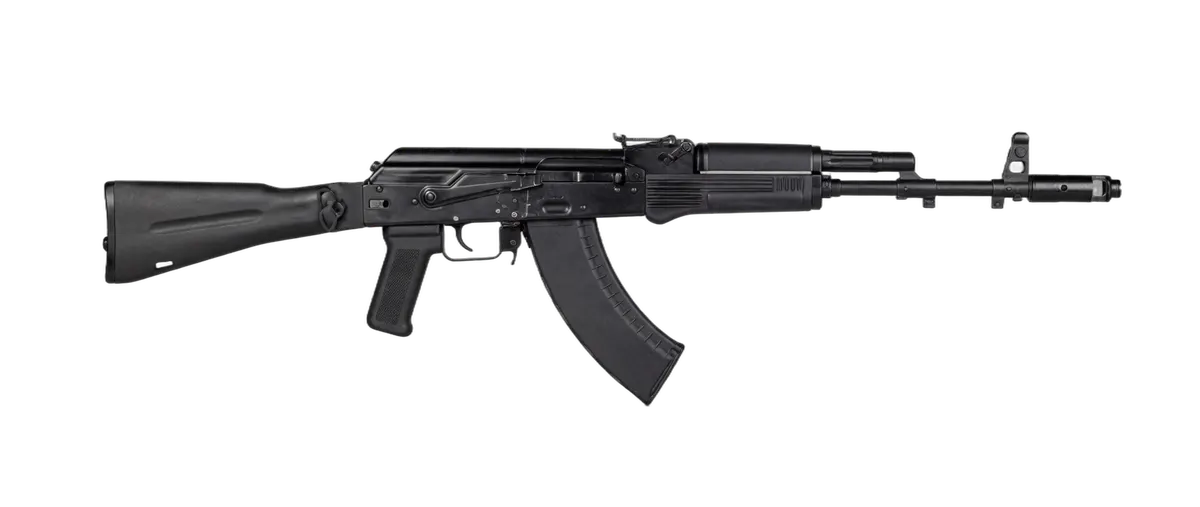 1994Russia
Russian "100"-series assault rifle in 7.62×39 mm: combines the AK-74M mechanics with the legacy AKM cartridge, a side-folding black polymer stock and modern furniture.
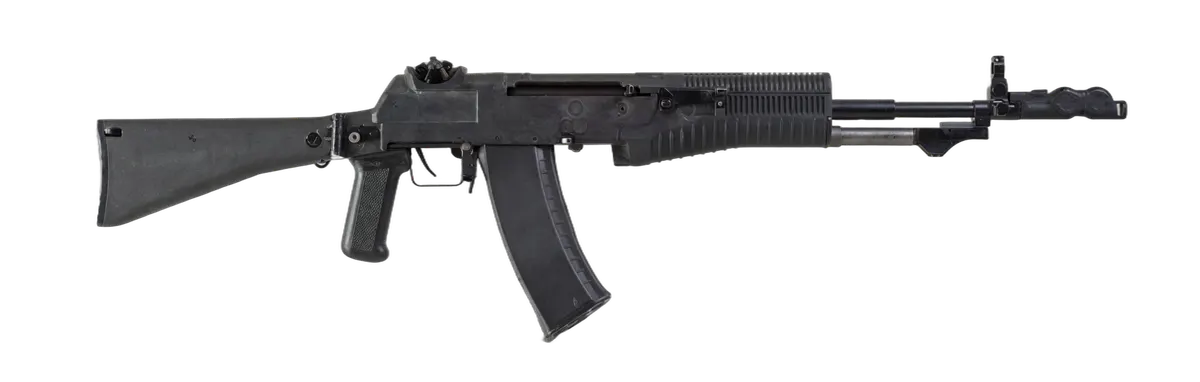 1994Russia
Russian assault rifle with a complex "shifted recoil" mechanism: it fires a two-round burst at about 1800 rpm before recoil reaches the shooter's shoulder, dramatically tightening groups on protected targets.
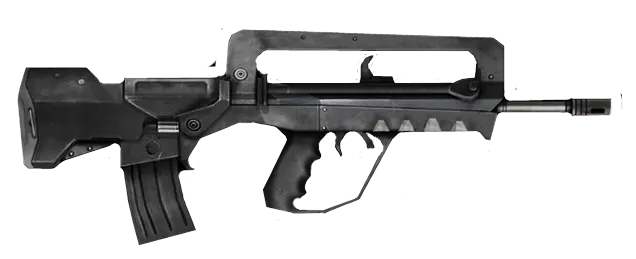 1994France
Evolution of the FAMAS F1 with STANAG magazines, oversized trigger guard and faster-twist barrel for SS109 ammunition.
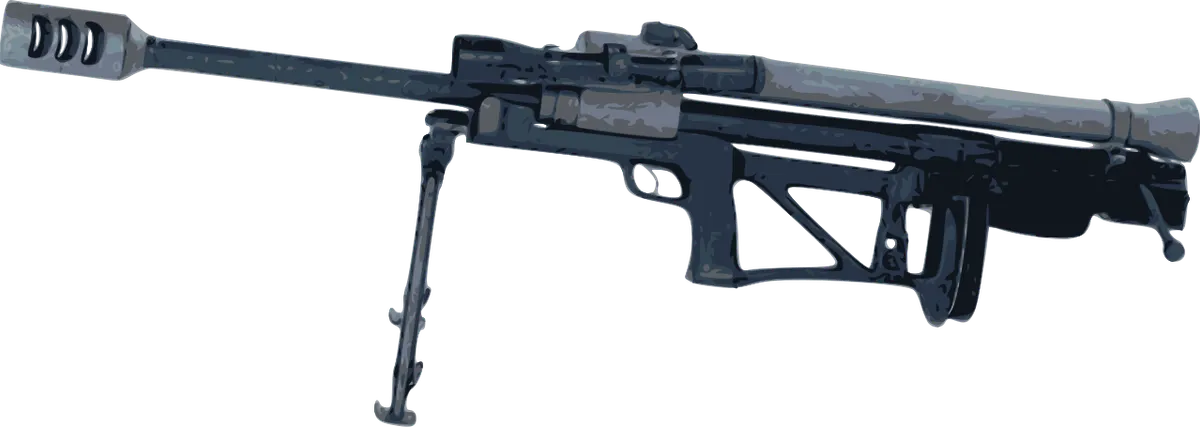 1994Croatia
Croatian 20×110 mm Hispano anti-materiel rifle, designed to engage Serbian tank optics during Operation Storm.
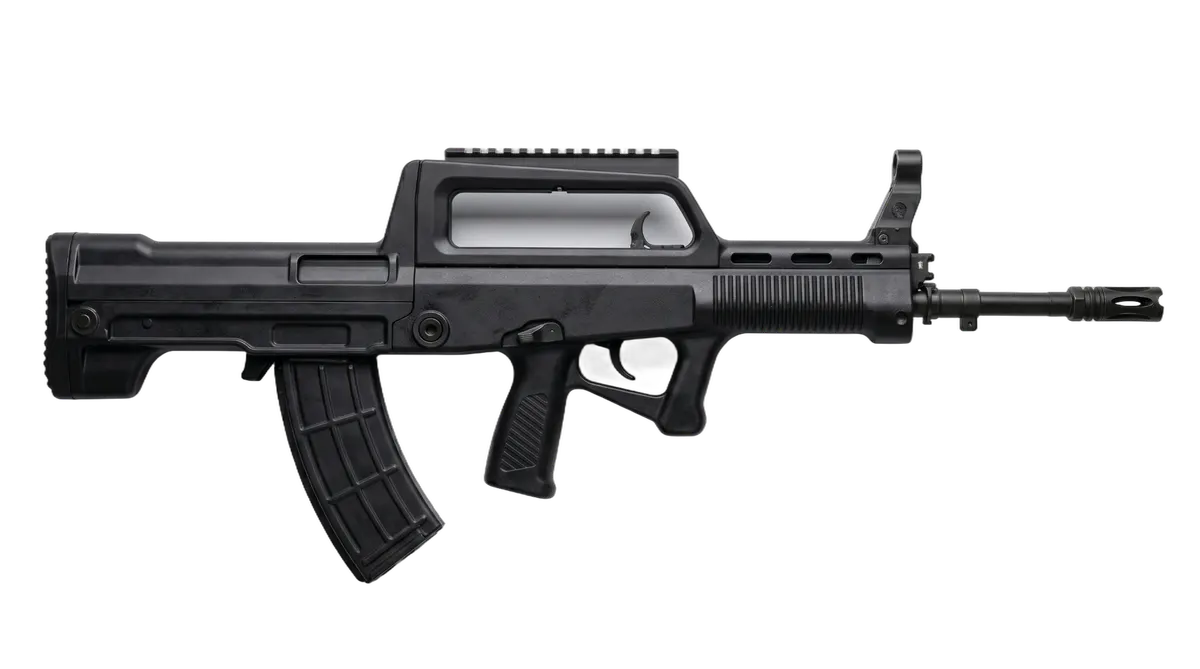 1995China
Chinese bullpup assault rifle in proprietary 5.8×42 mm caliber, standard issue for the PLA. Polymer construction, gas-operated with rotating bolt.
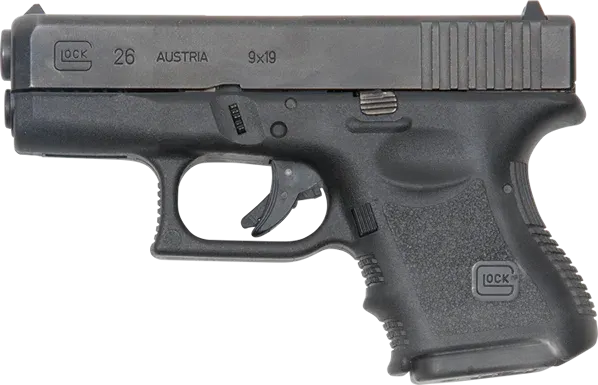 1995Austria
Subcompact 9×19 mm Parabellum pistol, the founder of the 'Baby Glock' family and one of the world's most popular concealed-carry handguns.
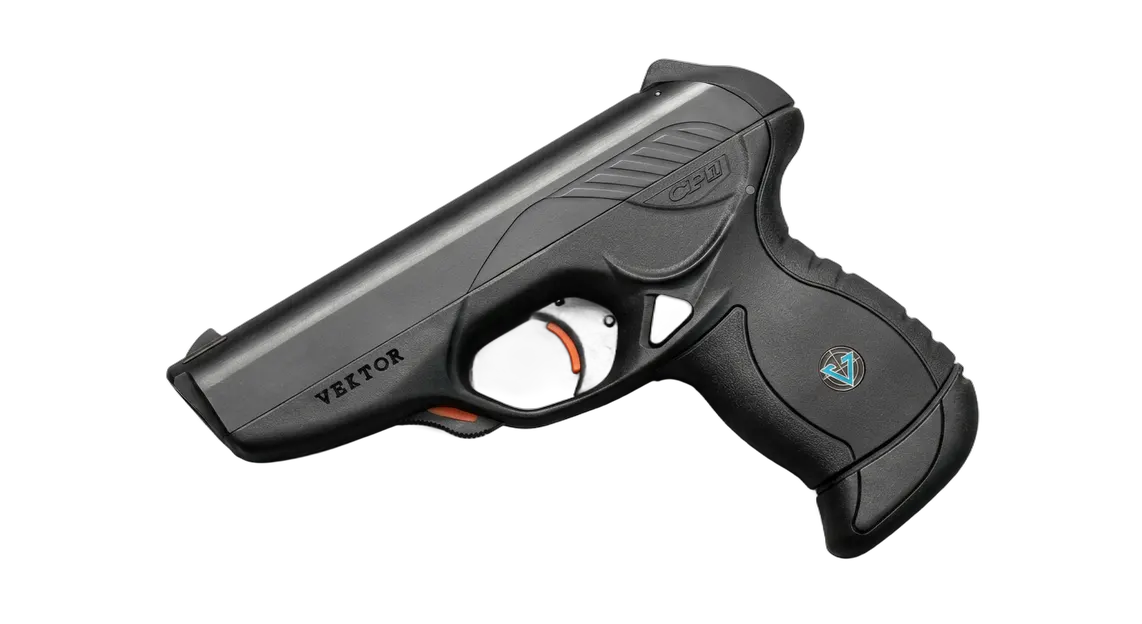 1996South Africa
South African compact 9×19 mm Parabellum semi-automatic pistol with an ergonomic polymer frame and strikingly futuristic lines, fed by a high-capacity double-stack magazine.
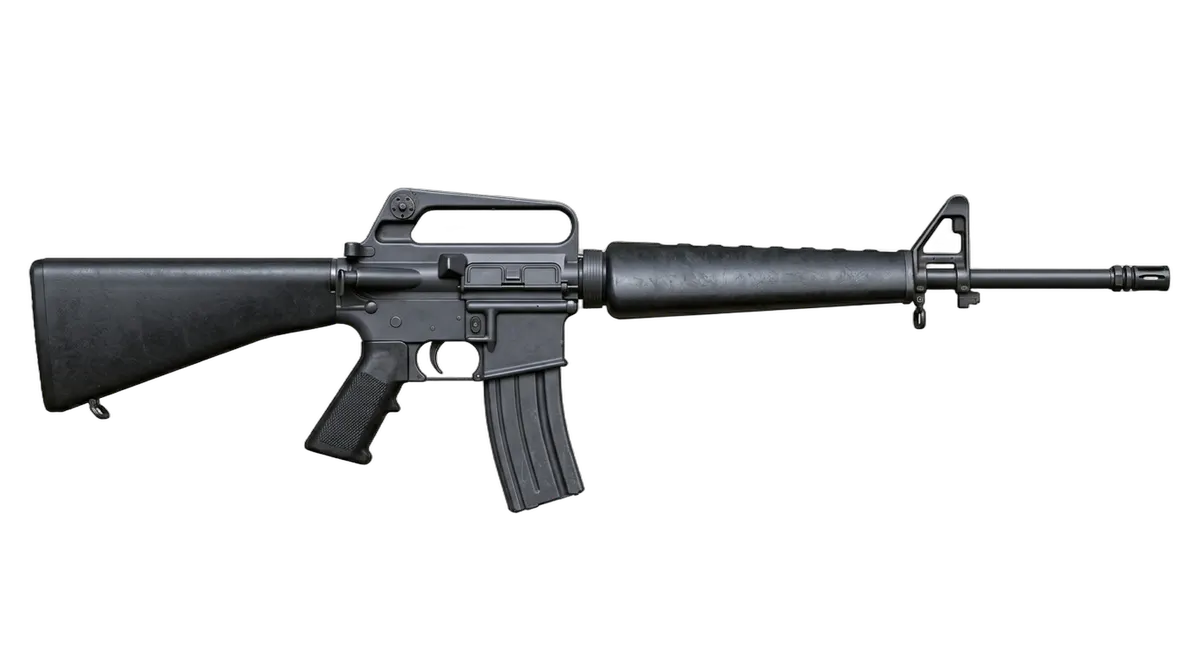 1997United States
Fourth variant of the M16 family: flat-top upper receiver with Picatinny rail for modular optics.
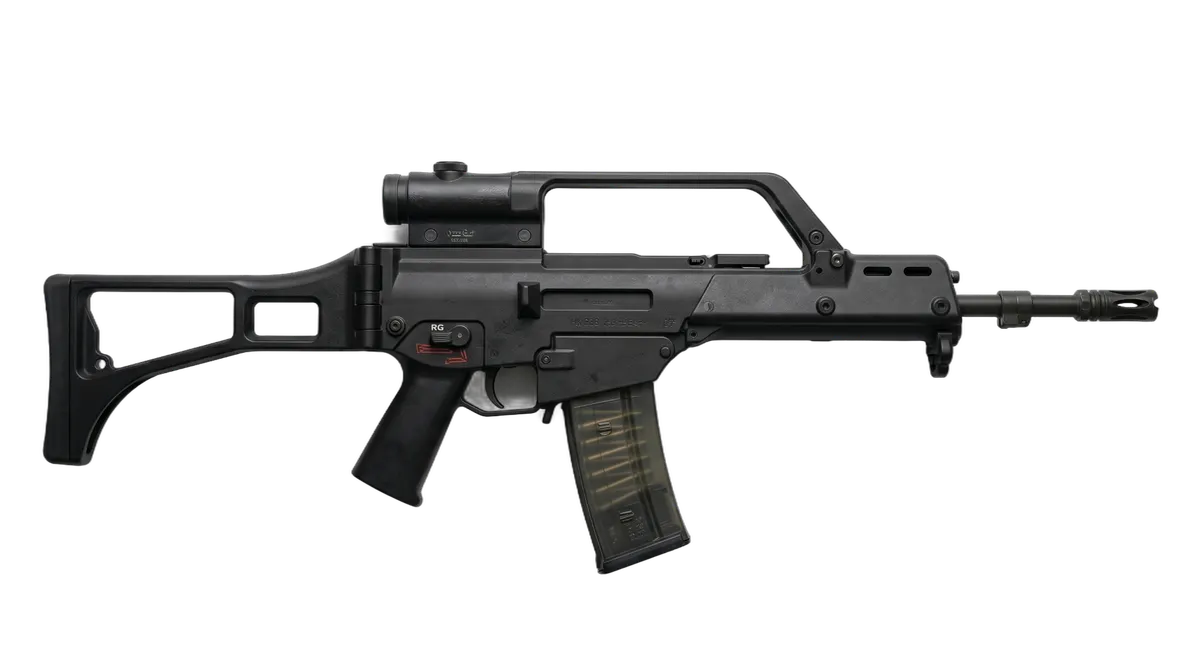 1997Germany
German 5.56 NATO assault rifle with polymer receiver, short-stroke gas piston and an integrated optic on the carry handle in the original versions.
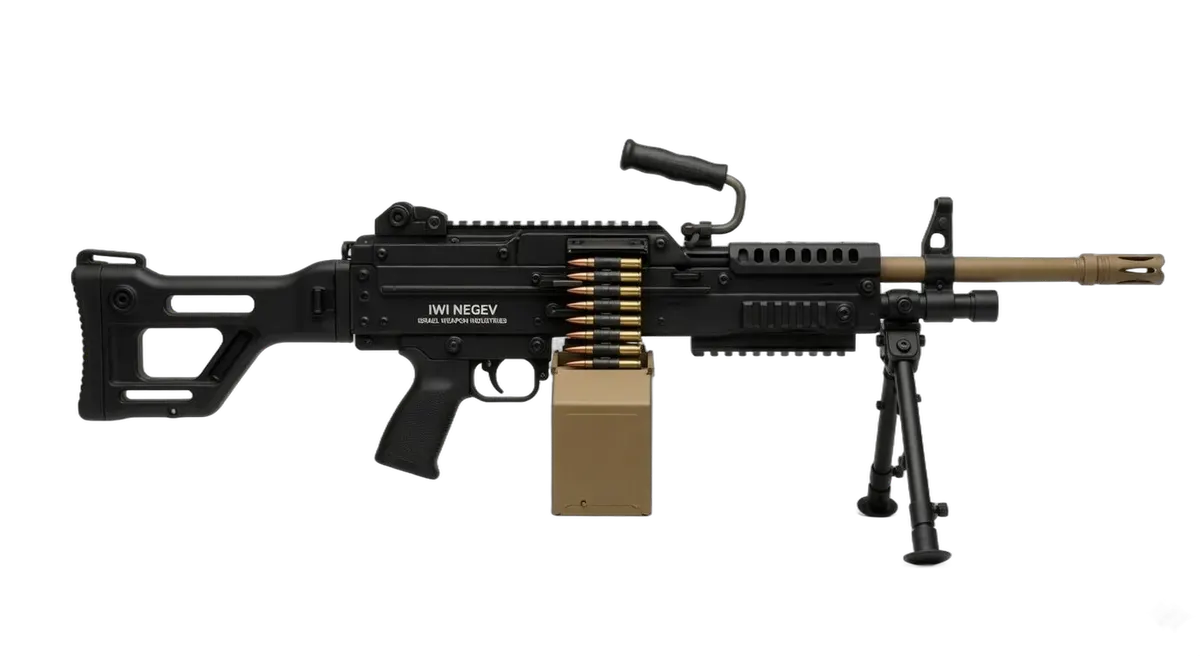 1997Israel
Israeli light machine gun in 5.56×45 NATO with dual belt or magazine feed, designed to serve both as a SAW and as a squad automatic rifle.
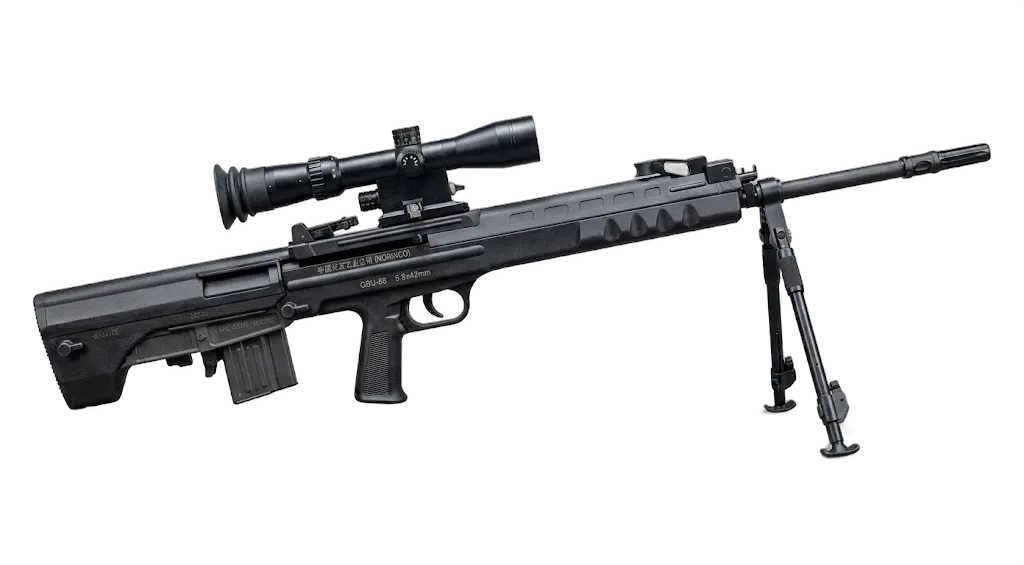 1997China
Chinese designated marksman rifle in bullpup configuration, chambered in the proprietary long-range 5.8×42 mm DBP88 caliber. The first indigenous semi-automatic precision weapon of the PLA.
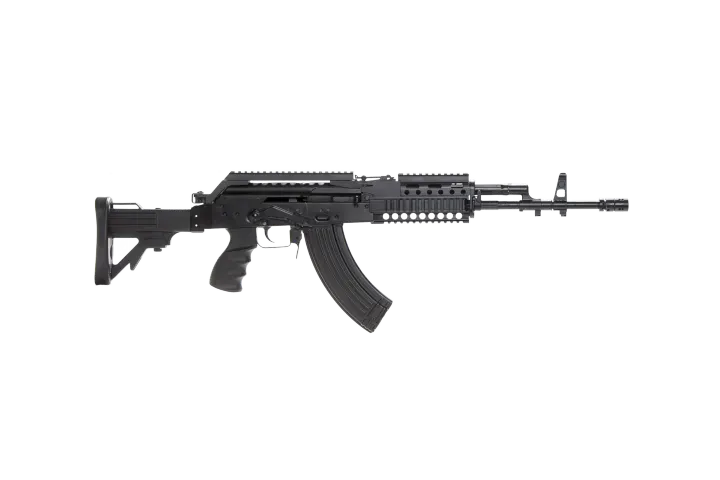 1997Poland
Polish AK-derived assault rifle, rechambered in 5.56×45 mm NATO. Standard issue of the Polish Armed Forces until the introduction of the Grot.
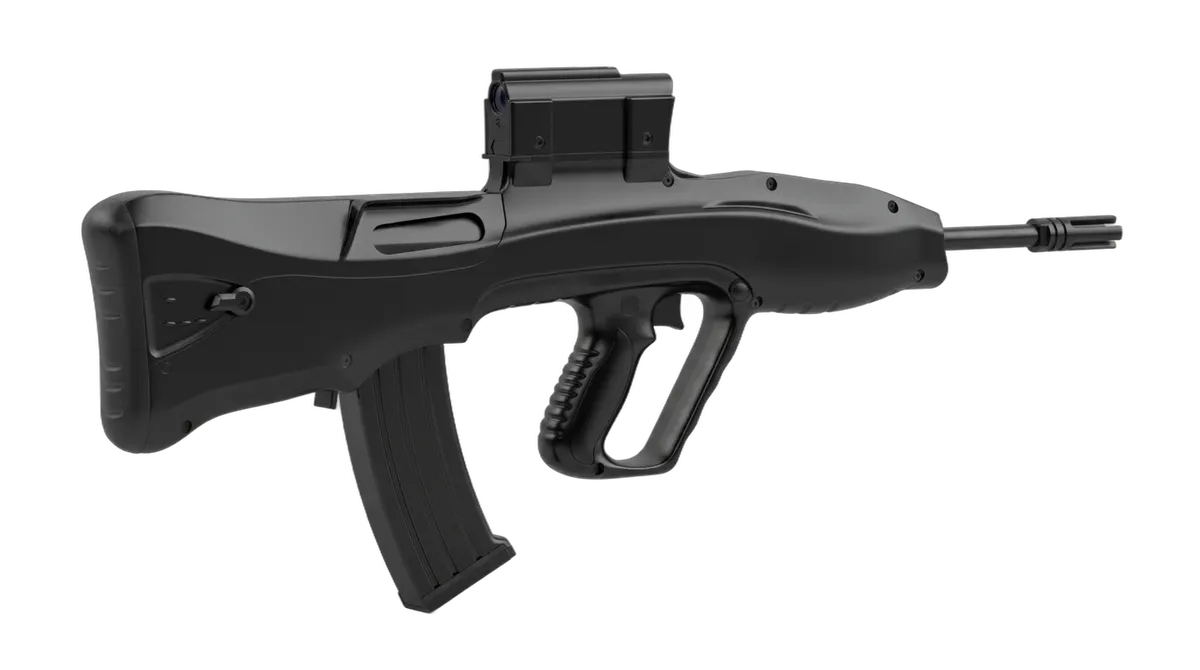 1997South Africa
South African bullpup assault rifle in 5.56×45 mm NATO, built around the Vektor R4/Galil mechanism housed in an ergonomic polymer chassis with integral optical sight.
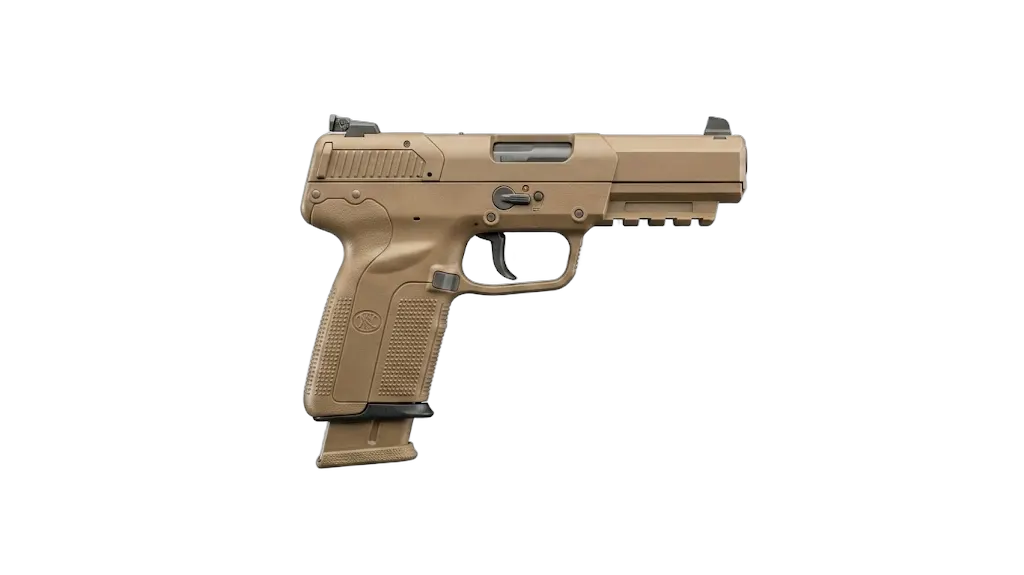 1998Belgium
Semi-automatic pistol in 5.7×28 mm with polymer frame and 20-round double-stack magazine: companion sidearm to the P90, capable of defeating light body armor.
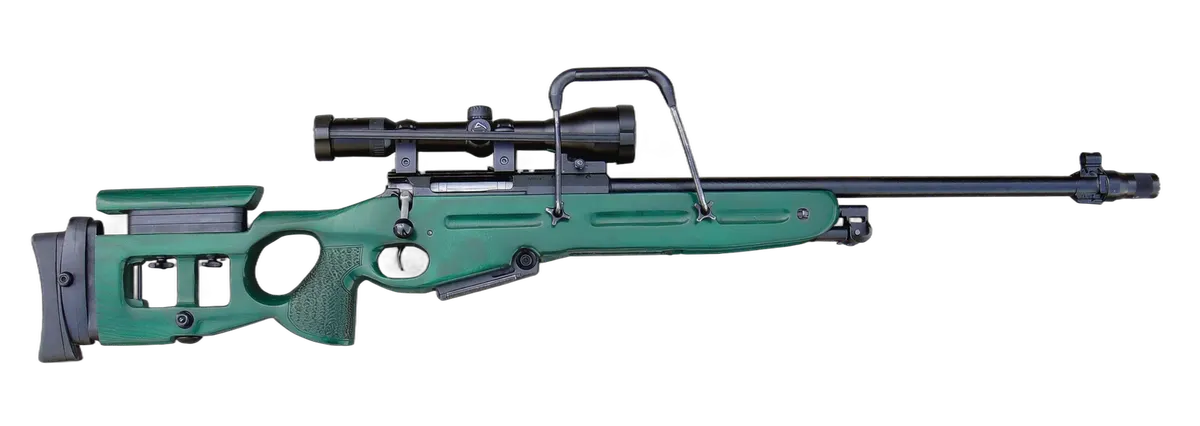 1998Russia
Russian bolt-action sniper rifle in 7.62×54R, derived from the Record-CISM target carbine. Adopted to complement the SVD in special units when sub-MOA accuracy is required.
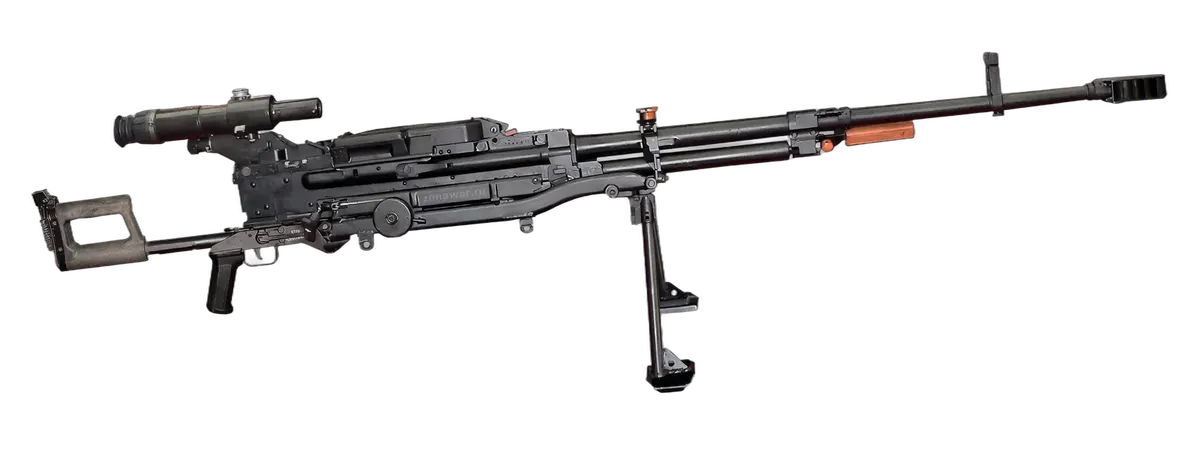 1998Russia
Russian heavy machine gun in 12.7×108 mm developed by the Degtyarev plant as a replacement for the NSV, lighter and with an improved-cooling barrel for sustained fire from tripod or bipod.
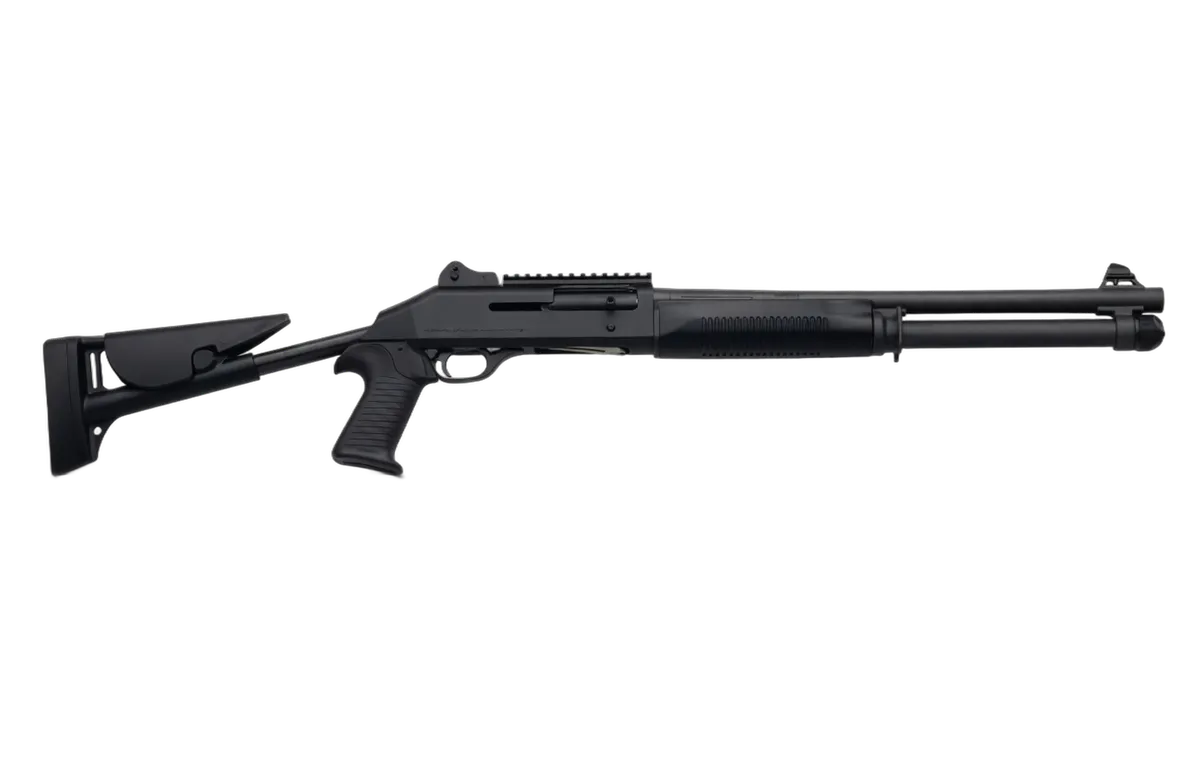 1998Italy
Italian semi-automatic 12-gauge combat shotgun developed by Benelli for the U.S. Marines JSCS programme; the first semi-auto adopted as a standard squad weapon by the USMC, officially designated M1014.
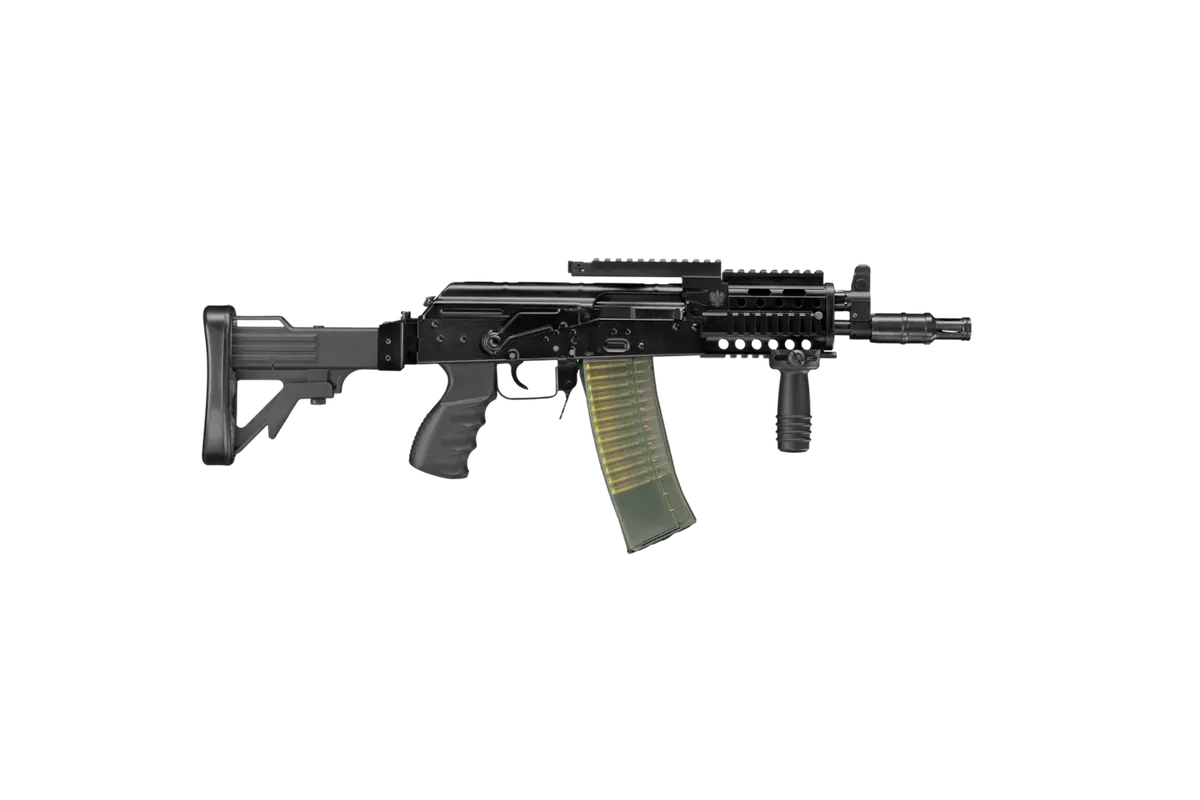 1998Poland
Compact version of the Beryl wz. 96 with shortened barrel. Issued to vehicle crews, paratroopers and Polish special forces.
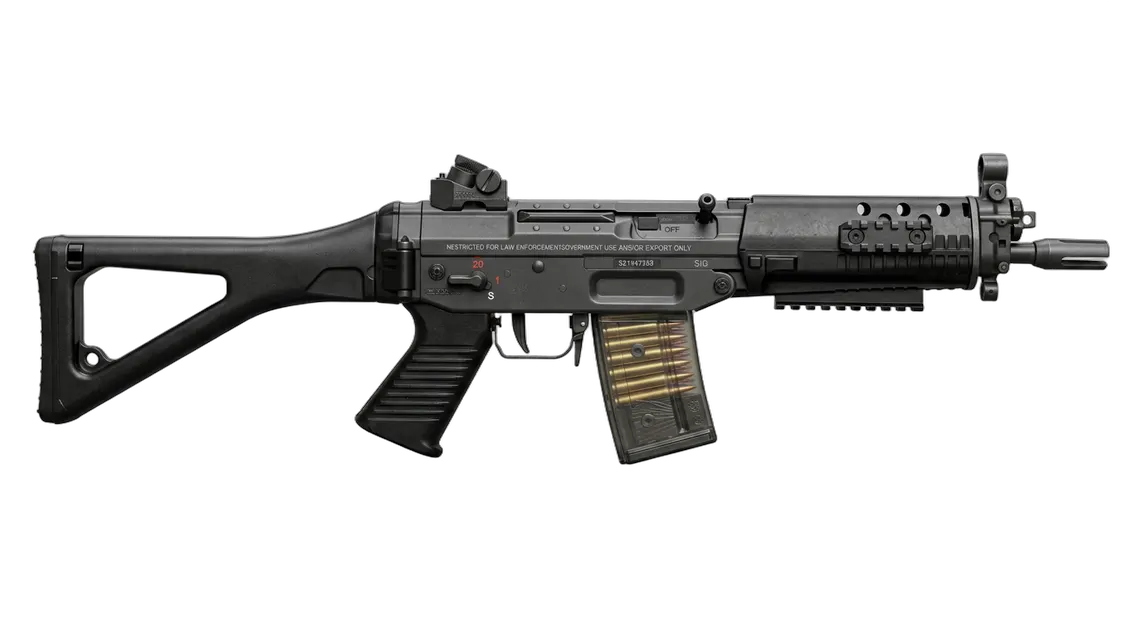 1998Switzerland
Ultra-compact version of the SG 550 family in 5.56×45 mm NATO, developed for special forces and police units. Short 226 mm barrel, side-folding stock and PDW/CQB configuration.
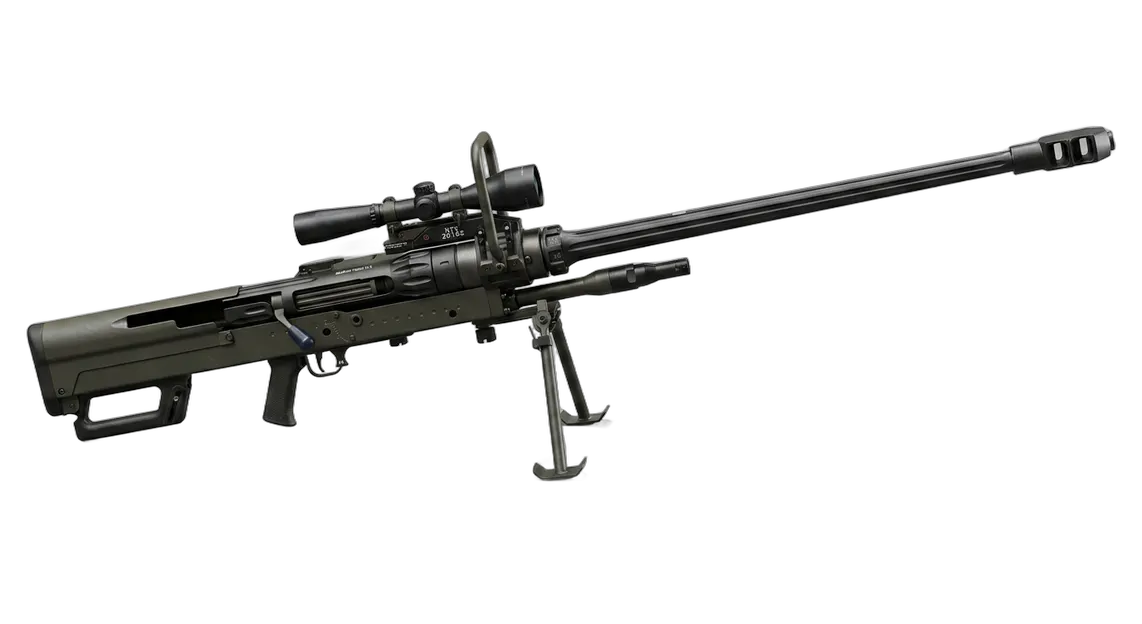 1998South Africa
South African modular anti-materiel rifle, convertible between 20×82 mm and 14.5×114 mm calibres by swapping the barrel assembly and magazine, mounted on a heavy bipod with skeleton stock.
 1998Austria
Lightweight bolt-action rifle built to Jeff Cooper's Scout Rifle specification: short, light, with a forward-mounted long-eye-relief optic.
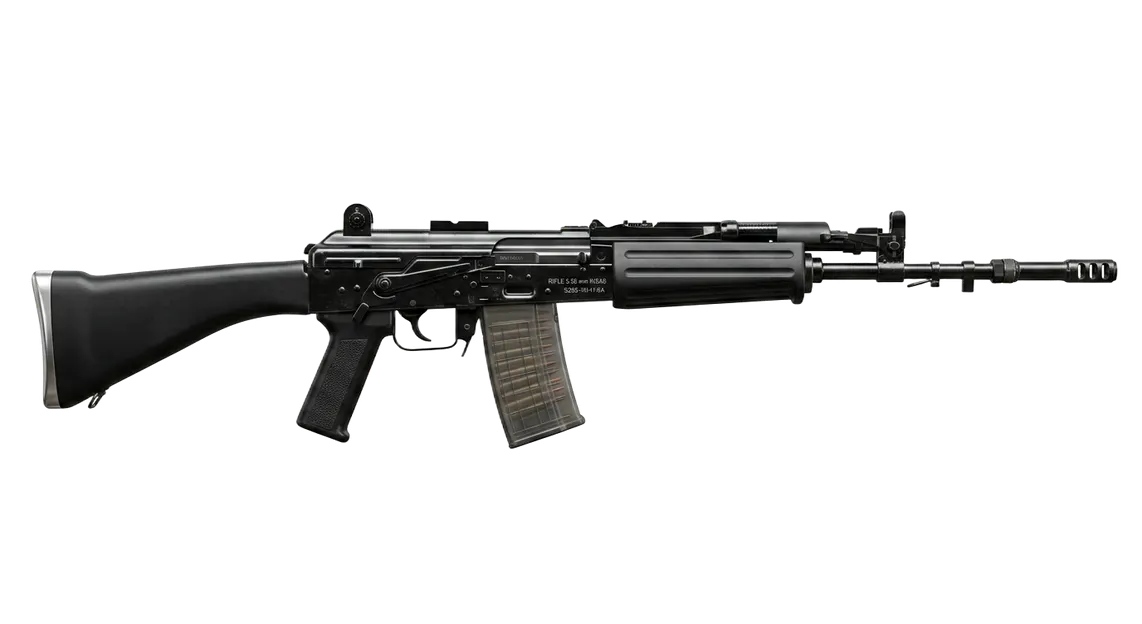 1998India
Standard Indian Army assault rifle since 1998, developed by DRDO/ARDE in 5.56×45 mm NATO.
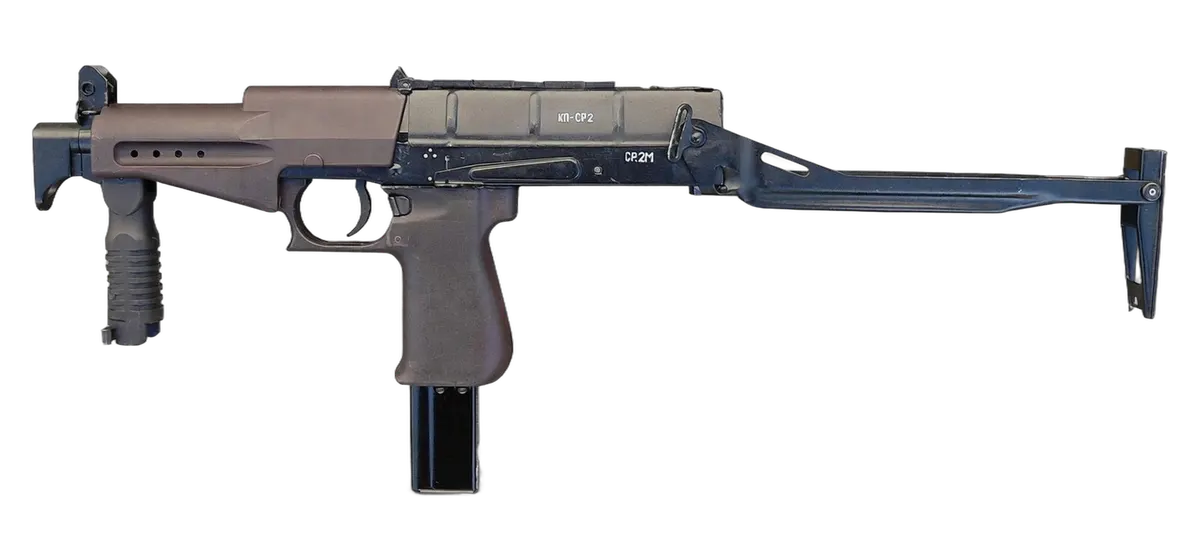 1999Russia
Russian 9×21 mm SP-10/SP-11 submachine gun developed by TsNIITochMash for the FSB and Spetsnaz units. High rate of fire, metal stock folding over the receiver and the ability to defeat heavy body armour.
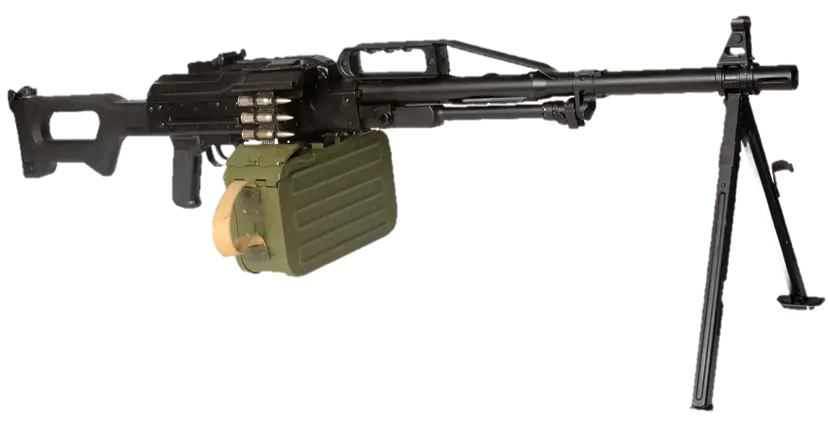 1999Russia
Russian general-purpose machine gun in 7.62×54R, an evolution of the PKM with a forced air-cooling barrel that removes the need for a barrel change in combat.
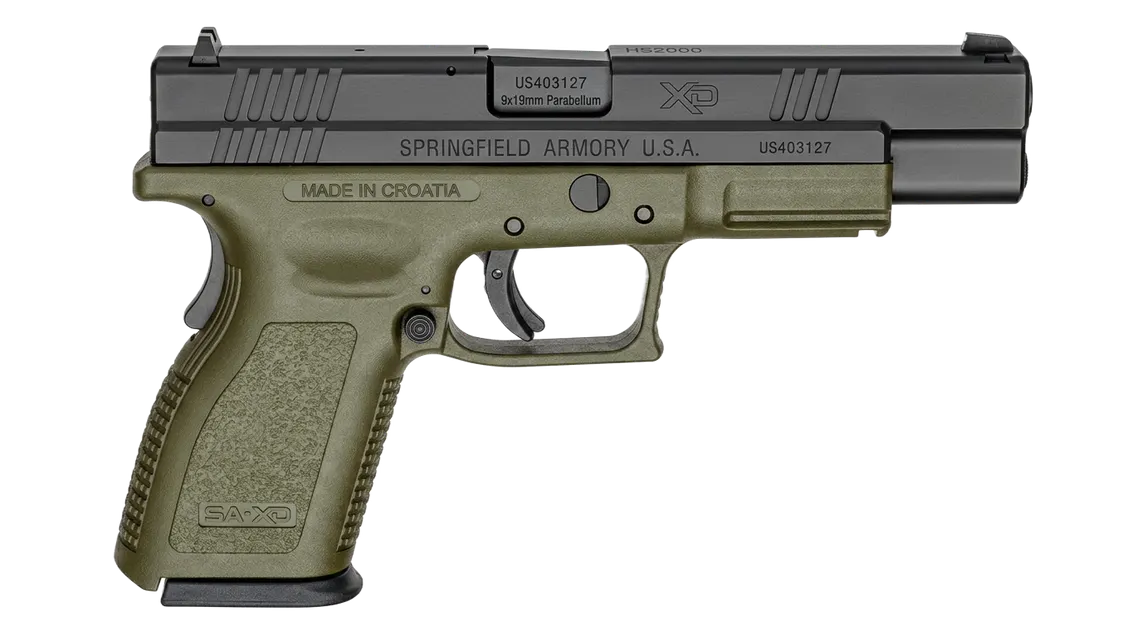 1999Croatia
Croatian striker-fired semi-automatic pistol in 9×19 mm, exported to the US as the Springfield XD.
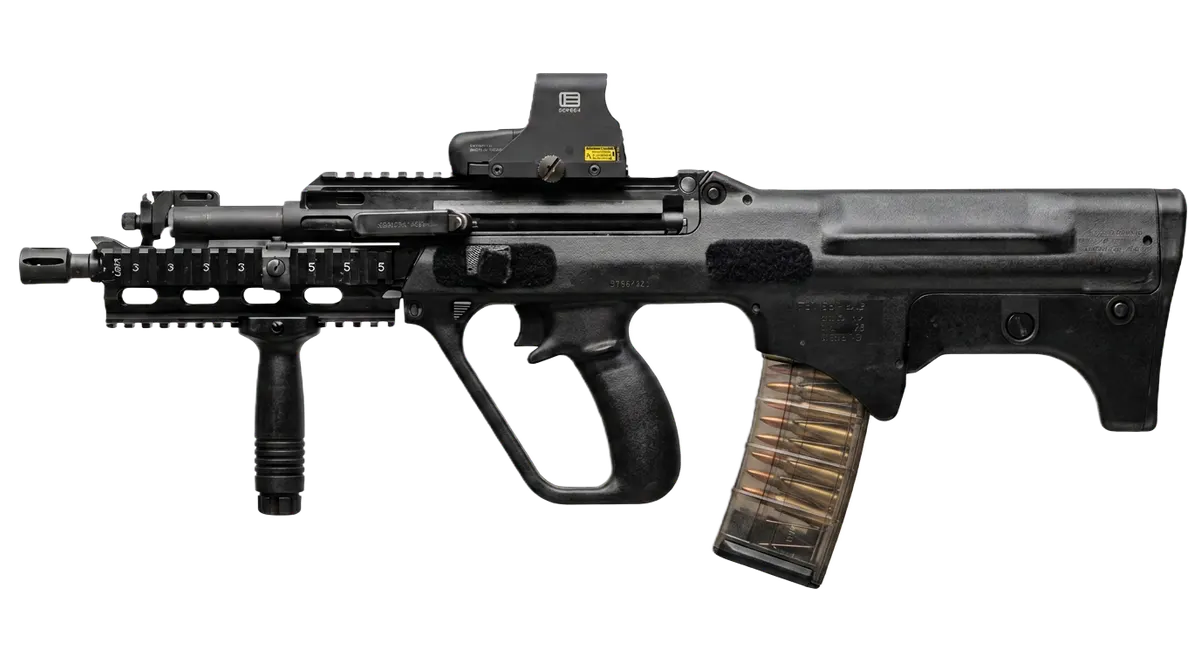 1999Singapore
5.56×45 NATO bullpup assault rifle, standard service weapon of the Singapore Armed Forces; integrated 1.5× optic, kevlar-reinforced polymer housing and a cheek-shield to deflect cases.
 2000Sweden
Swedish PDW built around the proprietary 6.5×25 CBJ cartridge (tungsten sabot bullet) capable of defeating heavy body armour beyond 50 m.
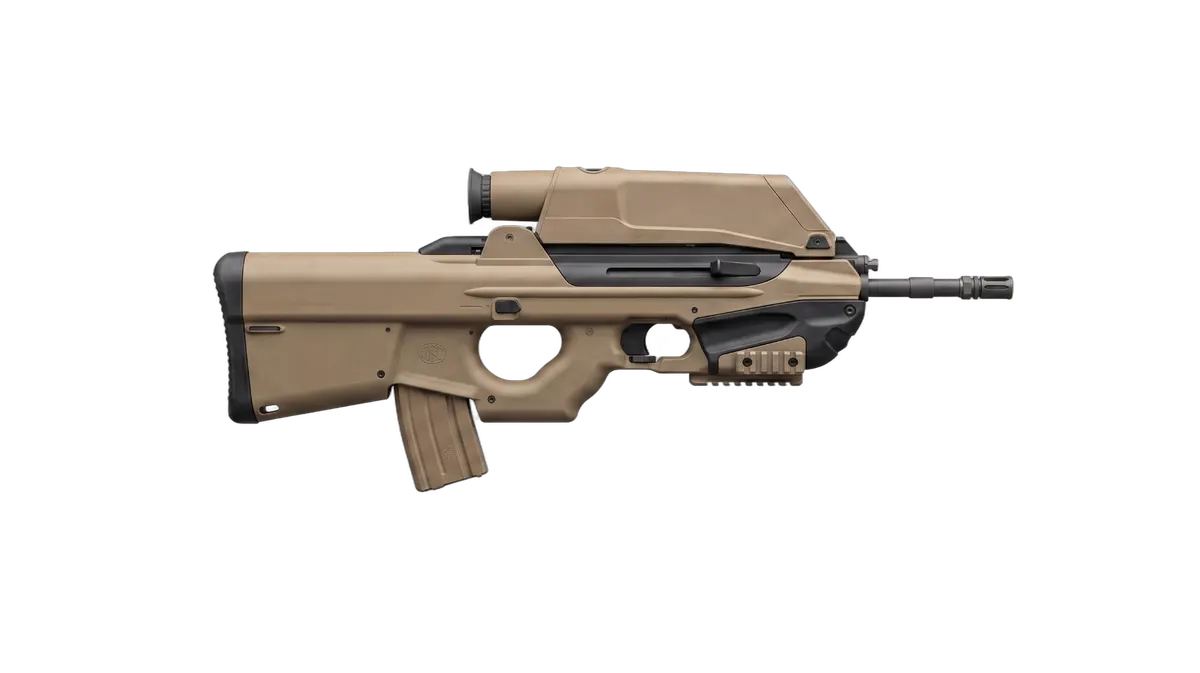 2001Belgium
Modular bullpup assault rifle in 5.56×45 mm NATO, fully ambidextrous thanks to forward case ejection toward the right: introduced by FN Herstal in 2001.
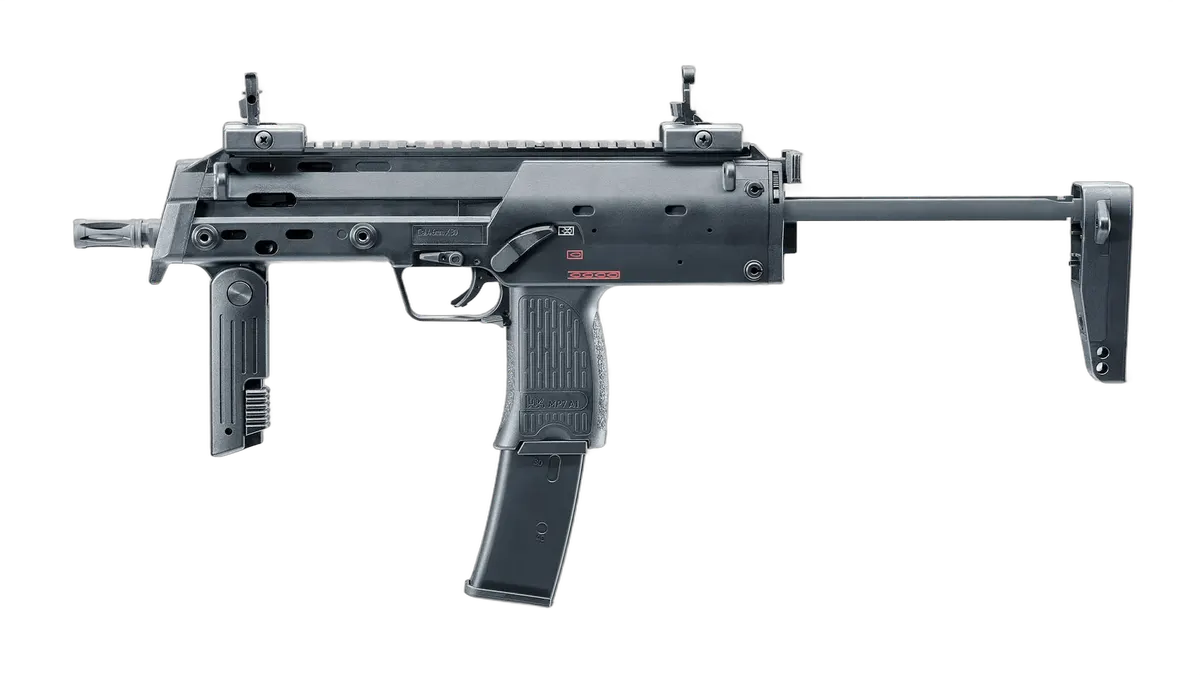 2001Germany
Compact Personal Defense Weapon chambered in the proprietary 4.6×30 mm HK round, able to defeat CRISAT-class body armour while keeping the size and recoil of a submachine gun.
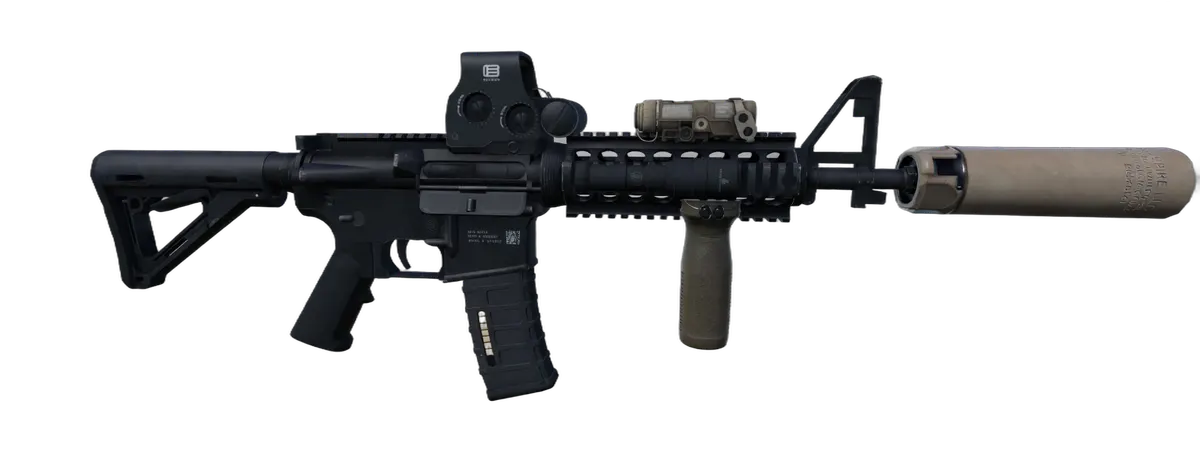 2001United Kingdom
5.56×45 NATO assault carbine adopted by UKSF (SAS, SBS, SRR, SFSG) as their standard weapon. Developed by Diemaco/Colt Canada as the C8 SFW (Special Forces Weapon), with a hammer-forged heavy-profile barrel.
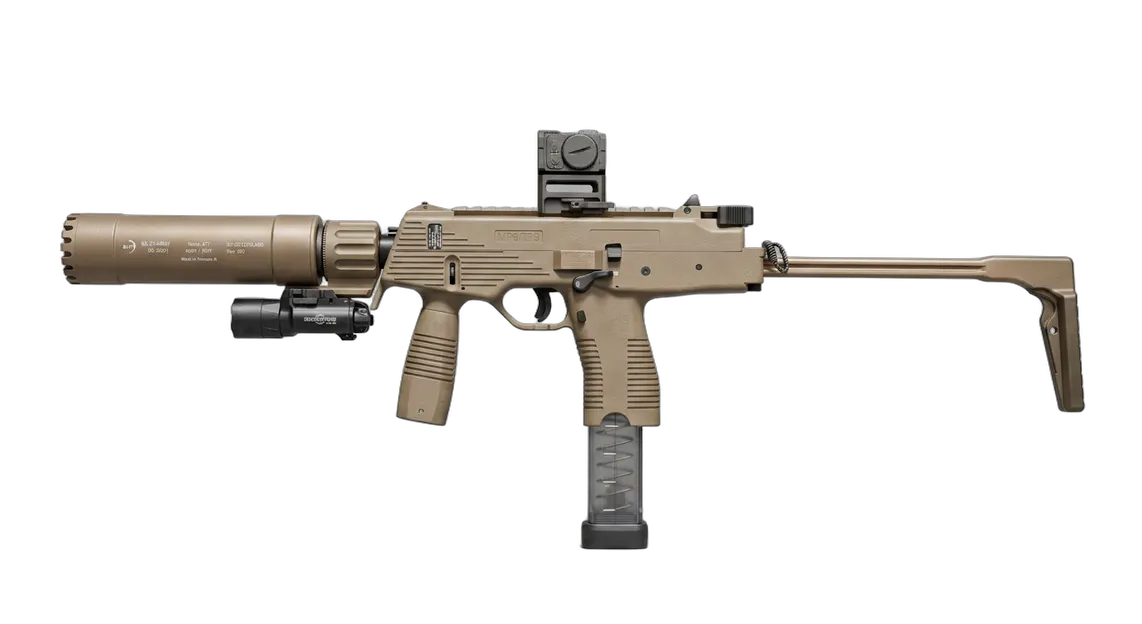 2001Switzerland
Compact submachine gun in 9×19 mm Parabellum derived from the Steyr TMP, acquired and refined by B&T. Polymer frame, side-folding stock, weight reduced to just over 1 kg.
Asymmetric conflicts accelerate adoption of short-stroke pistons, LPVO optics and NATO-standard Picatinny accessories.
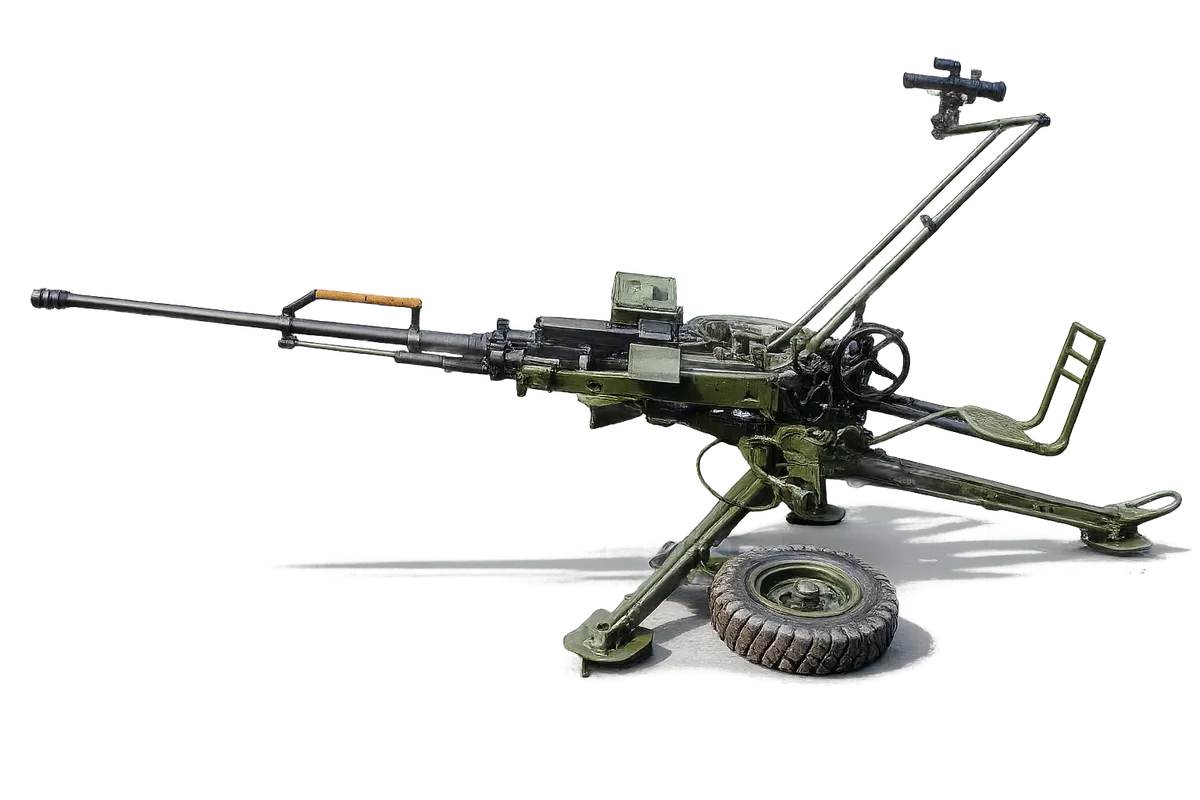 2002China
Chinese heavy machine gun in 14.5×114 mm on a wheeled tripod mount, derived from the Soviet KPV and used in the anti-aircraft and long-range anti-infantry role.
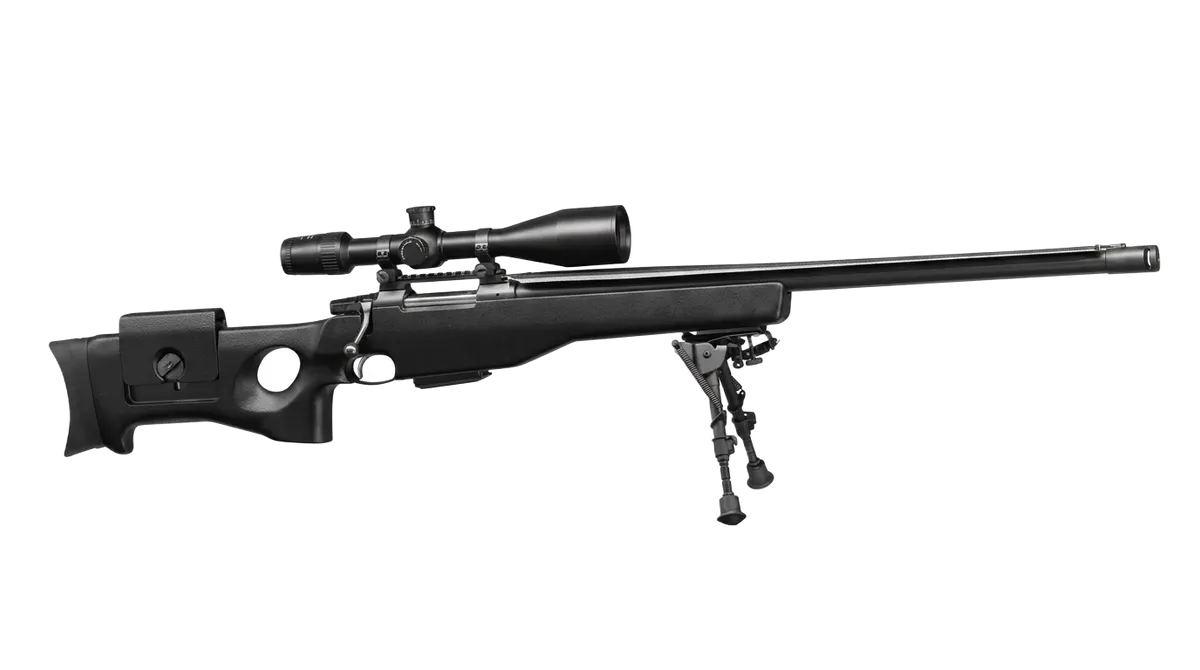 2002Czech Republic
Czech bolt-action precision rifle chambered in .308 Winchester (7.62×51 NATO), designed for police and special forces: ergonomic synthetic chassis, match barrel with muzzle brake and integral Picatinny rail.
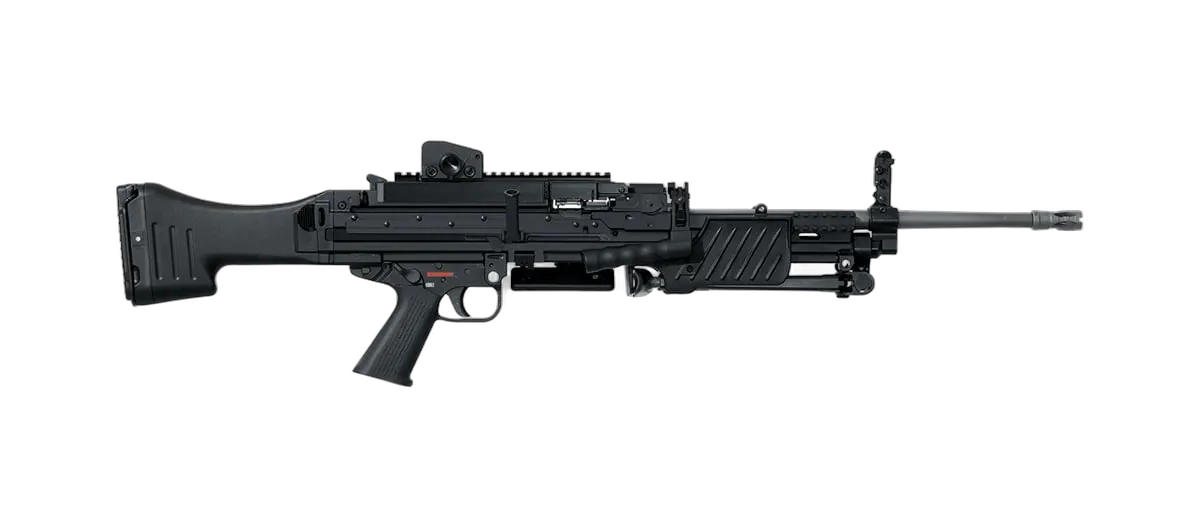 2003Germany
Belt-fed 5.56×45 mm NATO light machine gun developed by Heckler & Koch to replace the MG3 as the German Bundeswehr's squad automatic weapon.
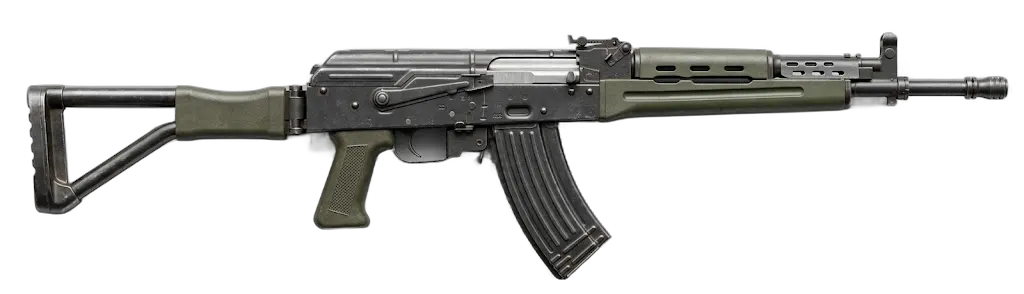 2003China
Chinese conventional-layout assault rifle adopted in 2003 as an alternative to the QBZ-95 bullpup, intended for airborne units, naval forces and export customers.
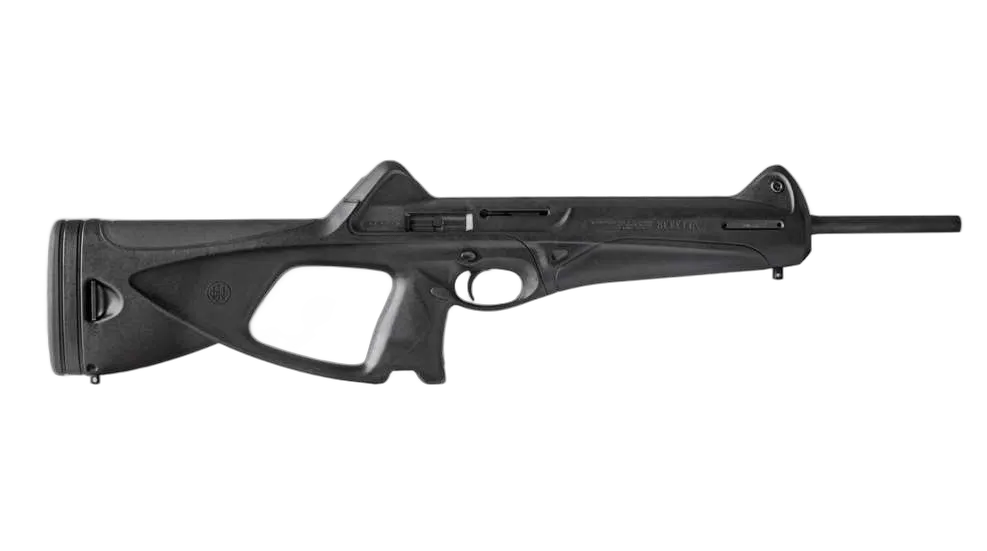 2003Italy
Italian semi-automatic carbine in pistol calibres (9×19, .40 S&W, .45 ACP) designed by Beretta as a compact firearm for civilian, sport and police use, sharing magazines with the 92/Px4 series pistols.
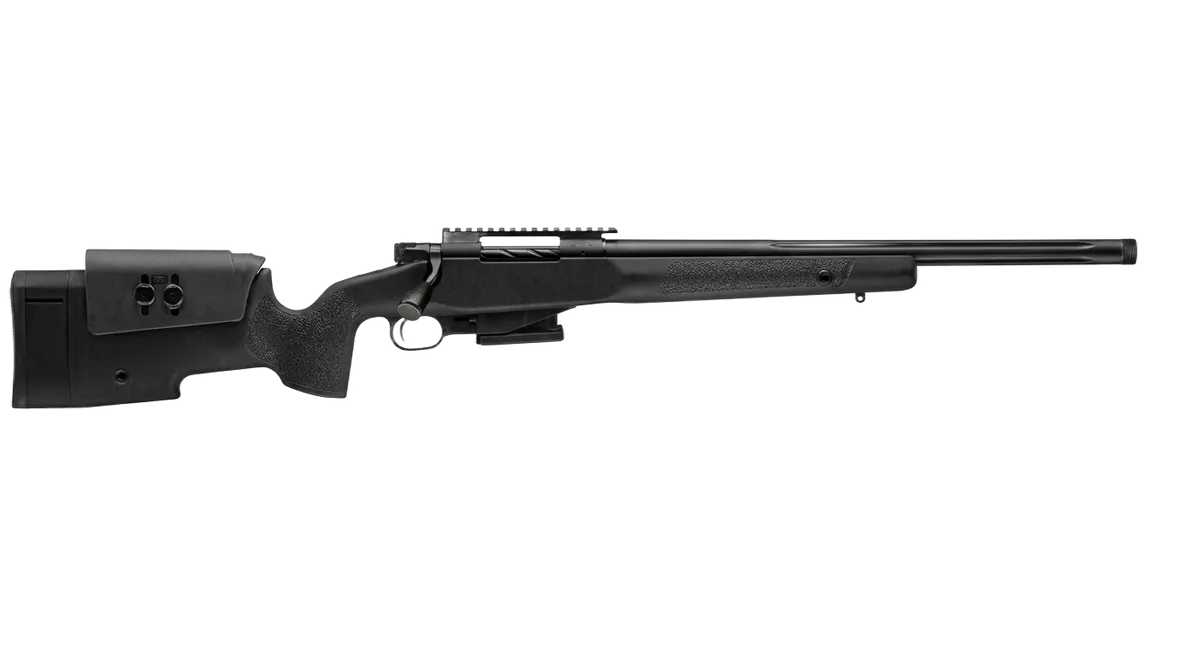 2003Belgium
Bolt-action .308 Winchester precision rifle developed by FN USA on the Winchester Model 70 action, dedicated to tactical police units and designated marksmen.
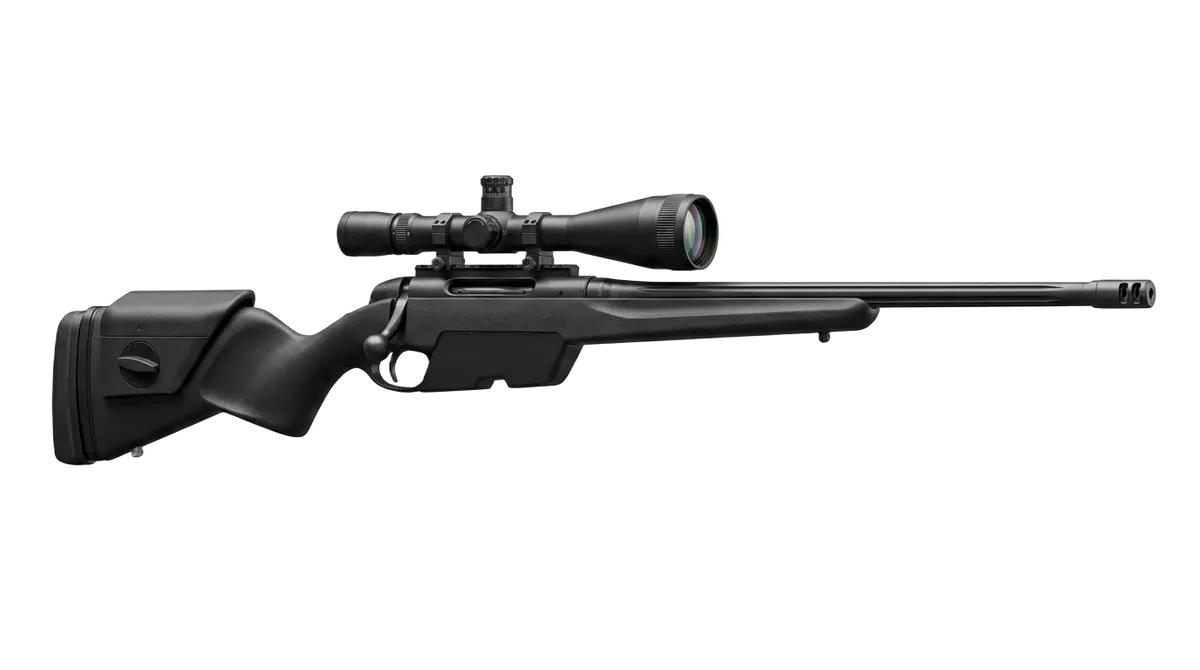 2003Austria
Bolt-action precision rifle aimed at sport shooting and varmint hunting, featuring a heavy free-floating barrel and an ergonomic synthetic stock.
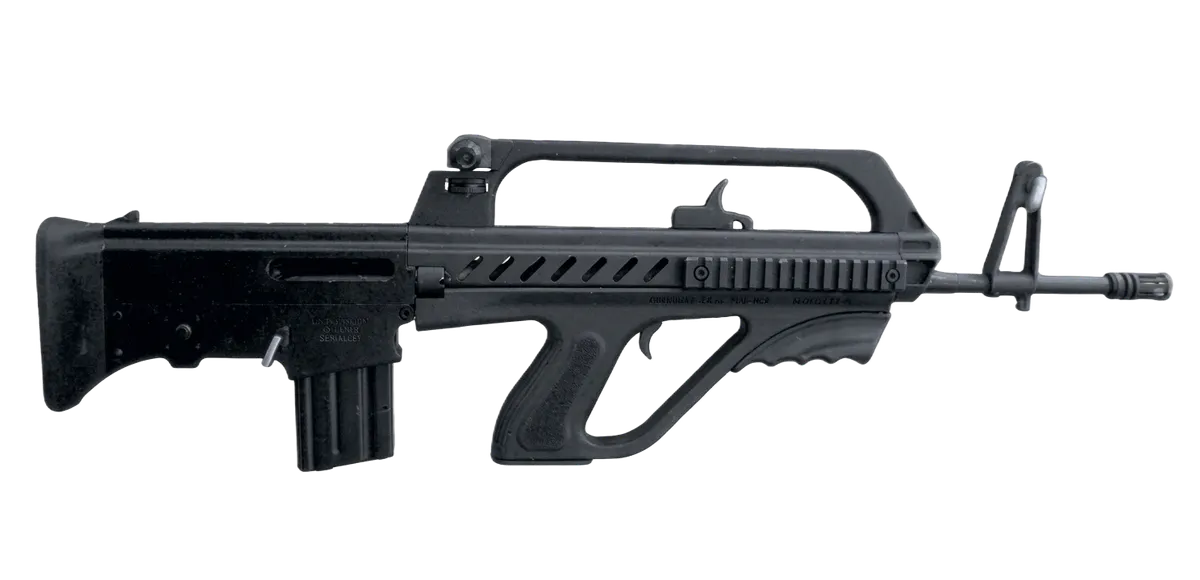 2003Iran
Iranian bullpup assault rifle in 5.56×45 NATO derived from the Iranian M16A1 copy (S-5.56) but rebuilt with a forward trigger group, integrated carry-handle sight and 14.5" barrel: fielded in limited numbers by the Artesh and IRGC for operational evaluation.
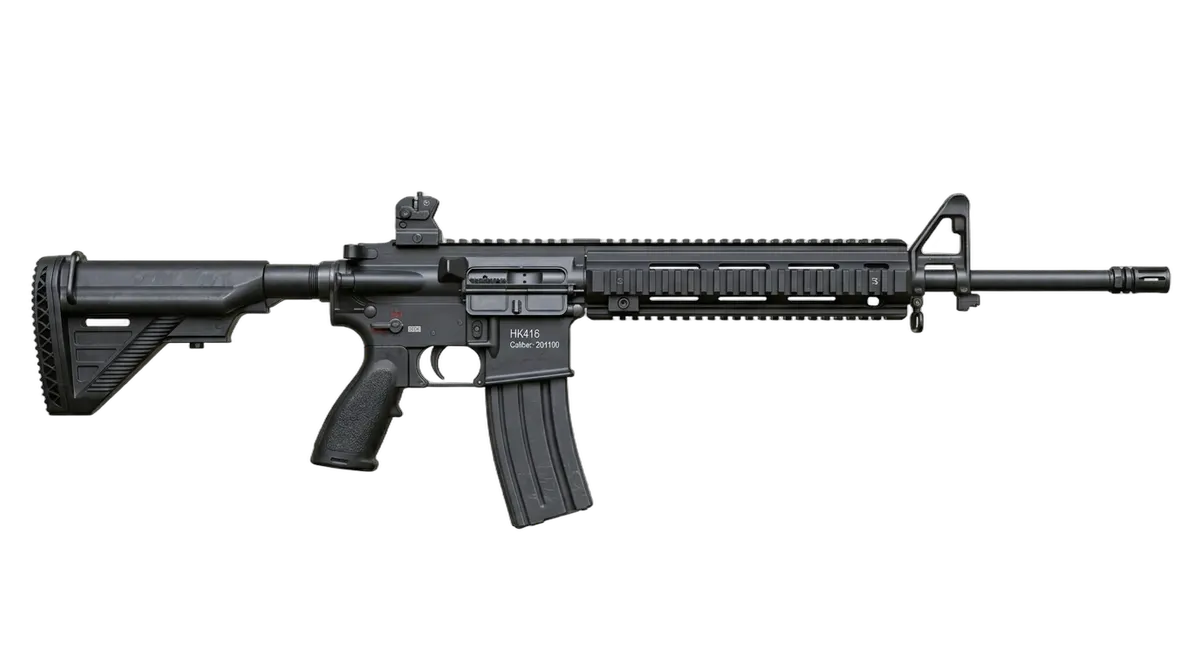 2004Germany
M4 evolution developed by HK: short-stroke piston system instead of direct impingement for greater reliability.
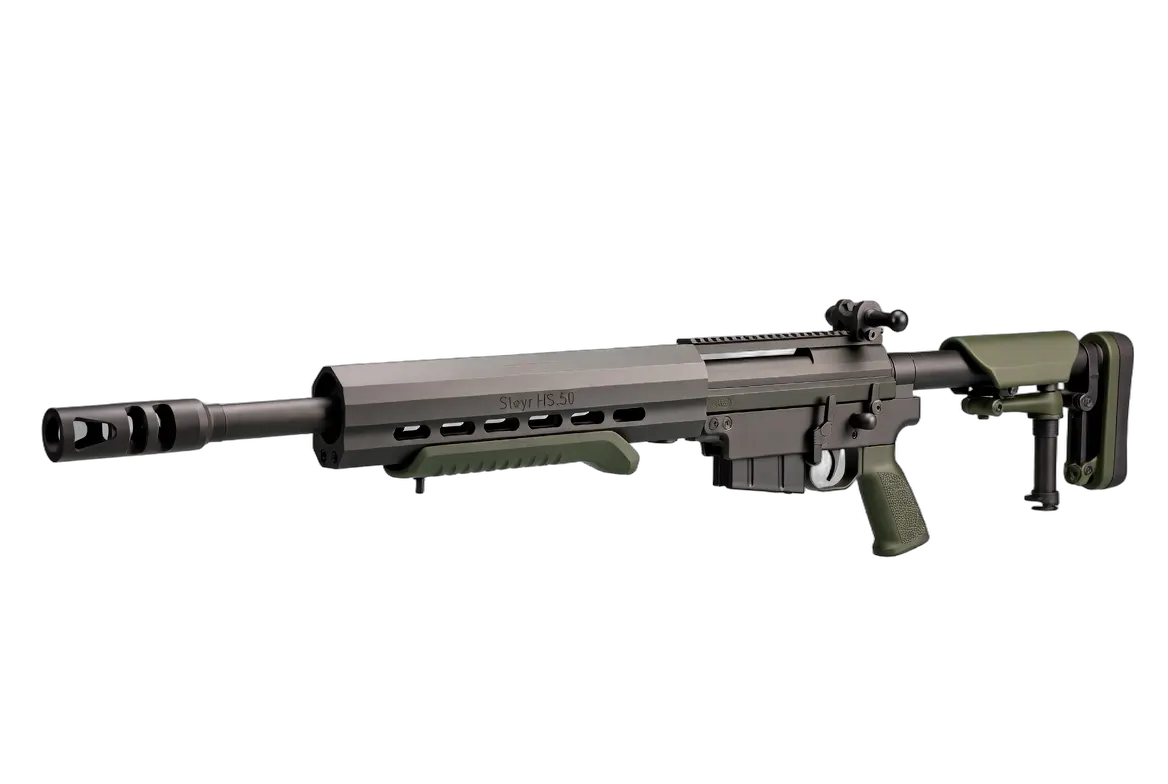 2004Austria
Single-shot bolt-action anti-materiel rifle in .50 BMG, with deflecting muzzle brake, free-floating barrel and adjustable stock: used for long-range and light-armor engagements.
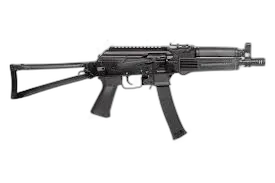 2004Russia
Russian 9×19 mm submachine gun derived from the AK platform. Blowback, closed bolt, side-folding stock: standard weapon for the MVD, Rosgvardiya and many post-Soviet police units.
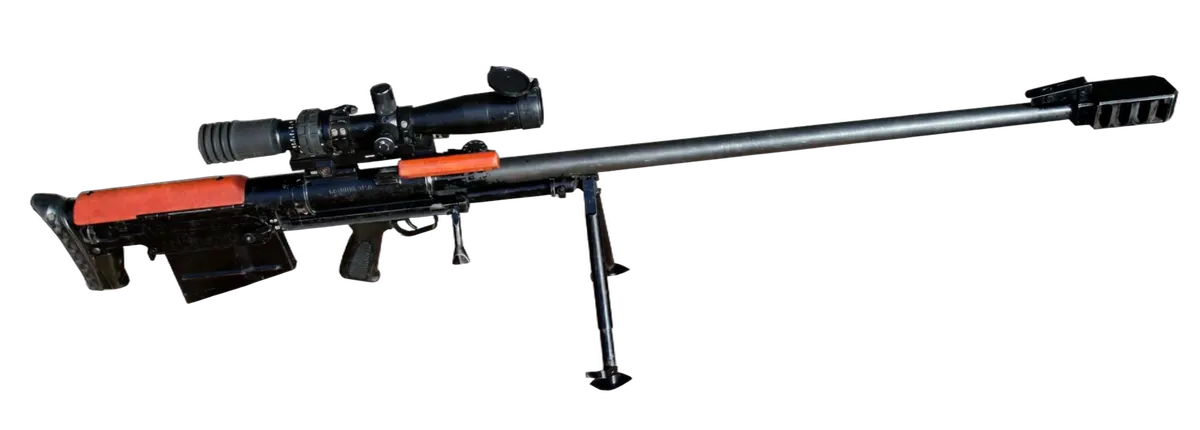 2004Russia
Russian bullpup anti-materiel rifle in 12.7×108 mm, developed by the Degtyarev plant for long-range engagements against light vehicles, emplacements and protected targets.
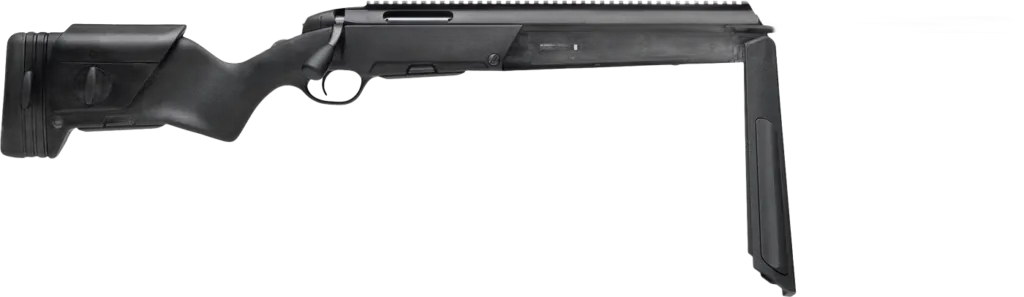 2004Austria
Tactical bolt-action precision rifle, successor of the SSG 69, with a polymer stock, integrated muzzle brake and cold-hammer-forged barrel.
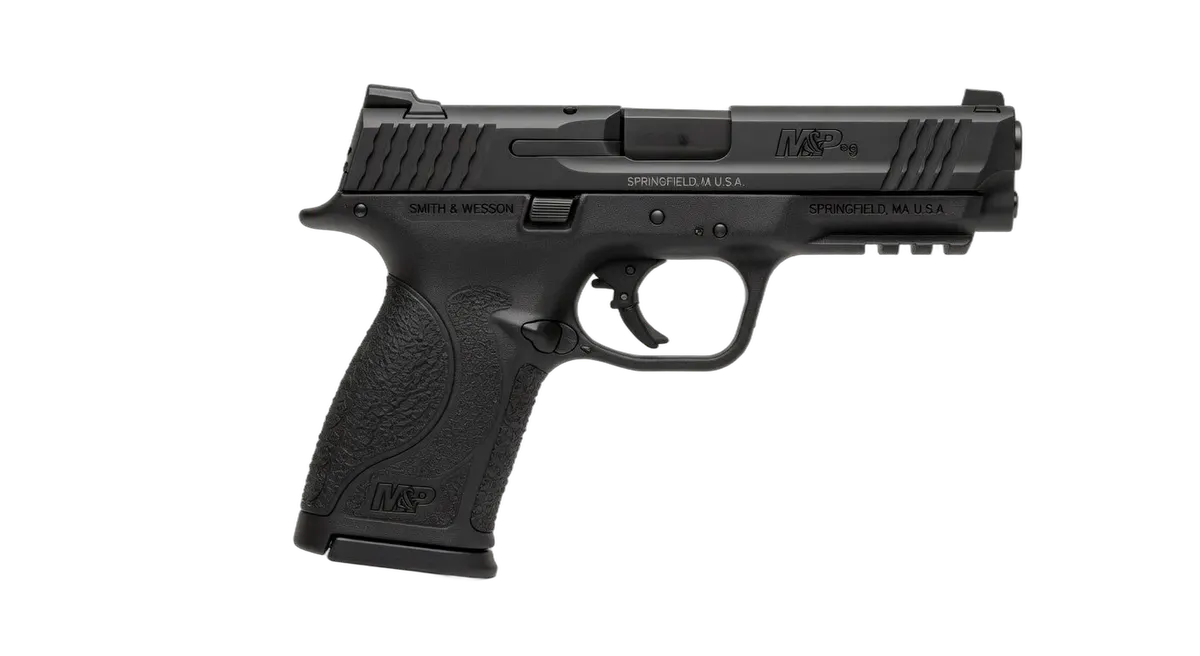 2005United States
Polymer-frame striker-fired pistol in 9×19, .40 S&W and .45 ACP: one of the most widely issued sidearms among U.S. police forces.
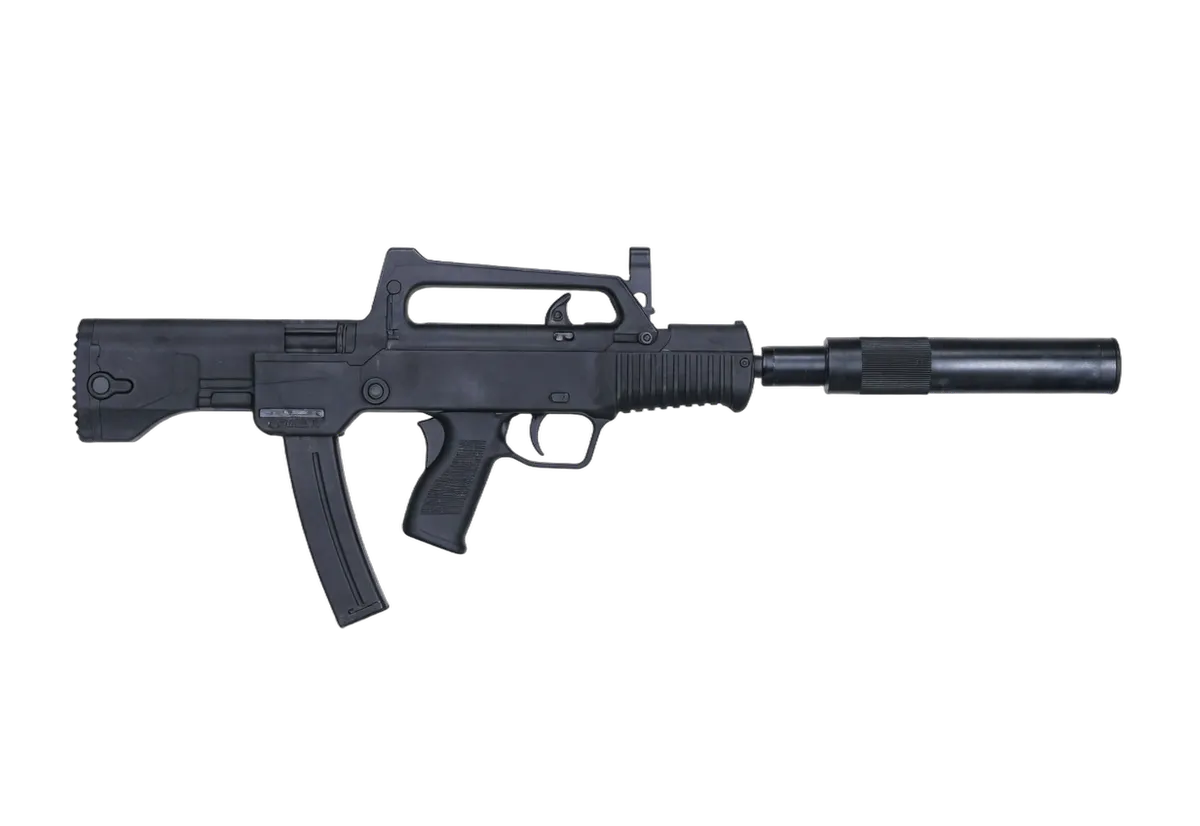 2005China
Silenced Chinese submachine gun in bullpup configuration, chambered in the proprietary subsonic 5.8×21 mm DCV05 caliber. Suppressed version of the QCW/JS family, equipped with a removable integral suppressor.
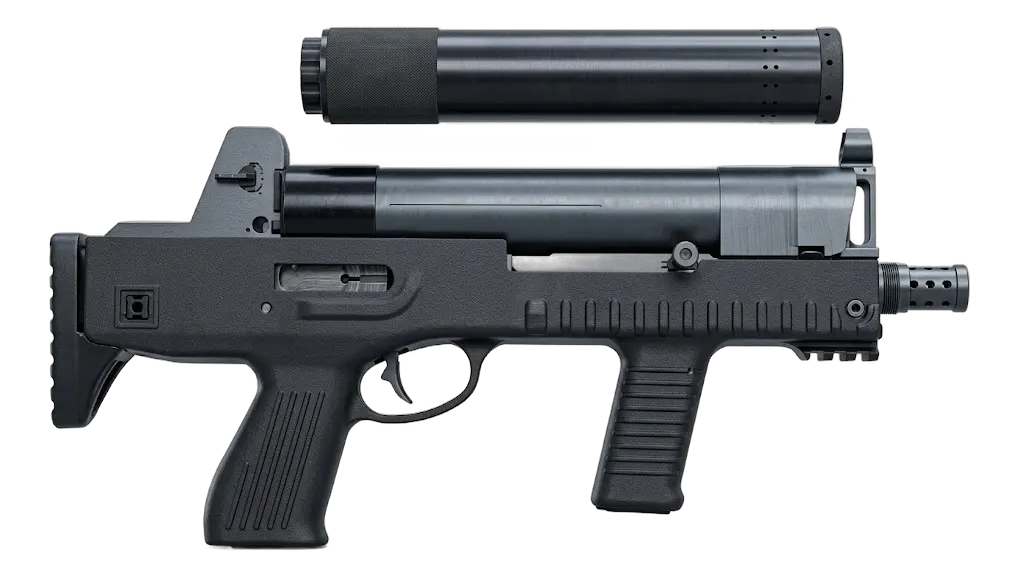 2005China
Chinese 9×19 mm Parabellum bullpup submachine gun developed for special forces and police units, with optional integral suppressor and a compact architecture.
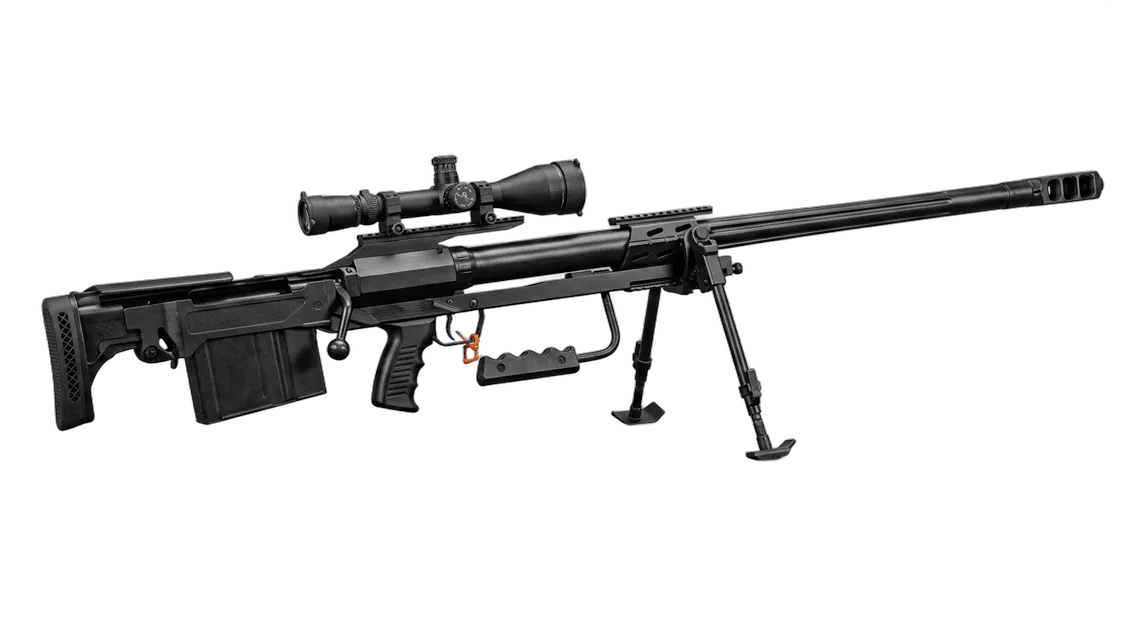 2005Poland
Polish anti-materiel rifle in .50 BMG, used to neutralise light vehicles, fortified positions and ordnance from a safe distance.
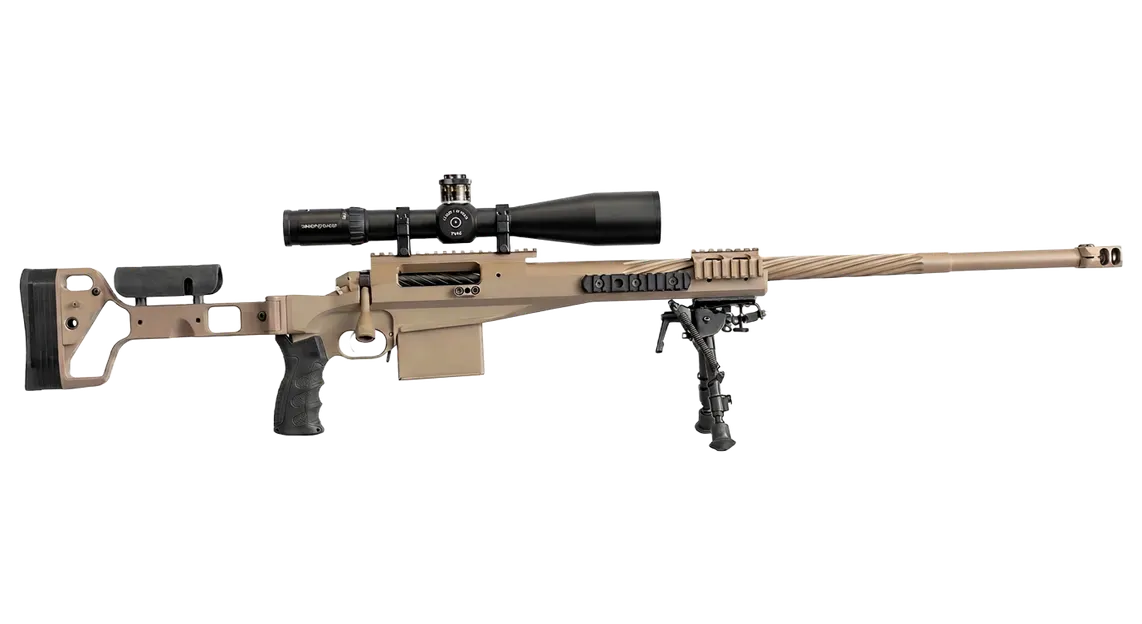 2005Canada
Bolt-action sniper rifle on a modified Remington 700 action chambered in .338 Lapua Magnum, developed by PGW Defence in Manitoba; in Canadian Armed Forces service since 2005 as the Medium Range Sniper Weapon System.
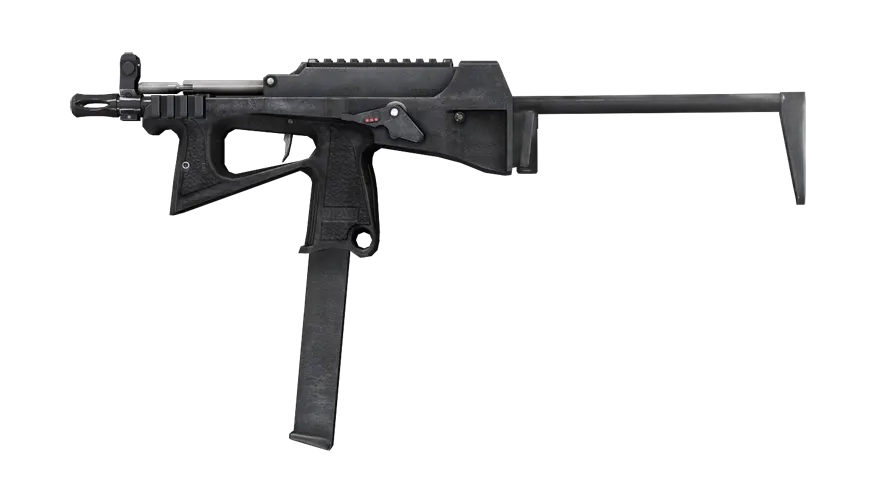 2006Russia
Russian compact 9×19 mm submachine gun designed by KBP of Tula. Polymer-framed, ambidextrous and closed-bolt, conceived for police and security personnel using armour-piercing 7N31 ammunition.
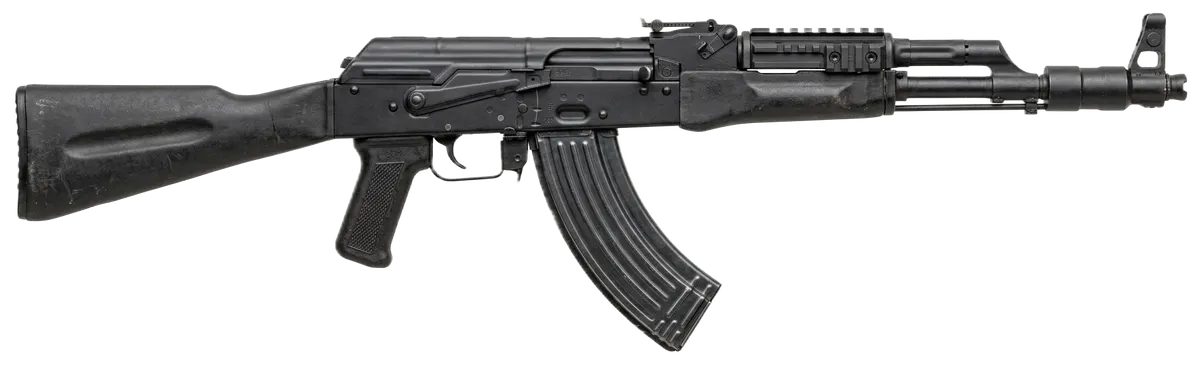 2006Iran
Iranian variant of the AKM in 7.62×39 mm with a fixed polymer stock, upper handguard with Picatinny rail and updated muzzle device: produced by DIO to equip Basij, IRGC and auxiliary units at low cost.
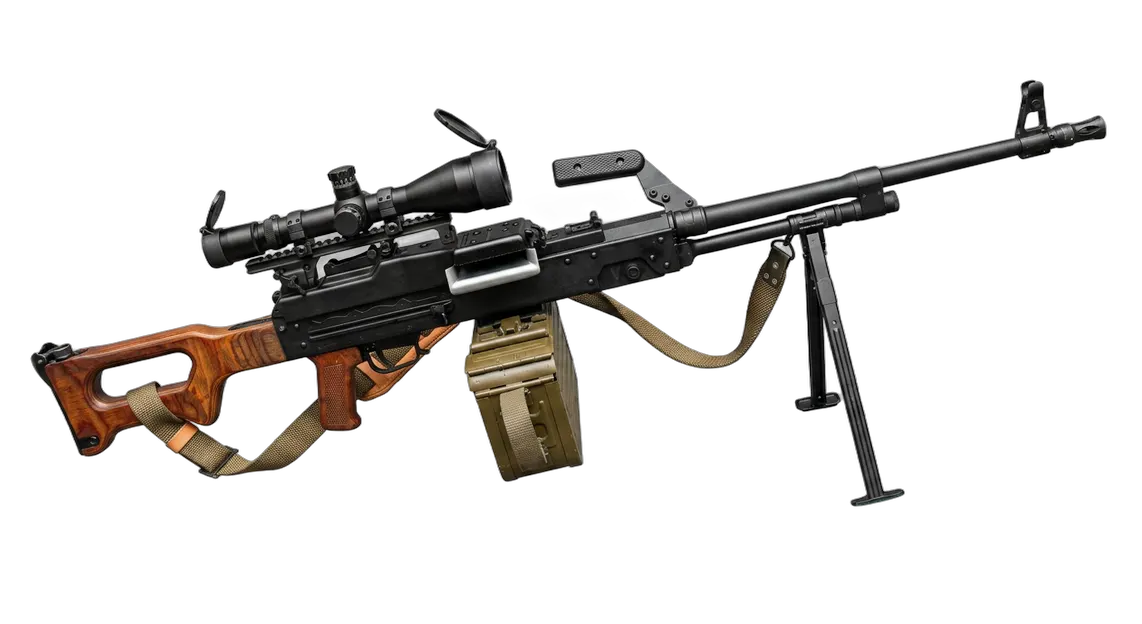 2007Poland
Polish general-purpose machine gun in 7.62×51 mm NATO, derived from the Soviet PK and rechambered to the NATO standard caliber.
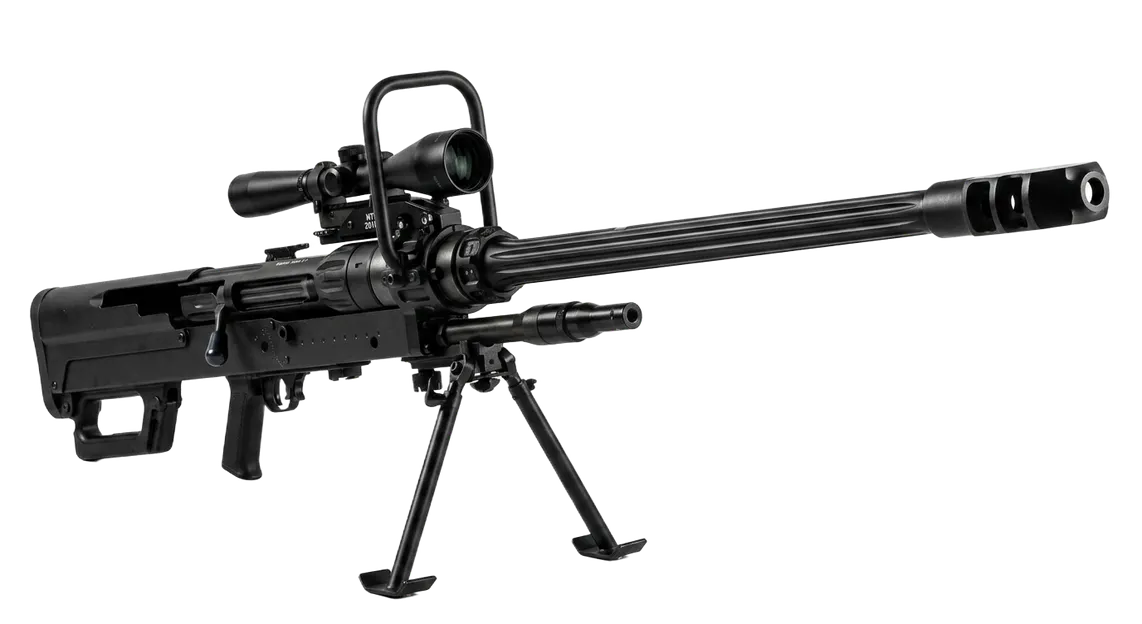 2007India
Indian multi-calibre anti-materiel rifle (20×82 mm, 14.5×114 mm, 12.7×108 mm) developed by ARDE and produced at Tiruchirappalli.
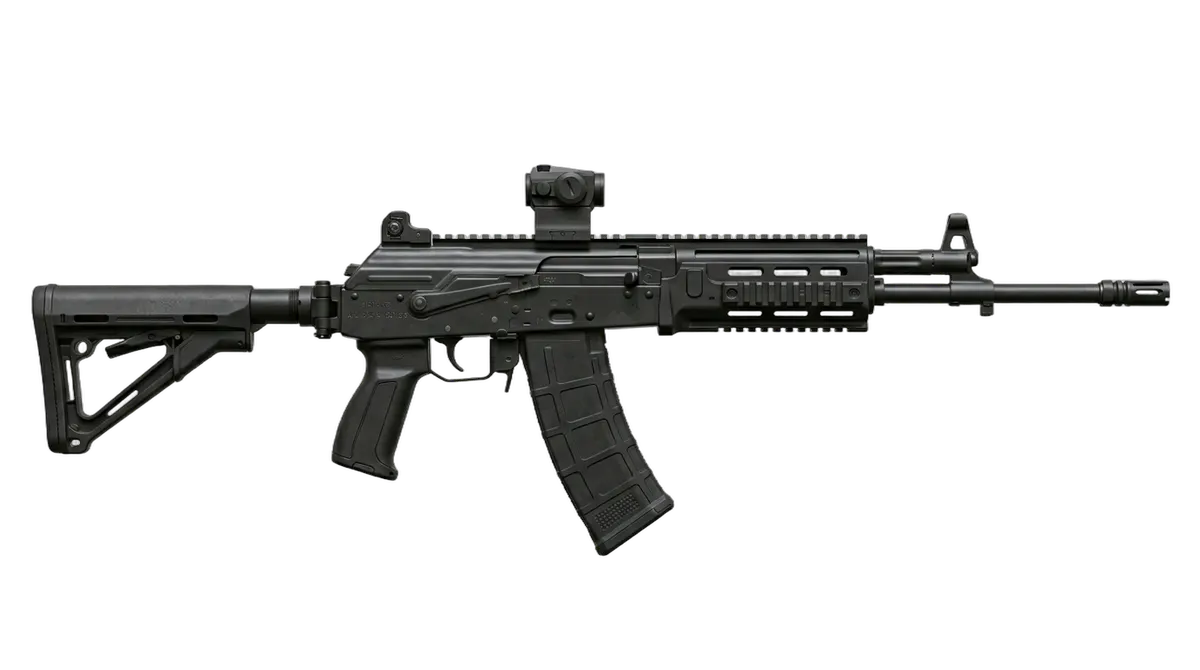 2008Israel
Modernization of the Galil family on an AK mechanical base: AR ergonomics, polymers and Picatinny rails.
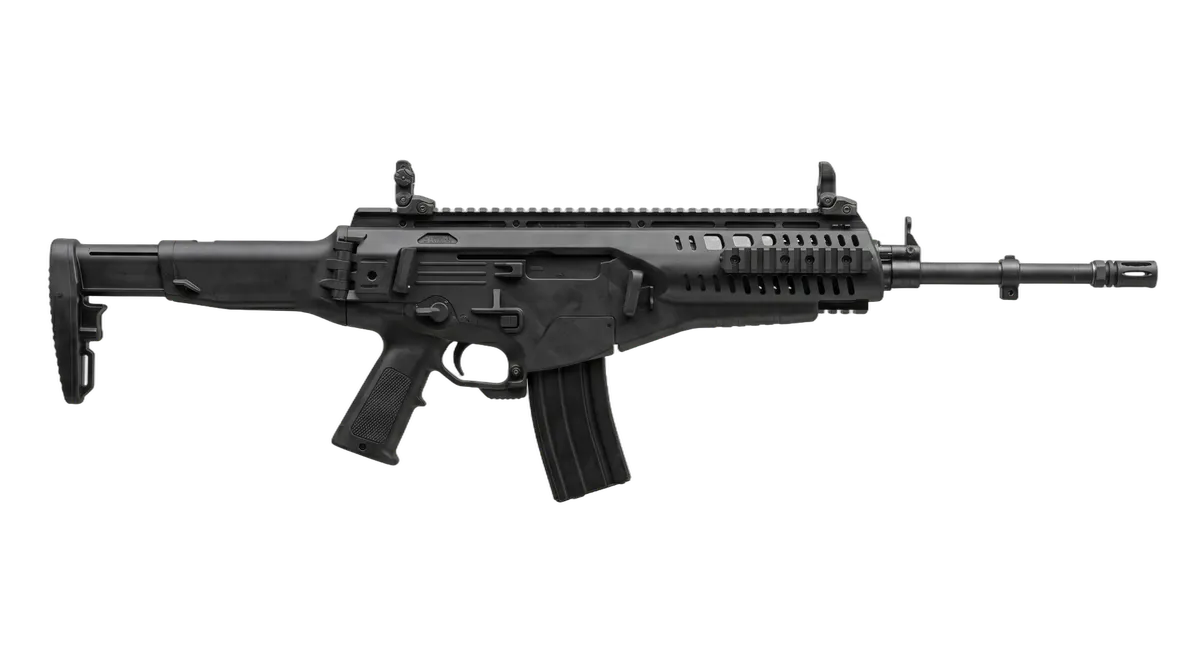 2008Italy
Italian modular 5.56 NATO assault rifle, part of the Soldato Futuro program. Switchable ambidextrous case ejection and quick-change barrel.
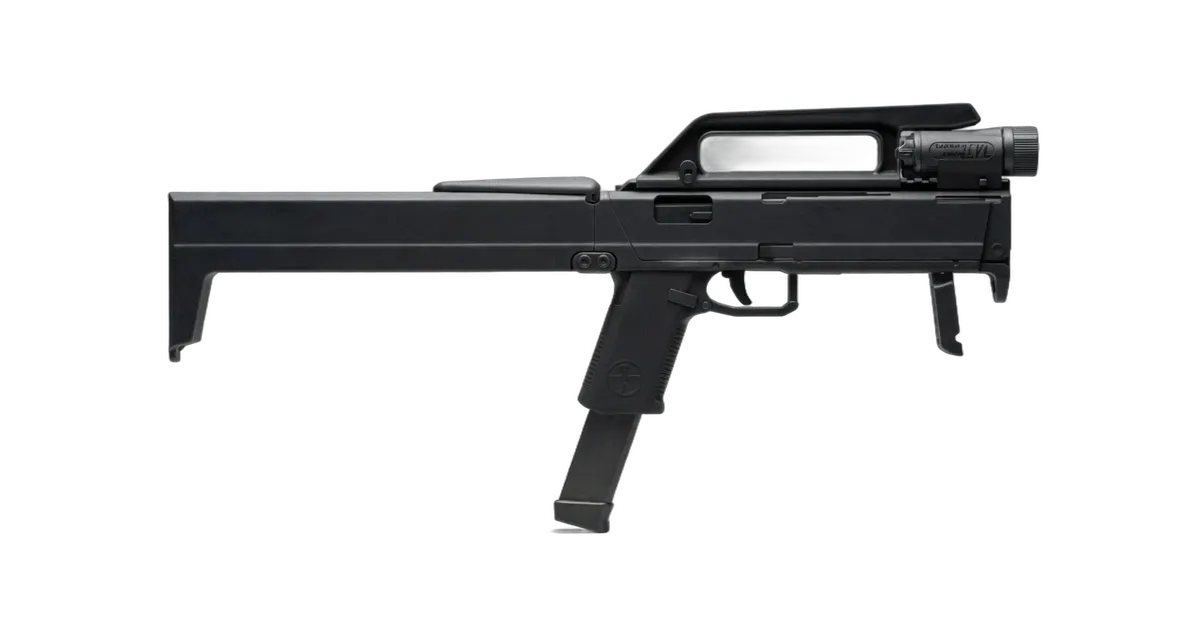 2008United States
Folding 9×19 mm submachine gun prototype unveiled by Magpul in 2008. When folded it looks like a rectangular box; the action is based on the Glock 17/18.
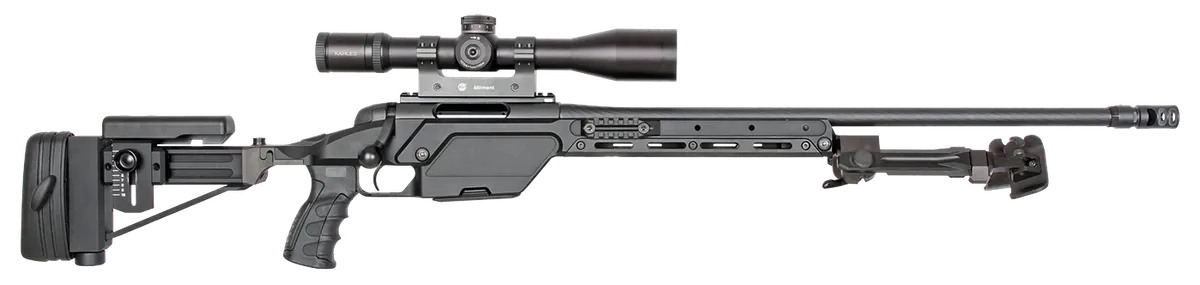 2008Austria
High-performance bolt-action sniper rifle with HAMR aluminium chassis, folding adjustable stock and provision for high-end optics.
2008SingaporeModular variant of the SAR 21 with side and top Picatinny rails replacing the integrated optic; allows mounting of red dot, holographic sights, lasers and tactical lights.
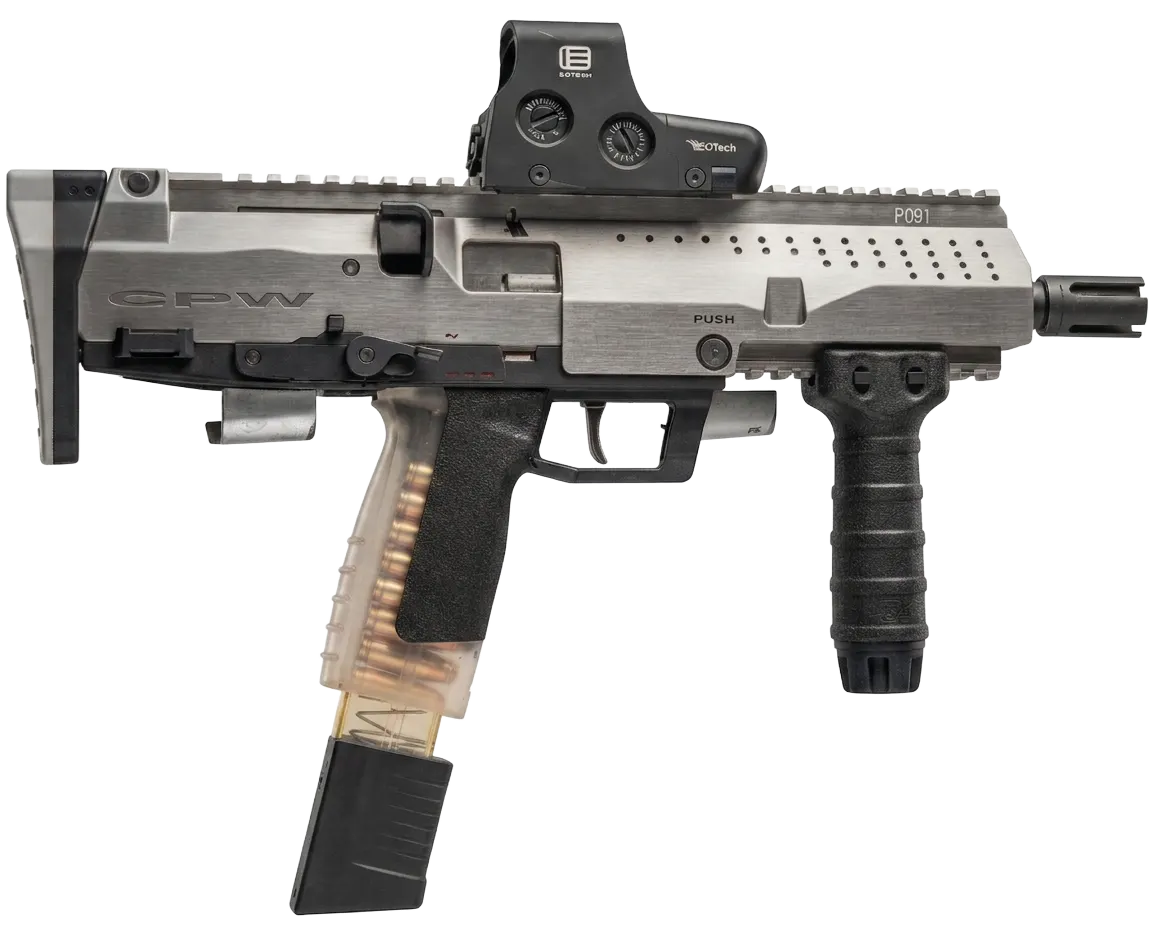 2008Singapore
Modular Personal Defense Weapon (PDW) in pistol calibers (9×19, .40 S&W, .357 SIG) designed for vehicle crews, pilots and special forces; light-alloy receiver with full-length Picatinny rail.
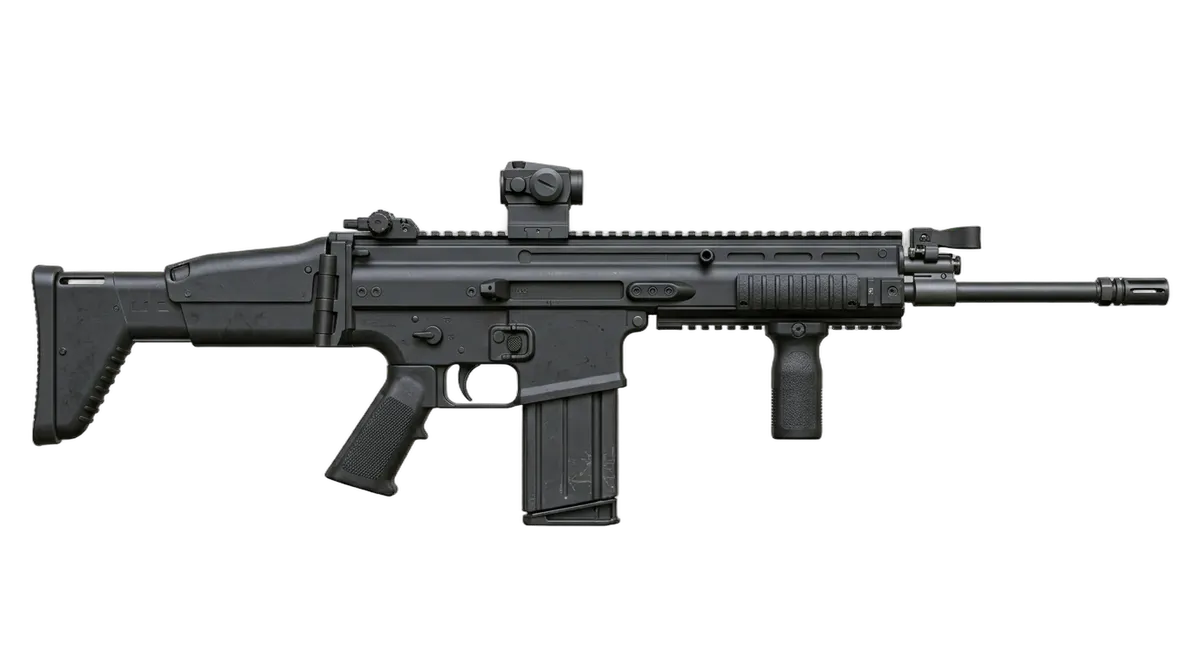 2009Belgium
5.56 NATO variant of the modular SCAR system. Folding adjustable stock, interchangeable barrel.
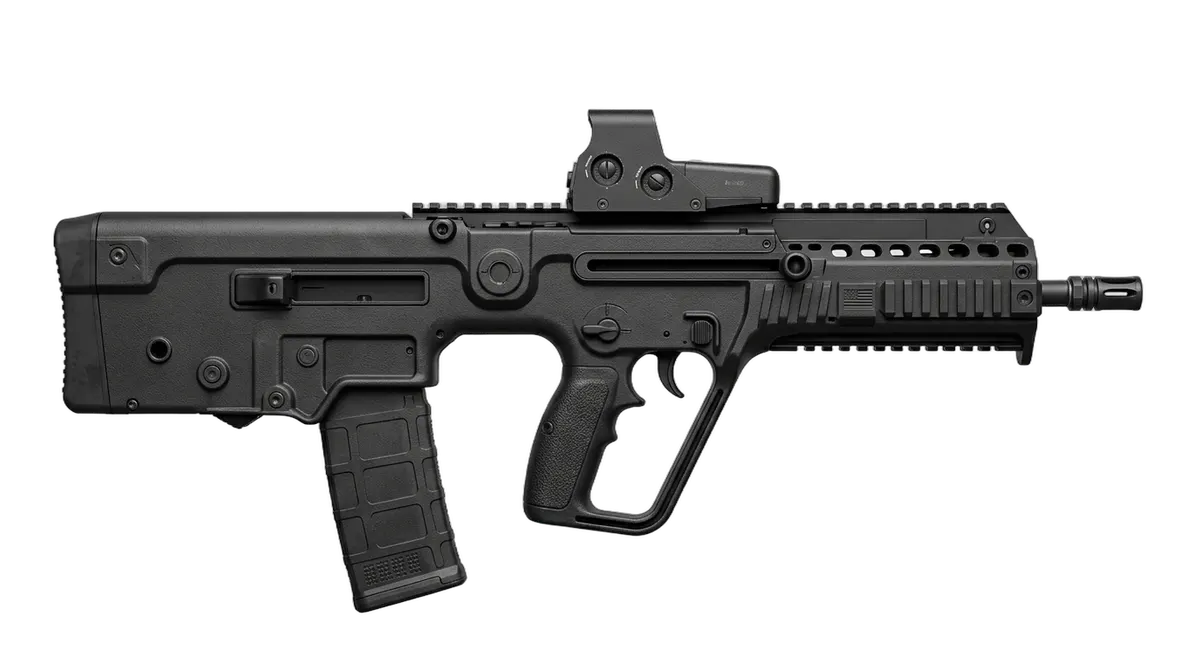 2009Israel
Compact Israeli bullpup issued to the IDF: long barrel in a compact footprint, excellent for vehicle and urban use.
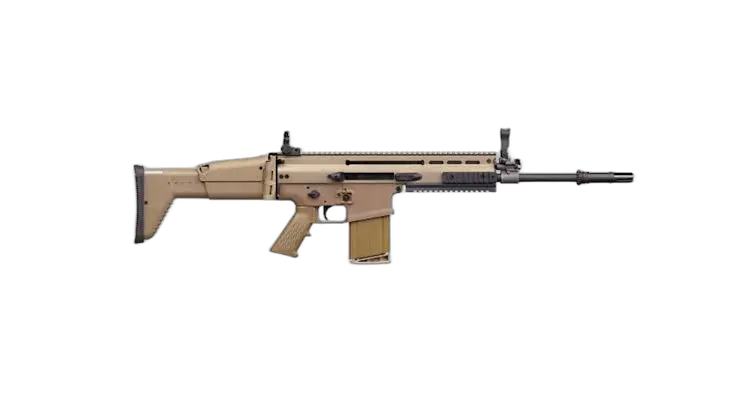 2009Belgium
Heavy variant of the FN SCAR family chambered in 7.62×51 mm NATO, developed for USSOCOM as the Mk 17: shares the SCAR-L's modular layout with interchangeable barrels and a folding/adjustable stock.
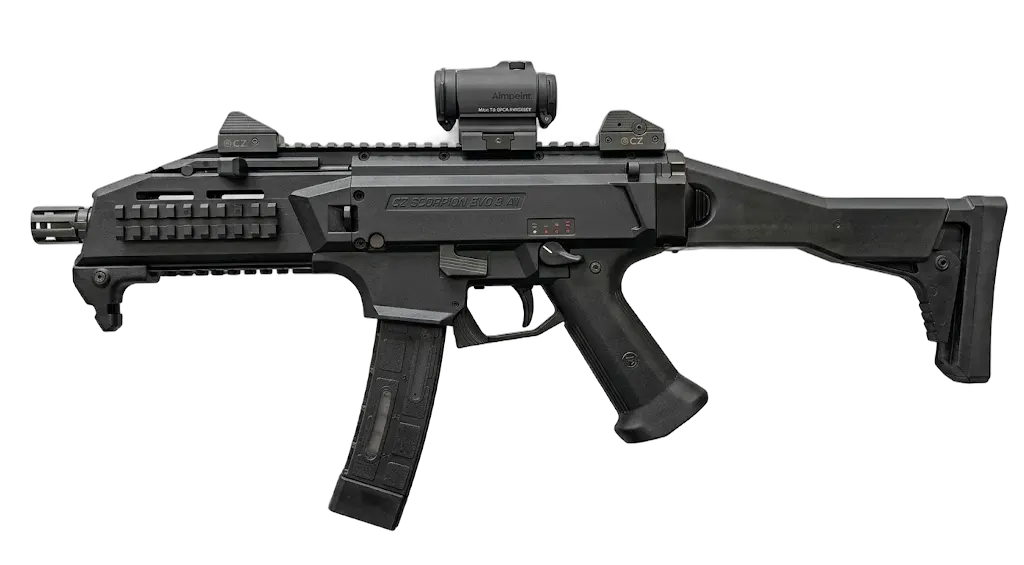 2009Czech Republic
Czech 9×19 mm Parabellum submachine gun built largely from polymer, with folding stock and extensive Picatinny accessory compatibility.
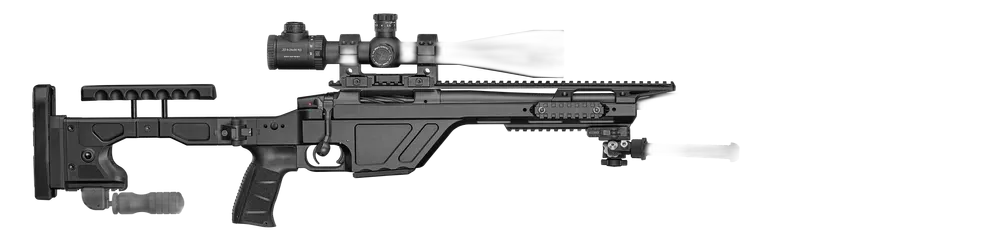 2009Czech Republic
Czech bolt-action precision rifle chambered in .308 Winchester or .338 Lapua Magnum, with modular tactical chassis and folding adjustable stock.
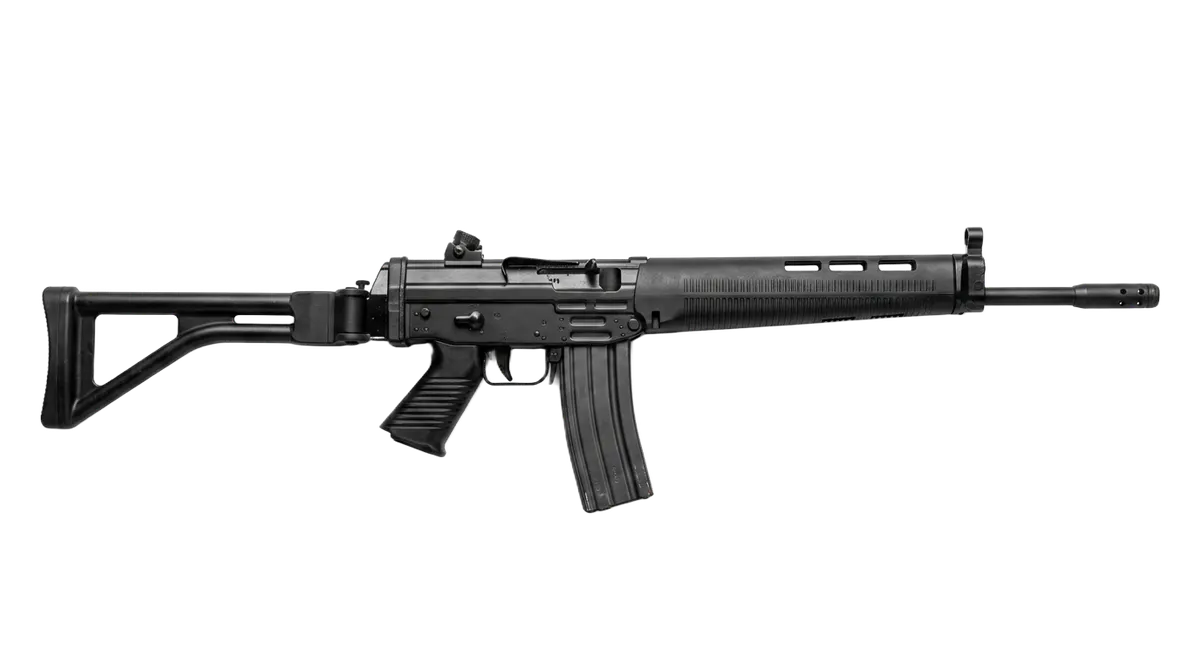 2009Brazil
Semi-automatic carbine in .40 S&W with folding stock, developed by Taurus for police, private security and the Brazilian civilian market.
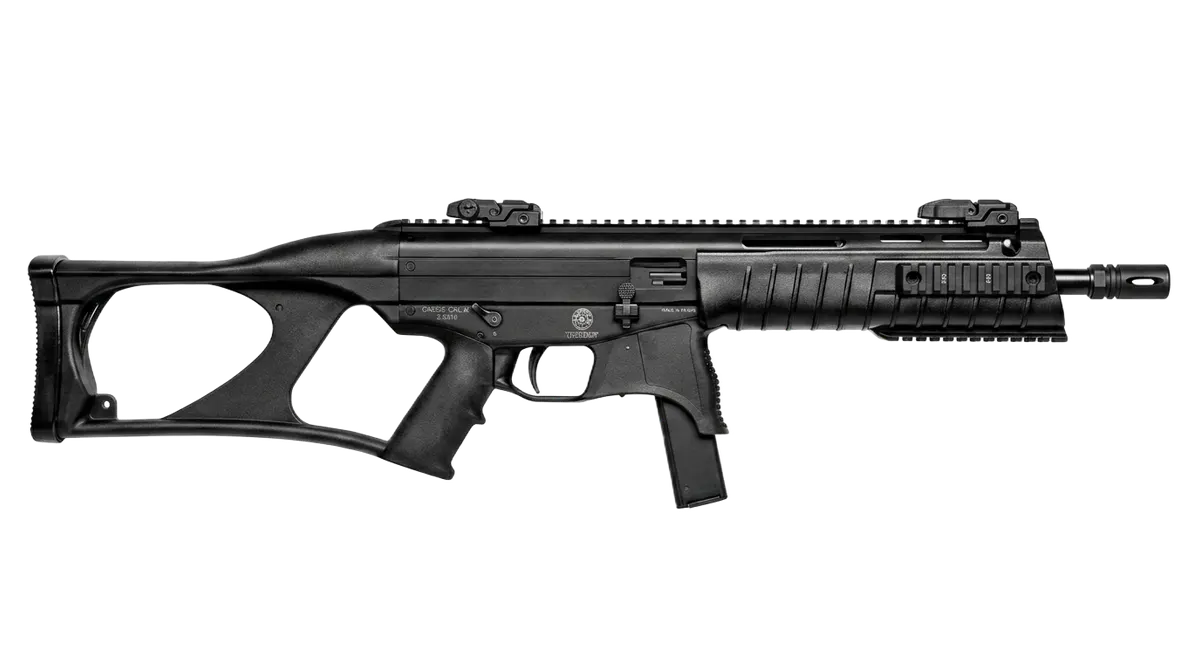 2009Brazil
9×19 mm pistol-caliber carbine with skeletal folding stock, derived from the CT-40 and widespread in practical shooting and Brazilian police units.
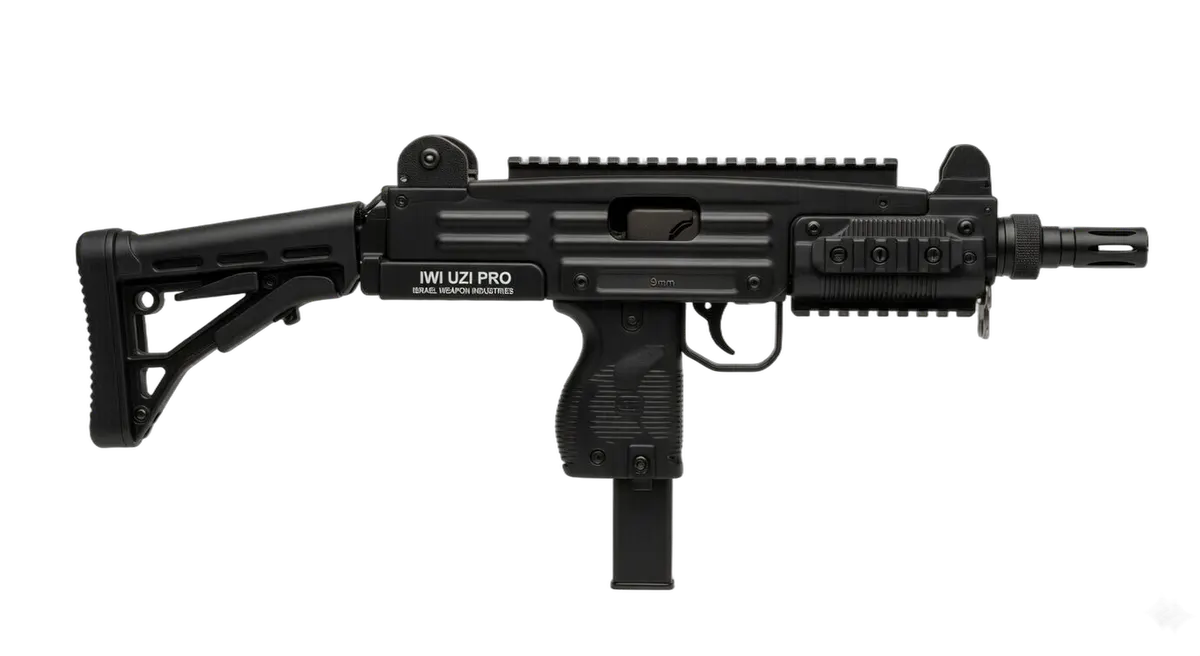 2010Israel
Modern evolution of the Micro Uzi with polymer frame, integrated Picatinny rails and folding stock: aimed at special units and close protection.
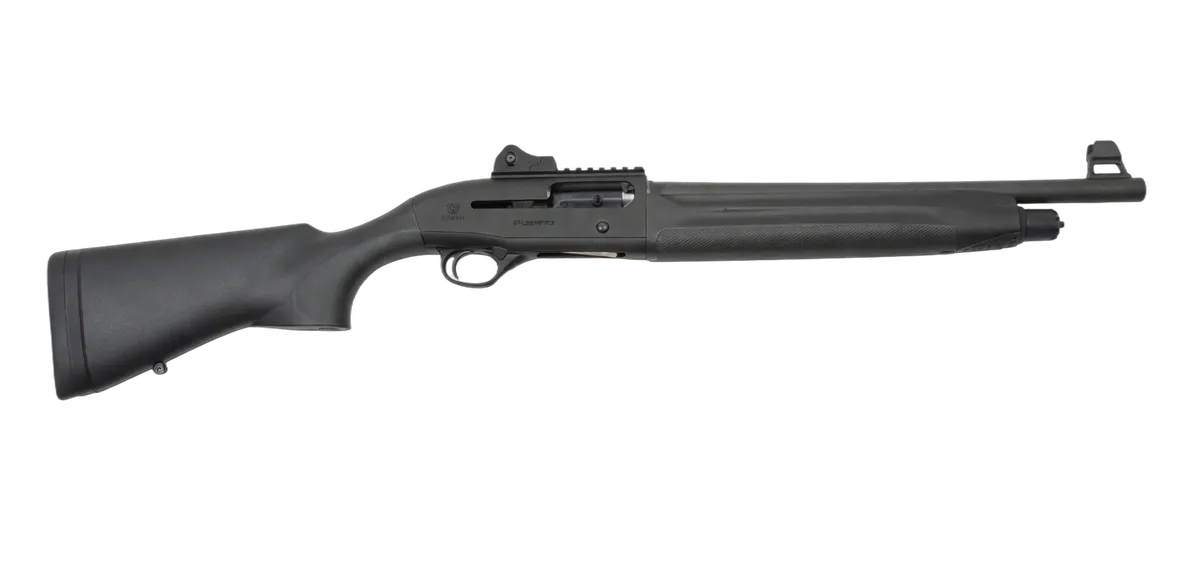 2010Italy
Italian semi-automatic 12-gauge tactical shotgun developed by Beretta for tactical and defense use, derived from the Storm family and based on the self-regulating gas system of the A400 series.
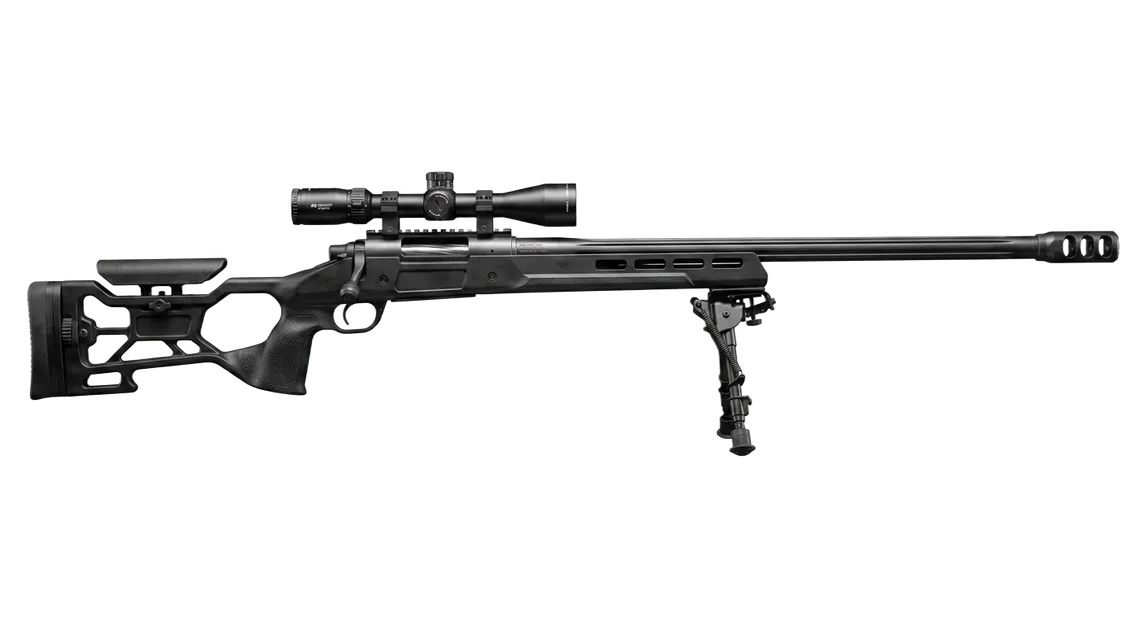 2010Croatia
Croatian precision rifle in .338 Lapua Magnum with aerospace-grade aluminium chassis and bolt-action.
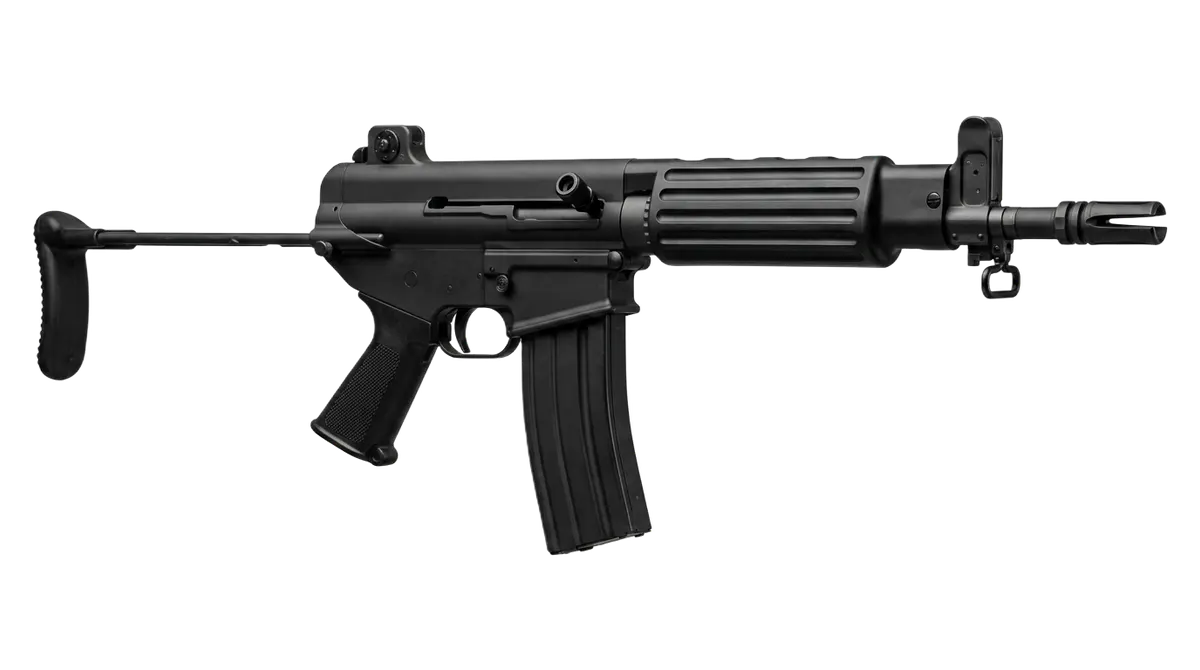 2010South Korea
Carbine version of the K2 in 5.56×45 NATO with a short barrel and tubular folding stock, developed primarily for the civilian/export market and for special units.
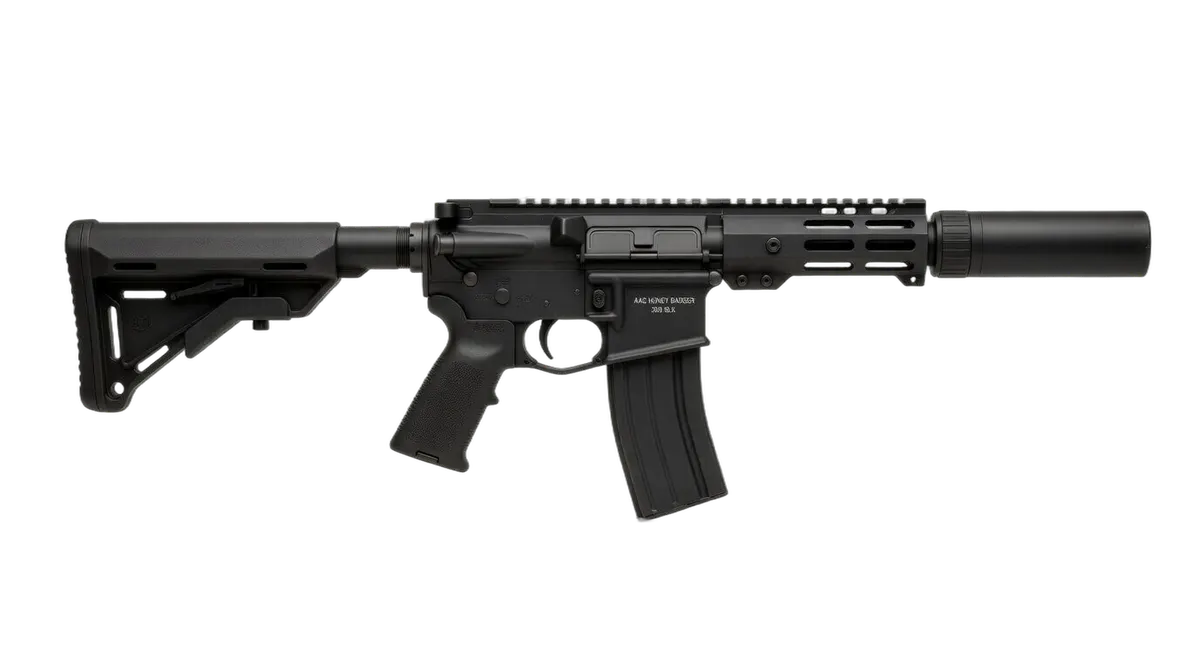 2011United States
AR-15-pattern PDW in .300 AAC Blackout, designed by AAC to be used with an integral suppressor and subsonic ammunition: maximum compactness and reduced acoustic signature.
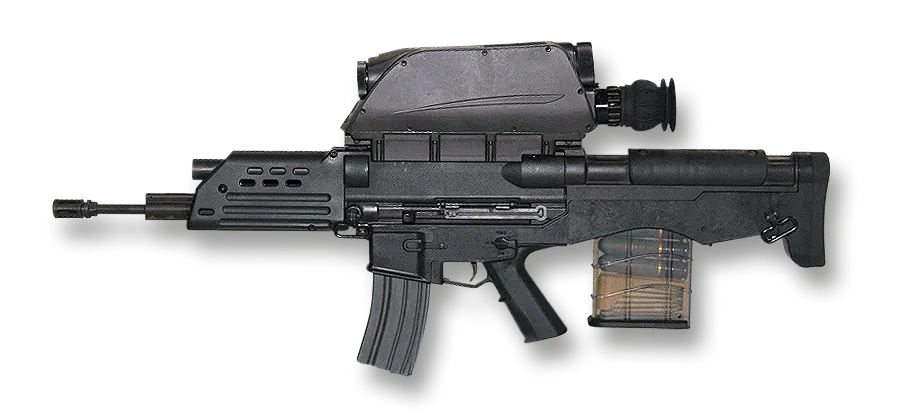 2011China
Chinese integrated weapon system combining a 5.8×42 mm assault rifle with a semi-automatic 20×80 mm airburst grenade launcher, managed by a computerized fire-control sight.
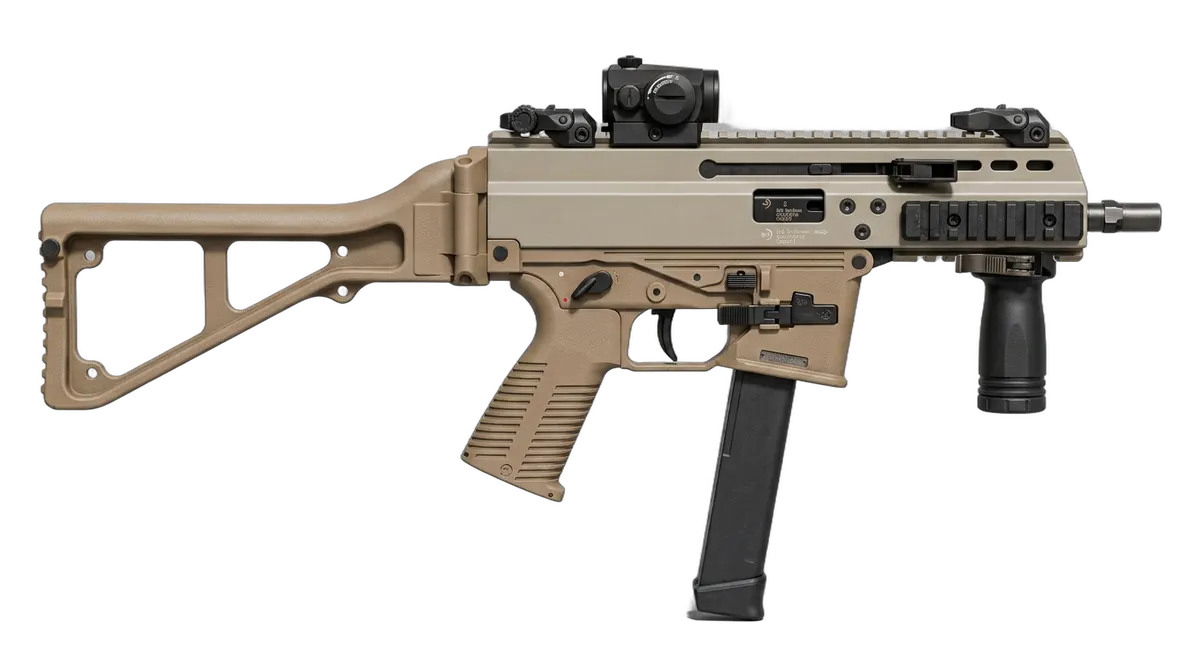 2011Switzerland
Modular Swiss submachine gun in 9×19 mm Parabellum, selected by the U.S. Army in 2019 as the Sub Compact Weapon (SCW designation). Hydraulic buffer, side-folding stock, full-length Picatinny rail.
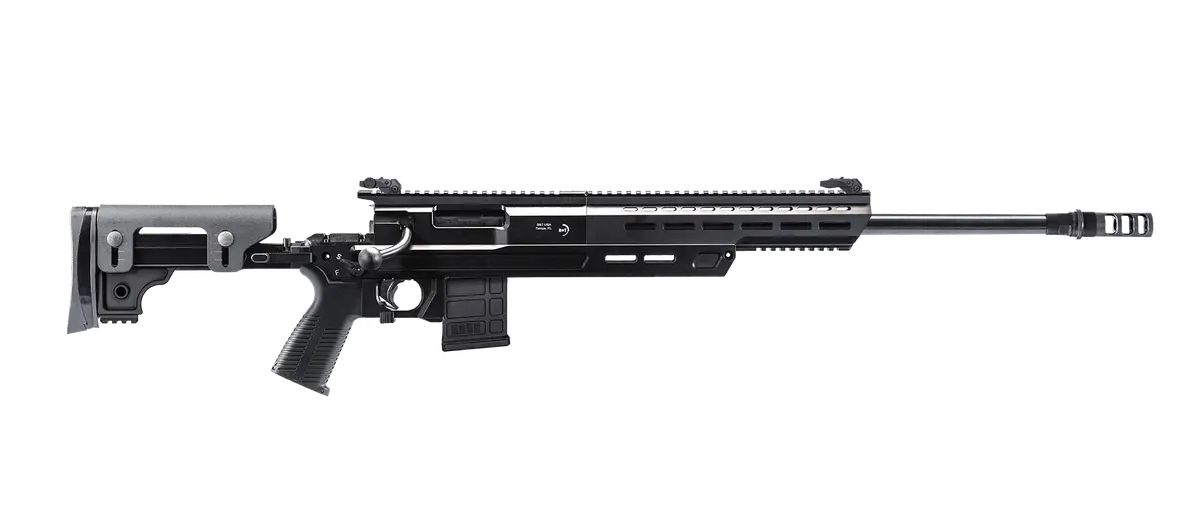 2011Switzerland
Swiss modular bolt-action precision rifle designed for long-range accuracy, with a modern layout, aluminium chassis and adjustable stock.
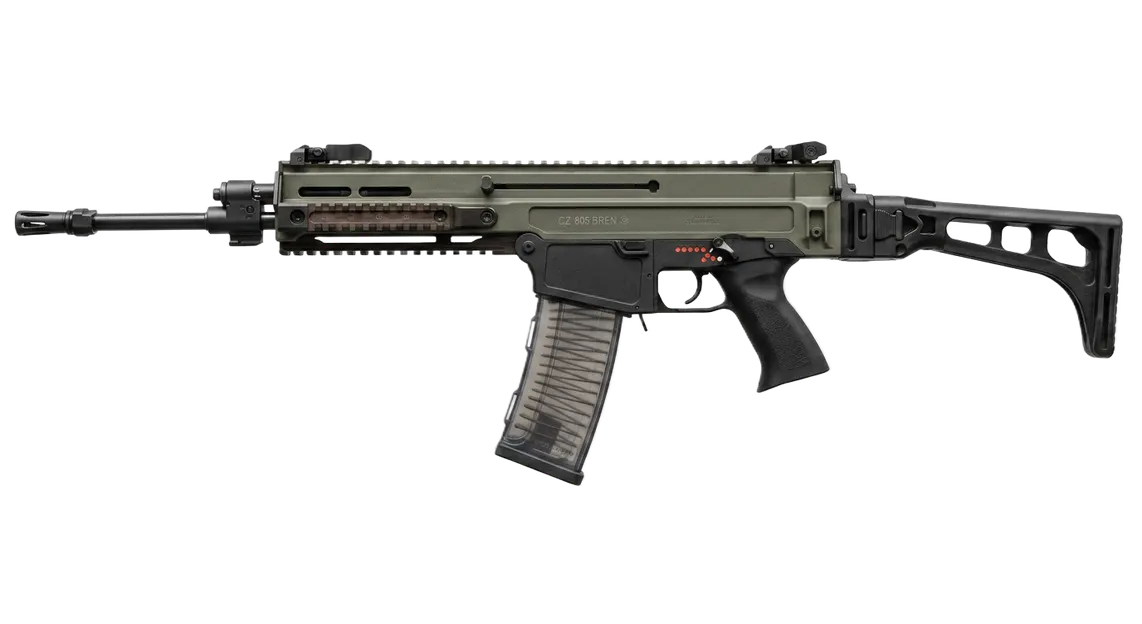 2011Czech Republic
Czech modular assault rifle chambered in 5.56×45 mm NATO (with conversion kits to 7.62×39 and 6.8 SPC). Adopted by the Czech Army in 2011, gradually replaced by the lighter CZ BREN 2.
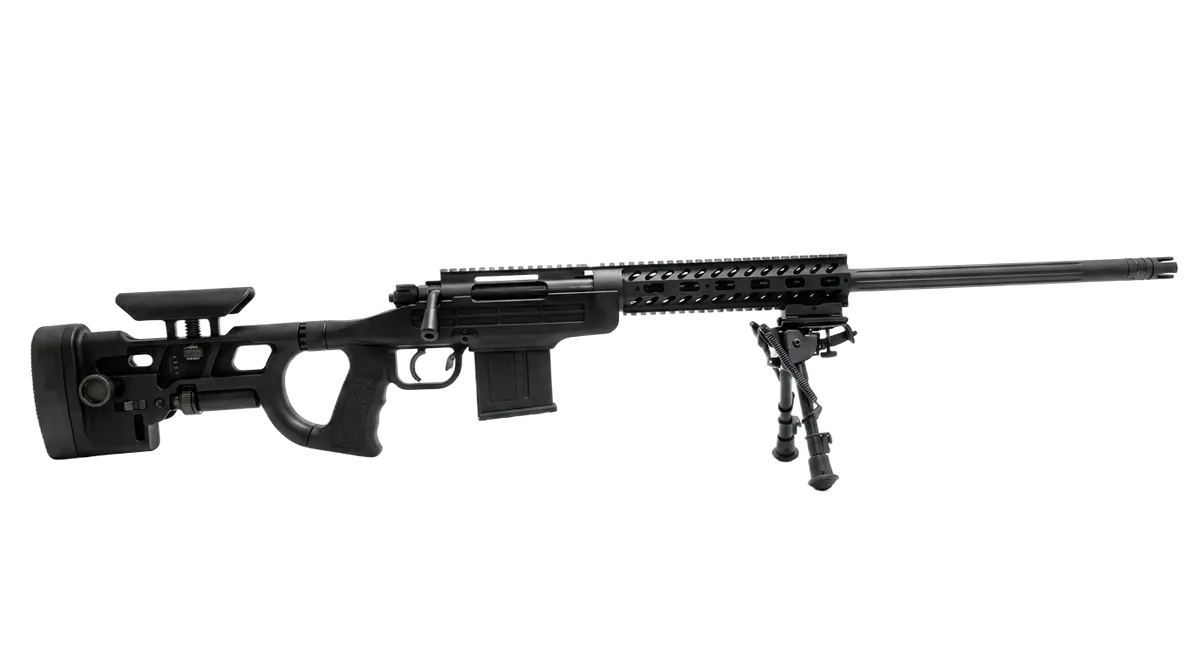 2011South Korea
South Korean 7.62×51 NATO bolt-action precision rifle with modular aluminum chassis and match-grade barrel, issued to ROK Army snipers.
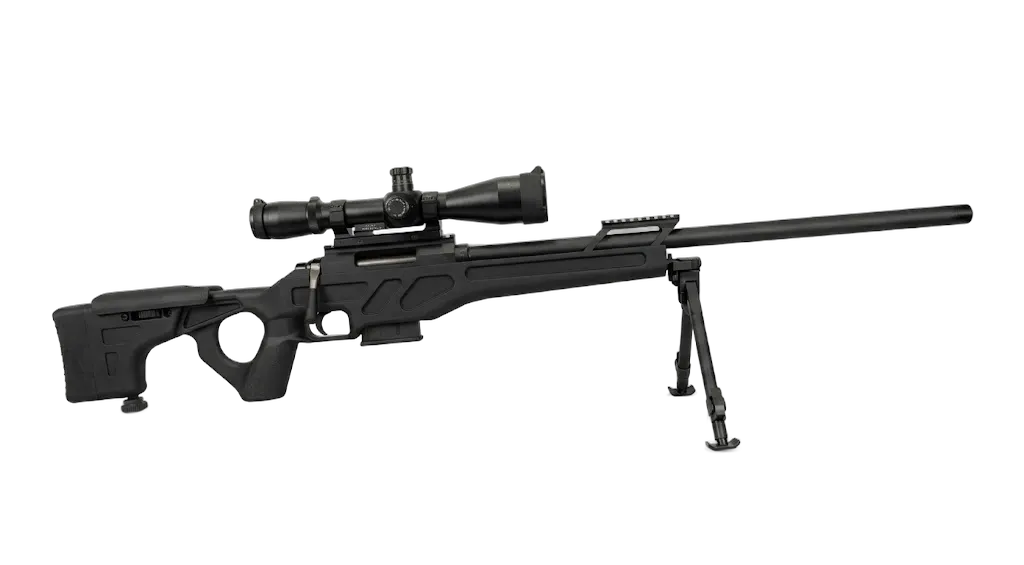 2012China
Bolt-action precision rifle chambered in 7.62×51 mm NATO, developed for Chinese elite units as a NATO-standard complement to the indigenous QBU-88 system.
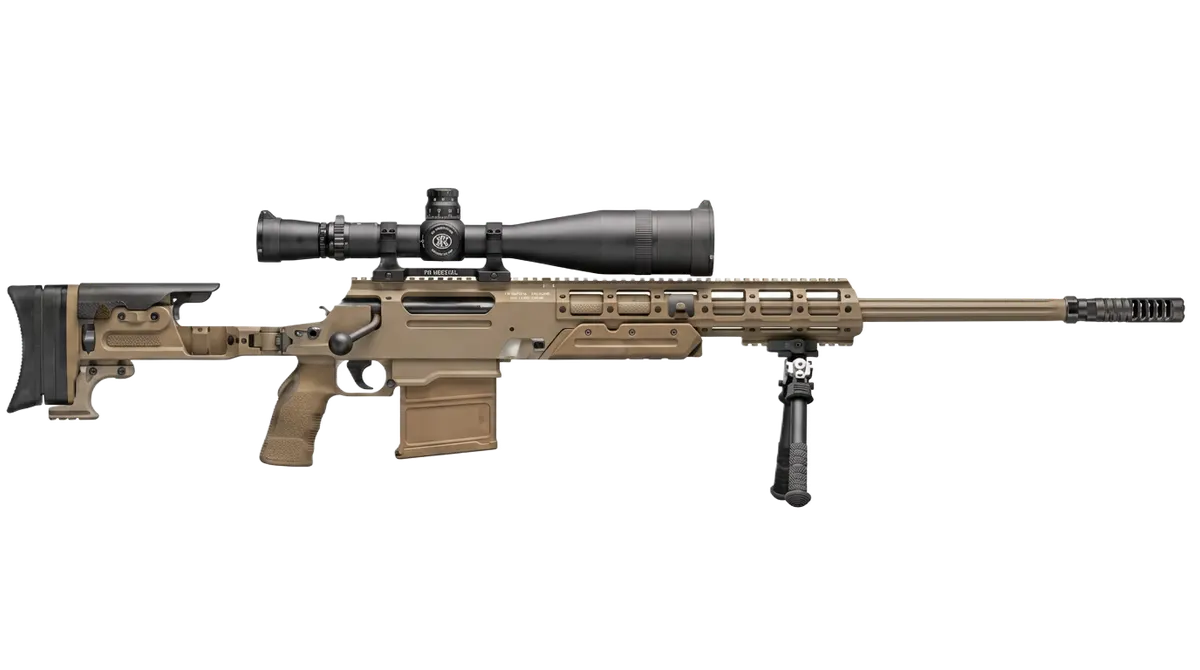 2012Belgium
Multi-calibre modular bolt-action precision rifle (.308 Win, .300 WM, .338 LM) intended for special forces and military snipers.
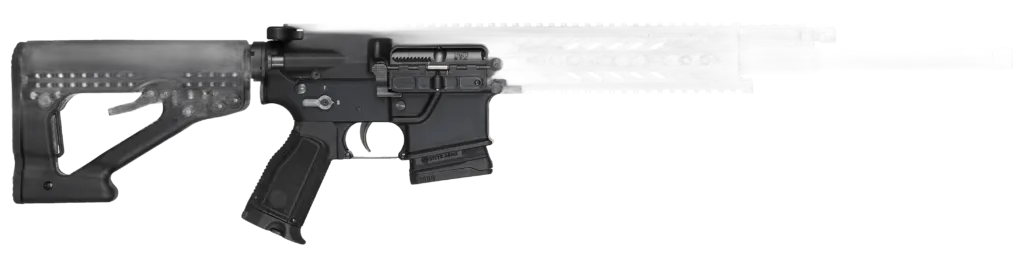 2012Austria
Semi-automatic 5.56×45 mm NATO carbine built on the AR-15 platform, aimed primarily at the U.S. civilian and law-enforcement markets.
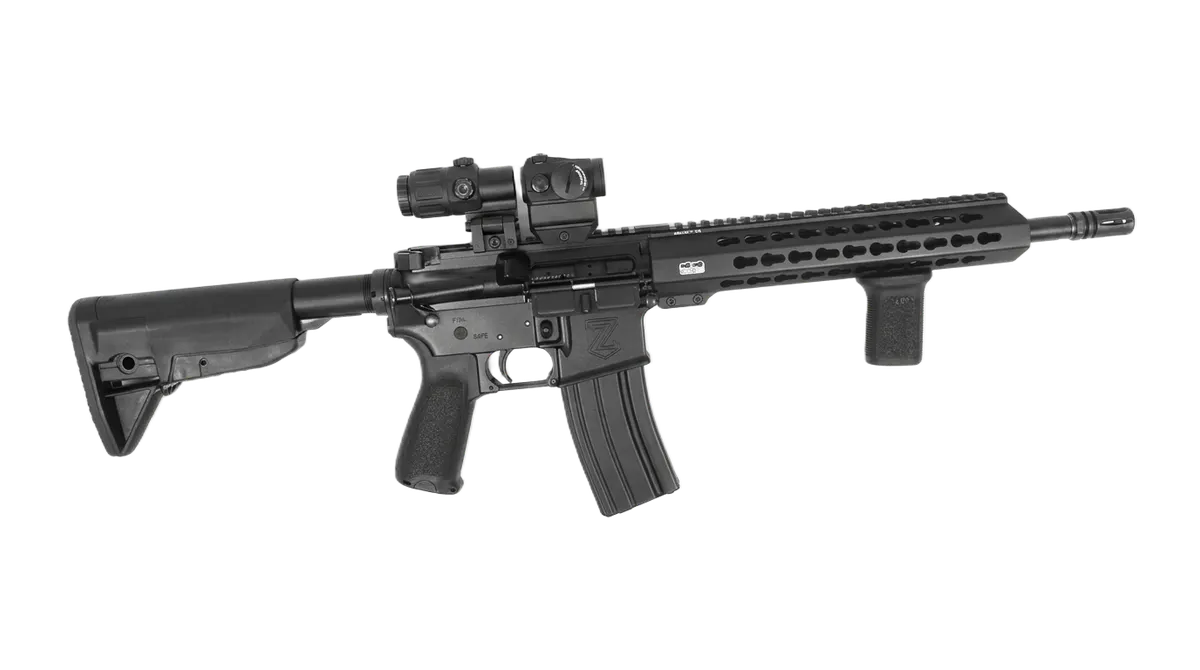 2012Ukraine
Ukrainian semi-automatic carbine on the AR-15 platform, produced in 5.56×45 mm NATO and .223 Remington for sport, precision and service use.
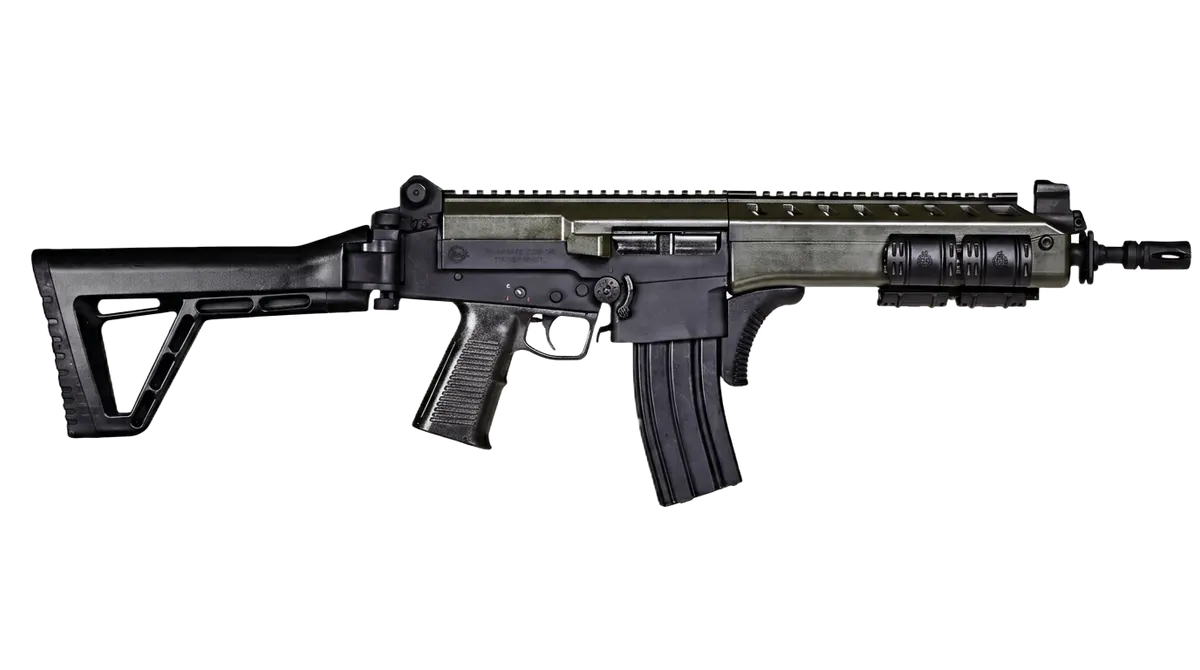 2012Brazil
Modular Brazilian assault rifle in 5.56×45 NATO (and 7.62×51 in DMR variants), developed by IMBEL as a replacement for the FAL M964 in the Brazilian Army.
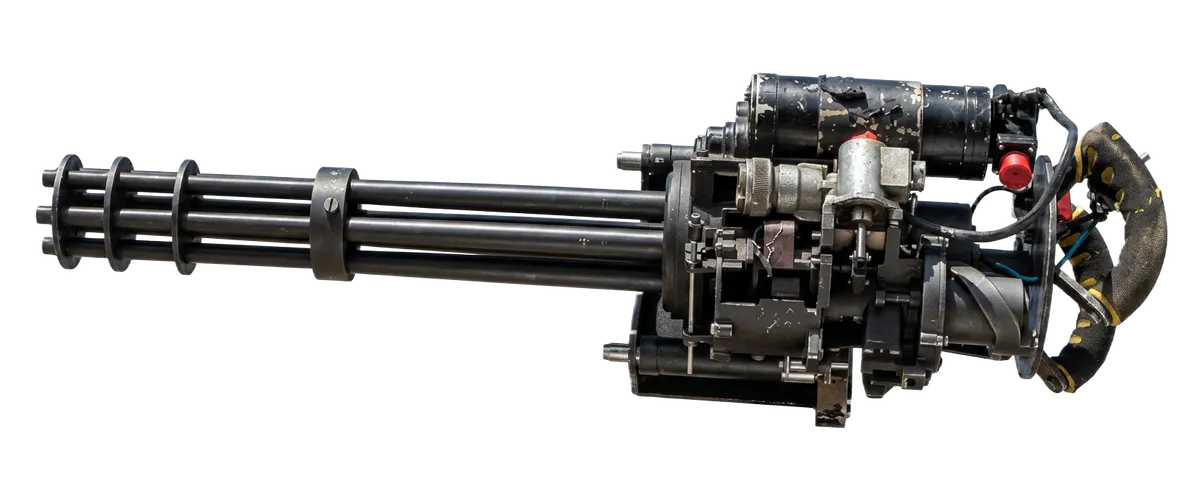 2012Iran
Iranian six-barrel rotary machine gun in 7.62×51 NATO, cloned from the US M134 Minigun: electric drive, 3,000–6,000 rpm rate of fire, mounted on Bell-214/Mi-17 helicopters, IRGC fast boats and point-defence pintles.
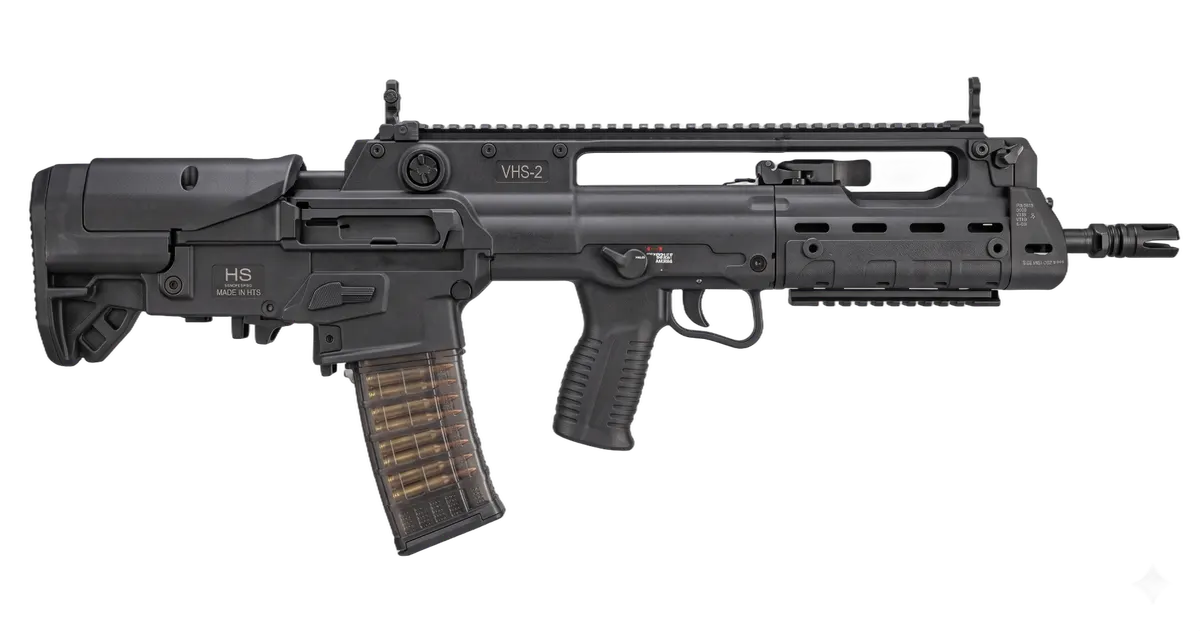 2013Croatia
Croatian bullpup assault rifle in 5.56×45 NATO, evolution of the original VHS: ambidextrous ergonomics and interchangeable barrel.
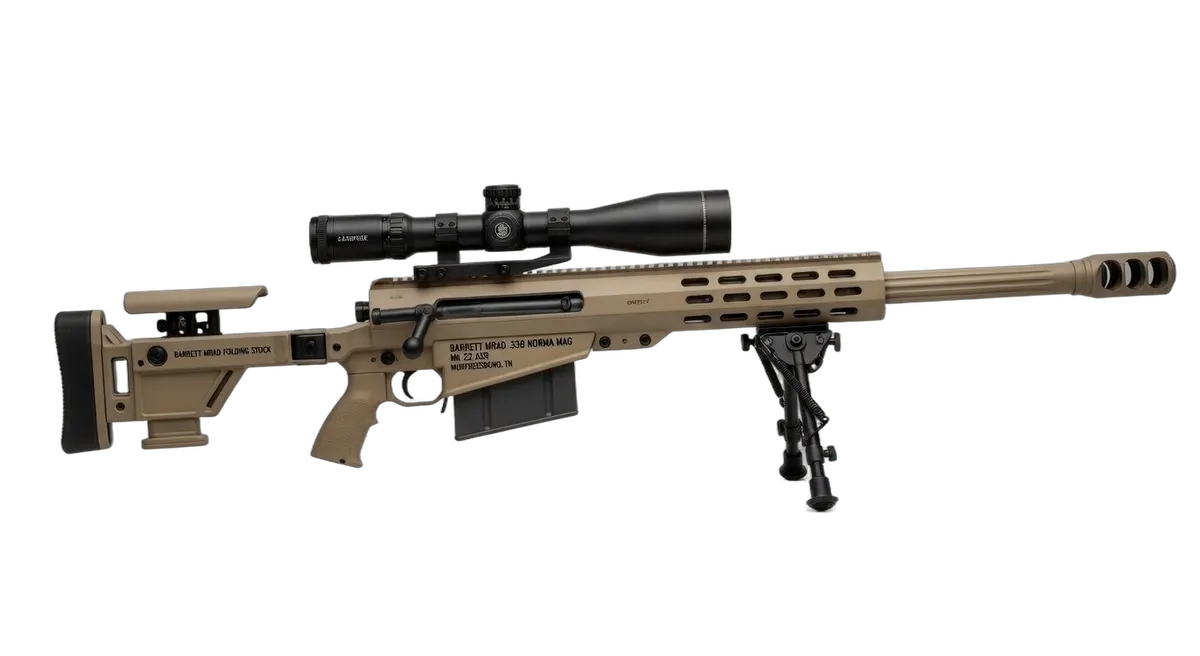 2013United States
Multi-caliber bolt-action sniper rifle adopted as the Mk 22 Advanced Sniper Rifle by the U.S. Army, USSOCOM and USMC: user-swappable barrels in 7.62 NATO, .300 Norma Magnum and .338 Norma Magnum.
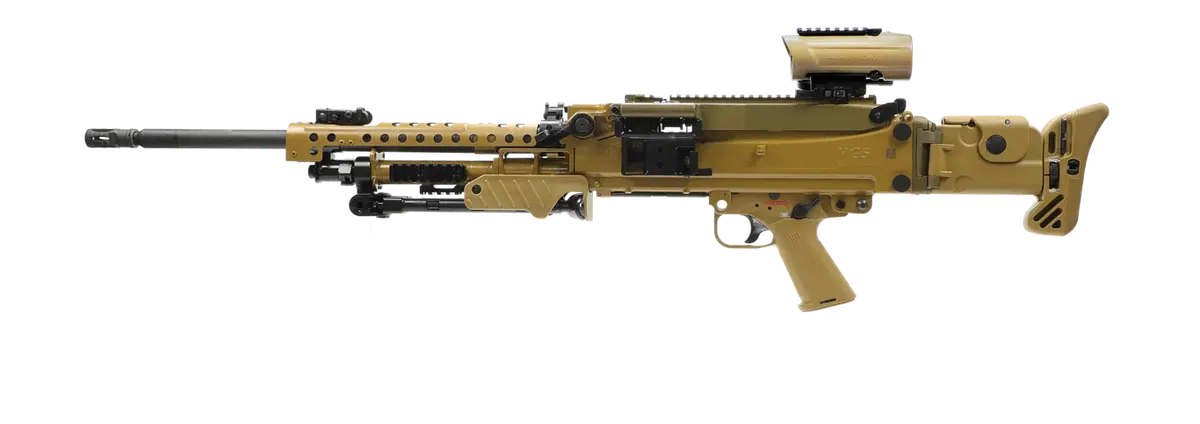 2013Germany
Belt-fed 7.62×51 mm NATO general-purpose machine gun, developed by Heckler & Koch as the HK121 to replace the venerable MG3 in Bundeswehr service.
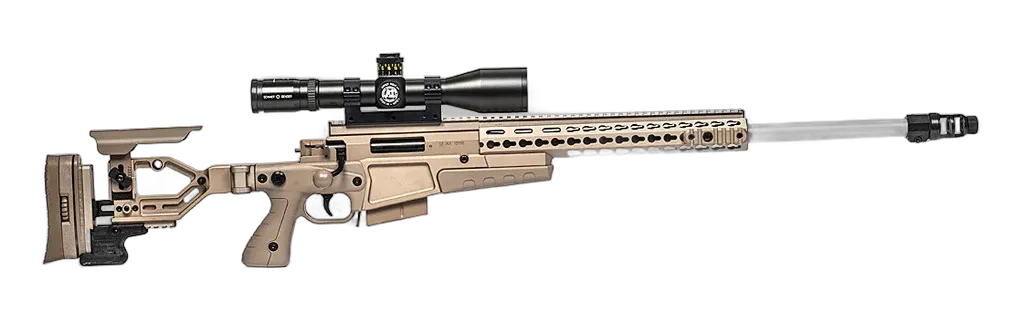 2013United Kingdom
Multi-calibre sniper rifle: the shooter can swap barrel and bolt between .338 LM, .300 WM and .308 Win in minutes. Folding chassis, M-LOK rails, tactical evolution of the AW.
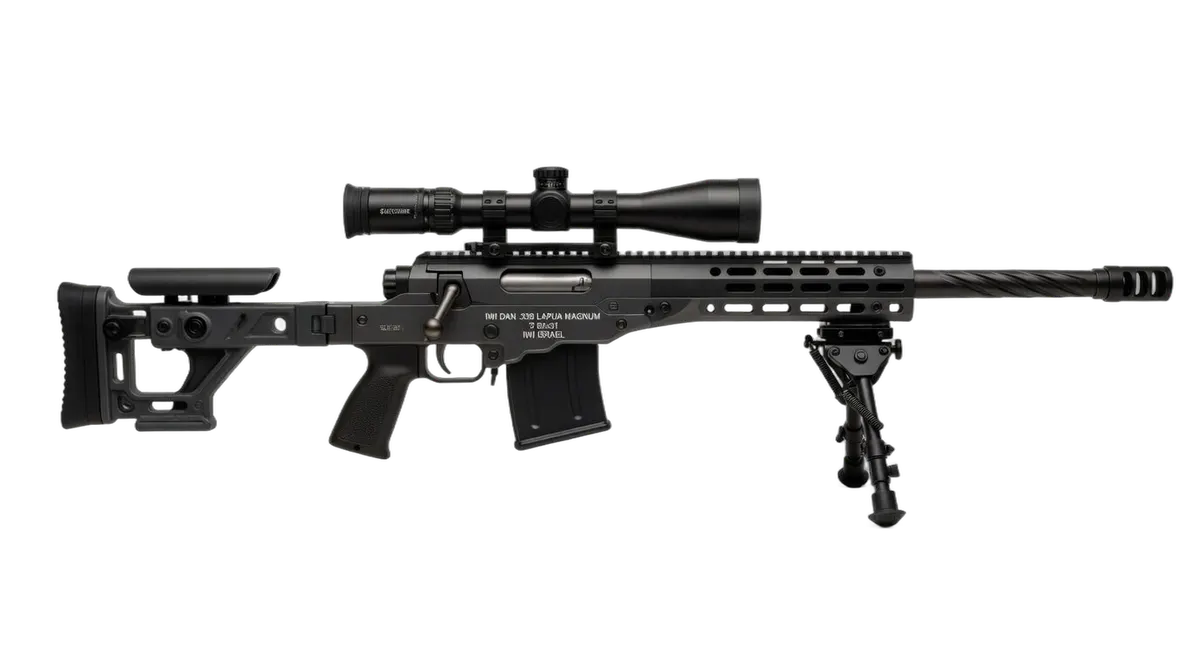 2014Israel
Israeli bolt-action precision rifle in .338 Lapua Magnum: modular chassis, free-float match barrel and folding adjustable stock, designed for long-range engagements.
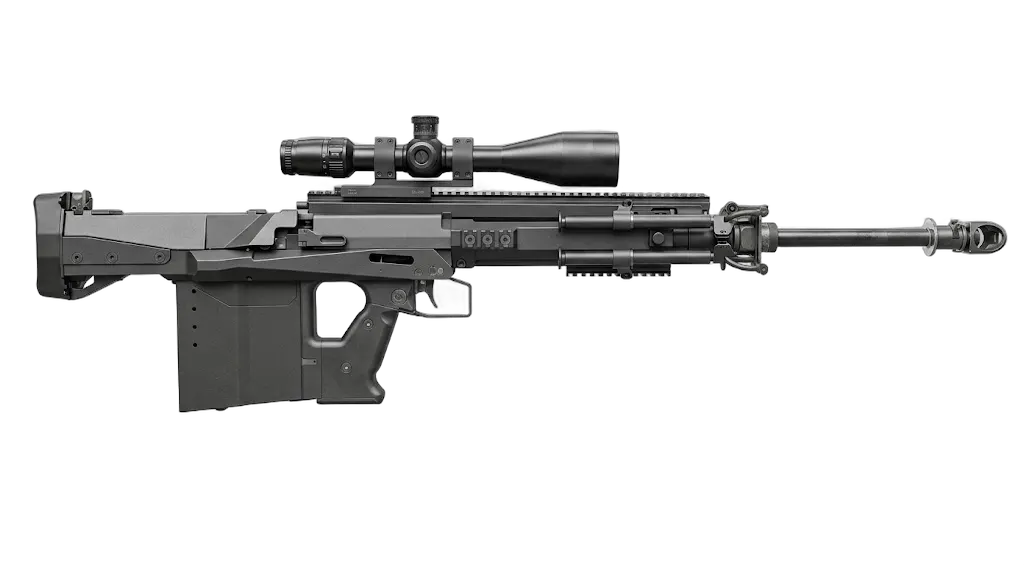 2014Hungary
Modernised Gepárd variant in .50 BMG / 12.7×99 mm NATO, with a compact bullpup architecture, high-magnification optic and free-floating heavy barrel.
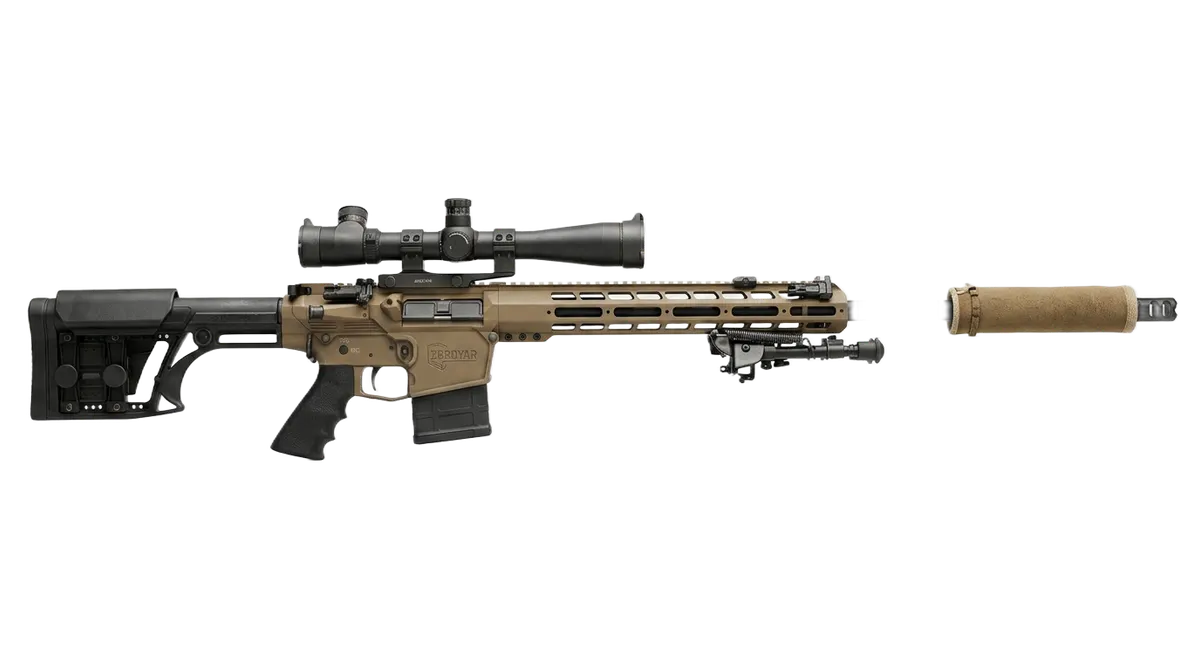 2014Ukraine
Ukrainian semi-automatic precision rifle on the AR-10 platform, chambered in 7.62×51 mm NATO (.308 Win), used as a DMR by the Ukrainian armed forces.
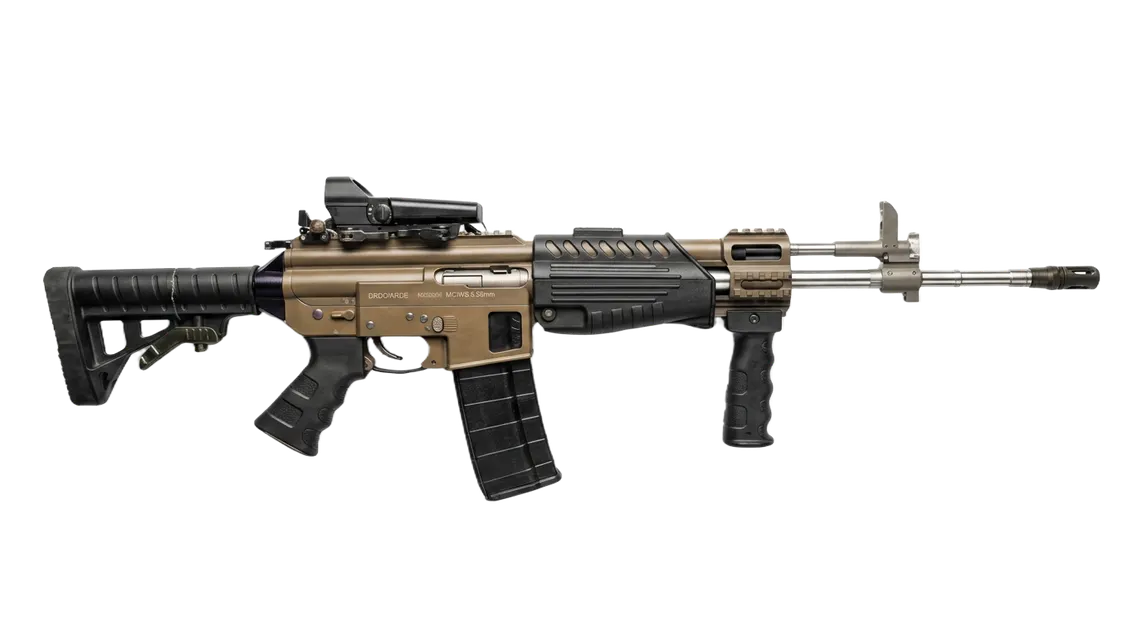 2014India
Indian modular system allowing conversion between 5.56×45, 7.62×39 and 6.8 SPC by swapping barrel and bolt.
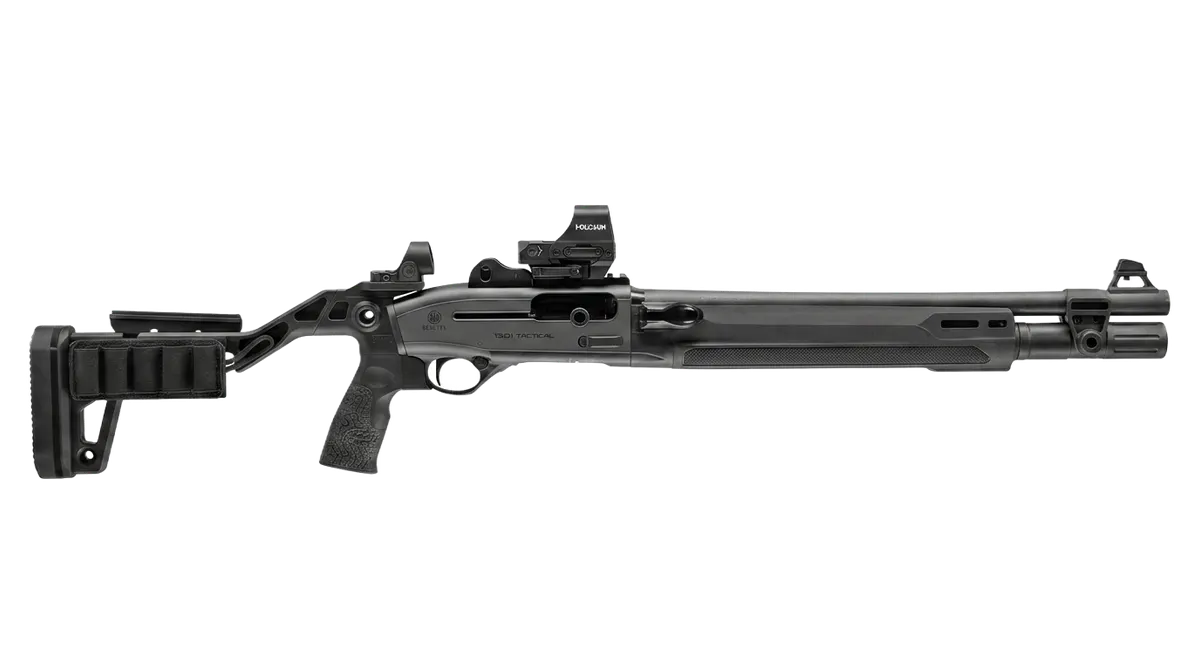 2014Italy
Ultra-fast semi-automatic shotgun based on the ARGO inertial system, designed for professional tactical and defensive use.
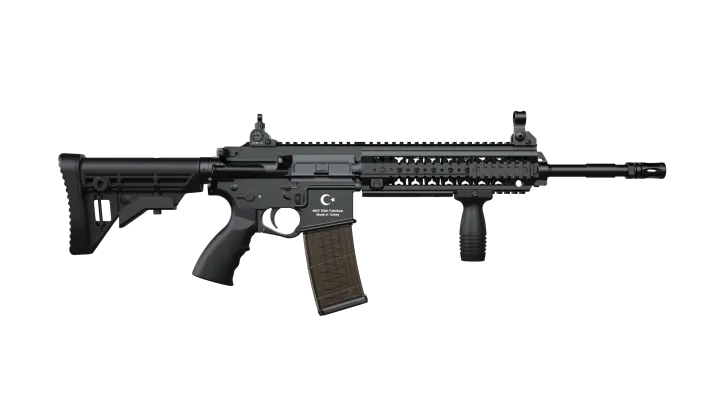 2014Turkey
Turkish 7.62×51 NATO battle rifle, the first fully domestic infantry weapon: HK417-style short-stroke piston system, fielded by the Turkish Armed Forces since 2014.
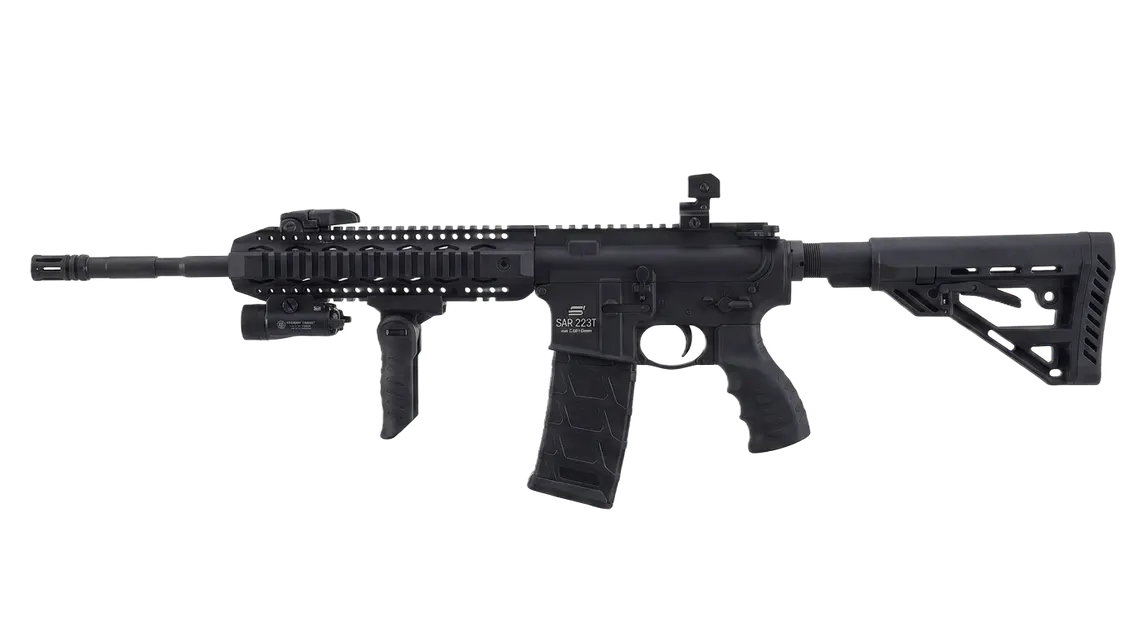 2014Turkey
Turkish 5.56 NATO assault carbine on a direct-impingement AR-15 base, produced by Sarsılmaz for police, special forces and export.
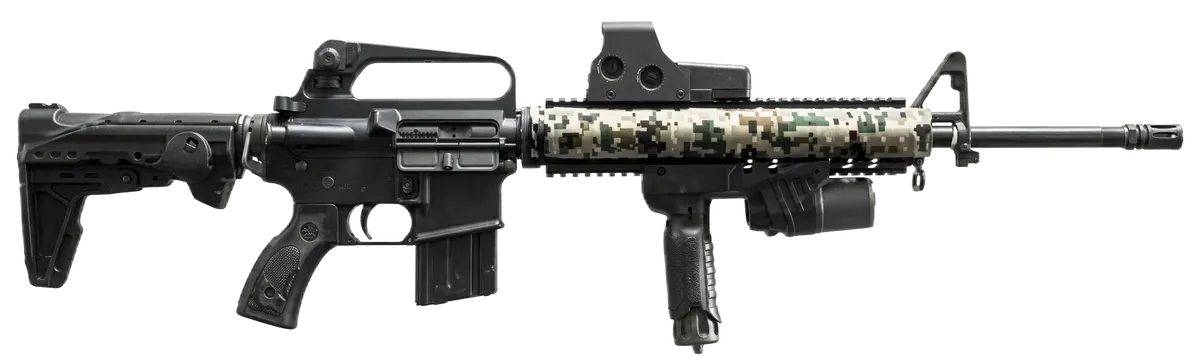 2014Iran
Iranian carbine inspired by the M4/M16A2 in 5.56×45 NATO with integral carry handle, quad-rail handguard in digital fibre wrap and retractable stock: a reverse-engineered copy fielded with the Saberin special-forces and the IRGC Navy.
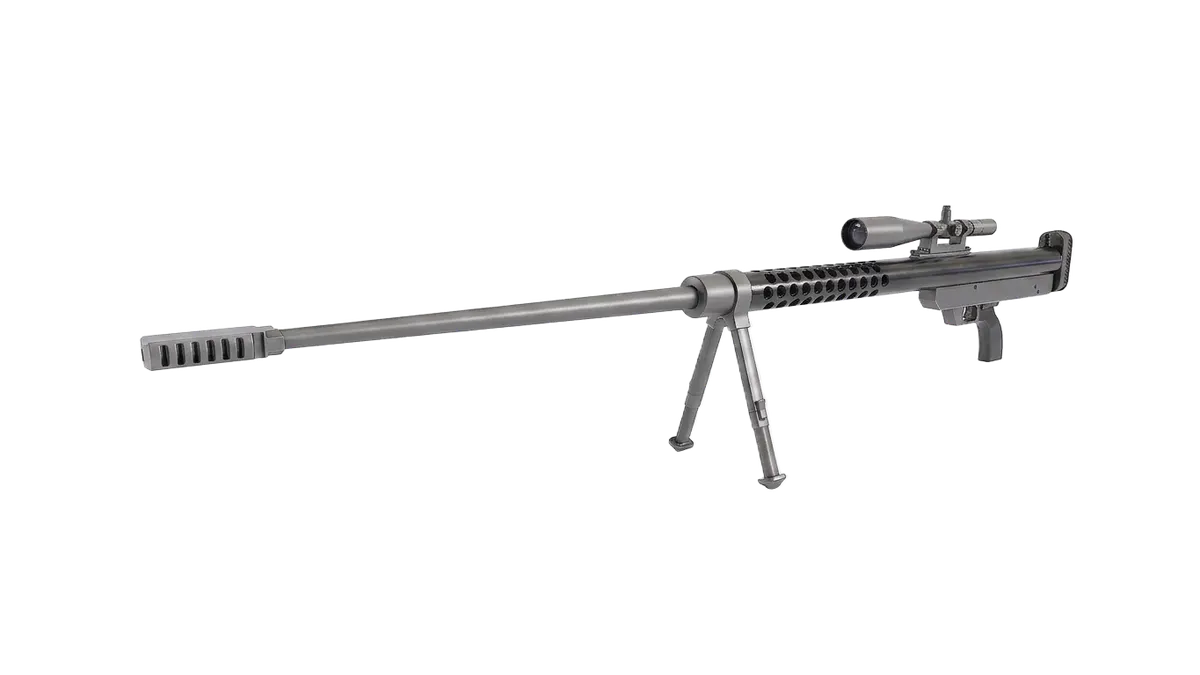 2014Iran
Iranian anti-materiel rifle in 14.5×114 mm — the calibre of the Soviet KPV heavy machine gun — with a long barrel, adjustable bipod, slotted muzzle brake and single-shot mount: designed to neutralise light vehicles, fortified positions and radars at ranges up to 4 km.
Caliber-convertible platforms, M-LOK, digital fire control: the weapon becomes a system, not a single piece.
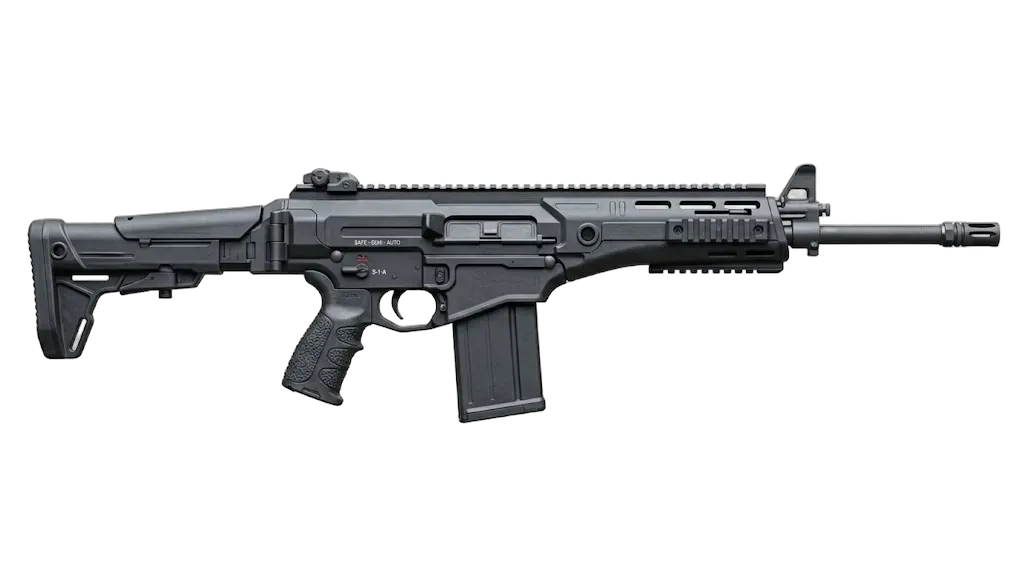 2015Italy
Italian 7.62×51 NATO battle rifle derived from the ARX-160 architecture, developed for long-range engagements and DMR roles.
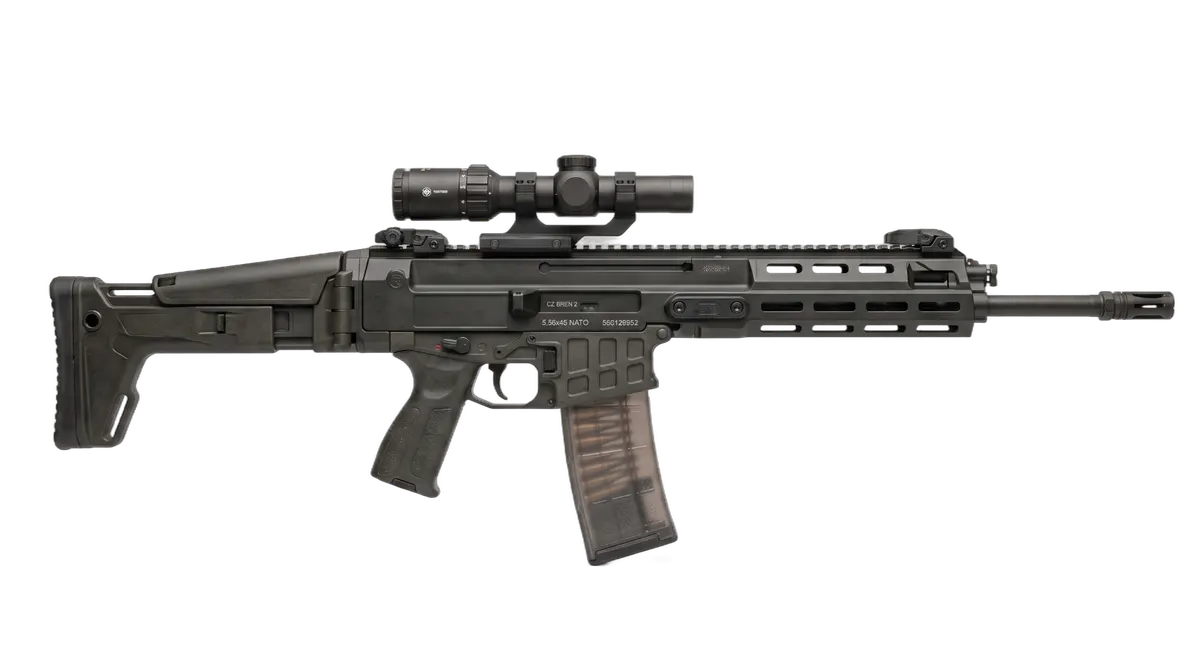 2015Czech Republic
Evolution of the CZ 805 BREN, a Czech modular 5.56 NATO or 7.62×39 mm assault rifle, lighter by about 700 g and with revised ergonomics. Standard issue for the Czech Army.
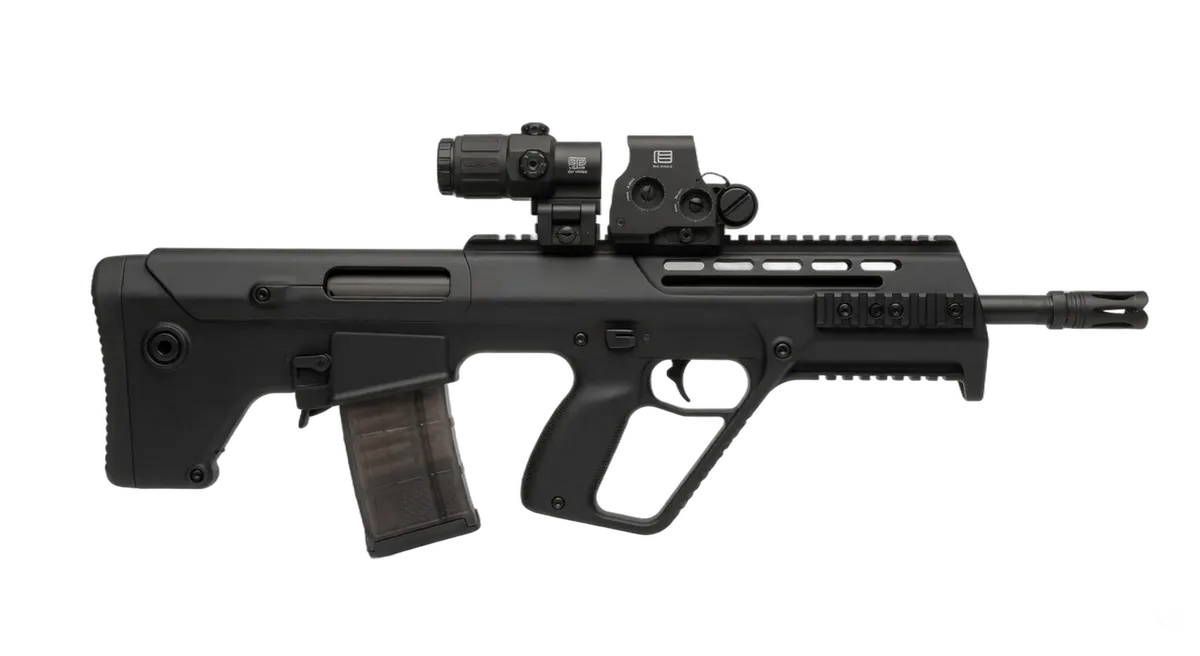 2015Ukraine
Ukrainian bullpup conversion based on the AKM/AK-74: the internals of an AK platform inside a compact polymer shell.
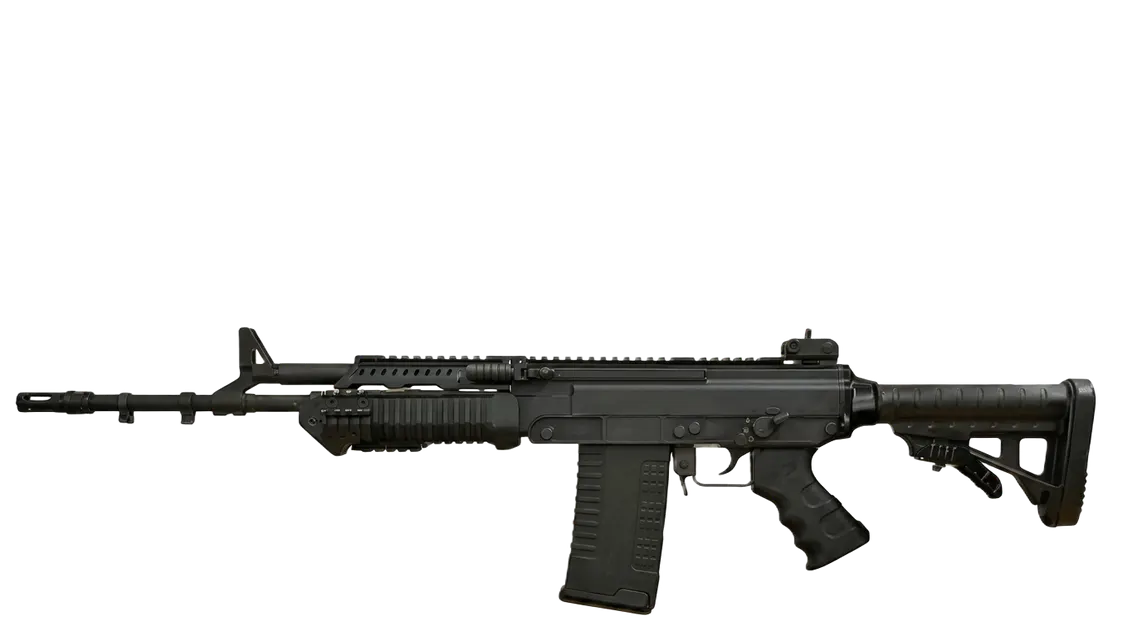 2015India
INSAS evolution with telescopic stock, quad-rail handguard and improved reliability.
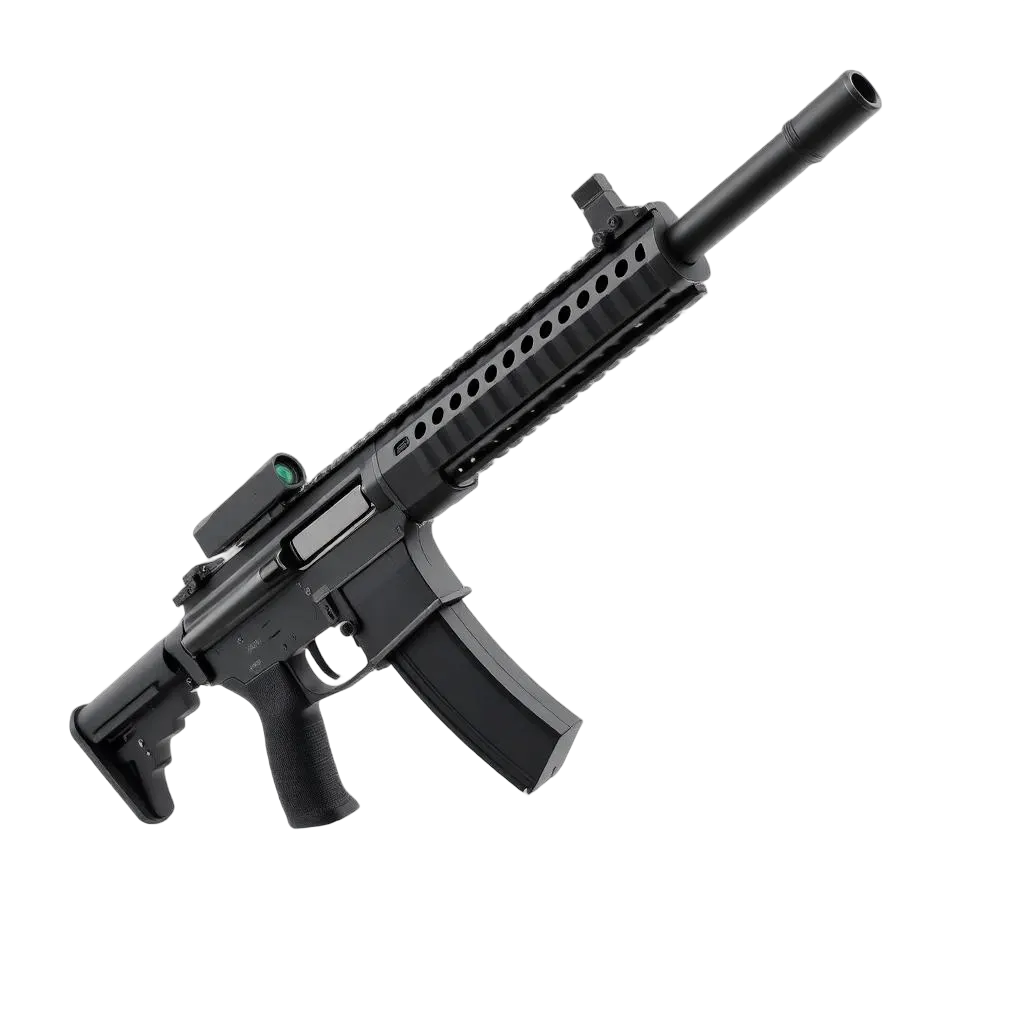 2016Russia
Russian modular light machine gun in 5.45×39 mm derived from the AK-12 platform. It introduces an interchangeable barrel (550 mm long or 415 mm short) and a 96-round drum magazine.
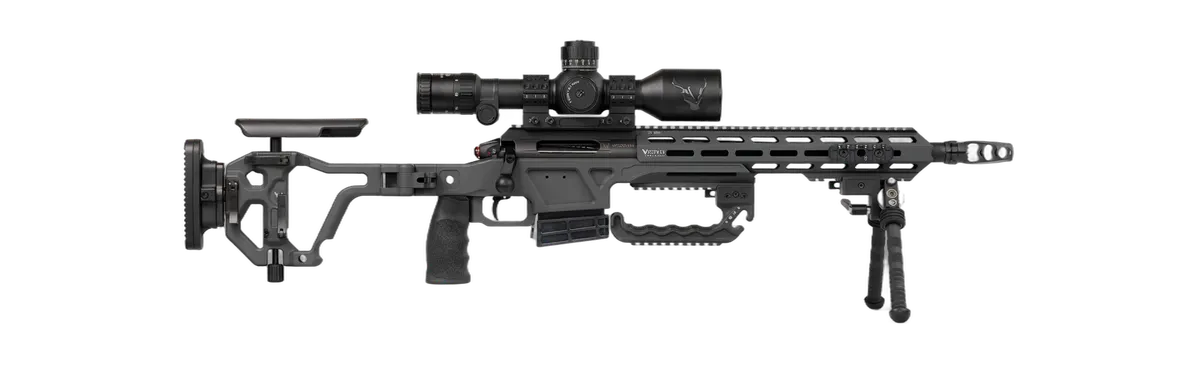 2016Italy
Italian bolt-action precision rifle from the Scorpio series, made by Victrix Armaments for PRS sport shooting and medium/long-range tactical use in calibres from 6 mm BR to .338 Lapua Magnum.
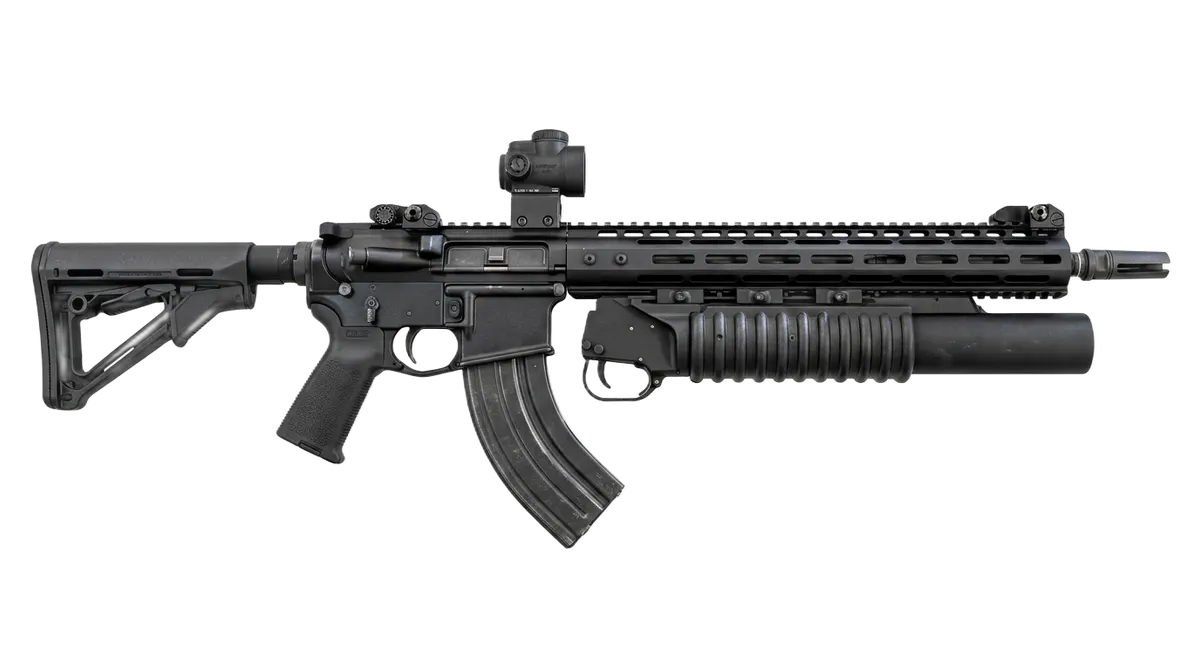 2016Ukraine
Ukrainian assault rifle on a modified AR-15 platform accepting standard AK magazines in 7.62×39 mm, combining AR ergonomics with former Soviet-bloc ammunition.
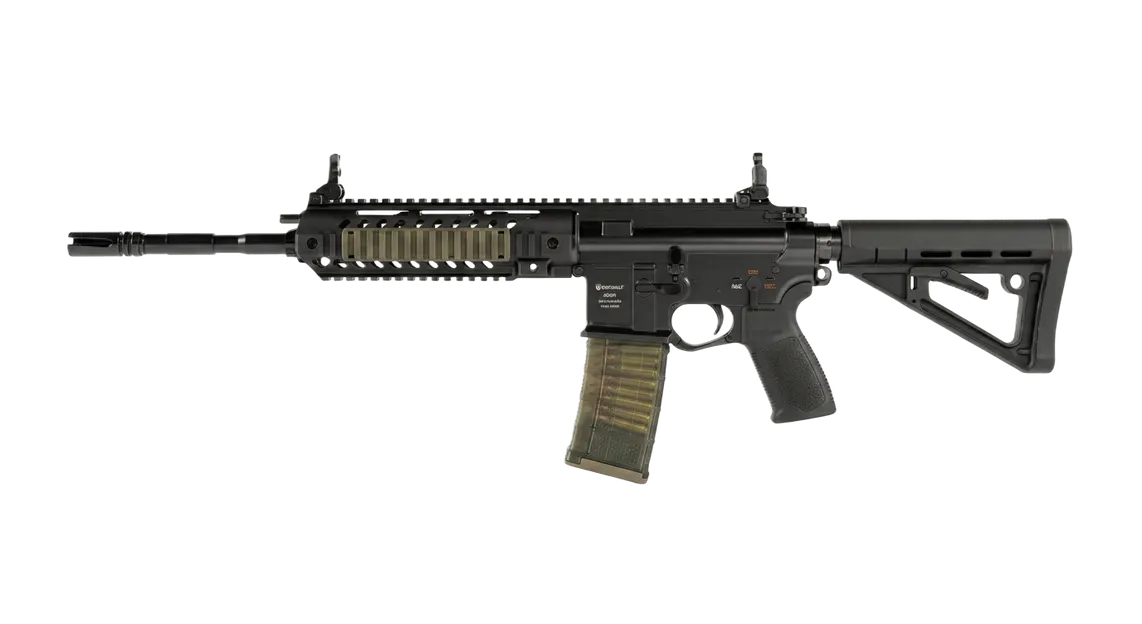 2016Turkey
5.56 NATO assault rifle developed by the Kale Group: AR-15 architecture with adjustable short-stroke piston, offered for the export market.
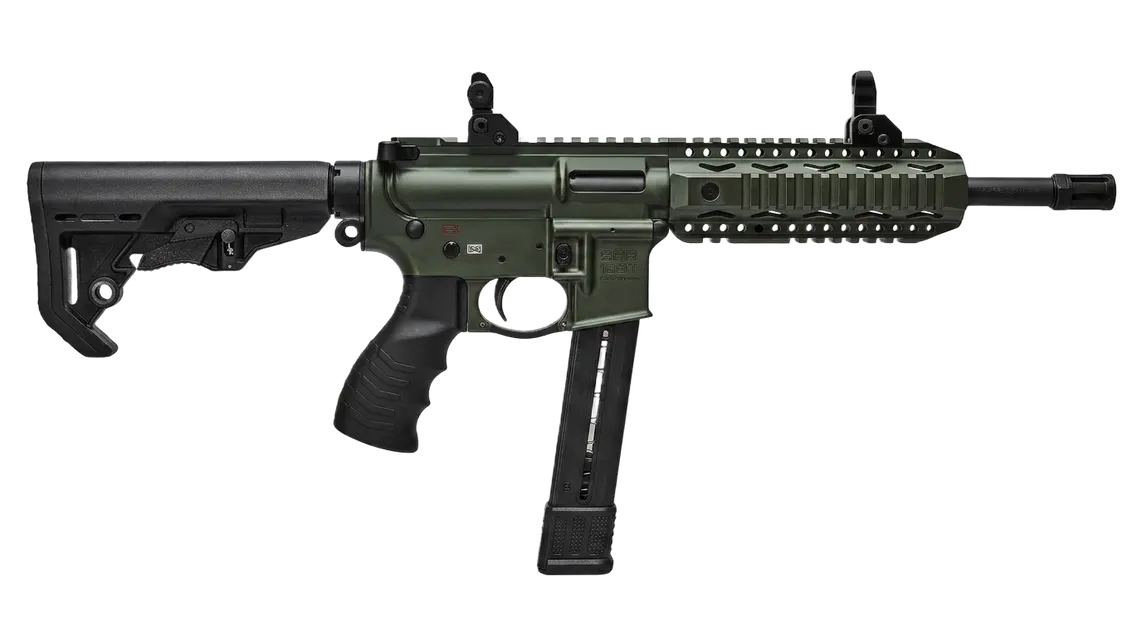 2016Turkey
9×19 submachine gun with scaled AR-15 architecture, closed bolt and Glock 17-pattern magazines: issued to police, special forces and VIP protection teams.
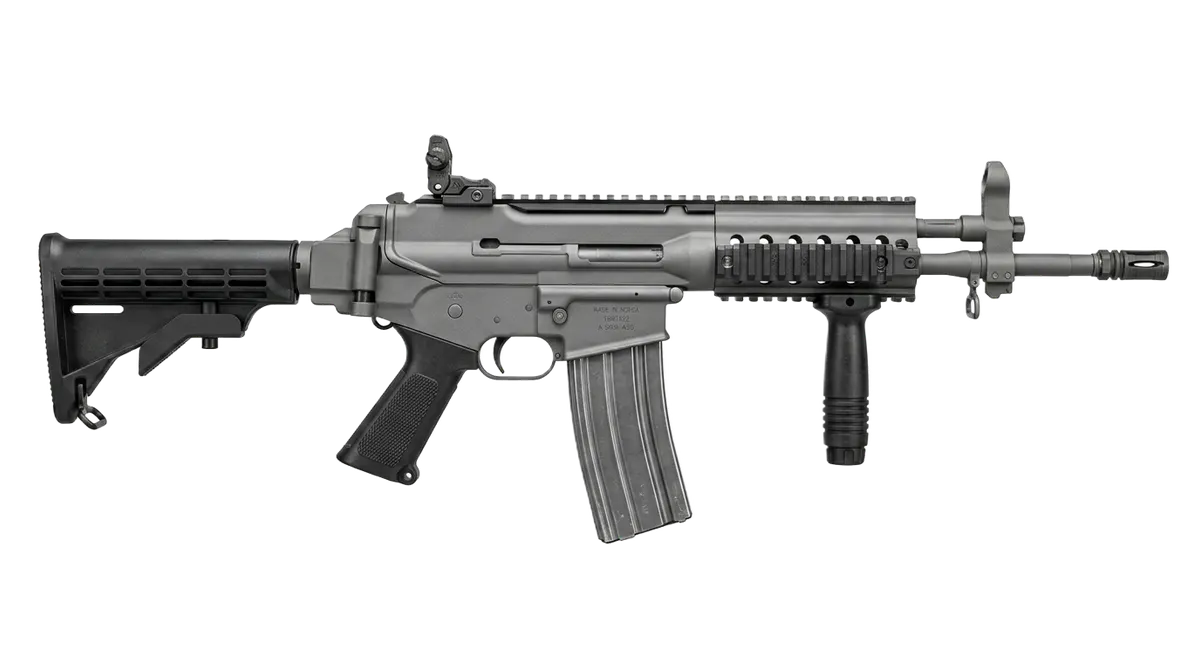 2016South Korea
K2 upgrade with an integral Picatinny quad-rail, M4-style telescoping stock and flip-up sights: new standard issue rifle being adopted by the ROK Army.
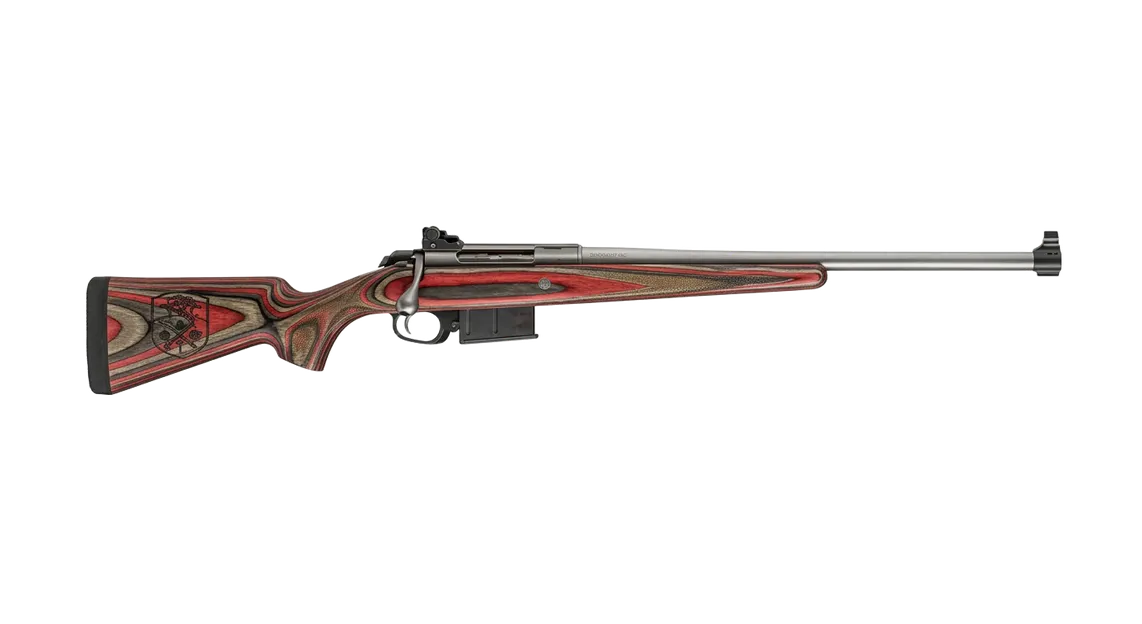 2016Canada
Bolt-action hunting/patrol rifle in .308 Winchester adopted in 2016 by the Canadian Rangers to replace the ageing Lee-Enfield No.4; based on the Finnish Tikka T3 CTR with a red-grey laminated wooden stock.
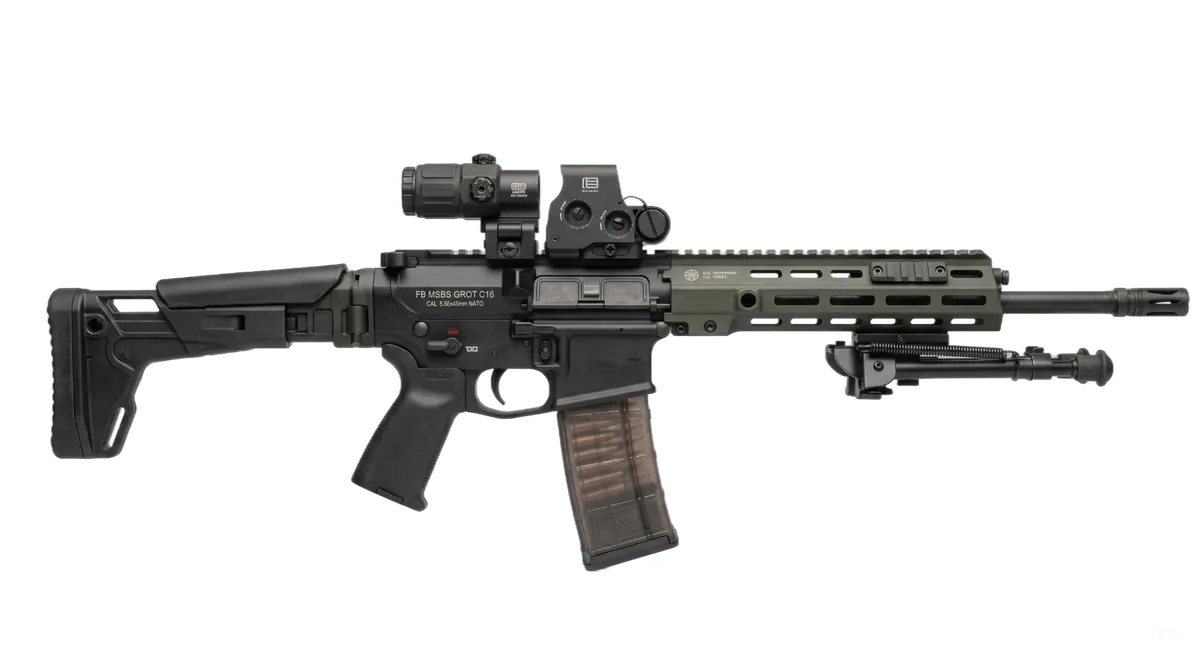 2017Poland
Polish modular gas-operated rifle, configurable in classic or bullpup layout. Standard issue of the Polish Armed Forces.
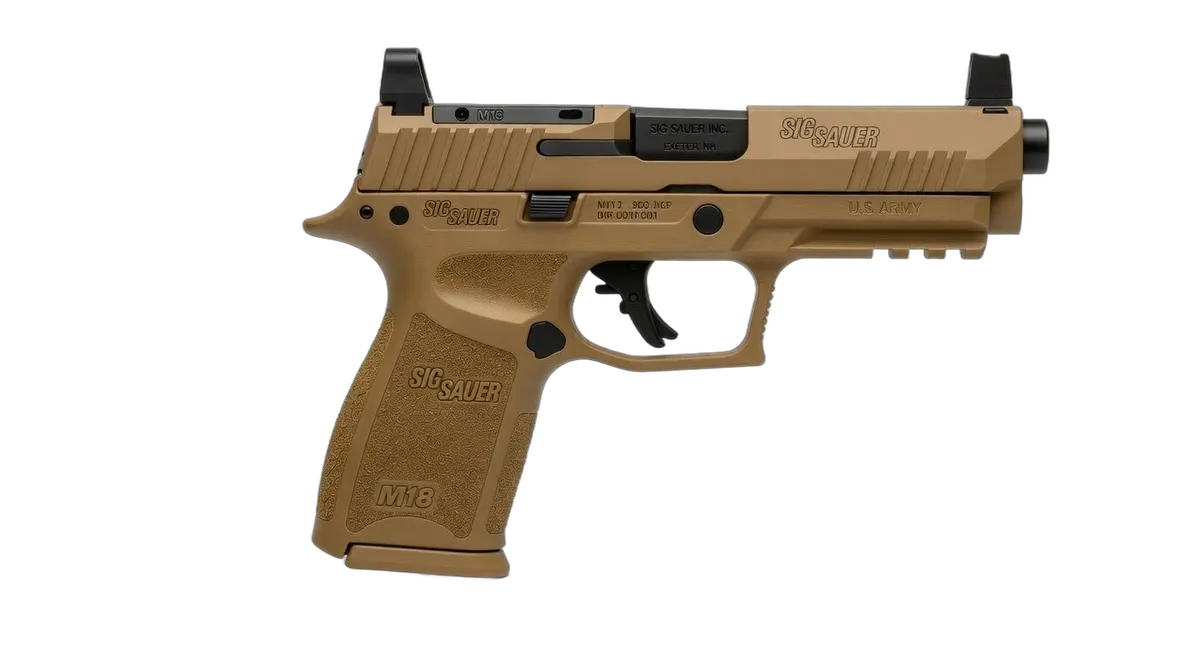 2017United States
9×19 compact pistol derived from the SIG P320, adopted as the U.S. armed forces' sidearm under the MHS program.
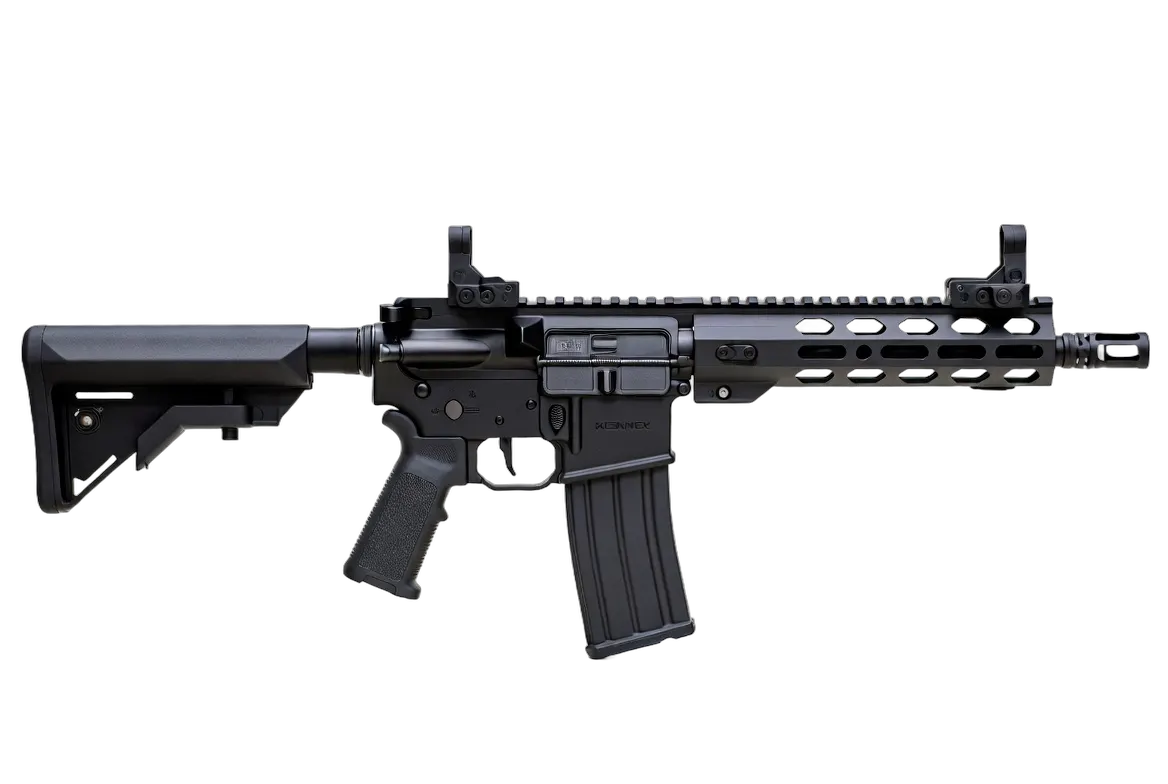 2017Germany
Modular 5.56×45 mm NATO assault rifle with a short-stroke gas piston and seven-lug rotating bolt; developed by Haenel as a direct rival to the HK416 in the German Army's «Sturmgewehr Bundeswehr» trials.
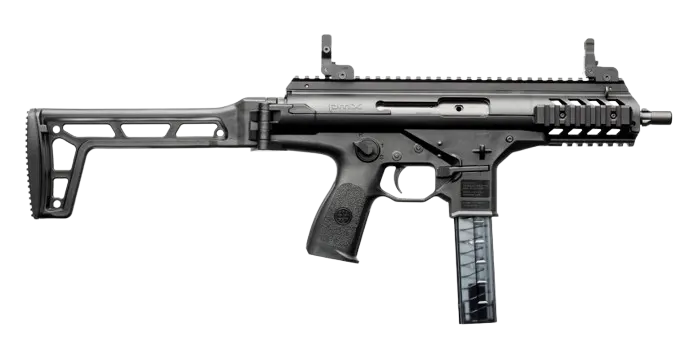 2017Italy
Italian 9×19 mm submachine gun developed by Beretta as an evolution of the Mx4 Storm, adopted by the Italian Army and police units for VIP protection and close-quarters duties.
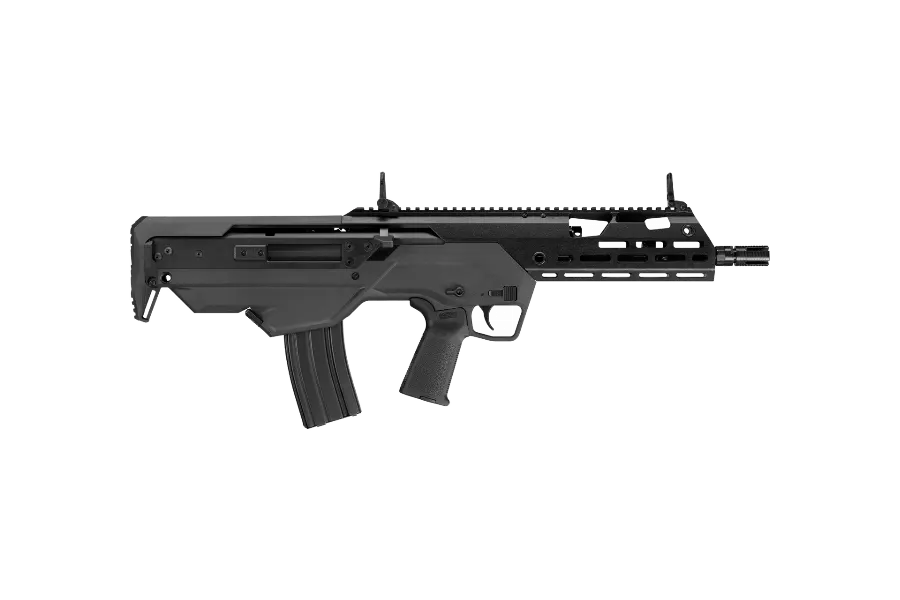 2017Poland
Bullpup configuration of the MSBS Grot platform. Reduced overall length with the same barrel — ideal for vehicle crews and urban operations.
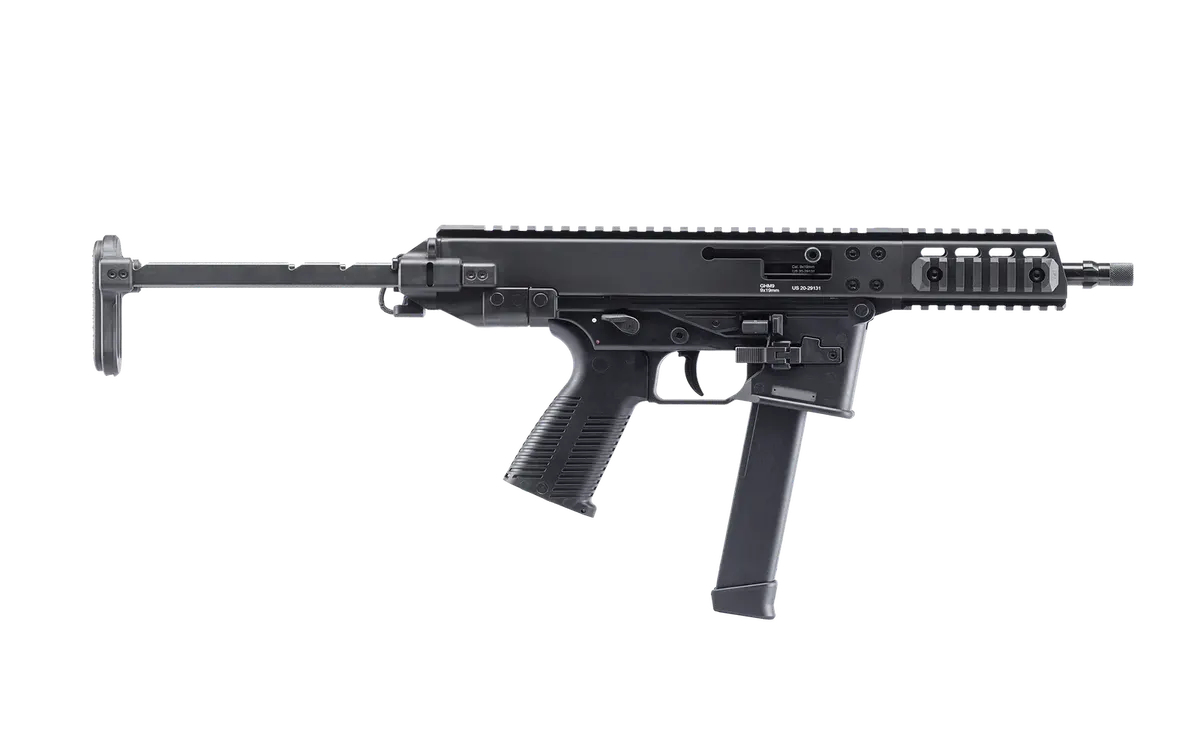 2017Switzerland
Swiss submachine gun in 9×19 mm Parabellum, derived from the GHM (General Handy Machinegun), designed for police forces and professional operators. Compact, modular, with a full-length Picatinny top rail.
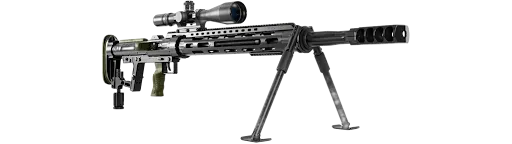 2017Ukraine
Ukrainian single-shot bolt-action anti-materiel rifle chambered in .50 BMG (12.7×99 mm NATO), designed for long-range engagements against vehicles and materiel.
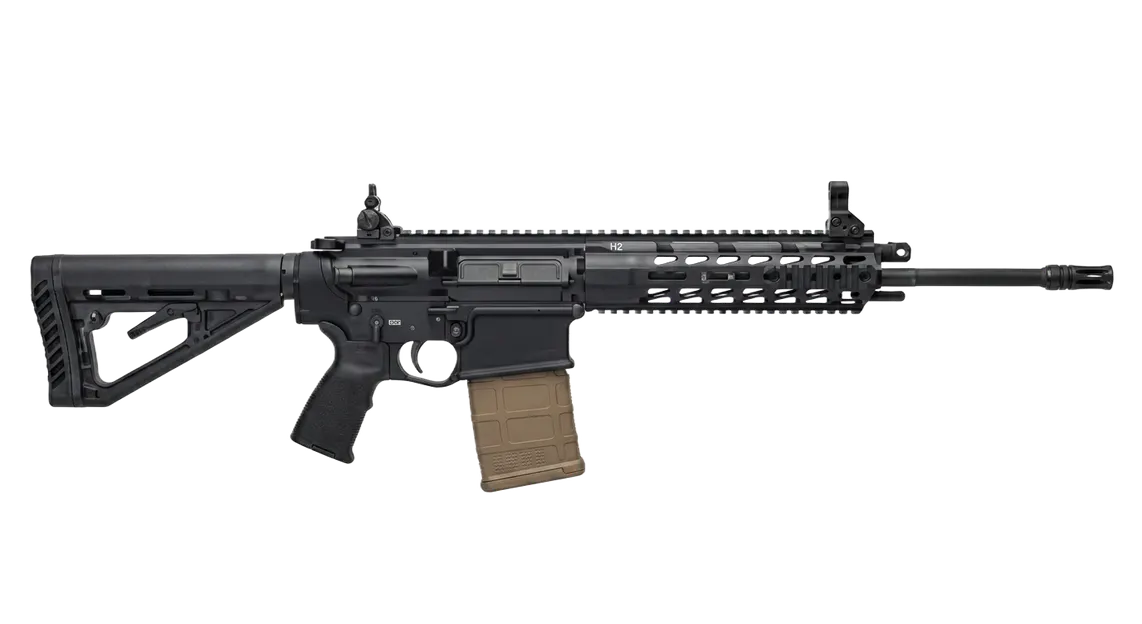 2017Turkey
5.56×45 NATO variant of the MPT with STANAG compatibility, developed for light infantry, Gendarmerie and export.
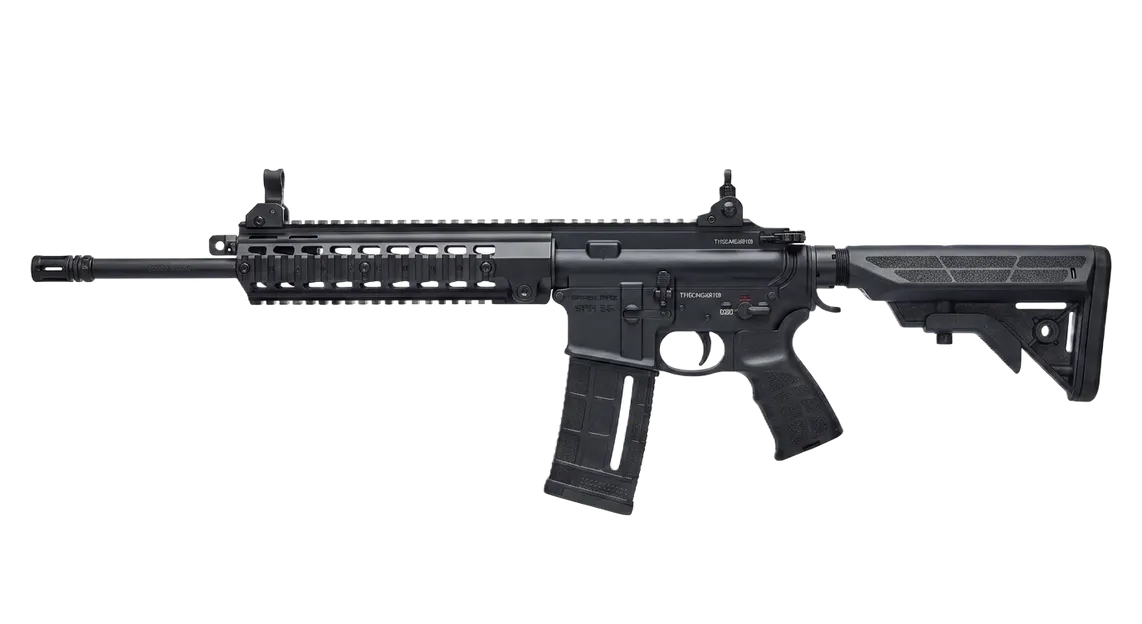 2017Turkey
Modular 5.56 NATO assault rifle with adjustable short-stroke piston, direct competitor to the MPT-55 and HK416.
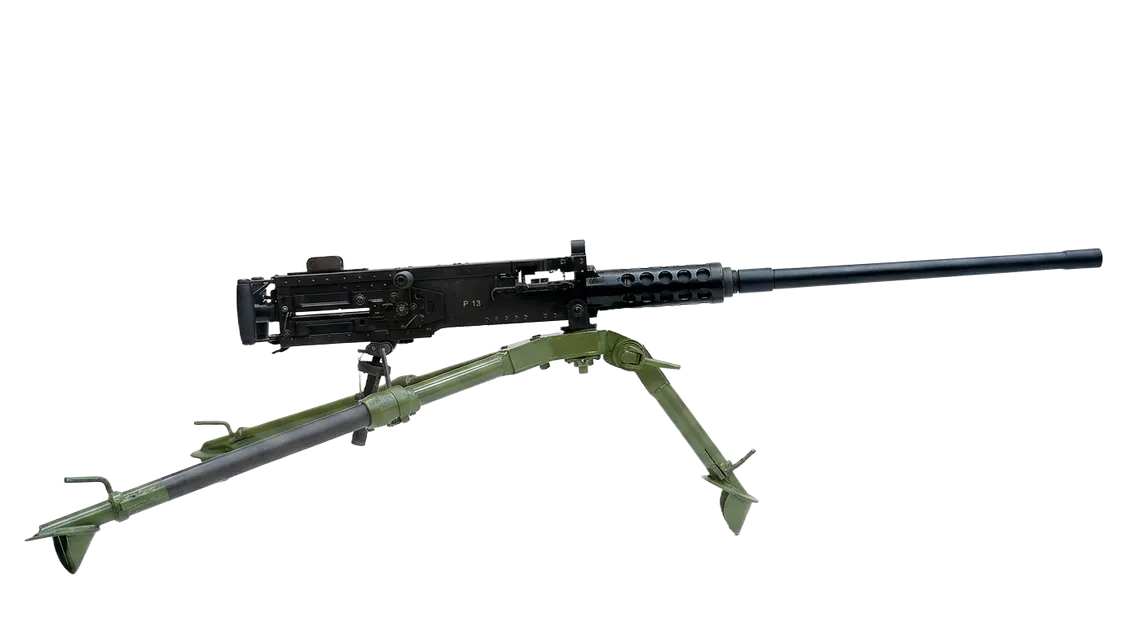 2017Turkey
Turkish version of the Browning M2HB .50 BMG with quick-change barrel (QCB) kit, produced by CANiK under MKE licence for the Turkish Armed Forces and export.
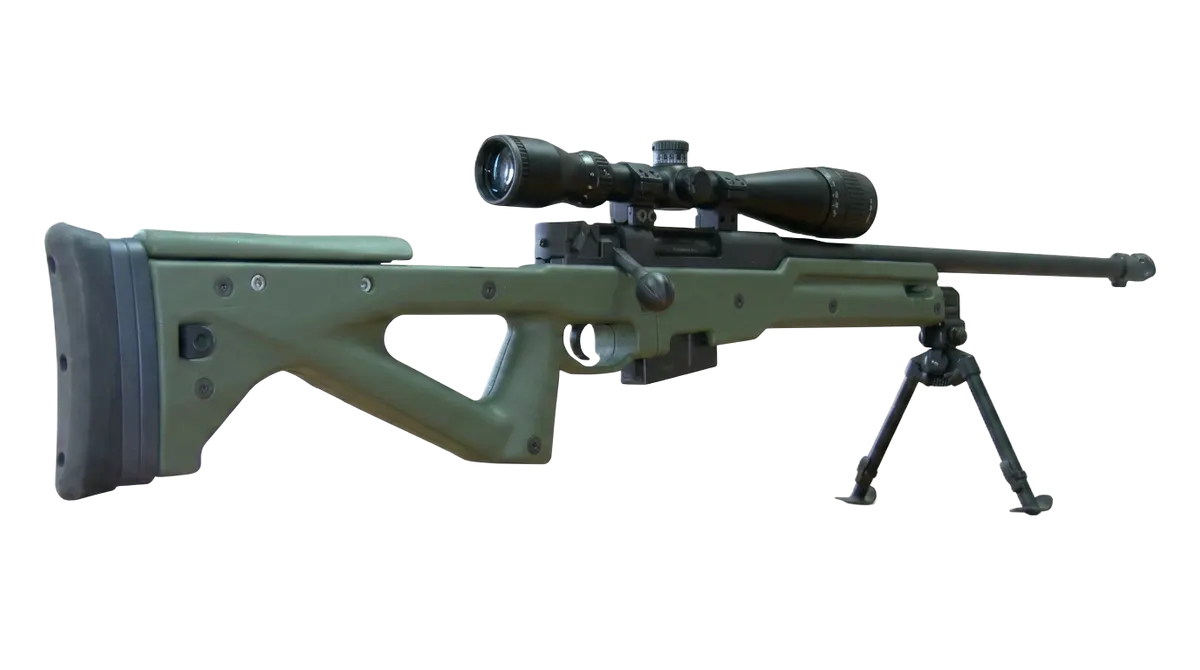 2017Turkey
Bolt-action precision rifle in 7.62×51 NATO (.308 Winchester) with polymer stock and match barrel for designated marksman use.
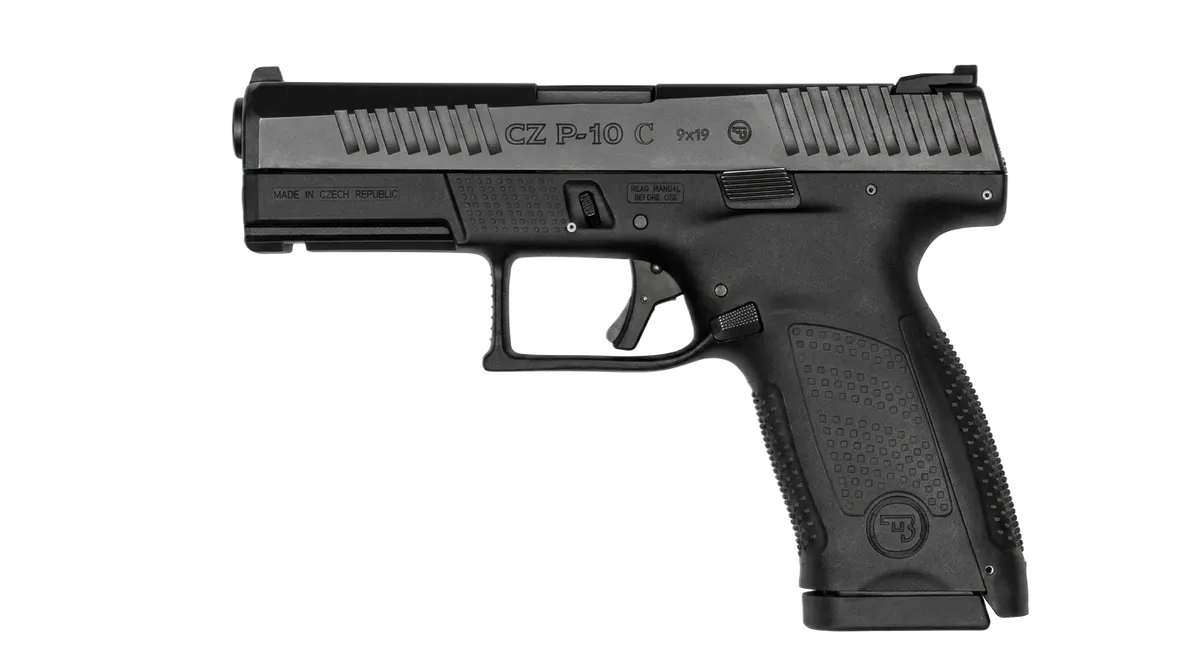 2017Czech Republic
Polymer striker-fired pistol chambered in 9×19, Compact format with 15-round magazine; ambidextrous controls, short trigger pull with tactile reset and integrated Picatinny dust-cover rail.
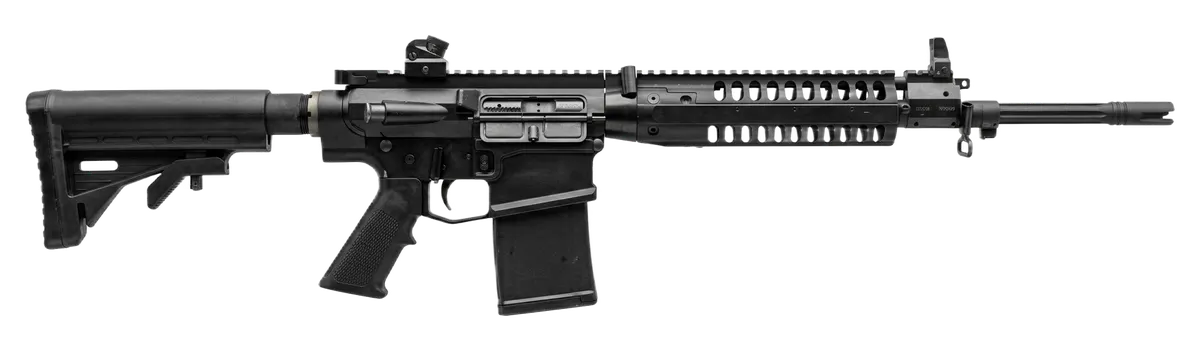 2017Iran
Iranian semi-automatic rifle in 7.62×51 NATO inspired by the AR-10/SR-25 architecture: free-floating barrel, ventilated free-float handguard with a full-length rail and retractable LMT-style stock; used as a squad DMR by the Army and IRGC.
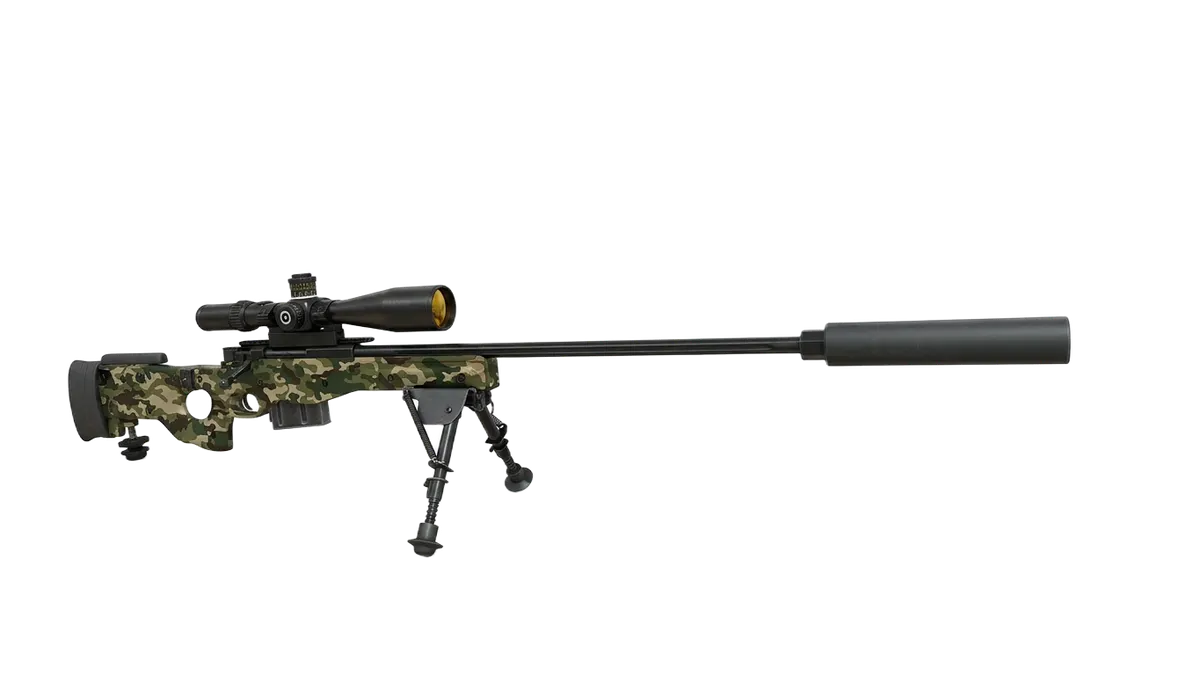 2017Iran
Iranian bolt-action precision rifle in .338 Lapua Magnum inspired by the Accuracy International AWM: polymer chassis with adjustable cheekpiece and butt-pad, integral bipod, optional suppressor; fielded with Artesh and IRGC sharpshooters.
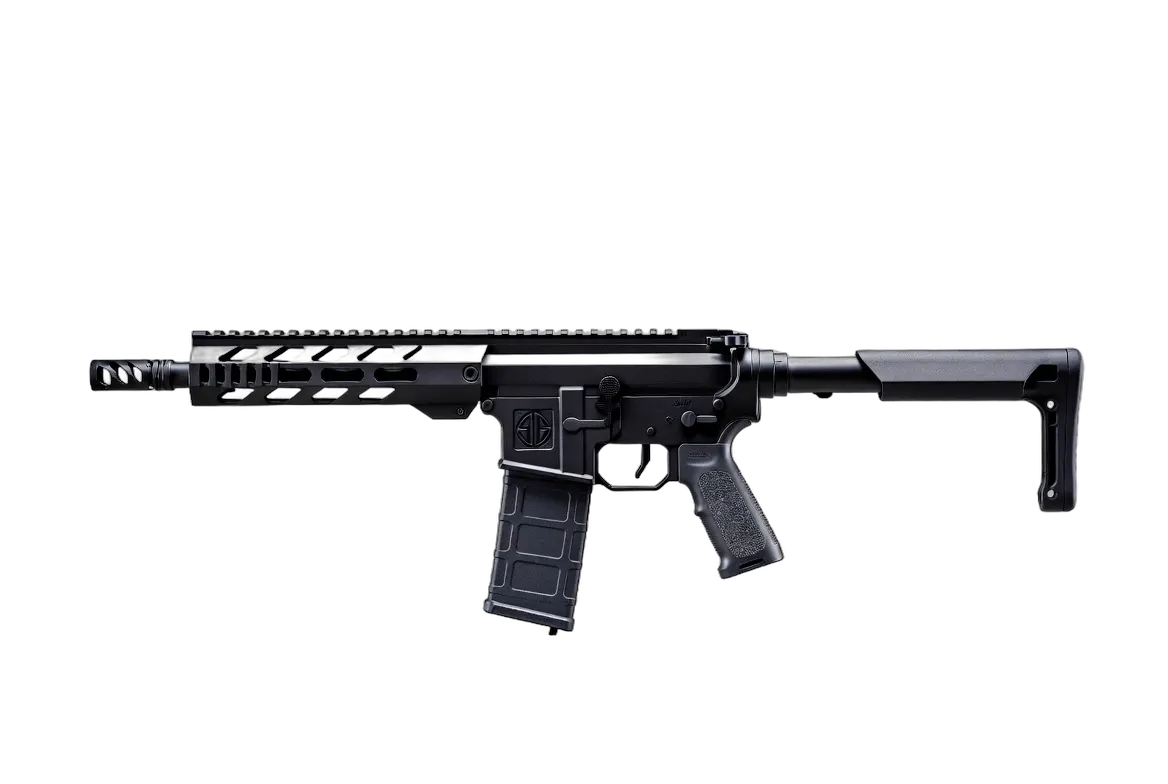 2018United States
Compact PDW from the MCX family in .300 AAC Blackout, designed for SOF and vehicle crews. 5.5" barrel and folding stock, AR-15 ergonomics with short-stroke gas piston.
 2018United States
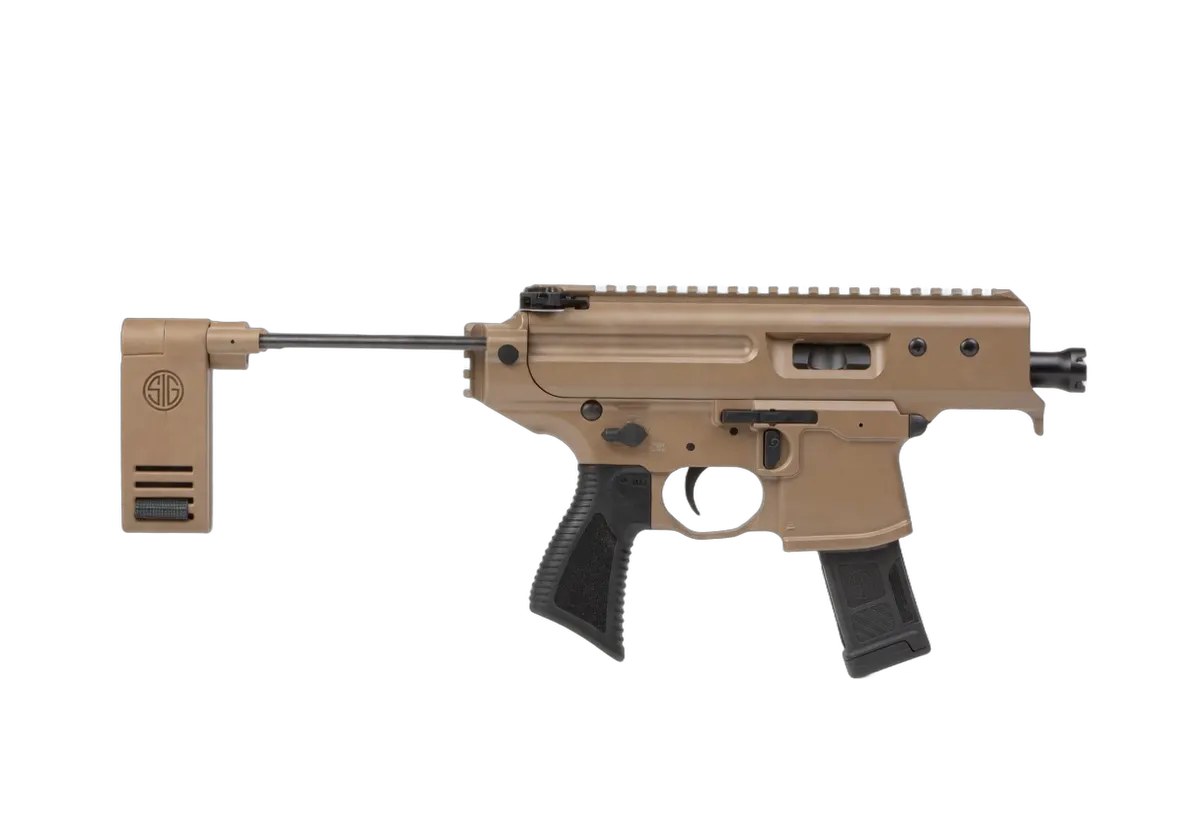
Ultra-compact variant of the MPX family in 9×19 mm, with a 3.5" barrel and monolithic telescoping pistol brace. Aimed at close-protection details and missions where concealment is critical.
 2018Russia
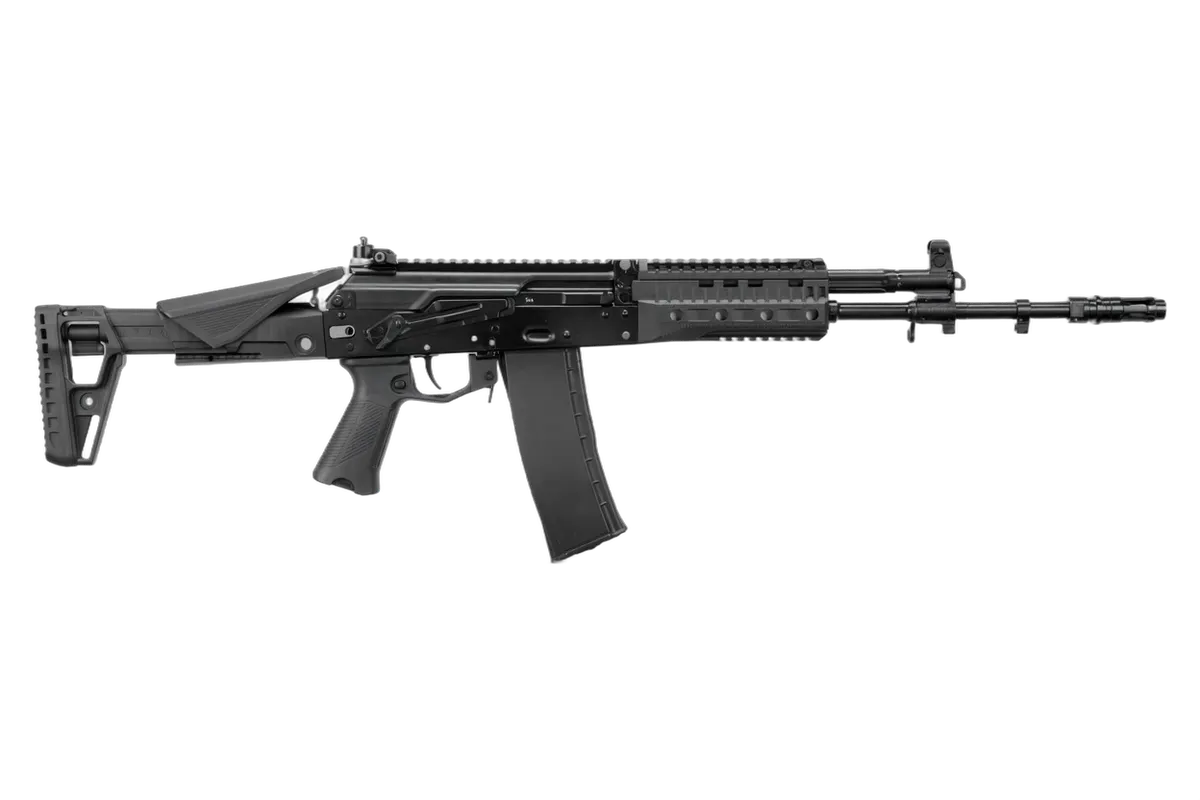
Latest-generation Russian 5.45×39 mm assault rifle developed under the Ratnik programme. Telescoping side-folding stock, full-length Picatinny rail on the dust cover and improved ergonomics over the AK-74M.
 2018Italy
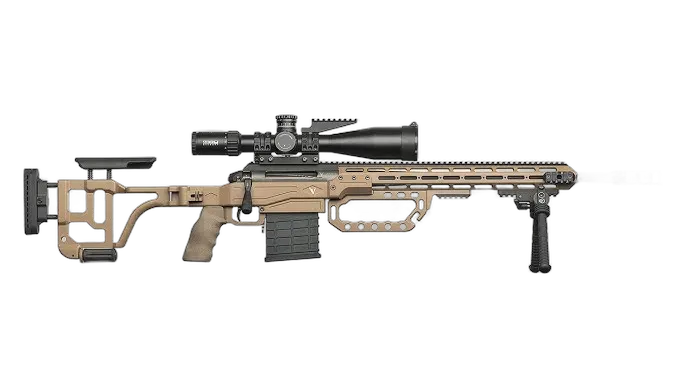
Italian bolt-action tactical precision rifle from the Minerva series, made by Victrix Armaments. Designed for LE/SOF use at short-to-medium range in .308 Win and .300 BLK with a modular chassis.
 2018China
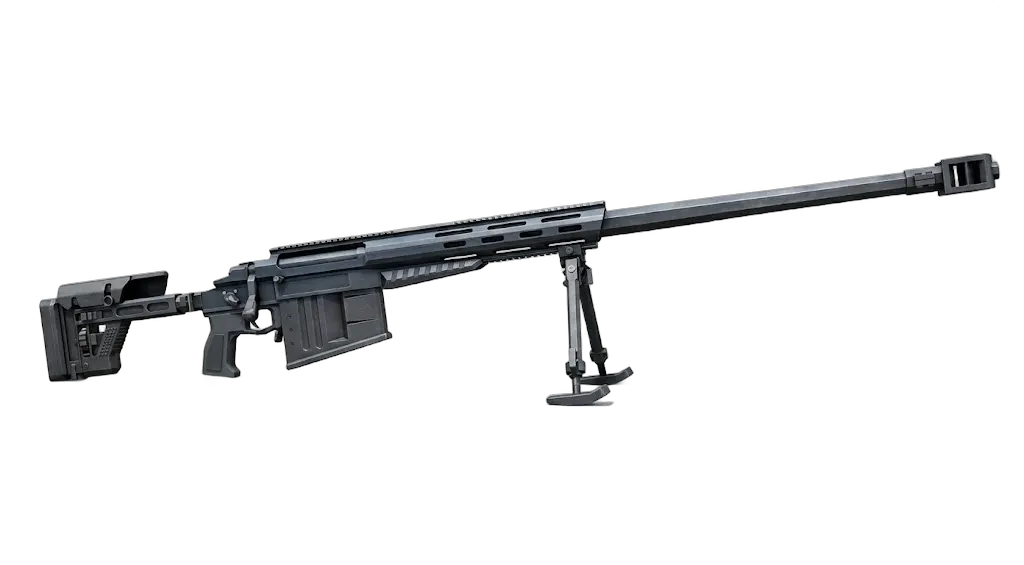
Semi-automatic anti-materiel rifle in 12.7×108 mm, designed for long-range engagement of light vehicles, fortified positions and infrastructure targets.
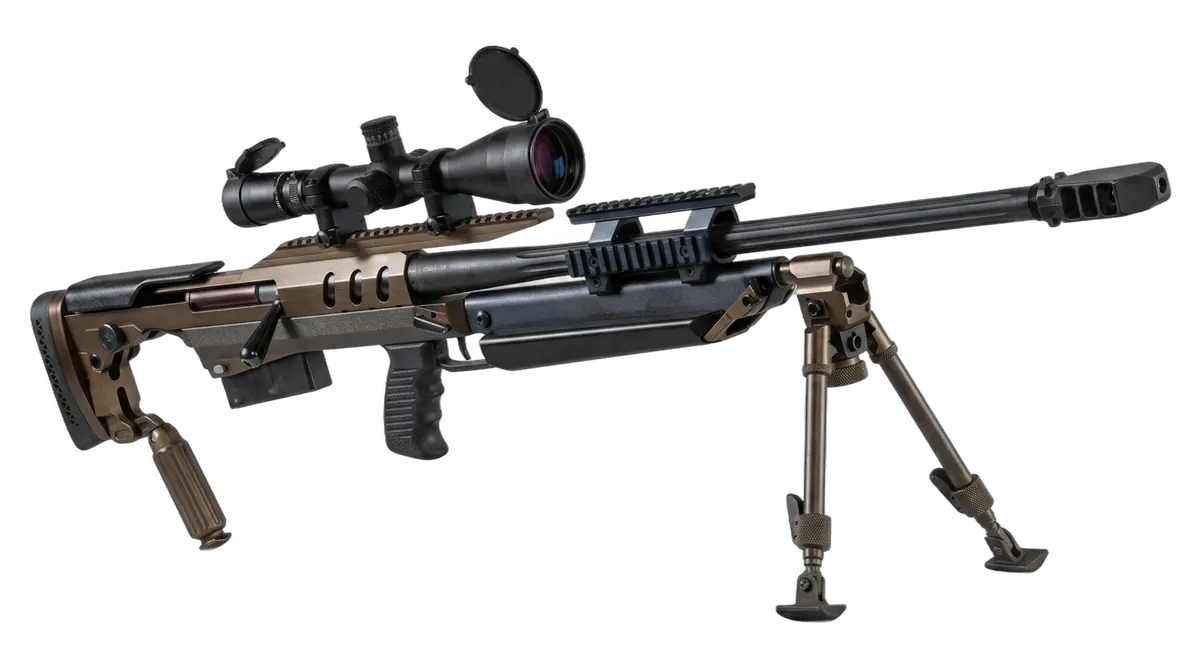 2018Poland
Polish bolt-action precision rifle in .338 Lapua Magnum, designed for long-range shooting out to 1500 metres.
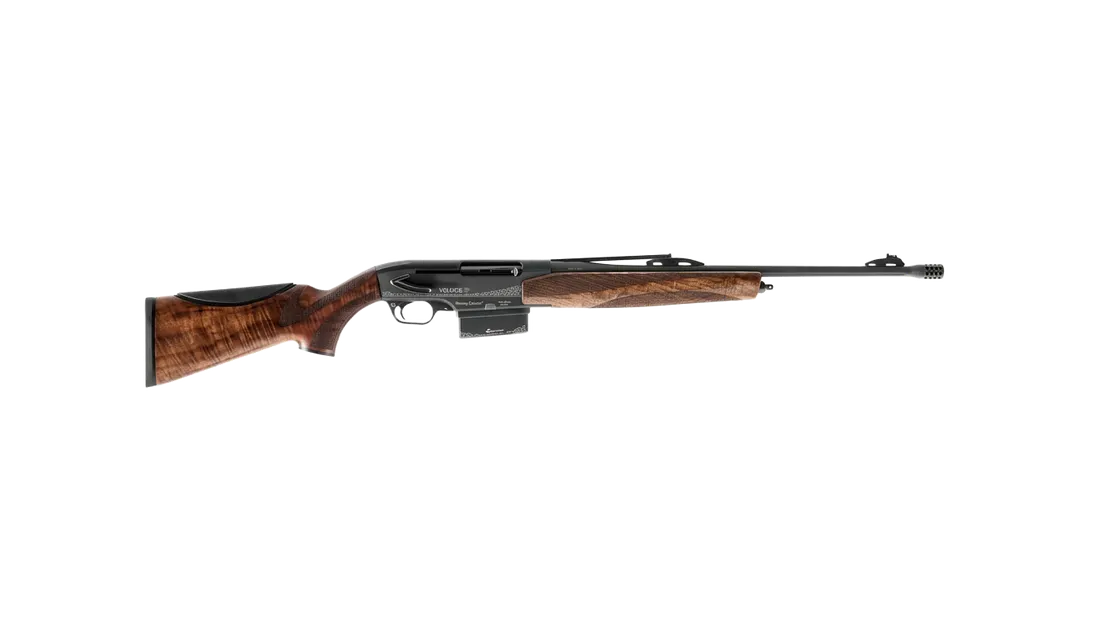 2018France
French semi-automatic hunting carbine with walnut stock, developed for driven boar hunting thanks to its quick-cycling action.
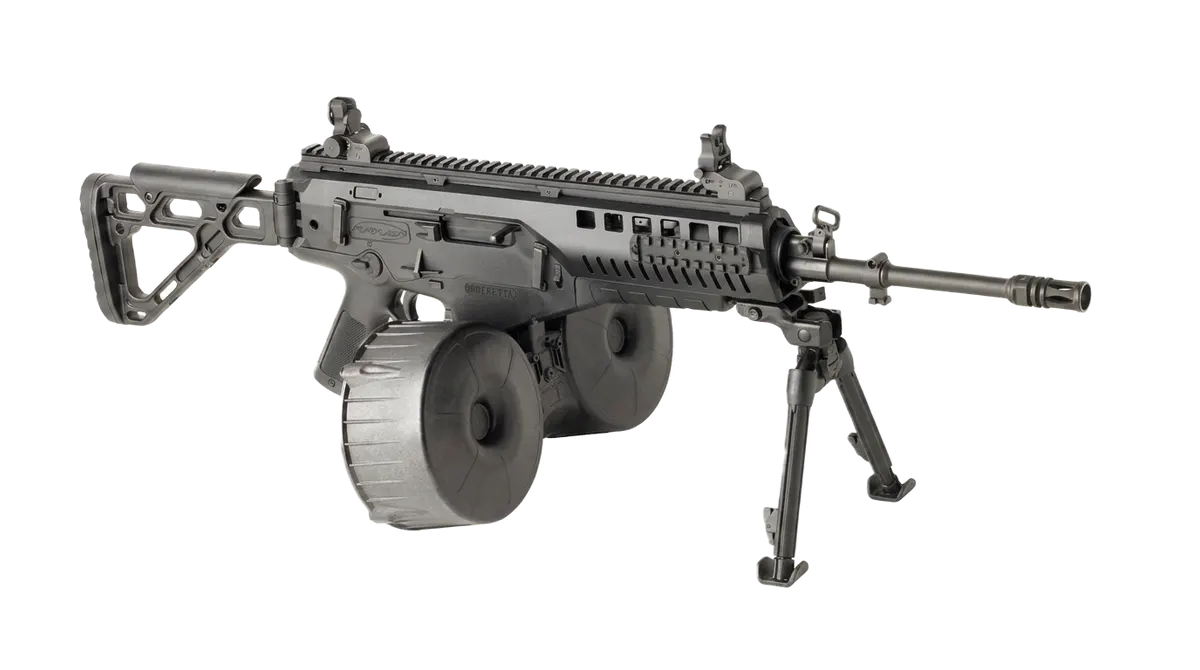 2018Italy
ARX160 evolution with extended modular interface, integrated bipod and compatibility with high-capacity drum magazines for support roles.
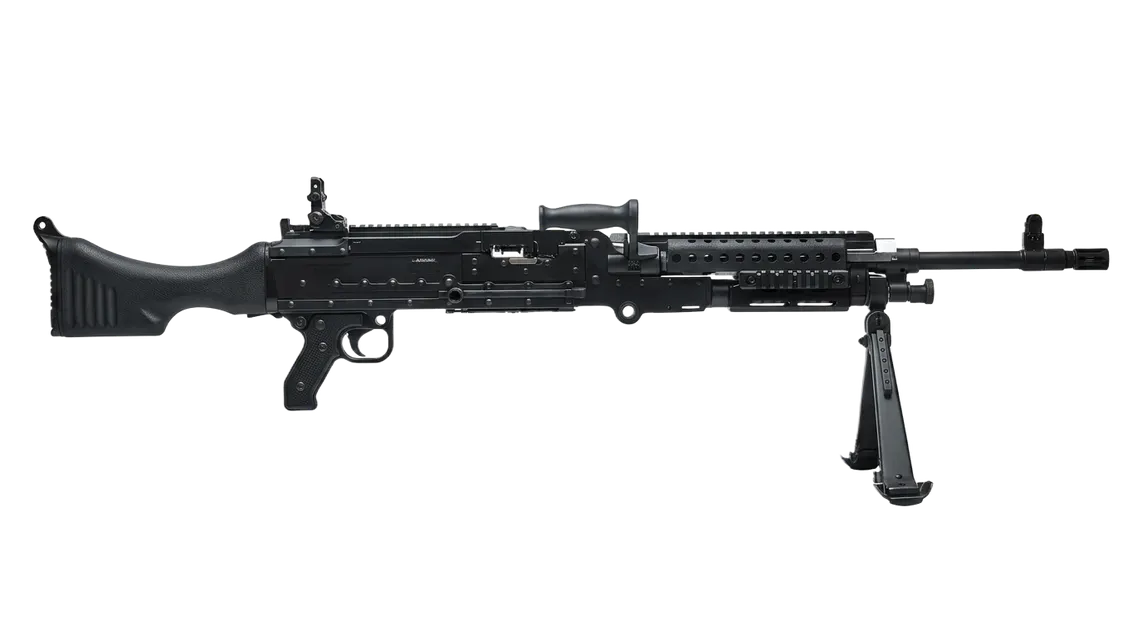 2018Turkey
Turkish 7.62×51 NATO medium machine gun with belt feed, Picatinny rail and quick-change barrel: a modern alternative to the Turkish MG3.
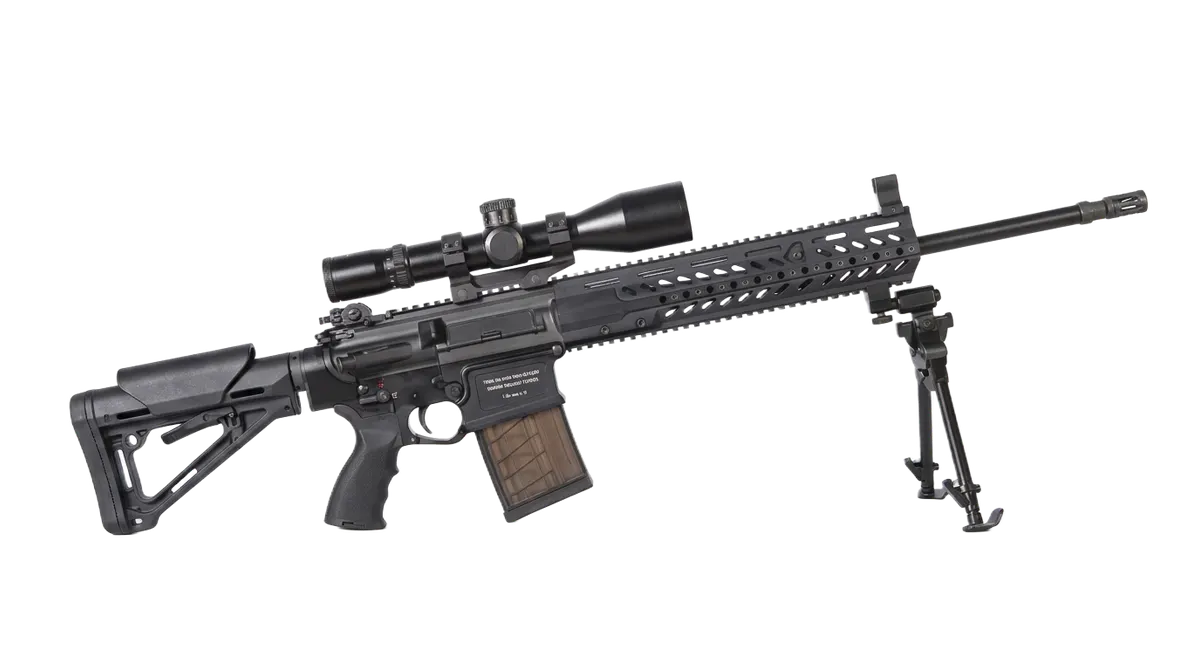 2018Turkey
7.62×51 NATO semi-automatic designated marksman rifle (DMR) on an AR-10 platform, produced by the Kale Group for the Turkish Armed Forces and export.
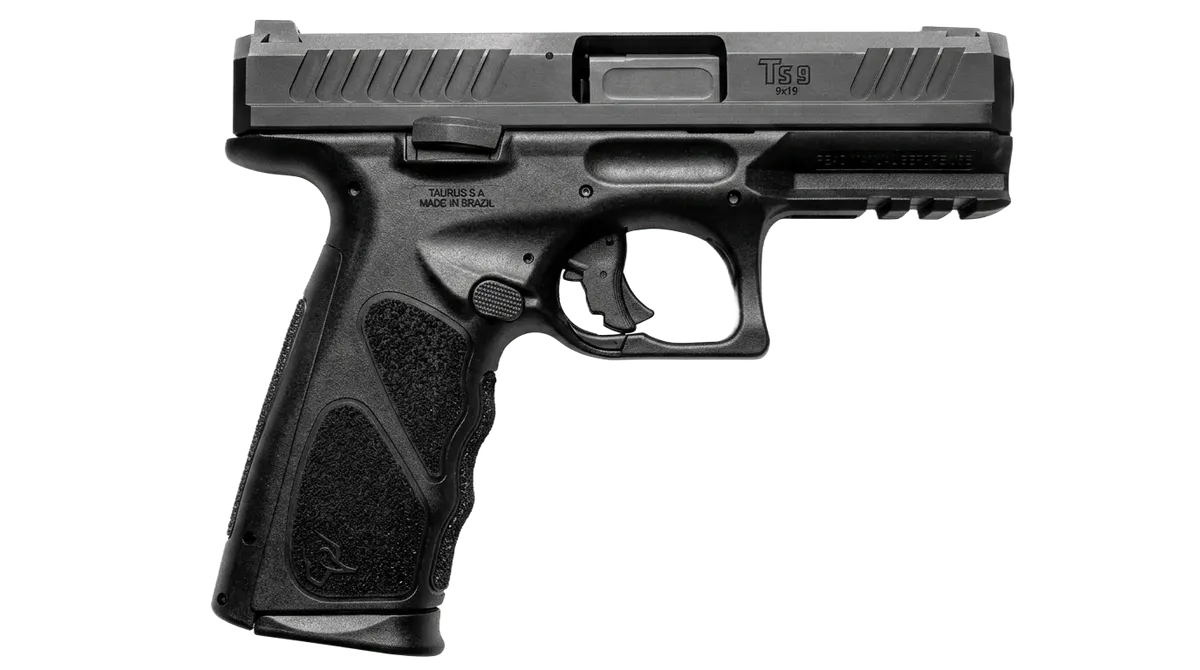 2018Brazil
Full-size striker-fired 9×19 mm pistol with polymer frame and steel slide, developed by Taurus to compete in military and police tenders.
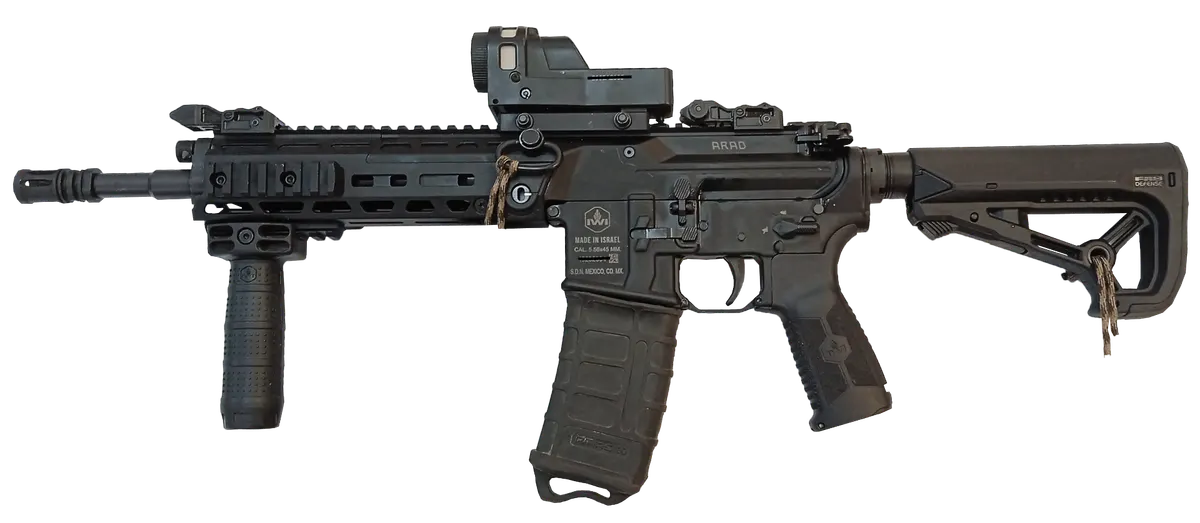 2018Israel
Next-generation AR-15 assault carbine developed by IWI in 5.56×45 NATO: monolithic alloy receiver, M-LOK free-float handguard, improved bolt carrier with reinforced extractor and FAB Defense stock, aimed at civilian/law-enforcement markets as a complement to the Tavor.
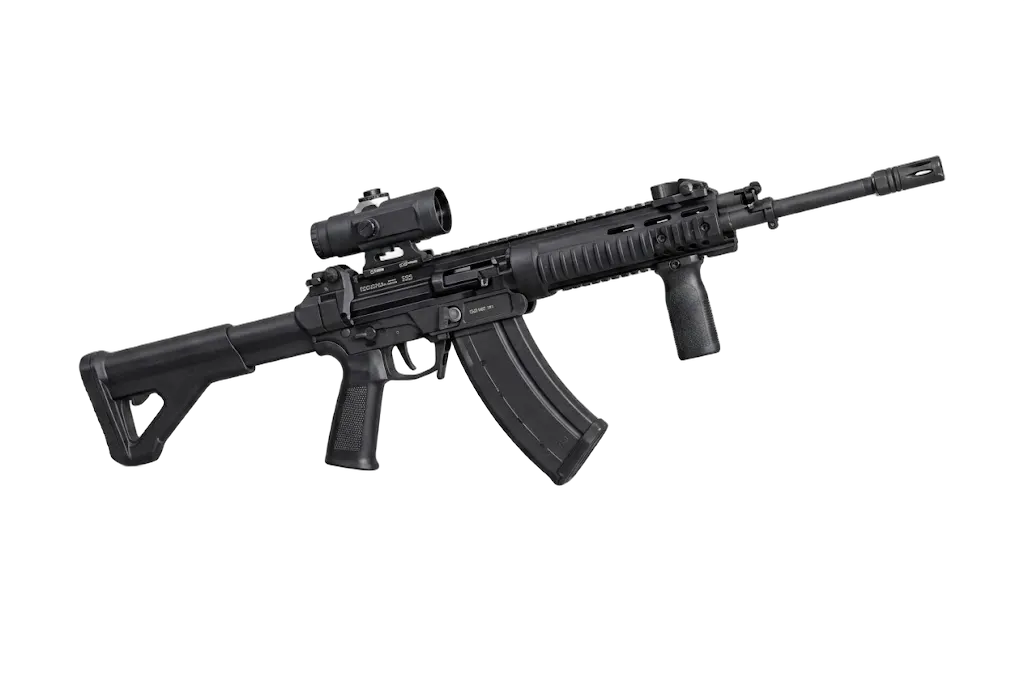 2019China
Modular Chinese assault rifle adopted in 2019 to replace the QBZ-95 bullpup: conventional layout with Picatinny rails, telescoping stock and modern optics issued as standard.
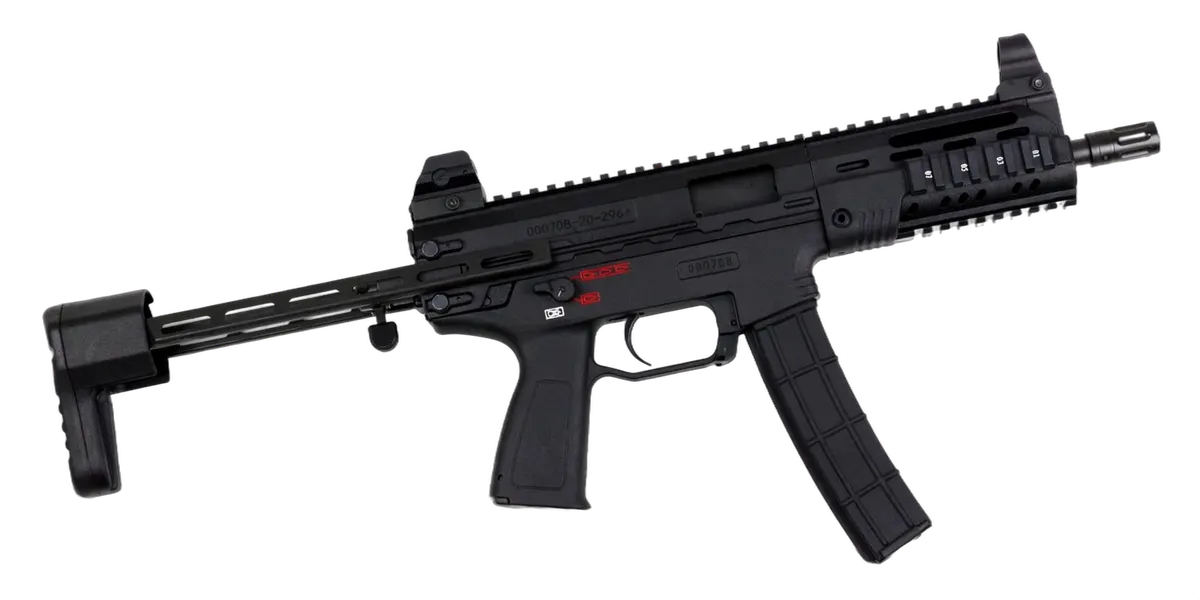 2019China
Modern Chinese submachine gun in 9×19 mm Parabellum, modular in design and inspired by Western PDWs such as the SIG MPX and B&T APC9. Designed for police and special forces, it features a folding stock and full-length Picatinny rail.
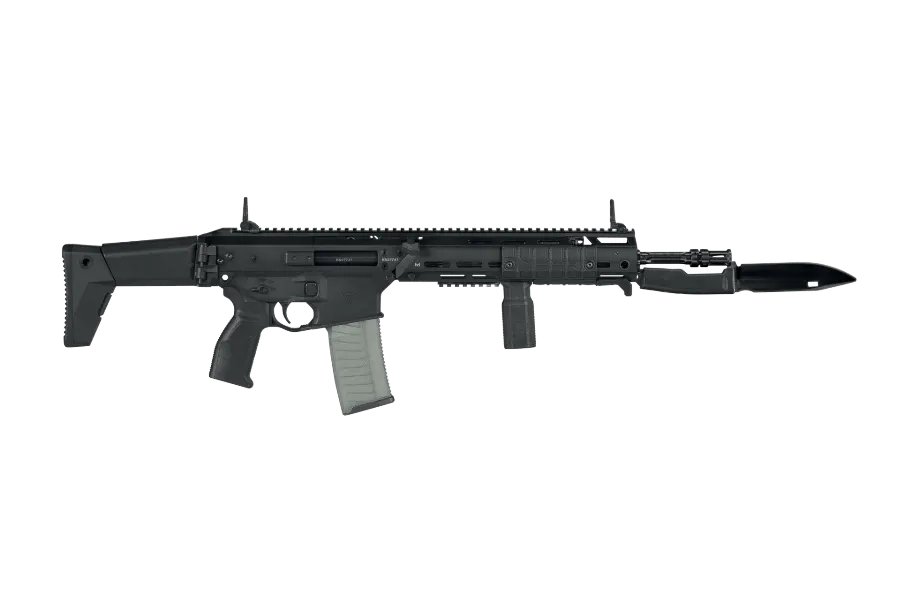 2019Poland
DMR (Designated Marksman Rifle) variant of the MSBS family, optimised for medium-range precision shooting with extended barrel and dedicated optic.
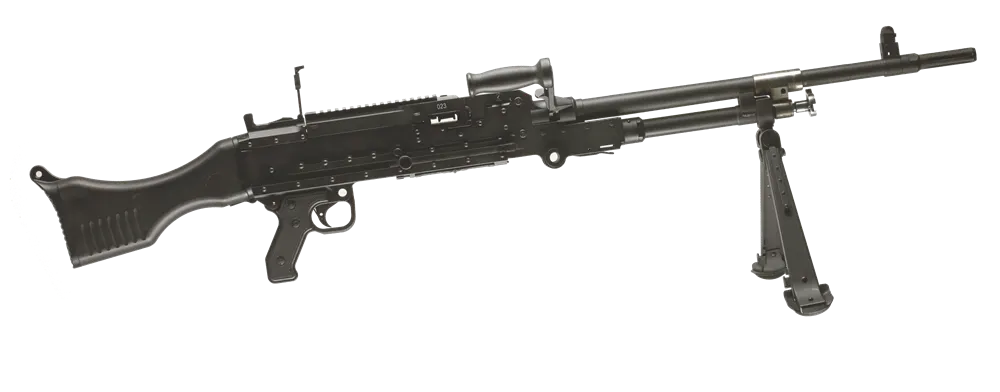 2019Turkey
Turkish modular GPMG in 7.62×51 NATO developed by MKE as evolution of the MG3, with Picatinny rails and quick-change barrel.
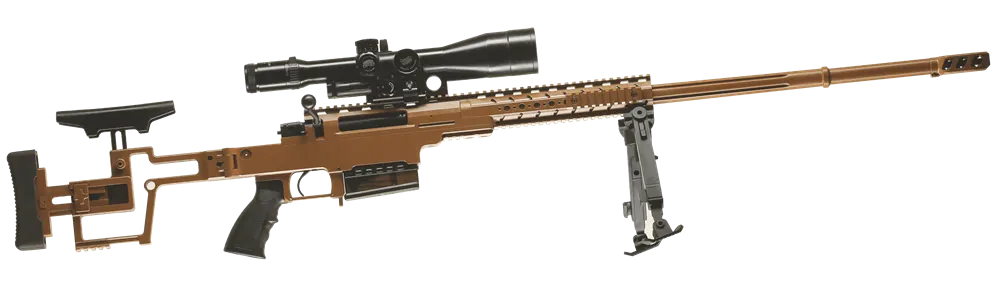 2019Turkey
Turkish 7.62×51 NATO semi-automatic precision rifle developed by the Kale Group for special forces and the army: modular chassis, match barrel and day/night optics.
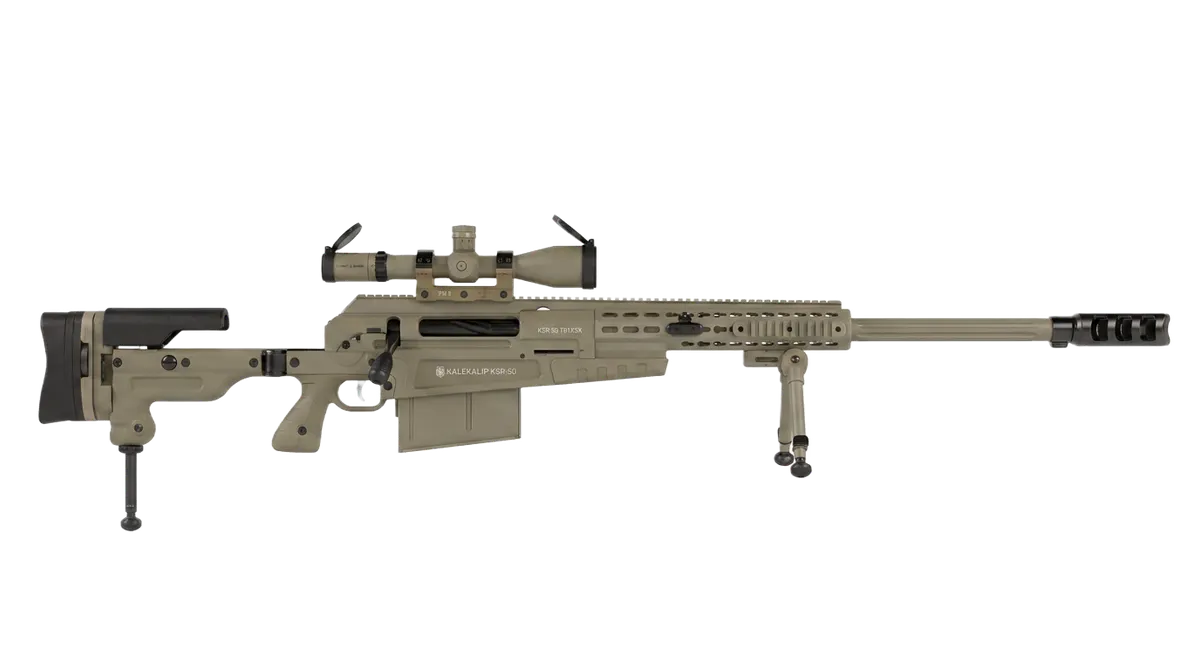 2019Turkey
Turkish .50 BMG magazine-fed anti-materiel rifle developed by Kale Kalıp for engaging lightly armoured and matériel targets at long range.
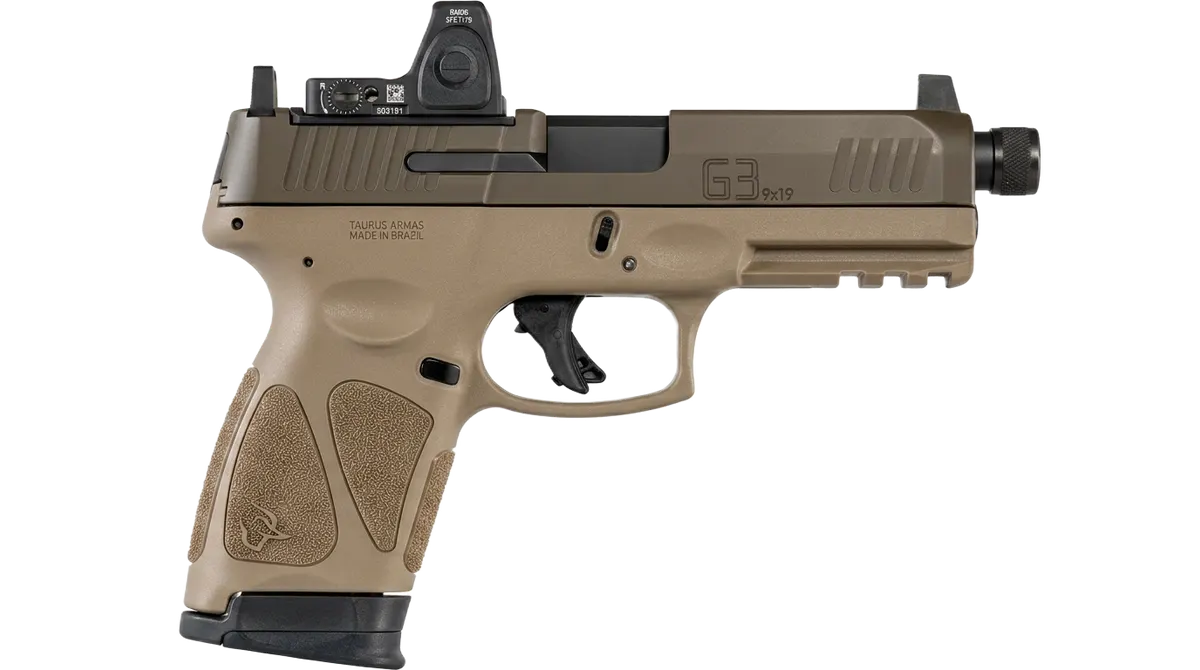 2019Brazil
Striker-fired 9×19 mm pistol with polymer frame and steel slide, evolution of the G2 series with improved trigger and high-capacity magazines.
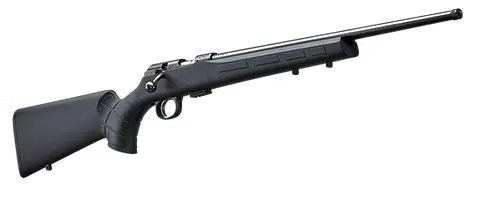 2019Czech Republic
Czech rimfire bolt-action rifle, evolution of the CZ 455: adjustable trigger (weight and travel), interchangeable barrels in .22 LR, .22 WMR and .17 HMR and modular stock for sport, hunting and training use.
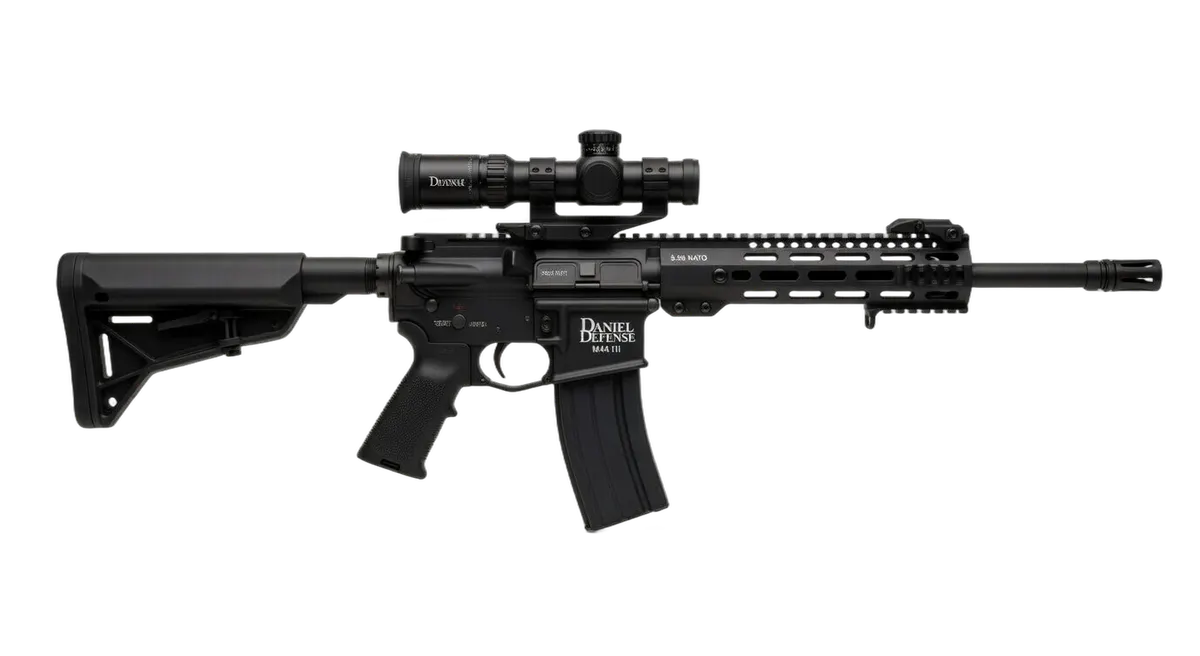 2020United States
Premium-grade AR-15 carbine with low-profile M-LOK RIII handguard: chosen by several U.S. special units and police forces.
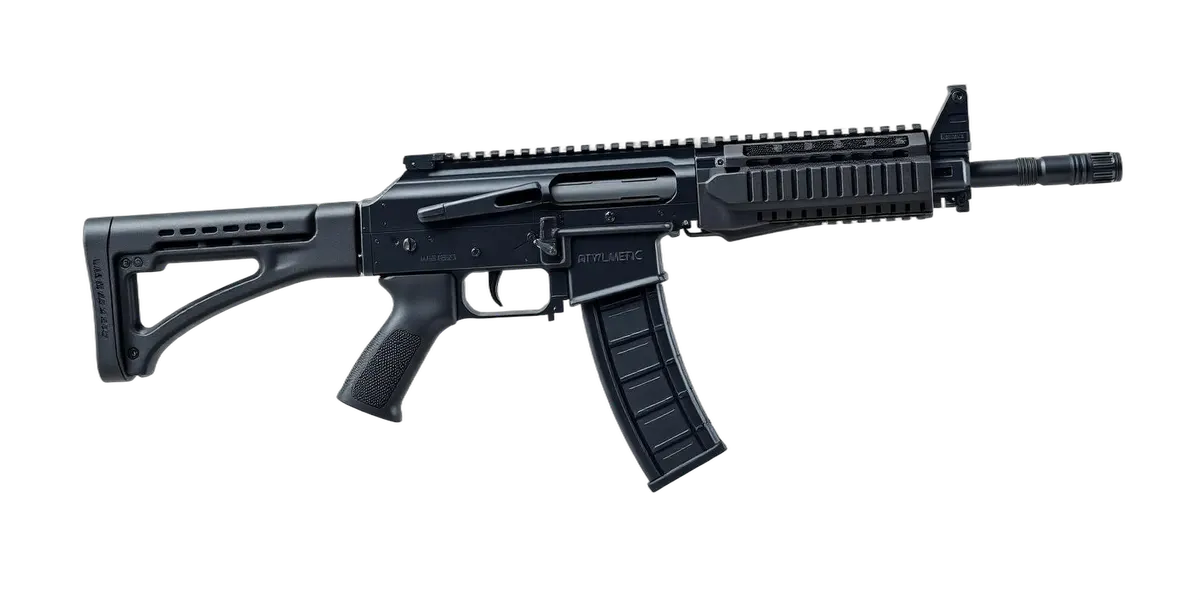 2020Russia
Export-oriented variant of the AK-12 rechambered in 5.56×45 mm NATO. Keeps the AK-12 telescoping folding stock, top rail and ergonomics, but targets foreign customers using standard NATO ammunition.
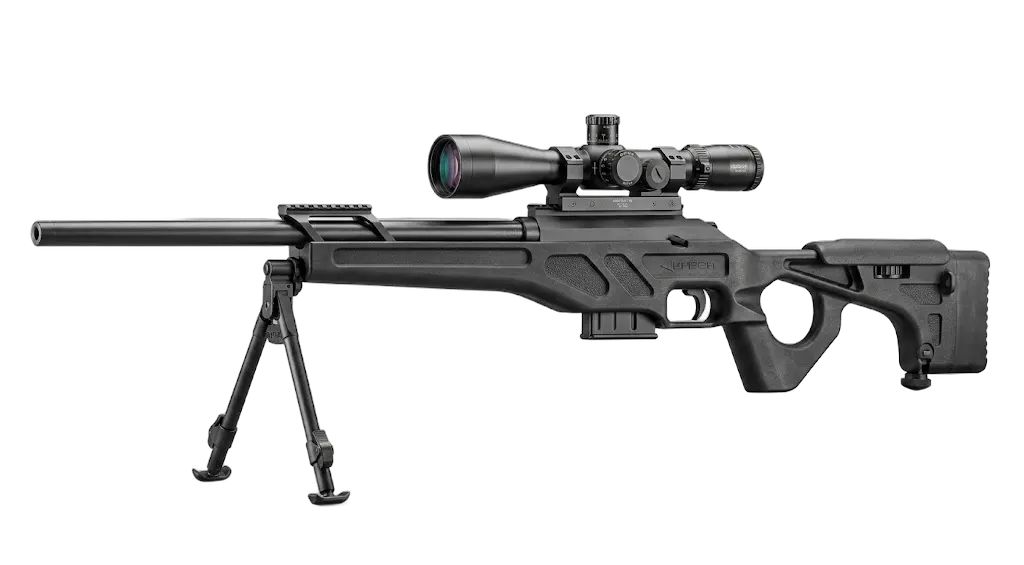 2020China
Bolt-action designated marksman rifle in 7.62×51 mm NATO with synthetic thumbhole stock and full-length top rail, intended for PLA squad marksmen.
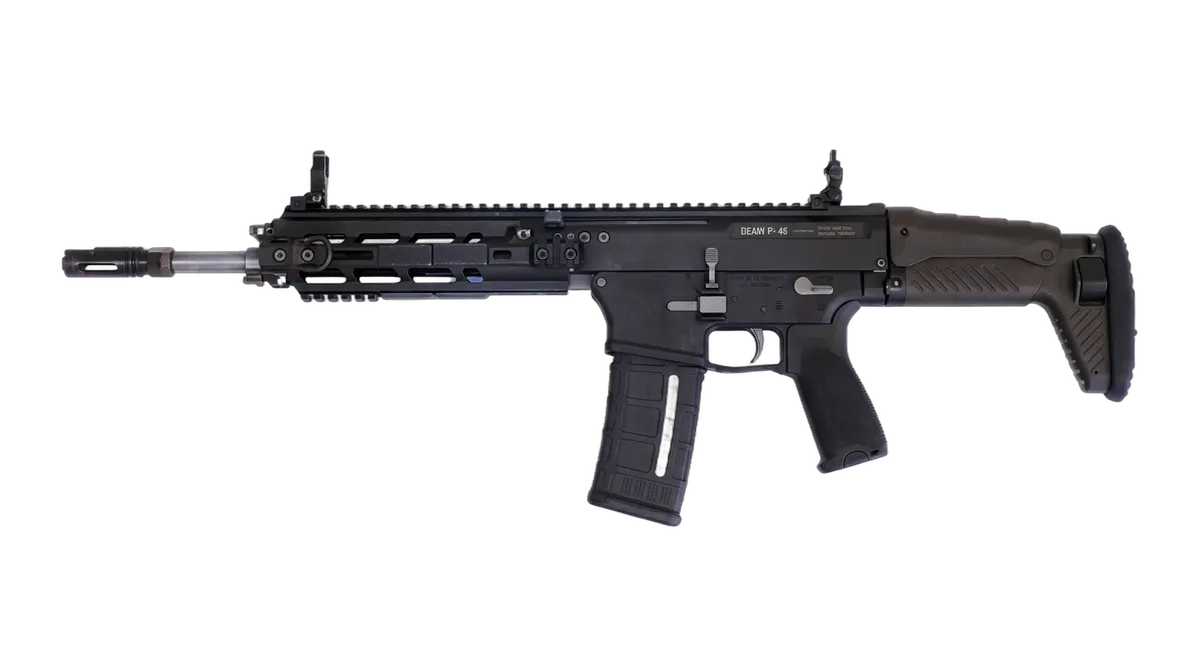 2020Japan
Japanese next-generation 5.56×45 mm NATO assault rifle with modern ergonomics, integral rails and a folding telescopic stock, developed to gradually replace the Type 89 in JSDF service.
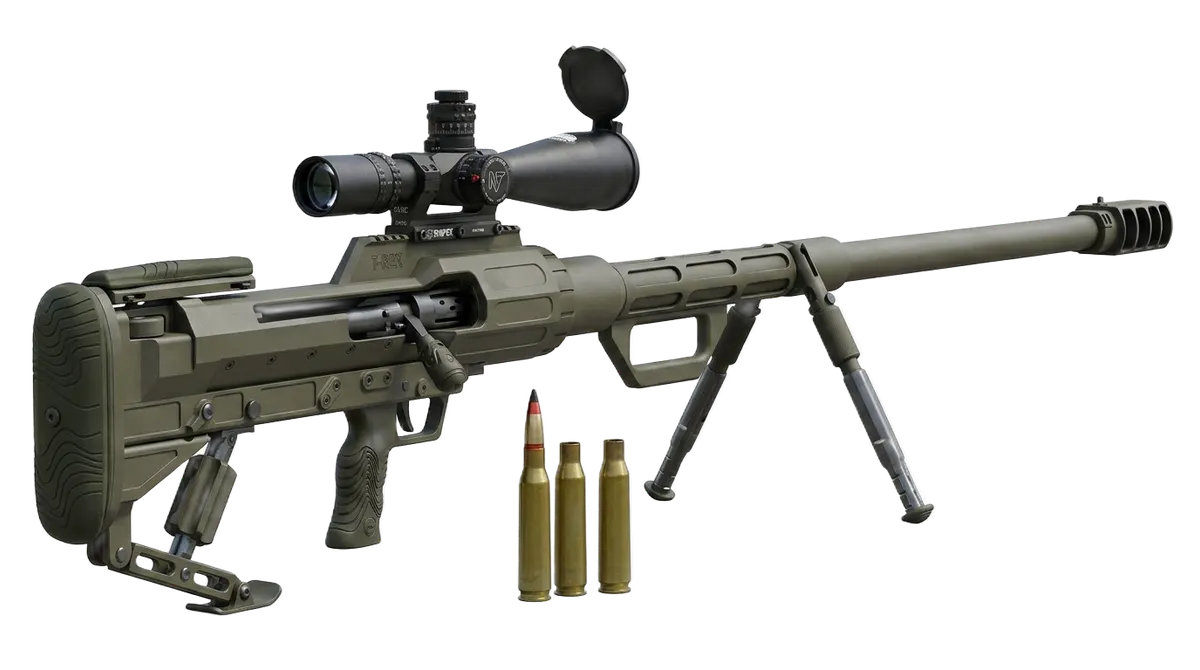 2020Ukraine
Ukrainian bullpup anti-materiel rifle chambered in 14.5×114 mm, considered one of the most powerful sniper rifles in the world, with an effective range over 2,000 meters.
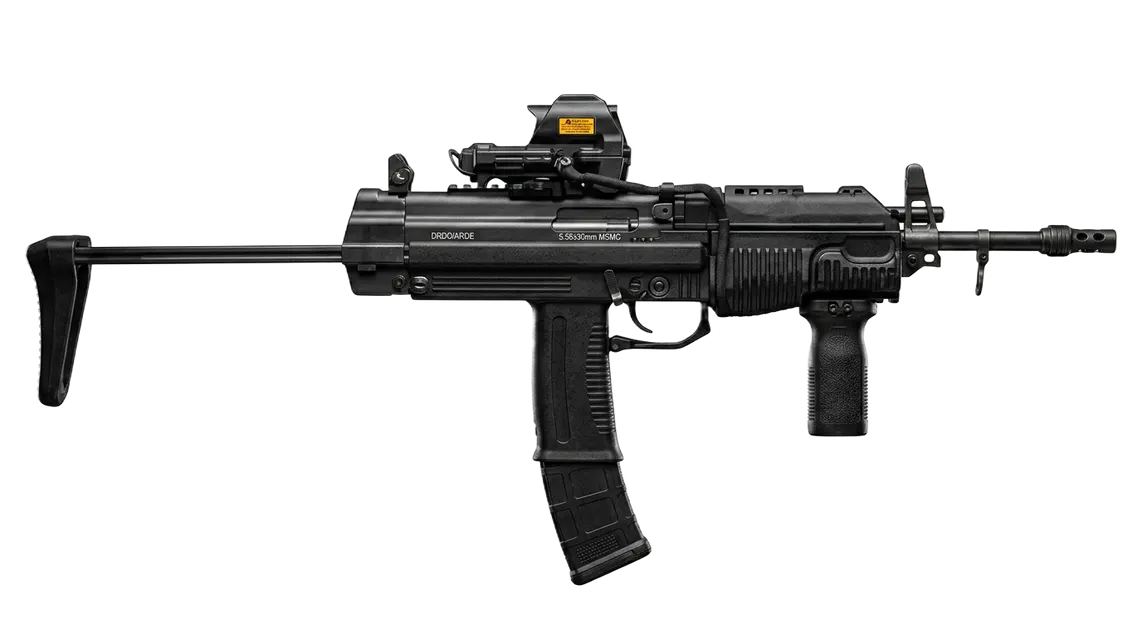 2020India
Indian PDW carbine in proprietary 5.56×30 mm MINSAS, lightweight and high-cadence for assault troops.
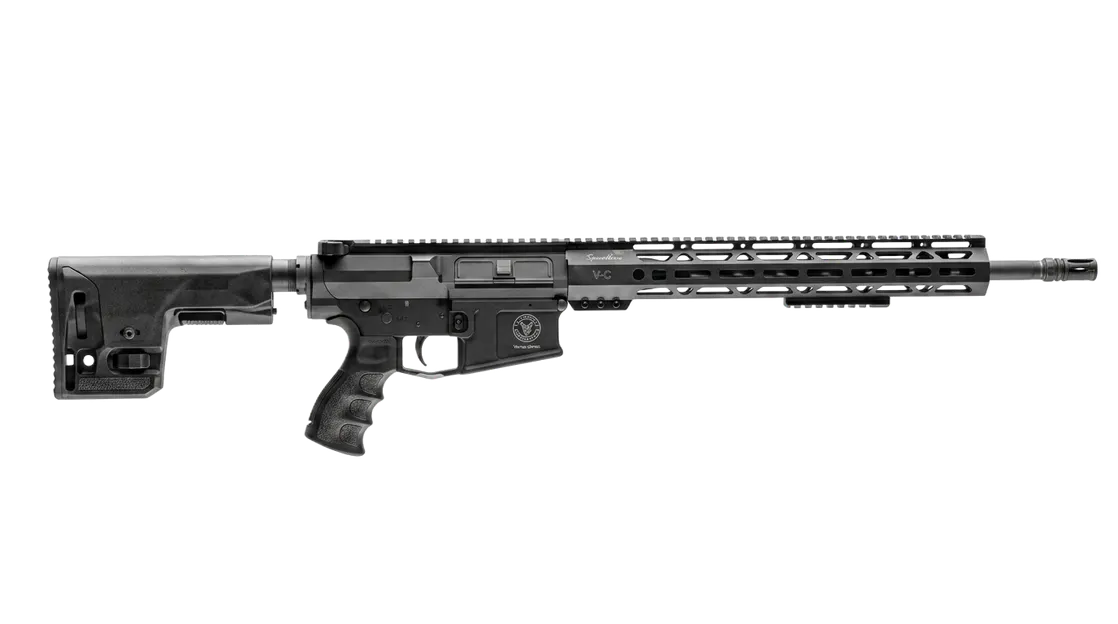 2020France
French AR-10 pattern semi-automatic carbine in .308 Winchester developed by Verney-Carron Speedline for the civilian market and police units.
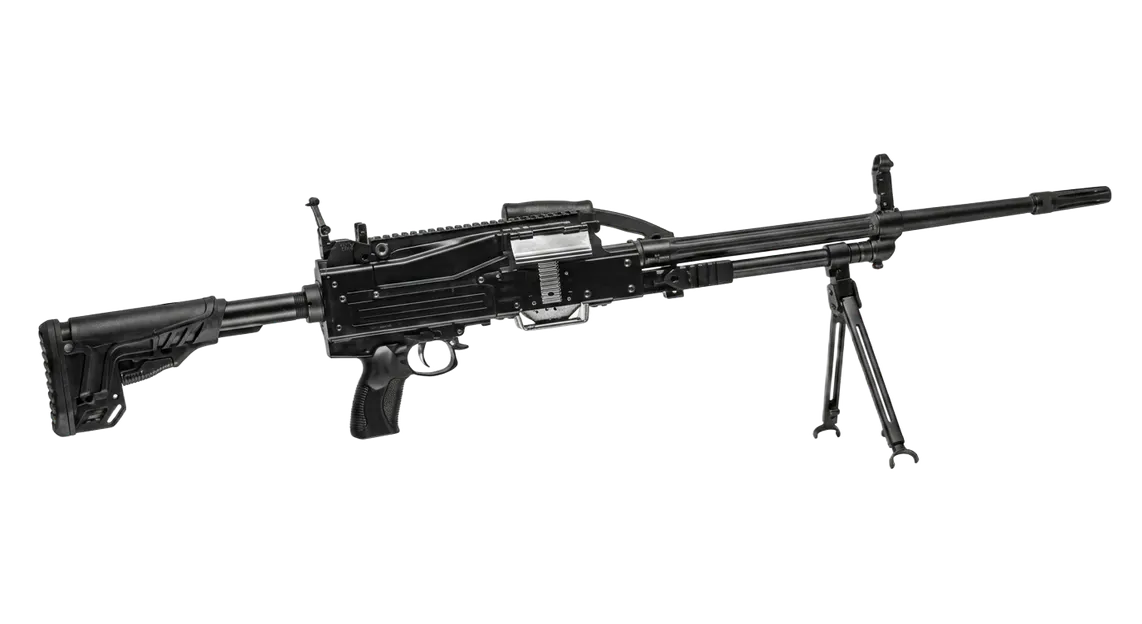 2020Turkey
Turkish 7.62×51 NATO infantry machine gun derived from the MMT with lightened configuration optimised for dismounted combat.
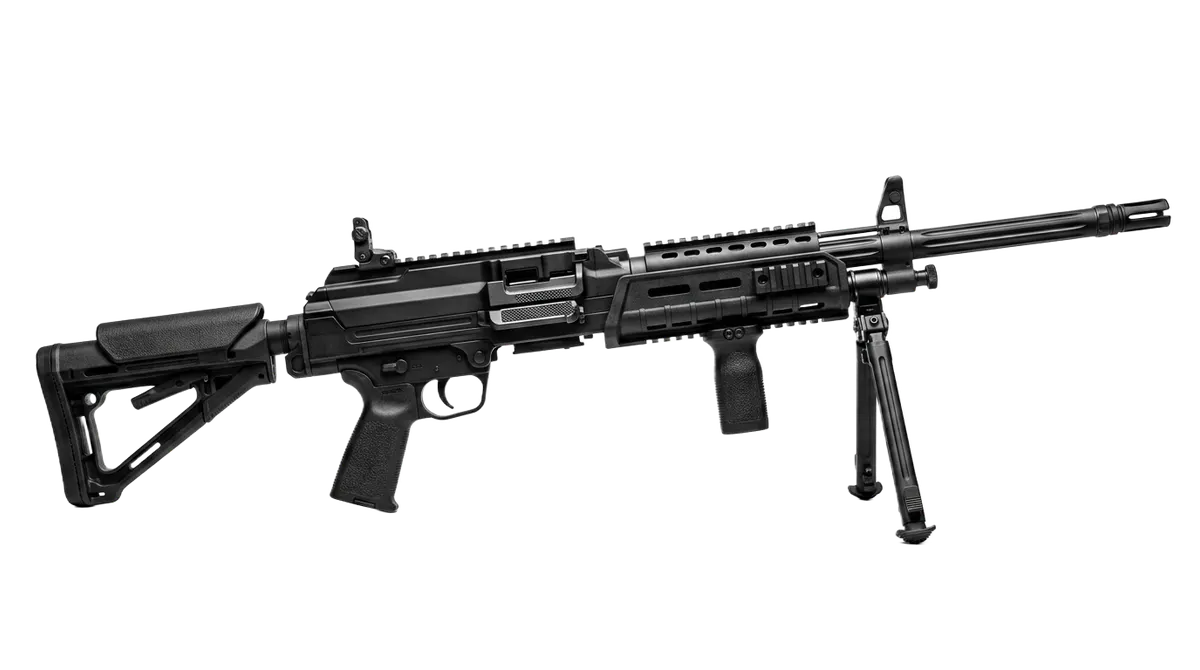 2020South Korea
Next-generation 5.56×45 NATO light machine gun designed to replace the K3 in South Korean infantry squads: M-LOK rails, telescoping stock and improved reliability.
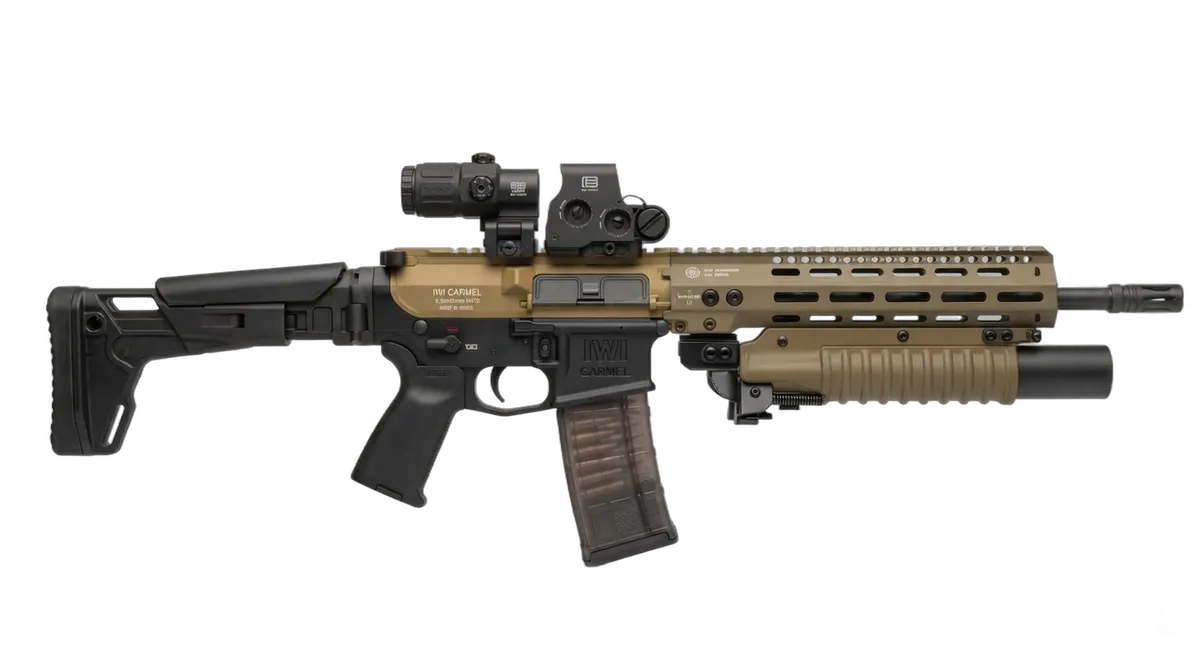 2021Israel
Israeli modular assault rifle in 5.56×45 NATO, evolution of the Galil ACE with AR-15-inspired architecture and aluminum receiver.
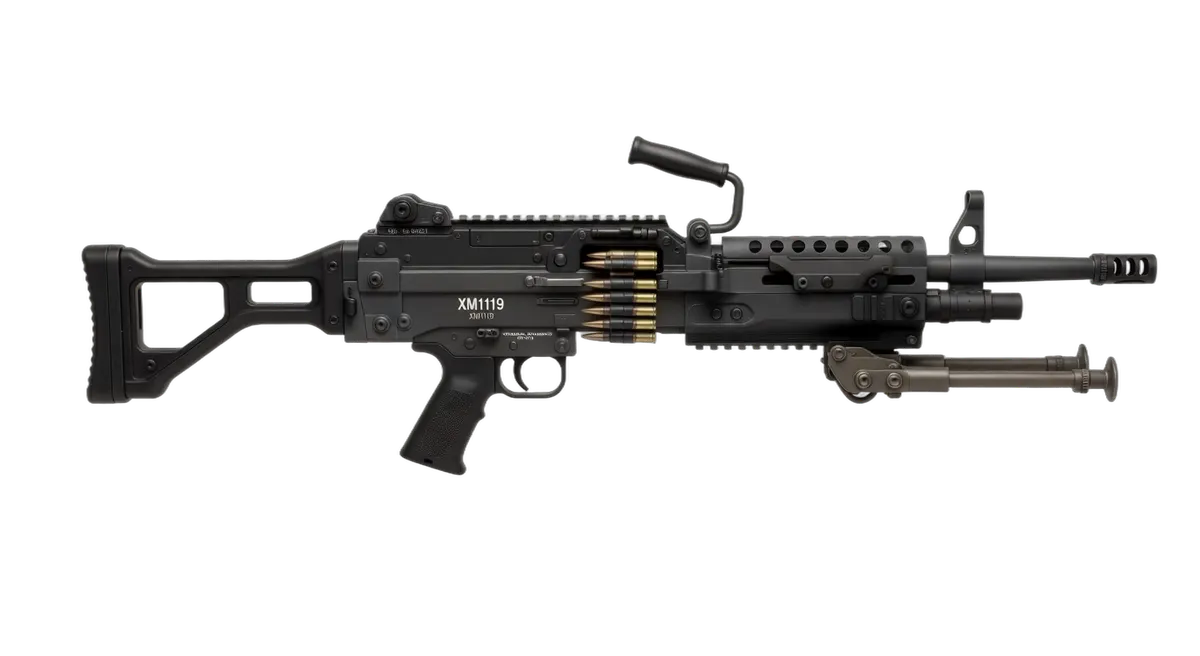 2021United States
Medium machine gun chambered in .338 Norma Magnum, developed for the USSOCOM Lightweight Medium Machine Gun program: M2 .50 range in a weapon the weight of an M240.
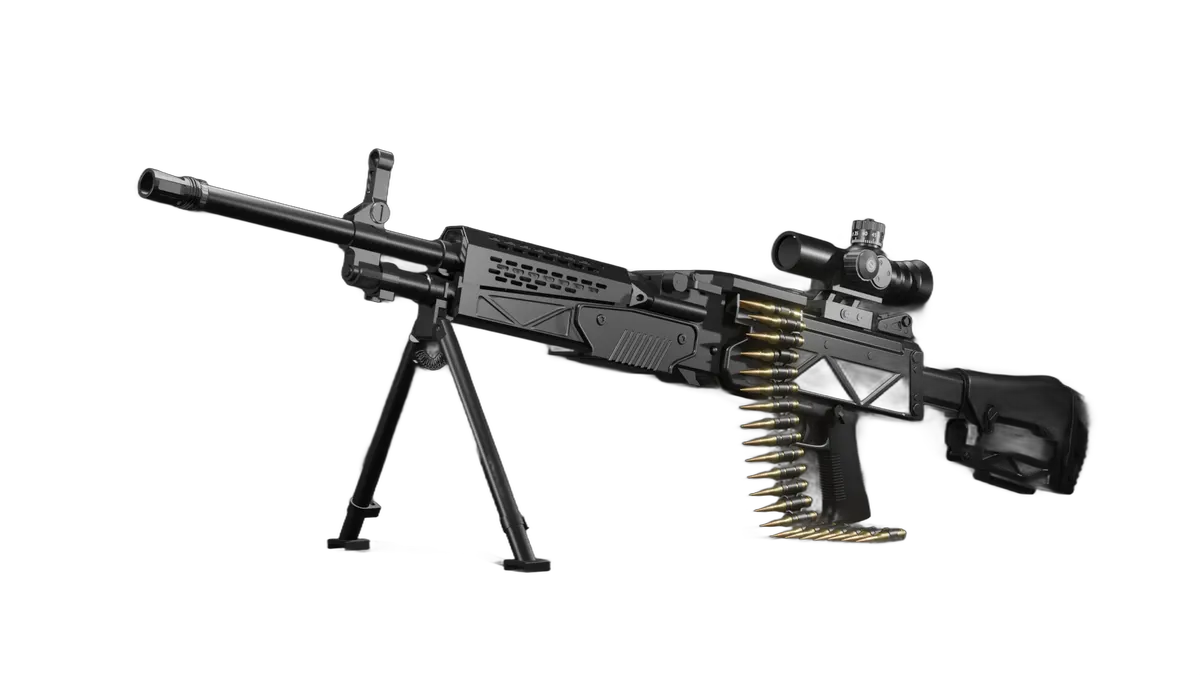 2021China
New-generation PLA general-purpose machine gun in 6.8×51 mm, designed to replace the QJY-88 with greater range, lethality and squad-level accuracy.
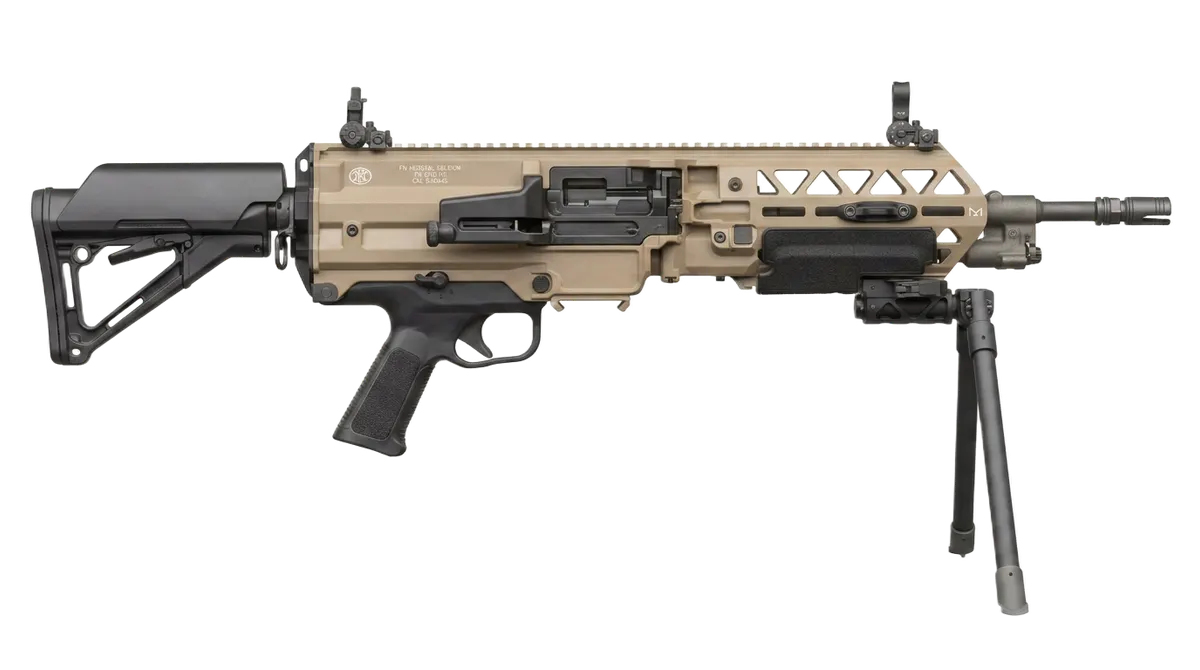 2021Belgium
Next-generation ultra-light machine gun (5.56 or 7.62 mm NATO), weighing less than 6 kg and introducing a revolutionary side-feed belt system.
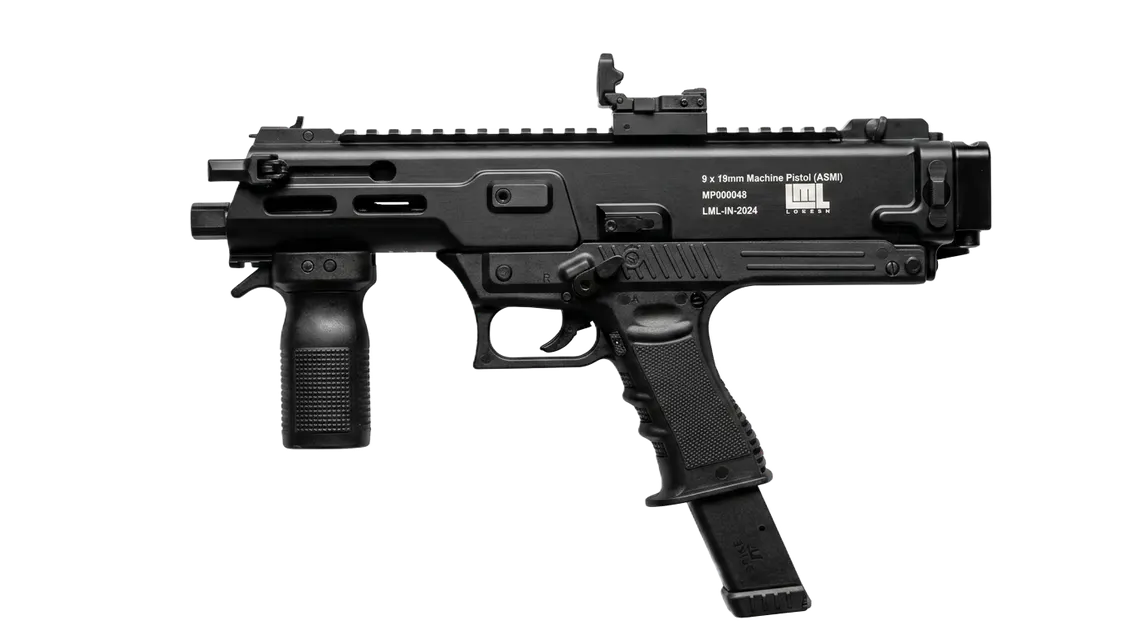 2021India
9×19 mm machine pistol developed by DRDO with Col. Prasad Bansod, the first fully Indian-designed weapon of its class.
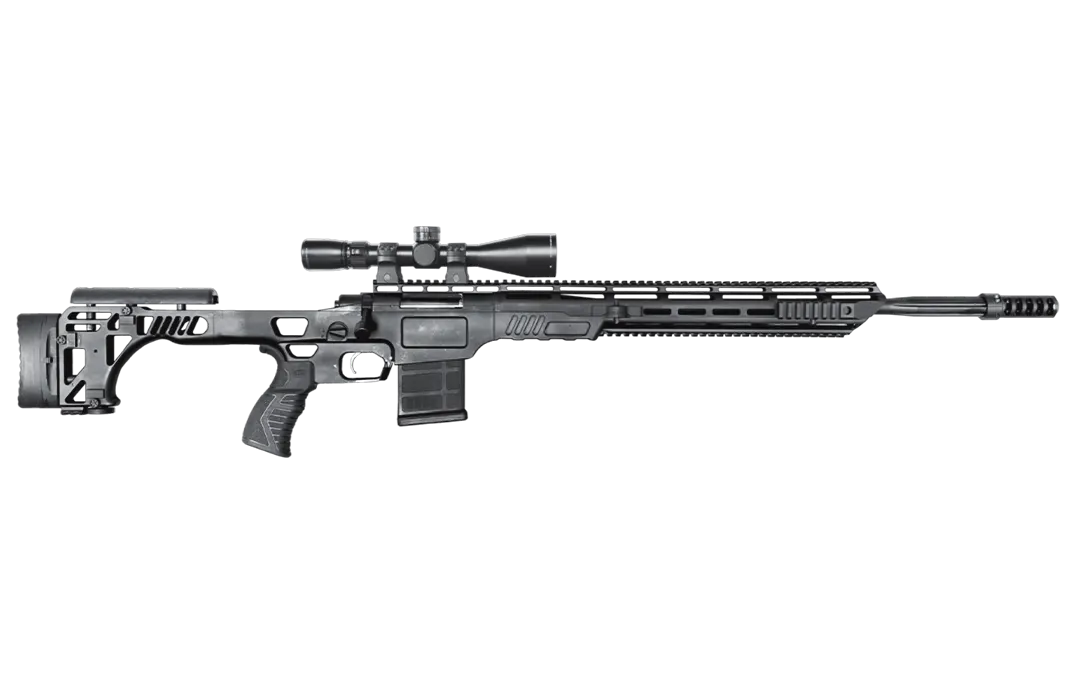 2021India
Indian bolt-action precision rifle in .338 Lapua Magnum and 7.62×51, the first privately-produced Indian sniper exported abroad.
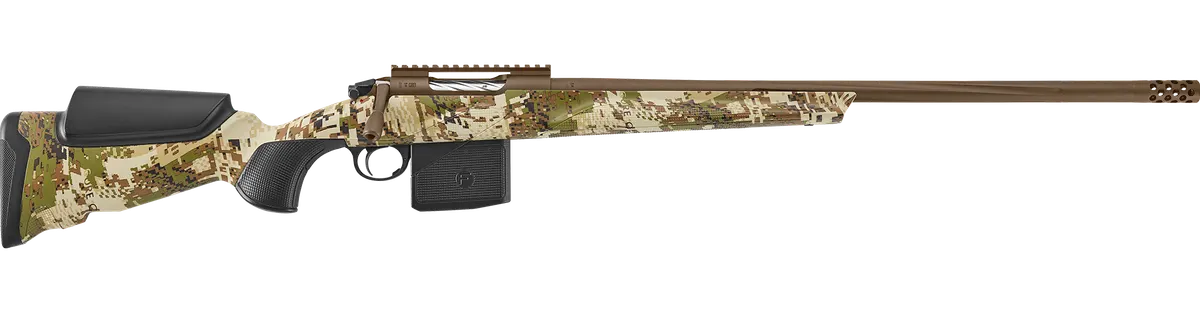 2021Italy
Italian bolt-action rifle for precision shooting and selective hunting, with Subalpine digital-camo stock and fluted bronze barrel.
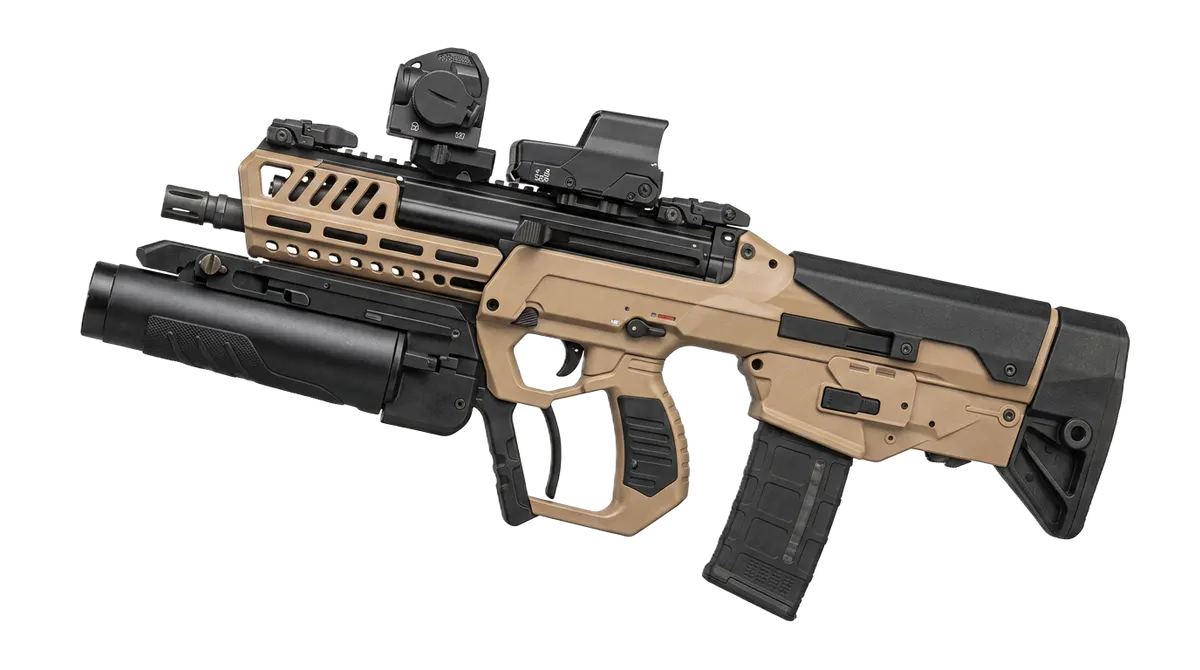 2021Singapore
Successor to the SAR 21 in 5.56×45 NATO: polymer bullpup with adjustable gas system, M-LOK handguard, integrated underbarrel grenade launcher and ambidextrous ejection.
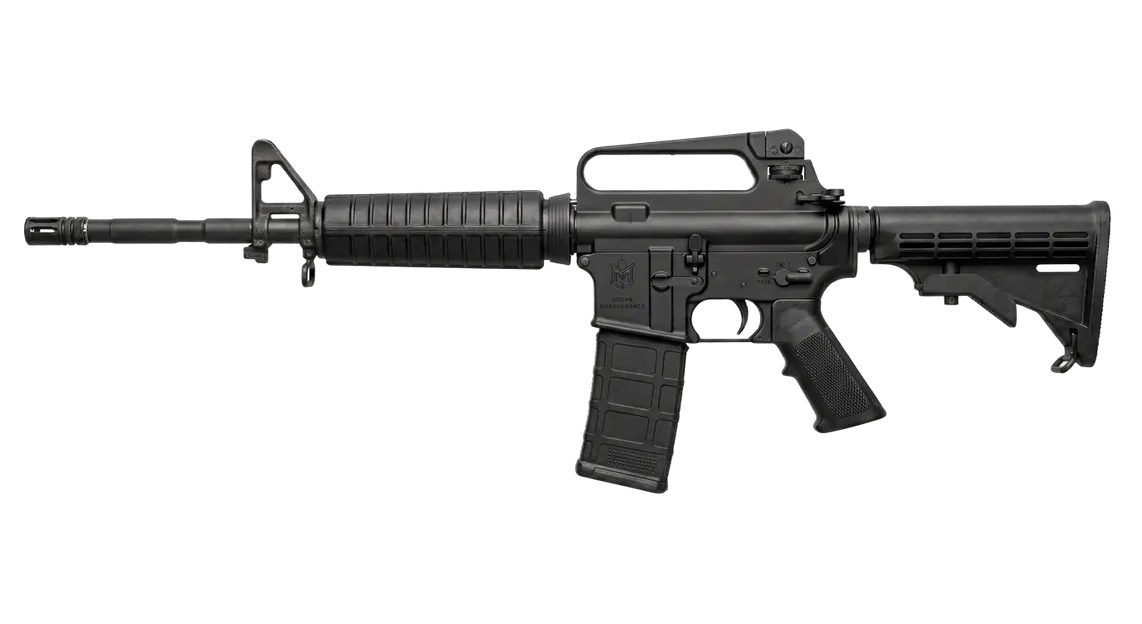 2021Canada
Canadian civilian AR-15 platform carbine with a 7" Mid-length barrel, produced in Ontario; classified as 'non-restricted' under the pre-2020 Canadian framework thanks to its hunting-rifle configuration.
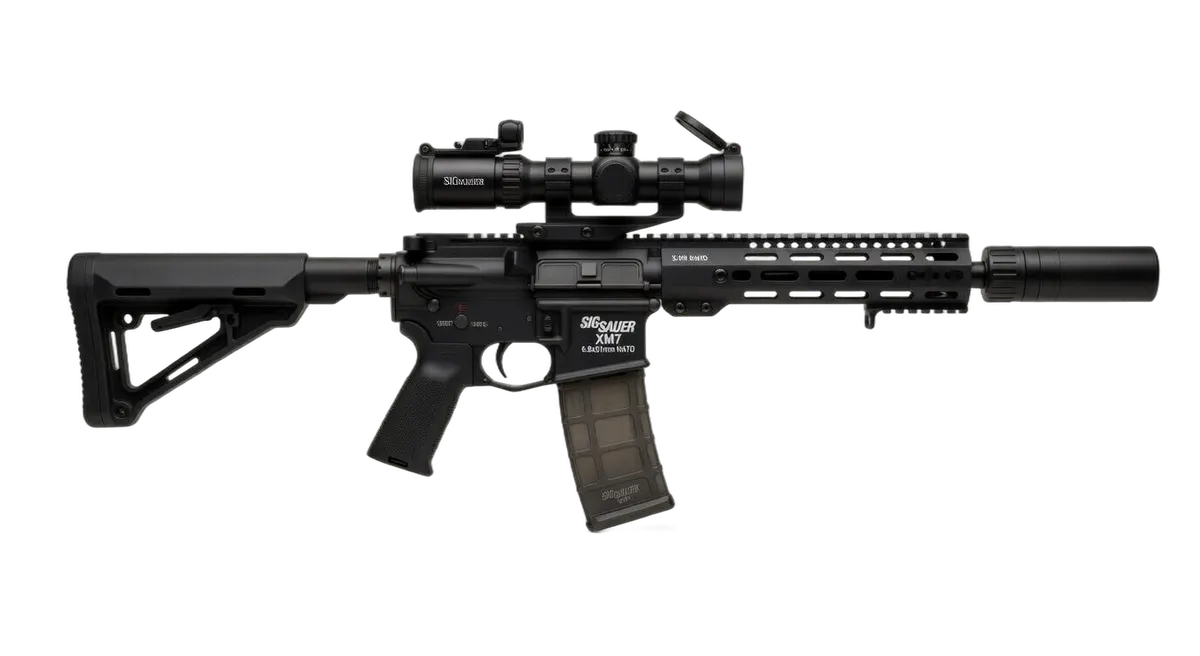 2022United States
New U.S. Army service rifle in high-pressure 6.8×51 mm (.277 Fury), winner of the NGSW program to replace the M4 in front-line units.
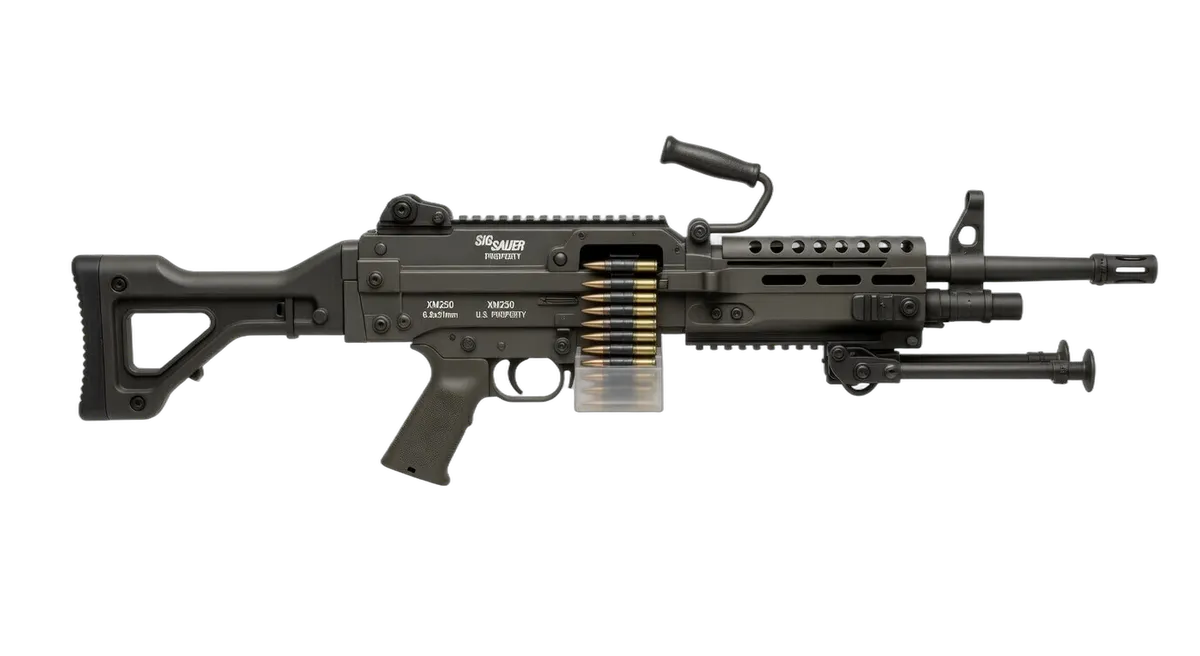 2022United States
6.8×51 mm (.277 Fury) light machine gun, winner of the NGSW-AR program: will gradually replace the M249 SAW in U.S. Army infantry squads.
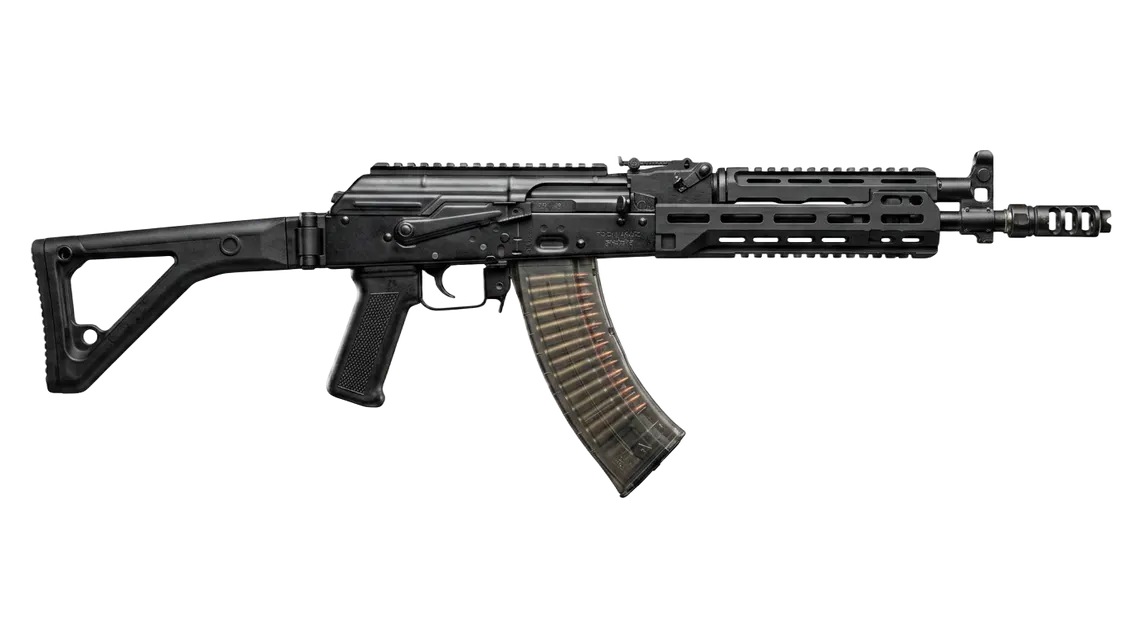 2022India
Indian 7.62×39 mm carbine on an AK platform modernised by SSS Defence with M-LOK handguard and folding stock.
2022IndiaIndian DMR / precision rifle developed by SSS Defence for tactical mid-range applications in 7.62×51 mm.
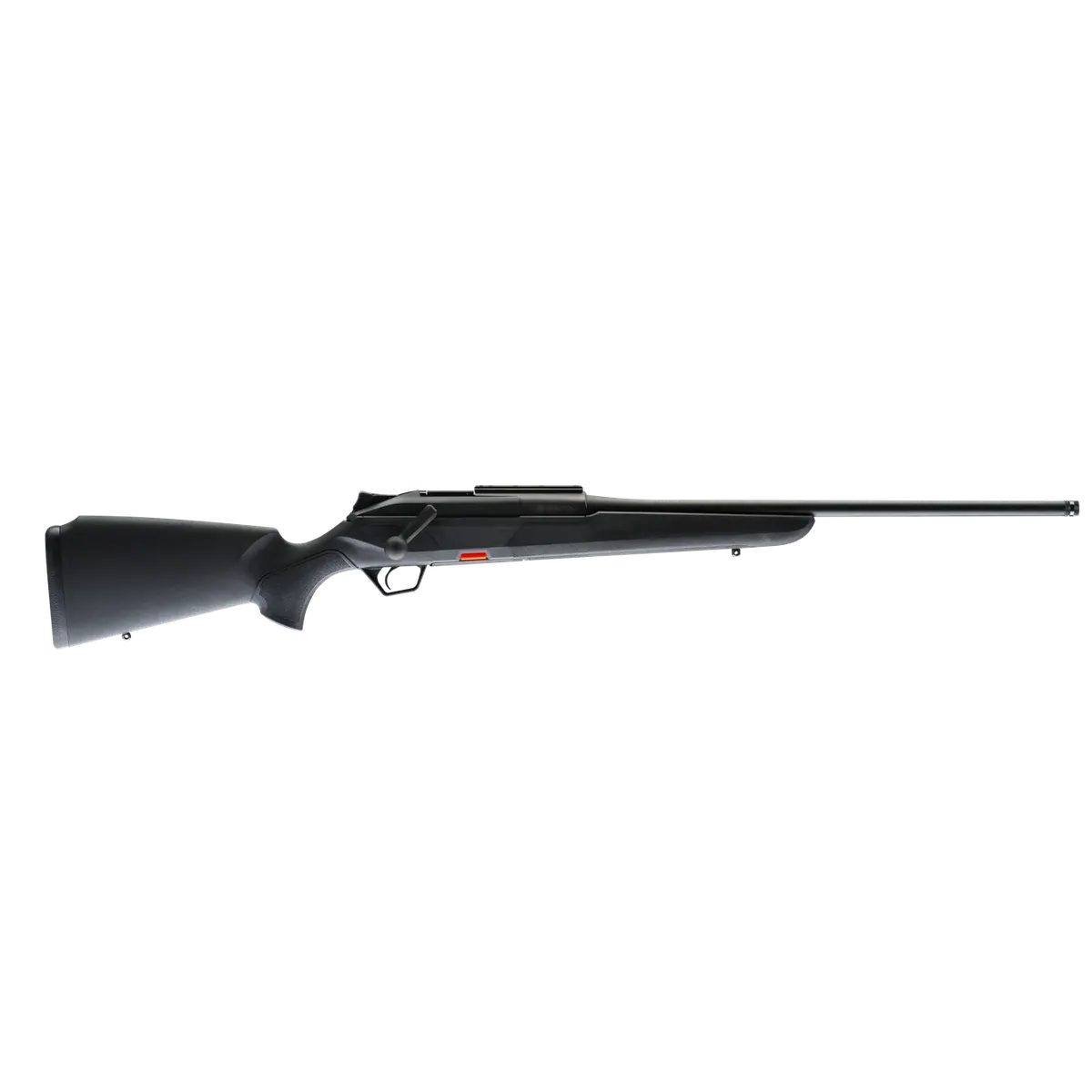 2022Italy
Ambidextrous straight-pull bolt-action hunting rifle with interchangeable barrel and modular bolt group.
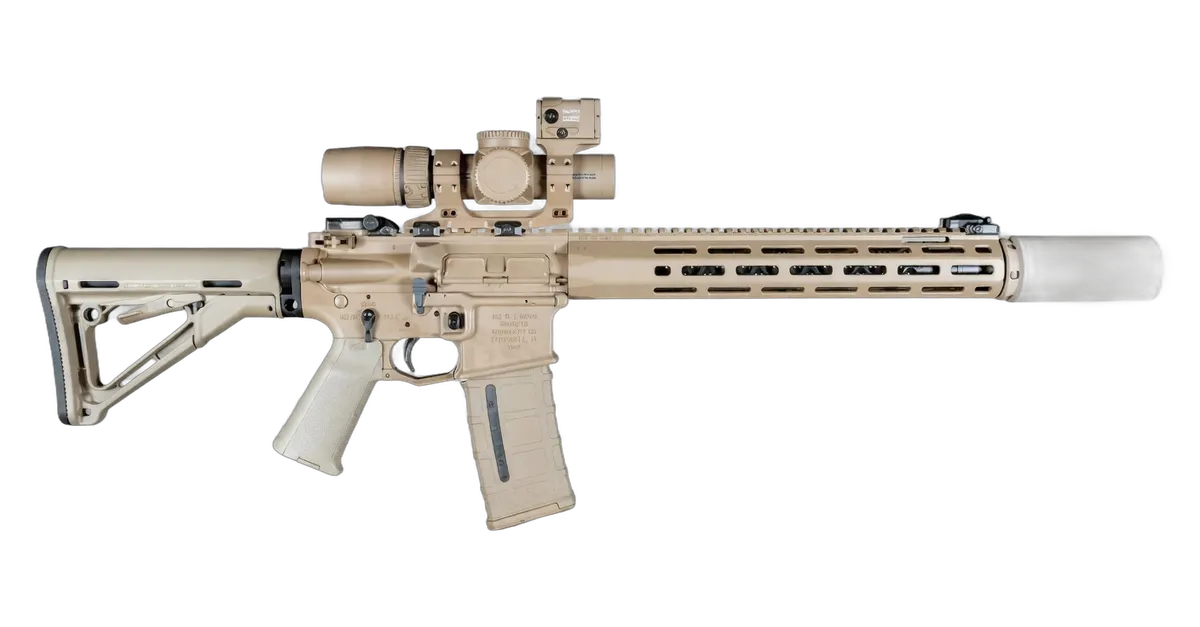 2024United Kingdom
5.56×45 NATO assault rifle selected by the British Army in 2024 to replace the SA80 for Rangers and Special Forces. Developed by US-based Knight's Armament Company from the KS-1 / SR-15 platform.
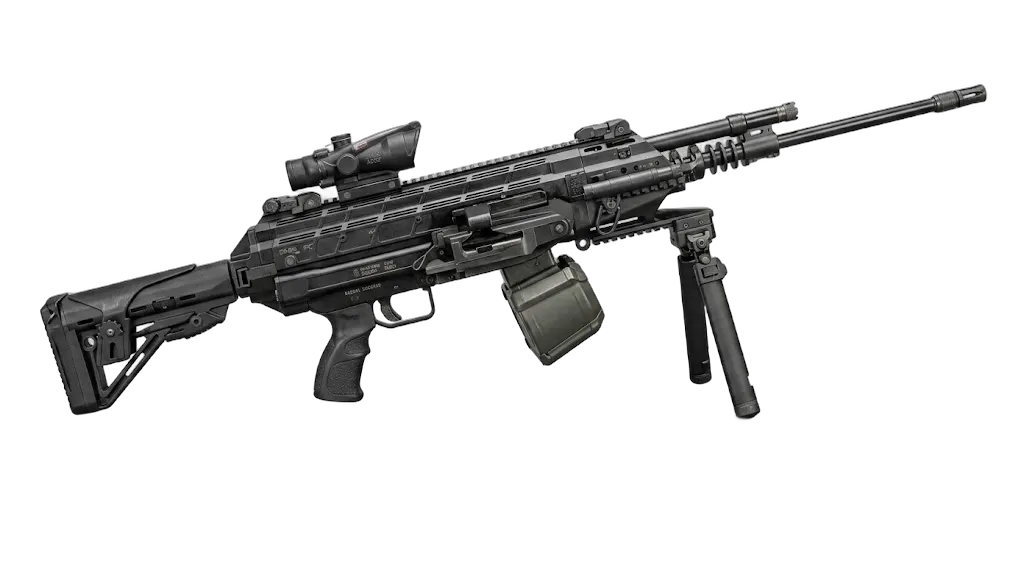 2024Hungary
Hungarian 7.62×51 mm NATO semi-automatic designated marksman rifle (DMR) with modular architecture, ACOG optic and high-capacity drum feed.
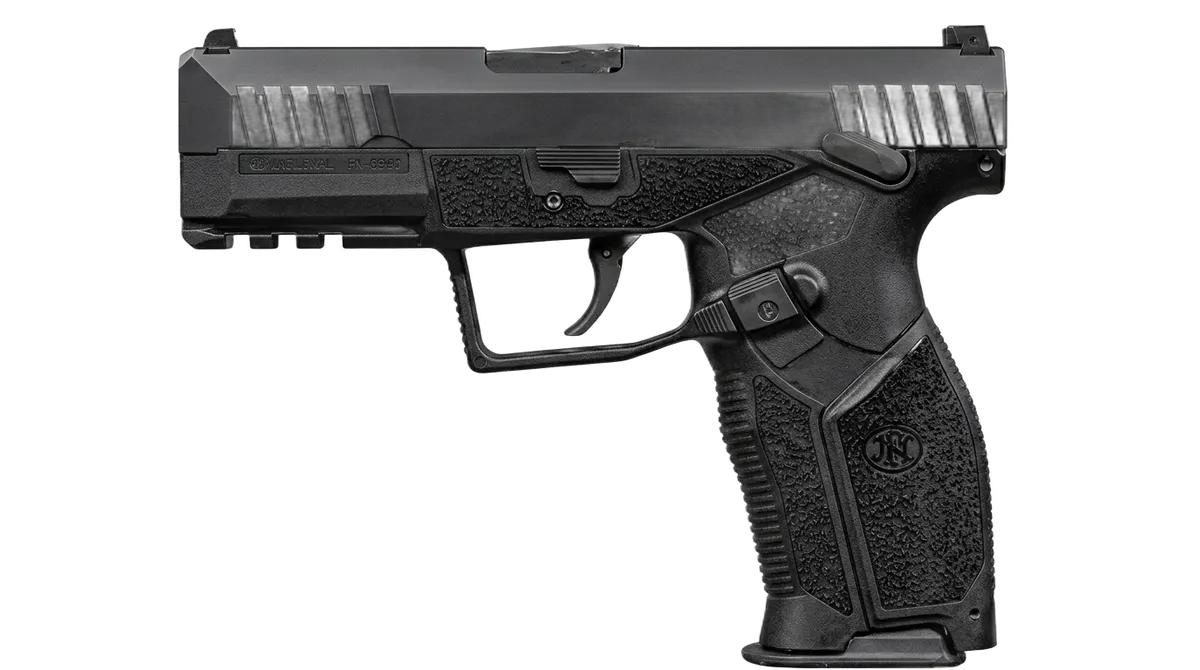 2024Belgium
New-generation 9×19 mm striker-fired pistol presented by FN as the spiritual heir of the Hi-Power, with polymer frame and increased capacity.
 2024India
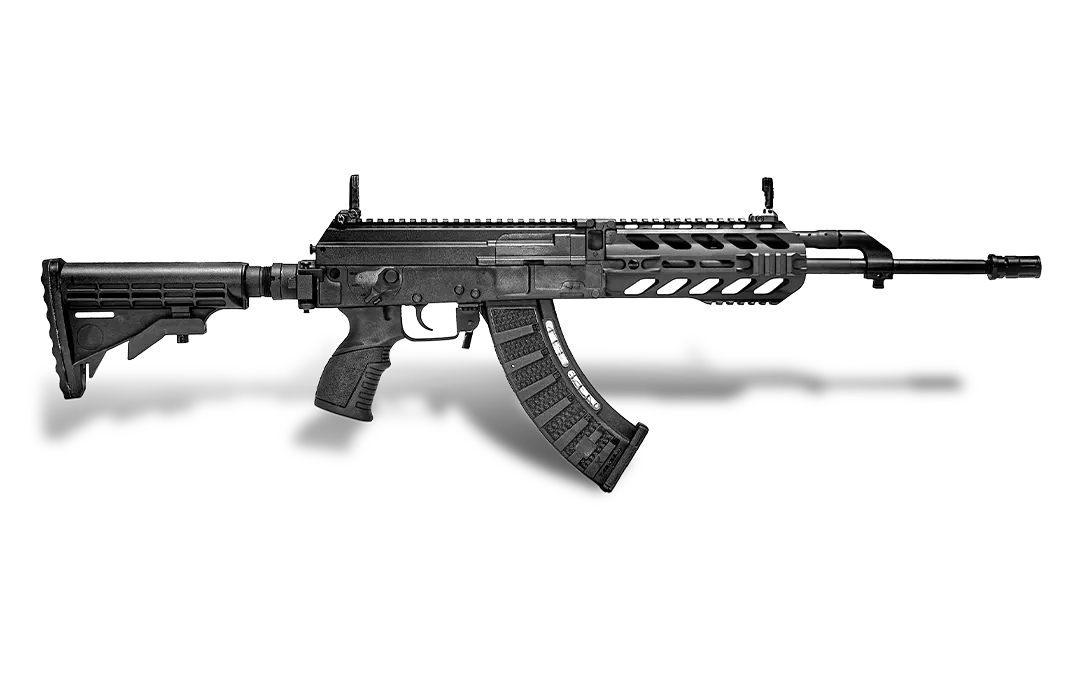
Indian assault rifle in 7.62×51 mm NATO, developed in 100 days and unveiled in March 2024.
 2025Canada
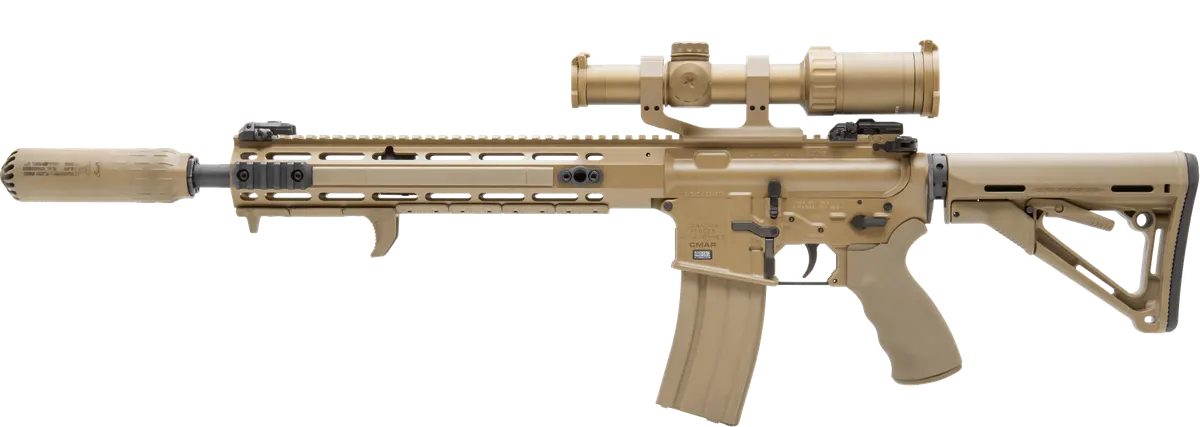
New Canadian modular rifle that will gradually replace the C7/C8 in the Canadian Armed Forces from 2025; evolved AR-15 platform with monolithic M-LOK upper, adjustable gas, 1-8× variable optic and FDE finish.