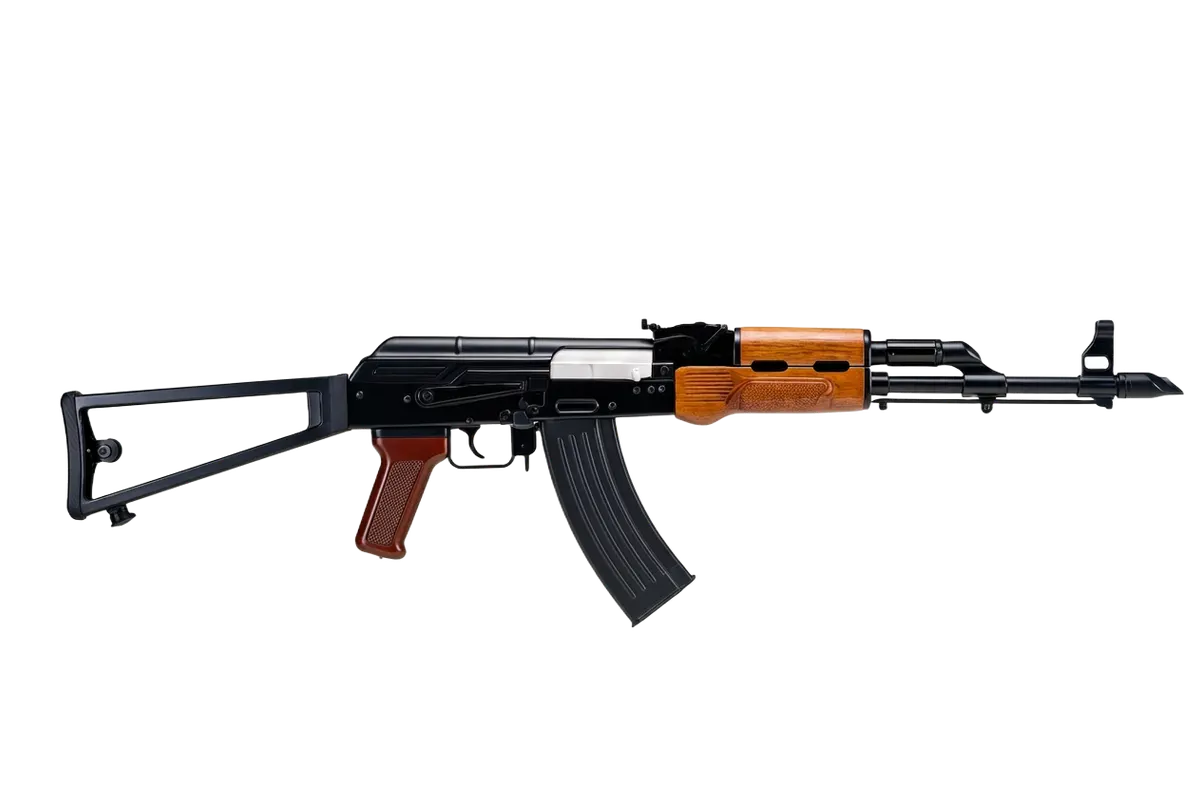
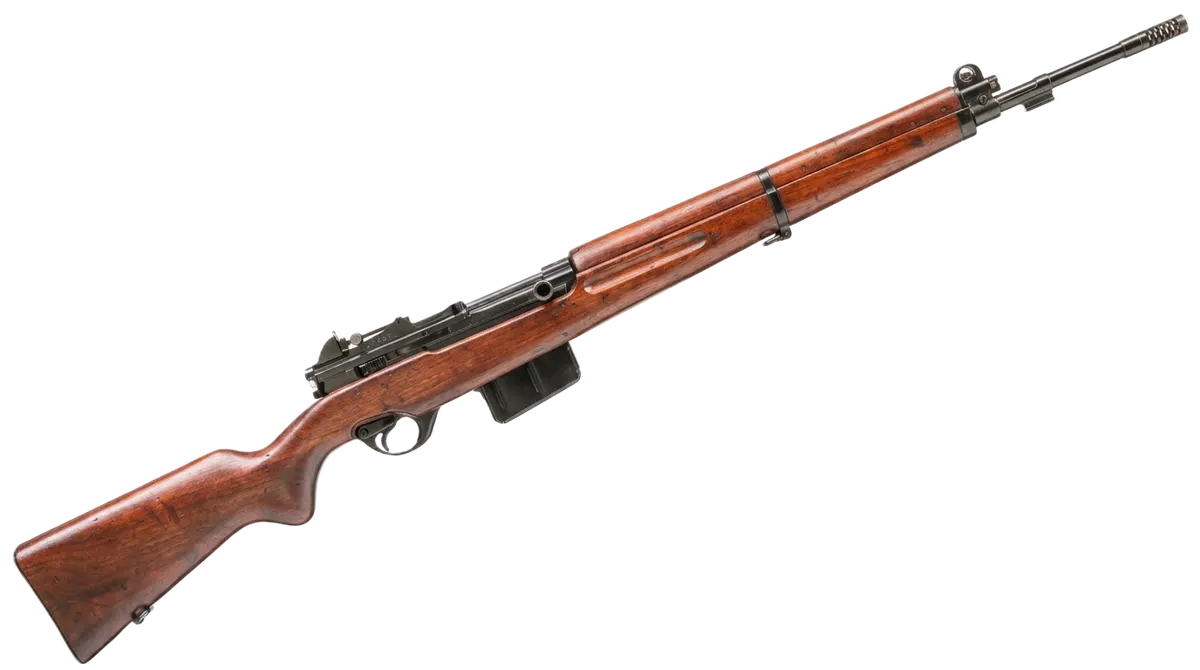
L1A1 SLR
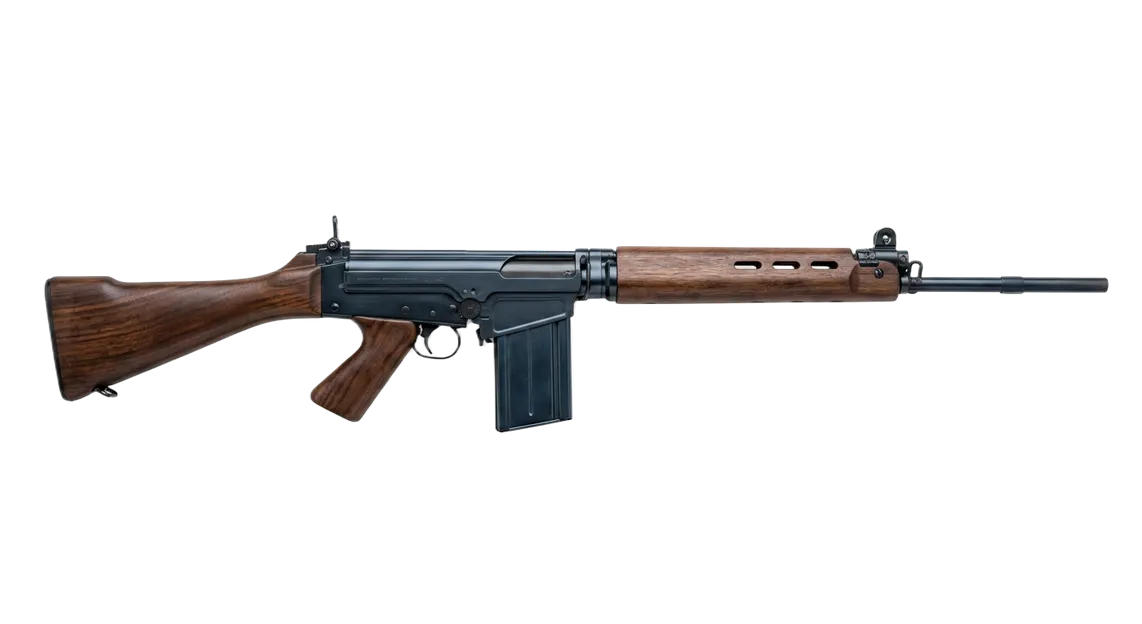
British inch-pattern version of the FN FAL in 7.62×51 NATO, produced under licence and restricted to semi-auto by British doctrine. Commonwealth standard rifle from 1954 until the SA80.
L1A1 SLR
Community
Data trust
- Reliability
- Unverified
- Sources
- Sources pending review
Identity
- Designation
- L1A1 SLR
- Alias
- Self-Loading Rifle (FN FAL inch-pattern)
- Manufacturer
- Royal Small Arms Factory Enfield (licenza FN Herstal)
- Country
- United Kingdom
- Year
- 1954
- Category
- Assault rifle
- Status
- Historic
Ballistics
- Caliber
- 7,62×51 mm NATO
- Muzzle velocity
- 823 m/s
- Rate of fire
- ~700 rpm
- Effective range
- 600 m
- Maximum range
- 800 m
Dimensions
- Barrel length
- 533 mm
- Overall length
- 1143 mm
- Empty weight
- 4.3 kg
- Loaded weight
- 5 kg
Mechanics
- Operating system
- Presa di gas, pistone a corsa breve
- Bolt / action
- Otturatore basculante (tilting bolt)
Feed
- System
- Caricatore amovibile
- Standard capacity
- 20 rounds
Fire modes
Historical profile
Origins and Development of the L1A1 Program
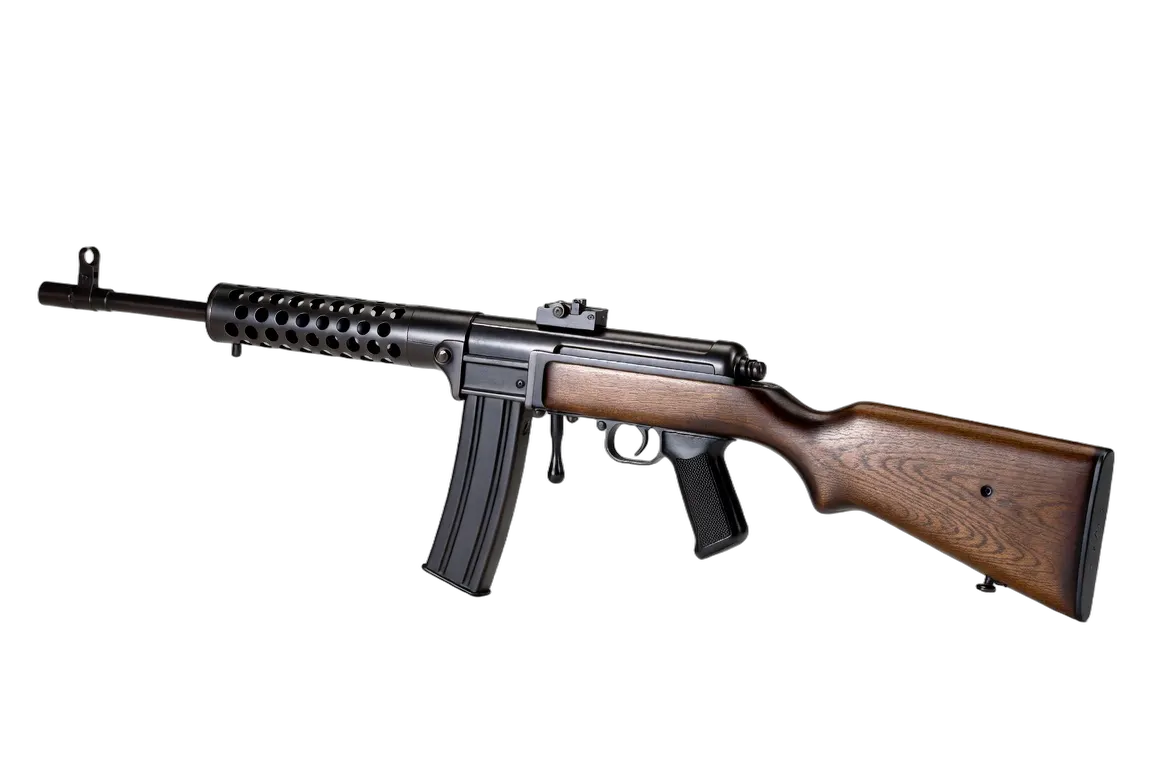
The path leading to the adoption of the L1A1 began in the late 1940s as the United Kingdom sought a successor to the venerable Lee-Enfield. Initially, British arsenals developed the revolutionary EM-2 rifle in .280 British calibre, but United States pressure within the newly formed NATO forced the adoption of the 7.62x51mm cartridge, leading to the cancellation of domestic projects in favour of the Belgian FN FAL system.
In 1954, the Royal Small Arms Factory at Enfield finalised the conversion of the Belgian design from the metric system to the British Imperial inch-scale. This technical transition was not a mere recalculation of measurements but required dedicated engineering to ensure compatibility with Commonwealth machine tools, resulting in the official designation of Self-Loading Rifle L1A1.
Technical Characteristics and Design
The L1A1 SLR differed from the metric variant through several substantial modifications, including a folding charging handle and the addition of sand-cuts on the bolt carrier to improve reliability in desert environments. The most significant doctrinal decision was the removal of selective fire capability, restricting the weapon to semi-automatic fire only to promote marksmanship and ammunition conservation during prolonged engagements.
The rifle employed a short-stroke gas piston system and a tilting breechblock, ensuring superior mechanical robustness. Early versions featured walnut wood buttstocks and handguards, which were progressively replaced by black glass-reinforced nylon synthetic furniture towards the late 1960s to better withstand climatic degradation.
Global Operational Service
The weapon became the backbone of British infantry during the Cold War, seeing extensive use during the Malayan Emergency and in Borneo against Indonesian forces. During the 1982 Falklands Conflict, the L1A1 ironically faced the metric FN FAL with selective fire capability used by Argentine troops, yet it demonstrated superior mechanical reliability and accuracy at long ranges.
Beyond the United Kingdom, the L1A1 was officially produced and adopted in Australia at the Lithgow factory and in Canada as the C1A1, serving in combat environments such as the Vietnam War. The Indian Army produced it locally as the Ishapore 1A, using it extensively in border conflicts, while Rhodesian security forces considered it a fundamental tool during the bush war of the 1970s.
Legacy and Decommissioning
In the mid-1980s, the British Ministry of Defence began the transition to the 5.56 NATO calibre, gradually replacing the L1A1 with the L85A1 bullpup system under the SA80 programme. Despite the shift to lighter systems, the SLR remained in service with reserve units and for training duties until the early 1990s, and it is still occasionally used for ceremonial roles by certain honour guards today.
The L1A1 is remembered today as the right arm of the Free World due to its widespread distribution across former British Empire and Commonwealth territories. Its reputation for indestructibility and stopping power has cemented its fame among collectors and military historians, remaining a symbol of the era when full-power battle rifles dominated the world's battlefields.
Variants
Main users
United Kingdom · Australia · Canada · India · New Zealand · Malesia
Key components
- ●Stock — Shoulder rest.
- ●Receiver — Weapon body with internal mechanisms.
- ●Grip — Primary grip.
- ●Magazine — Cartridge feed.
- ●Barrel — Guides the projectile.