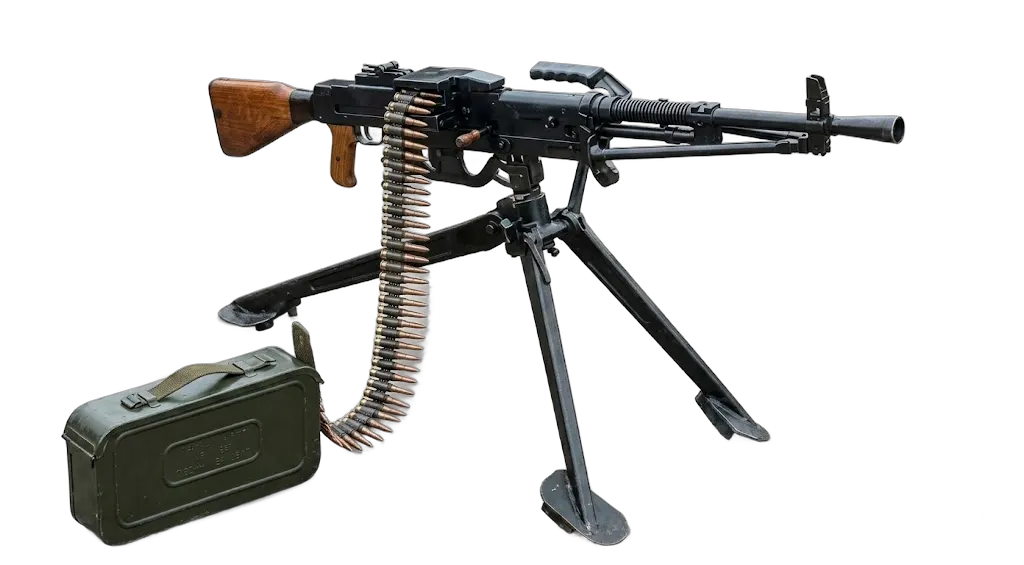
L7A2 GPMG
British version of the Belgian FN MAG, a belt-fed 7.62×51 NATO general-purpose machine gun. "Gimpy" to British soldiers: backbone of fire support since 1957.
L7A2 GPMG
Community
Data trust
- Reliability
- Unverified
- Sources
- Sources pending review
Identity
- Designation
- L7A2 GPMG
- Alias
- General Purpose Machine Gun (FN MAG)
- Manufacturer
- Royal Small Arms Factory / FN Herstal
- Country
- United Kingdom
- Year
- 1957
- Category
- Medium machine gun
- Status
- In service
Ballistics
- Caliber
- 7,62×51 mm NATO
- Muzzle velocity
- 840 m/s
- Rate of fire
- ~850 rpm
- Effective range
- 800 m
- Maximum range
- 1800 m
Dimensions
- Barrel length
- 630 mm
- Overall length
- 1232 mm
- Empty weight
- 11.79 kg
Mechanics
- Operating system
- Presa di gas, pistone a corsa lunga
- Bolt / action
- Otturatore basculante derivato dal BAR
Feed
- System
- Nastro a maglie disintegrabili M13
- Standard capacity
- 100 rounds
Fire modes
Historical profile
Origins and Development of the U.K. Programme
In the mid-1950s, the British Ministry of Defence expressed the need to replace the obsolete water-cooled Vickers medium machine gun and the Bren light machine gun, the latter having been provisionally converted to 7.62mm NATO as the L4. Following a series of comparative trials involving various international prototypes, the choice fell on the Belgian FN MAG design, developed by Ernest Vervier at Fabrique Nationale de Herstal.
The weapon was officially adopted in 1957 under the L7 designation, and initial production was entrusted to the Royal Small Arms Factory at Enfield, which implemented several modifications to adapt the original design to British manufacturing standards. These efforts led to the definitive L7A2 variant, featuring an improved gas regulator and enhanced internal component durability to ensure consistent performance in extreme environmental conditions.
Technical Details and Mechanical Design
The L7A2 operates via a gas-actuated system with a vertical tilting breechblock and is fed by M13-type disintegrating metallic link belts. The barrel, featuring a chrome-lined bore to resist thermal wear, is designed for rapid replacement, allowing operators to maintain a high volume of fire without damaging the rifling during prolonged engagement sessions.
The weapon is distinguished by its operational versatility through the use of an integrated bipod for the light support role or the L1A1 Sustained Fire tripod for long-range suppressive fire. In the SF configuration, the addition of a C2 optical sight or night vision systems allows infantry units to saturate targets at distances up to 1,800 metres with extreme precision.
Operational Service in Global Conflicts
Since its debut during the Aden Emergency, the GPMG has served as the backbone of British firepower in every significant conflict of the 20th and 21st centuries. During the Falklands War in 1982, the weapon proved superior to its Argentine counterparts, providing vital support during the night assaults on the ridges surrounding Port Stanley.
In the modern theatres of Iraq and Afghanistan, the L7A2 confirmed its legendary reliability despite harsh desert conditions characterised by fine sand and extreme heat. Beyond infantry use, the weapon is extensively employed as a coaxial machine gun on Challenger 2 tanks and as defensive armament on helicopters and protected transport vehicles.
Legacy and Continuity in the British Army
Despite several attempts to replace it with lighter 5.56mm NATO systems, such as the L110A2 Minimi, the British Army has recently decided to retain and upgrade the L7A2 for the Fire Support Group role. The superior stopping power and range of the 7.62mm round remain irreplaceable for suppressing enemy positions at distances inaccessible to smaller calibre weapons.
Today, the GPMG represents one of the rare cases of a 1950s-adopted weapon system still fully effective and on the front line, testifying to the excellence of the original FN Herstal design. The adoption of new Picatinny rails and advanced optics ensures that the L7A2 will remain the British standard for medium machine guns for decades to come.
Variants
Main users
United Kingdom · Australia · Canada · New Zealand · oltre 80 paesi (come FN MAG)
Key components
- ●Stock — Shoulder rest.
- ●Receiver — Weapon body with internal mechanisms.
- ●Grip — Primary grip.
- ●Magazine — Cartridge feed.
- ●Barrel — Guides the projectile.
Community
Recent reviews
Similar systems
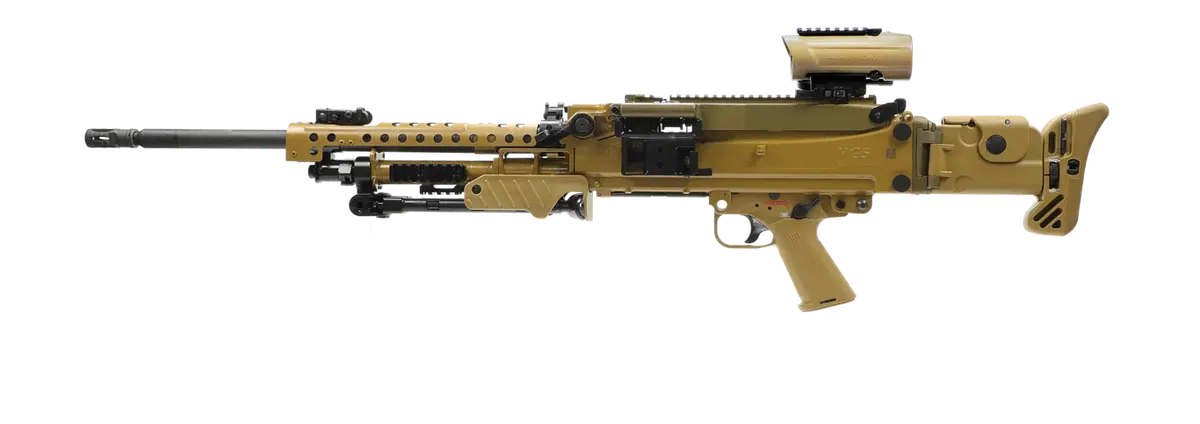
HK MG5
2013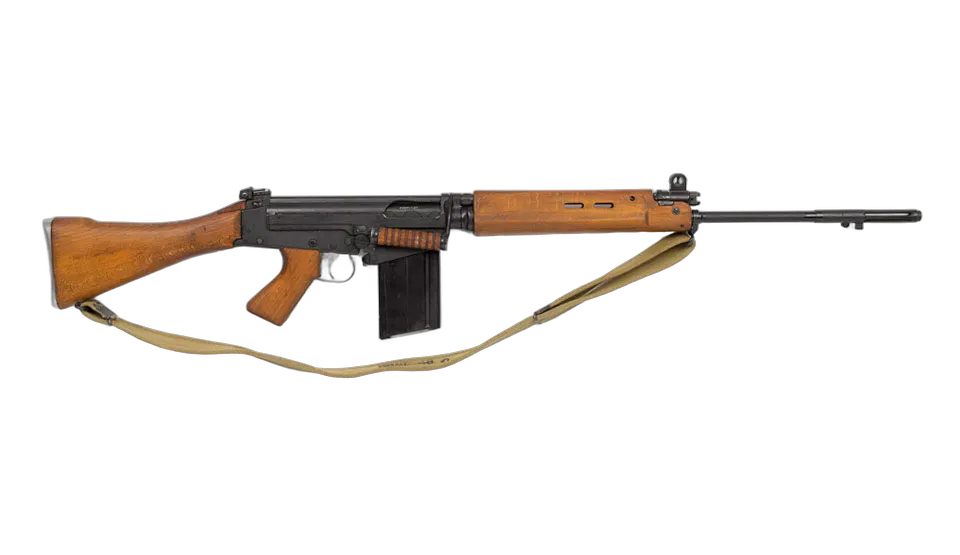
L1A1 SLR
1954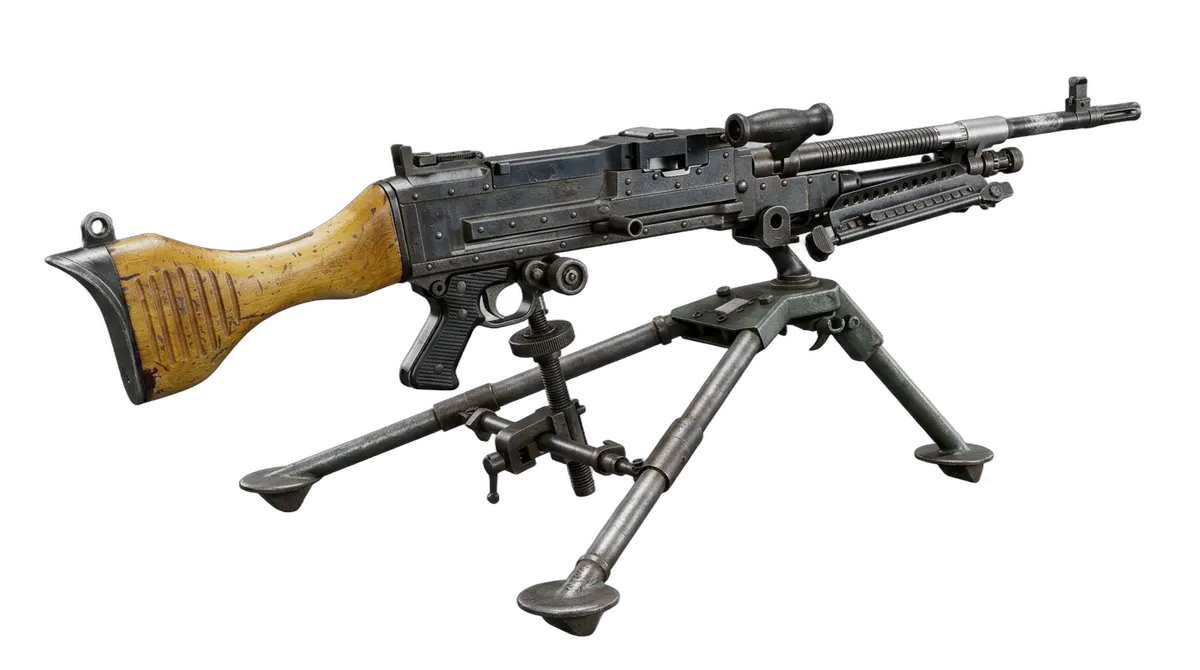
Type 67 GPMG
1967
U.S. Ordnance M60
1957
FN MAG
1958