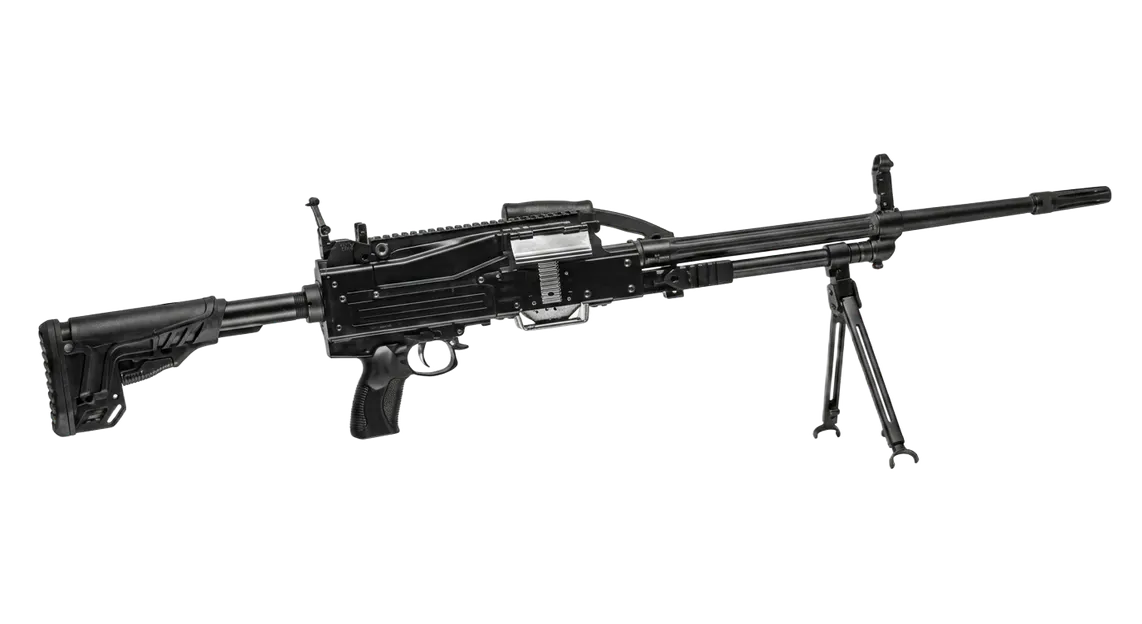
HK MG5
Belt-fed 7.62×51 mm NATO general-purpose machine gun, developed by Heckler & Koch as the HK121 to replace the venerable MG3 in Bundeswehr service.
HK MG5
Community
Data trust
- Reliability
- Unverified
- Sources
- Sources pending review
Identity
- Designation
- HK MG5
- Alias
- HK121
- Manufacturer
- Heckler & Koch
- Country
- Germany
- Year
- 2013
- Category
- Medium machine gun
- Status
- In service
Ballistics
- Caliber
- 7,62×51 mm NATO
- Muzzle velocity
- 860 m/s
- Rate of fire
- ~720 rpm
- Effective range
- 800 m
- Maximum range
- 1500 m
Dimensions
- Barrel length
- 550 mm
- Overall length
- 950 / 1192 mm
- Empty weight
- 9.9 kg
Mechanics
- Operating system
- Presa di gas a pistone lungo
- Bolt / action
- Otturatore rotante, canna a cambio rapido
Feed
- System
- Nastro disintegrabile DM60/M13
- Standard capacity
- 120 rounds
Fire modes
Historical profile
Development and Genesis of the Project
The development process of the HK121 began in 2007, when Heckler & Koch decided to leverage the experience gained from the 5.56 mm MG4 light machine gun to create a superior 7.62 mm NATO weapon system. The primary goal was to meet the Bundeswehr's requirements for the Infantryman of the Future (IdZ) program, which demanded a more precise and versatile weapon than the aging MG3.
Following years of intensive testing in extreme climatic conditions, including desert and Arctic environments, the firearm passed the official German selections in 2013, receiving the military designation MG5. The initial contract called for the delivery of over 12,000 units to modernize infantry arsenals and remote weapon stations on armored vehicles.
Technical Features and Design Concepts
The MG5 is based on a gas-operated system with a long-stroke piston and rotating bolt, a configuration that ensures superior stability compared to the short-recoil system of the previous MG3. The design features a reinforced cast steel receiver, engineered to withstand prolonged firing cycles while maintaining tight mechanical tolerances for consistent shot precision.
The firearm integrates a three-position gas regulator that allows the operator to vary the rate of fire between 640 and 800 rounds per minute, optimizing ammunition consumption or stopping power. The barrel is equipped with an integrated carrying handle that facilitates quick changes in combat conditions, eliminating the need for thermal protective gloves.
Operational Service and Variants
Entering active service with the German Army in 2015, the MG5 was distributed in several specialized configurations, such as the standard universal version and the MG5A1 variant for integration into FLW100 mounts on Dingo and LGS Fennek armored vehicles. The MG5A2 variant, featuring a shortened barrel and folding stock, was specifically adopted by paratrooper units and special forces for operations in confined environments.
Beyond Germany, the weapon has found international employment with the armed forces of Chile and Malaysia, demonstrating significant reliability during peacekeeping missions and border surveillance. Its ability to mount day and night optics on MIL-STD-1913 rails has made it a benchmark standard for tactical cooperation within NATO.
Legacy and Impact on the Industry
The MG5 represents the definitive departure from the architecture derived from the World War II-era MG42, marking the transition to a generation of medium machine guns focused on control and modularity. Its introduction has allowed for a significant reduction in the overall weight of squad-level weapons, while simultaneously improving operator safety through the use of ambidextrous manual safeties and loaded chamber indicators.
The success of the platform has influenced the doctrine for modern support weapons, shifting the emphasis from purely suppressive volume of fire to the surgical precision of single shots and short bursts. The integration of the MG5 system into modern battlefield management systems ensures that this model will remain the standard for German heavy infantry for decades to come.
Variants
Main users
Germania (Bundeswehr) · Norway · Australia (limitato) · Export NATO
Key components
- ●Stock — Shoulder rest.
- ●Receiver — Weapon body with internal mechanisms.
- ●Grip — Primary grip.
- ●Magazine — Cartridge feed.
- ●Barrel — Guides the projectile.
Community
Recent reviews
Similar systems
L7A2 GPMG
1957
HK MG4
2003
UKM-2000P
2007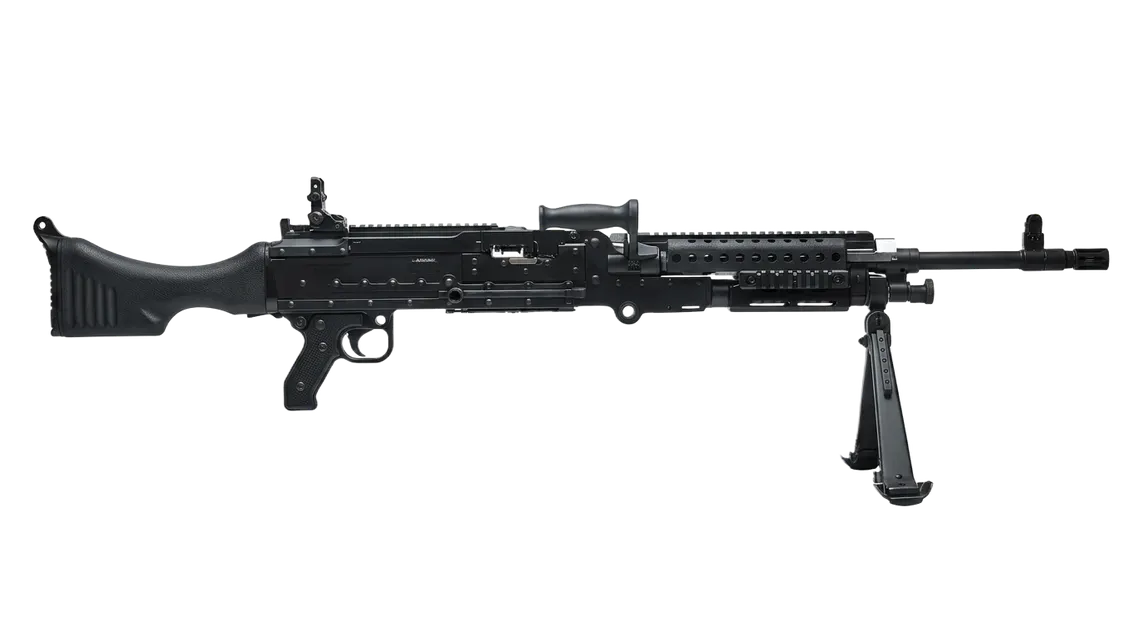
SAR 762 MT
2018
MMT-76
2019