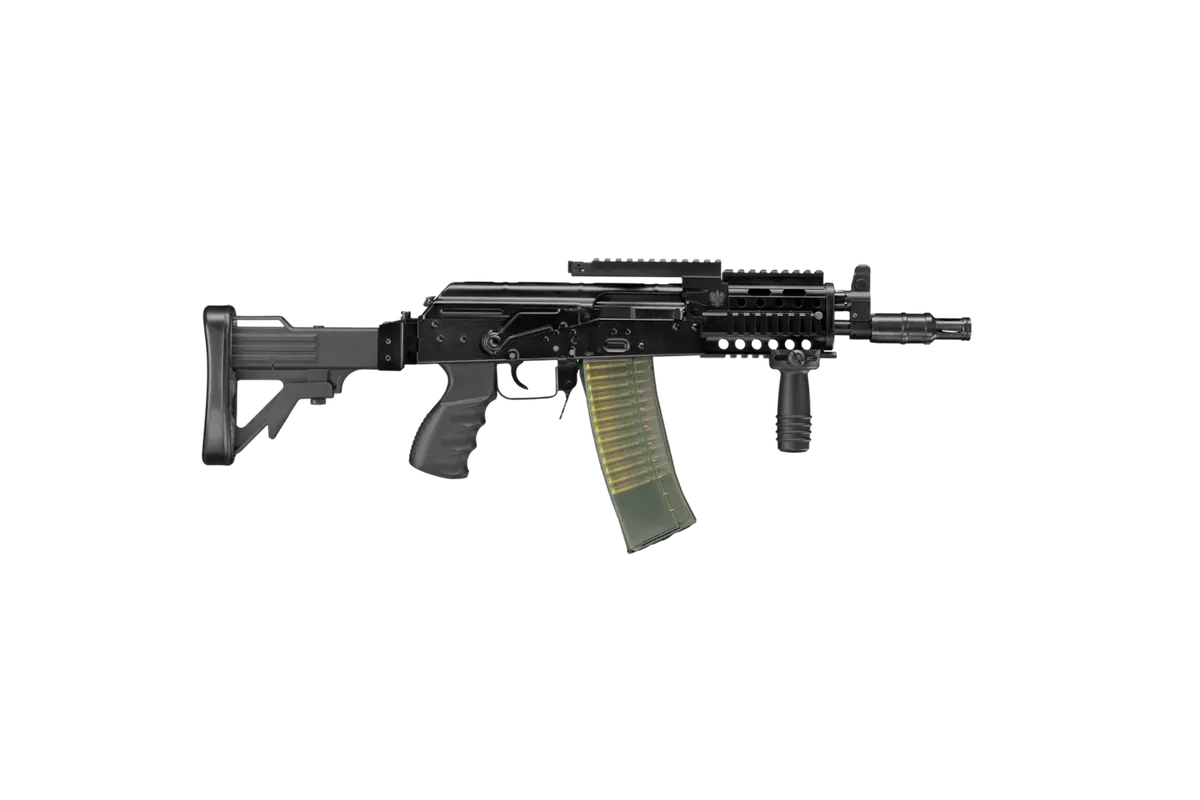
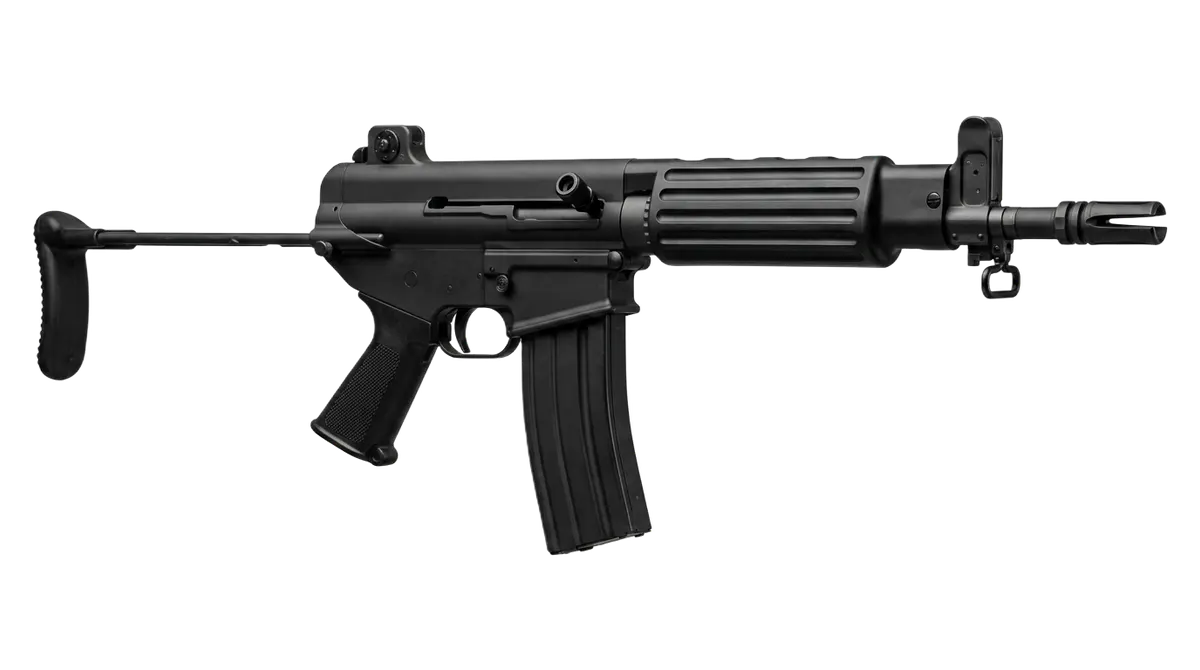
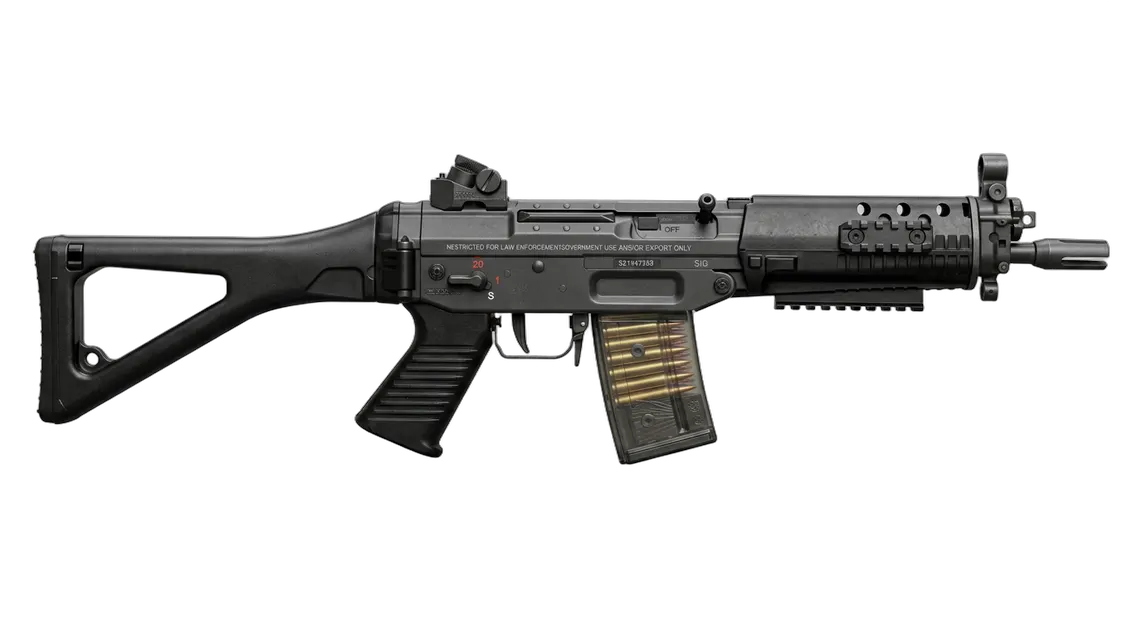
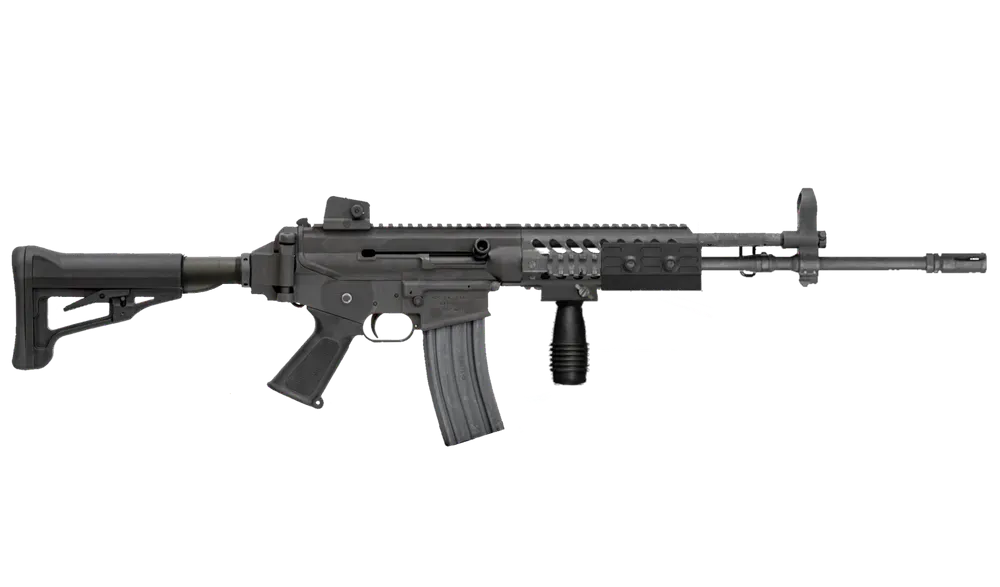
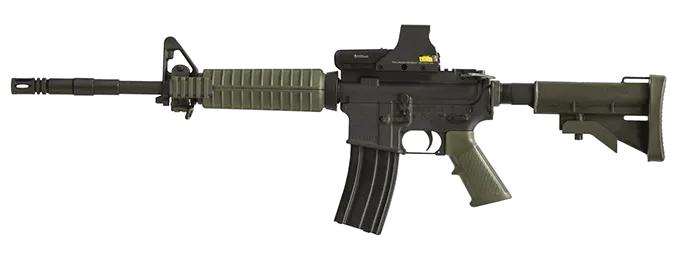
L119A1
5.56×45 NATO assault carbine adopted by UKSF (SAS, SBS, SRR, SFSG) as their standard weapon. Developed by Diemaco/Colt Canada as the C8 SFW (Special Forces Weapon), with a hammer-forged heavy-profile barrel.
L119A1
Community
Data trust
- Reliability
- Unverified
- Sources
- Sources pending review
Identity
- Designation
- L119A1
- Alias
- Diemaco / Colt Canada C8 SFW
- Manufacturer
- Colt Canada (ex Diemaco)
- Country
- United Kingdom
- Year
- 2001
- Category
- Carbine
- Status
- In service
Ballistics
- Caliber
- 5.56×45 mm NATO
- Muzzle velocity
- 905 m/s
- Rate of fire
- ~750 rpm
- Effective range
- 500 m
- Maximum range
- 600 m
Dimensions
- Barrel length
- 406 mm
- Overall length
- 820 / 911 mm
- Empty weight
- 3.1 kg
Mechanics
- Operating system
- Presa di gas diretta (DI, sistema AR-15)
- Bolt / action
- Otturatore rotante a chiusura geometrica
Feed
- System
- STANAG magazine
- Standard capacity
- 30 rounds
Fire modes
Historical profile
Origins and Development of the SFW Program
The roots of the L119A1 carbine date back to the late 1990s, when the British Ministry of Defence identified a need to replace the L85A1 bullpup rifle within elite units. The search focused on a proven AR-15 platform weapon, leading to the selection of the SFW (Special Forces Weapon) variant proposed by the Canadian company Diemaco, later acquired by Colt.
The official adoption contract was finalized in 2001, establishing the L119A1 as the standard issue for the SAS and SBS under an Urgent Operational Requirement acquisition. This choice was driven by the necessity for greater operational versatility and compatibility with NATO accessories compared to what national weapon systems offered at the time.
Technical Features and Design
The distinguishing feature of the L119A1 lies in its 15.7-inch cold hammer-forged barrel, which ensures durability and accuracy superior to standard M4 variants manufactured in the United States. The configuration features a heavy "straight taper" profile designed to better manage heat during sustained automatic fire and to support the mounting of under-barrel grenade launchers like the L123A1 (AG36).
The weapon's receiver integrates a MIL-STD-1913 Picatinny rail system for the installation of Trijicon ACOG or Aimpoint CompM2 optics, as well as laser pointers and tactical lights. Other specific modifications include a reinforced front sight post, a six-position collapsible stock, and an ergonomic pistol grip, optimized for use with protective gloves in diverse climatic environments.
Operational Service in Modern Conflicts
Since the beginning of Operation Veritas in Afghanistan in 2001, the L119A1 has become the iconic weapon of the United Kingdom Special Forces (UKSF) in every global theater of war. The carbine proved exceptional reliability in the desert conditions of Iraq during Operation Telic, where its resistance to sand and ease of maintenance were found superior to early L85 variants.
In addition to the SAS and SBS units, the weapon was issued to the SRR (Special Reconnaissance Regiment) and the SFSG (Special Forces Support Group), extending its use to escort, counter-terrorism, and close protection duties. Throughout its long service years between 2003 and 2014, the L119A1 was constantly updated with Surefire suppressors and modern holographic sighting systems.
Evolution, Variants and Military Legacy
Starting from 2014, the platform was gradually replaced by the L119A2 version, featuring a monolithic upper receiver (IUR) that increases accessory stability and overall accuracy. Although the core mechanics remain those of the Canadian Diemaco, the new variant introduced fully ambidextrous controls and improved thermal protection, confirming British trust in the Colt Canada platform.
The legacy of the L119A1 is also reflected in the adoption of similar versions by other NATO nations, such as Denmark with the C8 IUR (Gv m/10) and Norway, which chose the quality of Canadian barrels for their special units. At home, the experience gained with the L119A1 deeply influenced the subsequent modernization of conventional infantry and the development of requirements for the new Project Hunter individual weapon system.
Variants
Main users
UKSF (SAS, SBS, SRR, SFSG) · Forze speciali canadesi · KCT olandese · Jægerkorpset danese · FSK norvegese
Key components
- ●Stock — Shoulder rest.
- ●Receiver — Weapon body with internal mechanisms.
- ●Grip — Primary grip.
- ●Magazine — Cartridge feed.
- ●Barrel — Guides the projectile.