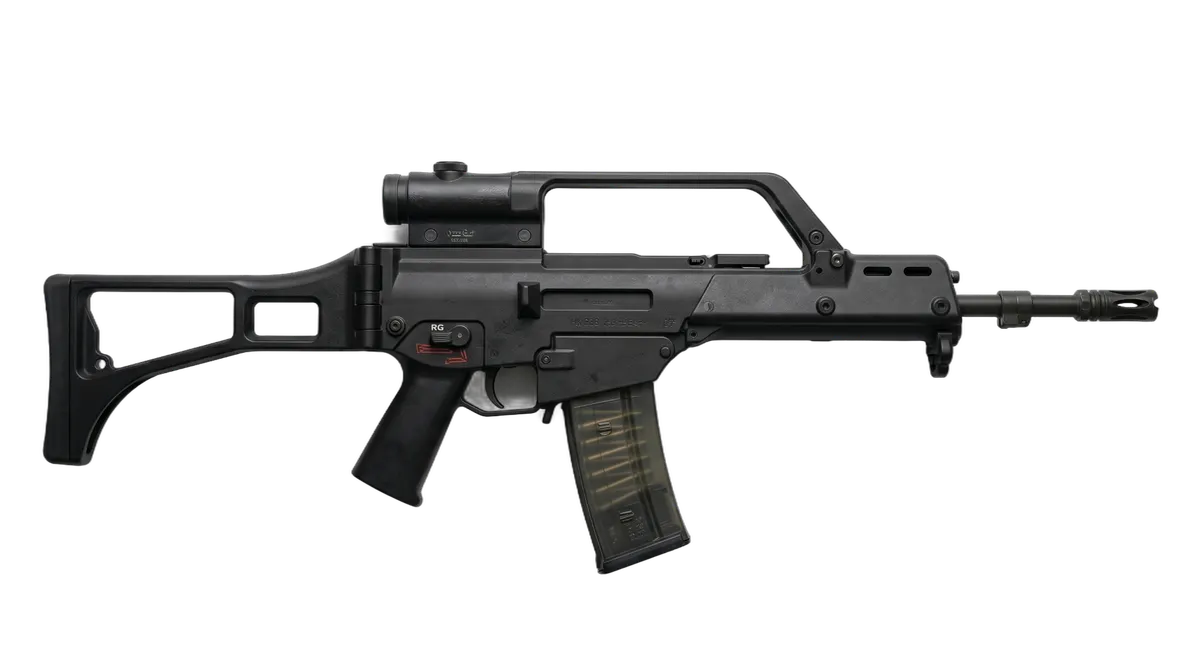
SA80 L85A2
British bullpup assault rifle in 5.56 NATO, compact layout with the SUSAT optic as standard issue. The A2 variant was reworked by H&K after the L85A1's reliability problems.
SA80 L85A2
Community
Data trust
- Reliability
- Unverified
- Sources
- Sources pending review
Identity
- Designation
- SA80 L85A2
- Alias
- Individual Weapon
- Manufacturer
- Royal Small Arms Factory / Heckler & Koch
- Country
- United Kingdom
- Year
- 1985
- Category
- Assault rifle
- Status
- In service
Ballistics
- Caliber
- 5.56×45 mm NATO
- Muzzle velocity
- 940 m/s
- Rate of fire
- ~775 rpm
- Effective range
- 400 m
- Maximum range
- 600 m
Dimensions
- Barrel length
- 518 mm
- Overall length
- 785 mm
- Empty weight
- 3.82 kg
- Loaded weight
- 4.98 kg
Mechanics
- Operating system
- Gas-operated, short-stroke piston
- Bolt / action
- Rotating bolt
Feed
- System
- STANAG magazine
- Standard capacity
- 30 rounds
Fire modes
Historical profile
Genesis and Development of the SA80 System
The journey leading to the adoption of the L85 is rooted in the 1950s British research on the .280 British cartridge, but it was not until 1970 that the Enfield Weapon System project began to take shape. Following the abandonment of the 4.85mm caliber in favor of the 5.56x45mm NATO, the XL70 prototype was refined until the official adoption of the L85A1 in 1985, intended to replace the obsolete L1A1 SLR.
Political pressure to maintain domestic production led the Royal Small Arms Factory at Enfield to finalize the weapon despite persistent mechanical design flaws. The transfer of ownership to British Aerospace and the subsequent closure of the Enfield facility complicated initial quality control, negatively impacting the first batches issued to the troops.
The Heckler & Koch Intervention: A2 Engineering
Due to mechanical failures emerging in operational theaters, the British Ministry of Defence commissioned Heckler & Koch, then a subsidiary of BAE Systems, for a radical overhaul program in 2000. This project led to the modification of approximately 200,000 units, where the entire bolt assembly was redesigned with reinforced extractors and a special steel firing pin to eliminate misfires.
Beyond internal mechanics, the A2 version introduced a comma-shaped charging handle to aid casing ejection and new steel magazines produced by Radway Green. The adoption of a modified gas recovery system and a sturdier piston finally ensured the reliable firing cycle that the armed forces had demanded for nearly twenty years.
Operational Service and Field Performance
The L85A1 had a troubled debut during Operation Granby in 1991, where desert sand caused constant jamming due to the gas system's excessively tight tolerances. In contrast, the L85A2 proved its excellence during Operation Telic in Iraq and Operation Herrick in Afghanistan, earning the soldiers' trust for its superior ballistic accuracy.
The integration of the 4x SUSAT optical sight, and later the Trijicon ACOG and ELCAN Spectre optics, allowed British infantrymen to engage targets with precision at greater distances than conventional assault rifles. Despite the impossibility of use by left-handed shooters, the weapon proved extremely effective in urban combat and long-range patrols.
The A3 Evolution and Historical Legacy
In 2018, the L85A3 upgrade package was introduced, aimed at extending the service life of the SA80 system beyond 2030 thanks to a new upper receiver with a continuous Picatinny rail. This variant, finished with a Flat Dark Earth Cerakote coating to reduce thermal signature, integrates lightened handguards with the KeyMod attachment system for modern accessories.
The L85 remains a symbol of British military identity, being one of the few bullpup rifles born during the Cold War still in active service with a major nation. Despite early criticism, the transformation brought about by the A2 variant converted one of the worst engineering failures into one of NATO's most accurate and reliable service weapons.
Variants
Main users
United Kingdom · Giamaica · Zimbabwe · Nepal
Key components
- ●Stock — Shoulder rest.
- ●Receiver — Weapon body with internal mechanisms.
- ●Grip — Primary grip.
- ●Magazine — Cartridge feed.
- ●Barrel — Guides the projectile.
Community
Recent reviews
Similar systems
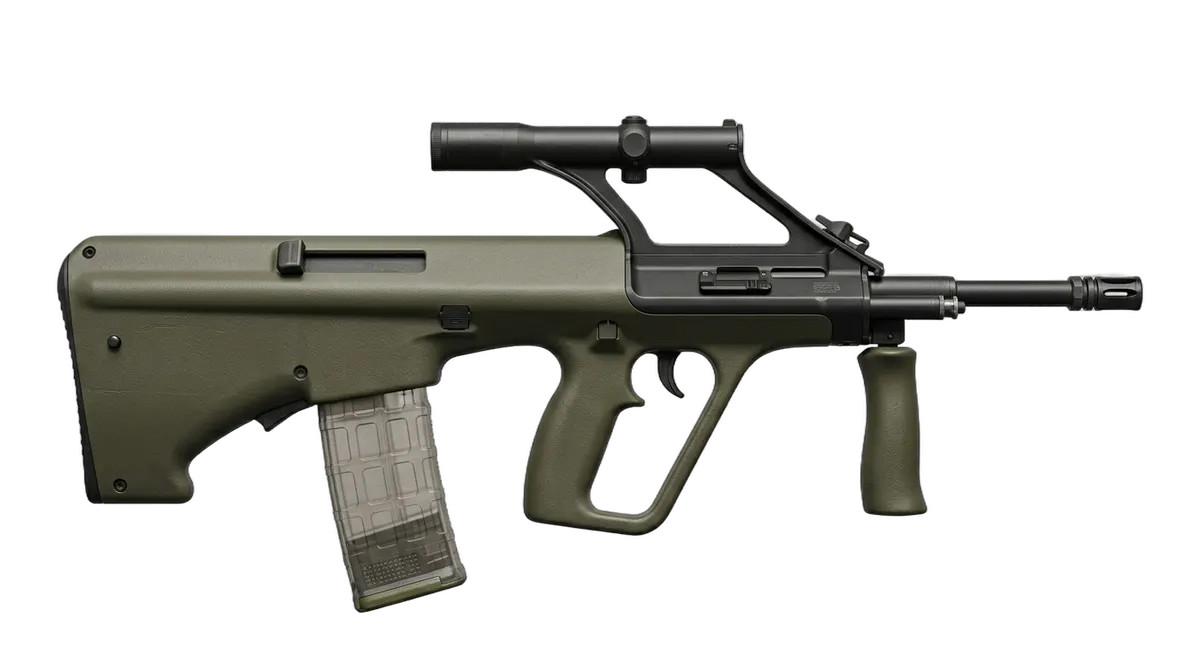
Steyr AUG
1978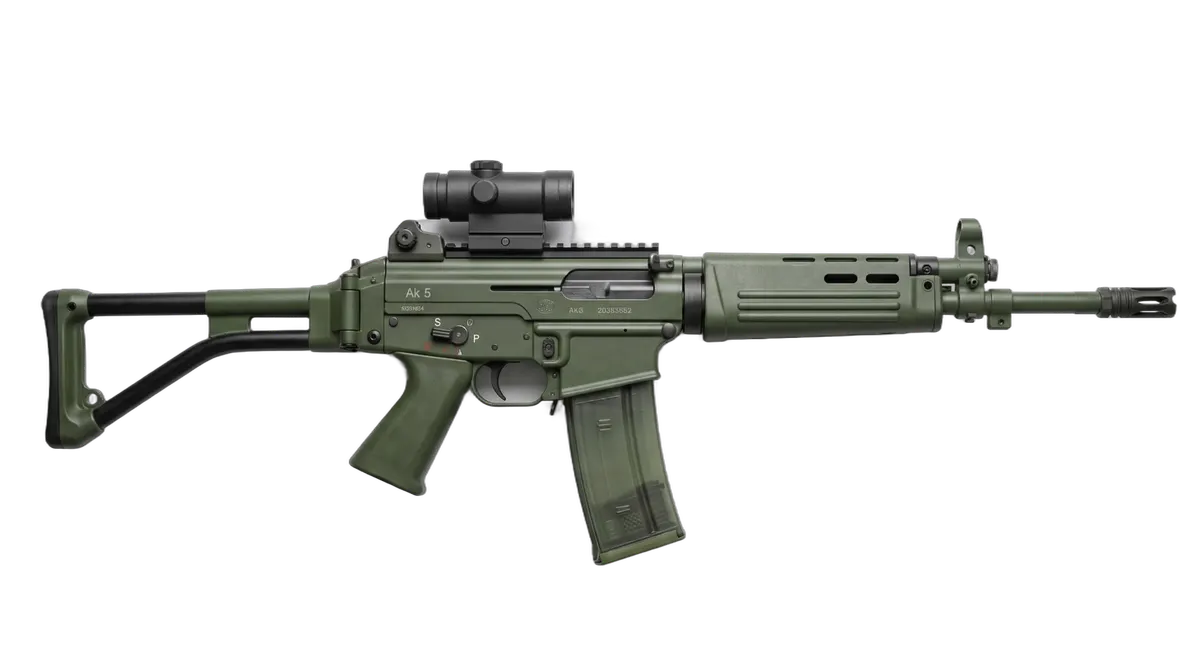
FN FNC / Ak 5
1979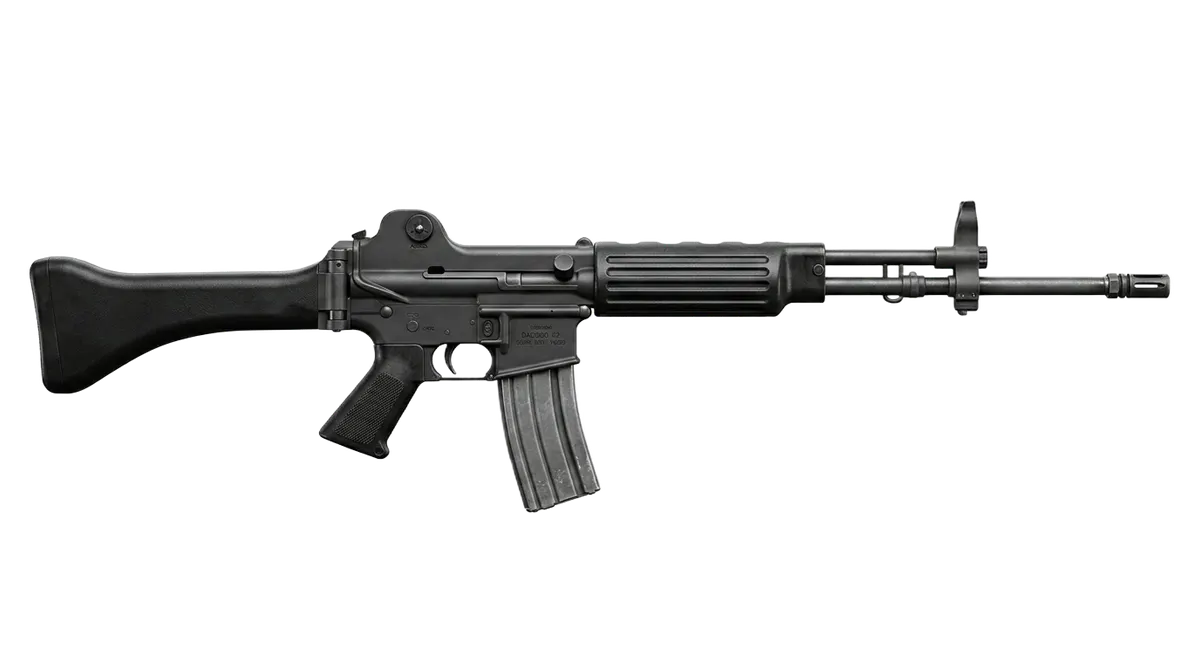
K2
1984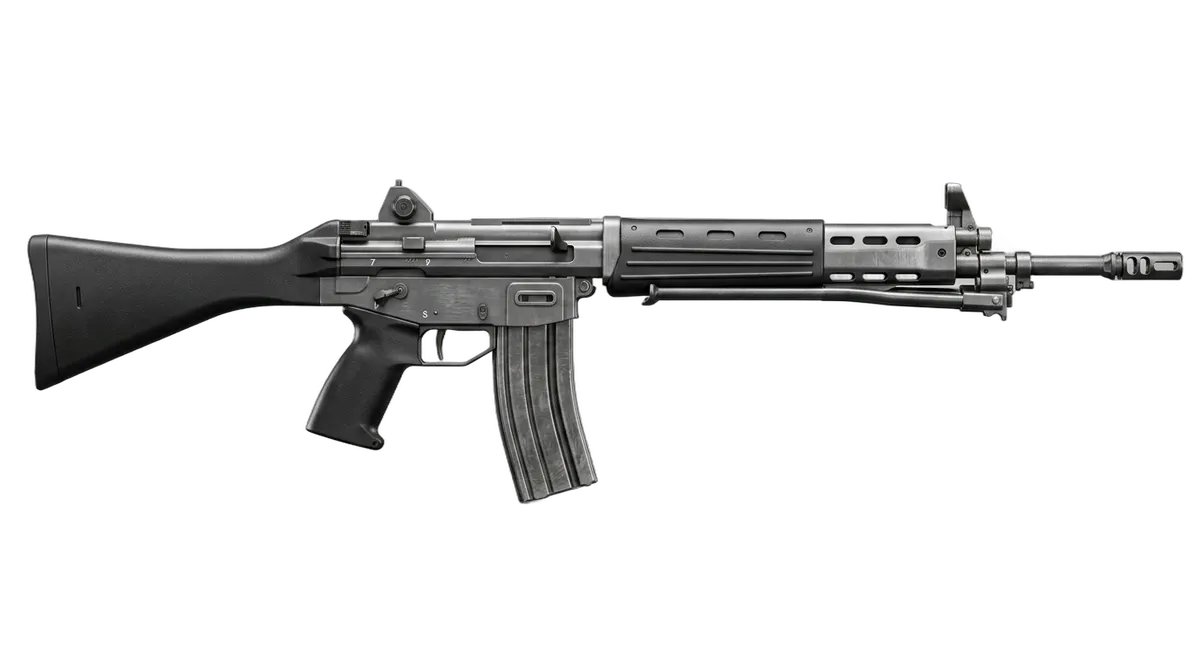
Howa Type 89
1989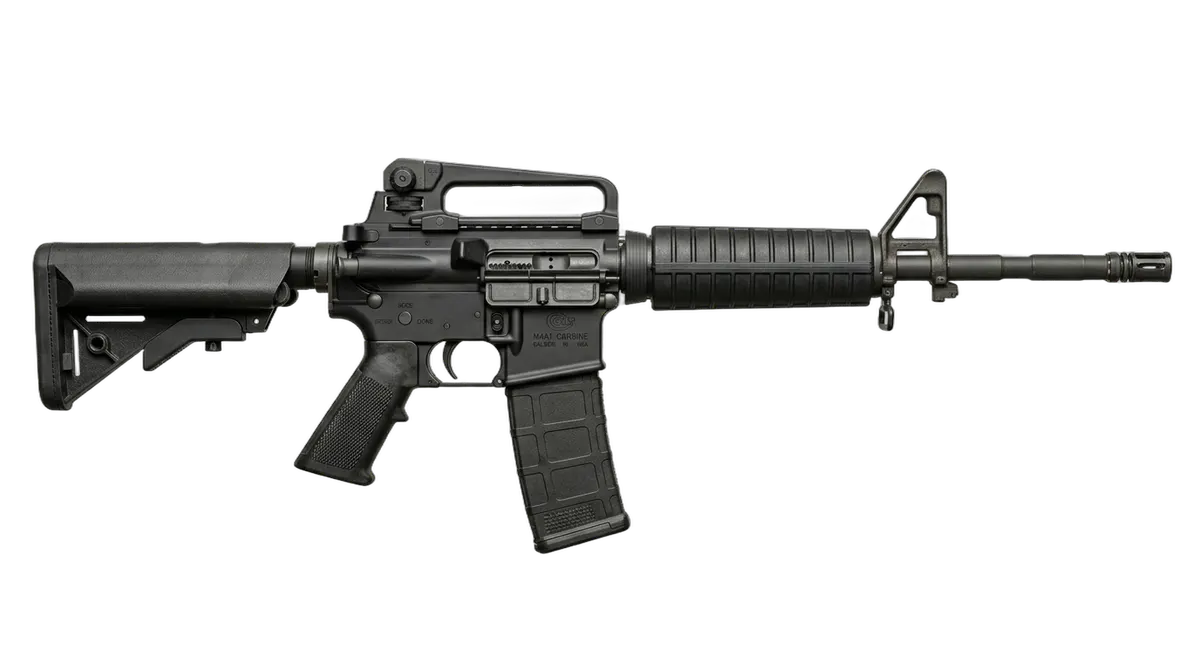
M4A1 Carbine
1994