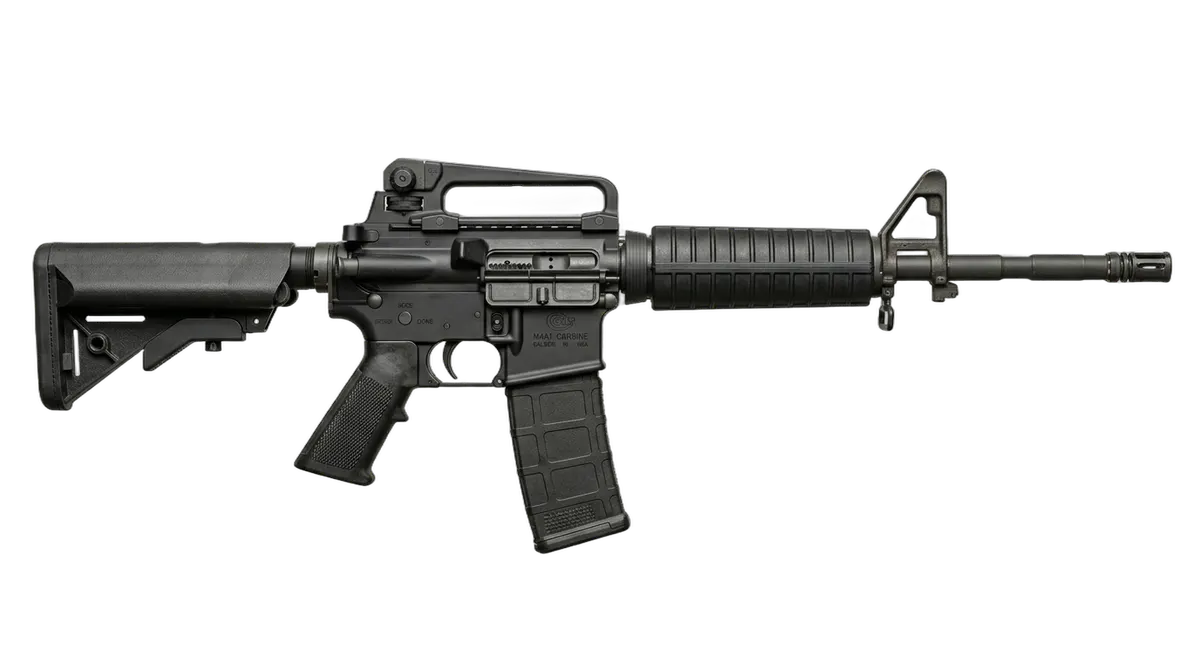
Heckler & Koch G36
German 5.56 NATO assault rifle with polymer receiver, short-stroke gas piston and an integrated optic on the carry handle in the original versions.
Heckler & Koch G36
Community
Data trust
- Reliability
- Unverified
- Sources
- Sources pending review
Identity
- Designation
- Heckler & Koch G36
- Alias
- Gewehr G36
- Manufacturer
- Heckler & Koch
- Country
- Germany
- Year
- 1997
- Category
- Assault rifle
- Status
- In service
Ballistics
- Caliber
- 5.56×45 mm NATO
- Muzzle velocity
- 920 m/s
- Rate of fire
- ~750 rpm
- Effective range
- 500 m
- Maximum range
- 800 m
Dimensions
- Barrel length
- 480 mm
- Overall length
- 758 / 999 mm
- Empty weight
- 3.63 kg
Mechanics
- Operating system
- Gas-operated, short-stroke piston
- Bolt / action
- Rotating bolt
Feed
- System
- Translucent proprietary magazine (STANAG on A3)
- Standard capacity
- 30 rounds
Fire modes
Historical profile
Development and Design Origins
The G36 development process began in the early 1990s following the failure of the caseless ammunition HK G11 project and the excessive unit cost of the G41. The Bundeswehr urgently required a modern 5.56 NATO weapon that was more cost-effective and lighter than the heavy 7.62 caliber G3, leading to the inception of the HK50 project.
Heckler & Koch presented the prototype and outpaced competition from the Steyr AUG, demonstrating significant operational flexibility during tests conducted between 1995 and 1996. Official adoption occurred in 1997, marking a radical departure from the roller-delayed blowback mechanisms typical of post-war German production.
Technical Features and Manufacturing Design
The architecture of the G36 is distinguished by the extensive use of carbon-fiber reinforced polymers for the receiver, trigger group, and folding stock. The core of the system is a short-stroke gas piston derived from the Armalite AR-18, which activates a seven-lug rotating bolt ensuring superior cleanliness compared to direct impingement systems.
Standard German versions include an iconic carry handle with a dual optical sight system, consisting of a red dot collimator and a 3x telescopic sight. The modular design allows for rapid transformation into compact versions such as the G36K for airborne troops or the G36C, equipped with Picatinny rails for special units.
Operational Service and International Proliferation
In addition to Germany, the G36 was adopted as the standard service rifle by Spain in 1999 and subsequently by numerous police forces and elite units in the United Kingdom, France, and the United States. The weapon saw intensive employment in the operational theaters of Kosovo and Afghanistan, where its lightweight nature was initially highly praised by patrolling troops.
In the 2010s, several technical inquiries and battlefield reports raised concerns regarding the thermal stability of the polymer under sustained fire in arid climates. Although the controversy led to heated political debates in Germany, the weapon has continued to serve with distinction in dozens of nations due to its ergonomics and ease of maintenance.
Final Evolution and Progressive Replacement
The response to precision criticisms led to the development of updated versions such as the G36A4, which integrates a new aluminum handguard and more advanced sighting systems. However, the German Ministry of Defense ultimately decided to launch the System Sturmgewehr Bundeswehr program for a total replacement of the platform by the mid-2020s.
The technological legacy of the G36 is evident in the HK416, which inherited the proven piston system, and in the HK433 rifle. Despite the transition towards the G95 (HK416A8), the G36 remains an icon of modern design, having influenced the engineering of numerous contemporary assault rifles and remaining a benchmark for the use of plastic materials in weapons of war.
Variants
Main users
Germania · Spain · Lithuania · Saudi Arabia · Latvia
Key components
- ●Stock — Shoulder rest.
- ●Receiver — Weapon body with internal mechanisms.
- ●Grip — Primary grip.
- ●Magazine — Cartridge feed.
- ●Barrel — Guides the projectile.
Community
Recent reviews
Similar systems
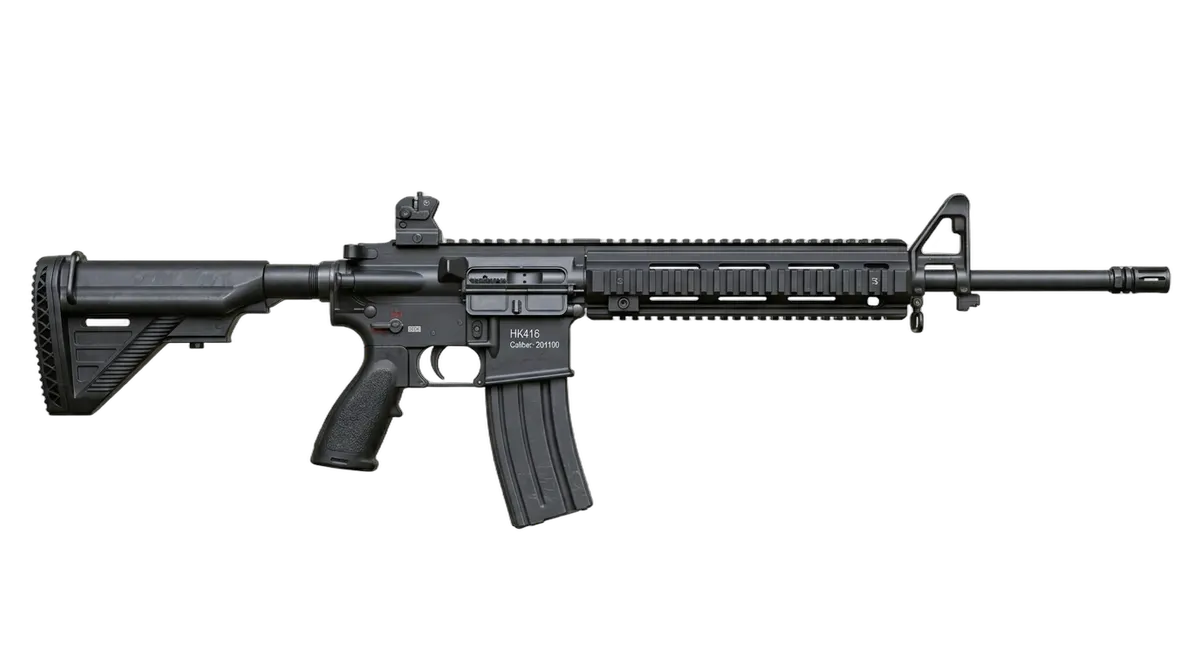
HK416
2004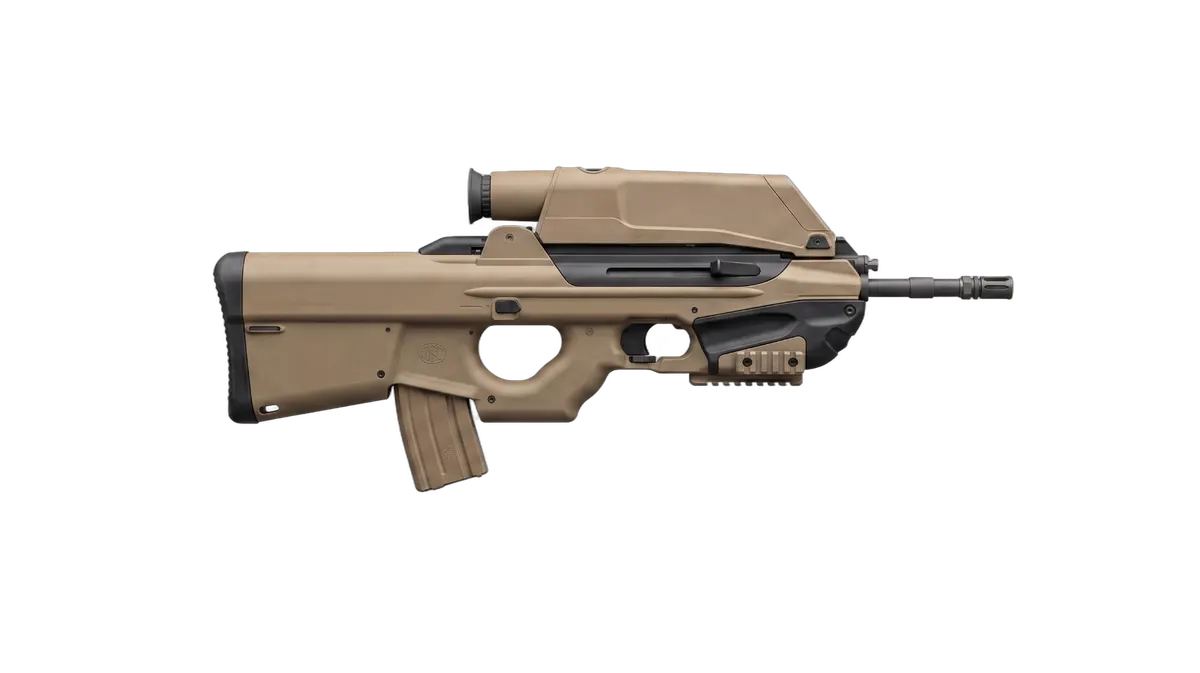
FN F2000
2001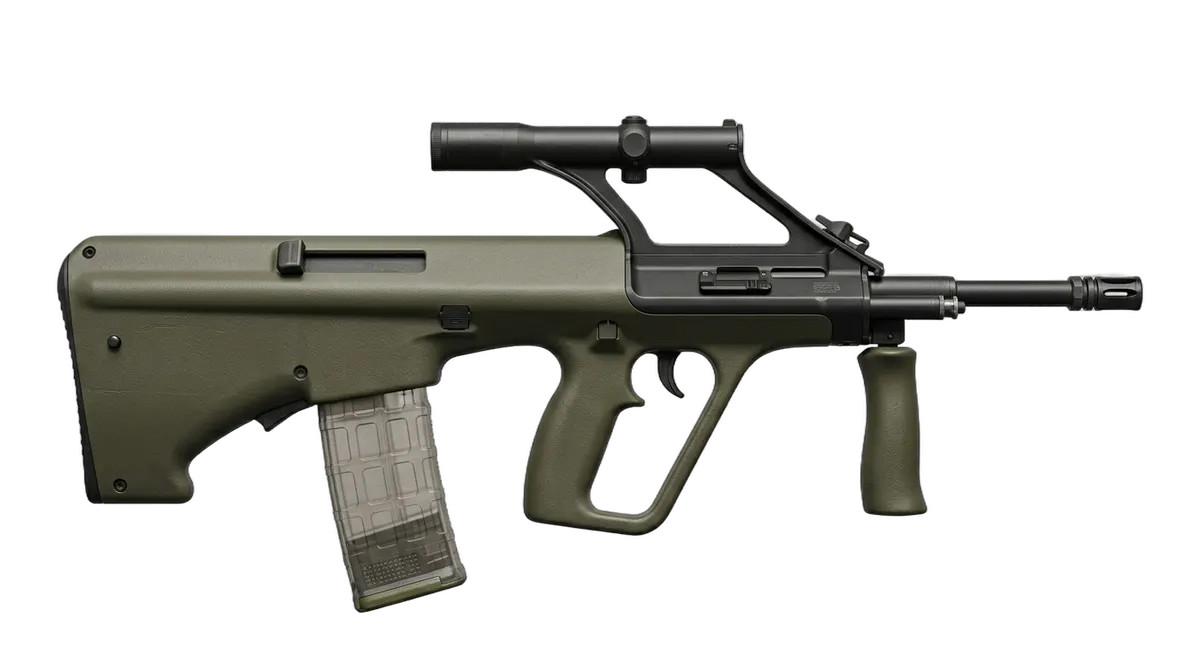
Steyr AUG
1978
SA80 L85A2
1985
Howa Type 89
1989