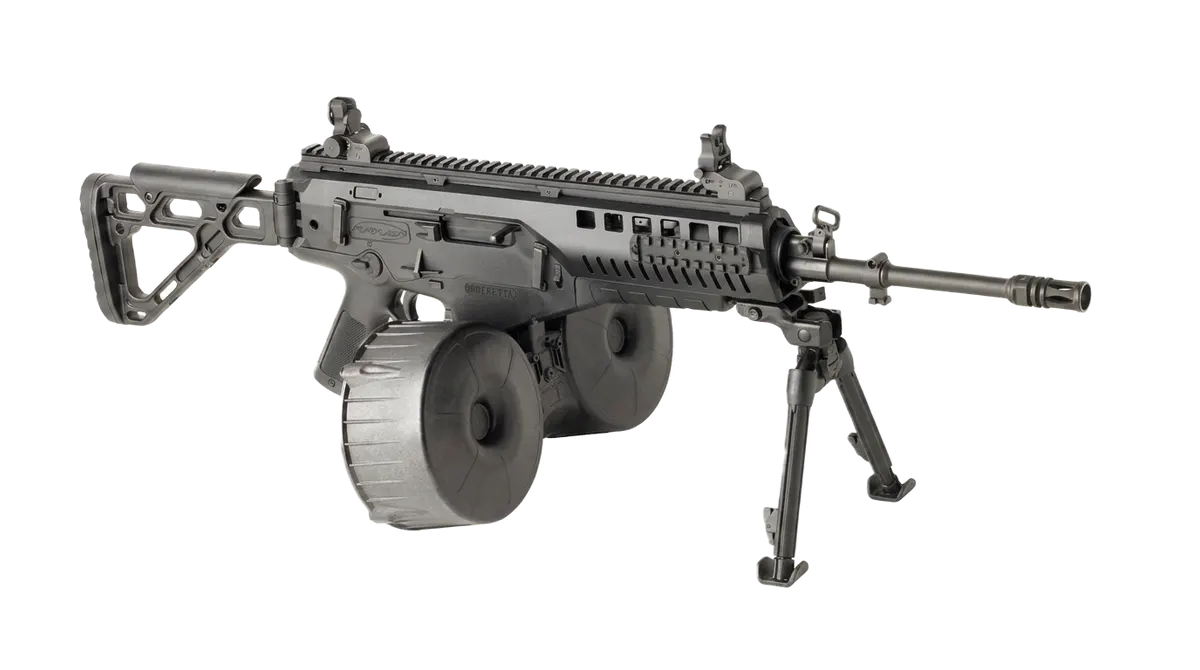
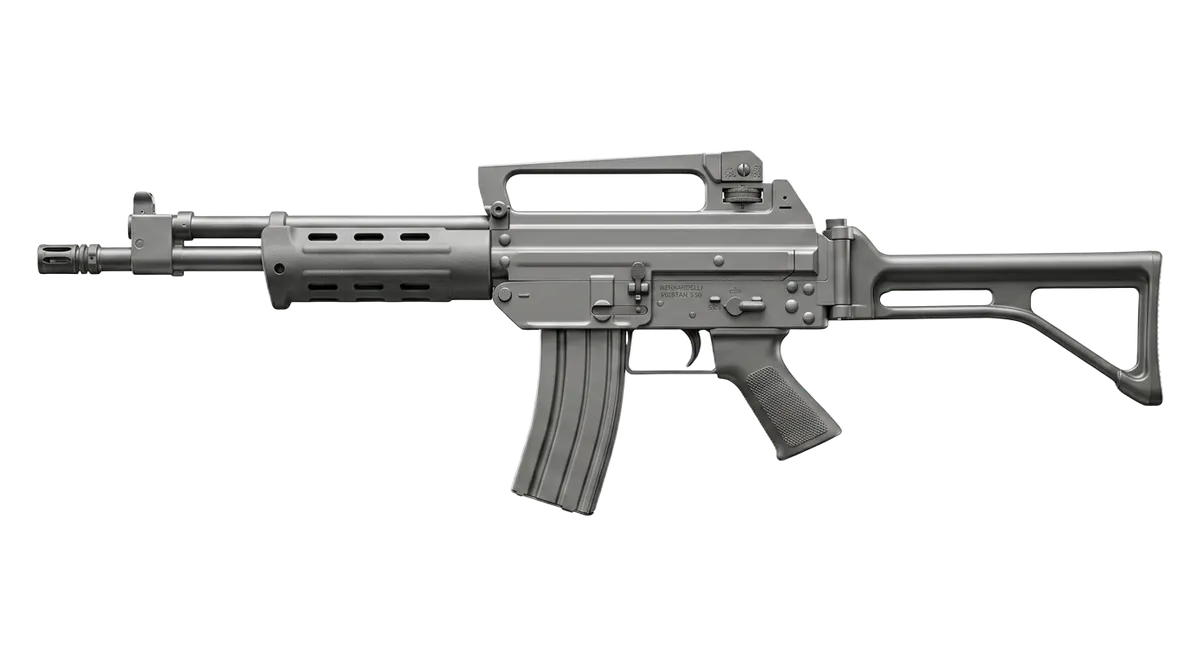
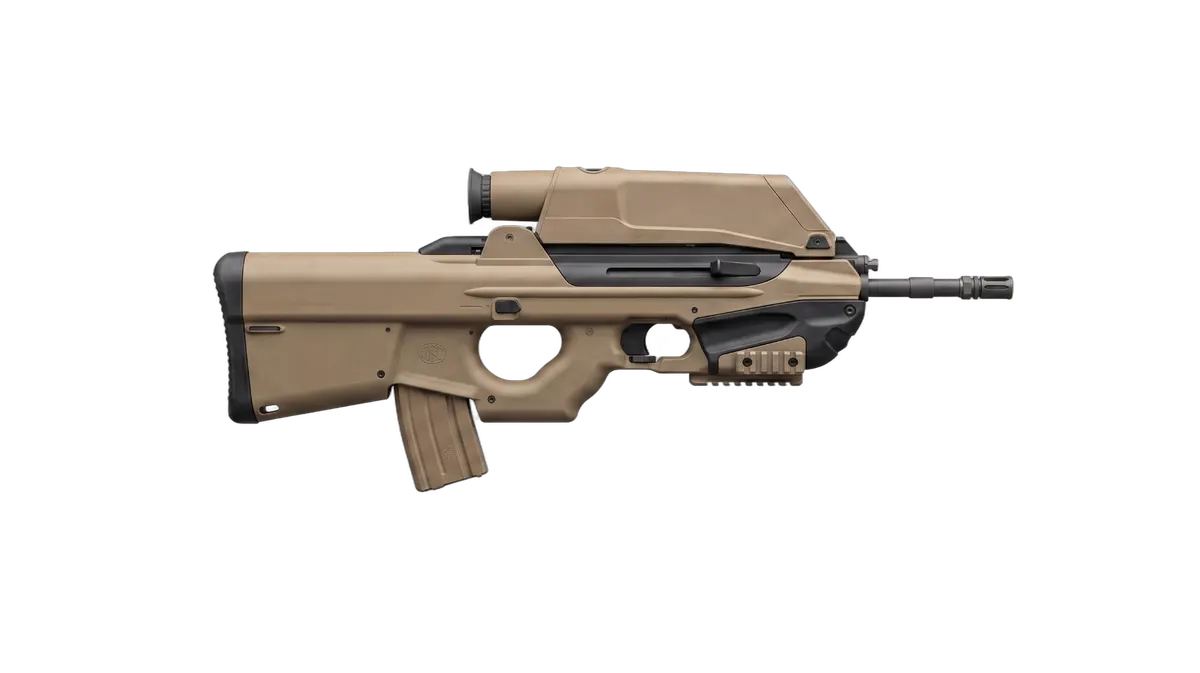
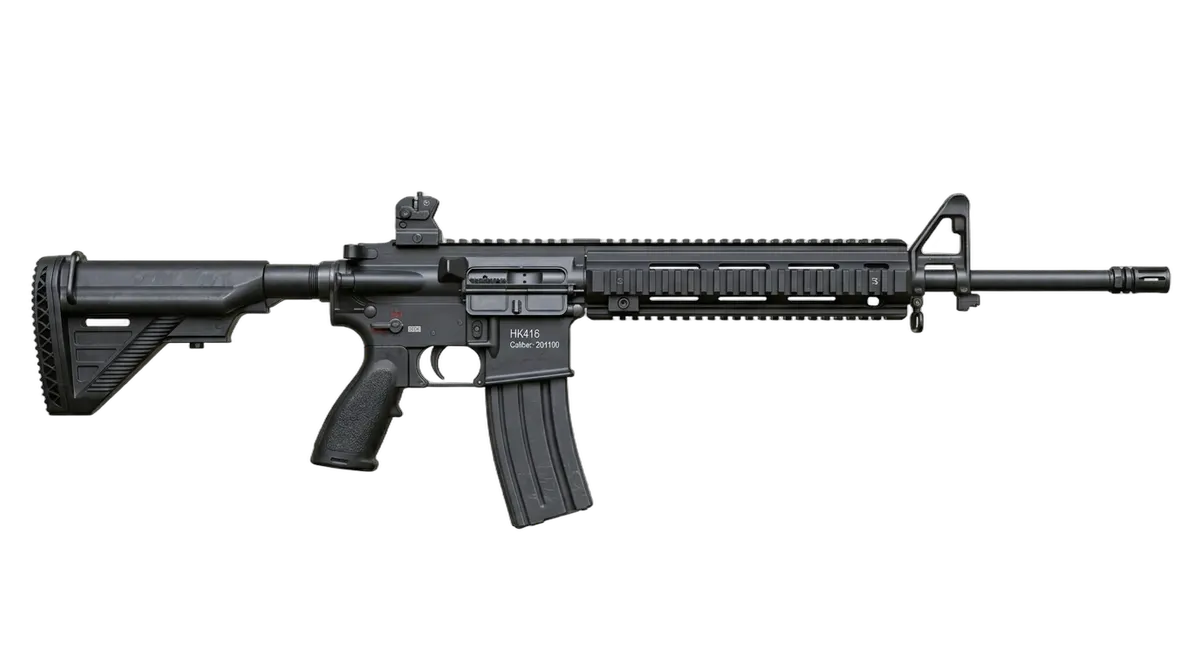
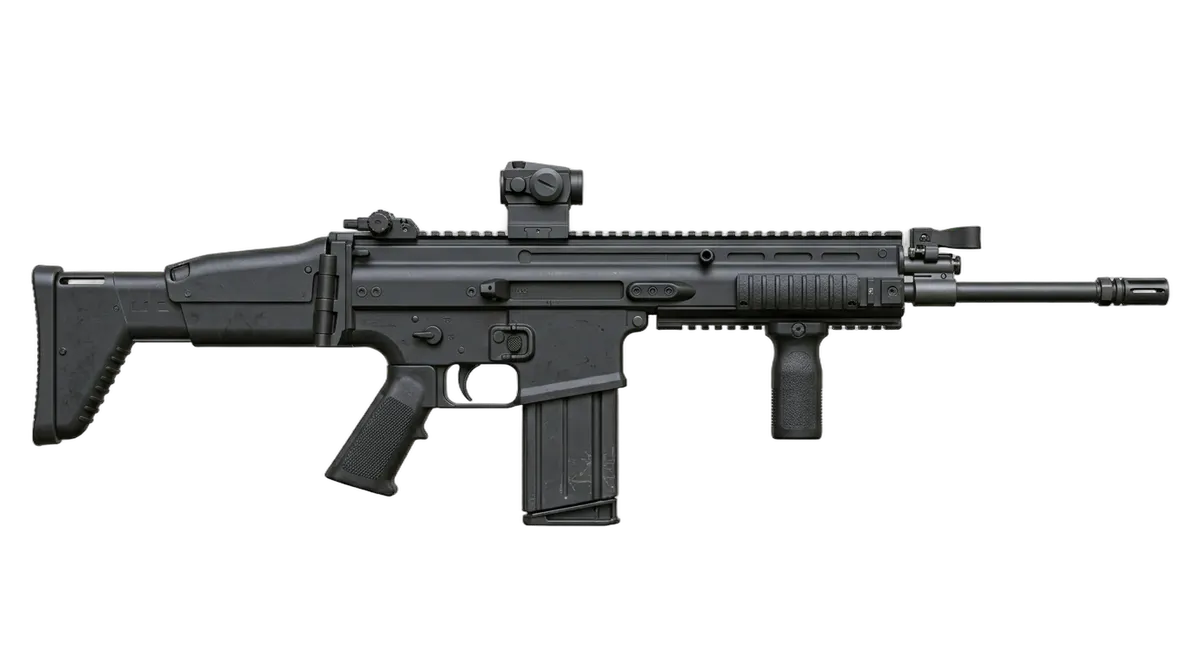
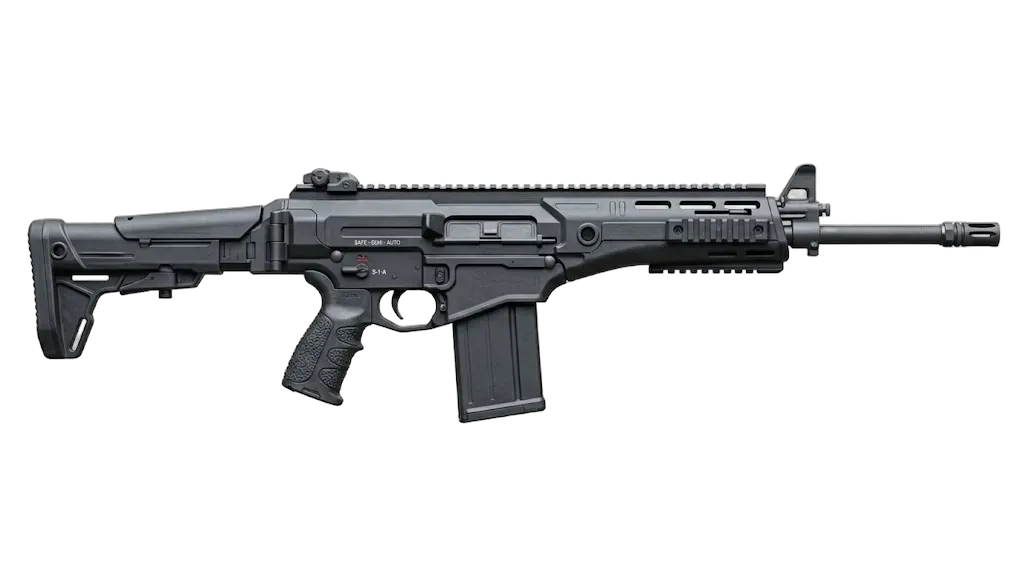
Beretta ARX 160
Italian modular 5.56 NATO assault rifle, part of the Soldato Futuro program. Switchable ambidextrous case ejection and quick-change barrel.
Beretta ARX 160
Community
Data trust
- Reliability
- Unverified
- Sources
- Sources pending review
Identity
- Designation
- Beretta ARX 160
- Alias
- ARX-160
- Manufacturer
- Beretta
- Country
- Italy
- Year
- 2008
- Category
- Assault rifle
- Status
- In service
Ballistics
- Caliber
- 5.56×45 mm NATO
- Muzzle velocity
- 900 m/s
- Rate of fire
- ~700 rpm
- Effective range
- 600 m
- Maximum range
- 800 m
Dimensions
- Barrel length
- 406 mm
- Overall length
- 820 / 920 mm
- Empty weight
- 3.1 kg
Mechanics
- Operating system
- Gas-operated, short-stroke piston
- Bolt / action
- Rotating bolt
Feed
- System
- STANAG magazine
- Standard capacity
- 30 rounds
Fire modes
Historical profile
Origins and Development of the Soldato Futuro Program
The Beretta ARX 160 was conceived in the early 2000s as the central component of the Soldato Futuro technological modernization program, commissioned by the Italian Ministry of Defense. The objective was to create an integrated weapon system capable of interfacing with new night vision and optronic aiming devices produced by Leonardo-Finmeccanica.
Following a prototyping phase lasting approximately four years, the rifle was officially unveiled in 2008 to replace the aging AR 70/90 series, which was considered obsolete for modern asymmetric warfare. The collaboration between Beretta engineers and Italian Army operational units allowed for ergonomic refinement based on specific feedback from the Afghan theater.
Technical Architecture and Modularity
The rifle is distinguished by its extensive use of high-strength technopolymers, which reduce overall weight and allow for a monolithic receiver with integrated Picatinny rails. The short-stroke gas piston operating system ensures high reliability even in extreme environmental conditions, minimizing residue buildup within the chamber.
One of the most innovative features is the ambidextrous ejector, selectable via a simple button, which allows for switching the direction of spent casings in seconds without tools. The barrel is equipped with a quick-release mechanism that facilitates field maintenance and enables rapid conversion between 12-inch and 16-inch lengths, adapting the weapon for CQB or standard infantry roles.
Operational Use and International Distribution
Official adoption by the Italian Armed Forces began in 2009, seeing immediate operational deployment in ISAF missions in Afghanistan and subsequent rotations in Iraq and Lebanon. Besides the army, specific variants entered the inventory of the Carabinieri and the State Police NOCS for public security and counter-terrorism duties.
Internationally, the rifle achieved significant commercial success, being adopted by the Polish Border Guard, Albanian Special Forces, and the Kazakhstan Army. Notably, the Egyptian government signed agreements for the supply of the ARX 160 to its elite forces and navy, consolidating the Beretta system's reputation in markets outside of Europe.
Technological Evolution and Legacy
Field experiences led to the development of the ARX 160 A3, featuring improved heat dissipation and a revised telescopic stock for better ballistic comfort. Subsequently, Beretta developed the ARX 200 in 7.62x51mm NATO caliber, created to meet the need for a Dedicated Marksman Rifle with superior effective range compared to the original model.
The legacy of the ARX 160 lies in introducing the concept of a totally ambidextrous and modular weapon into mass procurement, influencing the design of subsequent European combat rifles. Despite global competition, the rifle remains a benchmark for the integration of structural polymers and advanced electronic sighting systems.
Variants
Main users
Italia · Albania · Kazakhstan · Mexico · Turkmenistan
Key components
- ●Stock — Shoulder rest.
- ●Receiver — Weapon body with internal mechanisms.
- ●Grip — Primary grip.
- ●Magazine — Cartridge feed.
- ●Barrel — Guides the projectile.