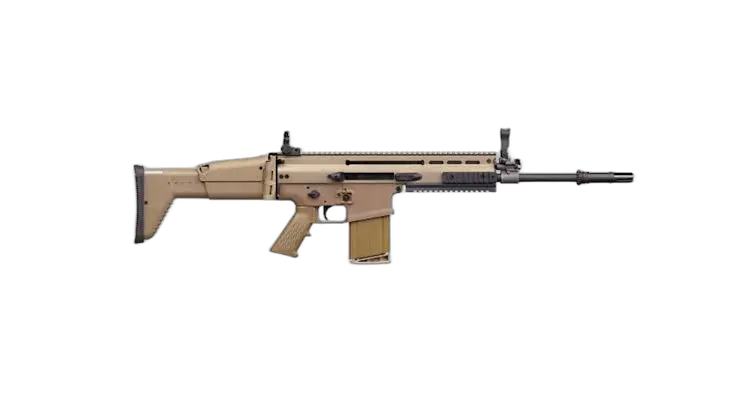
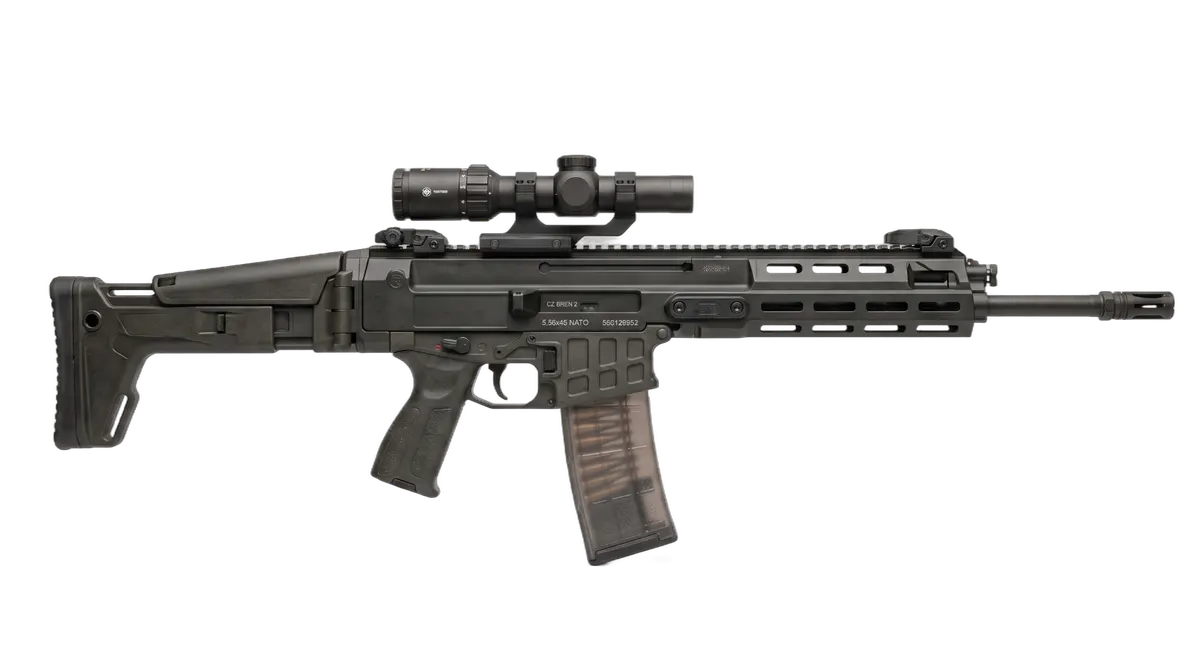
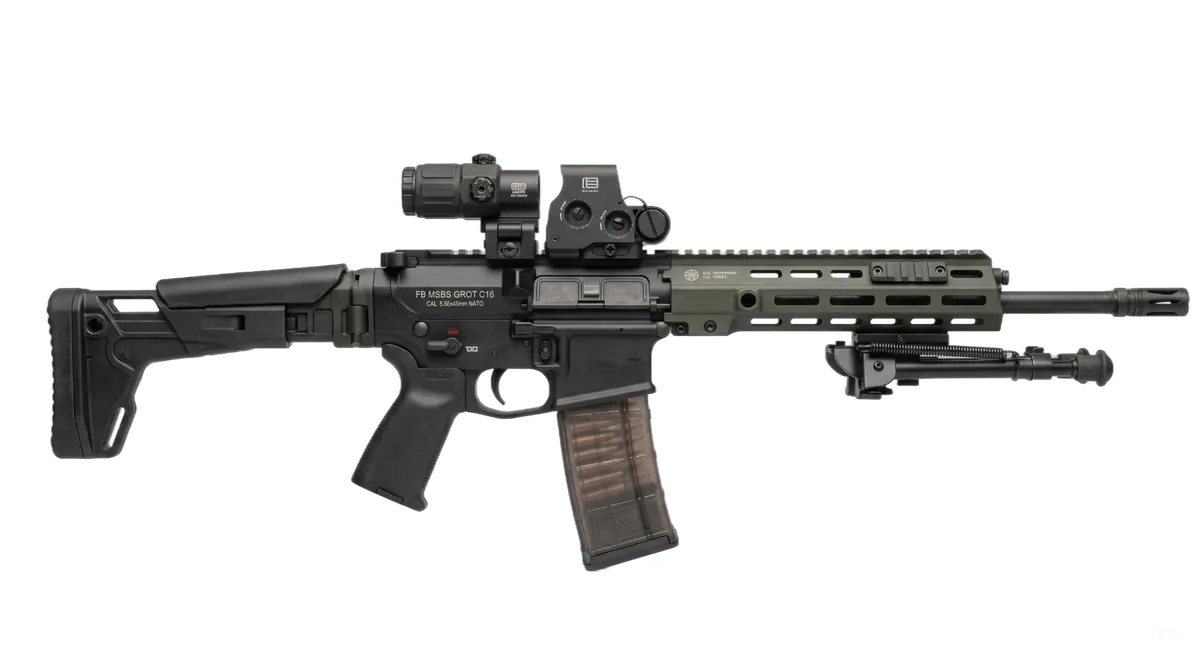
FN SCAR-L
5.56 NATO variant of the modular SCAR system. Folding adjustable stock, interchangeable barrel.
FN SCAR-L
Community
Data trust
- Reliability
- Unverified
- Sources
- Sources pending review
Identity
- Designation
- FN SCAR-L
- Alias
- Mk 16
- Manufacturer
- FN Herstal
- Country
- Belgium
- Year
- 2009
- Category
- Assault rifle
- Status
- In service
Ballistics
- Caliber
- 5.56×45 mm NATO
- Muzzle velocity
- 870 m/s
- Rate of fire
- ~625 rpm
- Effective range
- 500 m
- Maximum range
- 3600 m
Dimensions
- Barrel length
- 351 mm
- Overall length
- 620 / 850 mm
- Empty weight
- 3.04 kg
Mechanics
- Operating system
- Gas-operated, short-stroke piston
- Bolt / action
- Rotating bolt
Feed
- System
- STANAG magazine
- Standard capacity
- 30 rounds
Fire modes
Historical profile
Development and SOCOM Selection
The SOF Combat Assault Rifle program began in 2003 with the objective of providing U.S. special forces with a modular weapon system superior to the M4 platform. FN Herstal submitted the SCAR prototype which passed rigorous testing in 2004, demonstrating superior resilience in desert environments and simplified maintenance compared to direct gas impingement systems.
The pre-production phase and operational testing lasted several years, leading to the definition of the Light variant officially designated as the Mk 16 Mod 0. Despite the initial adoption, development was influenced by the need for logistical harmony between the different configurations required by elite units.
Technical Features and Design
The Mk 16 architecture is based on an extruded aircraft-grade aluminum upper receiver and a high-strength polymer lower receiver. The operating system utilizes a short-stroke gas piston located above the barrel that drives a robust bolt carrier group, ensuring a cleaner action less prone to jams caused by combustion residue.
Modularity is guaranteed by the ability to replace the barrel in less than five minutes using minimal tools, allowing the use of 10-inch CQC, 14-inch Standard, or 18-inch LB versions. The folding and telescopic stock offers six positions of longitudinal adjustment and a height-adjustable cheek rest to accommodate modern optics.
Operational Service and Distribution
Navy SEALs and Rangers units received the first operational batches in 2009, bringing the weapon into theater in Afghanistan and Iraq to test its capabilities in actual combat. However, in 2010 USSOCOM announced the suspension of Mk 16 variant purchases due to budget constraints and its role overlap with the M4, preferring to concentrate funds on the 7.62 mm Mk 17 model.
Despite the partial U.S. withdrawal, the SCAR-L has found widespread international success, being adopted by nations such as Belgium, Peru, and South Korean special units. Chile and the Portuguese Army subsequently chose this platform as the standard issue rifle for their regular troops, confirming the reliability of the 5.56 mm configuration.
Evolution and Military Legacy
The legacy of the SCAR-L lies in having introduced ergonomics and modularity standards that influenced the subsequent generation of global assault rifles. Many of its innovations, such as fully ambidextrous controls and integrated Picatinny rails, have become fundamental requirements for every modern infantry weapon.
Today the system continues to evolve through updated versions like the subcompact SCAR-SC, intended for close protection and urban operations. Although it did not replace the M4 as initially planned, the Mk 16 remains one of the most accurate and technologically advanced tools in the twenty-first-century small arms landscape.
Variants
Main users
USSOCOM · Belgium · Chile · Peru
Key components
- ●Stock — Shoulder rest.
- ●Receiver — Weapon body with internal mechanisms.
- ●Grip — Primary grip.
- ●Magazine — Cartridge feed.
- ●Barrel — Guides the projectile.