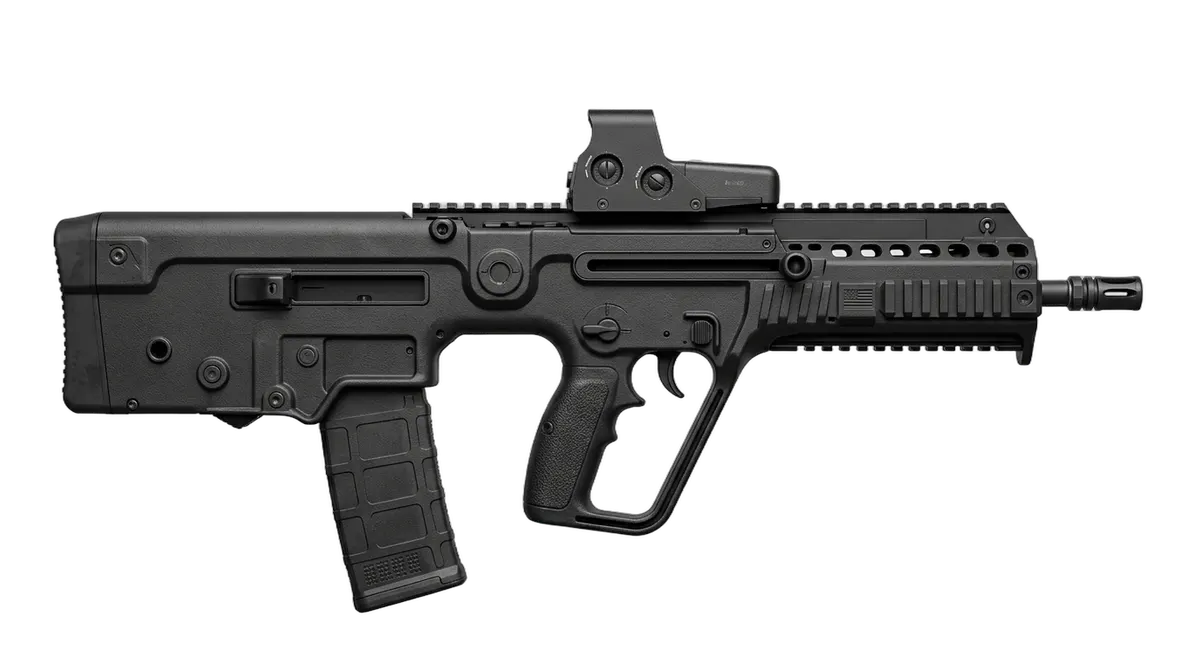
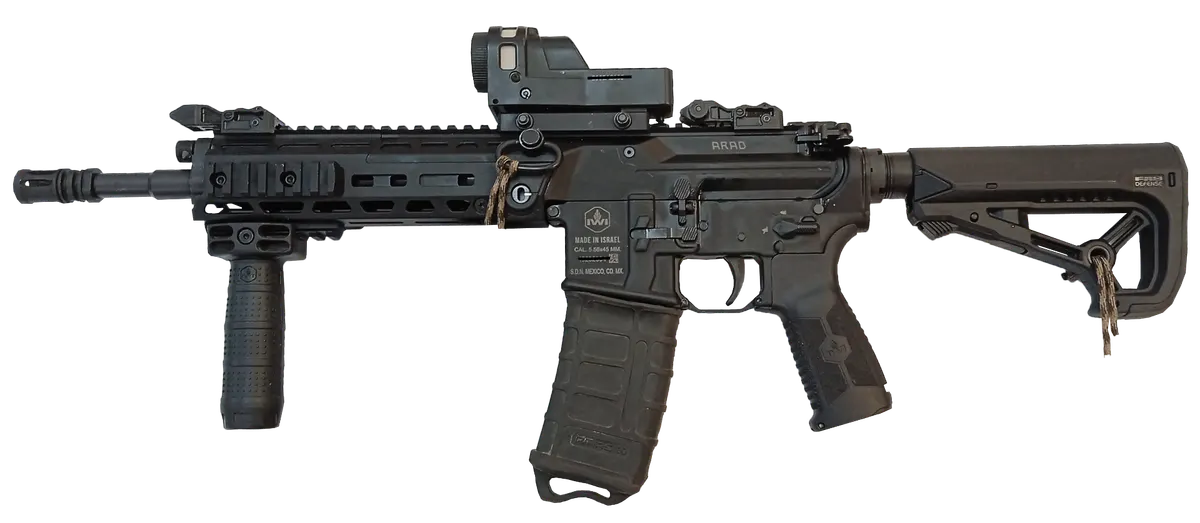
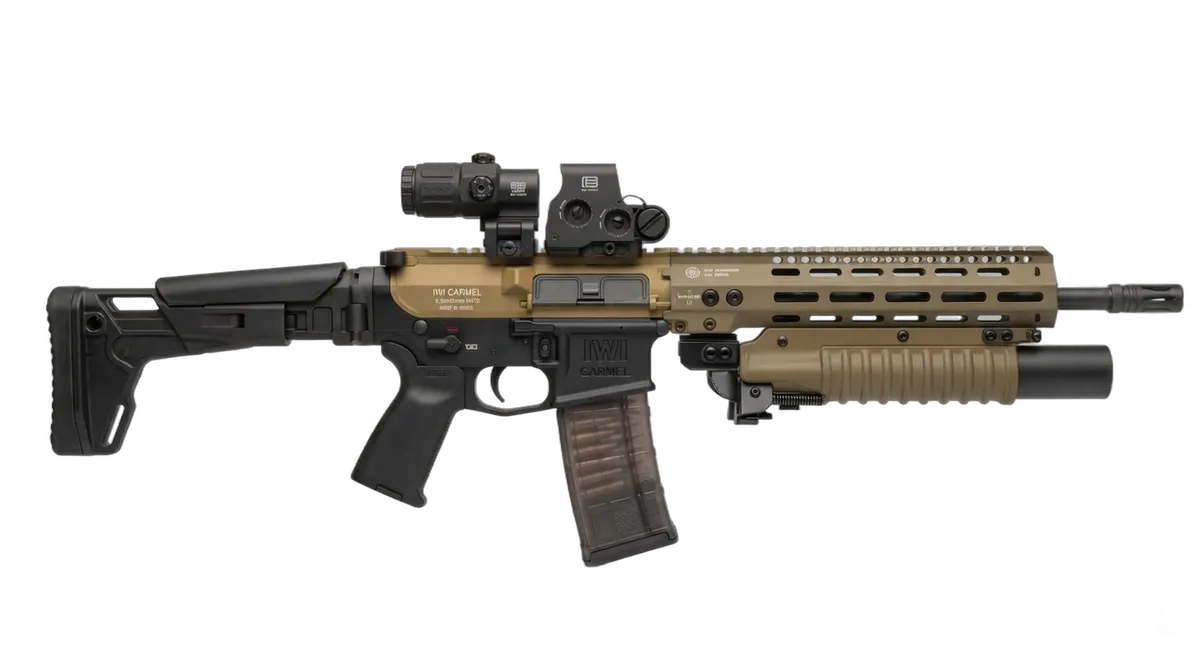
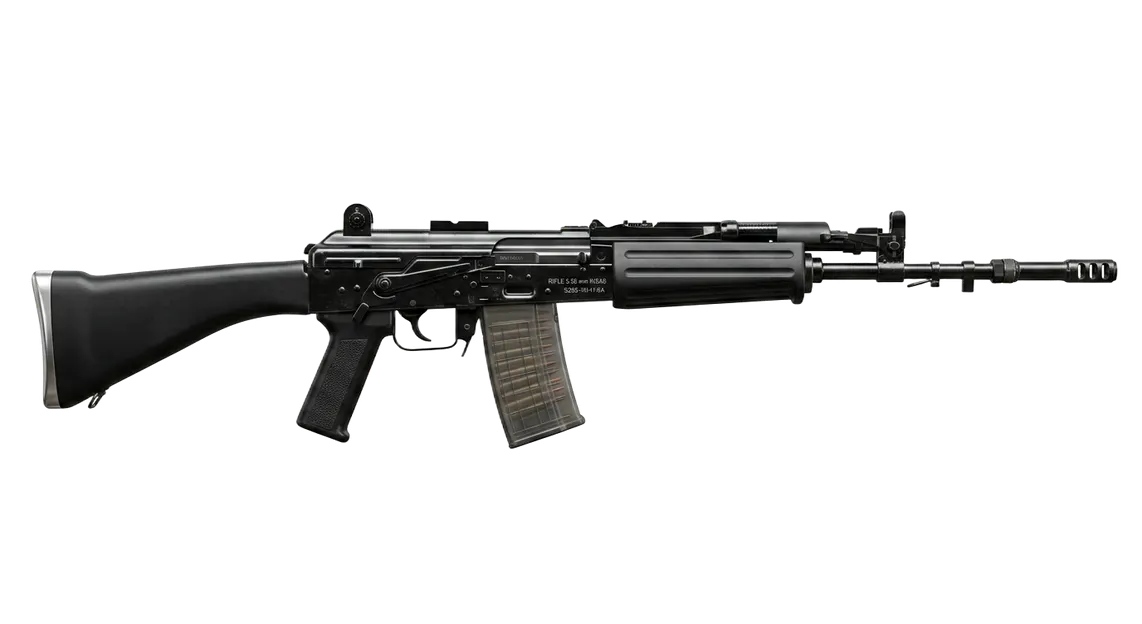
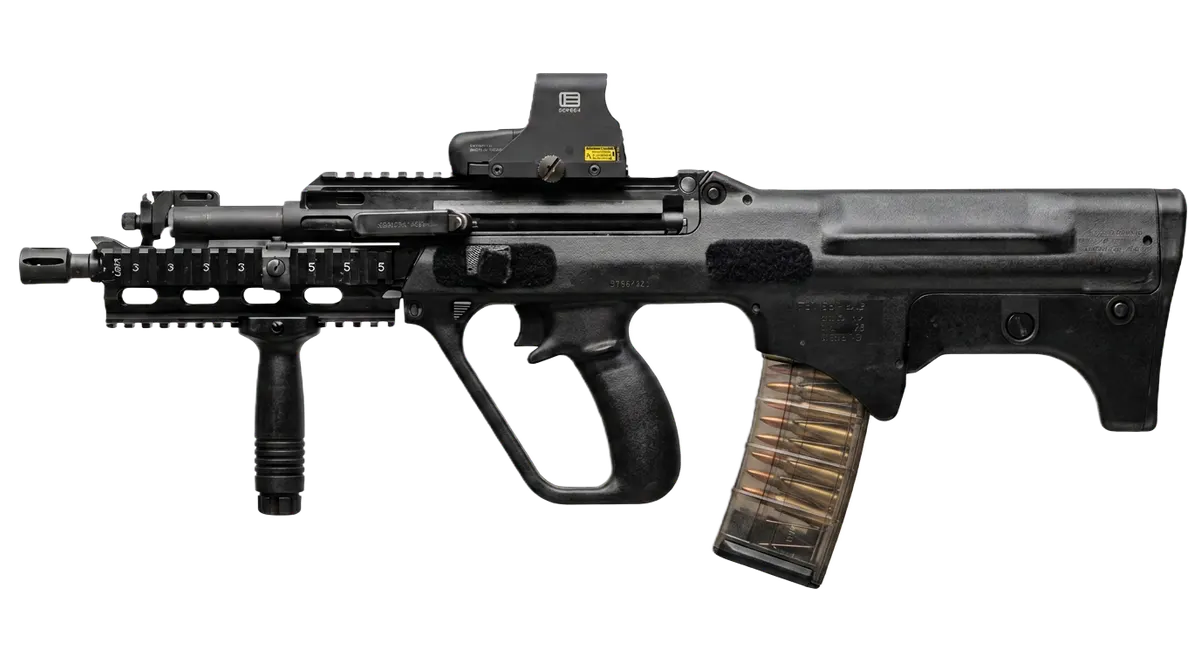
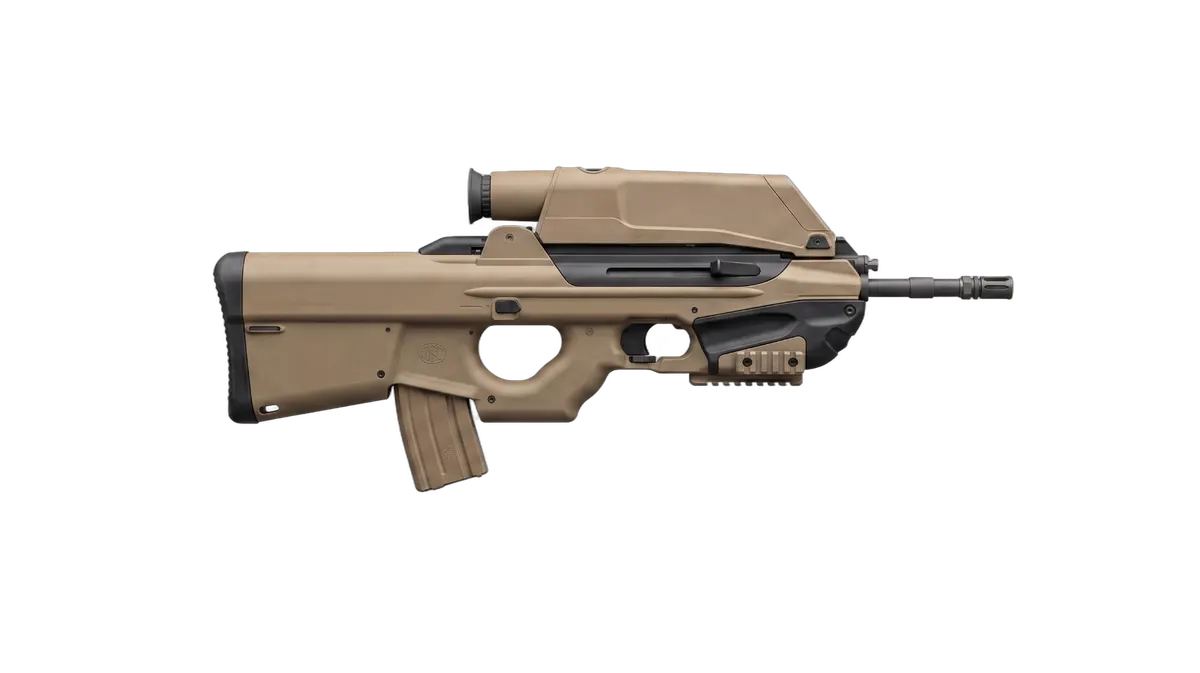
IWI Galil ACE
Modernization of the Galil family on an AK mechanical base: AR ergonomics, polymers and Picatinny rails.
IWI Galil ACE
Community
Data trust
- Reliability
- Unverified
- Sources
- Sources pending review
Identity
- Designation
- IWI Galil ACE
- Manufacturer
- IWI / FAB Defense
- Country
- Israel
- Year
- 2008
- Category
- Assault rifle
- Status
- In service
Ballistics
- Caliber
- 7.62×51 mm NATO / 5.56×45 mm / 7.62×39 mm
- Muzzle velocity
- 800 m/s
- Rate of fire
- ~700 rpm
- Effective range
- 500 m
- Maximum range
- 1000 m
Dimensions
- Barrel length
- 406 mm
- Overall length
- 685 / 925 mm
- Empty weight
- 3.7 kg
Mechanics
- Operating system
- Gas-operated, long-stroke piston (AK-derived)
- Bolt / action
- Rotating bolt
Feed
- System
- Polymer magazine (STANAG on 5.56 versions)
- Standard capacity
- 30 rounds
Fire modes
Historical profile
Development and Technical Origins
The Galil ACE project emerged in the early 2000s as IWI's response to the need for updating the obsolete 1970s original Galil design. While the internal mechanism remained rooted in the legendary reliability of the Finnish Valmet Rk 62 system, the modern market demanded superior modularity and reduced weight to compete with AR-15 platforms.
The prototyping phase officially concluded in 2008, when the weapon was introduced as a multi-caliber solution capable of operating in extreme environments, from tropical jungles to arid deserts. IWI's strategy focused from the outset on global export, offering a familiar platform to AK users but with Israeli military-grade quality standards.
Design Features
The ACE architecture is distinguished by the extensive use of high-strength polymers in the lower frame and stock assembly, drastically reducing weight compared to the milled steel receiver of previous models. The charging handle was relocated to the left side of the receiver and protected by a spring-loaded anti-contamination cover, derived from the FNC rifle design, allowing the operator to keep the strong hand on the grip during reload cycles.
The weapon integrates MIL-STD-1913 Picatinny rails at the twelve, three, six, and nine o'clock positions, protected by removable rail covers, facilitating the integration of optics, lasers, and IR designators. Accuracy is guaranteed by a cold-hammer-forged rotating bolt barrel and a trigger group derived from the Galil Sniper, offering a crisper and more predictable trigger pull compared to Russian-derived rifles.
Operational Service and International Adoptions
Colombia was the first major user and licensed manufacturer through the state-owned company Indumil, adopting the ACE 21, 22, and 23 as standard-issue rifles to replace older Galil SAR units. The weapon's effectiveness was extensively tested during counter-guerrilla operations in rural areas, where resistance to mud and corrosion proved superior to the M4 platforms issued to some elite units.
Beyond South America, where Chile and Peru established local assembly lines, the ACE was adopted by the Vietnamese Army as the STV-380 and STV-215 to replace the obsolete Chinese Type 56 arsenal. In Africa and Asia, numerous special units and presidential guards utilize the 7.62x39mm variants for their ability to combine former Soviet ammunition with Western ergonomics.
Legacy and Modern Variants
The introduction of the ACE GEN II version marked a further step in the platform's evolution, eliminating the fixed front sight in favor of a full-length flat top rail and introducing M-LOK handguards. This version achieved unprecedented success in the US civilian market, where "pistol" and "rifle" configurations are considered among the best AK derivatives ever produced for build quality and accuracy.
The Galil ACE today represents the definitive bridge between Eastern Bloc mechanical reliability and NATO tactical modularity. Its caliber versatility, including the powerful 7.62x51mm for designated marksman roles, ensures that Israel Galili's design will remain relevant in 21st-century conflicts, solidifying IWI's reputation as a leader in the combat arms industry.
Variants
Main users
Colombia · Chile · Peru · Vietnam · Brazil
Key components
- ●Stock — Shoulder rest.
- ●Receiver — Weapon body with internal mechanisms.
- ●Grip — Primary grip.
- ●Magazine — Cartridge feed.
- ●Barrel — Guides the projectile.