Steyr AUG
First widely adopted bullpup: polymer shell, integrated 1.5× optic, modular trigger group.
Steyr AUG
Community
Data trust
- Reliability
- Unverified
- Sources
- Sources pending review
Identity
- Designation
- Steyr AUG
- Alias
- Armee-Universal-Gewehr
- Manufacturer
- Steyr Mannlicher
- Country
- Austria
- Year
- 1978
- Category
- Assault rifle
- Status
- In service
Ballistics
- Caliber
- 5.56×45 mm NATO
- Muzzle velocity
- 970 m/s
- Rate of fire
- ~680 rpm
- Effective range
- 500 m
- Maximum range
- 2700 m
Dimensions
- Barrel length
- 508 mm
- Overall length
- 790 mm
- Empty weight
- 3.6 kg
Mechanics
- Operating system
- Gas-operated, short-stroke piston
- Bolt / action
- Rotating bolt
Feed
- System
- Translucent proprietary magazine (STANAG on A3)
- Standard capacity
- 30 rounds
Fire modes
Historical profile
Origins and Military Development
The development of the Armee Universal Gewehr began in the late 1960s under the leadership of Horst Wesp, Karl Wagner, and Karl Möser in collaboration with the Austrian military. The project aimed to replace the aging StG 58, a local variant of the FN FAL, with a platform combining the compactness of a submachine gun with the accuracy of a standard rifle.
Following a series of innovative prototypes, the system was officially adopted by the Austrian Army in 1977 under the designation Sturmgewehr 77. Its introduction marked a radical shift, proving that a bullpup configuration could pass the rigorous reliability and durability tests required by European powers.
Technical Features and Design
The design of the AUG is distinguished by the extensive use of high-strength polymers and a short-stroke gas piston operating system with a rotating bolt. A unique feature is the modular trigger pack contained within the stock, which allows the selection of semi-automatic or fully automatic fire through progressive trigger pressure.
The weapon integrates a cold-hammer-forged barrel that is easily interchangeable, available in various lengths to quickly transform the rifle from a short carbine to a light machine gun. The fixed Swarovski optic, mounted on the aluminum alloy receiver, was designed to ensure rapid target acquisition even under high operational stress. luxury.
Operational Service and Variants
Beyond Austria, Australia adopted the rifle in 1985, producing it locally as the F88 Austeyr at the Lithgow factory and utilizing it extensively in conflicts in Iraq and Afghanistan. The Irish Defence Forces also selected it in 1987 for its versatility during United Nations peacekeeping missions worldwide.
The evolution of the system led to the creation of the A2 variant with a detachable rail and the A3, characterized by multiple Picatinny rails for integrating modern optoelectronic accessories. Despite the adoption of new platforms by some units, the AUG remains the primary service rifle for nations such as Saudi Arabia, Argentina, and various elite police forces.
Legacy and Industry Influence翻
The AUG shattered aesthetic and functional prejudices regarding bullpup weapons, directly influencing the development of subsequent projects like the French FAMAS and the British SA80. Its futuristic aesthetics and modular architecture made it a benchmark for the ergonomics of modern individual firearms.
After over forty years of service, the rifle continues to be produced by Steyr Mannlicher, demonstrating exceptional longevity for such an avant-garde design. Its commercial and military success confirmed that the integration of plastic materials and standard optics represented the inevitable direction for the 21st-century defense industry.
Variants
Main users
Austria · Australia · Ireland · New Zealand · Saudi Arabia
Key components
- ●Stock — Shoulder rest.
- ●Receiver — Weapon body with internal mechanisms.
- ●Grip — Primary grip.
- ●Magazine — Cartridge feed.
- ●Barrel — Guides the projectile.
Community
Recent reviews
Similar systems
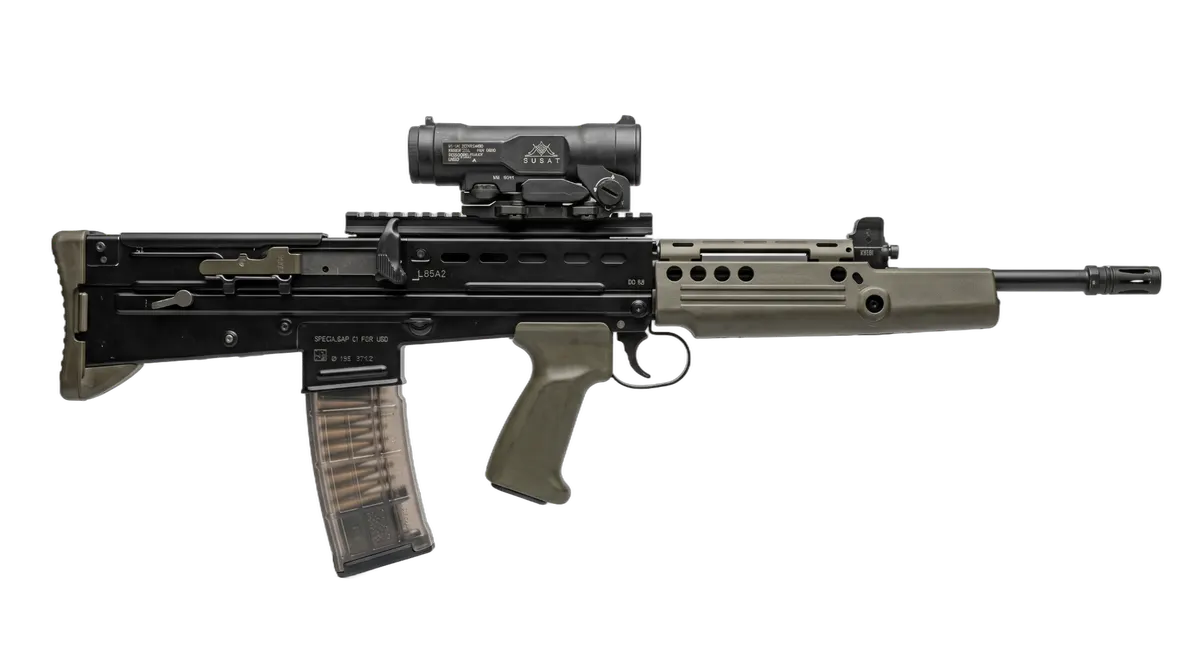
SA80 L85A2
1985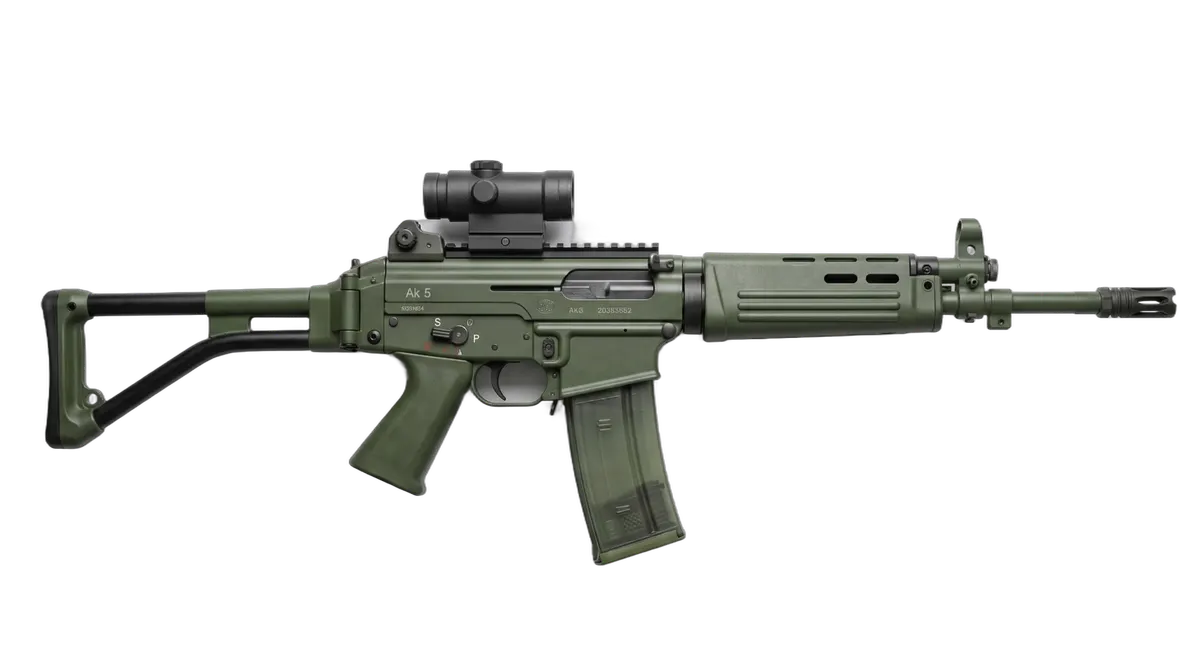
FN FNC / Ak 5
1979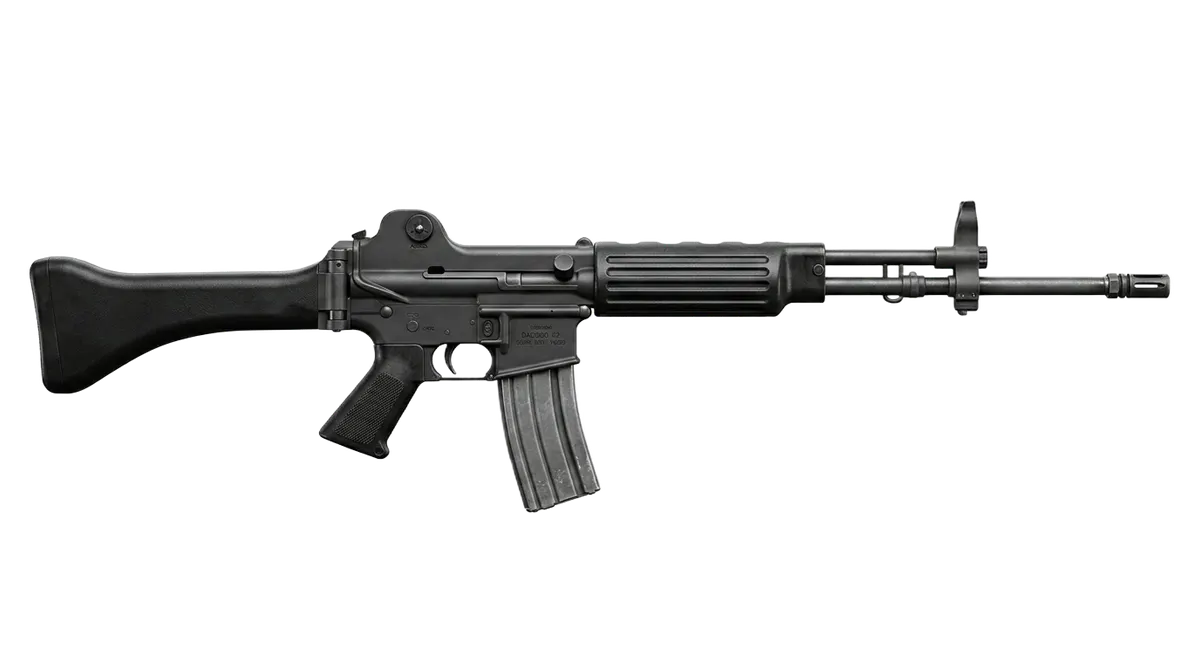
K2
1984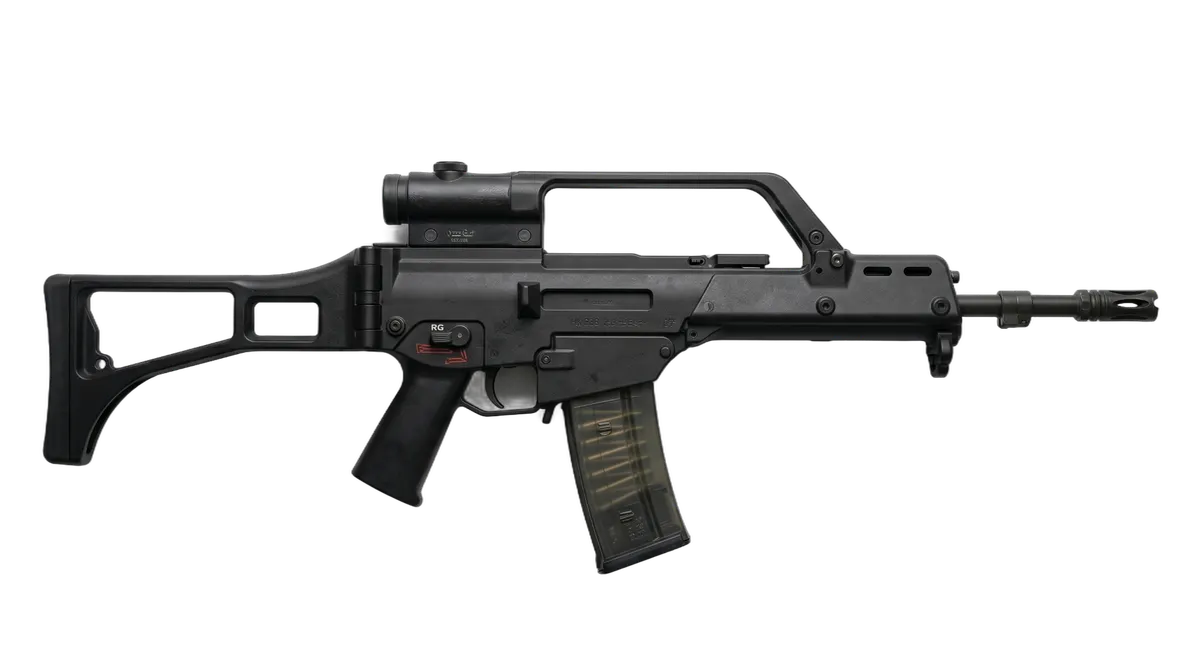
Heckler & Koch G36
1997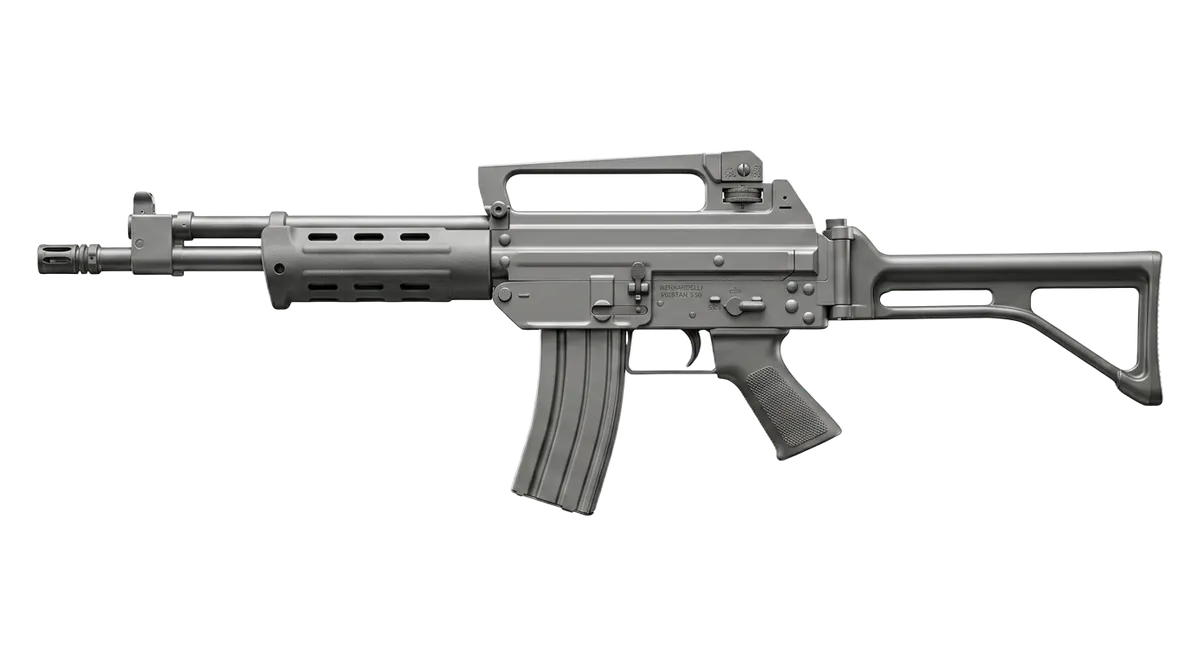
Beretta AR70
1972