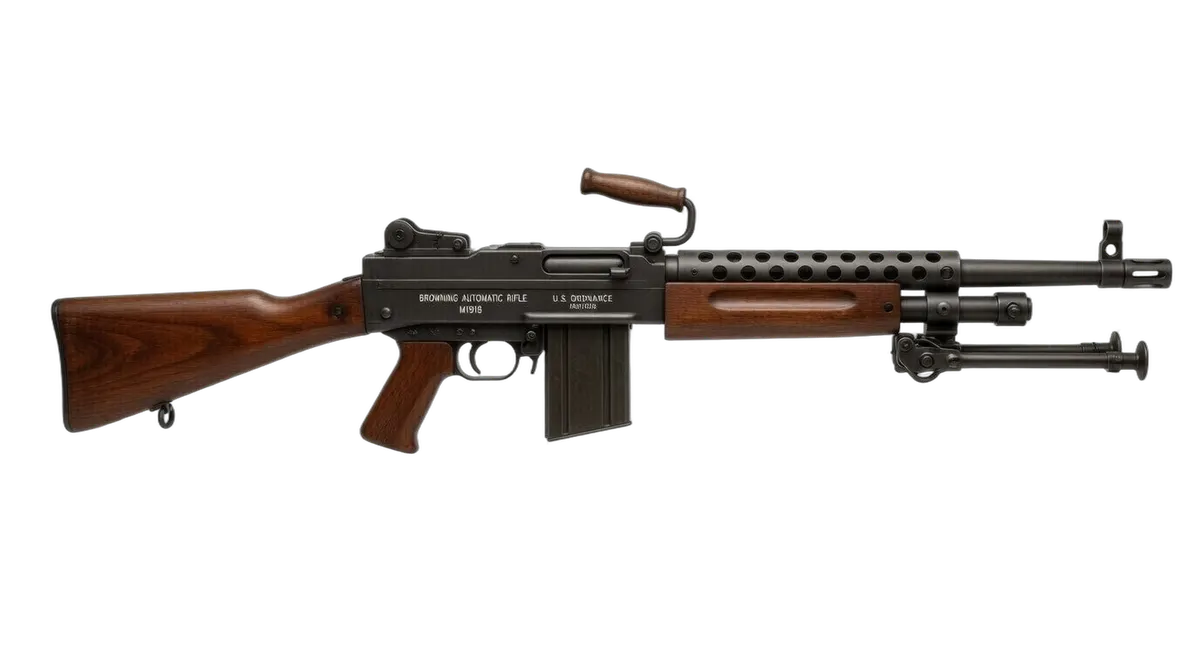
Bren
British light machine gun in .303 British (later 7.62 NATO L4), derived from the Czechoslovak ZB vz.26. Top-mounted 30-round magazine, bipod, quick-change barrel.
Bren
Community
Data trust
- Reliability
- Unverified
- Sources
- Sources pending review
Identity
- Designation
- Bren
- Alias
- Bren Light Machine Gun
- Manufacturer
- Royal Small Arms Factory Enfield (su licenza ZB vz.26)
- Country
- United Kingdom
- Year
- 1938
- Category
- Light machine gun
- Status
- Historic
Ballistics
- Caliber
- .303 British / 7,62×51 NATO (L4)
- Muzzle velocity
- 743 m/s
- Rate of fire
- ~500 rpm
- Effective range
- 550 m
- Maximum range
- 1850 m
Dimensions
- Barrel length
- 635 mm
- Overall length
- 1156 mm
- Empty weight
- 10.35 kg
Mechanics
- Operating system
- Presa di gas, pistone a corsa lunga
- Bolt / action
- Otturatore con blocco basculante (tilting bolt)
Feed
- System
- Caricatore superiore
- Standard capacity
- 30 rounds
Fire modes
Historical profile
Origins and Technical Development
The genesis of the Bren lies in the British search for a replacement for the Lewis gun during the mid-1930s. Following a series of comparative trials involving various international models, the Ordnance Board selected the Czechoslovak ZB vz.26 design from Zbrojovka Brno, citing its superiority in reliability and ease of maintenance.
The adaptation process required substantial modifications to convert the weapon from the 7.92 mm Mauser caliber to the rimmed .303 British cartridge, leading to the development of the ZB vz.33 variant. Mass production officially commenced at the Royal Small Arms Factory in Enfield in 1937, with formal adoption by the British Army occurring in August 1938 under the official designation Bren Mark I.
Mechanical Architecture and Design
The Bren operated via a gas-actuated system with a long-stroke piston located beneath the barrel, ensuring an extremely stable and controlled firing cycle. One of its most distinctive features was the top-mounted 30-round box magazine, which necessitated the offset of the sights to the left of the barrel axis to avoid obstructing the operator's line of sight.
The weapon featured a quick-change barrel system designed to prevent overheating during sustained fire, allowing the squad to maintain a consistent volume of fire. Although technically complex to manufacture due to numerous parts milled from solid steel billets, its inherent accuracy was such that it could be effectively used in a semi-automatic role for long-range precision shots.
Operational Service and Wartime Variants
During the Second World War, the Bren became the fundamental support weapon for Commonwealth infantry squads, distinguishing itself on every front from the sands of North Africa to the jungles of Burma. To meet wartime demands, the Mark II and Mark III variants were introduced, featuring construction simplifications aimed at accelerating industrial production and reducing the overall weight for paratrooper use.
In addition to British production, Canada manufactured thousands of units through the John Inglis and Company, some of which were chambered in 7.92 mm for Chinese Nationalist forces fighting the Japanese invasion. The weapon's reputation was such that even German troops, after capturing large quantities at Dunkirk, pressed it back into service under the designation Leichtes MG 138(e), valuing its robustness compared to their own models.
NATO Modernization and Historical Legacy
With the adoption of the standardized 7.62×51 NATO ammunition in 1954, the British Army opted not to retire the Bren but to convert it under the L4 program, utilizing new straight magazines interchangeable with those of the L1A1 SLR rifle. The definitive L4A4 variant remained in active service for decades, seeing extensive use during the 1982 Falklands War and even in the opening stages of the 1991 Gulf War alongside modern weapon systems.
The Bren's legacy is evidenced by its prolonged deployment in nations such as India and South Africa, which maintained it in their arsenals well into the twenty-first century. Regarded by many military historians as the finest light machine gun of its era, the weapon concluded its official UK career only with the full fielding of the L86 LSW and the FN Minimi, marking the end of an era for Enfield precision engineering.
Variants
Main users
United Kingdom · Canada · Australia · India · Commonwealth
Key components
- ●Stock — Shoulder rest.
- ●Receiver — Weapon body with internal mechanisms.
- ●Grip — Primary grip.
- ●Magazine — Cartridge feed.
- ●Barrel — Guides the projectile.
Community
Recent reviews
Similar systems
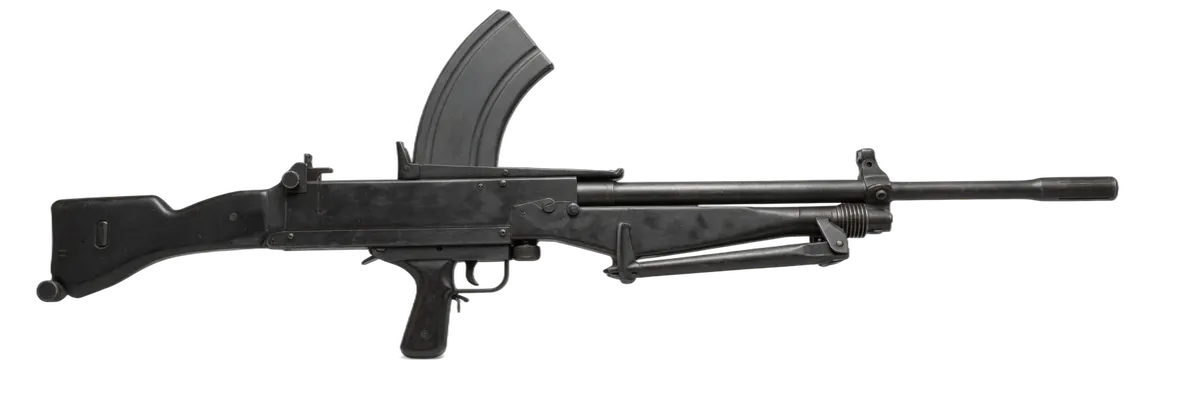
Besal
1942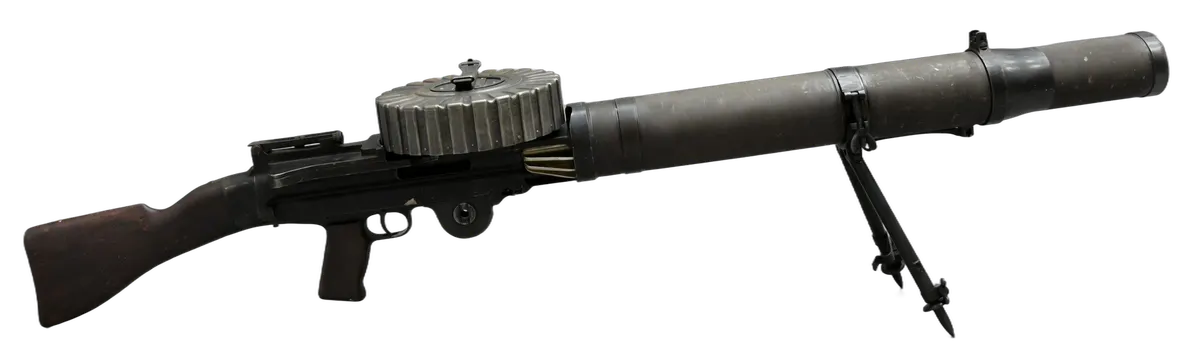
Lewis
1914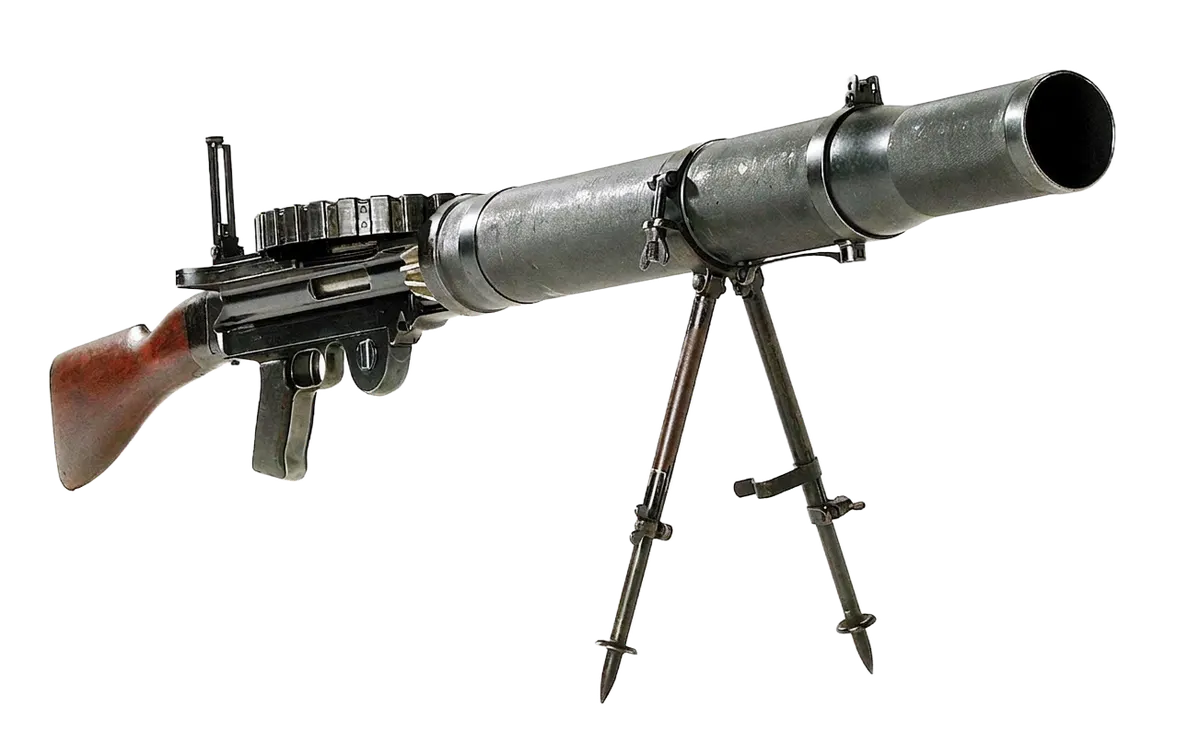
Lewis Gun
1914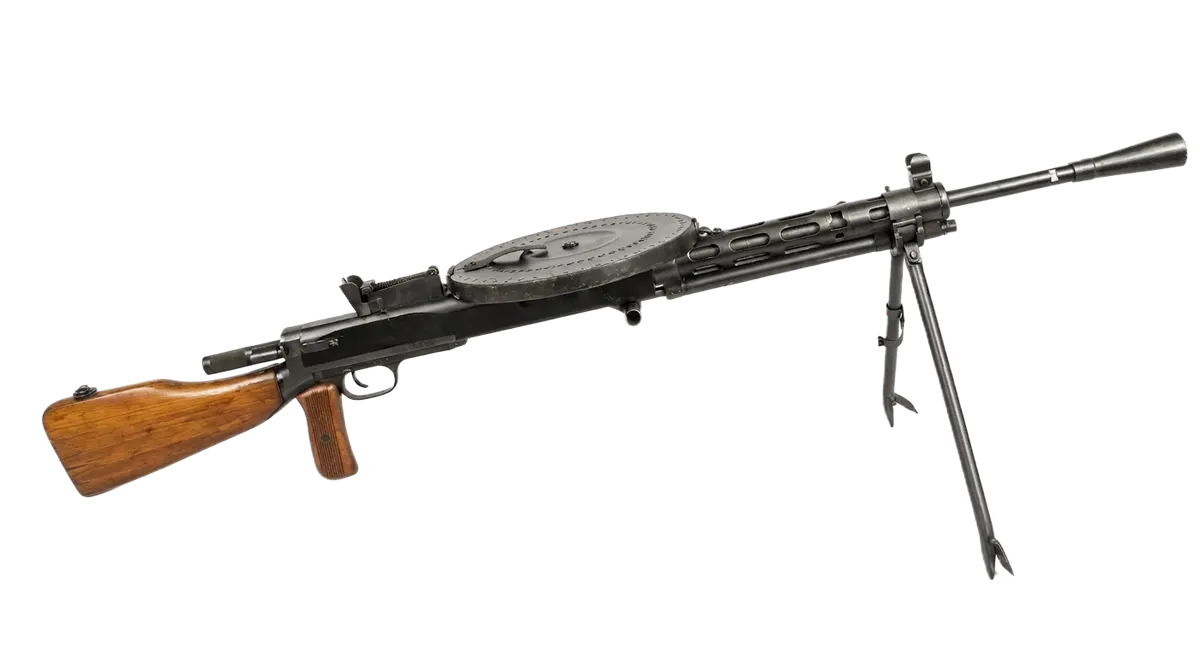
DP-28
1928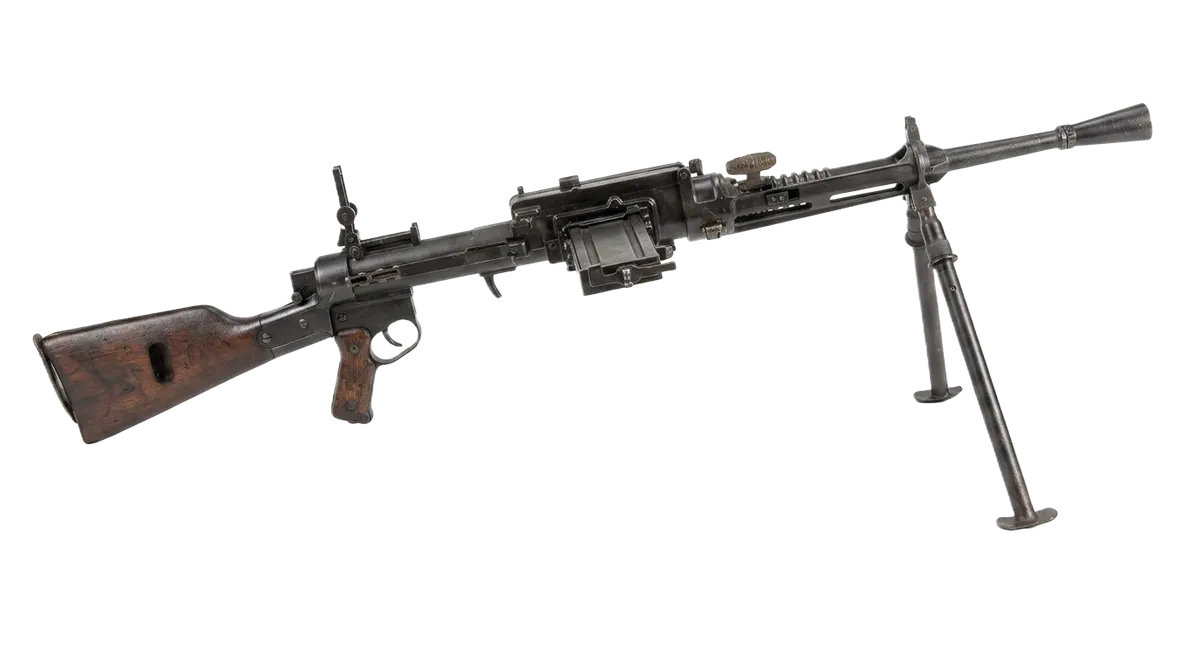
Breda 30
1930