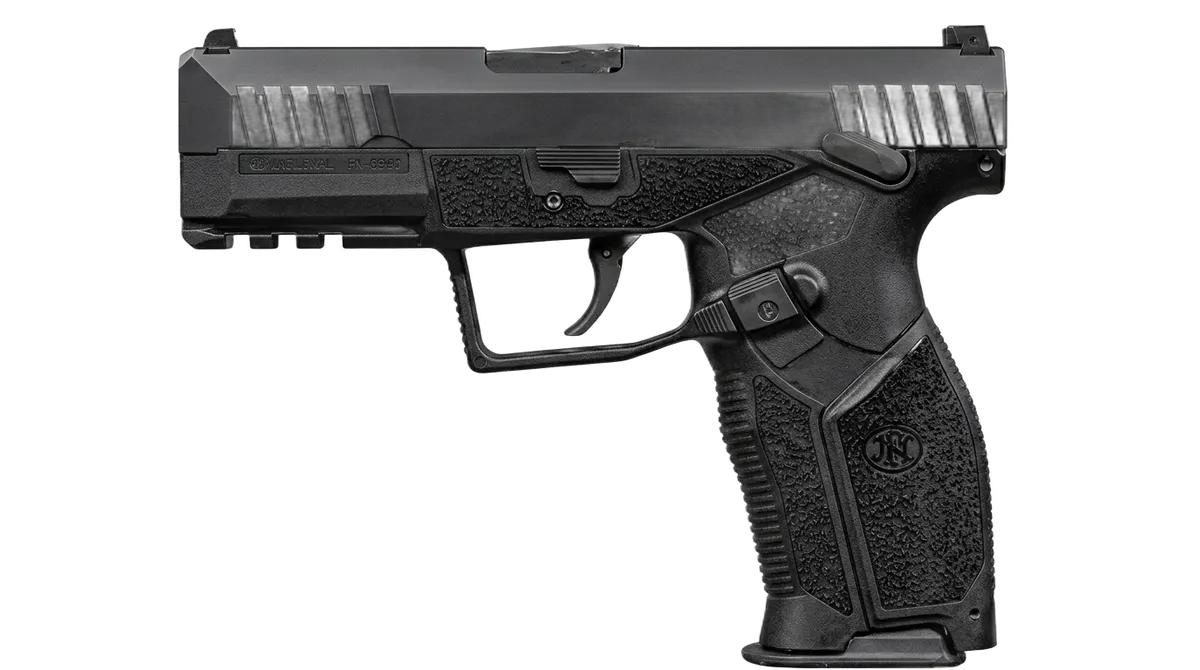
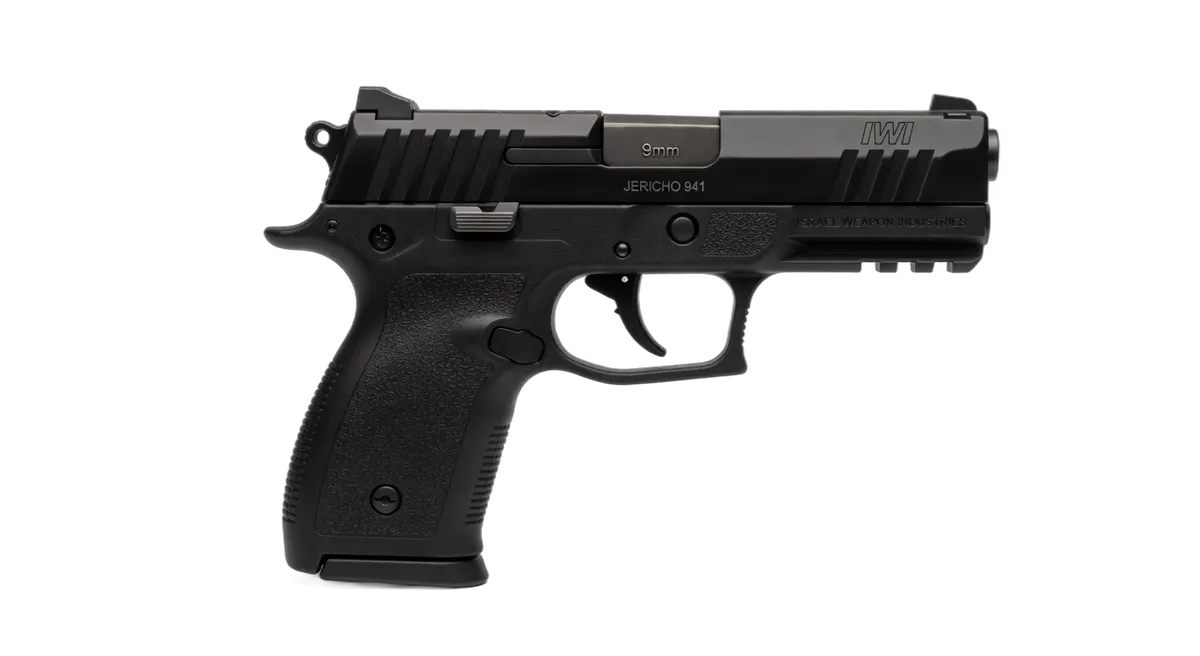
SIG Sauer M18
9×19 compact pistol derived from the SIG P320, adopted as the U.S. armed forces' sidearm under the MHS program.
SIG Sauer M18
Community
Data trust
- Reliability
- Unverified
- Sources
- Sources pending review
Identity
- Designation
- SIG Sauer M18
- Alias
- P320 Compact / M18 MHS
- Manufacturer
- SIG Sauer
- Country
- United States
- Year
- 2017
- Category
- Pistol
- Status
- In service
Ballistics
- Caliber
- 9×19 mm Parabellum
- Muzzle velocity
- 360 m/s
- Effective range
- 50 m
Dimensions
- Barrel length
- 99 mm
- Overall length
- 184 mm
- Empty weight
- 0.74 kg
Mechanics
- Operating system
- Short recoil
- Bolt / action
- Striker-fired
Feed
- System
- Double-stack magazine
- Standard capacity
- 17 rounds
Fire modes
Historical profile
Development and MHS Program
The path leading to the adoption of the M18 formally began in 2011 with the U.S. Armed Forces' Modular Handgun System program, aimed at replacing the aging Beretta M9. After years of rigorous testing and comparative evaluations among major global manufacturers, the Pentagon officially announced SIG Sauer's victory in January 2017 with a 580 million dollar contract.
The P320 platform was adapted to meet stringent military requirements that called for unprecedented modularity and superior operational reliability compared to previous models. While the full-size M17 variant was the first to be deployed, the M18 compact version was developed simultaneously to address specific needs for concealability and handling.
Architecture and Technical Innovations
The core element of the M18 is the stainless steel fire control unit, which constitutes the legally serialized part of the firearm and can be transferred between different polymer grip modules. This architecture allows the operator to modify the grip size and slide length while maintaining the same internal mechanics, optimizing logistics and ergonomics for various users.
Unlike the standard civilian P320, the M18 features military specifications such as an ambidextrous manual safety, a modified slide catch lever, and a removable plate for mounting red dot optics. The weapon utilizes a 3.9-inch barrel and is issued with 17 and 21-round magazines, finished with a salt-corrosion resistant Coyote PVD surface treatment.
Distribution and Operational Service
Initial distribution of the M18 began in 2017 with the Army's 101st Airborne Division, but its role quickly expanded beyond the concept of a compact sidearm for officers. In 2019, the U.S. Navy and the Marine Corps designated the M18 as their primary service pistol, preferring it over the longer version for its versatility in confined environments.
The Air Force and Coast Guard followed suit, adopting the M18 to equip security personnel and flight crews to replace the SIG Sauer P228 and Beretta M9. The weapon demonstrated high endurance during reliability tests under extreme conditions, exceeding 5,000 rounds without critical malfunctions during Army evaluations.
Legacy and Market Impact
The adoption of the M18 marked the end of the all-metal pistol era in the major branches of the American military, consolidating the dominance of high-strength polymers. The success of the MHS program prompted SIG Sauer to release the P320-M18 version on the civilian market, which faithfully replicates the military variant's features including controls and coloration.
The influence of the M18 design is reflected today in the global trend toward "optic-ready" modular pistols that allow for immediate integration of optoelectronic technologies. The weapon remains a pillar of U.S. defense and is expected to remain in service for decades to come, serving as a technological benchmark for future generations of military sidearms.
Variants
Main users
United States (US Army) · USMC · US Air Force · US Coast Guard
Key components
- ●Slide — Reciprocating slide with sight system.
- ●Receiver — Polymer frame with modular steel chassis.
- ●Grip — Ergonomic interchangeable grip.
- ●Magazine — Cartridge feed.
- ●Barrel — Guides the projectile.