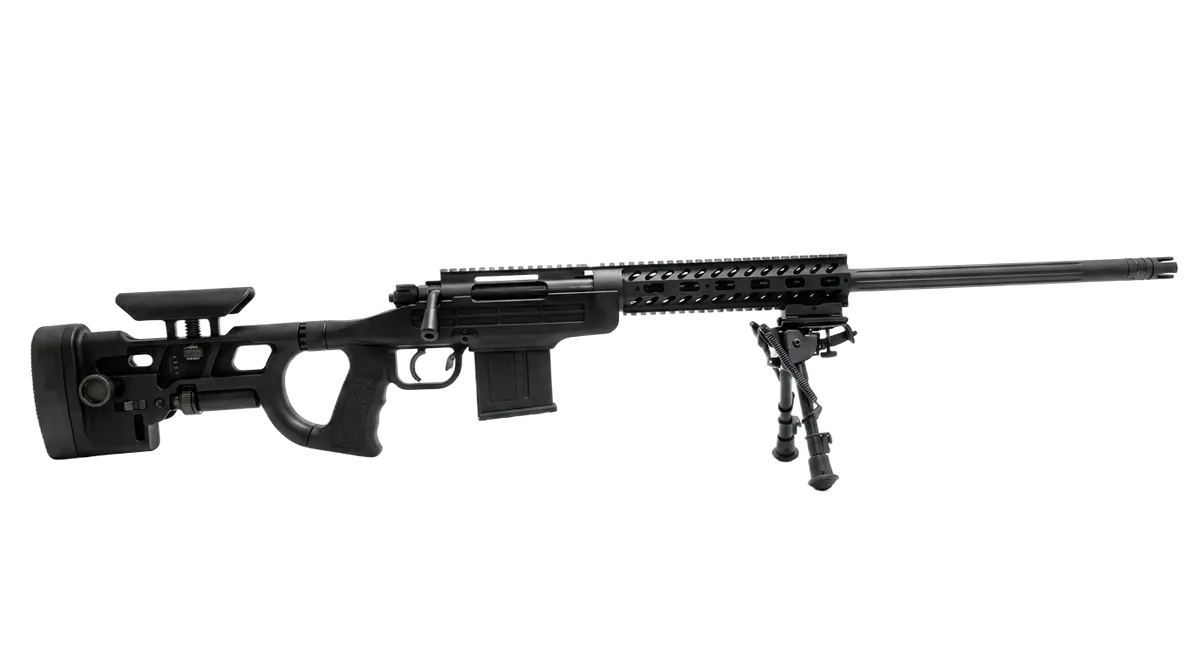
Remington M40
Country:  United StatesManufacturer: Remington Arms
U.S. Marine Corps bolt-action rifle based on the Remington 700 short action: in service through successive versions (M40A1/A3/A5/A6) from Vietnam to today.
Remington M40
Community
Data trust
- Reliability
- Unverified
- Sources
- Sources pending review
Identity
- Designation
- Remington M40
- Alias
- USMC Sniper Rifle
- Manufacturer
- Remington Arms / USMC Precision Weapons Section
- Country
- United States
- Year
- 1966
- Category
- Sniper rifle
- Status
- In service
Ballistics
- Caliber
- 7.62×51 mm NATO
- Muzzle velocity
- 777 m/s
- Effective range
- 1000 m
- Maximum range
- 3725 m
Dimensions
- Barrel length
- 635 mm
- Overall length
- 1124 mm
- Empty weight
- 7.5 kg
Mechanics
- Operating system
- Manual bolt action
- Bolt / action
- Two-lug rotating bolt
Feed
- System
- Single-stack bolt-action magazine
- Standard capacity
- 5 rounds
Fire modes
Historical profile
Origins and Technical Development
The genesis of the M40 dates back to the mid-1960s, when the United States Marine Corps identified the need for a standardized sniper rifle to replace various World War II-era models. After testing several platforms, the command selected the Remington Model 700 Varmint Special bolt-action in 1966, ordering an initial batch of 700 units equipped with Redfield 3-9x optics.
This program marked a doctrinal shift for the USMC, moving from adapted target rifles to a weapon system specifically configured for sniper requirements. Over the decades, the maintenance and evolution of the platform were entrusted to the Precision Weapons Section at Quantico, which gradually transformed the commercial rifle into an elite military weapon.
Architecture and Modular Design
The heart of the M40 system is the Remington 700 steel short action, paired with high-precision heavy barrels produced by companies such as Schneider or Hart. While the 1966 original featured a walnut wood stock, the introduction of the M40A1 variant in the 1970s brought the adoption of McMillan fiberglass stocks, drastically improving climatic stability and long-range accuracy.
Successive iterations integrated crucial technological innovations, such as the transition to Schmidt & Bender optics and the adoption of stainless steel barrels. With the M40A5 and the most recent M40A6, the system introduced detachable magazines, Picatinny rails for night vision devices, and a folding modular chassis that optimizes ergonomics for the modern operator.
Operational Service in Global Conflicts
The M40 made its field debut during the Vietnam War, immediately proving superior to previous Springfield and Winchester platforms due to its reliability in tropical environments. Legendary snipers like Chuck Mawhinney utilized this platform to establish new standards of combat effectiveness, solidifying the sniper's role within the Corps' tactical structure.
From the jungles of Southeast Asia to the deserts of Operation Desert Storm, and through the prolonged conflicts in Iraq and Afghanistan, the rifle has been the mainstay of Marine battalions for over half a century. Each specimen, meticulously assembled by specialized gunsmiths at Quantico, guaranteed consistent ballistic performance in every theater of operations involving the United States.
Legacy and Transition to the Mk 13 Mod 7
The M40 is considered one of the most iconic sniper rifles in military history, having influenced the design of countless modern bolt-action weapons worldwide. Despite its longevity, the ballistic limitations of the 7.62x51 mm caliber led the USMC to seek ammunition with greater range and stopping power for contemporary threats.
Starting in 2018, the Corps began replacing the M40 with the Mark 13 Mod 7 sniper rifle in .300 Winchester Magnum, ending the M40's reign as the primary weapon. However, the M40 series remains a symbol of craftsmanship and mechanical precision, continuing to serve in support and training roles within the American armed forces.
Variants
Main users
United States (USMC)
Key components
- ●Stock — McMillan A4 fiberglass stock.
- ●Receiver — Remington 700 short action.
- ●Grip — Anatomical grip integrated into the stock.
- ●Magazine — Internal 5-round feed.
- ●Barrel — Schneider heavy barrel with suppressor.
Compatible optics (1)
Community
Recent reviews
Similar systems
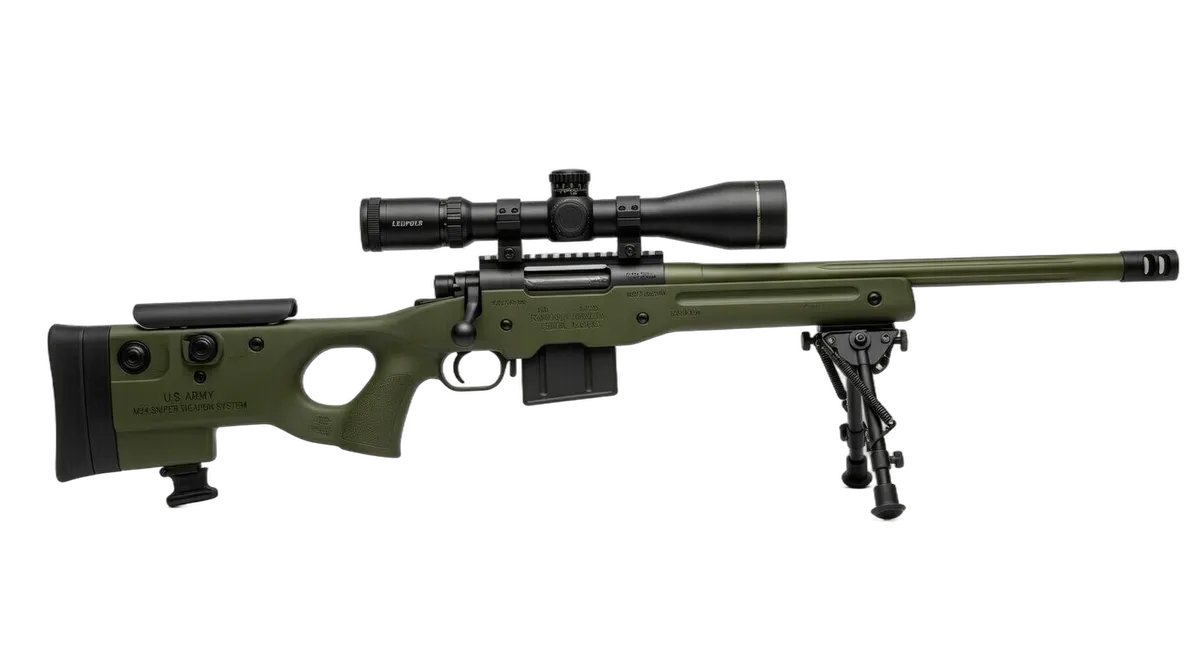
Remington M24 SWS
1988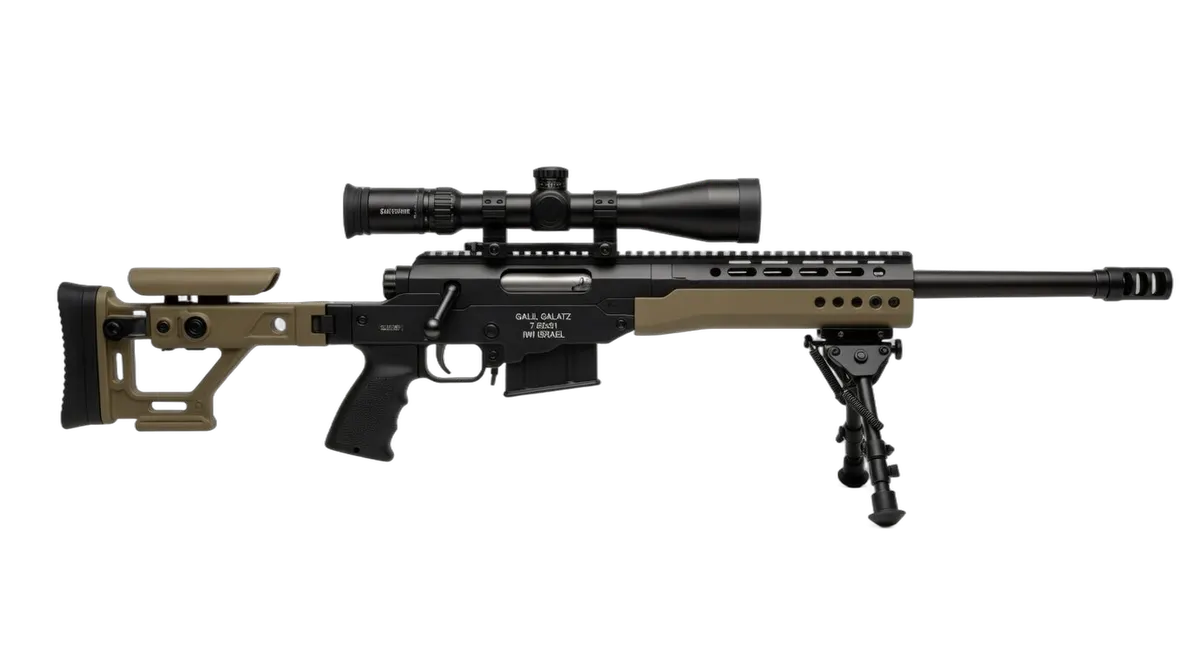
Galil Galatz
1983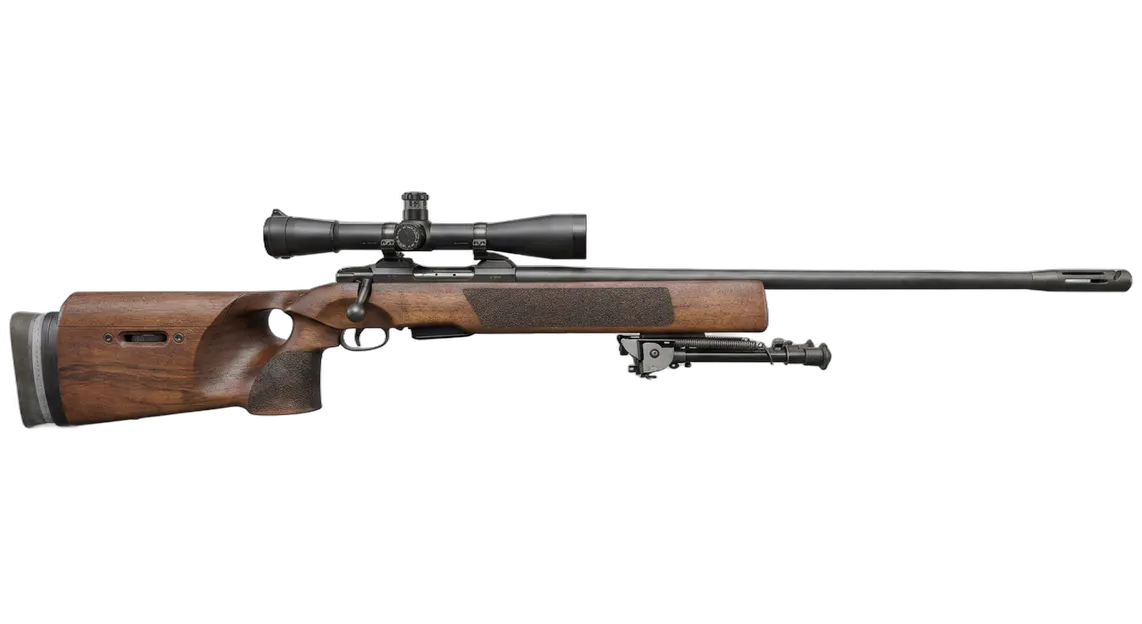
SIG Sauer SSG 2000
1984
FR-F2
1984
B&T APR
2011