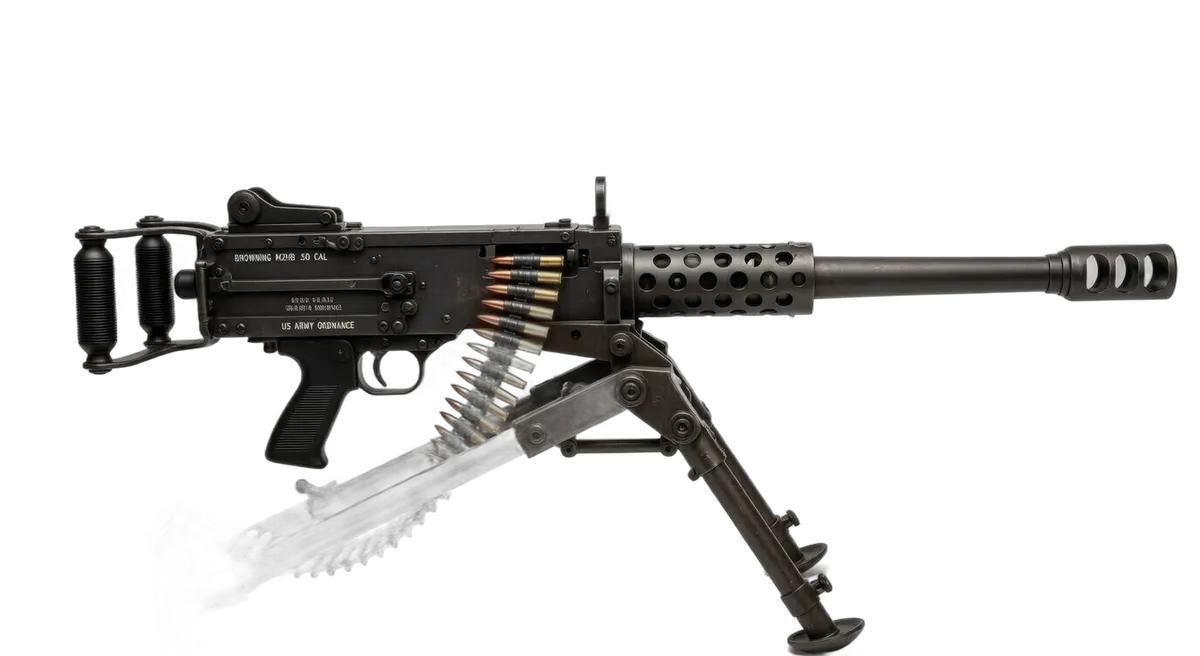
Yak-B 12.7
Four-barrel heavy aircraft Gatling-type machine gun in 12.7×108 mm, designed by Yakushev and Borzov for the USPU-24 remote turret of the Mi-24.
Yak-B 12.7
Community
Data trust
- Reliability
- Unverified
- Sources
- Sources pending review
Identity
- Designation
- Yak-B 12.7
- Alias
- ЯкБ-12,7 / 9-A-624
- Manufacturer
- Kovrov Mechanical Plant
- Country
- Russia
- Year
- 1975
- Category
- Heavy machine gun
- Status
- In service
Ballistics
- Caliber
- 12,7×108 mm
- Muzzle velocity
- 810 m/s
- Rate of fire
- ~4500 rpm
- Effective range
- 1500 m
- Maximum range
- 2000 m
Dimensions
- Barrel length
- 880 mm
- Overall length
- 1345 mm
- Empty weight
- 60 kg
Mechanics
- Operating system
- Gatling, azionamento misto gas/rinculo (4 canne)
- Bolt / action
- Rotary, gas/recoil
Feed
- System
- Nastro a maglie disintegrabili
- Standard capacity
- 1470 rounds
Fire modes
Historical profile
Origins and Technical Development
The development of the Yak-B officially began in the late 1960s at the TsKIB COO in Tula, under the direction of engineers Pyotr Yakushev and Boris Borzov. The primary objective was to provide the new Mil Mi-24D attack helicopter with a weapon possessing a volume of fire superior to traditional heavy machine guns, capable of saturating target areas during rapid low-altitude passes.
Initial ground trials commenced in 1971, immediately revealing engineering challenges related to the intense heat generated by the high rate of fire in the 12.7×108 mm caliber. The weapon received final ministerial approval in 1975, being assigned to serial production at the Kovrov Mechanical Plant for installation in the USPU-24 movable turret.
Design Features and Operating Mechanism
Unlike Western electric-driven Gatling systems, the Yak-B (GRAU index 9-A-624) utilizes a gas-operated self-driving system assisted by a spring-loaded firing device to initiate rotation. This configuration allows the weapon to reach its maximum rate of fire of approximately 4500 rounds per minute almost instantaneously, without the need for heavy or bulky external power sources.
The design features four rotating barrels connected to a central drum, fed by a belt system running along the left side of the turret. The weapon integrates a forced-air cooling system and requires rigorous maintenance due to accelerated wear on internal components caused by the violent acceleration of exhaust gases.
Operational Service and Combat Performance
The weapon saw its baptism of fire during the Soviet intervention in Afghanistan, where it proved lethal against Mujahideen ambushes and supply convoys. Despite its effectiveness in suppressing enemy fire, critical issues emerged regarding chronic overheating and a tendency to jam after sustained bursts exceeding 250 rounds.
In addition to the conflicts in Chechnya and operations in Syria, the Yak-B was exported to numerous Warsaw Pact countries and Soviet-allied nations, equipping Mi-25 and Mi-35 export versions. In tropical or desert environments, dust and extreme temperatures often limited the reliability of the feeding system, requiring frequent field overhauls.
Evolution, Variants and Replacement
To mitigate reliability issues, the YakB-12.7M (9-A-631) variant was introduced, featuring reinforced mechanics and modified rifling pitches for increased service life. However, wartime experience convinced the Russian Air Force that the 12.7 mm caliber was insufficient against modern armored vehicles, leading to a transition toward higher-caliber autocannons.
In subsequent versions of the Mil helicopter, such as the Mi-24P and Mi-24VP, the Yak-B was replaced by the 30 mm GSh-30K twin-barrel cannon or the 23 mm GSh-23L. Although it remains in service with many air forces worldwide, the Yak-B represents the last major Russian heavy rotary machine gun before Russian attack doctrine definitively converged on the destructive power of autocannons.
Variants
Main users
Russia · Bielorussia · Algeria · India · Vietnam
Key components
- ●Stock — Shoulder rest.
- ●Receiver — Weapon body with internal mechanisms.
- ●Grip — Primary grip.
- ●Magazine — Cartridge feed.
- ●Barrel — Guides the projectile.
Community
Recent reviews
Similar systems
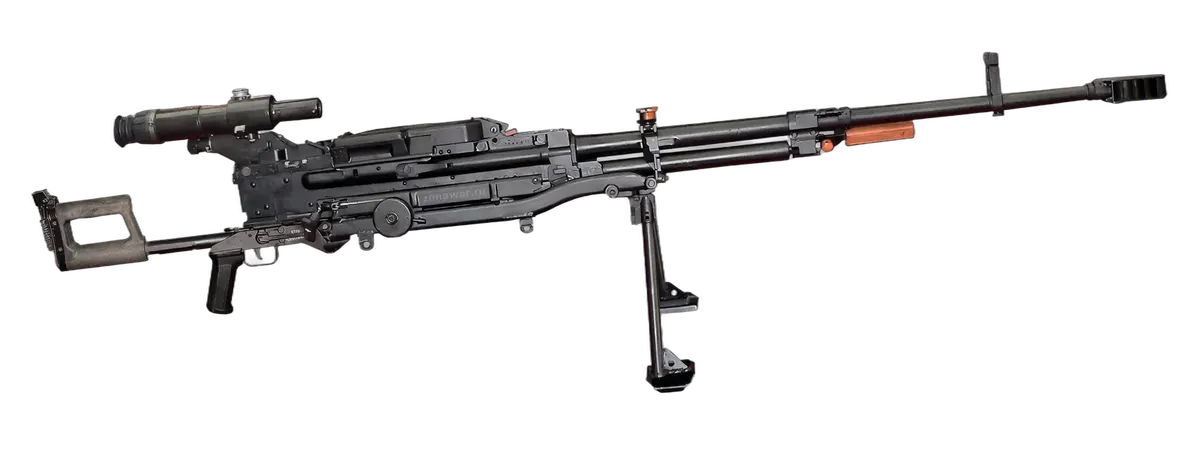
Kord 12,7
1998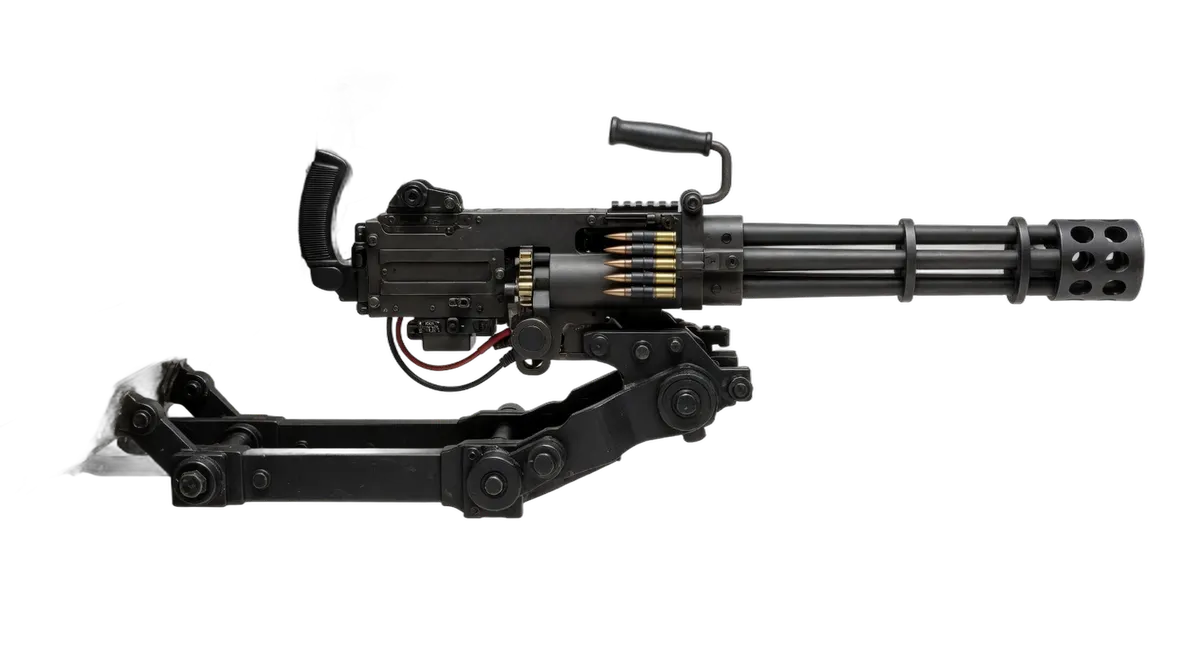
GAU-19
1983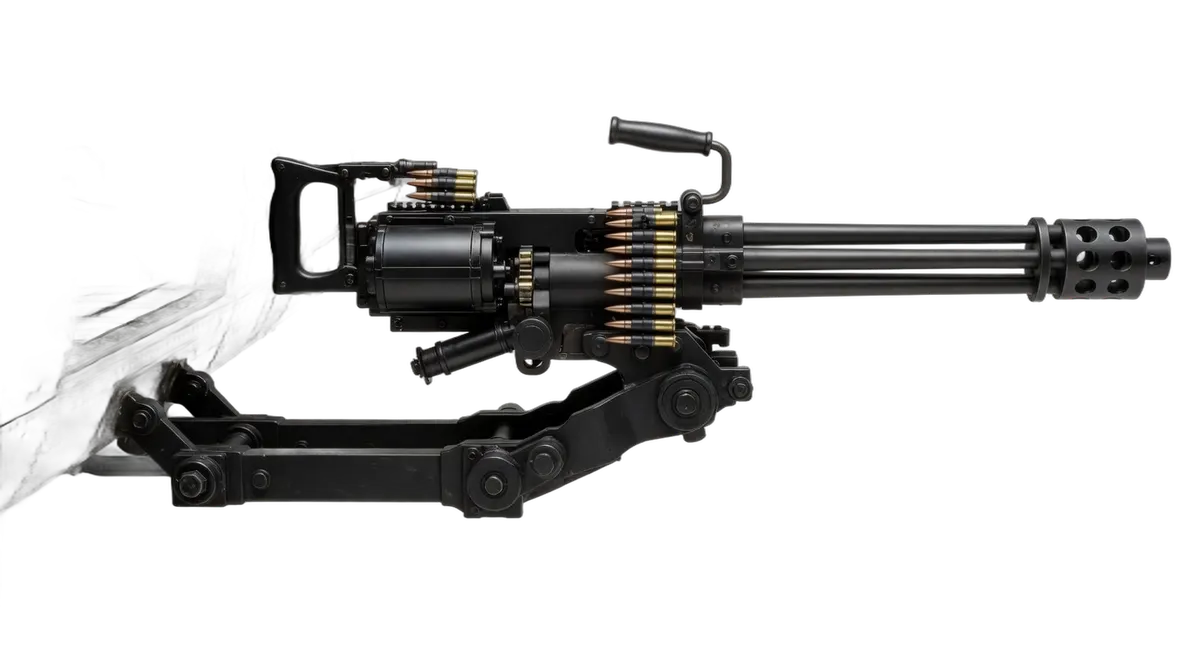
M134 Minigun
1963
QJZ-89
1989
ASVK 12,7 (Kord-SVK)
2004