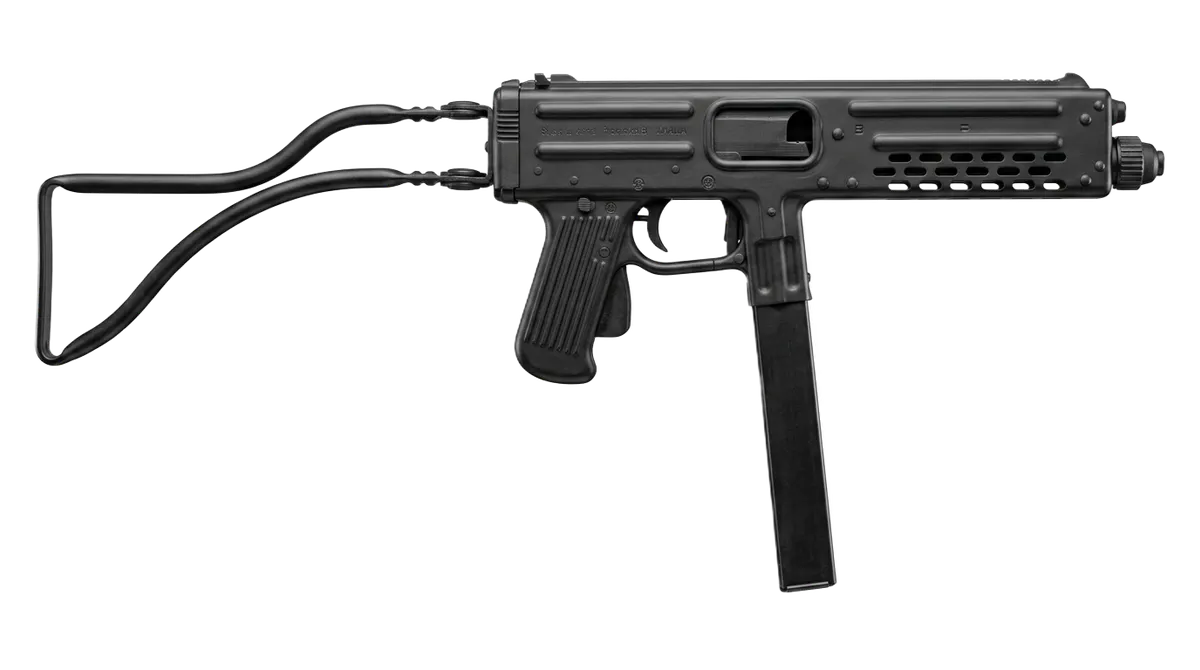
IWI Uzi
Israeli 9×19 submachine gun with a telescoping bolt wrapping around the barrel: compact, rugged and a symbol of the Israeli arms industry.
IWI Uzi
Community
Data trust
- Reliability
- Unverified
- Sources
- Sources pending review
Identity
- Designation
- IWI Uzi
- Manufacturer
- Israel Weapon Industries
- Country
- Israel
- Year
- 1954
- Category
- Submachine gun
- Status
- Historic
Ballistics
- Caliber
- 9×19 mm Parabellum
- Muzzle velocity
- 400 m/s
- Rate of fire
- ~600 rpm
- Effective range
- 200 m
- Maximum range
- 300 m
Dimensions
- Barrel length
- 260 mm
- Overall length
- 470 / 640 mm
- Empty weight
- 3.5 kg
Mechanics
- Operating system
- Blowback
- Bolt / action
- Telescoping bolt, open-bolt fire
Feed
- System
- Double-stack magazine in the grip
- Standard capacity
- 32 rounds
Fire modes
Historical profile
Development
The Uzi was designed by Major Uziel Gal between 1948 and 1950, in the wake of the Israeli War of Independence, to IDF specifications for a submachine gun that was simple to manufacture, compact and reliable. The design was inspired by the Czechoslovak Sa 23/25, which already used a telescoping bolt.
It was officially adopted by the IDF in 1954, produced by Israel Military Industries (now IWI), and for decades remained an industrial symbol of the young Israeli state.
Design
The key innovation is the telescoping bolt wrapping around the breech end of the barrel: for a given barrel length, the weapon is far shorter than contemporary submachine guns. The magazine is housed in the pistol grip, a "hand finds hand" arrangement that allows reloading in the dark.
It operates from an open bolt with a blowback system. The grip safety requires the hand to firmly grip the weapon to enable firing — an unusual safety feature for submachine guns of its era.
Operational service
The Uzi saw its baptism of fire in the Suez Crisis (1956) and was then used by the IDF in the Six-Day War (1967) and in every subsequent conflict through the 2000s. It was famously visible with the US Presidential security detail (Secret Service) after the 1981 attempt on Reagan's life.
Produced under license in Belgium (FN Herstal) and Germany (H&K), it has been adopted by more than 90 countries. It was gradually replaced in IDF service by the more compact Mini Uzi, Micro Uzi and Uzi Pro variants.
Variants
Main users
Israel · Germania · Belgium · oltre 90 paesi
Key components
- ●Stock — Shoulder rest.
- ●Receiver — Weapon body with internal mechanisms.
- ●Grip — Primary grip.
- ●Magazine — Cartridge feed.
- ●Barrel — Guides the projectile.
Community
Recent reviews
Similar systems
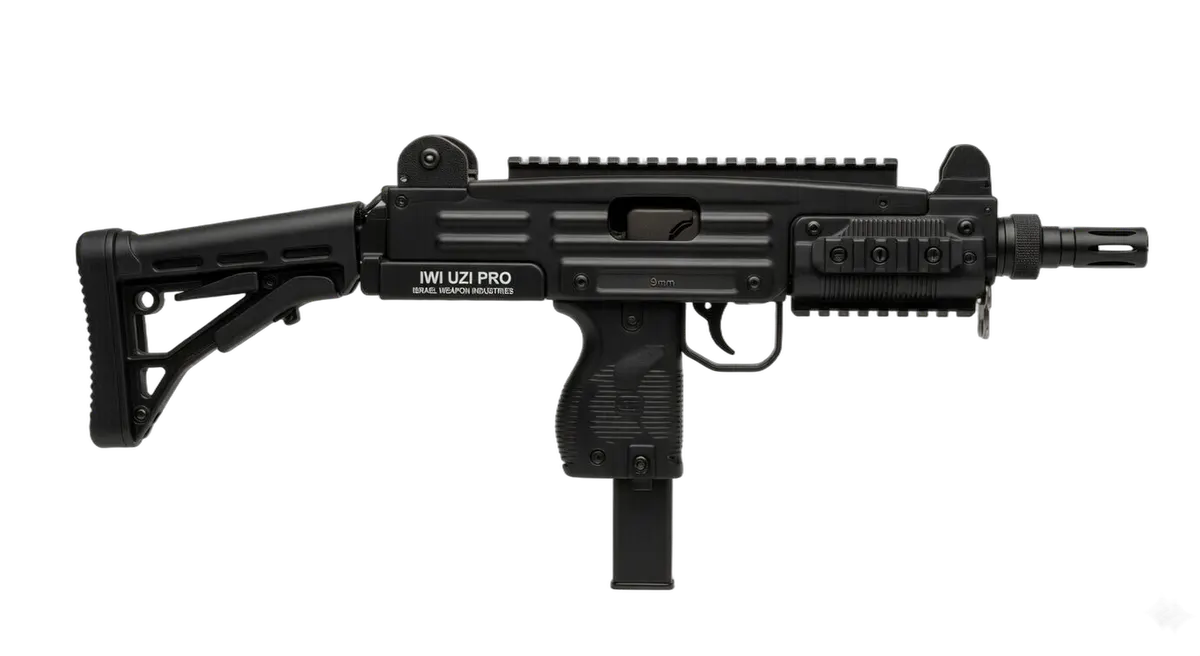
IWI Uzi Pro
2010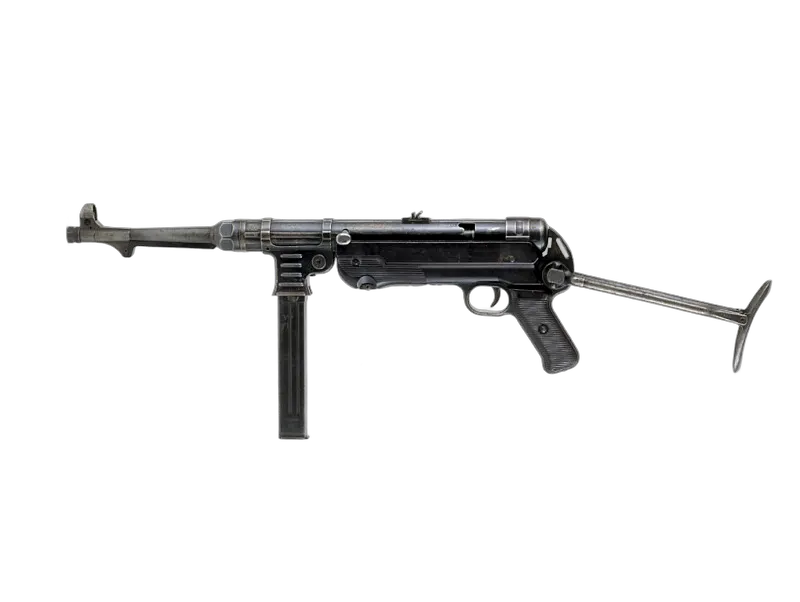
MP 40
1940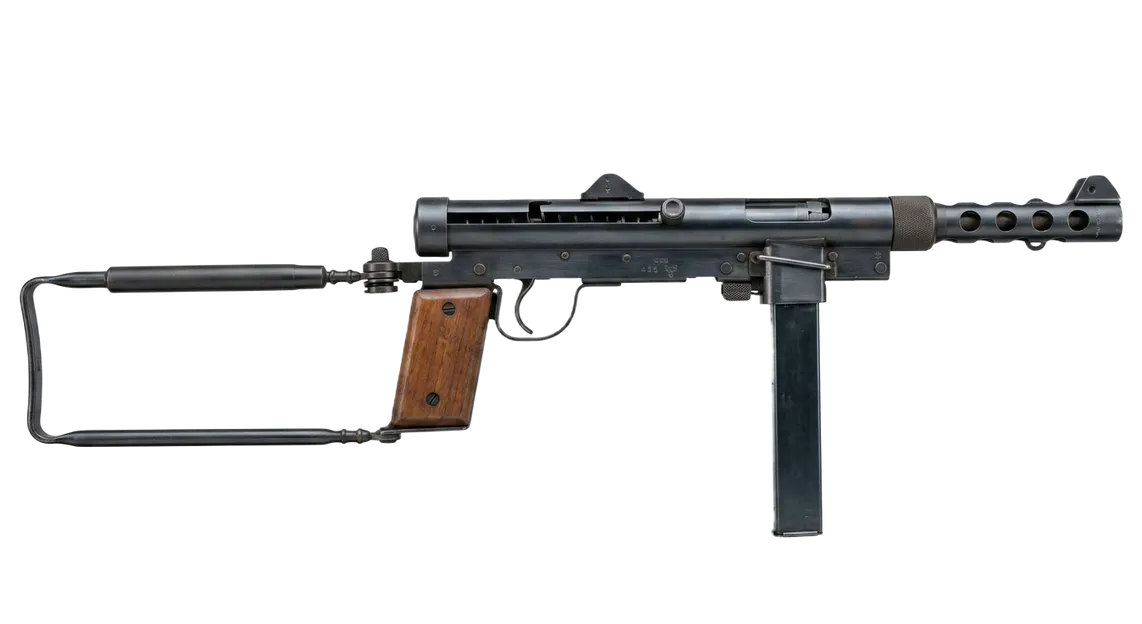
Kulsprutepistol m/45
1945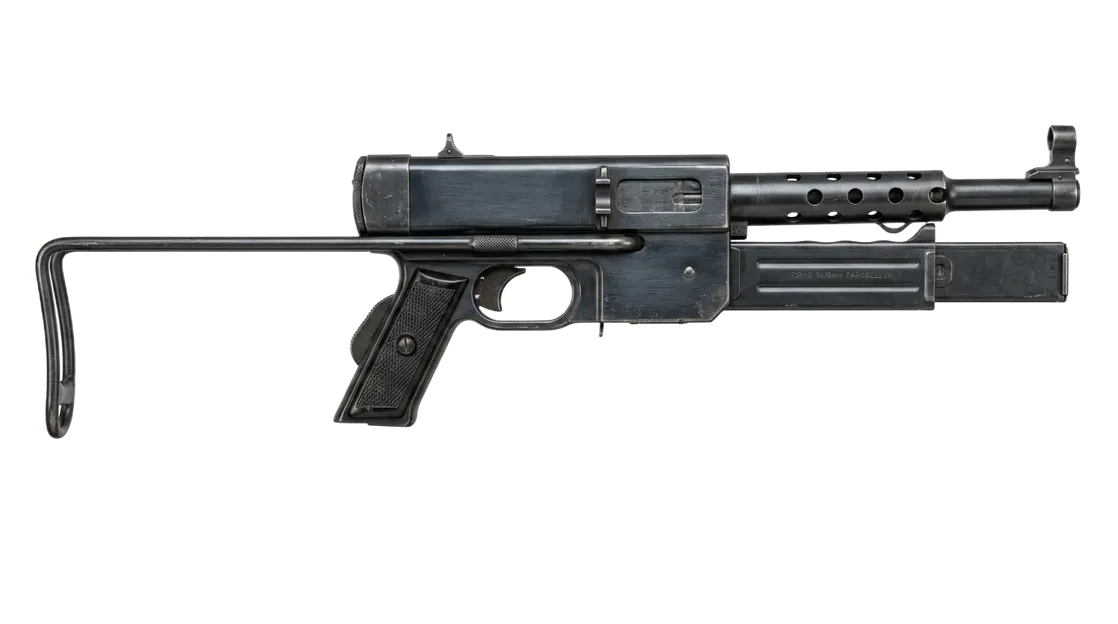
MAT-49
1949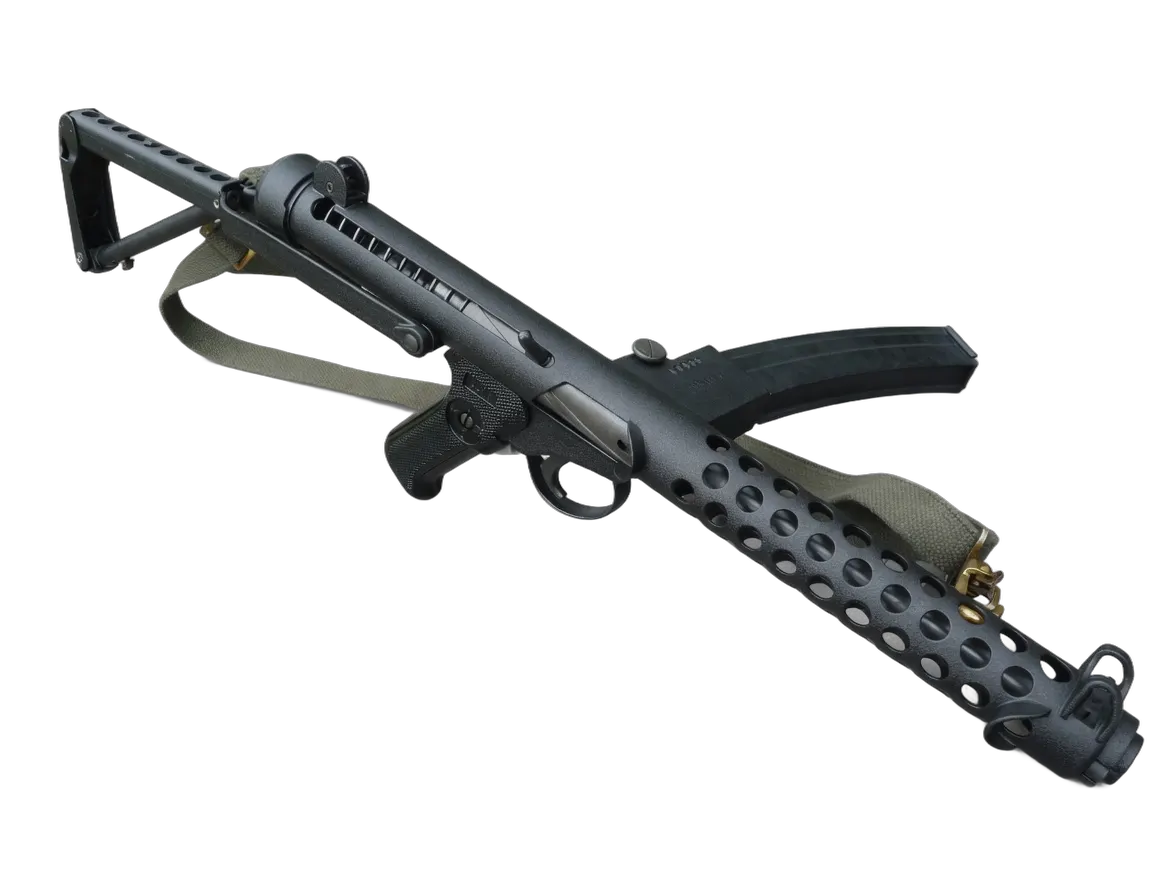
Sterling L2A3
1953