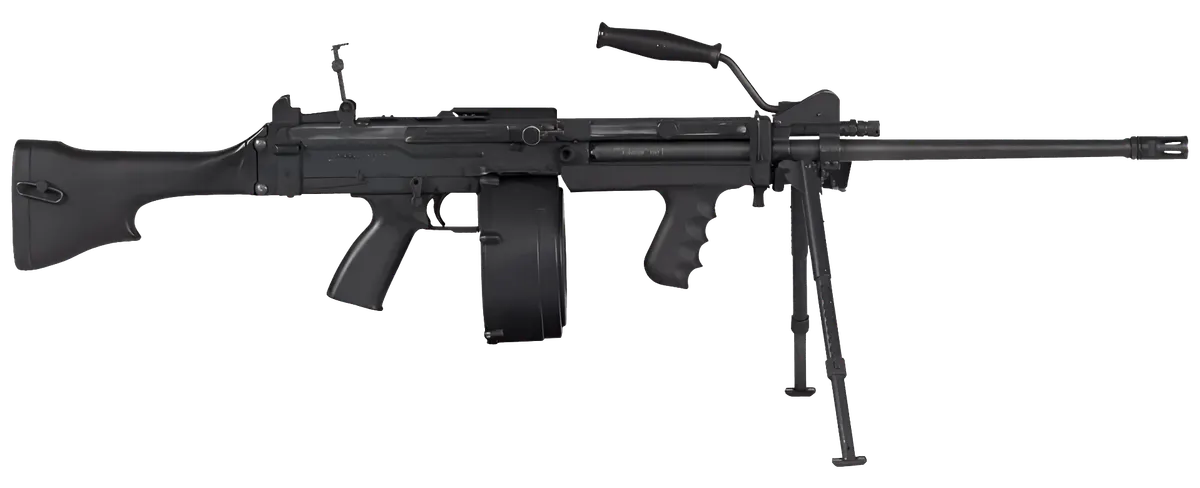
IWI Negev
Israeli light machine gun in 5.56×45 NATO with dual belt or magazine feed, designed to serve both as a SAW and as a squad automatic rifle.
IWI Negev
Community
Data trust
- Reliability
- Unverified
- Sources
- Sources pending review
Identity
- Designation
- IWI Negev
- Manufacturer
- Israel Weapon Industries
- Country
- Israel
- Year
- 1997
- Category
- Light machine gun
- Status
- In service
Ballistics
- Caliber
- 5.56×45 mm NATO
- Muzzle velocity
- 915 m/s
- Rate of fire
- ~850 rpm
- Effective range
- 800 m
- Maximum range
- 1000 m
Dimensions
- Barrel length
- 460 mm
- Overall length
- 780 / 1020 mm
- Empty weight
- 7.5 kg
Mechanics
- Operating system
- Gas-operated, long-stroke piston
- Bolt / action
- Rotating bolt
Feed
- System
- Dual feed: belt or STANAG magazine
- Standard capacity
- 200 rounds
Fire modes
Historical profile
Development and Technological Genesis
The program for a new national light machine gun began in the 1980s, when the Israel Defense Forces identified the need for a more maneuverable weapon than the heavy FN MAG 58. Israel Military Industries aimed to create a versatile platform capable of bridging the tactical gap between the Galil assault rifle and medium machine guns, ensuring sustained firepower during infantry operations in desert environments.
Following a series of prototypes extensively tested in the harsh environmental conditions of the Negev, the final design was approved in the mid-1990s. Although official adoption dates back to 1997, the refinement process included numerous modifications to the barrel and gas recovery system to ensure reliability with various types of 5.56 mm NATO ammunition.
Technical Details and Design
The Negev stands out for its sophisticated gas-operated system with a rotating bolt and a three-position pressure regulator that allows the rate of fire to be adapted to operational conditions. The first position is dedicated to precision aiming, the second increases the cyclic rate for suppression fire, and the third is reserved for contexts involving heavy accumulation of residue or mud.
The mechanical architecture was designed to favor maximum flexibility of use through a unique feeding system that accepts M27 disintegrating belts, standard M16 magazines, or specific Galil magazines via an adapter. This configuration allows the gunner to draw from the squad riflemen's ammunition in emergency situations, making the unit self-sufficient during prolonged firefights.
Operational Service and Global Distribution
The weapon received its baptism of fire during the conflict in southern Lebanon and subsequent operations in the Gaza Strip, demonstrating superior ballistic excellence compared to previously issued models. Its ability to be effectively operated by a single soldier, combined with the folding stock and low weight, has radically transformed urban patrolling and forward perimeter defense tactics.
Beyond primary Israeli use, the Negev has achieved significant international success, being adopted by Indian special forces, the Colombian army during counter-guerrilla operations, and several Southeast Asian nations. The variability of use scenarios, from the jungles of Thailand to the Arctic climates of Estonia, has confirmed the robustness of the original IWI design.
Evolution and Military Legacy
The platform's success led to the creation of the SF (Special Forces) variant with a short 330 mm barrel and, more recently, the powerful NG7 version in 7.62 mm NATO caliber. The latter has redefined the concept of the General Purpose Machine Gun (GPMG) by integrating a semi-automatic fire mode that allows for surgical precision unusual for weapons in its class.
The legacy of the Negev lies in having redefined modern squad automatic weapon standards, influencing the development of multi-role weapon systems worldwide. Today, its constant presence in dozens of armies and the integration of advanced optronic systems on current variants ensure the Negev family a leading role in the asymmetric conflicts of the twenty-first century.
Variants
Main users
Israel · Brazil · Estonia · Vietnam · India
Key components
- ●Stock — Shoulder rest.
- ●Receiver — Weapon body with internal mechanisms.
- ●Grip — Primary grip.
- ●Magazine — Cartridge feed.
- ●Barrel — Guides the projectile.
Community
Recent reviews
Similar systems
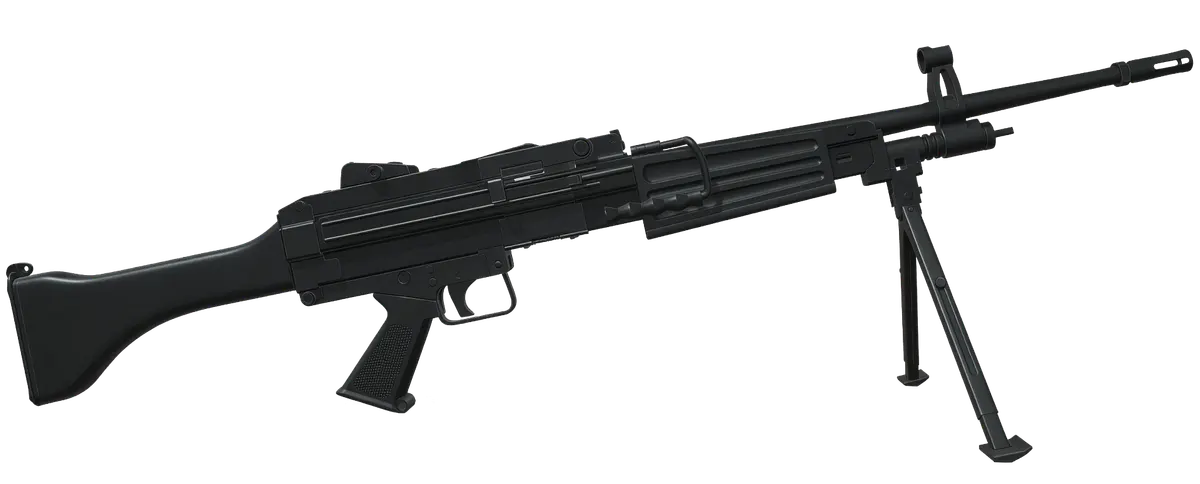
K3
1989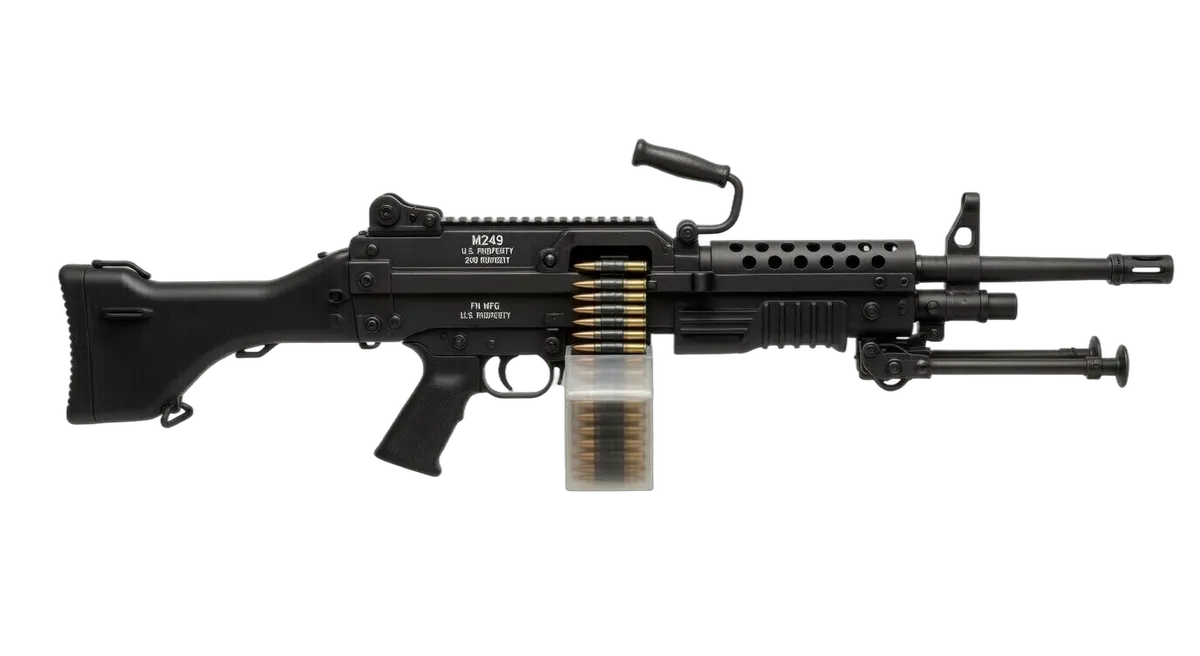
M249 SAW
1984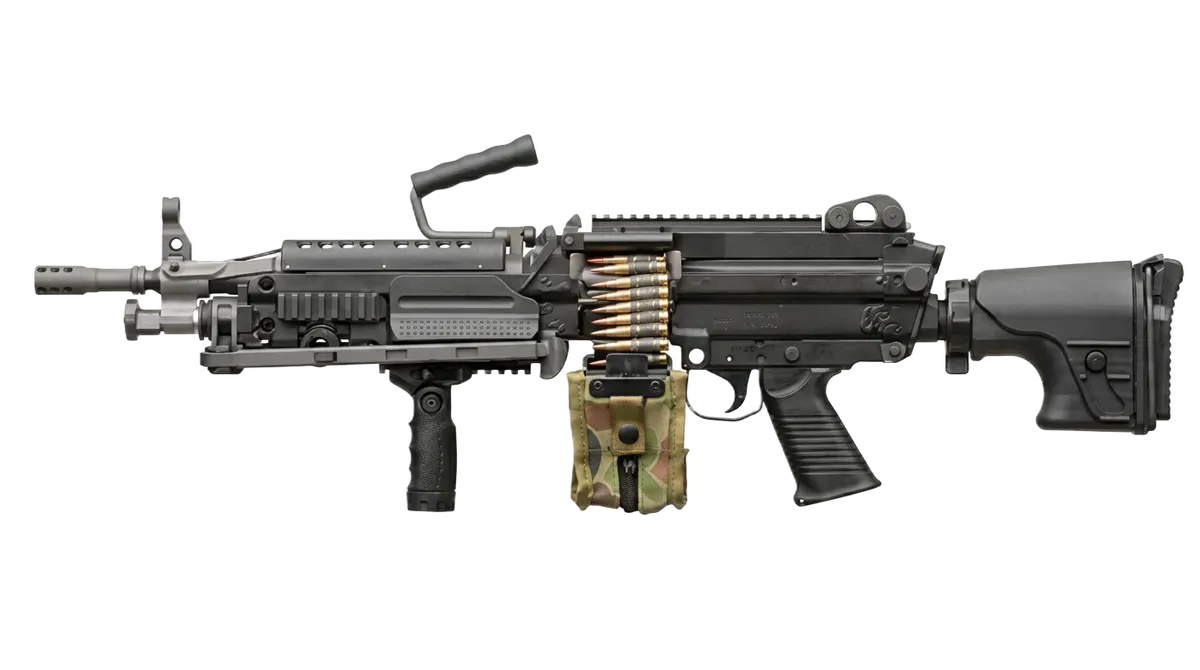
FN Minimi
1974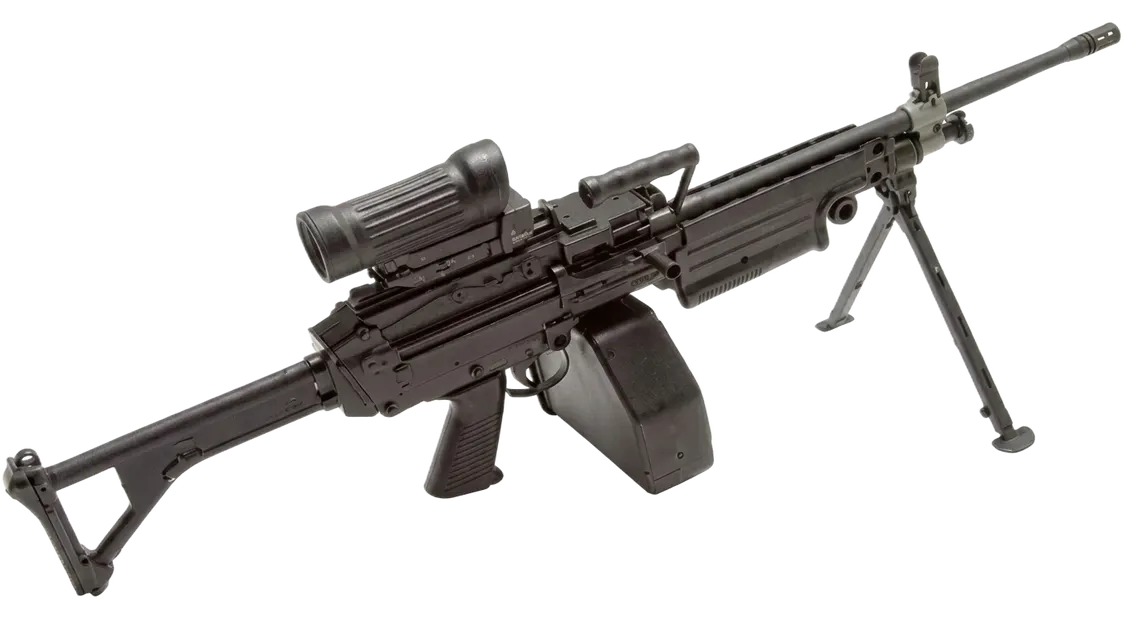
C9
1985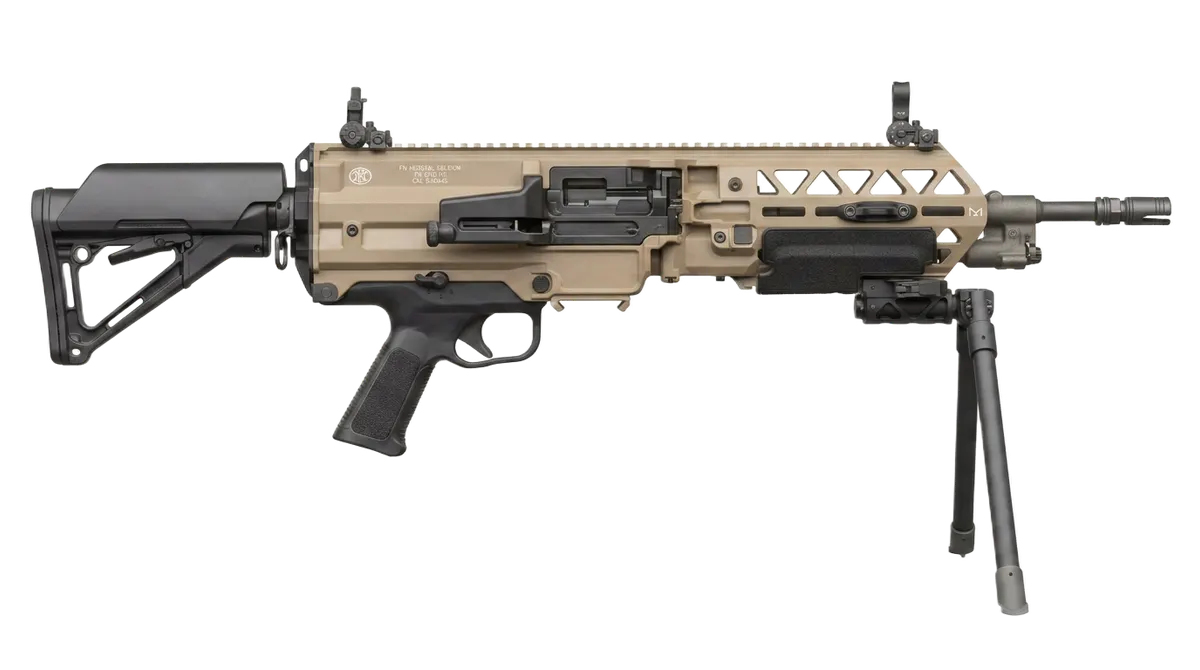
FN Evolys
2021