Colt M1911A1
Semi-automatic .45 ACP pistol designed by John Moses Browning, issued to U.S. armed forces for over 70 years and still the basis of countless derivatives today.
Colt M1911A1
Community
Data trust
- Reliability
- Unverified
- Sources
- Sources pending review
Identity
- Designation
- Colt M1911A1
- Alias
- Government / 1911
- Manufacturer
- Colt's Manufacturing Company
- Country
- United States
- Year
- 1924
- Category
- Pistol
- Status
- Historic
Ballistics
- Caliber
- .45 ACP
- Muzzle velocity
- 251 m/s
- Effective range
- 50 m
- Maximum range
- 100 m
Dimensions
- Barrel length
- 127 mm
- Overall length
- 216 mm
- Empty weight
- 1.1 kg
Mechanics
- Operating system
- Short recoil
- Bolt / action
- Rotating bolt (Browning geometric lockup)
Feed
- System
- Single-stack magazine
- Standard capacity
- 7 rounds
Fire modes
Historical profile
Development
The project grew out of trials launched by the US Army Ordnance Department after the Philippine–American War (1899–1902): in the Moros campaign, the issued .38 Long Colt revolvers proved insufficient to stop charging Moro juramentado warriors. The Army demanded a more powerful caliber, at least .45.
Between 1907 and 1911 intense trials were held at Springfield Armory: the pistol designed by John Moses Browning for Colt beat all competitors — including the Savage Model 1907 — firing 6,000 rounds without a single malfunction. It was adopted on 29 March 1911 as the Pistol, Caliber .45, Automatic, Model of 1911.
Design
Browning introduced the short-recoil action with swinging link and geometric locking via barrel lugs: the barrel locks to the slide at the moment of firing, recoils together for a few millimeters, then unlocks. This is the basic scheme of virtually every modern pistol, from Glock to SIG.
The .45 ACP cartridge, designed by Browning with Winchester, fires a 14.9 g bullet at 251 m/s: high stopping energy at close range, slow and manageable recoil.
Operational service
Experience in World War I led to the M1911A1 revision (1924): shorter trigger, arched mainspring housing, scallops behind the trigger guard, more visible sights. In this configuration it served throughout World War II, Korea and Vietnam: over 2.7 million units were produced by Colt, Remington Rand, Ithaca and Union Switch & Signal.
It was formally replaced in 1985 by the Beretta M9 in 9×19 mm but remains in service in modernized versions (MEU(SOC), MARSOC M45A1, FBI HRT) and still dominates IPSC/USPSA competitive shooting. Commercial families such as Kimber, Wilson Combat and Springfield Armory keep the design alive in the civilian market.
Variants
Main users
United States · United Kingdom · Norway · Philippines · over 30 countries
Key components
- ●Slide — Reciprocating slide with sight system.
- ●Receiver — Frame with trigger and internals.
- ●Grip — Grip with wooden panels.
- ●Magazine — Cartridge feed.
- ●Barrel — Guides the projectile.
Community
Recent reviews
Similar systems
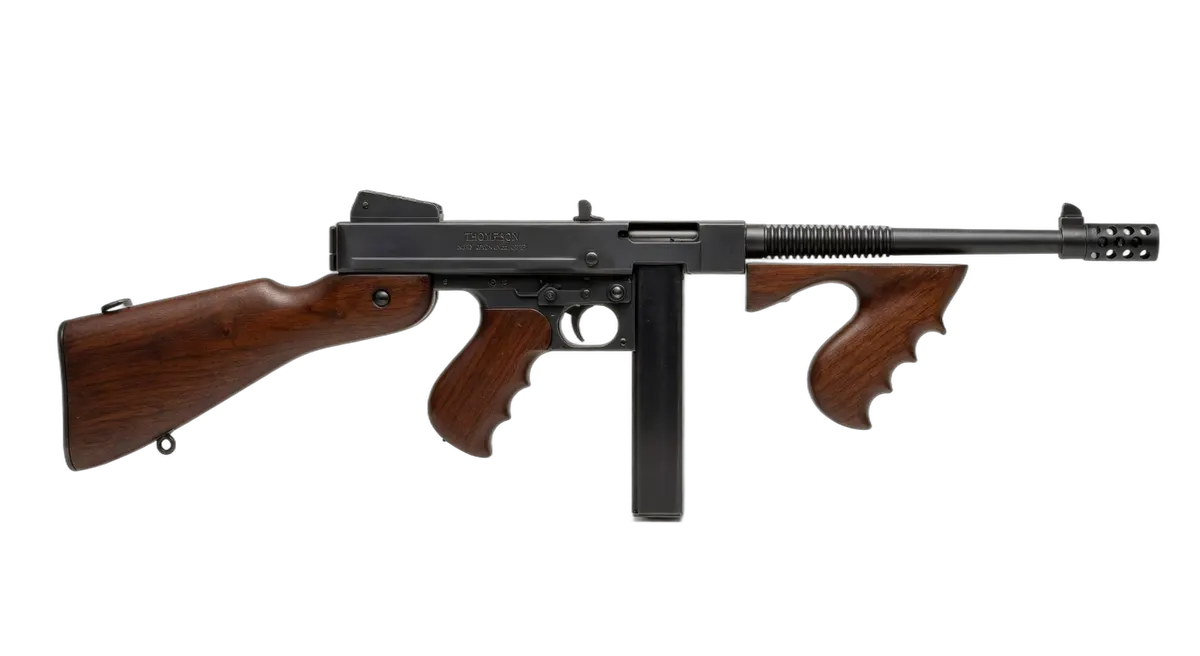
Thompson SMG
1921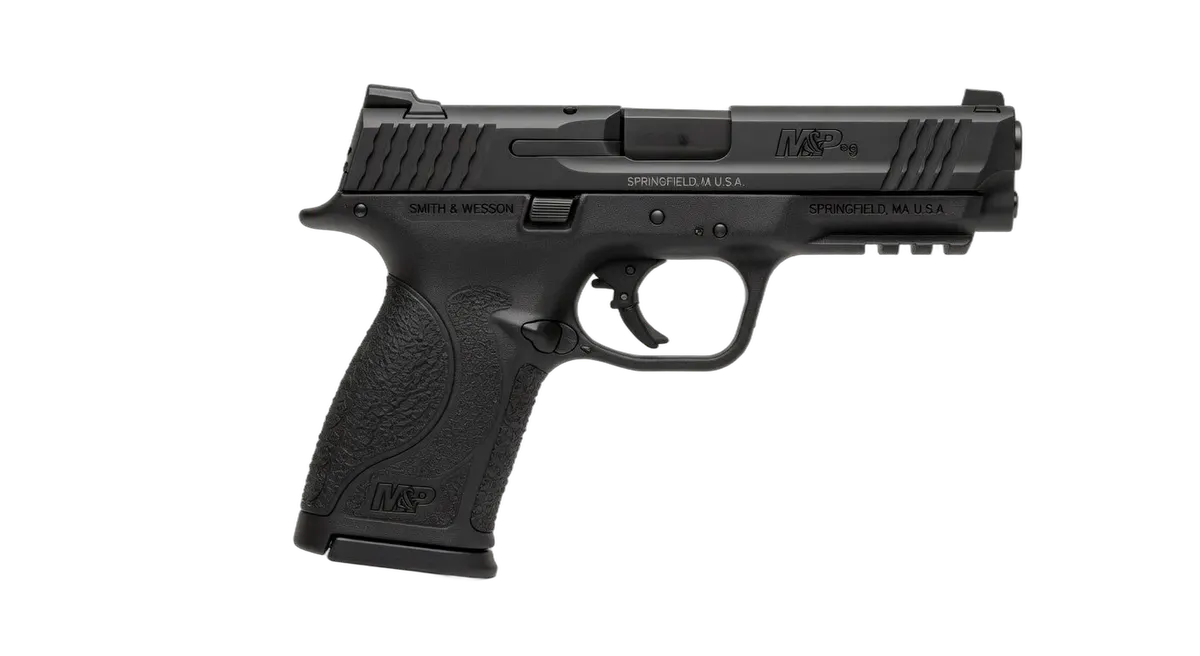
Smith & Wesson M&P
2005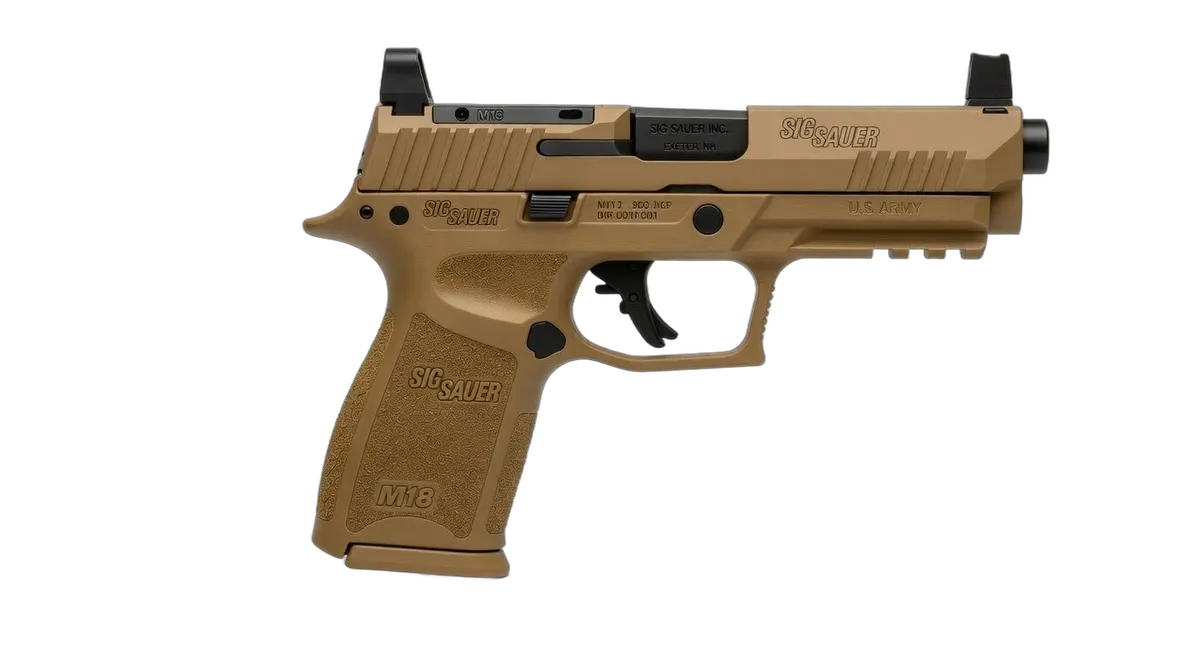
SIG Sauer M18
2017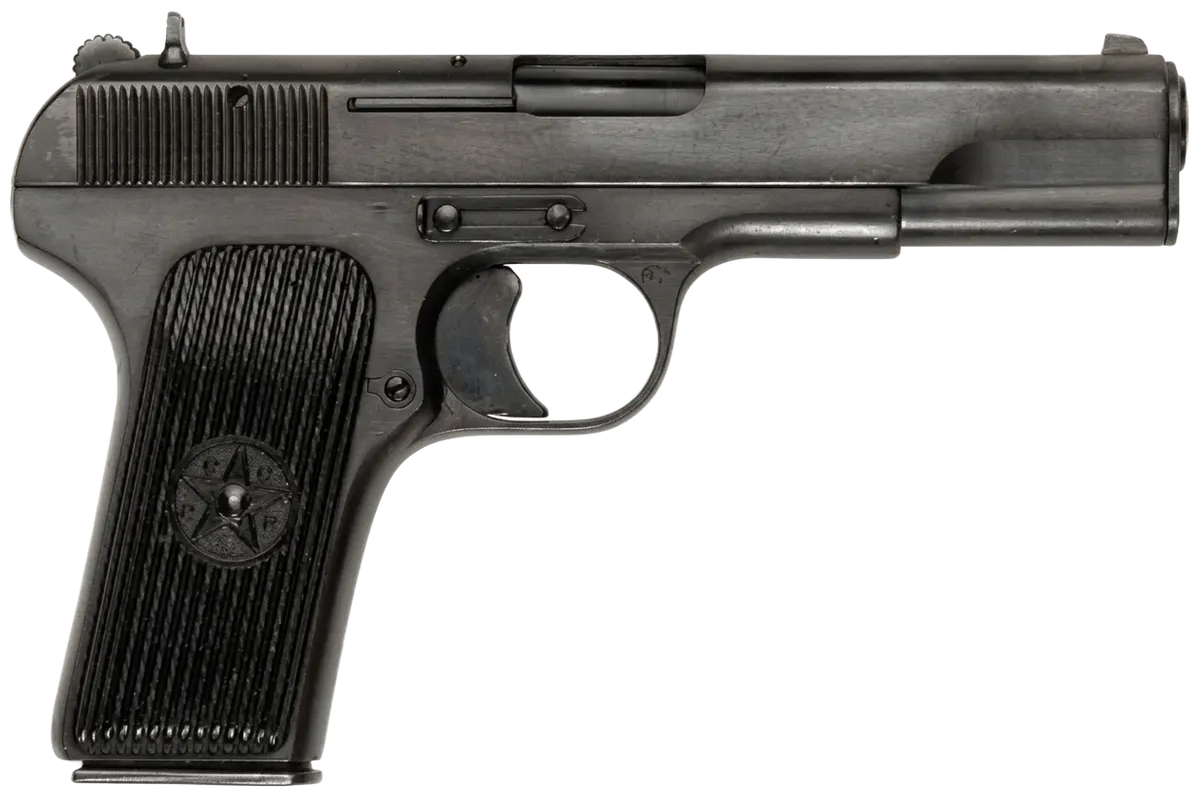
Tokarev TT-33
1933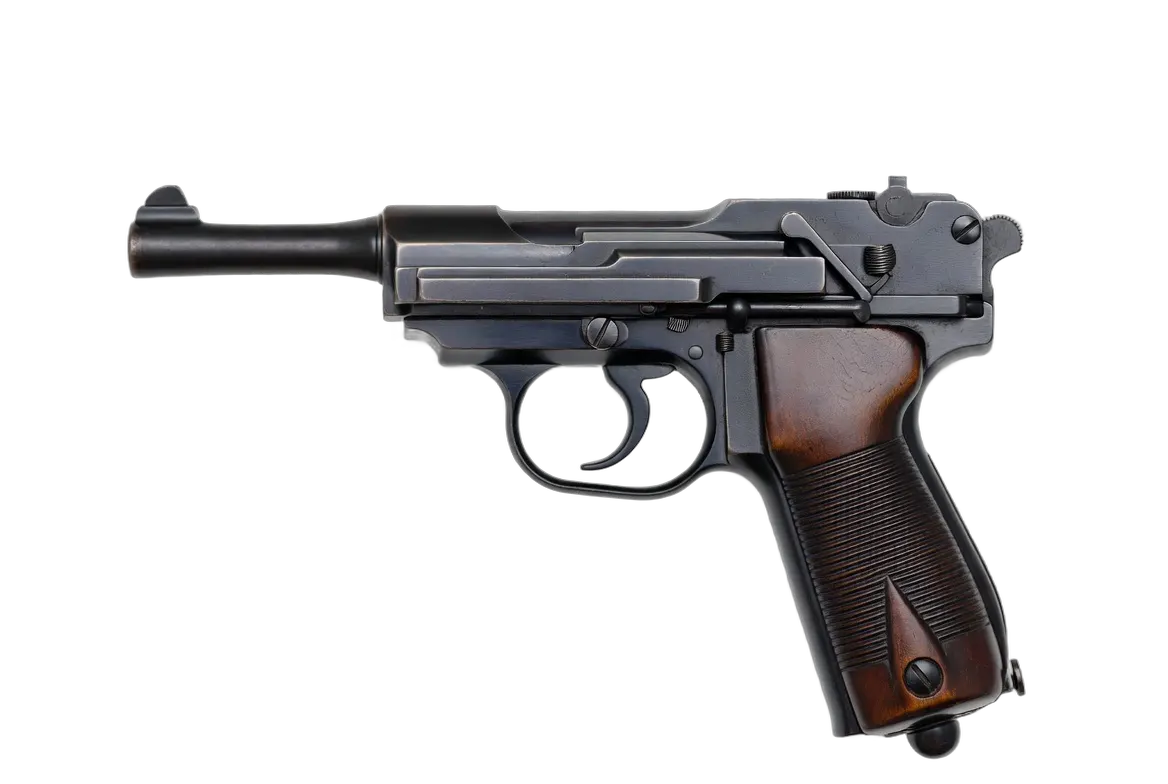
Walther P38
1938