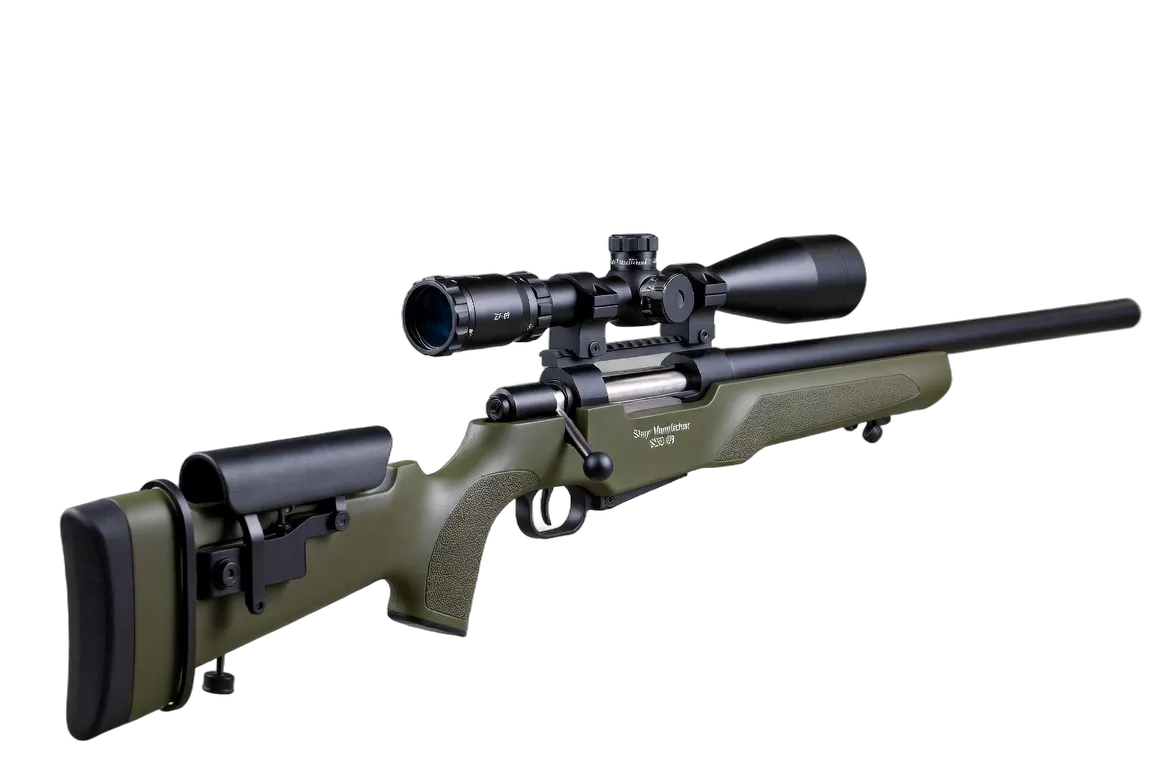
Steyr HS .50
Single-shot bolt-action anti-materiel rifle in .50 BMG, with deflecting muzzle brake, free-floating barrel and adjustable stock: used for long-range and light-armor engagements.
Steyr HS .50
Community
Data trust
- Reliability
- Unverified
- Sources
- Sources pending review
Identity
- Designation
- Steyr HS .50
- Manufacturer
- Steyr-Mannlicher
- Country
- Austria
- Year
- 2004
- Category
- Sniper rifle
- Status
- In service
Ballistics
- Caliber
- .50 BMG (12.7×99 mm NATO)
- Muzzle velocity
- 860 m/s
- Effective range
- 1500 m
- Maximum range
- 2500 m
Dimensions
- Barrel length
- 833 mm
- Overall length
- 1370 mm
- Empty weight
- 12.4 kg
Mechanics
- Operating system
- Manuale
- Bolt / action
- Bolt-action monocolpo
Feed
- System
- Monocolpo (HS .50 M1: caricatore amovibile)
- Standard capacity
- 1 rounds
Fire modes
Historical profile
Development and Strategic Genesis
The Steyr HS .50 project was born in the early 2000s to meet the growing global demand for anti-materiel weaponry offering high precision with reduced weight and lower costs compared to semi-automatic systems. The Austrian company Steyr-Mannlicher focused on a simplified bolt-action design, optimizing the structure to maximize the ballistic accuracy of the .50 BMG caliber without the mechanical complexities of gas-operated platforms.
The firearm was officially unveiled at the 2004 Shot Show, achieving immediate commercial success due to its modular architecture and ease of maintenance in field conditions. Development progressed rapidly, leading to the creation of the M1 variant, which addressed the needs of special units by integrating a magazine-fed system to increase the rate of fire while maintaining the original robustness.
Technical Features and Engineering
The heart of the Steyr HS .50 is its 833 mm cold-hammer-forged barrel, mounted in a fully free-floating configuration to minimize vibrational interference during firing. The breech is secured directly to the barrel, allowing for quick barrel changes and ensuring that the optics, mounted on an integral Picatinny rail, remain zeroed even after the rifle is disassembled for transport.
The recoil reduction system relies on a massive three-chamber muzzle brake that deflects gases laterally, dissipating approximately 40% of the energy generated by the powerful 12.7x99 mm NATO cartridge. The buttstock is fully adjustable for height and length, while the folding and adjustable bipod ensures the stability required for precision engagements that can exceed 1,500 meters of effective range.
Operational Service and Global Reach
The rifle was officially adopted by the Austrian Armed Forces (Jagdkommando) and numerous counter-terrorism units worldwide, proving highly effective in striking critical infrastructure and light vehicles. However, its operational history is marked by a controversial 2005 sale to Iran, officially intended for anti-narcotics operations, which led to the subsequent cloning of the weapon by local defense industries under the name AM-50 Sayyad.
The AM-50 and original Steyr variants have been widely documented in various Middle Eastern conflicts, demonstrating the design's ability to operate in harsh desert environments with minimal lubrication. Beyond military use, the rifle has found a place in several South American and Asian law enforcement agencies for long-range interdiction and explosive ordnance disposal (EOD) roles.
Legacy and Modern Variants
The success of the Steyr HS .50 consolidated Steyr-Mannlicher's reputation in the heavy-caliber sector, leading to the introduction of the HS .460 Steyr version, chambered for a high-velocity proprietary cartridge. This variant was developed specifically for markets where the .50 BMG caliber is subject to legal restrictions, while maintaining nearly identical ballistic performance over long distances.
Today, the HS .50 remains a benchmark in the anti-materiel rifle category for its constructional simplicity and incredible accuracy-to-price ratio. Despite competition from more complex multi-caliber models, the HS platform continues to be manufactured and updated, representing one of the most lethal and reliable tools available to modern sharpshooters.
Variants
Main users
Austria · Iran · Italia · India · Pakistan · Thailandia
Key components
- ●Stock — Shoulder rest.
- ●Receiver — Weapon body with internal mechanisms.
- ●Grip — Primary grip.
- ●Magazine — Cartridge feed.
- ●Barrel — Guides the projectile.
Community
Recent reviews
Similar systems
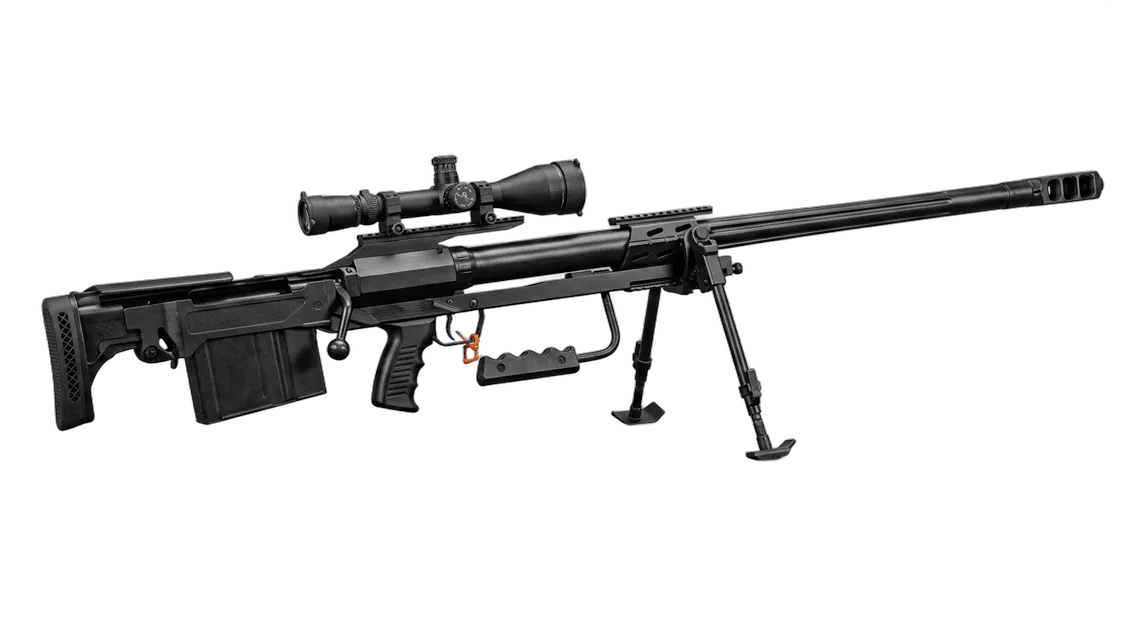
ZMT Tor
2005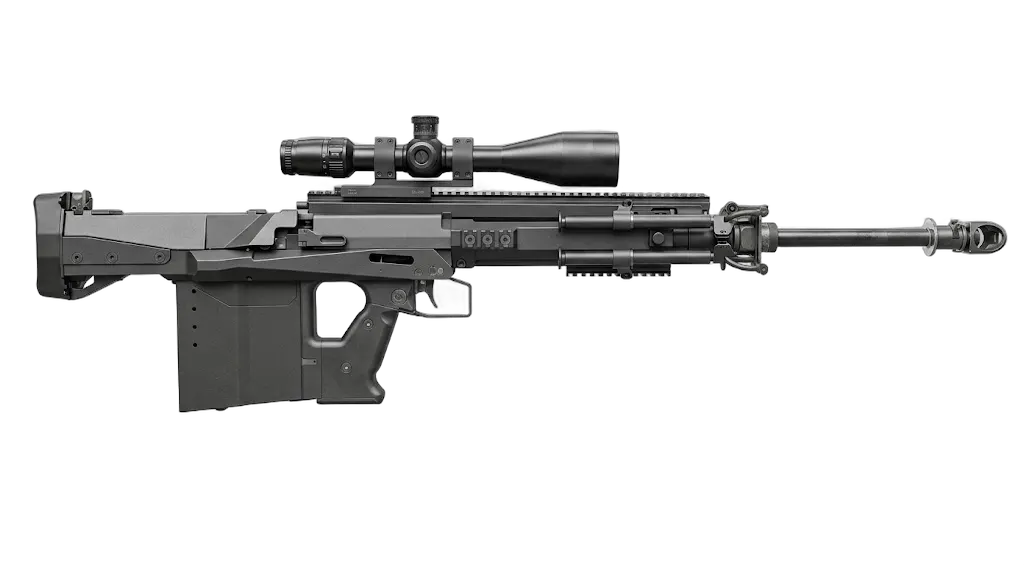
Gepárd M6 "Hiúz"
2014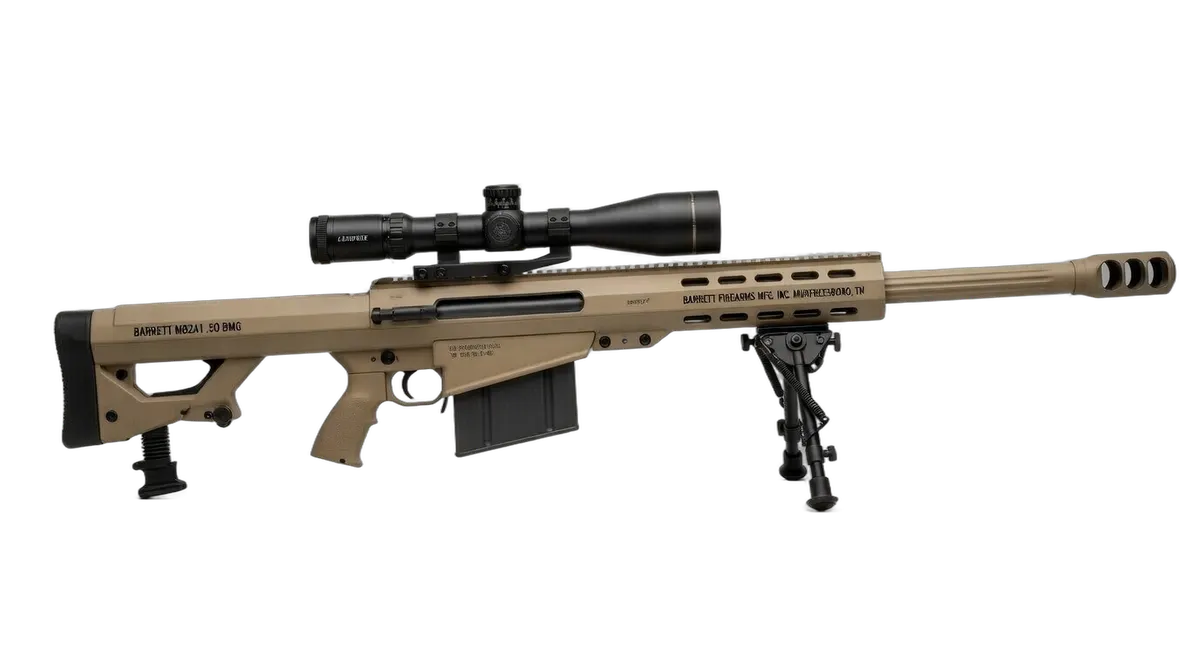
Barrett M82A1
1989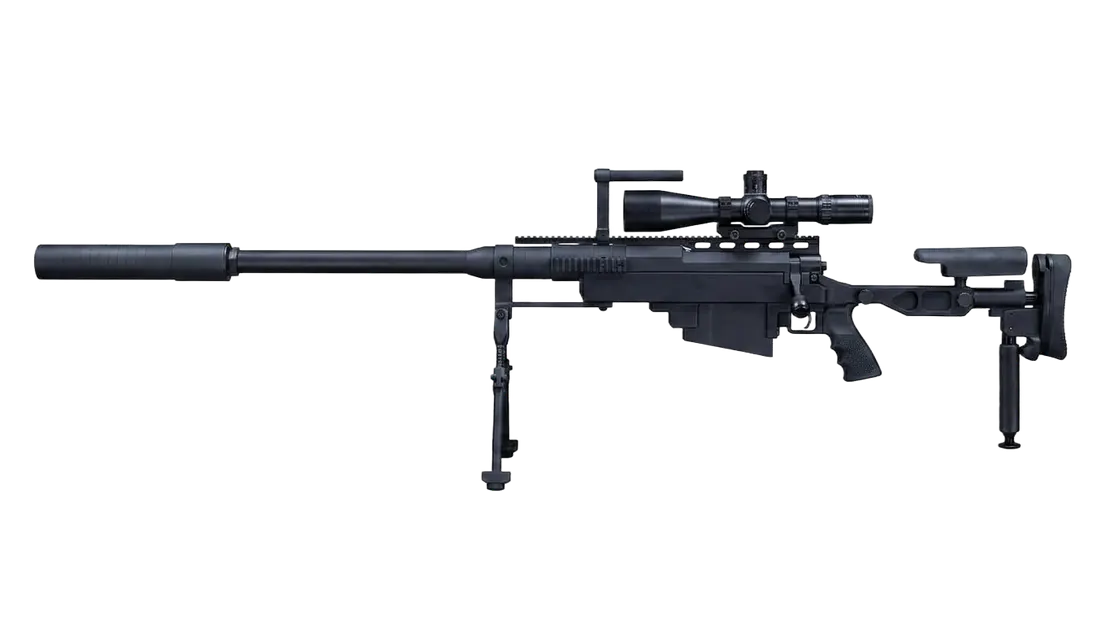
PGM Hécate II
1993
Snipex Rhino Hunter
2017