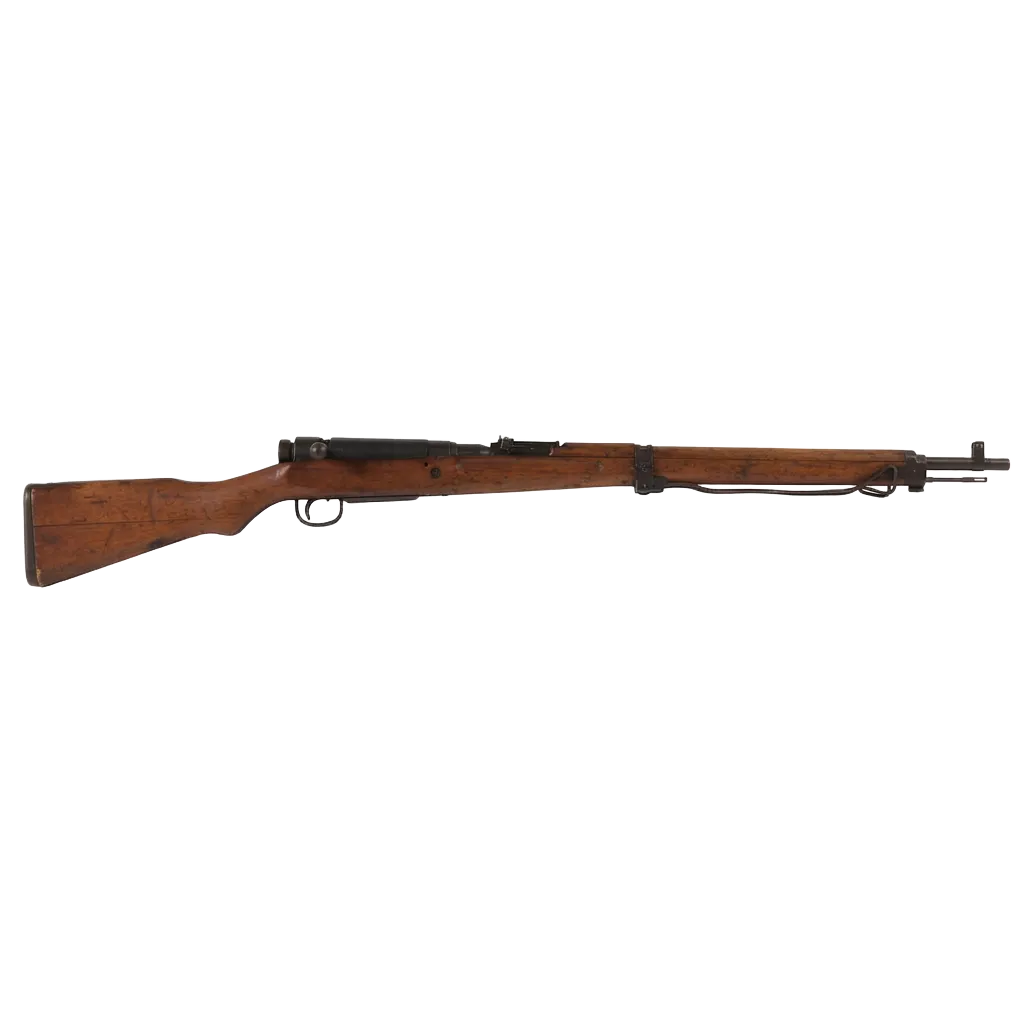
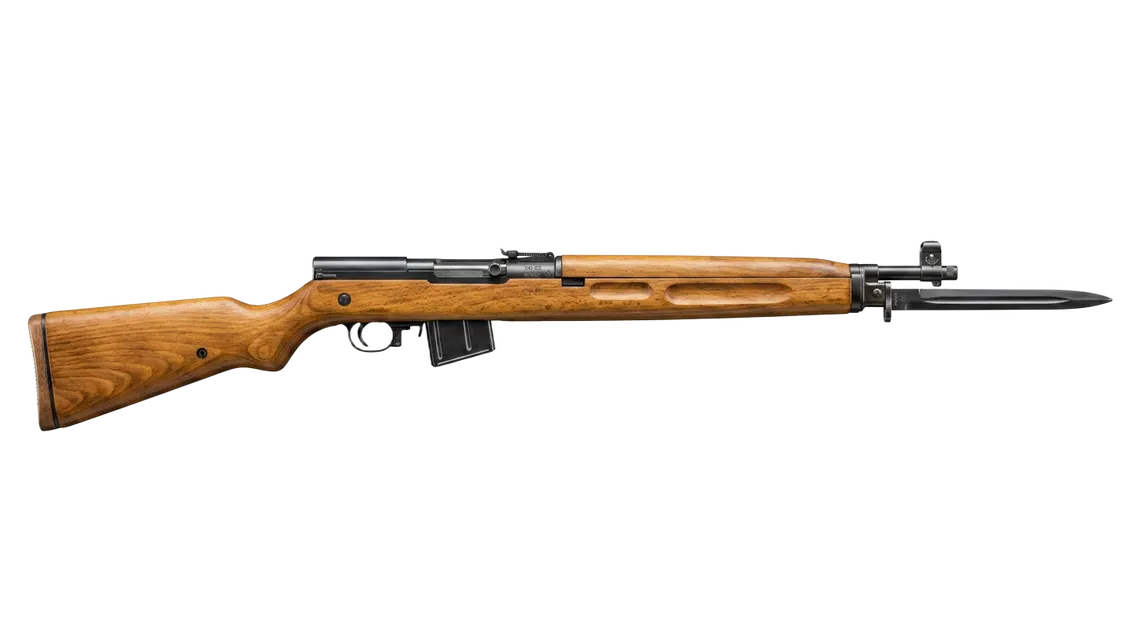
Automatgevär m/42
«Ag m/42 Ljungman»
CarbineSweden1942Historic
Swedish 6.5×55 semi-automatic rifle designed by Erik Eklund along Ljungman's lines: pioneer of the direct-impingement gas system later adopted by the AR-15.
Carbine//Sweden
ID — AG-M42
Designation
Automatgevär m/42
Carl Gustafs Stads Gevärsfaktori
Caliber
6.5×55 mm svedese
Community
Loading…
Data trust
- Reliability
- Unverified
- Sources
- Sources pending review
Identity
- Designation
- Automatgevär m/42
- Alias
- Ag m/42 Ljungman
- Manufacturer
- Carl Gustafs Stads Gevärsfaktori
- Country
- Sweden
- Year
- 1942
- Category
- Carbine
- Status
- Historic
Ballistics
- Caliber
- 6.5×55 mm svedese
- Muzzle velocity
- 745 m/s
- Effective range
- 600 m
- Maximum range
- 2000 m
Dimensions
- Barrel length
- 622 mm
- Overall length
- 1214 mm
- Empty weight
- 4.7 kg
Mechanics
- Operating system
- Presa di gas diretta (direct impingement)
- Bolt / action
- Tilting bolt
Feed
- System
- Caricatore amovibile bifilare
- Standard capacity
- 10 rounds
Fire modes
SafeSemi-auto
Historical profile
Developed under wartime pressure to give Swedish infantry a rapid-fire weapon without relying on foreign supply; production began in 1942 at Eskilstuna.
It was the first service rifle to adopt the direct-impingement gas system, with gas acting straight on the bolt without a piston — a solution later revisited by Eugene Stoner on the AR-15/M16.
Modernised as the Ag m/42B in 1953 with receiver and sight improvements, it remained in second-line service until the 1960s, replaced by the 7.62 NATO Ak 4 (HK G3).
Variants
Ag m/42Ag m/42B
Main users
Sweden · Egitto (Hakim, 7.92×57) · Danimarca
Key components
- ●Stock — Shoulder rest.
- ●Receiver — Weapon body with internal mechanisms.
- ●Grip — Primary grip.
- ●Magazine — Cartridge feed.
- ●Barrel — Guides the projectile.
Community
Loading…
Recent reviews
Related