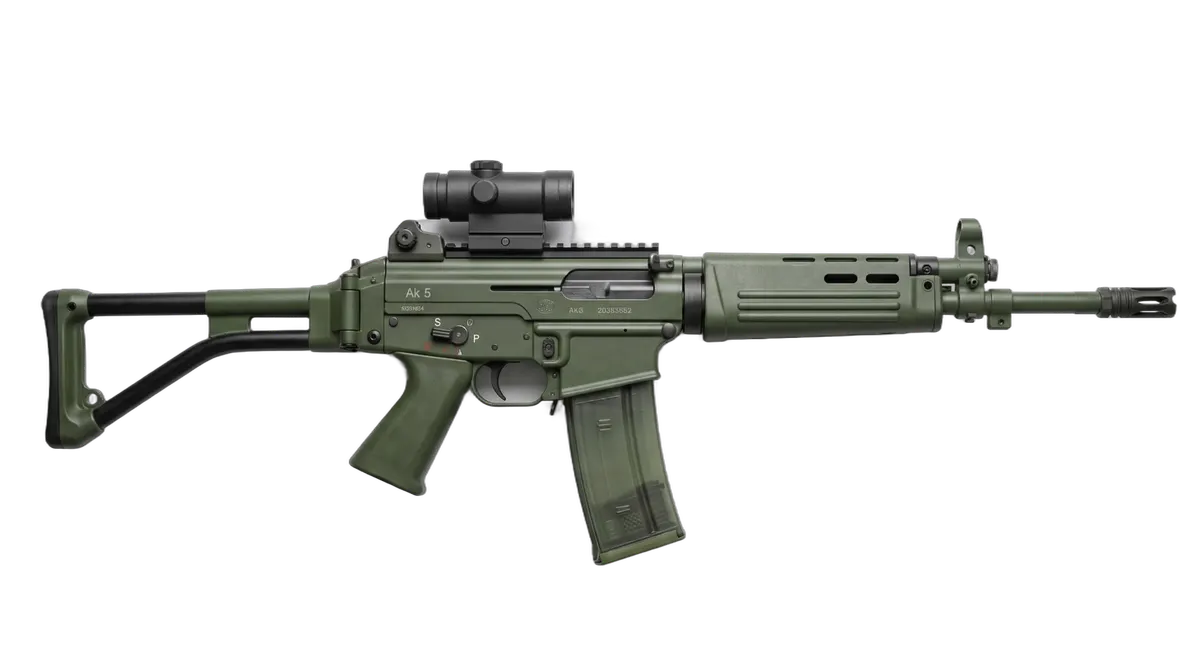
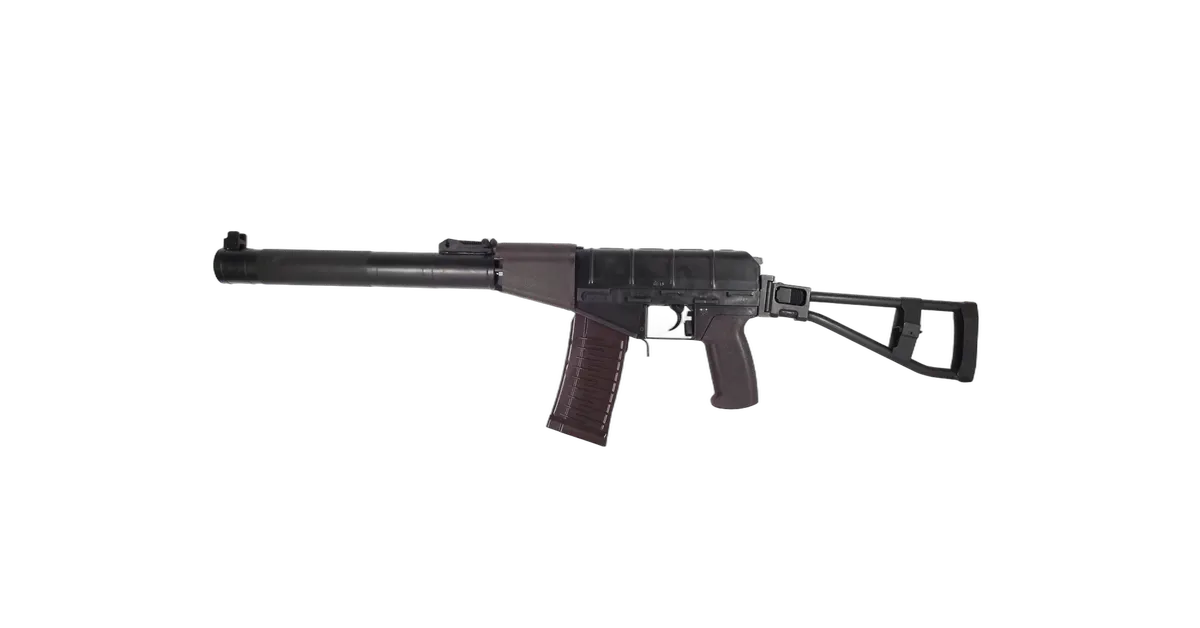
AK-74
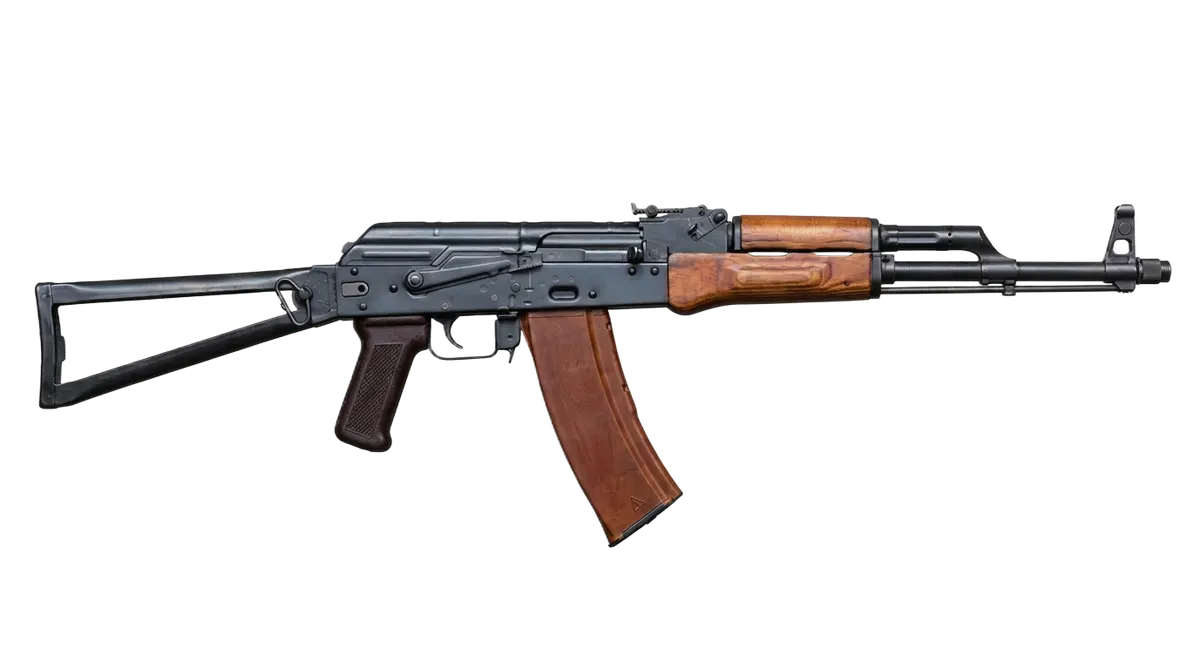
Evolution of the AKM in 5.45×39 mm: reduced recoil, greater accuracy, distinctive muzzle brake.
AK-74
Community
Data trust
- Reliability
- Partially verified
- Sources
- The Russian Way of War (Kalashnikov family and RPK; authors’ study, 2016)Army University Press / Foreign Military Studies Office · Accessed
- Last reviewed
Identity
- Designation
- AK-74
- Manufacturer
- Izhmash
- Country
- Russia
- Year
- 1974
- Category
- Assault rifle
- Status
- In service
Ballistics
- Caliber
- 5.45×39 mm
- Muzzle velocity
- 880 m/s
- Rate of fire
- ~650 rpm
- Effective range
- 500 m
- Maximum range
- 1000 m
Dimensions
- Barrel length
- 415 mm
- Overall length
- 943 mm
- Empty weight
- 3.3 kg
Mechanics
- Operating system
- Gas-operated, long-stroke piston
- Bolt / action
- Rotating bolt
Feed
- System
- Curved double-stack magazine
- Standard capacity
- 30 rounds
Fire modes
Production & service
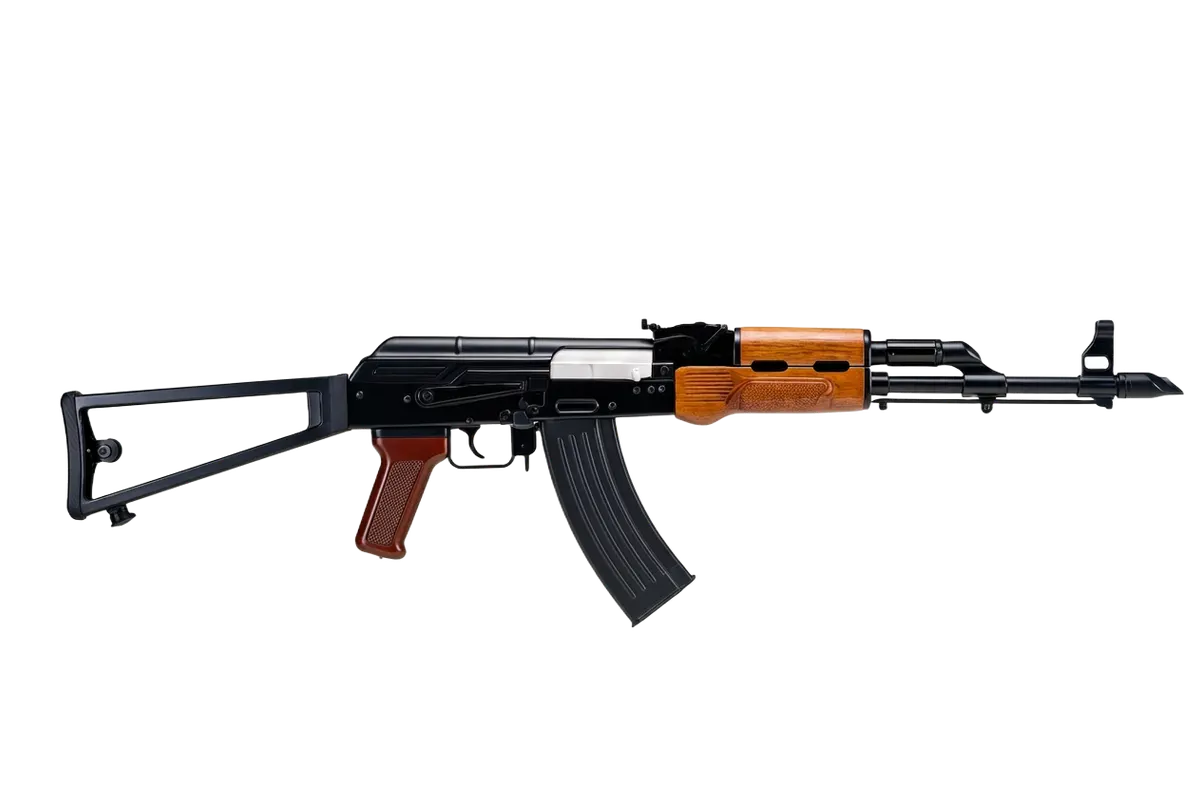
- ●AKS-74 — Side-folding metal stock for airborne troops.
- ●AKS-74U — Short "Krinkov" version, 206 mm barrel.
- ●AK-74M — 1991 standard with polymer side-folding stock.
Historical profile
Development
The Soviet Union launched a new intermediate-caliber program in the mid-1960s, responding to the US adoption of 5.56×45 mm with the M16 in Vietnam. Field testing showed that smaller, faster cartridges delivered flatter trajectories and a higher hit probability at medium range.
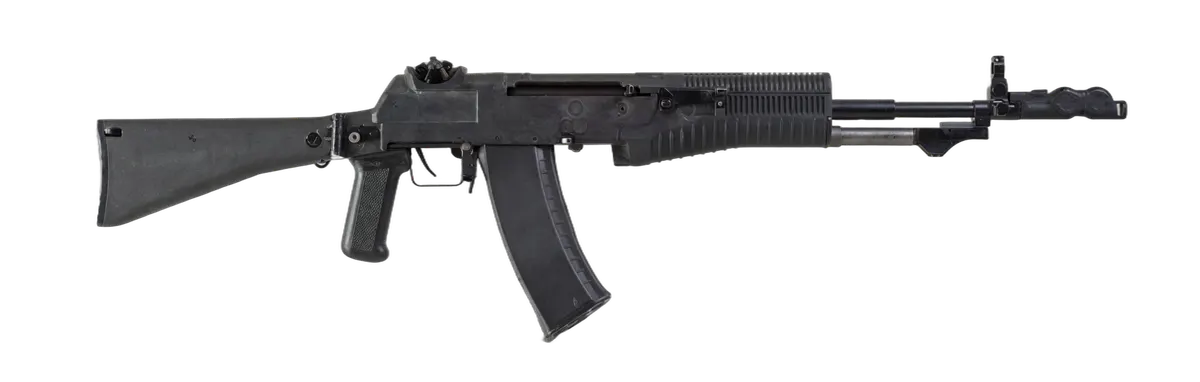
TsNIITochMash developed the 7N6 cartridge in 5.45×39 mm; Mikhail Kalashnikov adapted the AKM architecture to the new round. The rifle was adopted in 1974 as the AK-74.
Design
The architecture reuses the AKM: long-stroke gas piston, rotating bolt, stamped sheet-metal receiver. The barrel uses a tighter rifling twist (1:200 mm) optimized for the light 3.4 g bullet.
Its most recognizable feature is the two-chamber muzzle brake, which significantly reduces muzzle climb and felt recoil. The bakelite-orange or plum polymer magazines visually distinguish it from the 7.62×39 mm variants.
Operational service
The AK-74 saw its baptism of fire in the Soviet–Afghan War (1979–1989), where the mujahideen nicknamed it the "devil's Kalashnikov" for the characteristic wound profile of the 5.45 mm round.
It remained the standard Russian Army rifle until the gradual introduction of the AK-12, and serves with Belarus, Kazakhstan, Ukraine and other former Soviet republics; it has also been used in recent conflicts in the Caucasus and Ukraine.
Variants
Main variants include the AKS-74 with folding metal stock for airborne troops, the compact AKS-74U (206 mm barrel) for vehicle crews and special forces, the AK-74M (1991) with side-folding polymer stock and side rail, and the RPK-74 light machine gun.
Variants
Main users
USSR · Russia · former Soviet republics
Key components
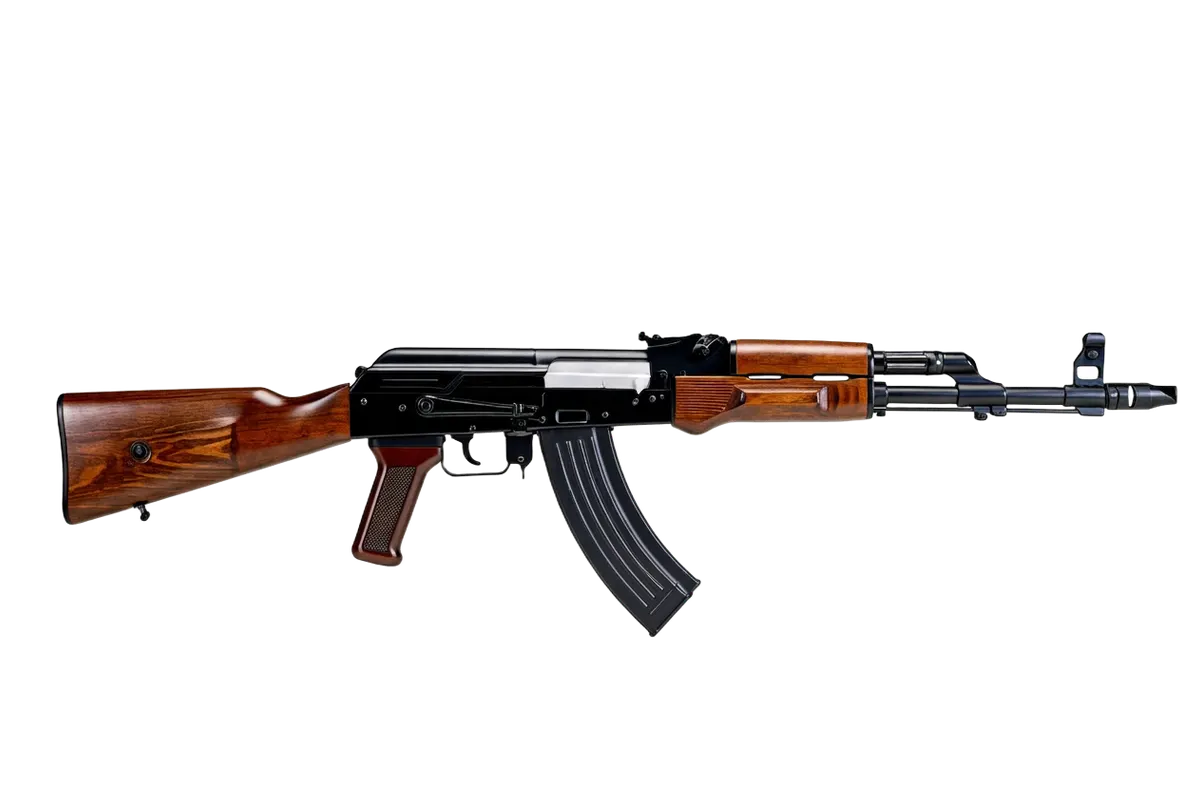
- ●Stock — Buttstock of the standard AK-74; AKS-74 folding-stock and AK-74M furniture details belong to their respective variants.
- ●Receiver — Receiver of the 5.45×39 mm Kalashnikov rifle, distinct in cartridge from the earlier 7.62×39 mm family.
- ●Grip — Pistol grip on the standard AK-74, separate from its rear stock.
- ●Magazine — Detachable box magazine feeding 5.45×39 mm cartridges rather than AKM ammunition.
- ●Barrel — 5.45×39 mm barrel with the standard AK-74’s distinctive muzzle brake.