RPK-16
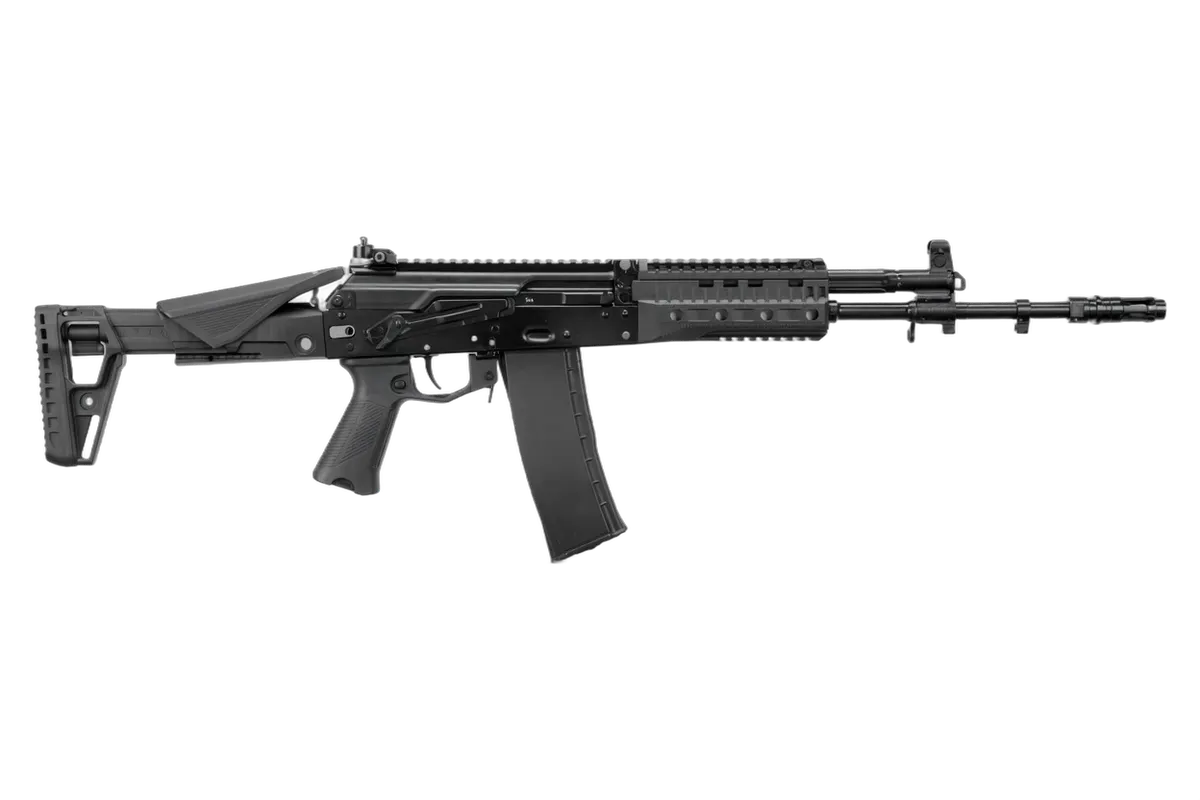
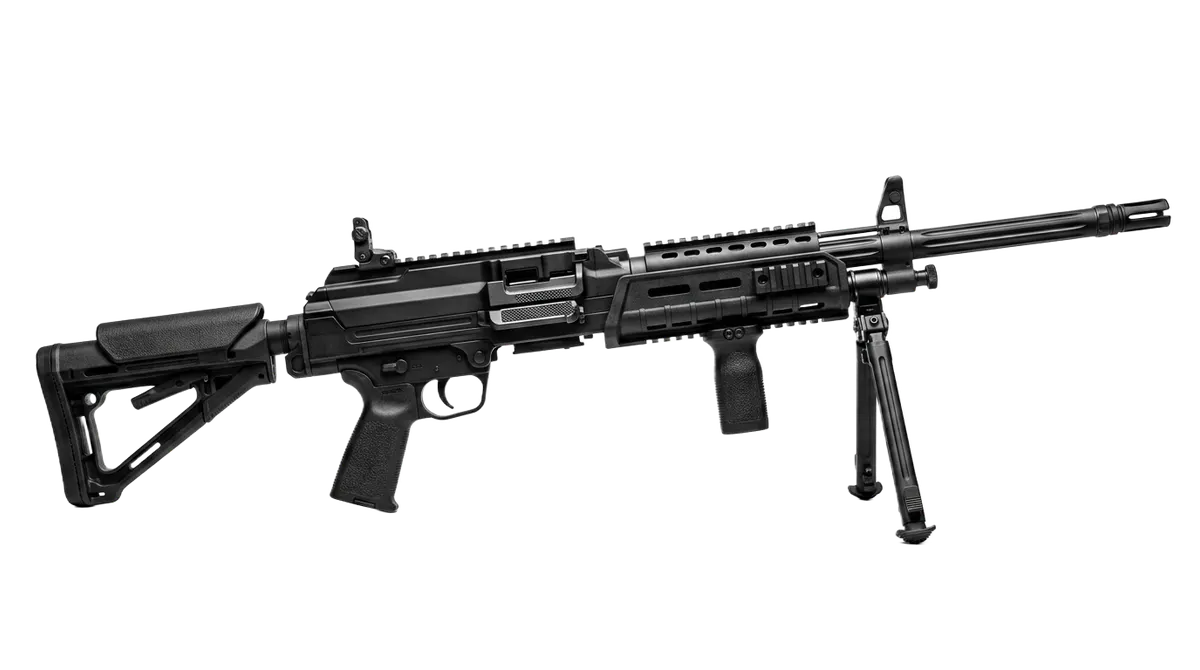
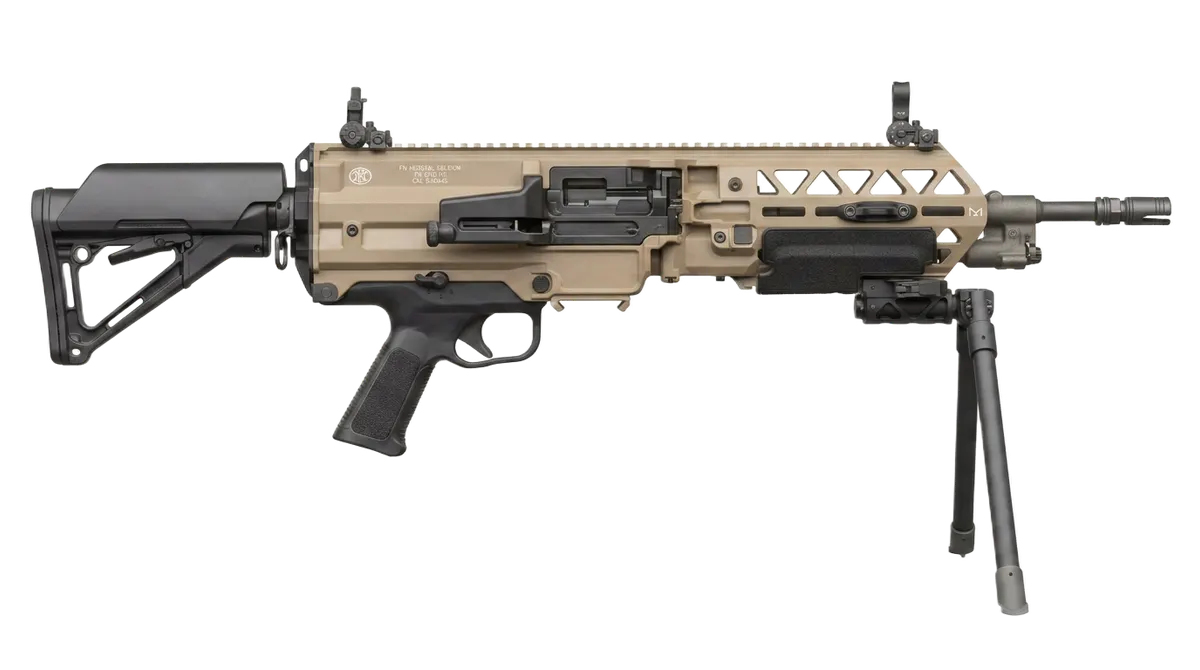
Russian modular light machine gun in 5.45×39 mm derived from the AK-12 platform. It introduces an interchangeable barrel (550 mm long or 415 mm short) and a 96-round drum magazine.
RPK-16
Community
Data trust
- Reliability
- Unverified
- Sources
- Sources pending review
Identity
- Designation
- RPK-16
- Alias
- РПК-16
- Manufacturer
- Kalashnikov Concern
- Country
- Russia
- Year
- 2016
- Category
- Light machine gun
- Status
- Limited
Ballistics
- Caliber
- 5,45×39 mm
- Muzzle velocity
- 910 m/s
- Rate of fire
- ~700 rpm
- Effective range
- 600 m
- Maximum range
- 1000 m
Dimensions
- Barrel length
- 550 mm
- Overall length
- 820 / 1076 mm
- Empty weight
- 4.5 kg
Mechanics
- Operating system
- Sottrazione di gas, otturatore rotante
- Bolt / action
- Long-stroke piston
Feed
- System
- Caricatore amovibile o tamburo
- Standard capacity
- 96 rounds
Fire modes
Historical profile
Development and Program Origins
The RPK-16 originated from Kalashnikov Concern's desire to modernize the squad light machine gun concept, aiming to overcome the structural limitations of the previous RPK-74M. The project began in the early 2010s to meet new urban combat doctrines that required a more maneuverable weapon compared to models with fixed 590 mm barrels.
Officially unveiled during the Army-2016 international military-technical forum, the weapon represents the pinnacle of Russian efforts to integrate assault platform advantages with machine gun firepower. The Russian Ministry of Defense monitored development with the goal of equipping elite units engaged in asymmetric warfare scenarios.
Technical Features and Design
The core of the RPK-16 design lies in its modular nature derived from the AK-12, which allows for barrel interchangeability through a quick-locking system. The 550 mm long barrel is optimized for the heavy support role, while the 415 mm short version transforms the weapon into a heavy assault rifle suitable for close-quarters operations.
The weapon introduces significant ergonomic innovations, such as a telescoping adjustable stock and an integral Picatinny rail interface on the receiver cover, which ensures the stability required for modern optics. The new 96-round drum magazine was designed to provide high sustained fire capacity while remaining compatible with AK-series rifles chambered in 5.45x39 mm.
Operational Service and Field Testing
In 2017, the RPK-16 was sent to Syria for a combat testing phase, where it equipped several Russian special forces units and military police. These tests highlighted the system's versatility, although they also revealed logistical complexities related to maintaining the barrel-change system in dusty desert environments.
Following feedback from the front, the Rosgvardia and the Special Operations Forces Command (SSO) adopted the weapon in limited batches for internal security and counter-terrorism duties. Despite initial expectations of total replacement, the weapon has been used primarily as a specialized tool rather than as standard issue for conventional infantry.
Legacy and Future Developments
The experience gained with the RPK-16 led to the realization that a quick-change barrel on an AK platform did not fully meet the reliability requirements for a standard squad machine gun. This prompted Kalashnikov Concern to develop the RPL-20, a belt-fed machine gun aimed at filling the gaps identified during RPK-16 testing.
Despite being partially superseded by newer designs, the RPK-16 remains a technological turning point that introduced modularity standards previously unseen in Russian support weapons. Some of its components, such as the drum magazine and ergonomic solutions, continue to be used as technical references for subsequent updates to the AK-12 and AK-19 series.
Variants
Main users
Russia (Spetsnaz, Rosgvardia)
Key components
- ●Stock — Shoulder rest.
- ●Receiver — Weapon body with internal mechanisms.
- ●Grip — Primary grip.
- ●Magazine — Cartridge feed.
- ●Barrel — Guides the projectile.