.380 ACP (9×17 mm)
Ubiquitous personal concealed-carry cartridge optimized for lightweight, compact blowback and locked-breech handguns.
- Designation
- —
- Standard
- —
- Origin
- —
- Introduced
- 1908
Community
Technical overview
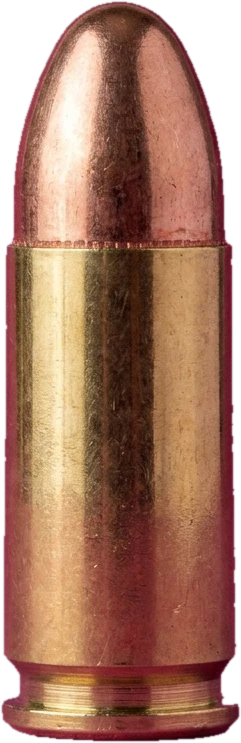
Utilizes a straight-walled rimless brass case holding standard 9mm diameter jacketed bullets. Terminal mechanics in modern defensive loadings rely on jacketed hollow point expansion to maximize kinetic energy transfer while achieving adequate penetration depths in soft tissue.
Strengths & limitations
- + Allows extreme firearm miniaturization for micro-concealed carry.
- + Manageable recoil impulse in modern locked-breech pocket pistols.
- + Wide commercial availability and extensive defensive bullet choices.
- − Marginally lower ballistic performance compared to standard 9×19mm Parabellum.
- − Poor barrier penetration and limited effectiveness against soft body armor.
Ballistics & dimensions
- Bullet diameter
- 9.02 mm (0.355 in)
- Case length
- 17.30 mm (0.681 in)
- Overall length
- 25.00 mm (0.984 in)
- Bullet weight
- 5.5–6.2 g (85–95 gr)
- Muzzle velocity
- 300 m/s (980 ft/s)
- Energy
- 270 J (199 ft·lbf)
- Max pressure
- 1,480 bar (21,466 psi)
- Typical twist rate
- —
Military variants & loadings
No variants recorded yet.
Weapons in the catalog using it (0)
Platforms: Ruger LCP, Walther PPK, SIG Sauer P365-380, Glock 42, Bersa Thunder 380, Smith & Wesson Bodyguard 380
Related cartridges: 9×19 mm Parabellum, 9×18 mm Makarov, .32 ACP
Data trust: Verified (CIP / SAAMI / Official Military Ordnance Specifications)
Doctrine & history
Designed by John Browning and introduced by Colt in 1908 for the Colt Model 1908 Pocket Hammerless. It became a standard military and police sidearm round throughout Europe (known as 9mm Browning Short) for much of the 20th century before evolving into a popular civilian concealed-carry cartridge.