Commands, state-linked actors, public architectures and standards, and the incidents that shaped cyberspace. Public attribution, historical evidence and the limits of what is known.
U.S. unified combatant command for cyberspace operations. The commander of USCYBERCOM has also served as Director of the National Security Agency under a dual-hat arrangement.
The United Kingdom’s joint military and intelligence organization for responsible, offensive and defensive cyber operations in support of national security, as described in official UK publications.
Military cyber warfare and electronic warfare command of Iran's Islamic Revolutionary Guard Corps (IRGC), responsible for coordinating military network protection, domestic information operations, and asymmetric offensive cyber campaigns. Publicly documented operations attributed to IRGC-affiliated units have targeted Middle Eastern energy infrastructure, defense aerospace contractors, diplomatic ministries, and operational technology environments in the United States, Europe, and Israel.
Joint operational command of the French Armed Forces (Commandement de la Cyberdéfense — COMCYBER), responsible for protecting military networks, conducting defensive cyber operations, and planning offensive cyber warfare capabilities in support of French military operations worldwide. Operates under the Chief of the Defence Staff while coordinating closely with France's national civilian cybersecurity agency (ANSSI).
Dedicated cyber, information operations, signals intelligence, and geospatial branch of the German Armed Forces (Cyber- und Informationsraum — CIR). Headquartered in Bonn, CIR consolidates Bundeswehr IT operations, electronic warfare, strategic reconnaissance, and military cyber capabilities on equal institutional footing with the German Army, Navy, and Air Force.
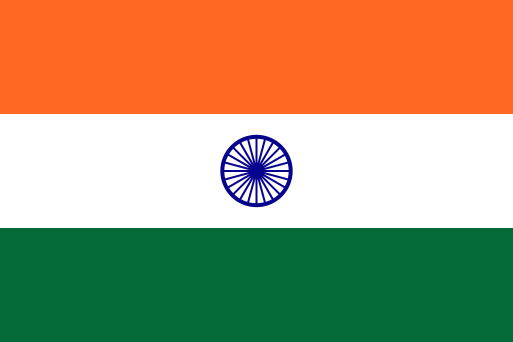
Tri-service military command of the Indian Armed Forces responsible for defending military networks, coordinating cyber operations across the Indian Army, Navy, and Air Force, and developing joint cyber warfare doctrine. Headquartered in New Delhi, DCyA serves as the institutional foundation for a planned full-scale Indian Armed Forces Cyber Command.
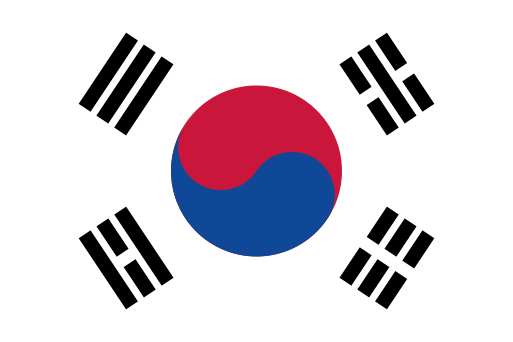
Joint cyber warfare command of the Republic of Korea Armed Forces, tasked with protecting military command-and-control networks, countering persistent North Korean cyber intrusions, and conducting psychological and network operations. Operates in close bilateral coordination with U.S. Cyber Command and South Korea's National Intelligence Service (NIS).
Joint cyber defense command of the Japan Self-Defense Forces (Jieitai Saibā Bōei-tai), established in March 2022 to centralize network monitoring, incident response, and defense of Ground, Maritime, and Air Self-Defense Force communications infrastructure. Under Japan's December 2022 National Security Strategy and Defense Buildup Program, its mandate is expanding toward active cyber defense and allied interoperability with the United States and NATO partners.
Australia's foreign signals intelligence, offensive cyber operations, and national cyber security agency, operating within the Department of Defence portfolio from Canberra. Incorporates the Australian Cyber Security Centre (ACSC) for national critical-infrastructure defense alongside offensive cyber warfare units supporting Australian Defence Force (ADF) operations.
Joint cyber warfare command of the Armed Forces of the Netherlands (Defensie Cyber Commando — DCC), responsible for integrating digital intelligence, defensive cyber operations, and offensive cyber capabilities into Dutch military operations and NATO collective defense. Collaborates closely with the Dutch Defence Intelligence and Security Service (MIVD) and the Joint Sigint Cyber Unit (JSCU).
The NSA group publicly described, in oversight reporting and later disclosures, as the Agency’s organization for computer-network exploitation in support of signals intelligence.
Unit 8200 is the IDF’s well-known signals-intelligence unit. Unit 81 is a distinct military technology unit. Public reporting has associated Unit 8200 with intelligence support to operations such as the 2007 Al-Kibar strike and, in investigative reporting, with the Stuxnet campaign; those operational links are reported, not officially itemized in full.
A GRU unit that the United States, the United Kingdom and other governments have attributed as the actor behind a series of destructive campaigns, tracked in industry as Sandworm (and related names). Public attributions include the 2015–2016 attacks on the Ukrainian power grid, the 2017 NotPetya outbreak, and further disruptive operations against Ukraine.
A GRU cyber-espionage and influence-support unit identified in the July 2018 U.S. indictment of twelve officers for the 2016 Democratic National Committee and related intrusions, and in subsequent allied statements. Industry names include APT28, Fancy Bear, Sofacy and others.
A Russian foreign-intelligence cyber-espionage actor that the United States, the United Kingdom and partners have attributed to the SVR. Industry names include APT29, Cozy Bear, the Dukes, Nobelium and Midnight Blizzard.
A PLA cyber-espionage unit identified in Mandiant’s 2013 APT1 report as Unit 61398, associated with large-scale theft of intellectual property and organizational data, primarily from entities in English-speaking countries.
Active (the PLA cyberspace organization has been reformed; the APT1 / Unit 61398 identity should not be treated as identical to later-named clusters) · Data Trust: Partial
A cluster that CISA, NSA, the FBI and partners have attributed to the People’s Republic of China, described as pre-positioning in some U.S. critical-infrastructure networks. It is not the same actor as APT1 / Unit 61398 or Salt Typhoon.
Active (as described in those advisories) · Data Trust: Partial
A separately tracked, PRC-attributed cluster publicly associated with intrusions into telecommunications providers and related infrastructure. It is not the same actor as APT1 / Unit 61398 or Volt Typhoon.
Active (as described in public official comments) · Data Trust: Partial
A DPRK state-linked cyber enterprise publicly associated with espionage, disruption and large-scale theft, including the 2014 Sony Pictures intrusion, the 2016 Bangladesh Bank theft, and the May 2017 WannaCry outbreak, which the United States and the United Kingdom attributed to Lazarus / DPRK. Industry names include Lazarus and APT38 (the latter often used for the financial-theft subset).
A computer worm that targeted industrial control systems used in uranium enrichment at Natanz, and that is widely assessed to have damaged centrifuges while hiding those effects from operators. It is one of the first publicly documented cases of malware used to cause physical damage to industrial equipment.
Historical / publicly analysed · Data Trust: Partial
Malware designed to interfere with industrial equipment used in electric-power systems. It was used in the December 2016 attack that cut power in parts of Ukraine, the first widely documented case of this family being used against a grid.
Historical family, later followed by Industroyer2 · Data Trust: Partial
A later variant, publicly described in 2022, aimed at high-voltage grid equipment in Ukraine. It is related to, but not identical with, the 2016 Industroyer family.
Publicly analysed 2022 variant · Data Trust: Partial
A rapidly spreading destructive worm, initially appearing as ransomware, that caused worldwide disruption after first hitting Ukrainian networks, including through compromised update software used by many Ukrainian firms. Global companies were severely affected. Public official statements have described the damage as among the most costly in history; a single audited worldwide total is not used here (U.S. officials have cited estimates exceeding $10 billion — treat as an official estimate, not an audited ledger).
Historical (the 2017 outbreak) · Data Trust: Partial
Destructive wiper malware used against Ukrainian government and other organizations immediately before and during the February 2022 invasion. WhisperGate appeared weeks earlier and was sometimes mistaken at first for ransomware; HermeticWiper was used more widely on 23 February.
Historical 2022 campaign families (later related activity may exist; do not invent a current status) · Data Trust: Partial
A large, modular cyber-espionage framework discovered in 2012, found primarily in the Middle East, and publicly compared with the Stuxnet / Duqu family. It was used for intelligence collection, not for the industrial sabotage associated with Stuxnet.
Historical. Researchers reported that operators issued a removal command after public discovery. · Data Trust: Partial
Commercial mobile spyware sold to government agencies for lawful-intercept claims, and repeatedly documented by civil-society and news investigations on the phones of journalists, lawyers and officials.
Active as a commercial product line, with continuing public controversy and export-control actions (including a U.S. Commerce Department Entity Listing of NSO Group in 2021). · Data Trust: Partial
Wiper malware used against satellite-modem and related network equipment. The 24 February 2022 incident disrupted Viasat KA-SAT service for many users in Ukraine and elsewhere in Europe at the start of the full-scale invasion.
Malware that infected large numbers of small office and home routers and related network devices in many countries, and that could be used for interception or to disable devices. Cisco Talos and official statements described infections on the order of 500,000 devices in 54 countries at the time of the 2018 disclosure — use those as the contemporary official/industry figures, dated 2018.
The 2018 botnet was disrupted. Later activity (Cyclops Blink) is a separate, related story. · Data Trust: Partial
Destructive disk-wiping malware family designed to overwrite master boot records and user data on Windows-based enterprise networks across the Middle Eastern energy and government sectors. Most notably deployed in August 2012 against Saudi Aramco, rendering tens of thousands of corporate workstations inoperable and demonstrating how non-kinetic cyber tools can inflict massive economic disruption on strategic energy producers.
An Israeli airstrike that destroyed the clandestine Al-Kibar plutonium-production reactor in Syria’s Deir ez-Zor region, built with North Korean assistance, as later documented by the IAEA and acknowledged by Israel in 2018. Public coverage of the declassification described approximately 17 tons of precision-guided munitions. How Syrian air defences were blinded is widely discussed in journalism as a mix of electronic warfare and possible network attack, sometimes compared with the U.S. “Suter” family; those mechanisms are not officially itemized in the same detail and must not be written as verified packet-level fact. Specific Syrian battery types (for example Pantsir-S1 in 2007) are not treated as confirmed.
Waves of distributed denial-of-service and related disruption against Estonian government, banking, media and other websites after the relocation of the Bronze Soldier monument in Tallinn. The events were an important catalyst for NATO’s Cooperative Cyber Defence Centre of Excellence in Tallinn and for later Allied cyber-defence policy.
A cyber-espionage campaign disclosed by Google in January 2010, affecting Google and other companies, and involving theft of intellectual property and access to email accounts of Chinese human-rights activists, as Google described it at the time. The disclosure was a turning point in public discussion of state-linked corporate espionage.
Breaches of U.S. Office of Personnel Management systems that exposed federal personnel records and, separately, background-investigation files. OPM announced that the background-investigation breach affected 21.5 million people, and that 5.6 million fingerprint records were involved; a related earlier personnel-records breach was described as affecting about 4.2 million people. These official figures may be used, sourced to OPM.
A supply-chain operation in which trojanized updates of SolarWinds Orion software were distributed to a large customer base. SolarWinds said that up to about 18,000 customers received a trojanized update; official and company reporting later described a much smaller set of victims in which the intrusion was actually followed through (often cited as fewer than 100). Use those as dated official/company figures, not as a new census.
Historical campaign (remediation continued afterwards) · Data Trust: Partial
A ransomware attack on Colonial Pipeline Company that led the operator to halt the major U.S. East Coast refined-products pipeline, causing fuel shortages and emergency measures. The company paid a ransom in bitcoin; the Department of Justice later announced recovery of a large portion of that ransom (publicly described as 63.7 of the 75 bitcoin paid). Official policy aftermath included new TSA pipeline cybersecurity requirements.
Historical criminal incident with national-infrastructure impact · Data Trust: Partial
Voluntary cybersecurity risk management framework published by the U.S. National Institute of Standards and Technology (NIST) to help critical infrastructure operators, government agencies, and private organizations organize cybersecurity governance. Version 2.0 (2024) structures organizational outcomes around six core functions: Govern, Identify, Protect, Detect, Respond, and Recover.
Premier international standard specifying requirements for establishing, implementing, maintaining, and continually improving an Information Security Management System (ISMS). Widely required across defense supply chains, telecommunications operators, and government contractors to demonstrate auditable organizational risk management.
Globally adopted, openly accessible knowledge base and behavioral taxonomy of adversary tactics and techniques derived from real-world cyber incident observations. MITRE ATT&CK (Adversarial Tactics, Techniques, and Common Knowledge) provides a standardized common language for defense teams, national CERTs, and military cyber protection units to classify intrusion lifecycle phases and assess defensive coverage.
Prioritized, prescriptive set of defensive cybersecurity safeguards developed by an international consensus of government, defense, and industry practitioners to mitigate the most pervasive cyberattack vectors. Organized into three Implementation Groups (IG1, IG2, IG3) to scale foundational cyber hygiene from small organizations to large, high-security enterprises.
Landmark legal reference manuals examining how existing international law—including the UN Charter, state sovereignty, state responsibility, and the Law of Armed Conflict (International Humanitarian Law)—applies to cyber warfare and peacetime cyber operations. Widely cited by military legal advisers, defense ministries, and foreign ministries across NATO and allied nations.
Architectural cybersecurity paradigm ("never trust, always verify") replacing traditional perimeter-centric network defenses with continuous identity verification, device health attestation, micro-segmentation, and least-privilege access for every transaction. Formally adopted across the U.S. Department of Defense Information Network (DODIN) and NATO federated mission networks to contain lateral movement following perimeter breaches.
In service · Data Trust: Partial
CLASSIFIEDGENERIC ILLUSTRATION
Generic illustration — not a depiction of any actual system. CLASSIFIED is a visual label, not an official classification statement.

 United States
 United Kingdom
 Iran
 France
 Germany
 India
 South Korea
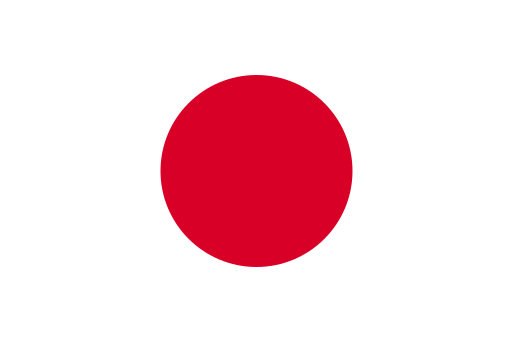 Japan
 Australia
 Netherlands
 Israel
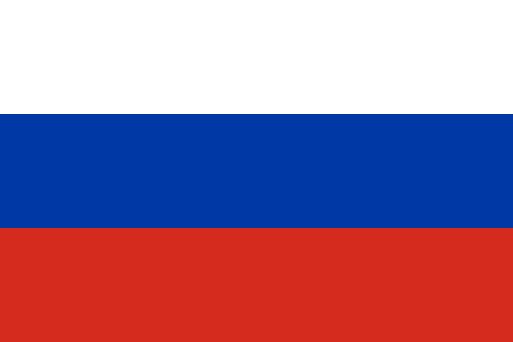 Russia
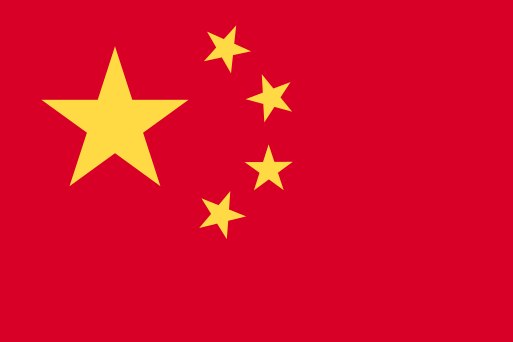 China
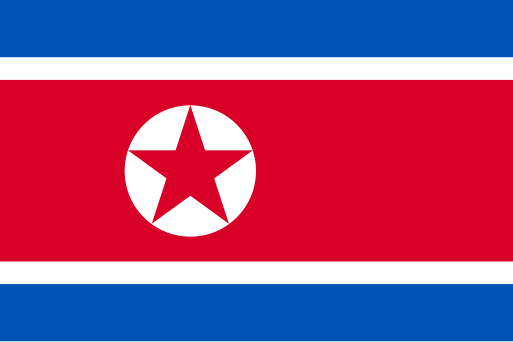 North Korea