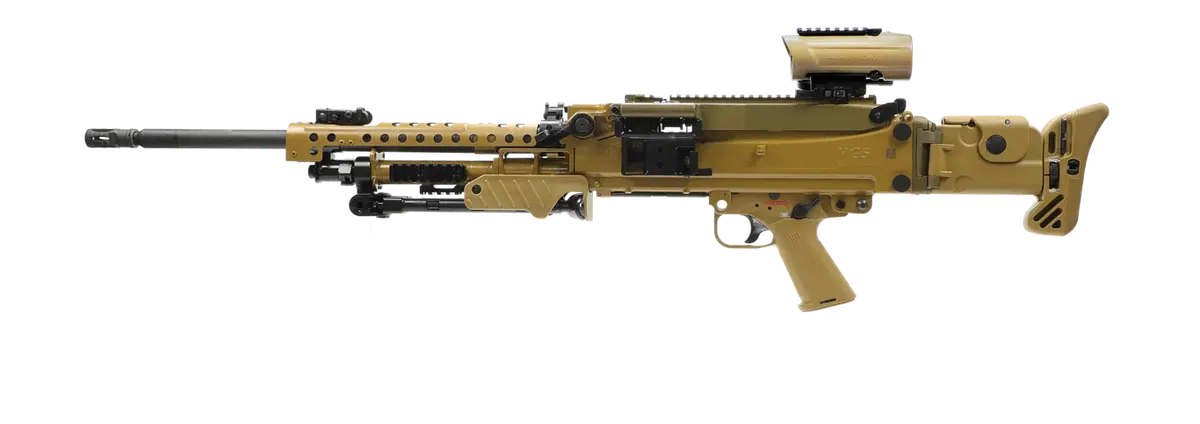
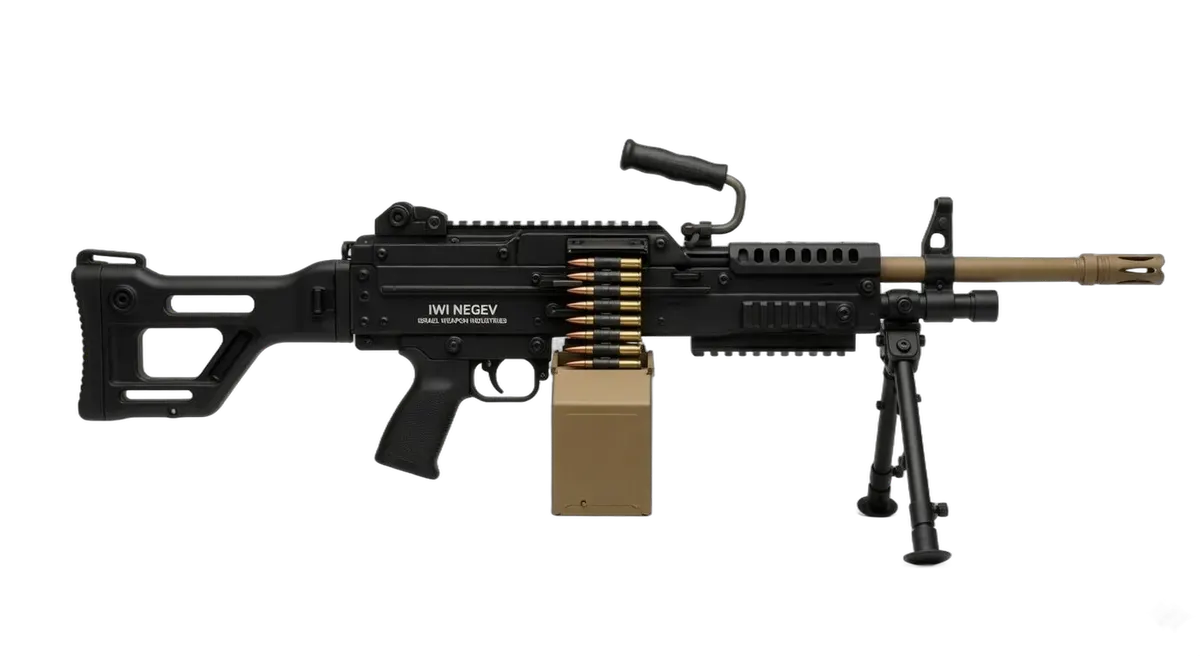
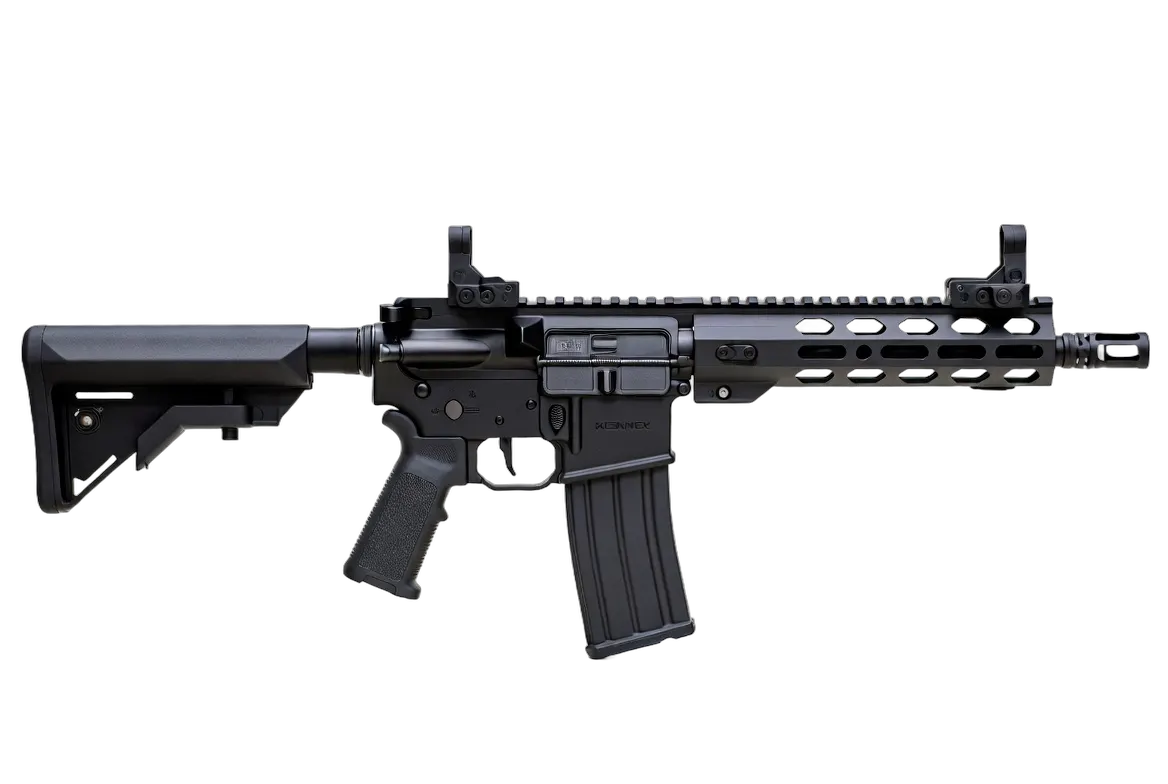
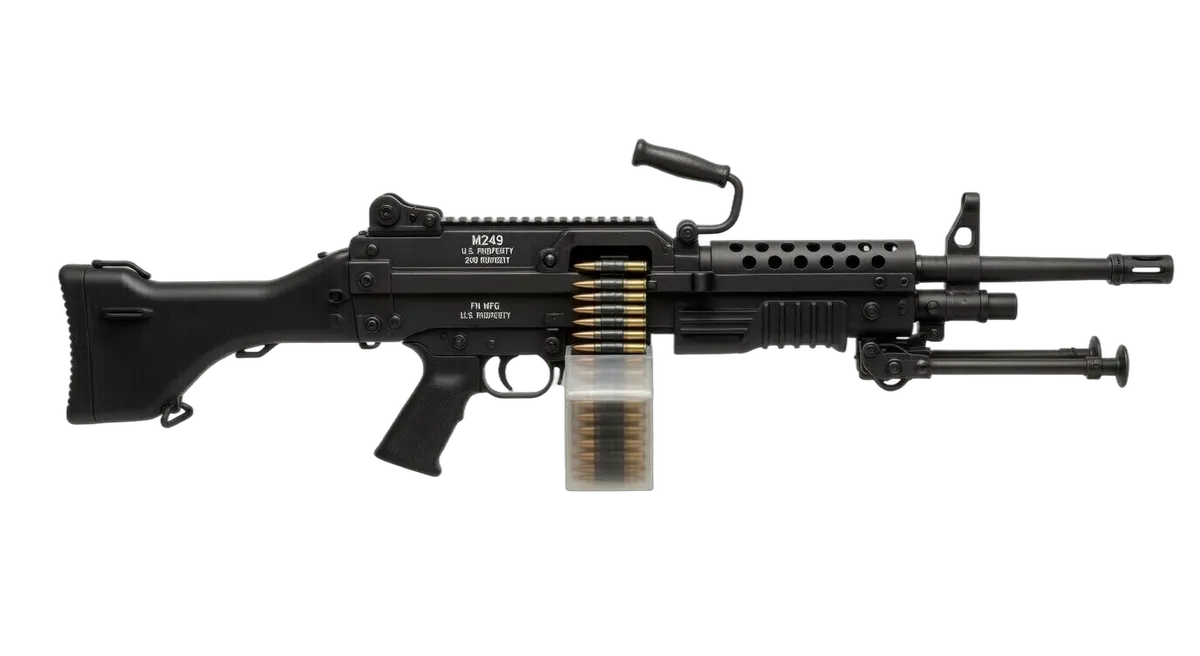
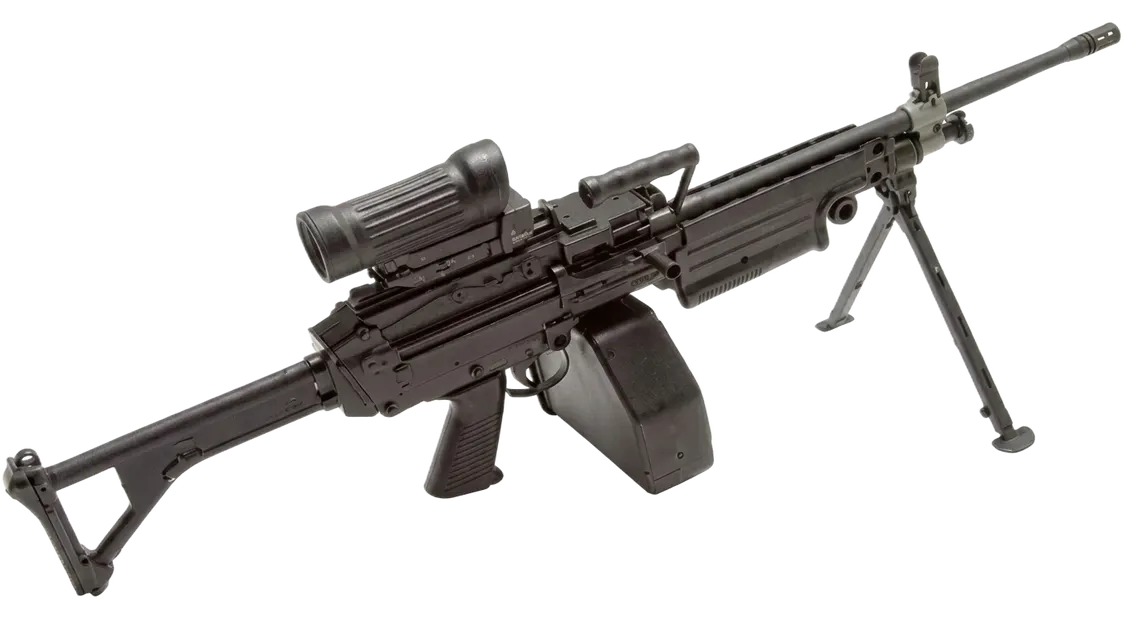
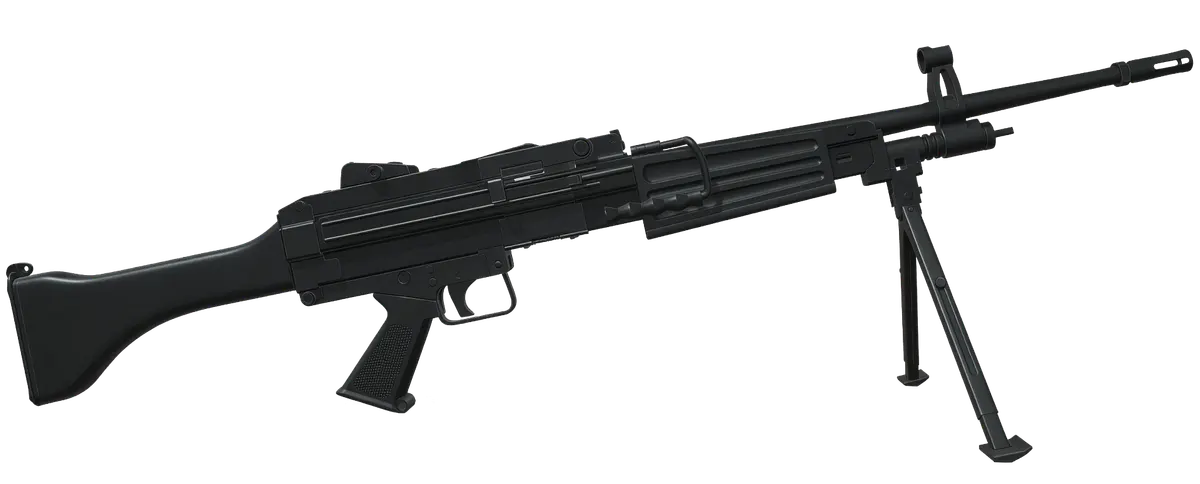
HK MG4
Country:  GermanyManufacturer: Heckler & Koch
Belt-fed 5.56×45 mm NATO light machine gun developed by Heckler & Koch to replace the MG3 as the German Bundeswehr's squad automatic weapon.
HK MG4
Community
Data trust
- Reliability
- Unverified
- Sources
- Sources pending review
Identity
- Designation
- HK MG4
- Alias
- MG43
- Manufacturer
- Heckler & Koch
- Country
- Germany
- Year
- 2003
- Category
- Light machine gun
- Status
- In service
Ballistics
- Caliber
- 5,56×45 mm NATO
- Muzzle velocity
- 920 m/s
- Rate of fire
- ~850 rpm
- Effective range
- 600 m
- Maximum range
- 1000 m
Dimensions
- Barrel length
- 482 mm
- Overall length
- 830 / 1030 mm
- Empty weight
- 8.15 kg
Mechanics
- Operating system
- Presa di gas a pistone lungo
- Bolt / action
- Otturatore rotante, canna a cambio rapido
Feed
- System
- Nastro disintegrabile M27
- Standard capacity
- 200 rounds
Fire modes
Historical profile
Development and Origins of the MG43
The MG4 development program began in the late 1990s when Heckler & Koch decided to design a modern squad automatic weapon to compete with the FN Minimi. First presented in 2001 under the provisional designation MG43, the weapon aimed to fill the gap left by the MG3 in 5.56 mm NATO caliber, offering a lighter and more manageable platform for dismounted infantry.
The German Ministry of Defense's primary goal was the acquisition of a weapon system providing high rates of fire with reduced weight to support operational units in high-mobility scenarios. Following a series of rigorous environmental and reliability tests, the MG43 project was officially adopted by the Bundeswehr in 2003, receiving the military designation MG4.
Technical Architecture and Mechanics
The MG4 is a gas-operated machine gun featuring a short-stroke piston located under the barrel and a rotating bolt for maximum locking security. Unlike the previous MG3, feeding occurs exclusively via M27 disintegrating belts, eliminating the possibility of using STANAG magazines to ensure greater cyclic reliability during sustained fire.
The barrel is equipped with a quick-change system featuring an integrated carrying handle that also acts as a release lever, allowing the operator to replace the overheated component in seconds without protective gloves. The structure includes a side-folding polymer stock on the left and an integrated bipod, while the top of the receiver houses a MIL-STD-1913 Picatinny rail for the installation of Zeiss optics or laser pointers.
Operational Service in Modern Conflicts
The MG4 received its baptism of fire during the ISAF mission in Afghanistan, where it was extensively used by Bundeswehr paratroopers and panzergrenadiers for convoy defense and tactical support. German troops appreciated the weapon's accuracy at medium ranges and the ease of logistical supply guaranteed by the standardization of the 5.56 mm caliber with the G36 rifle.
In addition to Germany, Spain adopted the MG4 as the standard squad automatic weapon for the Ejército de Tierra starting in 2007, ordering thousands of units to modernize its light infantry departments. Other operators include Malaysia, which equipped its PASKAL naval special forces, and Portugal, solidifying the weapon's reputation as one of the most reliable LMG systems within NATO.
Variants and Tactical Legacy
Over the years, several variants have been introduced, including the MG4E for the export market and the MG4KE with a shortened barrel for close-quarters operations or elite troops. Another significant version is the MG4A3, which introduces significant ergonomic improvements and new protective coatings, extending the platform's operational life well beyond the second decade of the 21st century.
The MG4's influence is evident in the development of its larger sibling, the MG5 (HK121) in 7.62 mm caliber, which follows its ergonomic and functional layout to permanently replace the MG3 in heavy support roles. Today, the MG4 remains a pillar of squad-level firepower, representing the ideal balance between the volume of fire of a machine gun and the portability required by modern infantry.
Variants
Main users
Germany (Bundeswehr) · Spain · Brunei · Kuwait · Malaysia
Key components
- ●Stock — Shoulder rest.
- ●Receiver — Weapon body with internal mechanisms.
- ●Grip — Primary grip.
- ●Magazine — Cartridge feed.
- ●Barrel — Guides the projectile.