
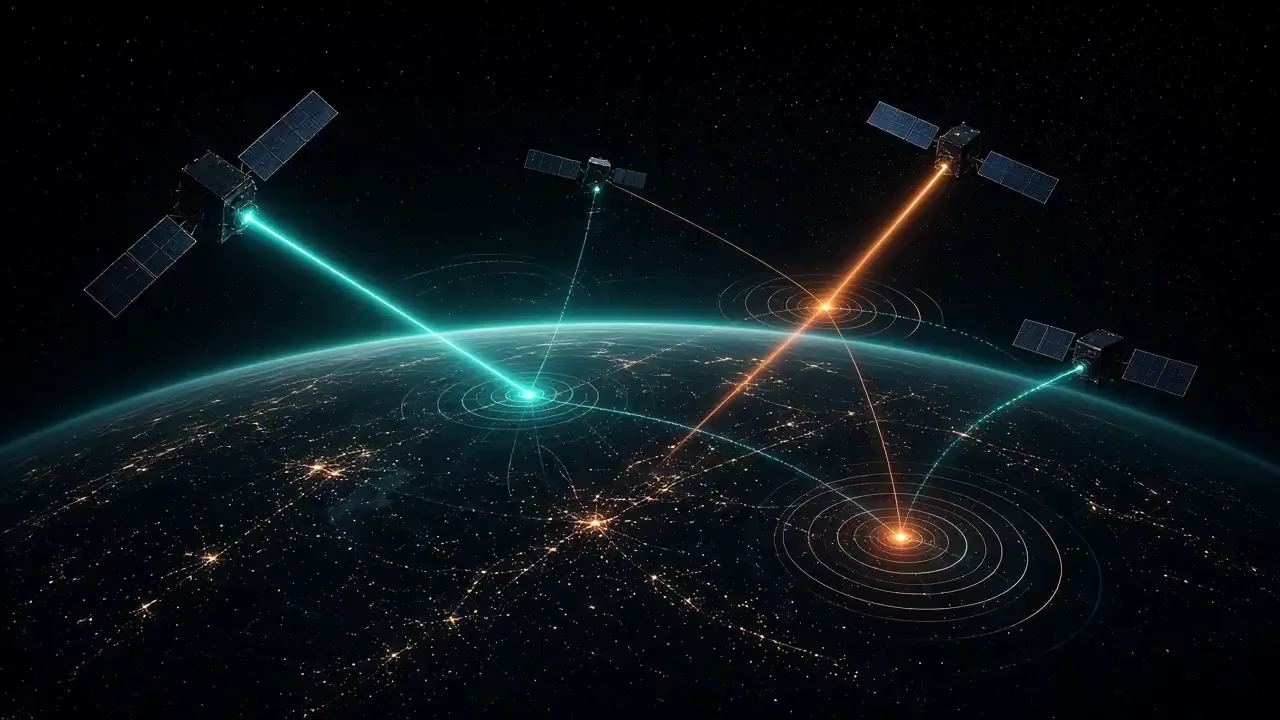
SBSS (Space Based Surveillance System / Block 10)
Country:  United StatesManufacturers: Ball Aerospace & Technologies (spacecraft bus & sensor), Boeing (co-manufacturer)
Developed by the U.S.
AI render based on photo by unknown author, Public domain
Wikimedia Commons referenceCommunity
Identity5 fields
- Country
- United States
- Manufacturer
- Ball Aerospace & Technologies (spacecraft bus & sensor) / Boeing
- Introduction
- 2010
- Status
- In service
- Category
- Space surveillance / inspector satellite
Mission8 fields
- Orbit
- Sun-Synchronous Orbit (SSO)
- Operator
- United States Space Force (Space Delta 2)
- Payload
- 30-centimeter visible-spectrum optical telescope mounted on a two-axis gimbaled pointing platform, equipped with a wide-field-of-view staring camera
- Altitude & Inclination
- ~630 km circular | 97.8° inclination
- Launch Mass
- ~1,031 kg
Data trust
- Reliability
- Unverified
- Sources
- Sources pending review
- Last reviewed

Historical profile
Developed by the U.S. Air Force and Ball Aerospace as the first dedicated space-based optical sensor designed specifically for the Space Surveillance Network (SSN). Unlike ground telescopes restricted by nighttime darkness and clear skies, SBSS operates above the atmosphere in a sun-synchronous twilight orbit, maintaining 24/7 continuous optical tracking of high-value objects in deep geosynchronous orbit.
Provides foundational space domain awareness data to the Joint Space Operations Center (JSpOC / National Space Defense Center), cataloging orbital debris, active commercial spacecraft, and untracked foreign military maneuvers in GEO.
Variants and blocks: SBSS Block 10 (single pathfinder vehicle; follow-on architectures integrated into modern commercial and military SDA programs).
