
Micius / QUESS (Quantum Experiments at Space Scale)
Country:  ChinaManufacturer: Innovation Academy for Microsatellites (IAMCAS)
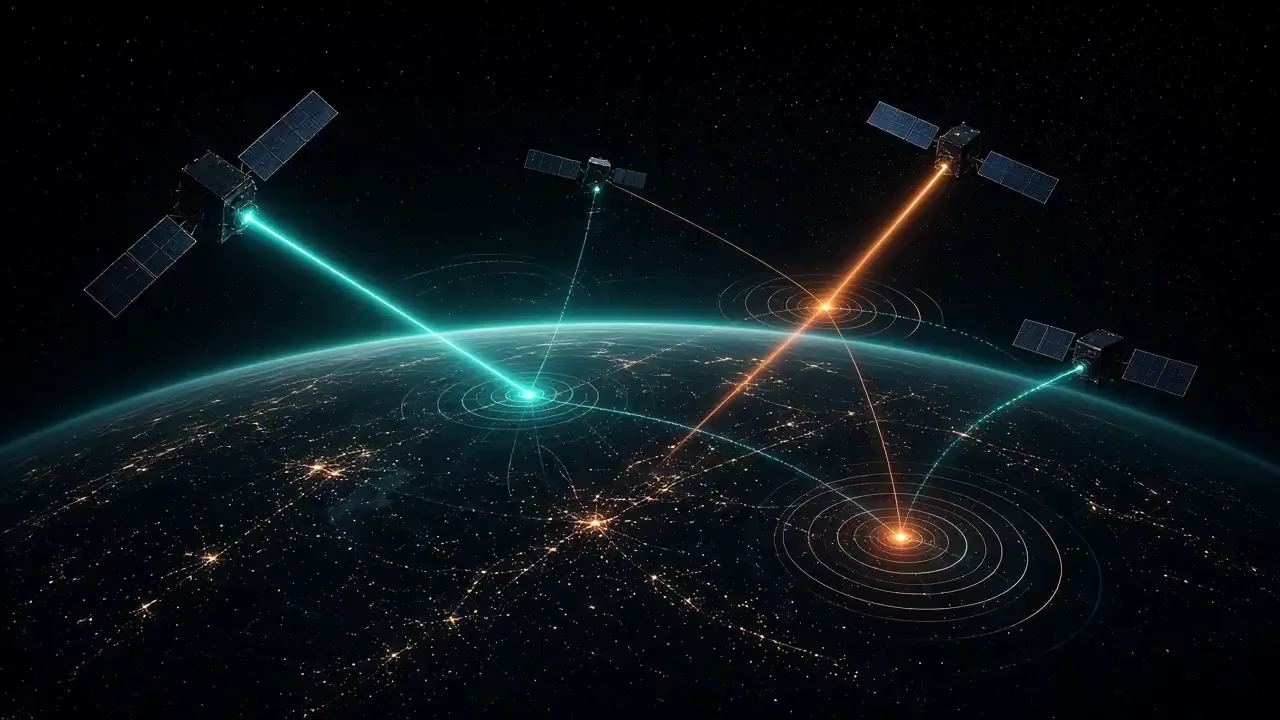
Named after the ancient Chinese philosopher and scientist Mozi, Micius was launched as the world's first quantum communication satellite.
Owner-supplied artwork
Community
Identity5 fields
- Country
- China
- Manufacturer
- Innovation Academy for Microsatellites (IAMCAS)
- Introduction
- 2016
- Status
- In service
- Category
- Communications satellite
Mission8 fields
- Orbit
- Sun-Synchronous Orbit (SSO)
- Operator
- Chinese Academy of Sciences (CAS) / University of Science and Technology of China (USTC)
- Payload
- High-precision optical telescope, polarization-entangled photon source, quantum key distribution (QKD) transmitter, and high-bandwidth laser communications subsystem
- Altitude & Inclination
- ~500 km circular | 97.4° inclination
- Launch Mass
- ~631 kg
Data trust
- Reliability
- Unverified
- Sources
- Sources pending review
- Last reviewed
Historical profile
Named after the ancient Chinese philosopher and scientist Mozi, Micius was launched as the world's first quantum communication satellite. Designed to test unhackable quantum key distribution (QKD) over intercontinental distances, the satellite exploits quantum entanglement to distribute cryptographic keys between space and ground stations separated by over 1,200 kilometers (Delingha and Nanshan in China, alongside ground nodes in Graz, Austria).
Successfully established intercontinental secure quantum-encrypted video conferencing between Beijing and Vienna (2017); serves as the vanguard for China's planned global quantum satellite constellation intended to immunize military and diplomatic communications against quantum computing code-breaking.
Variants and blocks: Prototype single-unit testbed; paves the way for higher-altitude operational QKD constellations.
