
Ballistic helmet
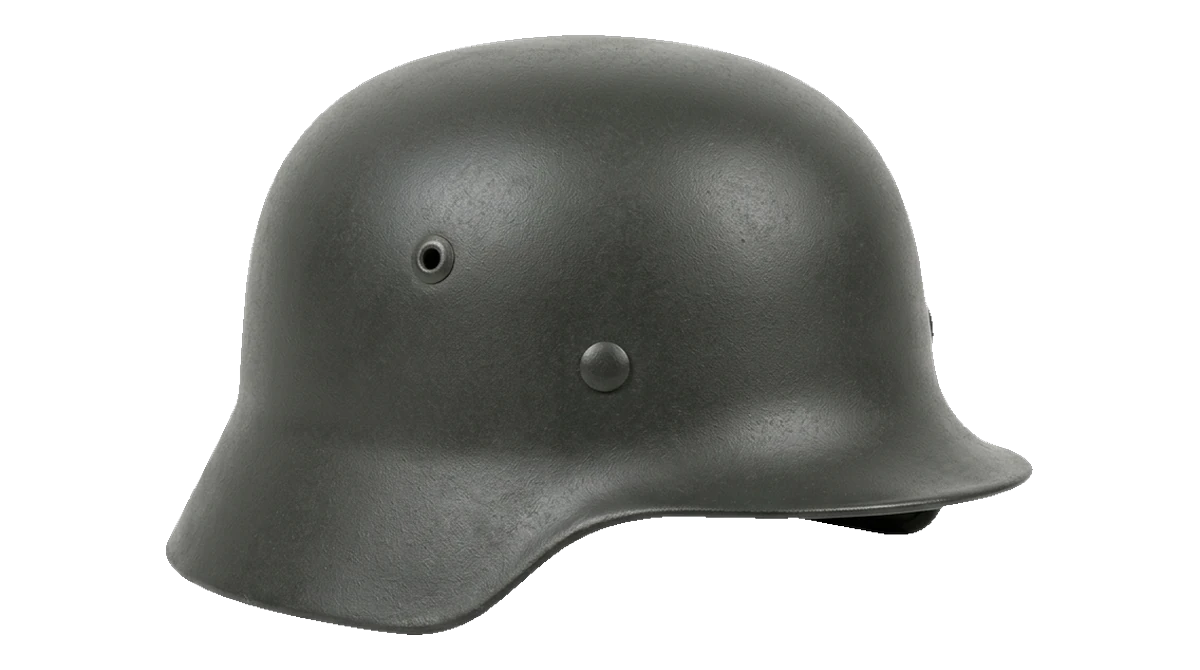
Stahlhelm M35
Engineered under the direction of Dr. Friedrich Schwerd and the German Army Weapons Agency (Heereswaffenamt), the M35 refined the WWI Stahlhelm silhouette by reducing visor and skirt flare, lowering weight, and introducing stamped ventilation bushings and a rolled edge for structural rigidity and wearer safety.
Community
Loading…
Specifications
- Category
- Ballistic helmet
- Country
- Germany
- Manufacturer
- Eisenhüttenwerke Thale / Quist / Vereinigte Deutsche Nickelwerke / ET / NS
- Introduced
- 1935
- Status
- Retired
- Protection level
- High-velocity shrapnel, shell fragments, and low-velocity pistol rounds (V50 ≈ 280–310 m/s); offered superior temple, ear, and nape coverage compared to contemporary Allied helmets
- Material
- Hot-pressed molybdenum-alloyed sheet steel (replacing silicon-nickel steel of WWI M16/M18 models)
- Weight
- ~0.98–1.25 kg (2.16–2.75 lb) depending on shell size (60–70)
- Users
- —
- Suspension / Liner
- M31 aluminum/steel liner band with 8- or 9-finger vegetable-tanned sheepskin/pigskin leather suspension and drawstring crown adjustment
- Accessories & Mounting
- Side ventilation grommets, painted branch decals, reversible cloth camouflage covers (Splittertarnmuster, Erbsenmuster), wire mesh foliage baskets
- Variants & modernizations
- M35 (separate riveted vent bushings, rolled edge), M40 (stamped integral vent holes, manganese-silicon steel), M42 (unrolled raw flared edge to simplify wartime stamping).
History
Issued across all branches of the Wehrmacht (Heer, Luftwaffe, Kriegsmarine) and Waffen-SS from 1935 through World War II, as well as exported to Nationalist China and Spain. Its ergonomic geometry directly influenced modern composite helmets, including the U.S. PASGT design.
Related systems
—
Sources
- Data trust: Verified (Wehrmacht Ordnance Specifications & Ballistic Heritage Studies)
Community
Loading…
