
Body armor & plates
Interceptor Body Armor (IBA)
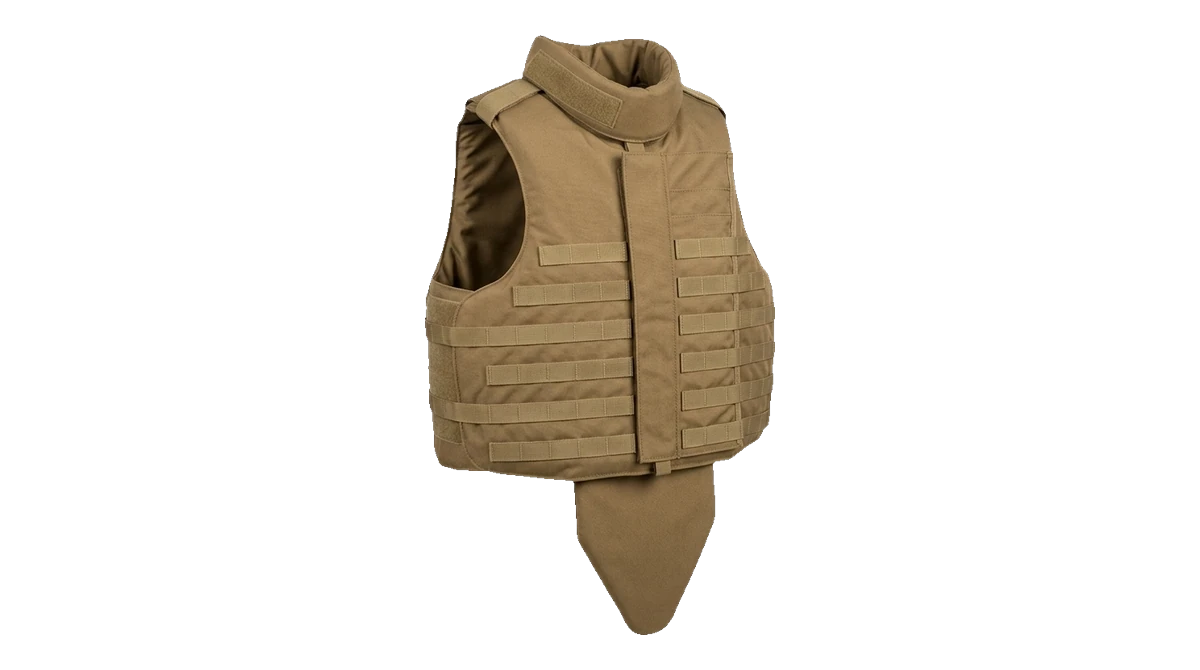
Developed in the late 1990s to replace the fragmentation-only PASGT vest with a modular system capable of stopping high-velocity rifle fire. The Interceptor combined a lighter Kevlar KM2 soft vest with boron-carbide/silicon-carbide ceramic plates and PALS webbing, revolutionizing modern infantry load carriage.
AI render based on photo by MilitariaBelgium/CollectorOfInsignia, CC BY-SA 3.0
Community
Loading…
Specifications
- Category
- Body armor & plates
- Country
- United States
- Manufacturer
- Point Blank Body Armor / Specialty Defense Systems (SDS)
- Introduced
- 1999
- Status
- Retired / Reserve Service (Replaced by IOTV/MTV)
- Protection level
- NIJ Level IIIA soft armor (9×19 mm FMJ) + NIJ Level III / IV hard plate protection (SAPI stops 7.62×51 mm M80 ball; ESAPI stops .30-06 M2 AP armor-piercing rifle rounds)
- Material
- Outer Tactical Vest (OTV) with multi-layer fine-weave Kevlar KM2 soft ballistic inserts
- Weight
- ~7.44 kg (16.4 lb) complete with OTV soft armor (3.8 kg) and front/back SAPI plates (3.6 kg); up to ~15 kg with full throat, groin, and deltoid protectors
- Users
- —
- Hard Plate Compatibility
- Front and rear internal pockets accepting Small Arms Protective Inserts (SAPI / ESAPI) ceramic plates + optional side-SAPI pouches
- Modularity & Load Carriage
- Introduced PALS/MOLLE webbing grid directly across the vest exterior, eliminating the need for separate load-bearing vests
- Variants & modernizations
- OTV Gen I (Woodland/DCU), OTV Gen II (UCP/Coyote Brown, added quick-release and side-plate support).
History
Served as the primary combat body armor of the U.S. Army and U.S. Marine Corps during the early years of Operation Enduring Freedom (Afghanistan) and the 2003 invasion of Iraq, saving thousands of lives from sniper and rifle fire before being succeeded by the IOTV and MTV.
Related systems
—
Sources
- Data trust: Verified (U.S. Army PEO Soldier & USMC Systems Command Program Records)
Community
Loading…
