Body armor & plates
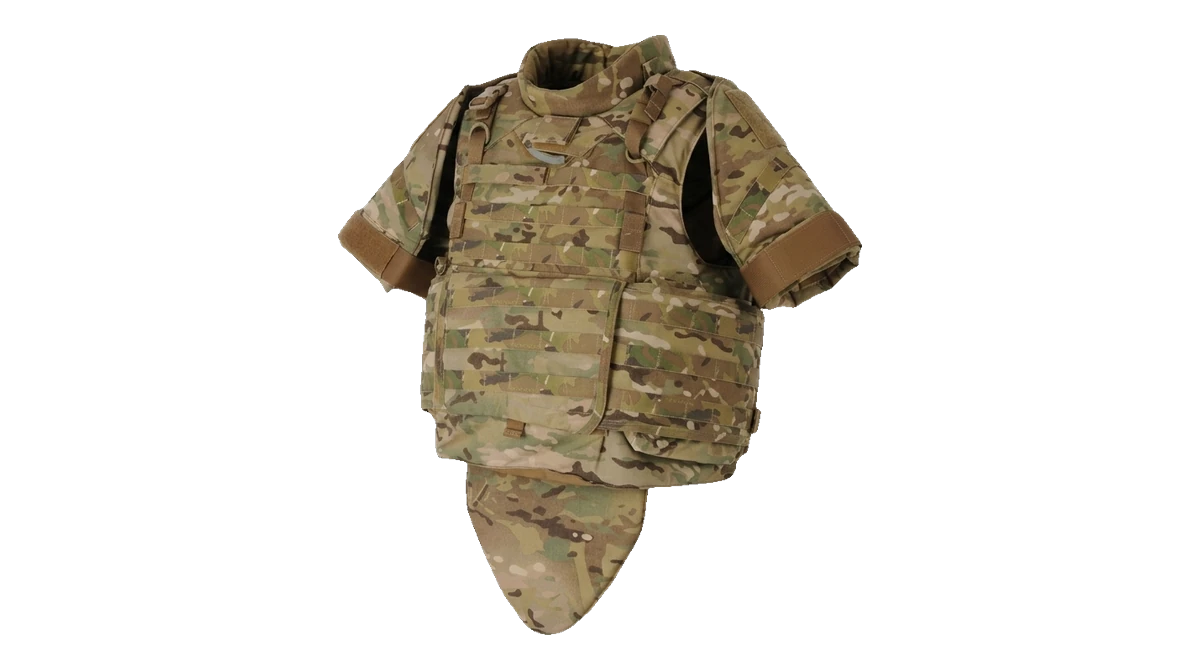
Improved Outer Tactical Vest (IOTV)
Developed by the U.S. Army to replace the Interceptor OTV, the IOTV addressed key feedback from Iraq and Afghanistan by adding an internal elastic cummerbund to distribute weight ergonomically, integrated side-plate carriers, lower-back kidney protection, and a single-pull quick-release mechanism for rapid medical access or water egress.
AI render based on photo by Unknown author Unknown author, Public domain
Community
Loading…
Specifications
- Category
- Body armor & plates
- Country
- United States
- Manufacturer
- Point Blank Enterprises / KDH Defense Systems / BAE Systems
- Introduced
- —
- Status
- Active (Standard Issue U.S. Army; supplemented by MSV)
- Protection level
- NIJ Level IIIA soft armor + NIJ Level IV+ hard plate protection (ESAPI / XSAPI defeat 7.62×54 mm R B32 API and .30-06 M2 AP threats)
- Material
- Multi-layer woven para-aramid / UHMWPE hybrid soft ballistic panels (vest, cummerbund, collar, groin, and lower-back protectors)
- Weight
- ~13.6–15.9 kg (30–35 lb) full configuration with ESAPI/side plates (Gen I); reduced to ~11.8 kg (26 lb) in Gen IV
- Users
- —
- Introduction dates
- 2007 (Gen I), 2016 (Gen IV)
- Hard Plate Compatibility
- Front, rear, and integrated side pockets accepting ESAPI / XSAPI ceramic ballistic plates
- Modularity & Load Carriage
- Full PALS/MOLLE exterior webbing, internal elastic waist cummerbund to shift weight off shoulders onto hips, and single-pull emergency quick-release cable system
- Variants & modernizations
- IOTV Gen I (UCP), Gen II (improved quick-release & side-opening buckle), Gen III (OEF-CP MultiCam, upgraded release mechanism), Gen IV (OCP, 20% lighter soft armor and streamlined shoulder profile).
History
Widely fielded across all U.S. Army Brigade Combat Teams from 2007 through deployments in Iraq, Afghanistan, Syria, and Europe, evolving through four generations to reduce weight and improve shoulder mobility.
Related systems
—
Sources
- Data trust: Verified (U.S. Army PEO Soldier / PM Soldier Survivability Datasheets)
Community
Loading…