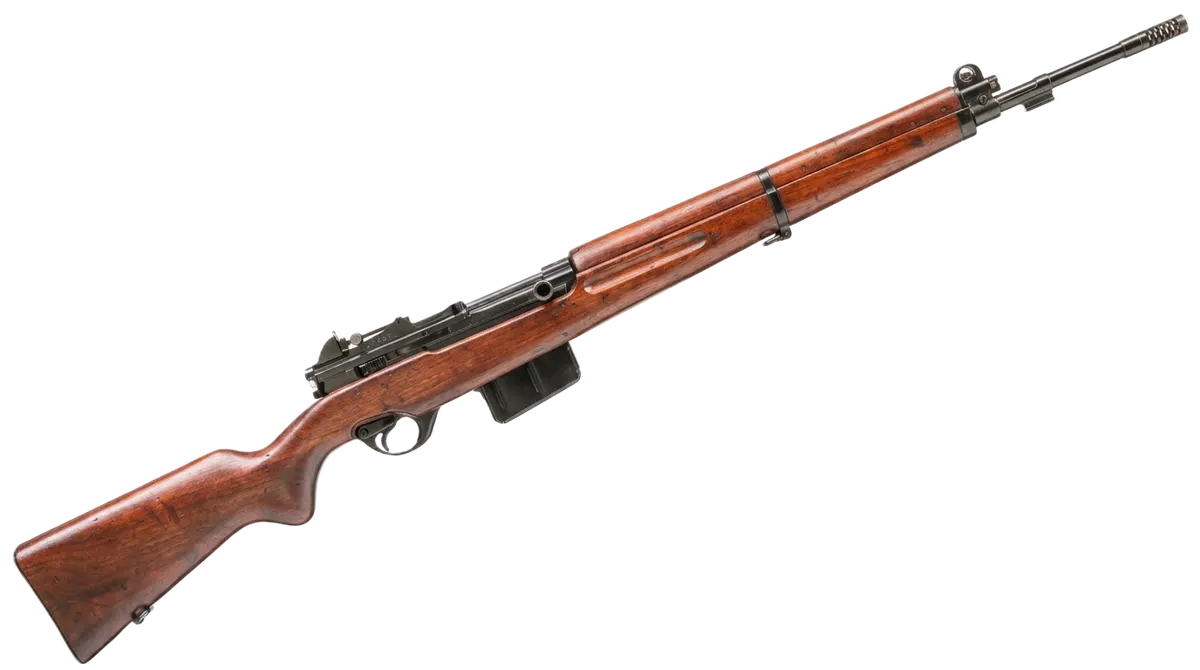
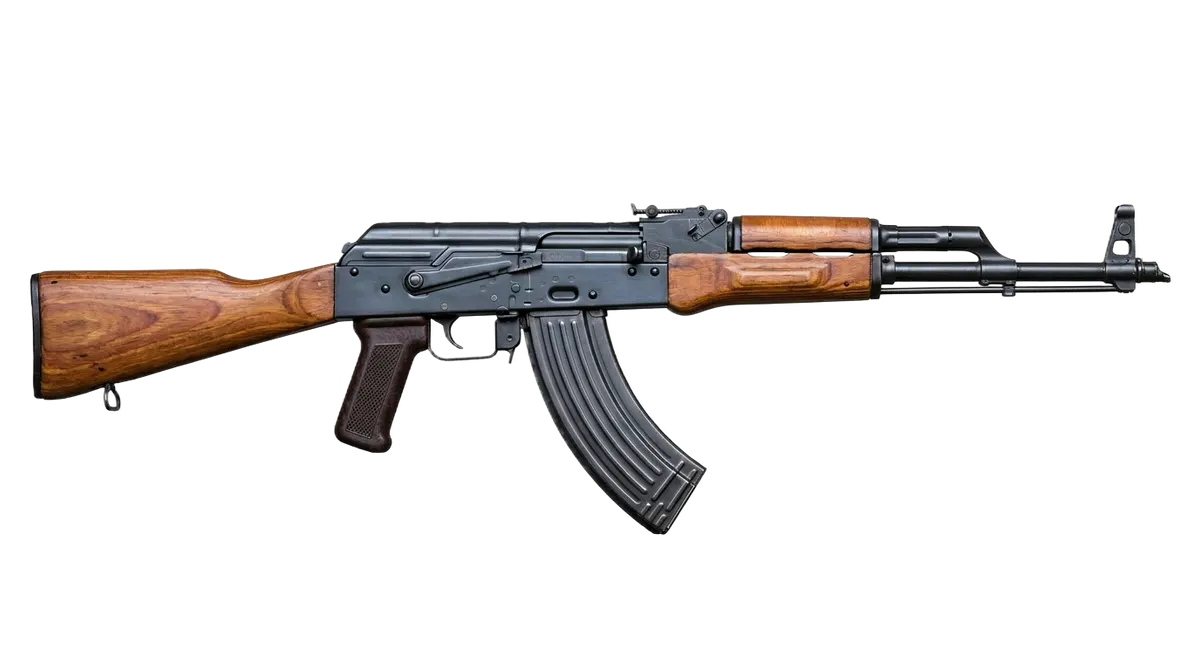
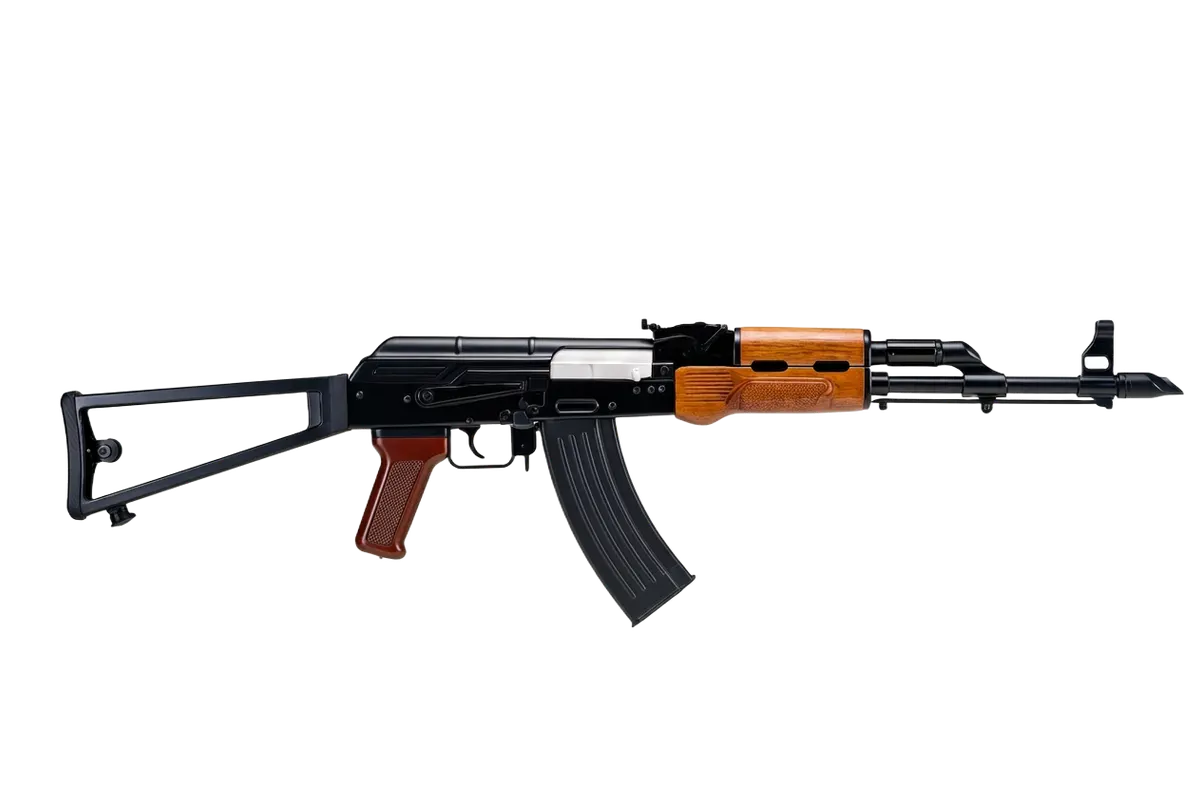
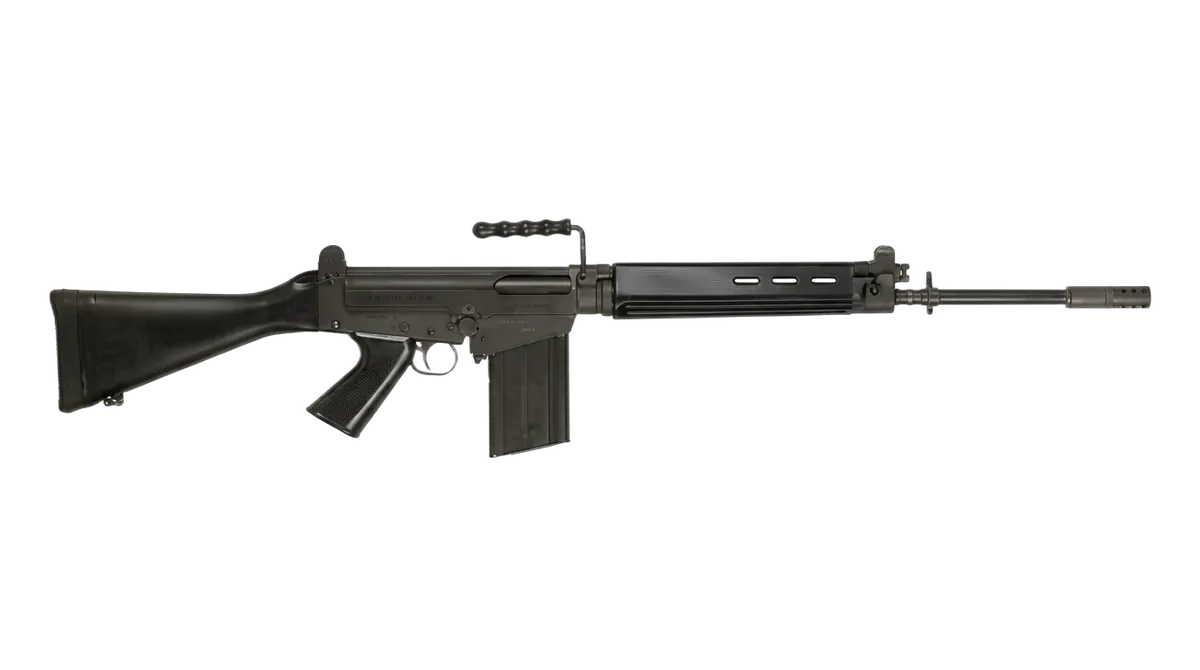
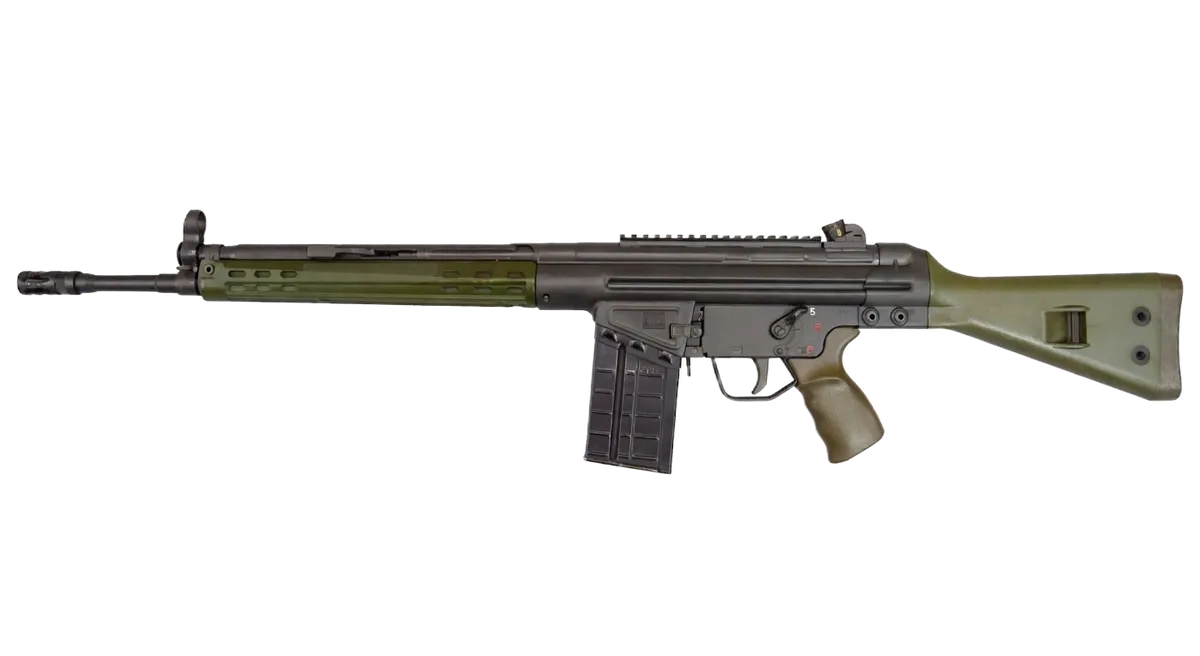
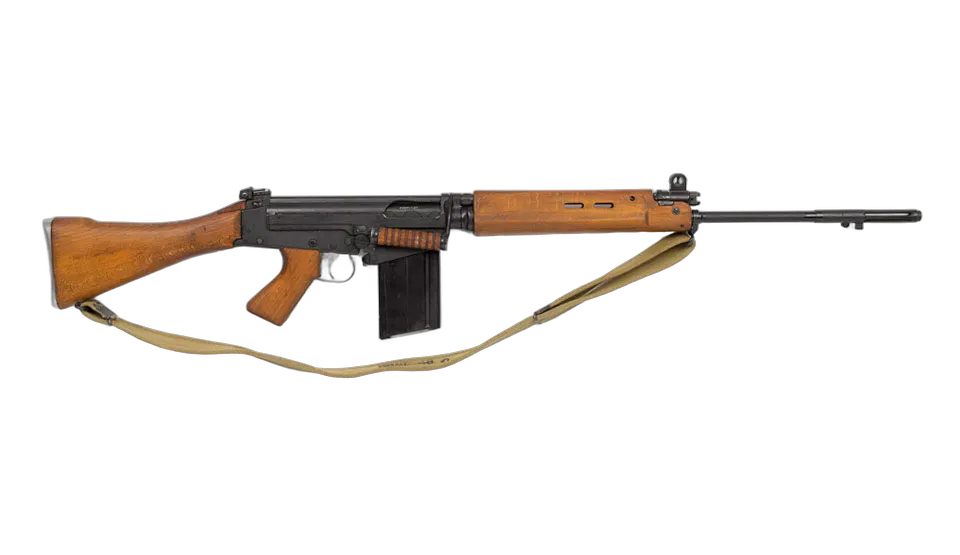
StG 44
Country:  GermanyManufacturer: Steyr Arms (Steyr Mannlicher)
Widely regarded as the first true assault rifle: chambered in the 7.92×33 mm Kurz intermediate cartridge, it combined automatic firepower, manageable weight and effective range up to 300 m — conceptually anticipating the AK-47 and every modern assault rifle.
StG 44
Community
Data trust
- Reliability
- Unverified
- Sources
- Sources pending review
Identity
- Designation
- StG 44
- Alias
- Sturmgewehr 44 / MP 43 / MP 44
- Manufacturer
- C.G. Haenel / Steyr / Erma
- Country
- Germany
- Year
- 1944
- Category
- Assault rifle
- Status
- Historic
Ballistics
- Caliber
- 7,92×33 mm Kurz
- Muzzle velocity
- 685 m/s
- Rate of fire
- ~550 rpm
- Effective range
- 300 m
- Maximum range
- 600 m
Dimensions
- Barrel length
- 419 mm
- Overall length
- 940 mm
- Empty weight
- 4.6 kg
Mechanics
- Operating system
- Gas-operated, long-stroke piston
- Bolt / action
- Tilting bolt
Feed
- System
- Caricatore curvo bifilare da 30 colpi
- Standard capacity
- 30 rounds
Fire modes
Historical profile
Development
The Sturmgewehr 44, designed by Hugo Schmeisser at Haenel of Suhl, is universally recognized as the first true assault rifle in history, and it defined the category itself.
Developed despite Hitler's initial opposition (he wanted conventional rifles and submachine guns), it was initially produced under the cover designations MKb 42, MP 43 and MP 44 before receiving its final name Sturmgewehr ('assault rifle') in 1944.
Design
Chambered in the new intermediate 7.92×33 mm Kurz cartridge (created by Polte Magdeburg in 1941), it operates on long-stroke gas piston with a tilting bolt.
Built largely from stamped and welded sheet metal for mass production, with a 30-round double-stack magazine. Cyclic rate of about 500-600 rpm, semi/auto selector.
Operational service
Produced in approximately 425,000 units between 1943 and 1945, it was issued mainly to elite Wehrmacht and Waffen-SS units on the Eastern Front.
It allowed German infantry to maintain fire superiority against Soviet formations armed with Tokarev and PPSh-41, but arrived too late and in insufficient numbers to change the war's outcome.
Legacy
It directly influenced the development of the Soviet AK-47 (Kalashnikov studied captured examples) and indirectly all modern assault rifles, defining the concept of intermediate ammunition.
Captured examples remained in service in Czechoslovakia, Yugoslavia and numerous paramilitary forces into the 1970s.
Variants
Main users
Germany (Wehrmacht, Waffen-SS) · East Germany (Volkspolizei) · Czechoslovakia · Yugoslavia
Key components
- ●Stock — Shoulder rest.
- ●Receiver — Weapon body with internal mechanisms.
- ●Grip — Primary grip.
- ●Magazine — Cartridge feed.
- ●Barrel — Guides the projectile.