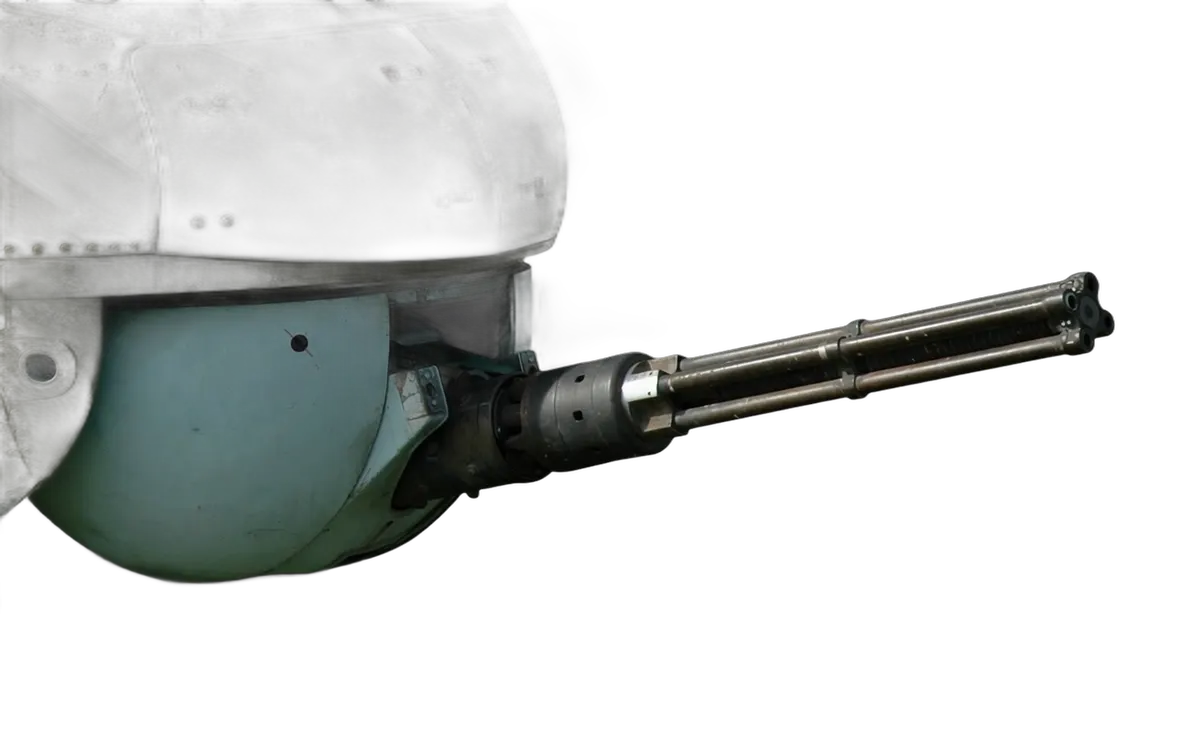
M134 Minigun
Country:  United StatesManufacturer: General Electric / Dillon Aero
Six-barrel rotary Gatling-type 7.62×51 NATO machine gun, externally driven by an electric motor: rates of 2,000-6,000 rpm for airborne and vehicular use.
M134 Minigun
Community
Data trust
- Reliability
- Unverified
- Sources
- Sources pending review
Identity
- Designation
- M134 Minigun
- Alias
- GAU-2/A
- Manufacturer
- General Electric / Dillon Aero
- Country
- United States
- Year
- 1963
- Category
- Heavy machine gun
- Status
- In service
Ballistics
- Caliber
- 7.62×51 mm NATO
- Muzzle velocity
- 869 m/s
- Rate of fire
- ~6000 rpm
- Effective range
- 1000 m
- Maximum range
- 3725 m
Dimensions
- Barrel length
- 559 mm
- Overall length
- 801 mm
- Empty weight
- 38.5 kg
Mechanics
- Operating system
- External electric drive (Gatling)
- Bolt / action
- Six-barrel rotary Gatling system
Feed
- System
- De-linked or linkless 7.62 NATO belt
- Standard capacity
- undefined rounds
Fire modes
Historical profile
Development and Strategic Genesis
The origins of the M134 date back to the late 1950s, when General Electric was tasked with scaling down the 20 mm M61 Vulcan autocannon concept for the new 7.62x51 mm NATO standard caliber. The requirement emerged from the shift in U.S. military doctrine toward asymmetric warfare in Southeast Asia, where target speed and jungle density demanded immediate and massive area suppression.
Initial prototypes were tested at Eglin Air Force Base under the Gunship I program, proving that a single rotary weapon could deliver the fire volume equivalent to ten conventional machine guns. This success led to the rapid adoption of the GAU-2/A designation by the Air Force in 1963, followed by the M134 designation for Army-specific weapon systems.
Mechanical Architecture and Design
The architecture of the M134 is based on a rotating bolt system driven by an external 28-volt electric motor, which controls the feeding, firing, and extraction cycles. This configuration prevents typical malfunctions related to gas-operated cycling times, as a misfire does not stop the rotation, simply ejecting the inert round from the weapon.
The six rotating barrels are mounted on a central rotor that dissipates heat during movement, allowing for prolonged bursts without the risk of immediate overheating typical of single-barrel weapons. The belt-fed system is assisted by a mechanical delinker that ensures a constant ammunition transit speed even at the maximum rates of 6,000 rounds per minute.
Operational Service and Vietnam Variants
During the Vietnam War, the Minigun became the cornerstone of close air support operations, being installed on side-firing mounts in the legendary Douglas AC-47 Spooky. The weapon allowed crews to saturate large areas of ground with one tracer every five rounds, creating a devastating psychological effect on enemy forces during nighttime perimeter defenses.
Beyond fixed gunship use, the system was integrated into SUU-11/A external pods for light attack aircraft and on flexible mounts for UH-1 Iroquois and AH-1 HueyCobra helicopters. In the naval sphere, the U.S. Navy's Brown Water Navies utilized it on fast assault craft to counter ambushes along the riverbanks of the Mekong Delta.
Dillon Aero Modernization and Legacy
After a decline in post-Vietnam usage, the weapon experienced a technological renaissance in the 1990s thanks to Dillon Aero, which solved chronic feeding issues by improving overall reliability. The new M134D version, featuring titanium components and a redesigned feeder, has been adopted by special forces worldwide, including the British SAS and Italian 3rd REOS units.
Today, the Minigun remains irreplaceable for point defense on modern helicopters such as the MH-47 Chinook and the MH-60L Direct Action Penetrator, also finding application on protected land vehicles. Its ability to generate unsurpassed fire density has made it an icon of modern military technology, ensuring its permanence in NATO arsenals for decades to come.
Variants
Main users
United States · United Kingdom · Australia · over 20 countries
Key components
- ●Receiver — Housing with electric motor and rotating bolt assembly.
- ●Grip — Rear spade grip with electric trigger.
- ●Magazine — De-linked belt feed from ammo box (3,000+ rounds).
- ●Barrel — Six-barrel 7.62 NATO rotating cluster.
- ●Mount — Pintle/cradle mount for aircraft or vehicle use.
Community
Recent reviews
Similar systems
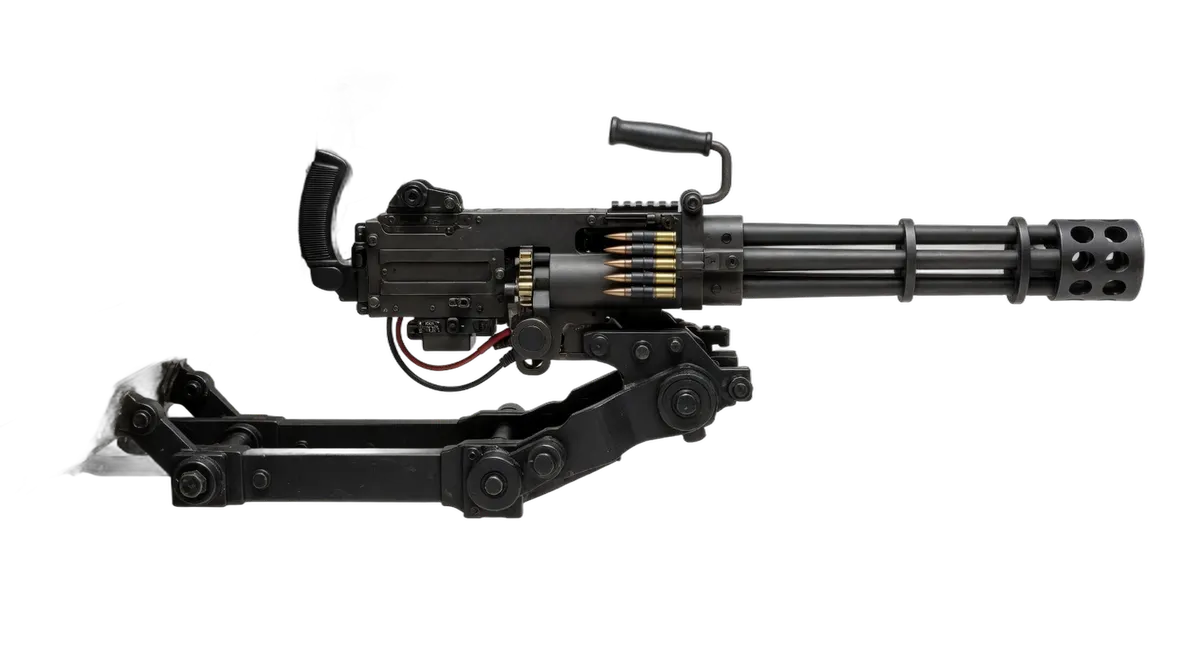
GAU-19
1983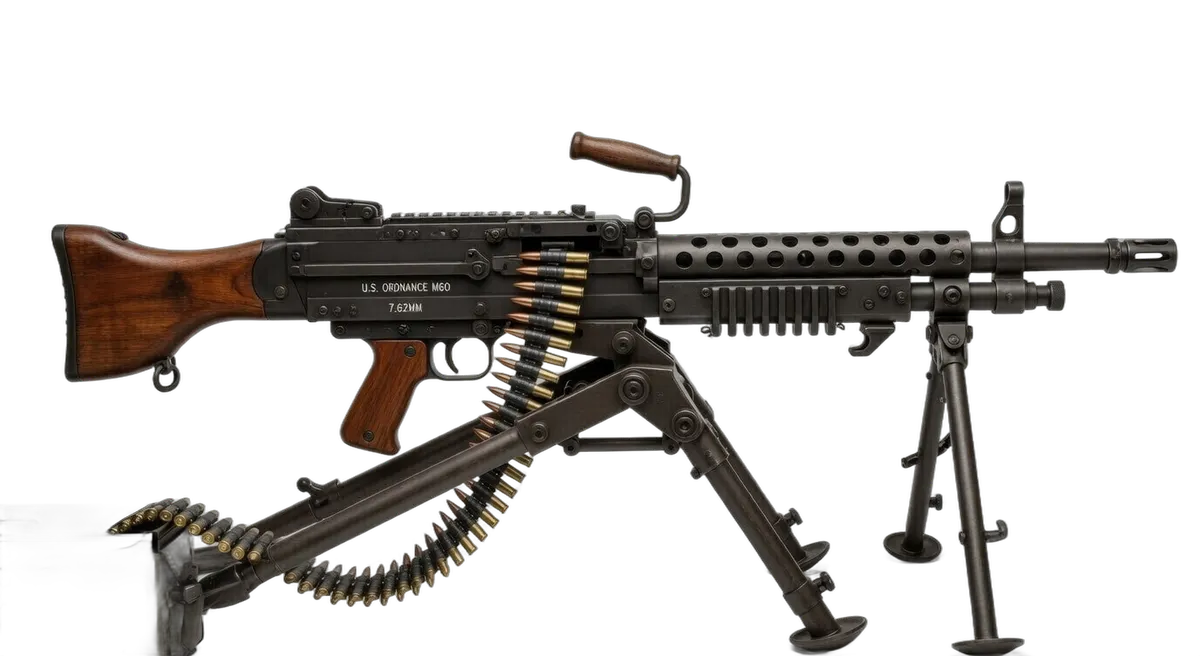
U.S. Ordnance M60
1957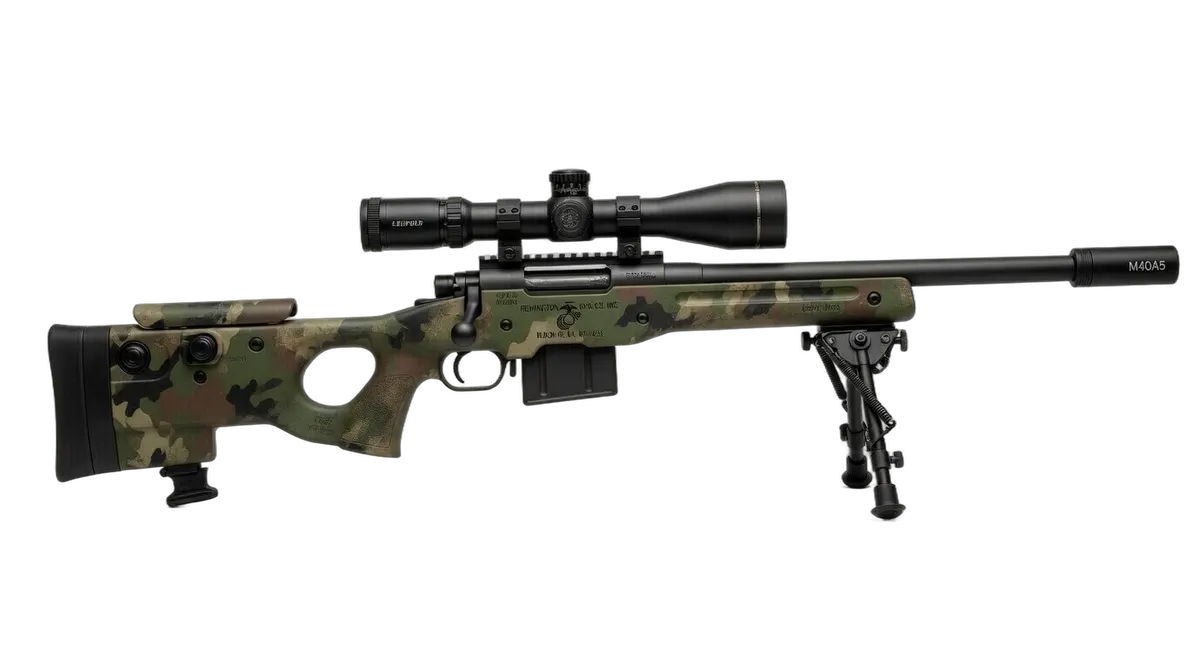
Remington M40
1966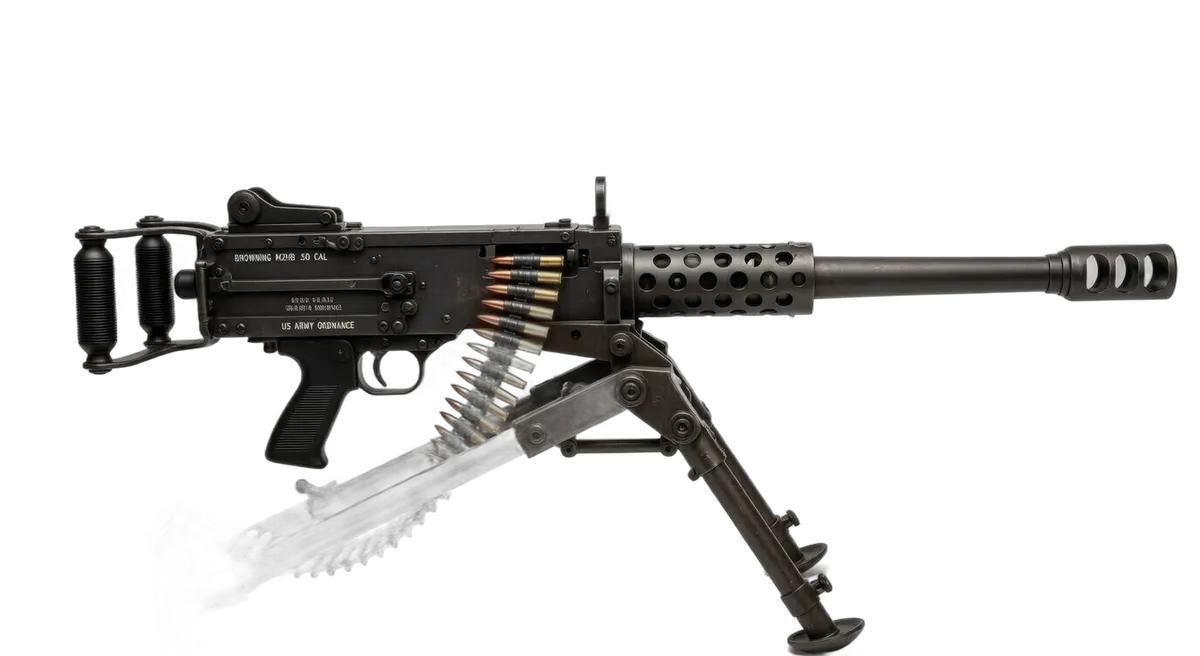
Browning M2HB
1933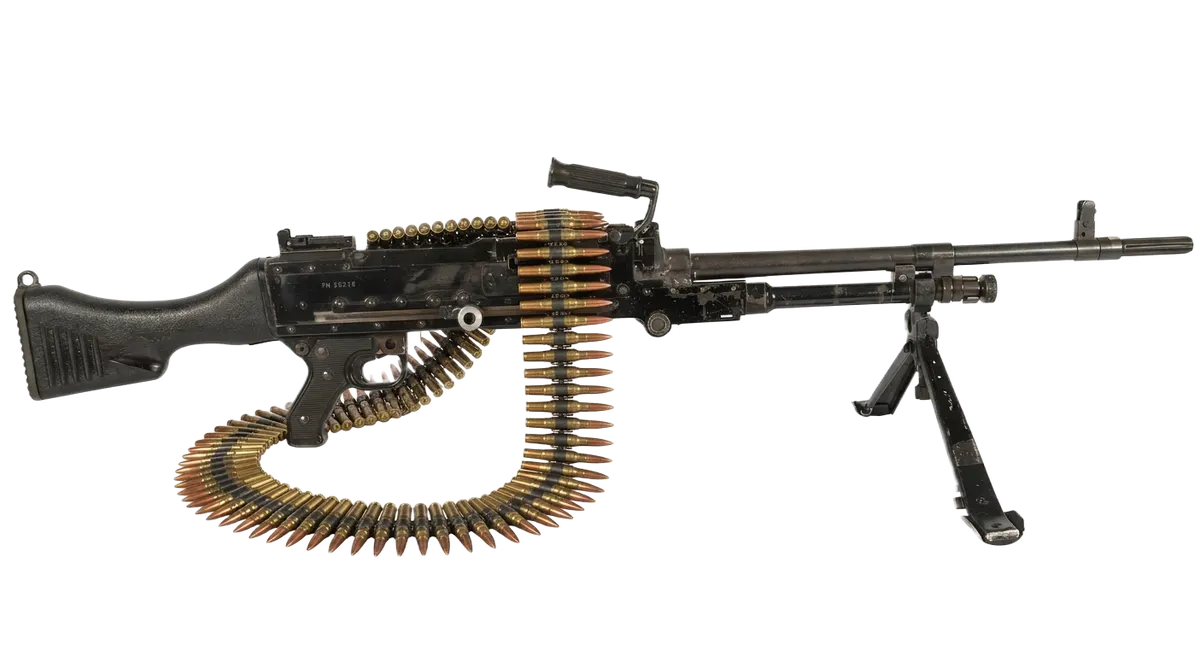
FN MAG
1958