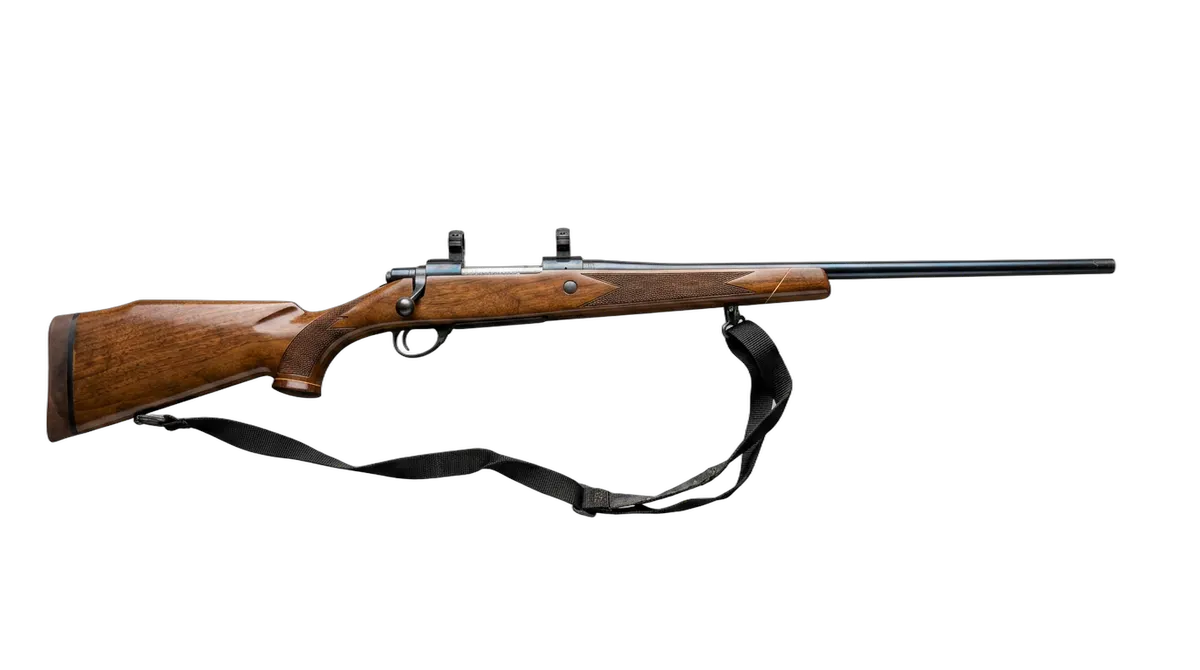
L96A1
Country:  United KingdomManufacturer: Accuracy International
Bolt-action sniper rifle in 7.62×51 NATO, the first AI model adopted by the British Army in 1985. Aluminium chassis with green polymer skin, foundation of the later AW family.
L96A1
Community
Data trust
- Reliability
- Unverified
- Sources
- Sources pending review
Identity
- Designation
- L96A1
- Alias
- Accuracy International PM
- Manufacturer
- Accuracy International
- Country
- United Kingdom
- Year
- 1985
- Category
- Sniper rifle
- Status
- Historic
Ballistics
- Caliber
- 7,62×51 mm NATO
- Muzzle velocity
- 850 m/s
- Effective range
- 800 m
- Maximum range
- 1100 m
Dimensions
- Barrel length
- 655 mm
- Overall length
- 1124 mm
- Empty weight
- 6.5 kg
Mechanics
- Operating system
- Otturatore girevole-scorrevole manuale
- Bolt / action
- Bolt-action
Feed
- System
- Caricatore amovibile
- Standard capacity
- 10 rounds
Fire modes
Historical profile
Development and Military Trials
The genesis of the L96A1 dates back to the early 1980s, when the British Army launched the Sniper System Improvement Programme to replace the ageing Lee-Enfield L42A1 rifles. Accuracy International, then a small company founded by Malcolm Cooper, submitted the Precision Marksman (PM) model to compete against established rivals such as the Parker-Hale M85.
The prototype stood out during the 1982 and 1983 comparative trials, demonstrating superior accuracy and unprecedented structural durability in the most extreme environmental conditions. Following a series of refinements requested by the Ministry of Defence, the weapon was officially selected and adopted in 1985 under the service designation L96A1.
Architecture and Technical Innovations
The design of the L96A1 introduced the revolutionary concept of an aluminium chassis system, onto which the action and the hollow polymer stock, composed of two halves joined by screws, were mounted. This configuration eliminated the need for traditional resin bedding, ensuring a constant point of impact regardless of variations in temperature or humidity.
The weapon featured a bolt-action system with three frontal locking lugs and a 60-degree bolt throw to facilitate rapid cycling. The standard configuration included a Schmidt & Bender 6x42 PM telescopic sight, mounted on an integral dovetail rail on the receiver, and a ten-round detachable steel magazine.
Operational Service and Variants
The L96A1 quickly became the mainstay of British Army and Royal Marines sniper units, seeing intensive use during the Gulf War and the Balkan conflicts. Its reputation for reliability was confirmed in the field, where the weapon proved capable of lethal shots at distances exceeding 800 metres in all climatic conditions.
In addition to the standard version, specific variants were developed, such as the L96A1 with a folding stock for paratroopers and versions equipped with integral suppressors for special operations. Sweden was among the first foreign nations to take an interest in the design, pushing for further modifications that would lead to the subsequent evolution of the system.
Evolution and Lifetime Military Succession
The experience gained with the L96A1 led to the creation of the AW (Arctic Warfare), designed to operate at temperatures as low as -40 degrees Celsius, which gradually replaced the original model during the 1990s. Despite the transition, the L96A1 remained in limited service for training and in reserves until the full adoption of the AWM models chambered in .338 Lapua Magnum.
The architecture introduced by this rifle defined the global standard for modern metallic chassis sniper rifles, influencing dozens of subsequent designs. Today, the L96A1 is considered an icon of British small arms design, marking the definitive shift from rifles derived from standard infantry weapons to purpose-built precision weapon systems.
Variants
Main users
United Kingdom · Germany (BGS) · Sweden · Belgium
Key components
- ●Stock — Shoulder rest.
- ●Receiver — Weapon body with internal mechanisms.
- ●Grip — Primary grip.
- ●Magazine — Cartridge feed.
- ●Barrel — Guides the projectile.
Community
Recent reviews
Similar systems
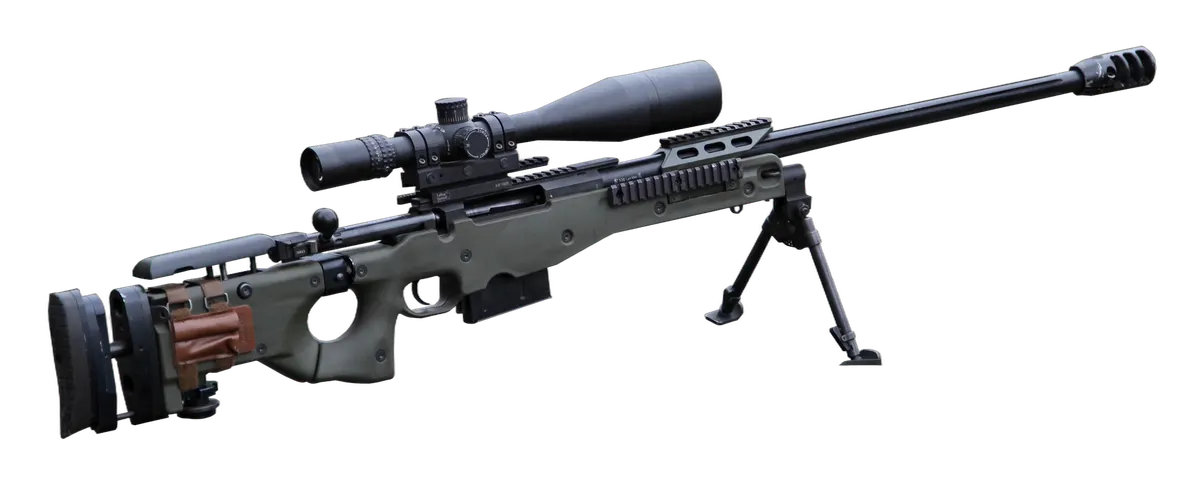
AW (Arctic Warfare)
1988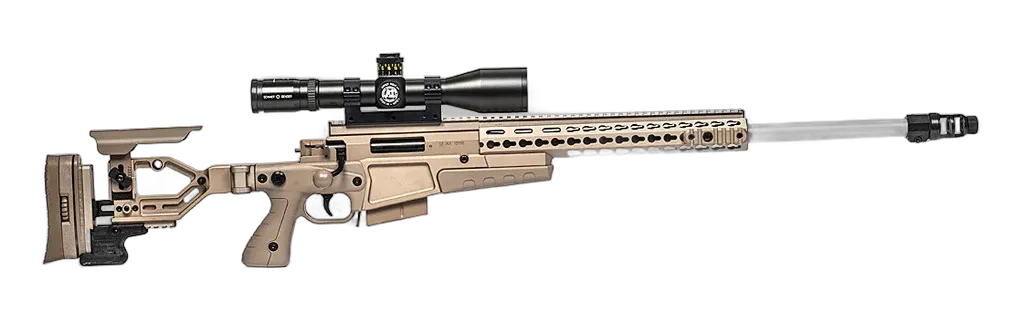
AXMC
2013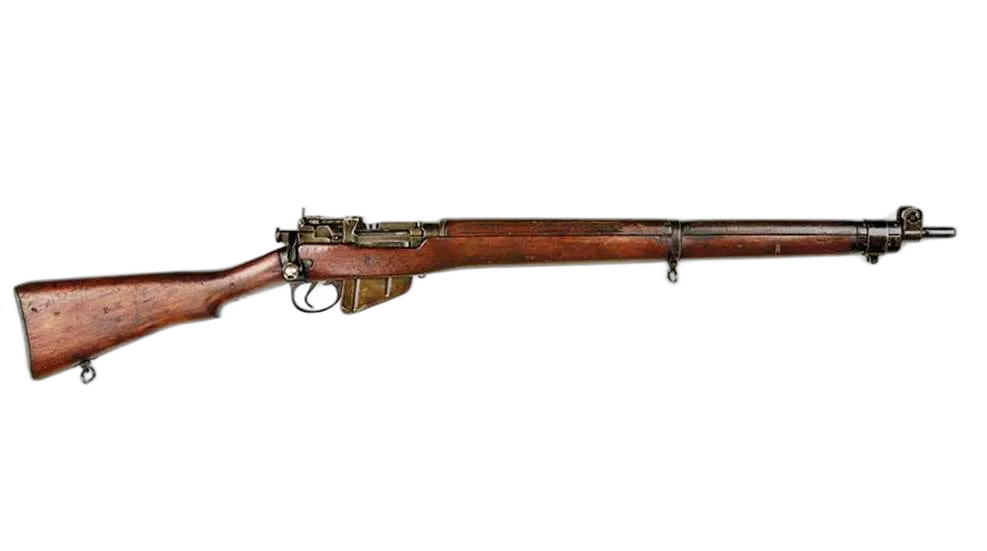
Lee-Enfield No.4 Mk I
1941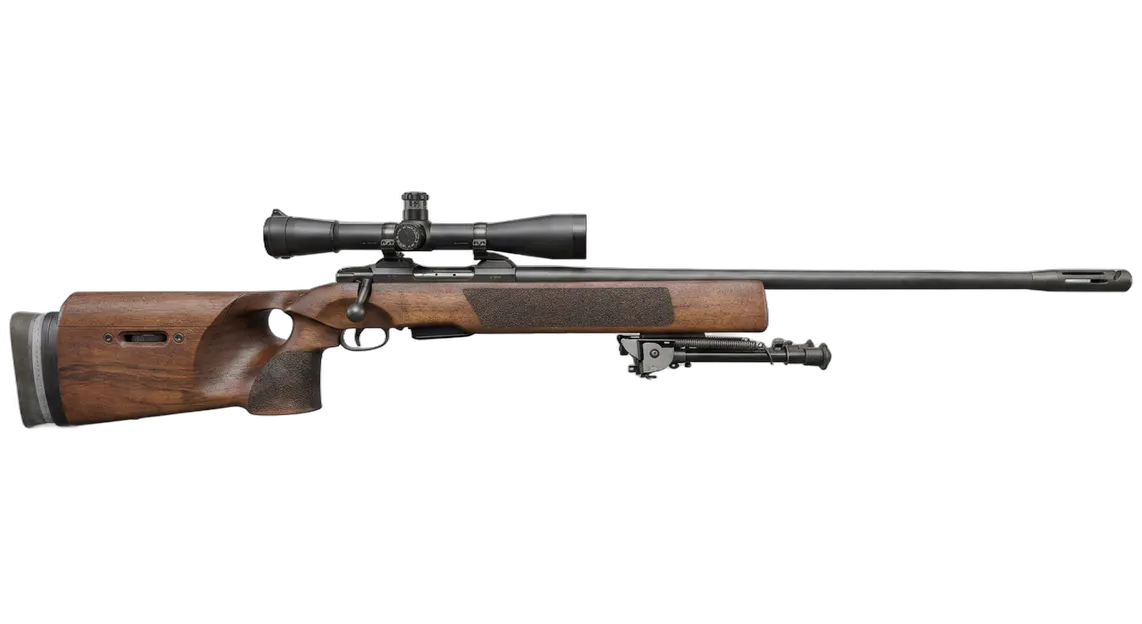
SIG Sauer SSG 2000
1984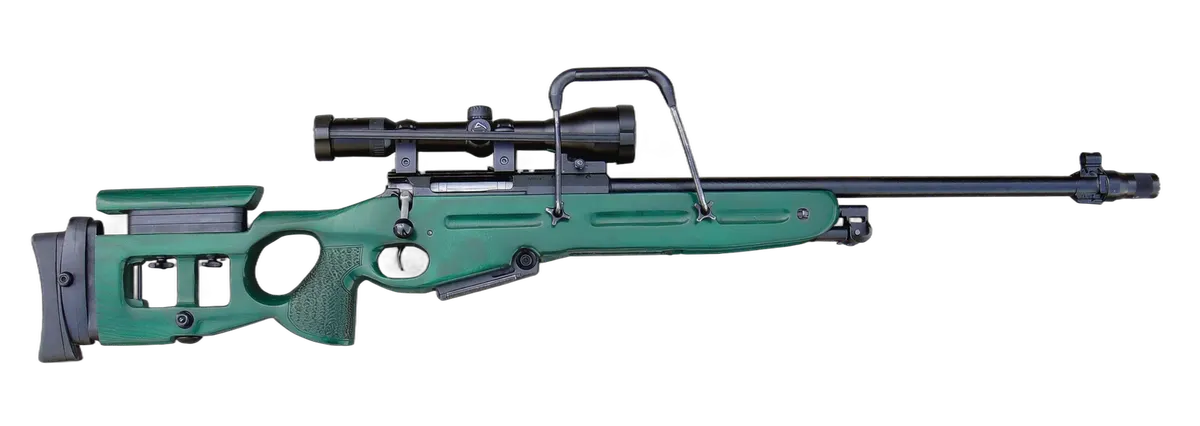
SV-98
1998