Chieftain
Country:  United KingdomManufacturer: Leyland Motors
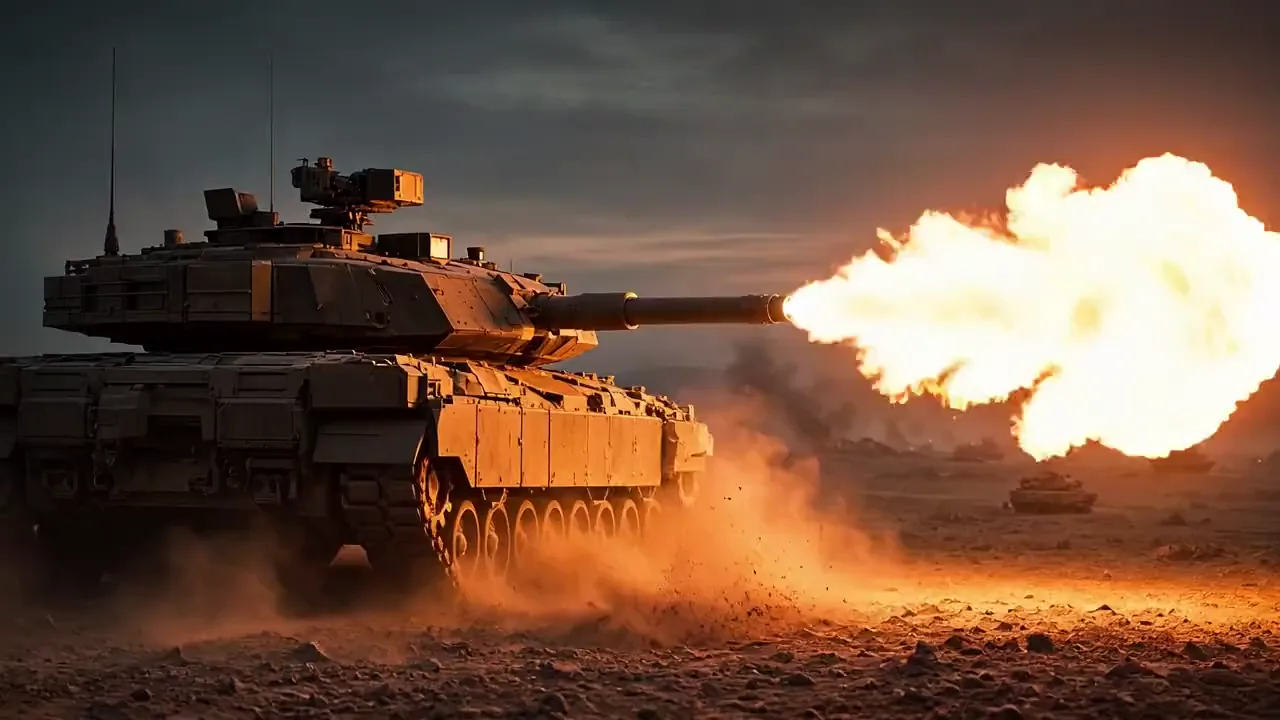
The FV4201 Chieftain was the primary main battle tank (MBT) of the United Kingdom from the 1960s into the 1990s. Introduced in 1967, it was among the most heavily armed MBTs at the time, mounting a 120 mm Royal Ordnance L11 gun, equivalent to the much larger specialist heavy tanks in service.
Data-only record added 25 November 2026 (Round 13 raw-data expansion). Illustration pending: uses the generic pending placeholder. Text adapted from Wikipedia (CC BY-SA 4.0).
Supplied specifications (Wikipedia infobox, 25 Nov 2026): Type: Main battle tank; In service: 1960s–1990s; No. built: 1,896 (900 for UK, 996 exported); Mass: 55 long tons (62 short tons; 56 t ); Length: 35 ft 4 in (10.77 m) – gun forward; 7.5 m (24 ft 7 in) – hull; Width: 12 ft 0 in (3.66 m); Height: 2.9 m (9 ft 6 in); Crew: 4; Main armament: L11A5 120 mm rifled gun; Secondary armament: 2 × L7 Machine Gun; Engine: Leyland L60 (multifuel 2-stroke opposed-piston compression-ignition ); 750 hp (560 kW) 6 Cyl, 19 litres.; Power/weight: 11.1 hp (8.3 kW)/ton (at sprocket); Suspension: Horstmann: horizontal coil spring suspension bogies; Operational range: 500 km (310 miles) on roads; Maximum speed: Road: 40 km/h (25 mph) (Mk. 1- Mk. 3); 43 km/h (27 mph) (Mk. 5)
Illustration: Based on reference: https://commons.wikimedia.org/wiki/File:Chieftain_Tank_(9628802829).jpg
Community
Identity4 fields
- Designation
- Chieftain
- Manufacturer
- Leyland Motors
- Country
- United Kingdom
- Category
- Main battle tank
Production & service4 fields
- Introduced
- 1960
- Status
- Historic
- Units produced
- Not available
- Operators
- United Kingdom, Iran, Iraq, Jordan, Kuwait, Oman
Specifications11 fields
- Combat weight
- 56 t
- Crew
- 4
- Main armament
- L11A5 120 mm rifled gun
- Secondary armament
- 2 × L7 Machine Gun
- Engine
- Leyland L60 (multifuel 2-stroke opposed-piston compression-ignition ); 750 hp (560 kW) 6 Cyl, 19 litres.
Data trust
- Reliability
- Partially verified
- Sources
- Chieftain (tank)Wikipedia · Accessed
- Last reviewed
- Confidence level
- Partial. Figures transcribed from the cited Wikipedia article (infobox and lead) on 25 November 2026; not independently audited. Unknown values are left empty and render as —.
Historical profile
It was also among the most heavily armoured, with up to 195 mm (7.7 in) that was highly sloped to give 388 mm (15.3 in) thickness along the line of sight. A development from the Centurion MBT, the Chieftain introduced the supine (reclining) driver position to British design allowing a heavily sloped hull with reduced height. A new powerpack and improved transmission gave it higher speed than the Centurion despite being heavier due to major upgrades to armour protection and the armament; this allowed it to replace both the Centurion and Conqueror heavy tank while performing their roles effectively. The multi-fuel engine proved to be the design's primary drawback, causing frequent breakdowns; it was said sarcastically that the Chieftain was extremely effective if it broke down in a useful location.
This led to a series of improved models with new armour, sensors, engines and suspension systems, and these saw sales export success. Among these was the Shir 2 version for Iran, which added Chobham armour, one of the first British uses of this armour. This order was cancelled due to the Iranian Revolution in 1979.
ARSENALIS // Research desk
Dossier resources
- Listed · status unspecified
- Active
- Retired
- On order / future
- —No quantity recorded
| Country | Status | Qty | Source |
|---|---|---|---|
| Listed · status unspecified | — | Dossier sources | |
| Listed · status unspecified | — | Dossier sources | |
| Listed · status unspecified | — | Dossier sources | |
| Listed · status unspecified | — | Dossier sources | |
| Listed · status unspecified | — | Dossier sources | |
| Listed · status unspecified | — | Dossier sources |
Quantities are shown only when published in structured operator data; otherwise “—”. Individual service status is unspecified unless explicitly recorded.
Operator list sources
- attributed to Chieftain (tank)
Select a country on the map or in the table to see its entry and other catalogued systems listing it as an operator.