Smith & Wesson M&P
Country:  United StatesManufacturer: Smith & Wesson
Polymer-frame striker-fired pistol in 9×19, .40 S&W and .45 ACP: one of the most widely issued sidearms among U.S. police forces.
Smith & Wesson M&P
Community
Data trust
- Reliability
- Unverified
- Sources
- Sources pending review
Identity
- Designation
- Smith & Wesson M&P
- Alias
- Military & Police
- Manufacturer
- Smith & Wesson
- Country
- United States
- Year
- 2005
- Category
- Pistol
- Status
- In service
Ballistics
- Caliber
- 9×19 mm Parabellum
- Muzzle velocity
- 360 m/s
- Effective range
- 50 m
Dimensions
- Barrel length
- 108 mm
- Overall length
- 194 mm
- Empty weight
- 0.68 kg
Mechanics
- Operating system
- Short recoil
- Bolt / action
- Striker-fired
Feed
- System
- Double-stack magazine
- Standard capacity
- 17 rounds
Fire modes
Historical profile
Origins and Strategic Development
The genesis of the Smith & Wesson M&P dates back to the early 2000s, when the Springfield-based company decided to reclaim its market share in the law enforcement sidearm sector, previously dominated by the Sigma series and the less successful SW99. The project aimed to create a modern platform capable of overcoming the ergonomic limitations of European competitors, integrating decades of feedback collected from security operators.
The official launch took place in 2005, marking a crucial turning point for the American manufacturer, which chose to revive the historic Military & Police designation to evoke the reliability of its iconic revolvers. Development initially focused on the .40 S&W caliber, then the FBI standard, before rapidly expanding to 9x19 mm and .45 ACP to meet global market demands.
Design Characteristics
From a technical standpoint, the firearm is distinguished by the adoption of a stainless steel slide treated with a high-resistance Zytel or Melonite finish, mounted on a polymer frame reinforced with metal inserts. The main innovation was the introduction of three different sizes of interchangeable grip backstraps, allowing the weapon to adapt to various hand sizes without the need for complex tools.
The internal architecture features a passive safety system including a firing pin block and a sear lever designed to prevent accidental discharge in the event of a drop. Unlike many competing models, the M&P was designed with a take-down lever that does not require pulling the trigger for field stripping, significantly increasing safety during routine maintenance operations.
Operational Service and Adoptions
The adoption of the M&P was massive and immediate in the United States, where over five hundred law enforcement agencies, including the Los Angeles and Detroit departments and Washington State, chose the weapon as their standard issue. Its versatility allowed Smith & Wesson to successfully participate in numerous international tenders, securing contracts with the Belgian police, Iraqi security forces, and various special units in Southeast Asia.
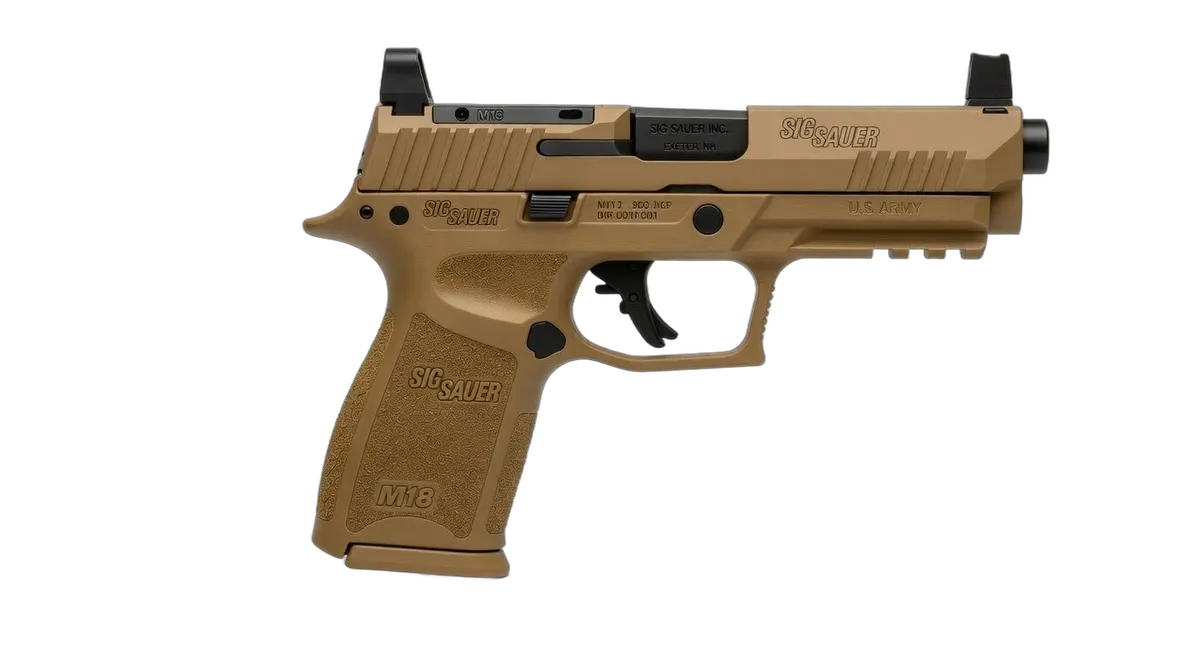
In military endurance tests, the weapon proved its remarkable ability to operate in extreme climatic conditions, from the Iraqi desert to South American rainforests. Despite its defeat in the U.S. Army's Modular Handgun System program in favor of the SIG Sauer P320, the M&P maintained a strong position as the primary alternative in North American government markets due to its modularity.
Evolution and Technical Legacy
In 2017, the series reached full maturity with the introduction of the M2.0 variant, which brought significant improvements to the trigger group and frame rigidity through an extension of the internal steel chassis. This version also introduced specialized models such as the Performance Center series and compact variants for concealed carry, consolidating the platform as a complete ecosystem for every tactical need.
The legacy of the M&P lies in having redefined ergonomic standards for modern striker-fired pistols, deeply influencing the design of 21st-century handguns. Today, the M&P family continues to expand with optics-ready versions and modern calibers such as 5.7x28 mm, remaining one of the pillars of the American firearms industry and a benchmark for mechanical reliability.
Variants
Main users
U.S. police forces · United States (LE)
Key components
- ●Slide — Reciprocating slide with sight system.
- ●Receiver — Polymer frame with trigger.
- ●Grip — Grip with interchangeable backstraps.
- ●Magazine — Cartridge feed.
- ●Barrel — Guides the projectile.