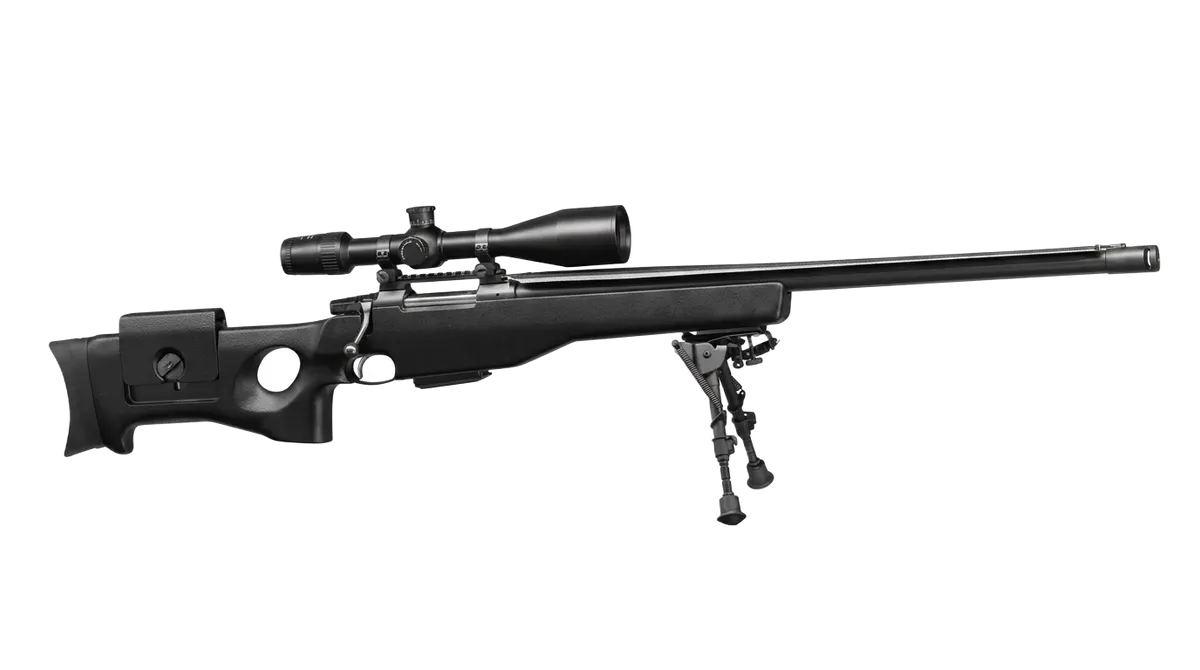
SV-98
Country:  RussiaManufacturer: Kalashnikov Concern (Izhmash)
Russian bolt-action sniper rifle in 7.62×54R, derived from the Record-CISM target carbine. Adopted to complement the SVD in special units when sub-MOA accuracy is required.
SV-98
Community
Data trust
- Reliability
- Unverified
- Sources
- Sources pending review
Identity
- Designation
- SV-98
- Alias
- Снайперская винтовка обр. 1998
- Manufacturer
- Izhmash / Kalashnikov Concern
- Country
- Russia
- Year
- 1998
- Category
- Sniper rifle
- Status
- In service
Ballistics
- Caliber
- 7,62×54R
- Muzzle velocity
- 820 m/s
- Effective range
- 800 m
- Maximum range
- 1000 m
Dimensions
- Barrel length
- 650 mm
- Overall length
- 1200 mm
- Empty weight
- 5.8 kg
Mechanics
- Operating system
- Otturatore girevole-scorrevole manuale
- Bolt / action
- Bolt-action
Feed
- System
- Caricatore amovibile
- Standard capacity
- 10 rounds
Fire modes
Historical profile
Origin and Technical Development
The development process of the SV-98 began in the early 1990s under the leadership of engineer Vladimir Stronskiy, aimed at bridging the gap between the semi-automatic SVD and the extreme precision requirements of elite units. The mechanical foundation was identified in the Record-CISM target rifle, a high-level sporting weapon produced by Izhmash that had already proven its ballistics in international competitions.
The Russian Ministry of Defence and security agencies formally requested a platform that could guarantee consistent sub-minute of angle (MOA) groups up to a distance of 800 meters. Following a series of rigorous state trials that confirmed the superiority of the bolt-action system over semi-automatic cycles, the weapon received official approval in 1998, entering serial production under the designation 6V10.
Design and Features Performance
The SV-98 is distinguished by the use of a cold-hammer-forged heavy barrel in a free-floating configuration, featuring a threaded muzzle for the installation of specific suppressors or flash hiders. The action is bedded into a laminated wood stock treated for moisture resistance, characterized by an adjustable cheek piece and buttpad that allow the shooter to customize the ergonomics based on the installed optics.
The trigger system is fully adjustable for weight and travel, offering superior control during critical firing phases in operational contexts. Although the rifle is natively equipped with PKS-07 or 1P69 Giperon optics, the presence of an upper rail allows for the integration of night vision devices and modern Western or domestic sighting systems.
Operational Service and Variants
The weapon found its ideal use in counter-terrorism and urban security operations conducted by the FSB and the SOBR special police units, where maximum precision is preferred over volume of fire. During the Chechen conflicts and subsequent operations in the Caucasus, the SV-98 was often deployed alongside the SVD to provide flexible and extremely accurate long-range tactical cover.
In addition to the standard 7.62×54R version, variants chambered for .308 Winchester and the powerful .338 Lapua Magnum were produced for foreign markets and long-range interdiction tasks. During the 2000s, the rifle was exported in small batches to Armenia and other post-Soviet countries, consolidating its reputation as a reliable tool in extreme climatic conditions.
Modern Evolution and Legacy
In response to infantry modernization needs, the Kalashnikov Concern introduced the SV-98M variant in the 2010s, replacing the wooden stock with a multi-adjustable, folding aluminum chassis. This evolution drastically reduced the weight of the rifle and improved structural stability under thermal stress, introducing a long Picatinny rail for modular accessibility.
The legacy of the SV-98 lies in establishing a new standard for Russian service ammunition, proving that the old rimmed cartridge can still deliver competitive performance in a bolt-action platform. Despite competition from newer systems like the Chukavin SVCh, the SV-98 remains a fundamental pillar of training and operational deployment for Russian precision marksmen due to its robustness and intrinsic accuracy.
Variants
Main users
Russia (MVD, FSB, Spetsnaz) · Belarus
Key components
- ●Stock — Shoulder rest.
- ●Receiver — Weapon body with internal mechanisms.
- ●Grip — Primary grip.
- ●Magazine — Cartridge feed.
- ●Barrel — Guides the projectile.
Community
Recent reviews
Similar systems
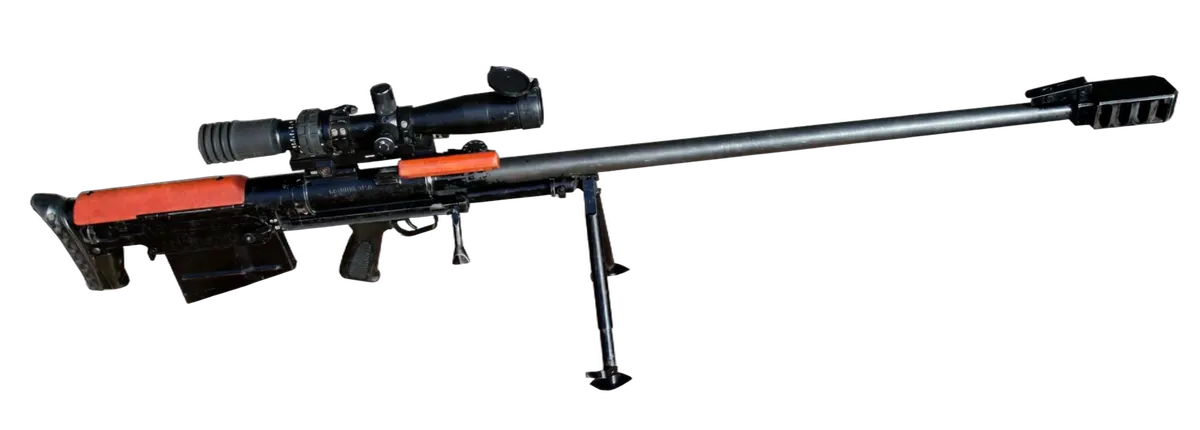
ASVK 12,7 (Kord-SVK)
2004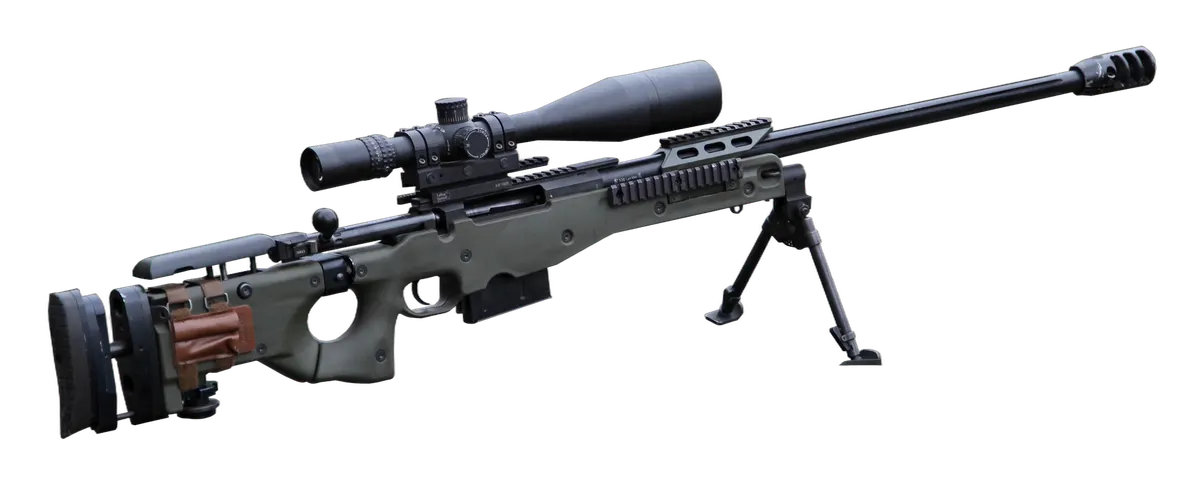
AW (Arctic Warfare)
1988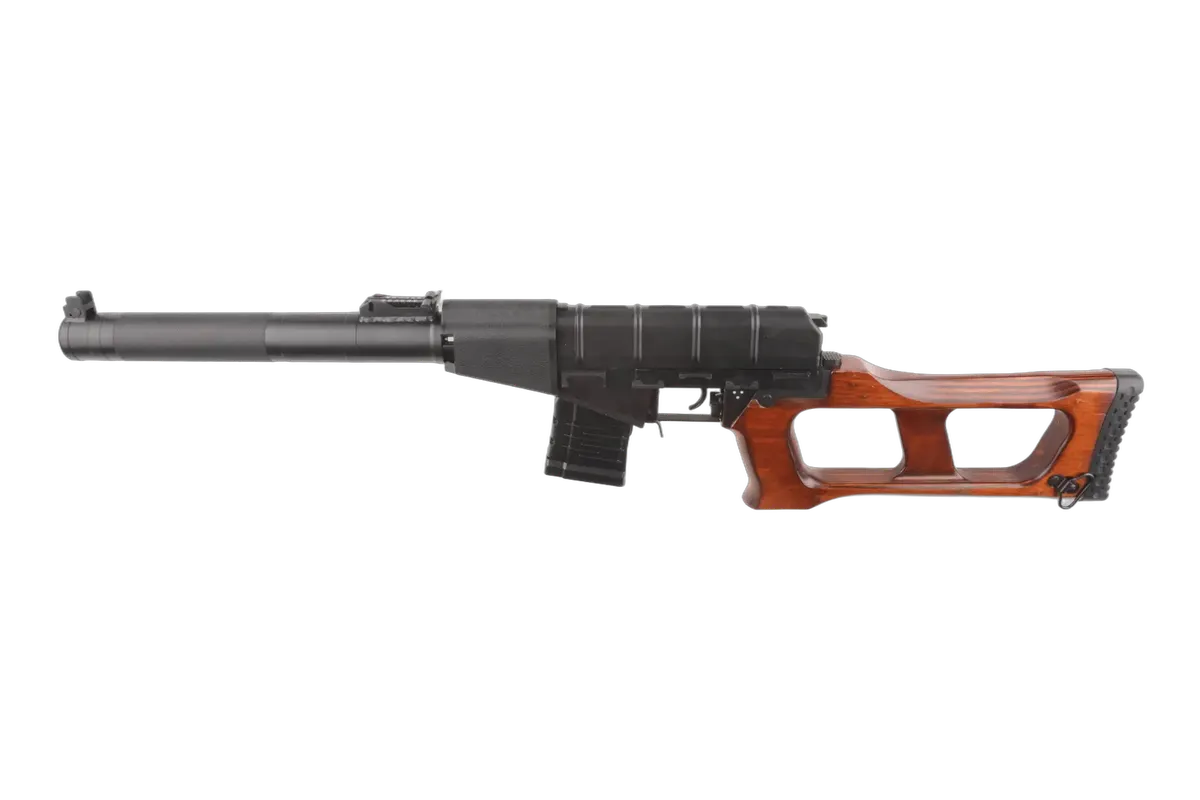
VSS Vintorez
1987
Denel NTW-20
1998
PKP Pecheneg
1999