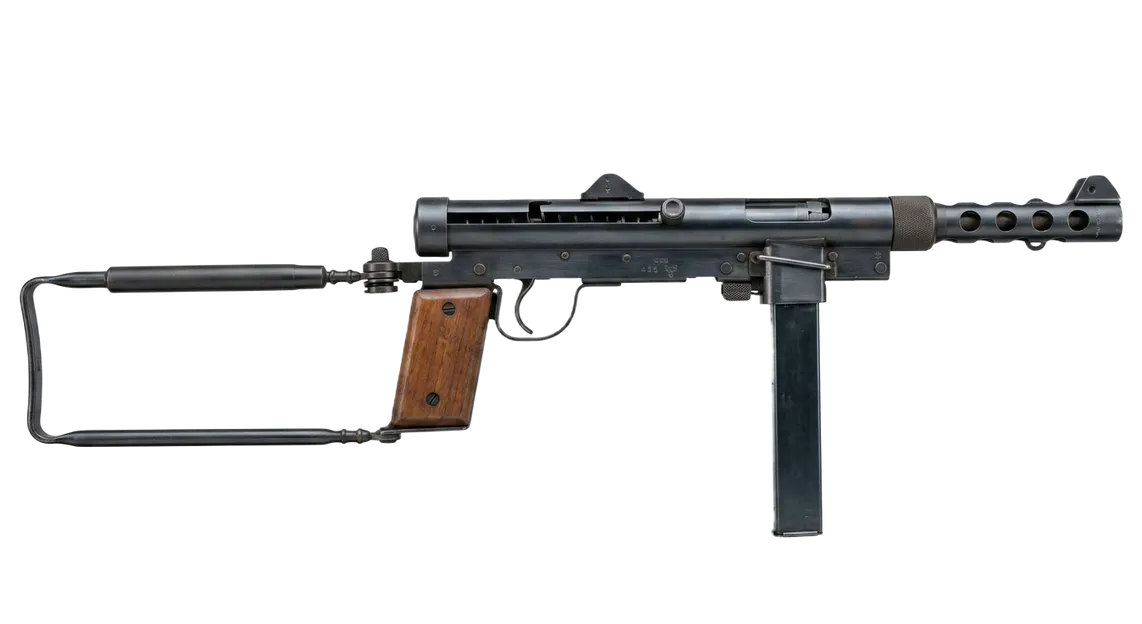
Sten
British WWII submachine gun in 9×19 Parabellum: designed for emergency production with stamped and brazed components, extremely low unit cost.
Sten
Community
Data trust
- Reliability
- Unverified
- Sources
- Sources pending review
Identity
- Designation
- Sten
- Alias
- Sten Gun Mk II
- Manufacturer
- Royal Small Arms Factory / BSA / vari subappaltatori
- Country
- United Kingdom
- Year
- 1941
- Category
- Submachine gun
- Status
- Historic
Ballistics
- Caliber
- 9×19 mm Parabellum
- Muzzle velocity
- 365 m/s
- Rate of fire
- ~500 rpm
- Effective range
- 100 m
- Maximum range
- 200 m
Dimensions
- Barrel length
- 196 mm
- Overall length
- 762 mm
- Empty weight
- 3.2 kg
Mechanics
- Operating system
- Massa battente (blowback) a otturatore aperto
- Bolt / action
- Open bolt
Feed
- System
- Caricatore laterale
- Standard capacity
- 32 rounds
Fire modes
Historical profile
Origins and Emergency Development
Following the disastrous evacuation of Dunkirk in 1940, the British Army faced a desperate shortage of individual automatic weapons. Harold Turpin and Major Reginald Shepherd designed a rapid and inexpensive solution at the Royal Small Arms Factory in Enfield to replace the costly American Thompson and the inefficient Lanchester.
The initial prototype, designated the Mark I, was approved in early 1941 and still featured some refined elements like a wooden foregrip and a flash hider. However, it was with the subsequent Mark II version that mass production reached its peak, optimizing every component for manufacturing in non-specialized civilian workshops.
Technical Features and Design
The Sten operated on a simple blowback system from an open bolt, utilizing a minimal number of moving parts enclosed in a tubular steel receiver. The most distinctive feature was the magazine well mounted on the left side, which could be rotated 90 degrees to seal the ejection port against dust during transport.
The weapon made extensive use of cold stamping and electric welding techniques, reducing the labor hours required for each unit to a fraction compared to traditional rifles. Despite the ballistic effectiveness of the 9mm Parabellum round, the double-column single-feed magazine remained the system's weak point, causing frequent jams due to bullet friction.
Operational Service in Global Conflicts激
Initially distributed to airborne troops and commandos, the Sten became the iconic weapon of British and Commonwealth infantry during the Normandy landings and the Italian campaign. Its extreme simplicity allowed thousands of units to be air-dropped by the SOE to resistance movements in France, Yugoslavia, and Scandinavia.
Beyond the European theater, the weapon saw extensive use in Southeast Asia and during the Greek Civil War, proving its tactical versatility despite a tendency for accidental discharges if the receiver suffered violent impacts. Specialized versions like the Mk IIS, equipped with an integrated suppressor, were used extensively for clandestine operations and sabotage behind enemy lines.
Final Evolution and Succession
Toward the end of the conflict, the Mark V variant was introduced to improve ergonomics, adding a pistol grip and a wooden stock similar to those of the Lee-Enfield rifle. Although more reliable and better finished, this version could not erase the reputation of the crude weapon that had characterized previous models during the darkest years of the war.
In the post-war period, the Sten remained in limited service during the Suez Crisis and the Malayan Emergency before being officially replaced by the Sterling submachine gun in 1953. Many units continued to circulate for decades across the Third World and the Middle East, remaining a benchmark for weapon designs born from extreme industrial necessity.
Variants
Main users
United Kingdom · Resistenza francese · Partigiani europei · Commonwealth
Key components
- ●Stock — Shoulder rest.
- ●Receiver — Weapon body with internal mechanisms.
- ●Grip — Primary grip.
- ●Magazine — Cartridge feed.
- ●Barrel — Guides the projectile.
Community
Recent reviews
Similar systems
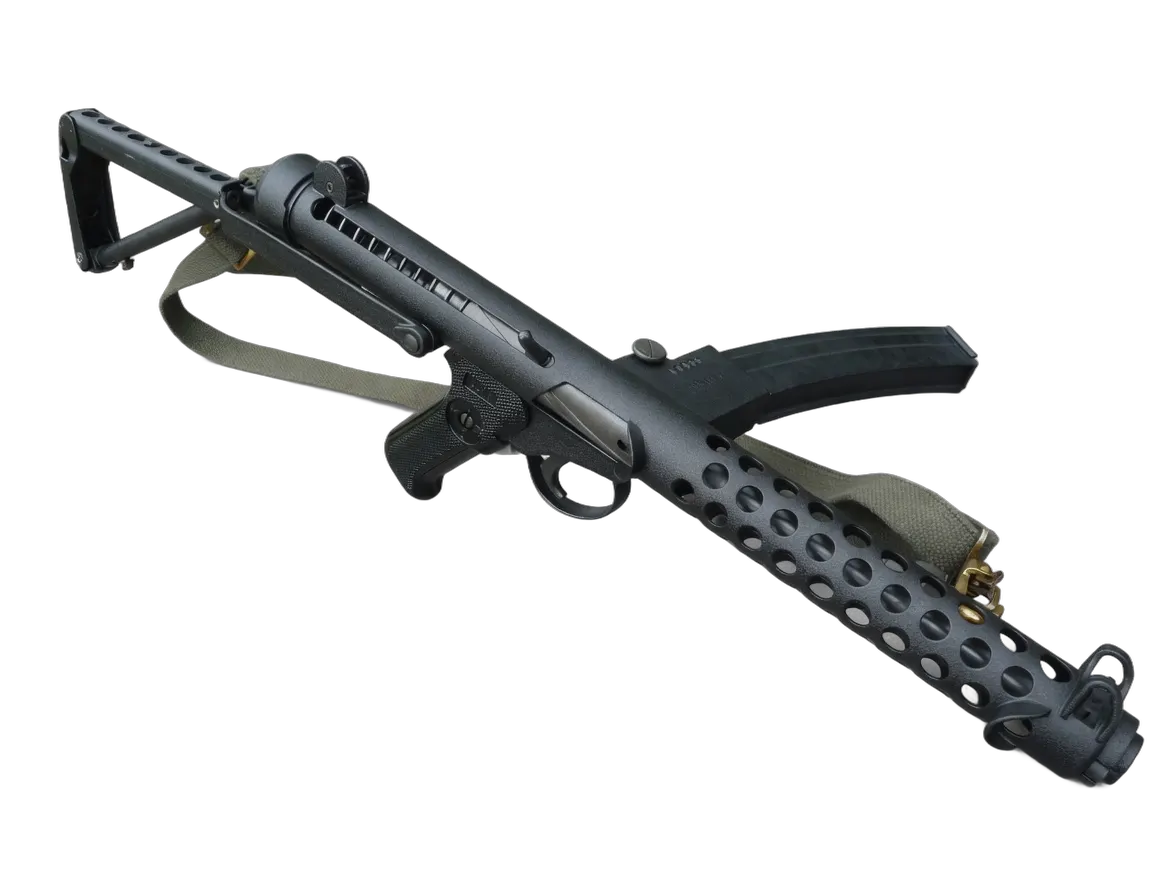
Sterling L2A3
1953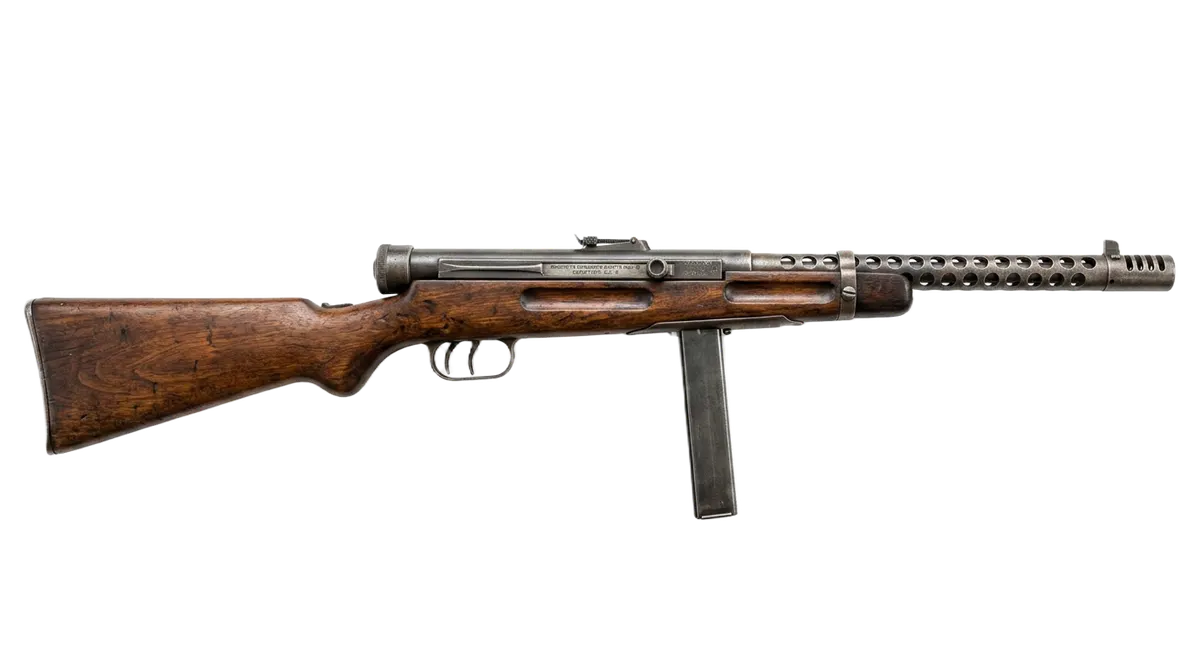
Beretta MAB 38
1938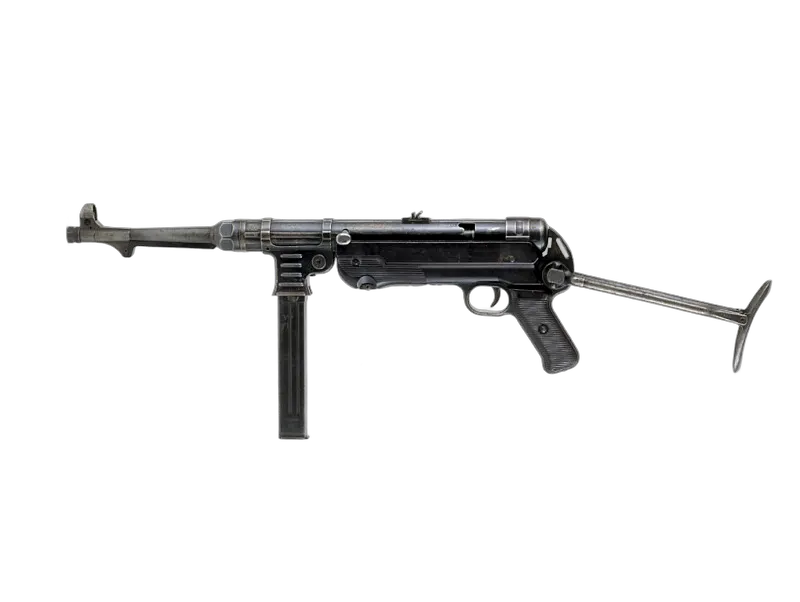
MP 40
1940
MP41 (Furrer)
1941
Hispano-Suiza MP43
1943