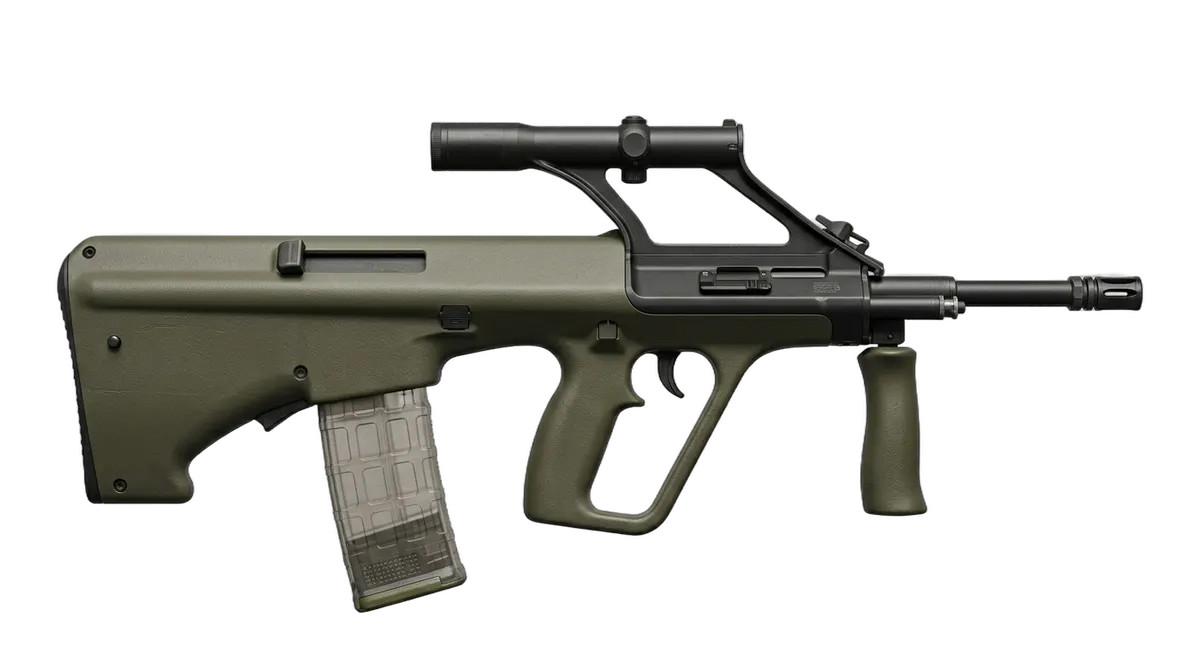
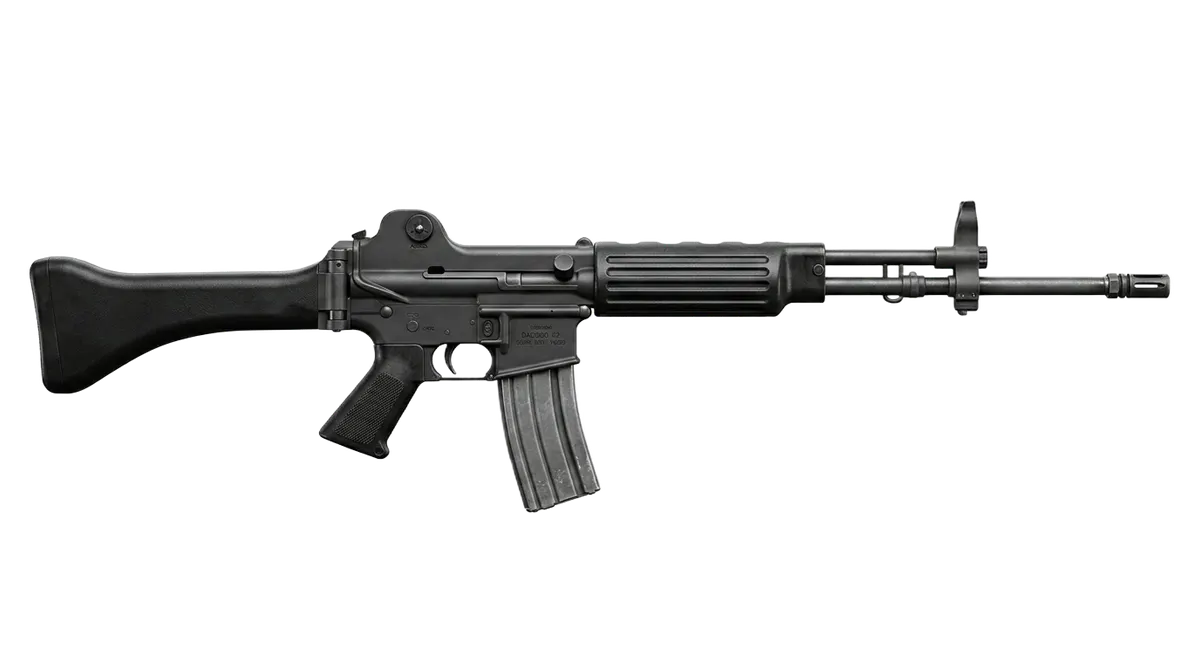
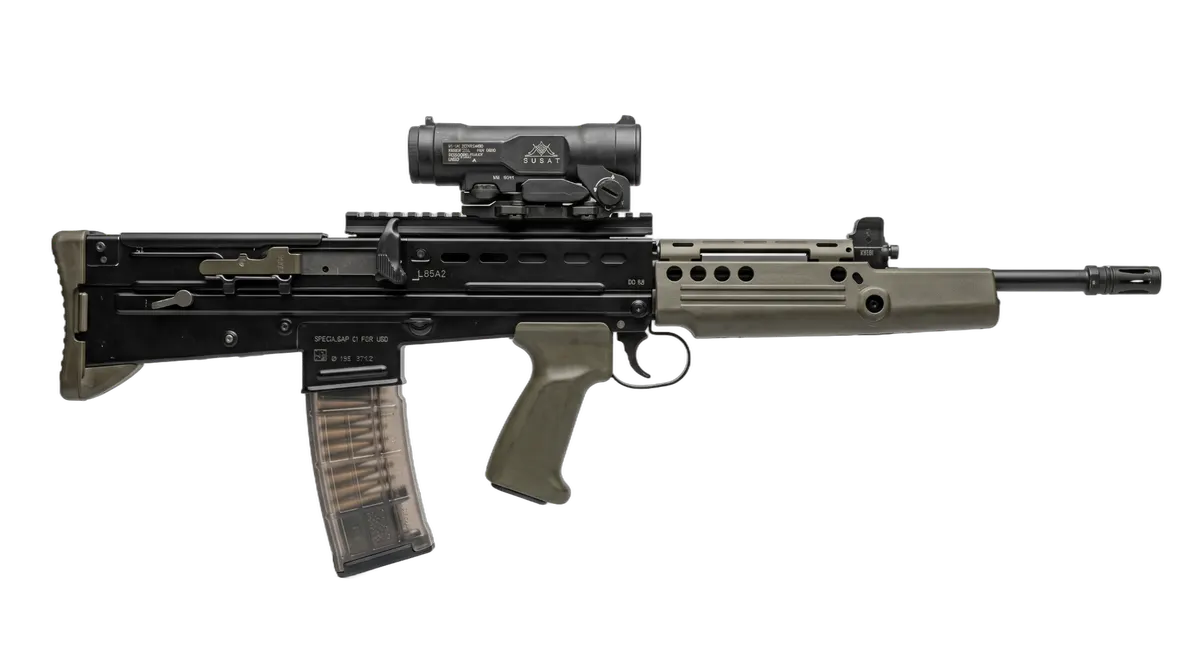
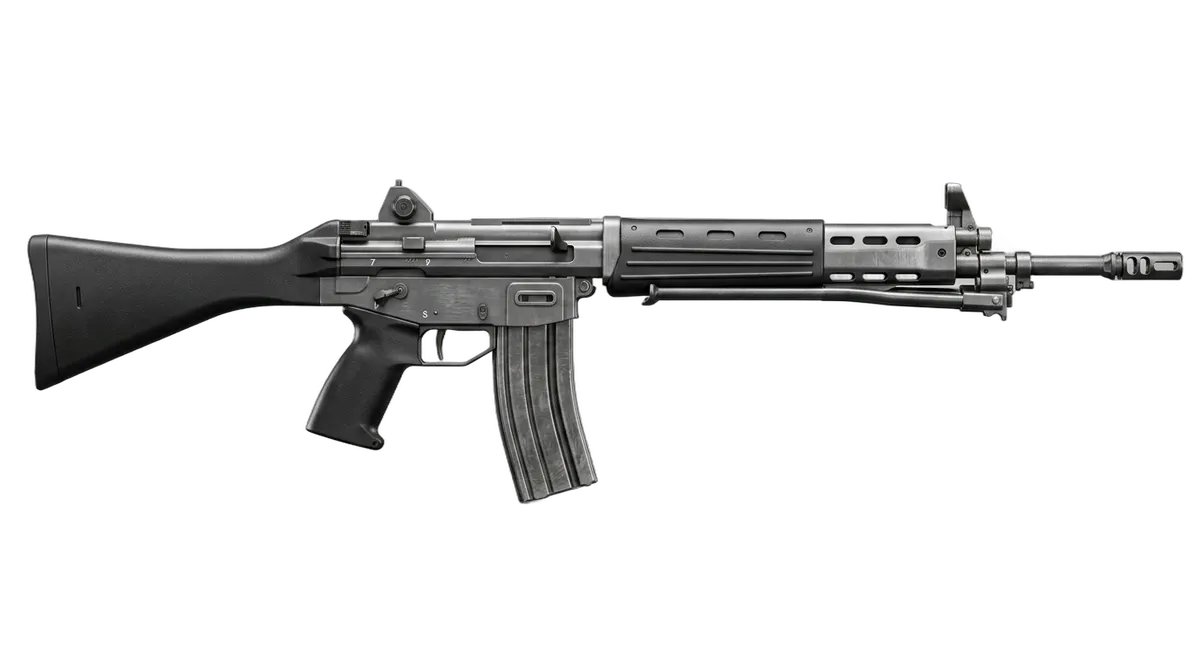
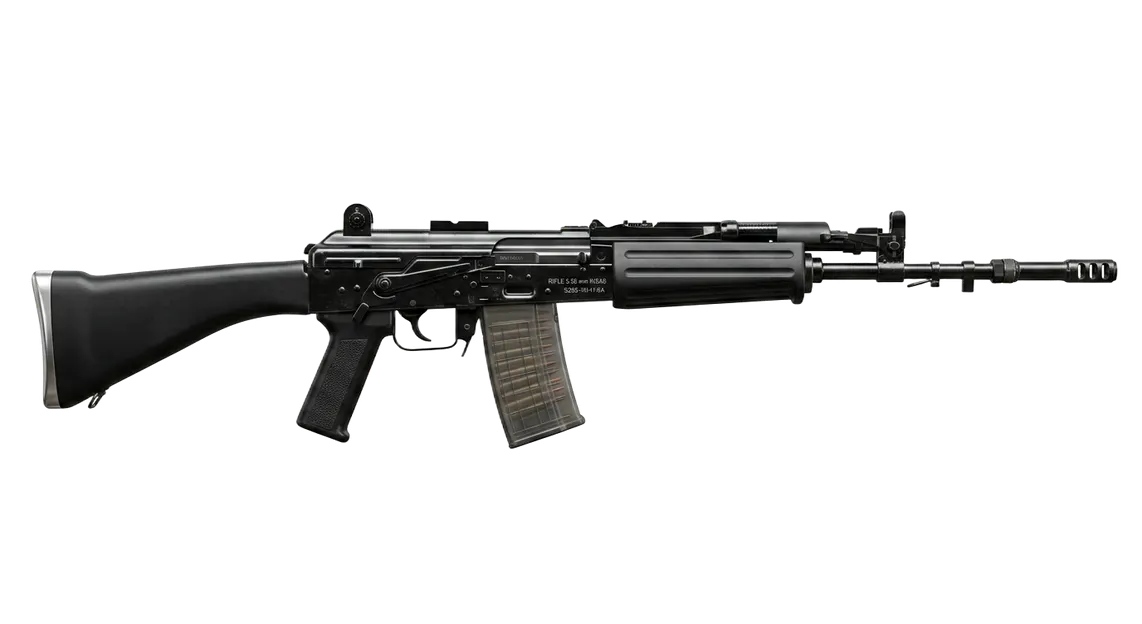
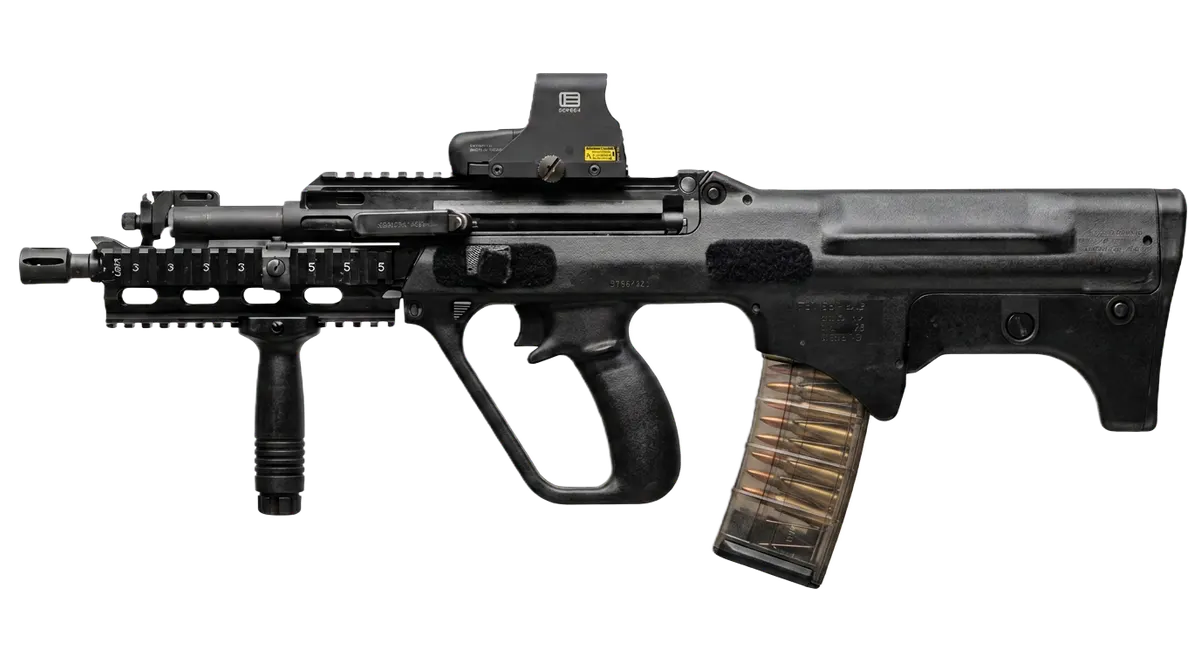
FN FNC / Ak 5
Country:  BelgiumManufacturer: FN Herstal
Belgian 5.56 NATO assault rifle derived from the CAL, adopted by Sweden as the Ak 5 in a Bofors-modified version for the Nordic climate.
FN FNC / Ak 5
Community
Data trust
- Reliability
- Unverified
- Sources
- Sources pending review
Identity
- Designation
- FN FNC / Ak 5
- Alias
- Automatkarbin 5
- Manufacturer
- FN Herstal / Bofors Carl Gustaf
- Country
- Belgium
- Year
- 1979
- Category
- Assault rifle
- Status
- In service
Ballistics
- Caliber
- 5.56×45 mm NATO
- Muzzle velocity
- 925 m/s
- Rate of fire
- ~700 rpm
- Effective range
- 400 m
- Maximum range
- 600 m
Dimensions
- Barrel length
- 450 mm
- Overall length
- 766 / 1000 mm
- Empty weight
- 3.9 kg
Mechanics
- Operating system
- Gas-operated, long-stroke piston
- Bolt / action
- Rotating bolt
Feed
- System
- STANAG magazine
- Standard capacity
- 30 rounds
Fire modes
Historical profile
Origins and Development of the FNC Program
The Fabrique Nationale Carabine project arose from the need to rectify the commercial failure of the previous FN CAL, a technically advanced but overly complex and expensive weapon for the market of the time. Between 1975 and 1977, FN Herstal engineers worked on a new prototype designated FNC 76, which aimed to combine modern modularity with a more reliable operating system under extreme conditions.
Sweden, searching for a replacement for the 7.62x51mm Ak 4 rifle, conducted a series of grueling comparative trials between 1975 and 1980, evaluating prototypes from around the world. The FNC emerged as the winner due to its mechanical robustness, leading Bofors Carl Gustaf to negotiate a production license for a variant specifically adapted to Scandinavian requirements.
Technical Characteristics and Swedish Adaptations
The weapon internal architecture departs from the roller-locking system of the FN FAL, adopting a Kalashnikov-inspired rotating bolt driven by a long-stroke gas piston. This technical choice ensures superior tolerance to debris and facilitates field maintenance by troops, while maintaining the accuracy of the 5.56x45mm NATO cartridge.
The Swedish Automatkarbin 5 variant introduced substantial modifications, including the removal of the three-round burst mode in favor of semi-automatic and automatic selection only. To operate in the Arctic climate, the trigger guard was enlarged, the charging handle was modified for use with heavy gloves, and external surfaces were treated with a non-reflective green epoxy finish.
Military Employment and Operational Service
The FNC was officially adopted by the Belgian Army in 1989 as a replacement for the aging FAL, seeing extensive use in peacekeeping operations in Somalia and the Balkans. Beyond Belgium and Sweden, the weapon achieved success in Indonesia, where it is locally produced as the Pindad SS1, and among various elite units in South America and Africa.
The Swedish Ak 5 entered active service in 1986, becoming the standard-issue weapon for all branches of the Scandinavian nation armed forces. Throughout its decades of service, the weapon demonstrated exceptional longevity, being deployed by Swedish contingents in international missions under UN and NATO mandates, confirming the effectiveness of the modifications made by Bofors.
Modern Evolution and Historical Legacy
In the early 2000s, the Ak 5C program transformed the original rifle into a modern platform equipped with an adjustable telescopic stock and a handguard with MIL-STD-1913 rails for integrating Aimpoint optics and laser pointers. This configuration, along with the short-barreled Ak 5D version intended for vehicle crews, allowed the weapon to remain competitive despite the advent of lighter weapon systems.
The Ak 5 lifecycle is drawing to a close with the 2023 Swedish announcement regarding the adoption of a new rifle family developed in collaboration with Finland and Sako. However, the FNC and its derivatives remain milestones of small arms engineering, celebrated for merging the reliability of piston systems with the Western ergonomics of Cold War assault rifles.
Variants
Main users
Belgium · Sweden · Indonesia · Tonga
Key components
- ●Stock — Shoulder rest.
- ●Receiver — Weapon body with internal mechanisms.
- ●Grip — Primary grip.
- ●Magazine — Cartridge feed.
- ●Barrel — Guides the projectile.