AN-94 Abakan
Country:  RussiaManufacturer: Kalashnikov Concern (Izhmash)
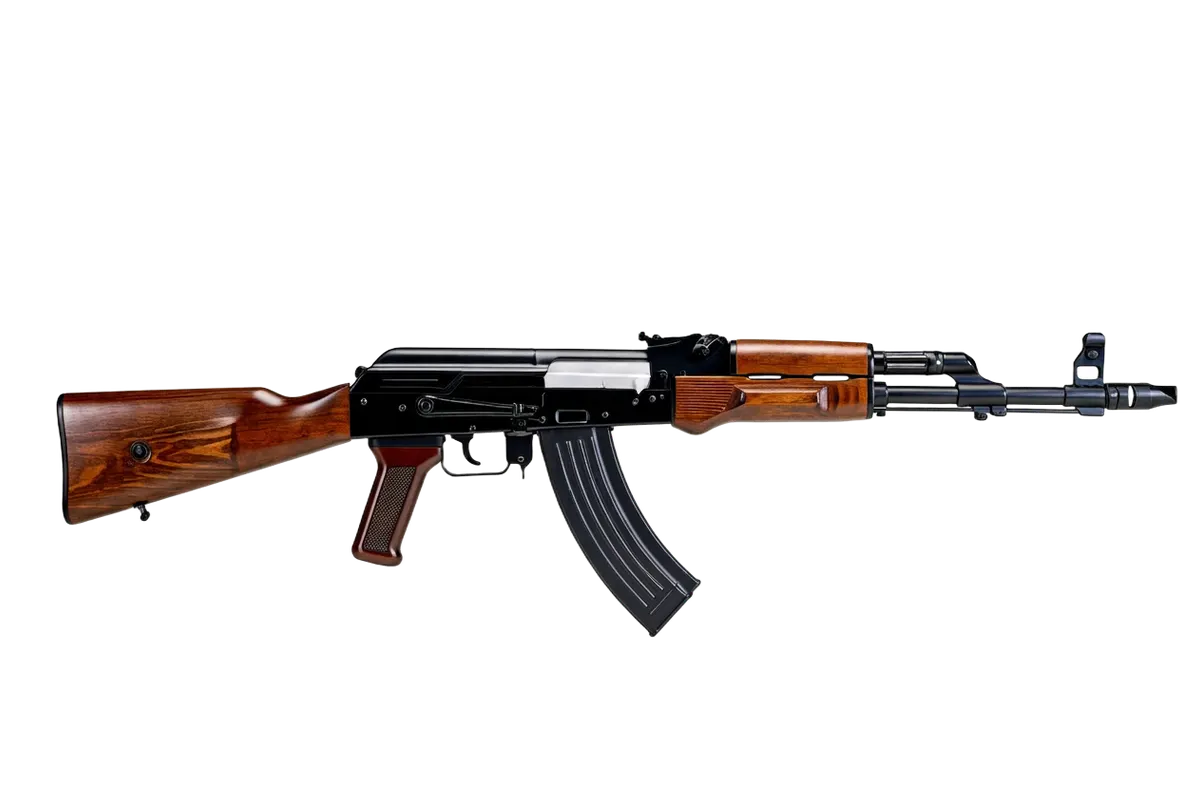
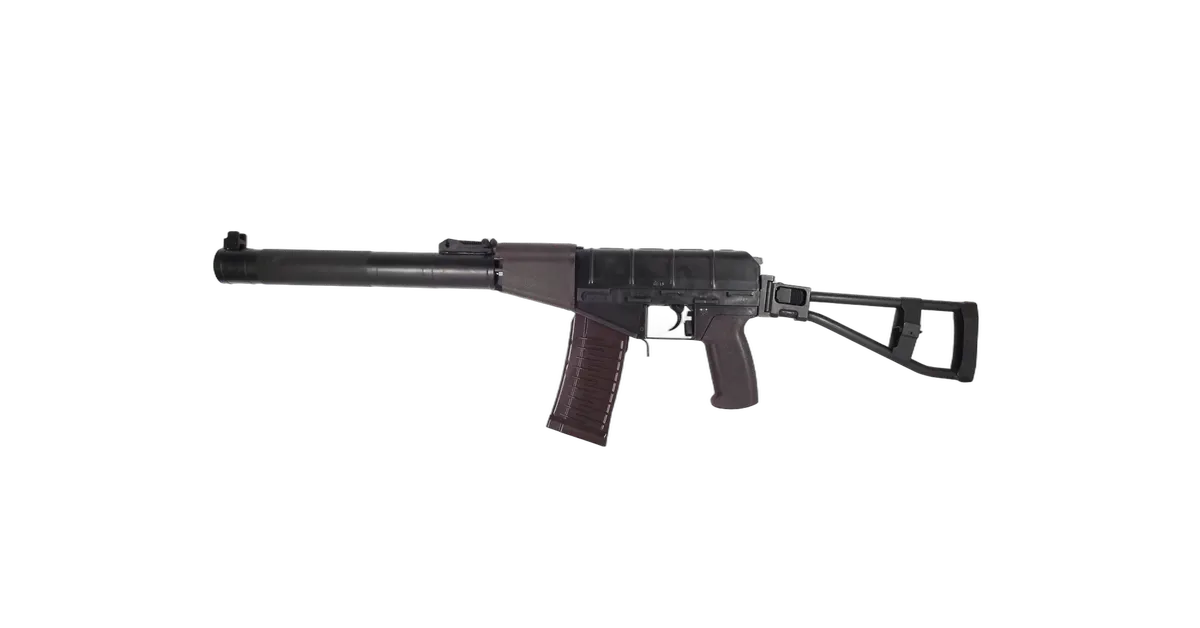
Russian assault rifle with a complex "shifted recoil" mechanism: it fires a two-round burst at about 1800 rpm before recoil reaches the shooter's shoulder, dramatically tightening groups on protected targets.
AN-94 Abakan
Community
Data trust
- Reliability
- Unverified
- Sources
- Sources pending review
Identity
- Designation
- AN-94 Abakan
- Alias
- Автомат Никонова 1994 «Абакан»
- Manufacturer
- Izhmash
- Country
- Russia
- Year
- 1994
- Category
- Assault rifle
- Status
- Limited
Ballistics
- Caliber
- 5,45×39 mm
- Muzzle velocity
- 900 m/s
- Rate of fire
- ~600 rpm
- Effective range
- 700 m
- Maximum range
- 1000 m
Dimensions
- Barrel length
- 405 mm
- Overall length
- 728 / 943 mm
- Empty weight
- 3.85 kg
Mechanics
- Operating system
- Presa di gas con culla a rinculo differito
- Bolt / action
- Rotating bolt
Feed
- System
- Caricatore curvo amovibile (compatibile AK-74)
- Standard capacity
- 30 rounds
Fire modes
Historical profile
Development and Abakan Competition
The origins of the AN-94 trace back to the Abakan research and development program launched by the Soviet Ministry of Defense between 1980 and 1994. The primary goal was to identify a successor to the AK-74 that could increase combat fire effectiveness by at least twofold, especially for less experienced soldiers.
Gennadiy Nikonov, working at the Izhmash plant, submitted several prototypes based on the concept of delayed recoil impulse, including the prominent AS model. After rigorous comparative testing against rival designs such as Koksharov's AEK-971, Nikonov's design was declared the winner in 1994 due to its superior accuracy during short bursts.
Technical Innovation and Mechanics
The weapon is distinguished by the adoption of the Boren-on-Pulley system, which utilizes a pulley and a steel cable to manage the feeding of 5.45x39mm ammunition within a floating barrel-receiver group. This allows the AN-94 to fire a two-round burst at 1800 rounds per minute, ensuring the second bullet leaves the muzzle before the user feels the recoil of the first.
Beyond the two-round burst mode, the rifle can operate in semi-automatic or standard automatic mode at 600 rounds per minute, offering tactical flexibility. The construction features extensive use of glass-fiber reinforced polymers and a unique rotating diopter rear sight, while the bayonet lug is positioned laterally to avoid interfering with the complex muzzle brake.
Adoption and Operational Service
Although the AN-94 was officially intended to replace the entire AK-74 fleet, the economic hardships of the post-Soviet Russian Federation drastically limited its distribution. The weapon was issued exclusively to elite units such as the Spetsnaz, FSB counter-terrorism teams, and selected Ministry of Internal Affairs (MVD) detachments.
During service in the Chechen Wars and various Caucasian conflicts, the weapon received mixed reviews due to its excessive mechanical complexity and difficulty of field maintenance. The training required to strip and clean the AN-94 was significantly higher than that needed for the Kalashnikov platform, making it ill-suited for conscripted troops.
Decline and Military Legacy
Serial production at the Izhevsk plant ceased permanently around 2006, although the weapon remained in Russian arsenals for special purposes. The high production cost, estimated at roughly six times that of an AK-74M, and the fragility of certain internal components accelerated the adoption of simpler alternatives like the AK-12 and AK-103.
Today, the AN-94 is considered a milestone in ballistic engineering for its bold approach to burst-fire accuracy, despite being a large-scale logistical failure. It remains an extremely rare collector's item and a symbol of Russia's technological transition toward advanced weapon systems that proved too costly for a mass army.
Variants
Main users
Russia (Spetsnaz, MVD, FSB)
Key components
- ●Stock — Shoulder rest.
- ●Receiver — Weapon body with internal mechanisms.
- ●Grip — Primary grip.
- ●Magazine — Cartridge feed.
- ●Barrel — Guides the projectile.