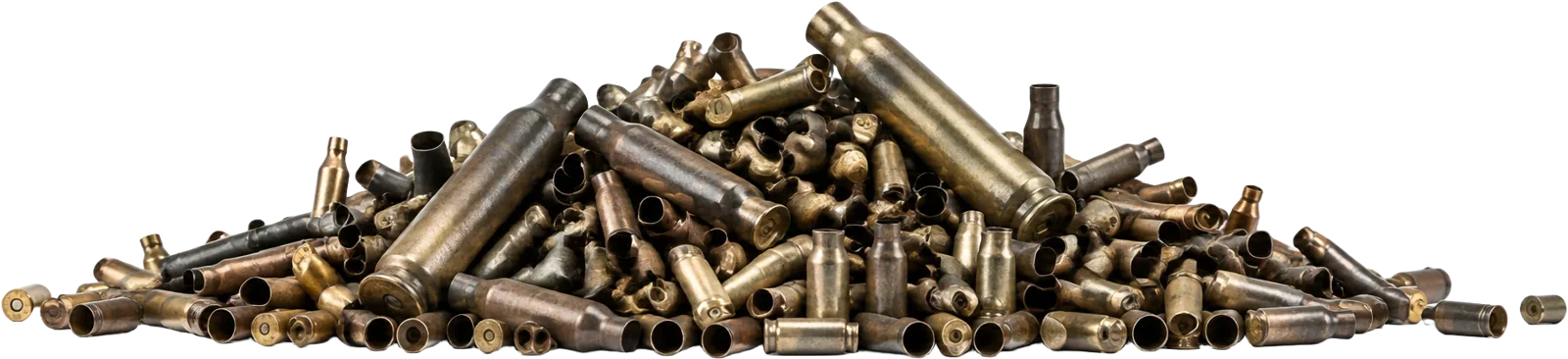

TNT (Trinitrotoluene)
Foundational military secondary high explosive (2,4,6-Trinitrotoluene / TNT) and the universal baseline reference (RE Factor = 1.00) against which the explosive yield of all conventional and nuclear weapons is measured, valued for its low melting point allowing safe melt-casting into artillery shells, bombs, and mines.
- Designation
- —
- Standard
- Germany (First synthesized 1863; adopted by German Armed Forces 1902)
- Origin
- Germany / Global
- Introduced
- 1902
Dates: 1902 (Military adoption) – Present
In service
Community
Technical overview
Foundational military secondary high explosive (2,4,6-Trinitrotoluene / TNT) and the universal baseline reference (RE Factor = 1.00) against which the explosive yield of all conventional and nuclear weapons is measured, valued for its low melting point allowing safe melt-casting into artillery shells, bombs, and mines.
Technical specifications
- Chemical Composition
- Aromatic nitro compound (2,4,6-trinitrotoluene)
- Detonation Velocity (m/s)
- 6,900 m/s
- Relative Effectiveness (vs TNT)
- 1.00 (universal baseline standard)
- Density (g/cm³)
- 1.654 g/cm³ (crystal) / ~1.55–1.60 g/cm³ (cast)
- Form Factor
- Pale yellow castable solid, pressed blocks (e.g., 1/4 lb, 1/2 lb, 1 lb U.S. / 200 g & 400 g Soviet demolition blocks), or flake
- Primary Military Role
- Universal artillery shell, mortar, hand grenade, landmine, and aerial bomb explosive filler
Military variants & loadings
| Designation | Type | Notes |
|---|---|---|
| Cast / Pressed TNT | — | (standard demolition blocks and burster charges) |
| TNT Blends | — | (Amatol, Composition B, Tritonal, Torpex, Pentolite) |
Platforms & context
No linked weapons yet.
Dataset evidence note: Owner-supplied source assessment; not independently audited. Values remain qualified where supplied; unsourced or operational details are omitted.
Doctrine & history
Adopted by the Imperial German military in 1902 (replacing shock-sensitive picric acid) and subsequently by virtually every army and navy in World War I, World War II, and the Cold War, TNT remains widely used both in pure form (such as demolition blocks and Soviet/Russian artillery shells) and as a castable matrix blended with RDX (Composition B), aluminum (Tritonal), or ammonium nitrate (Amatol).
Data trust
- Reliability
- Partially verified
- Sources
- TNTWikipedia · Accessed
- Last reviewed
Technical and historical reference data only; no fabrication, handling, or operational instructions
ARSENALIS // Research desk
Dossier resources
Loading map…
Natural Earth · schematic bordersNo operator entries recorded for this selection.
No structured operator list recorded. Country of origin is not treated as an operator.