
Mark VII (UK) & Mark 9 (US) Naval Depth Charges
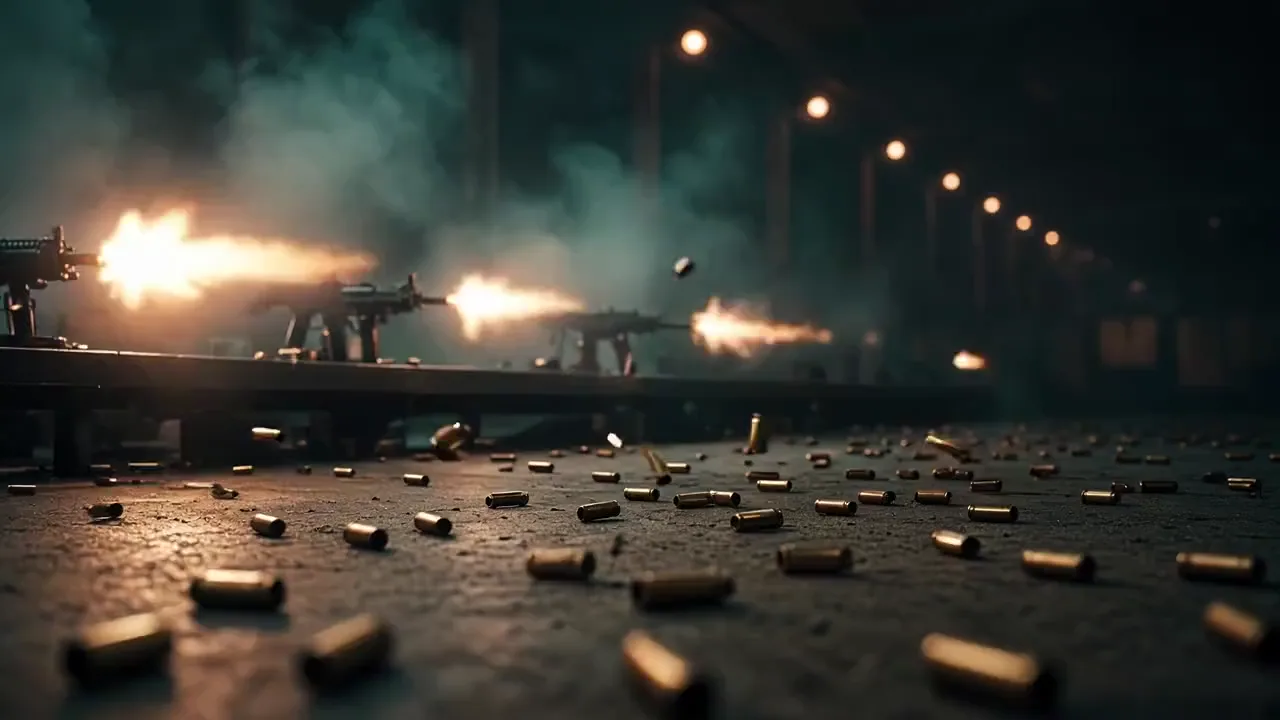
Iconic World War II anti-submarine warfare (ASW) underwater explosive canisters—the cylindrical British Mark VII "ashcan" and the streamlined fin-stabilized American Mark 9 teardrop depth charge—dropped from destroyer stern racks and K-gun throwers to crush submerged U-boat pressure hulls via hydrostatic-pressure-fuzed underwater shockwaves.
- Designation
- —
- Standard
- United Kingdom (Royal Navy Mk VII) & United States (U.S. Navy Mk 9 teardrop)
- Origin
- United Kingdom / United States
- Introduced
- 1918
Dates: 1918 (British Mk VII) – 1943 (U.S. Mk 9 teardrop) – 1960s/1970s (Replaced by ASW homing torpedoes)
Retired
Community
Technical overview
Iconic World War II anti-submarine warfare (ASW) underwater explosive canisters—the cylindrical British Mark VII "ashcan" and the streamlined fin-stabilized American Mark 9 teardrop depth charge—dropped from destroyer stern racks and K-gun throwers to crush submerged U-boat pressure hulls via hydrostatic-pressure-fuzed underwater shockwaves.
Technical specifications
- Total Weight
- 190 kg (420 lb — UK Mk VII) / 145 kg (320 lb — US Mk 9)
- Main Charge
- 132 kg (290 lb) Amatol, Minol, or Torpex (Mk VII) / 91 kg (200 lb) TNT or Torpex (Mk 9)
- Charge Mass
- 132 kg (290 lb) Amatol, Minol, or Torpex (Mk VII) / 91 kg (200 lb) TNT or Torpex (Mk 9)
- Actuation Mechanism
- Hydrostatic pressure fuze
- Casing Material
- Cylindrical sheet-steel drum (Mk VII) or streamlined teardrop steel body with tail fins (Mk 9)
- Dimensions
- 711 mm length × 447 mm diameter (Mk VII) / 704 mm × 447 mm (Mk 9)
- Published historical effect radius
- ~6–8 m lethal hull-rupture radius against WWII submarine pressure hulls
Military variants & loadings
| Designation | Type | Notes |
|---|---|---|
| Mark VII / Mark VII Heavy | — | (standard Royal Navy and Commonwealth WWII cylindrical ASW depth charge) |
| Mark 9 Mod 0–4 | — | (U.S. Navy streamlined fast-sinking teardrop ASW depth charge) |
Platforms & context
No linked weapons yet.
Dataset evidence note: Owner-supplied source assessment; not independently audited. Published values are qualified by variant, estimate or historical context where supplied. Classified or unsourced figures remain absent.
Doctrine & history
Serving as the primary submarine-killing weapons of the Battle of the Atlantic and the Pacific War, the British Mk VII (upgraded with Torpex filler and weighted Mk VII Heavy variants to sink faster) and the faster-sinking U.S. Mk 9 (sinking at 4.4 m/s to catch deep-diving submarines) sank hundreds of Axis submarines before being superseded during the Cold War by homing ASW torpedoes (Mk 44/46).
Data trust
- Reliability
- Partially verified
- Sources
- Depth charge — British Mk VII & US Mk 9Wikipedia · Accessed
- Last reviewed
Technical and historical reference data only; no fabrication, handling, or operational instructions
ARSENALIS // Research desk
Dossier resources
Loading map…
Natural Earth · schematic bordersNo operator entries recorded for this selection.
No structured operator list recorded. Country of origin is not treated as an operator.
