

Yankee-class
Project 667A Navaga
Country: Soviet UnionManufacturer: Sevmash & Leninsky Komsomol Shipyard (Komsomolsk-on-Amur) (Severodvinsk)
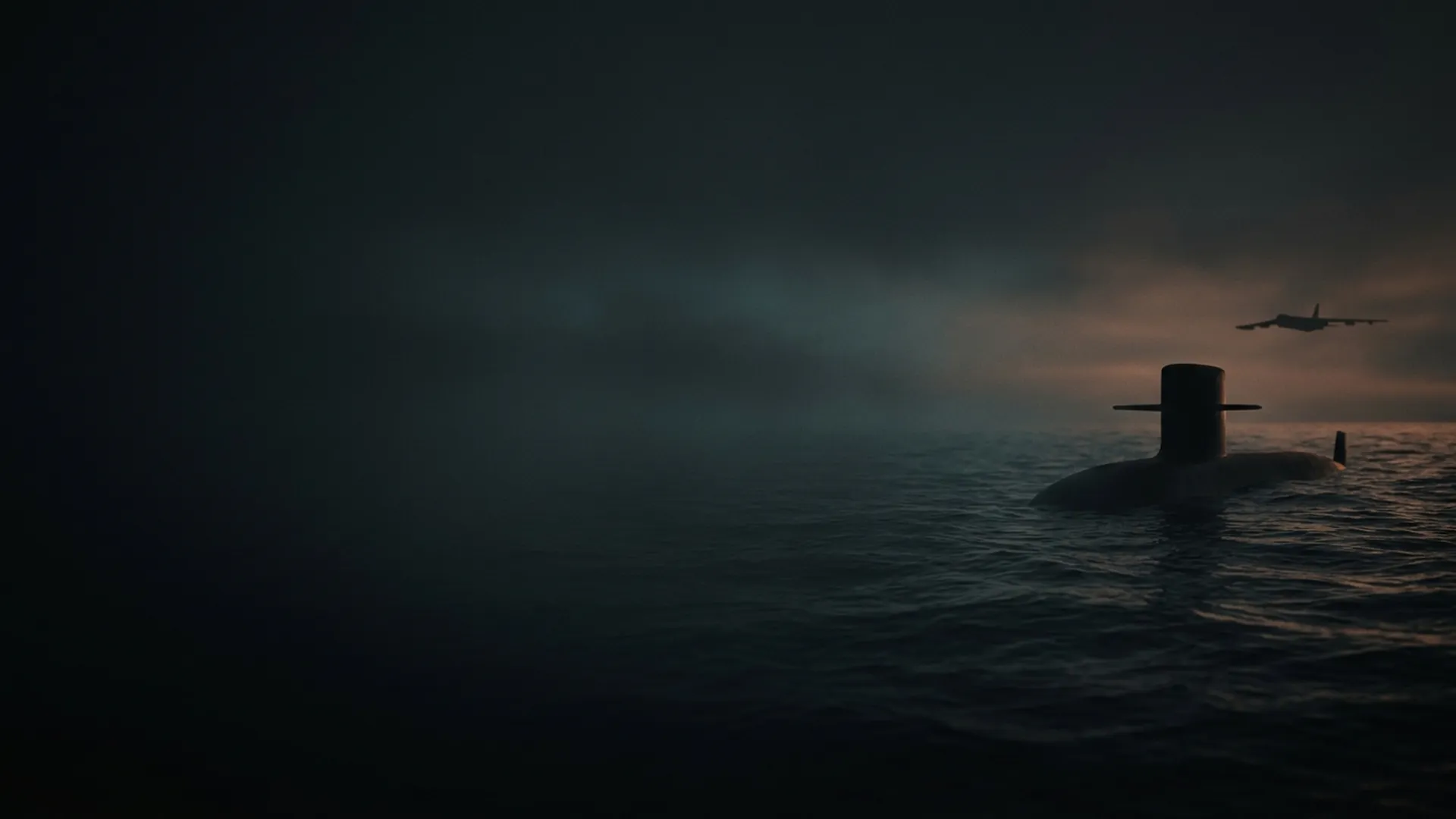
First modern Soviet nuclear-powered ballistic missile submarine class (Project 667A Navaga / Yankee I), housing 16 liquid-fueled R-27 Zyb SLBMs inside the pressure hull aft of the sail in a layout analogous to the U.S. Navy's Polaris submarines.
AI-generated illustration based on a photo by Unknown author, Public domain, via Wikimedia Commons.
Community
Identity5 fields
- Country
- Soviet Union
- Manufacturer
- Sevmash (Severodvinsk) & Leninsky Komsomol Shipyard (Komsomolsk-on-Amur)
- Introduction
- 1967
- Status
- Historic
- Category
- Ballistic missile submarine
Specifications4 fields
- Launch platform
- —
- Range
- —
- Length
- —
- Submerged displacement
- —
- Beam
- —
- Draught
- —
- Crew
- —
- Submerged speed
- —
Supplied specifications
- Dates: 1967 (Lead boat commissioned) – 1994 (Last SSBN decommissioned)
- Displacement: ~7,760 tonnes surfaced / ~9,600 tonnes submerged
- Length / Beam: ~128.0 m / ~11.7 m
- Propulsion: Two VM-4 pressurized water nuclear reactors + two steam turbines; ~27–28 knots submerged speed
- Strategic Armament: 16× R-27 / R-27U Zyb submarine-launched ballistic missiles
- Defensive Armament: 4× 533 mm and 2× 400 mm bow torpedo tubes
- Data trust: Partial. Sevmash/Komsomolsk construction, 1967–1974 commissioning of 34 boats, 16-tube R-27 armament, 1986 K-219 loss, and ~9,600-tonne submerged displacement: Verified against cited historical sources. Exact acoustic quieting metrics: Unverified (—).
Variants
- Project 667A / 667AU Navaga (Yankee I) (34-boat 16-tube R-27 SSBN class)
- Project 667AM (Yankee II) (single boat K-140 re-armed with 12 solid-fuel R-31 missiles) & Project 667M Andromeda (Yankee Sidecar) (cruise-missile testbed)
Data trust
- Reliability
- Partially verified
- Sources
- Yankee-class submarineWikipedia · Accessed
- Last reviewed
History and evolution
Thirty-four Project 667A submarines were built at rapid pace between 1967 and 1974—enabling continuous Soviet strategic patrols off the U.S. Atlantic and Pacific coasts during the height of the Cold War—with K-219 famously sinking in the Atlantic in October 1986 after a missile tube explosion and fire.
