Typhoon class
Project 941 Akula
Country: Soviet UnionManufacturers: Rubin Design Bureau, Sevmash (co-manufacturer)
The Typhoon class (Project 941) is a Soviet ballistic-missile submarine class, among the largest submarines built. The first boat entered service in 1981. The class has been withdrawn from operational ballistic-missile service, with the last units retired in the early 2020s.
Project 941 boat moored at a quay
AI-generated illustration based on a DTRA photo by DTRA, Public domain, via Wikimedia Commons.
Community
Identity5 fields
- Country
- Soviet Union
- Manufacturer
- Rubin Design Bureau / Sevmash
- Introduction
- 1981
- Status
- Historic
- Category
- Ballistic missile submarine
Specifications4 fields
- Launch platform
- —
- Range
- —
- Length
- 175 m
- Submerged displacement
- 48,000 t
- Beam
- 23 m
- Draught
- 12 m
- Crew
- 160
- Submerged speed
- 27 kn
Supplied specifications
- History and additional figures from editor-supplied reference profiles; not independently verified. Existing figures are preserved; spans, estimates, bounds and variant-dependent figures are not imported.
Data trust
- Reliability
- Partially verified
- Sources
- Typhoon-class submarineWikipedia · Accessed
- Last reviewed
History and evolution
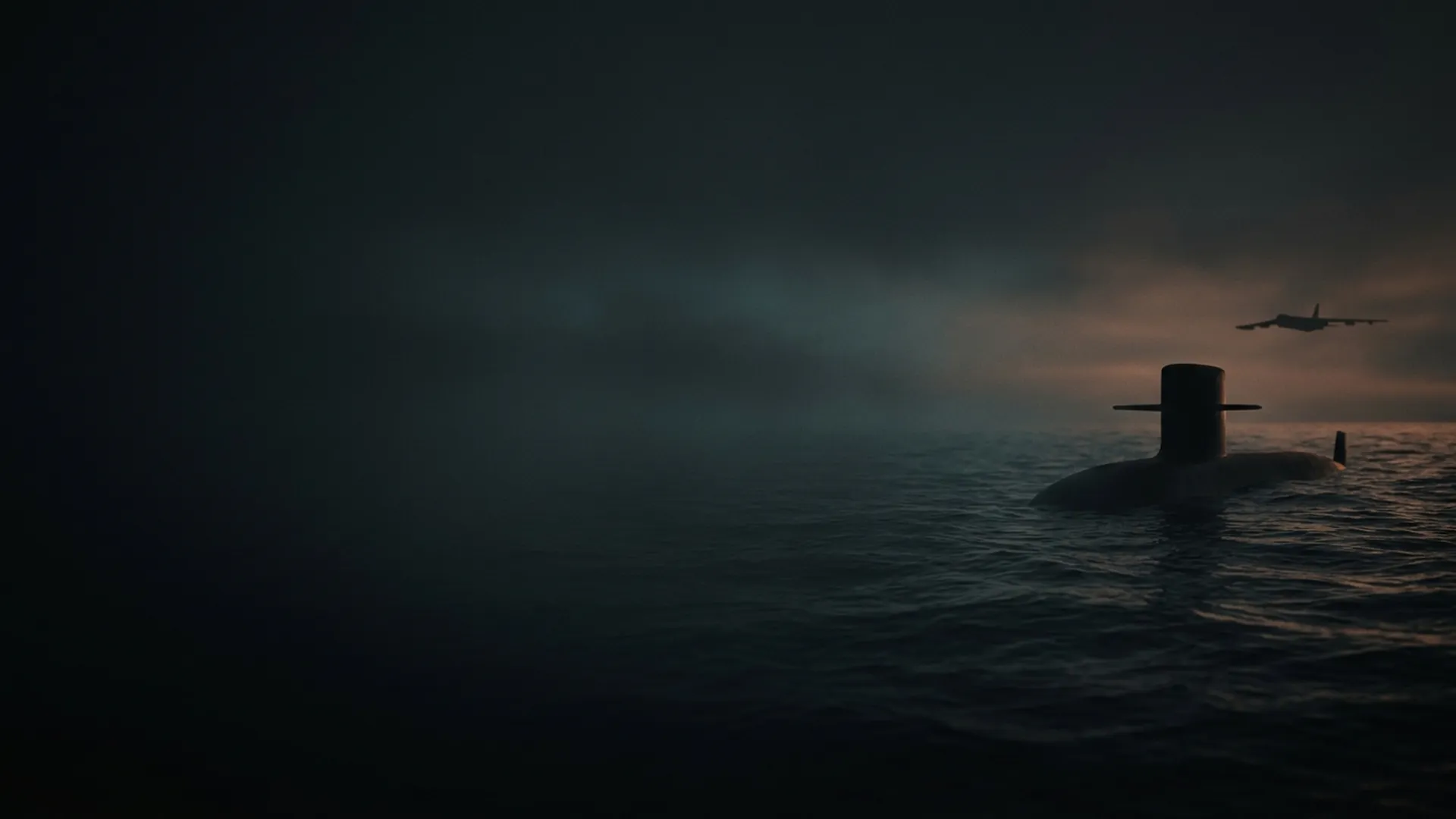
Origins: The Largest Submarines Ever Built (1972–1981): Developed by the Rubin Design Bureau (OKB-18) in Leningrad under chief designer Sergei Kovalev and constructed at the Sevmash shipyard in Severodvinsk under the Soviet designation Project 941 Akula (NATO reporting name: Typhoon class), these leviathans were engineered in the 1970s to carry the massive 90-tonne R-39 Rif (SS-N-20 Sturgeon) solid-fuel SLBM while operating beneath the thick Arctic polar ice cap—beyond the reach of NATO anti-submarine aircraft and surface warships. Lead submarine TK-208 Dmitriy Donskoy was laid down in 1976 and commissioned into the Soviet Northern Fleet in December 1981.
Revolutionary Multi-Hull Ice-Breaking Architecture: Five Internal Pressure Hulls: Rather than a single cylindrical hull, the Typhoon class features two parallel main pressure hulls arranged side-by-side (similar to a catamaran) joined by three smaller pressure hulls for the command center, torpedo room, and steering gear, all enclosed within a massive streamlined outer light hull with 20 missile silos placed forward of the sail between the two main hulls. Under-Ice Operations & Crew Comfort: Reinforced with a hardened sail, retracted bow diving planes, and shrouded twin propellers capable of surfacing through 2.5–3 meters of solid Arctic pack ice, the Typhoon's vast internal volume even included a crew sauna, small swimming pool, gym, and solarium for extended 120-day polar patrols.
Decommissioning and Final Retirement (2000s–2023): Six Typhoon-class submarines were completed between 1981 and 1989 (a seventh hull, TK-210, was scrapped before completion). Following the end of the Cold War, high operating costs and the depletion of Ukrainian-built R-39 missiles led to the early retirement of five boats in the 1990s and 2000s (three dismantled under the U.S.–Russian Cooperative Threat Reduction program). Lead boat TK-208 Dmitriy Donskoy was modernized under Project 941UM to serve as the testbed for the RSM-56 Bulava SLBM before being formally decommissioned in February 2023, marking the end of the Typhoon era.