
Starlink / Starshield
Country:  United StatesManufacturer: SpaceX
Starlink is SpaceX's low-Earth-orbit broadband satellite constellation, which began launching operational satellites on 24 May 2019 after two test satellites in February 2018. Starshield is a related SpaceX line of purpose-built LEO satellites for the United States and allied governments, adapted from Starlink and publicly announced under that name in December 2022.
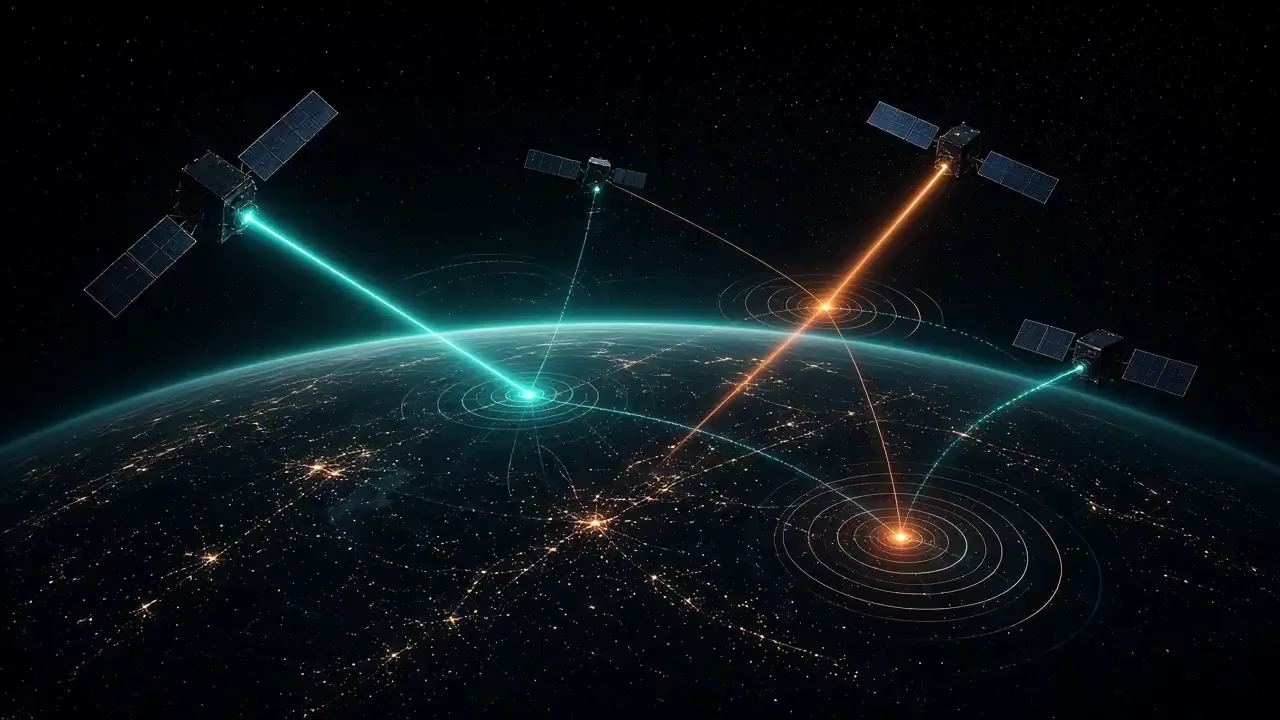
AI-generated illustration based on a photo by Official SpaceX Photos, CC0, via Wikimedia Commons
Wikimedia Commons referenceCommunity
Identity5 fields
- Country
- United States
- Manufacturer
- SpaceX
- Introduction
- 2019
- Status
- In service
- Category
- Communications satellite
Mission9 fields
- Orbit
- LEO
- Operator
- SpaceX
- Payload
- Broadband communications (Starlink); government / military payloads (Starshield)
- Introduction dates
- 2023 (Initial operational launches 2023–2024)
- Altitude & Inclination
- ~300–570 km circular | 43°–97.6° inclination (shell-dependent)
Data trust
- Reliability
- Partially verified
- Sources
- StarlinkWikipedia · Accessed
- SpaceX StarshieldWikipedia · Accessed
- Last reviewed
Historical profile
After two test satellites in February 2018, the first batch of 60 operational Starlink satellites launched on 24 May 2019.
The Starshield name was publicly announced in December 2022, although earlier government contracting is also described in public sources. Reported launches of an NRO proliferated constellation began in May 2024; a separate first-launch date for a vehicle officially branded Starshield is not assigned on this sheet. Unconfirmed reports of future interceptor or directed-energy payloads are not recorded.
Developed by SpaceX as a dedicated national security satellite bus and end-to-end constellation architecture distinct from commercial Starlink. Engineered to support the U.S. Space Development Agency's Proliferated Warfighter Space Architecture (PWSA) and the NRO's proliferated reconnaissance network, Starshield shifts military space posture away from small numbers of exquisite, vulnerable geostationary targets toward resilient, mass-produced LEO meshes.
Contracted by the U.S. Space Force for tactical global battlefield connectivity and by the NRO (under a reported $1.8 billion classified program) to establish a persistent, rapid-revisit global Earth-observation constellation providing near-continuous target custody.
Variants and blocks: Starshield MILSATCOM Bus (U.S. Space Force tactical data relay), NRO Proliferated Architecture Bus (classified ISR sensor hosts).
