
QZSS Michibiki (Quasi-Zenith Satellite System)
Country:  JapanManufacturer: Mitsubishi Electric (MELCO)
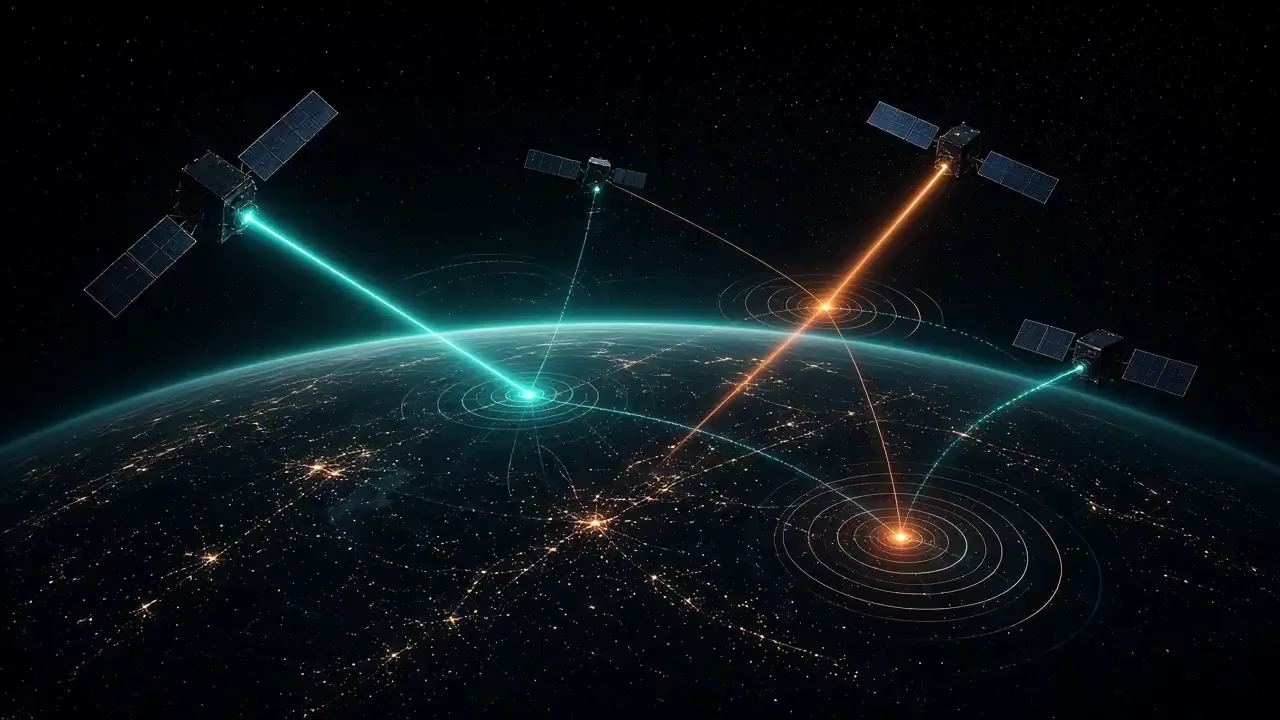
Engineered by Japan to provide uninterrupted high-elevation satellite navigation coverage over urban canyons and mountainous terrain in East Asia and the Western Pacific, where low-elevation GPS signals are frequently blocked.
Based on reference: https://commons.wikimedia.org/wiki/File:QZS-2or4_CG05.png
Wikimedia Commons referenceCommunity
Identity5 fields
- Country
- Japan
- Manufacturer
- Mitsubishi Electric (MELCO)
- Introduction
- —
- Status
- In service
- Category
- Navigation satellite
Mission10 fields
- Orbit
- Inclined Geosynchronous Orbit (IGSO — Asymmetric Figure-8 Tundra-like ground track) + Geostationary Earth Orbit (GEO)
- Operator
- Cabinet Office of Japan (National Space Policy Secretariat) / Japan Self-Defense Forces (JSDF)
- Payload
- Rubidium atomic frequency standards, L1 C/A, L1C, L2C, L5, L6 Centimeter-Level Augmentation Service (CLAS), and encrypted Public Regulated Service (PRS) / PNT signals for Japanese national security forces
- Introduction dates
- 2010 (QZS-1), 2018 (4-satellite operational constellation), 2024–2026 (7-satellite expansion)
- Altitude & Inclination
- ~32,600 km perigee × 39,000 km apogee | 39°–45° inclination (IGSO) + 35,786 km equatorial (GEO)
Data trust
- Reliability
- Unverified
- Sources
- Sources pending review
- Last reviewed

Historical profile
Engineered by Japan to provide uninterrupted high-elevation satellite navigation coverage over urban canyons and mountainous terrain in East Asia and the Western Pacific, where low-elevation GPS signals are frequently blocked. Expanding to a 7-satellite constellation provides Japan with an autonomous regional PNT capability capable of operating independently even if global GPS signals are degraded or denied.
Integrated across Japan Self-Defense Forces (JSDF) naval vessels, F-35/F-15J aircraft, Type 12 anti-ship missiles, and autonomous unmanned platforms, while reinforcing U.S.-Japan bilateral space security cooperation (hosting U.S. Space Domain Awareness payloads on QZS-6 and QZS-7).
Variants and blocks: QZS-1 (pathfinder), QZS-1R / QZS-2 to QZS-4 (4-satellite baseline), QZS-5 to QZS-7 (7-satellite autonomous expansion).
