
Body armor & plates
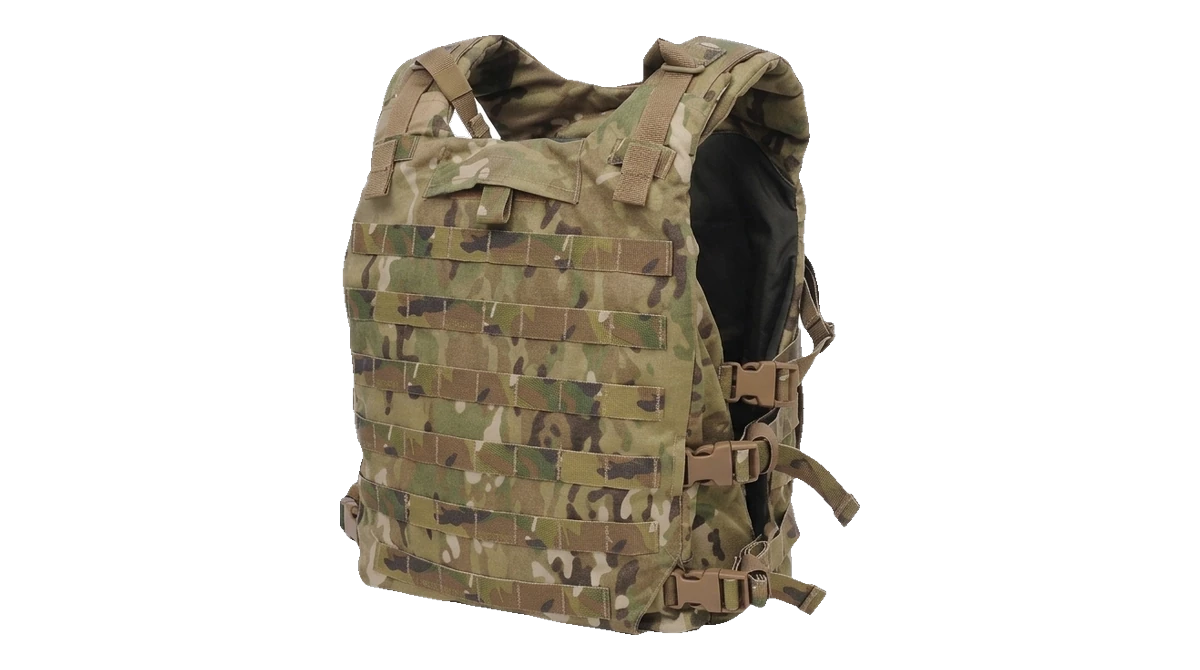
Soldier Plate Carrier (SPC)
Developed by the U.S. Army in 2010 as an urgent operational response to the extreme weight burden carried by infantry soldiers operating at high altitudes in the Hindu Kush mountains of Afghanistan. By stripping away bulky full-torso soft armor while retaining vital-organ ESAPI/XSAPI ceramic plates, the SPCS restored agility and endurance.
AI render based on photo by Unknown author Unknown author, Public domain
Community
Loading…
Specifications
- Category
- Body armor & plates
- Country
- United States
- Manufacturer
- KDH Defense Systems
- Introduced
- 2010
- Status
- Active (Light Infantry & Mountain Units)
- Protection level
- NIJ Level IV hard plate protection over vital thoracic organs (with ESAPI/XSAPI plates); minimal soft-armor fragmentation coverage outside plate footprints
- Material
- Minimalist internal aramid soft-armor backers behind hard plates and side-plate pockets (eliminating full-torso soft armor vest coverage)
- Weight
- ~7.7–9.1 kg (17–20 lb) complete with ESAPI and side plates — saving ~4.5–5.5 kg over the contemporary IOTV
- Users
- —
- Hard Plate Compatibility
- Front, rear, and side pockets for ESAPI / XSAPI ceramic plates
- Modularity & Load Carriage
- Lightweight Cordura nylon chassis with full PALS/MOLLE webbing, side-plate cummerbund, and quick-release shoulder/cummerbund hardware
- Variants & modernizations
- SPCS Gen I (OEF-CP MultiCam), SPCS Gen II (OCP Scorpion W2, improved shoulder ergonomics and cummerbund).
History
Issued primarily to U.S. Army light infantry, airborne, and mountain divisions (such as the 10th Mountain, 82nd Airborne, and 101st Airborne Divisions) deploying to Afghanistan from 2010 onward.
Related systems
—
Sources
- Data trust: Verified (U.S. Army PEO Soldier / Rapid Fielding Initiative Documentation)
Community
Loading…
