
Load bearing & packs
PLCE
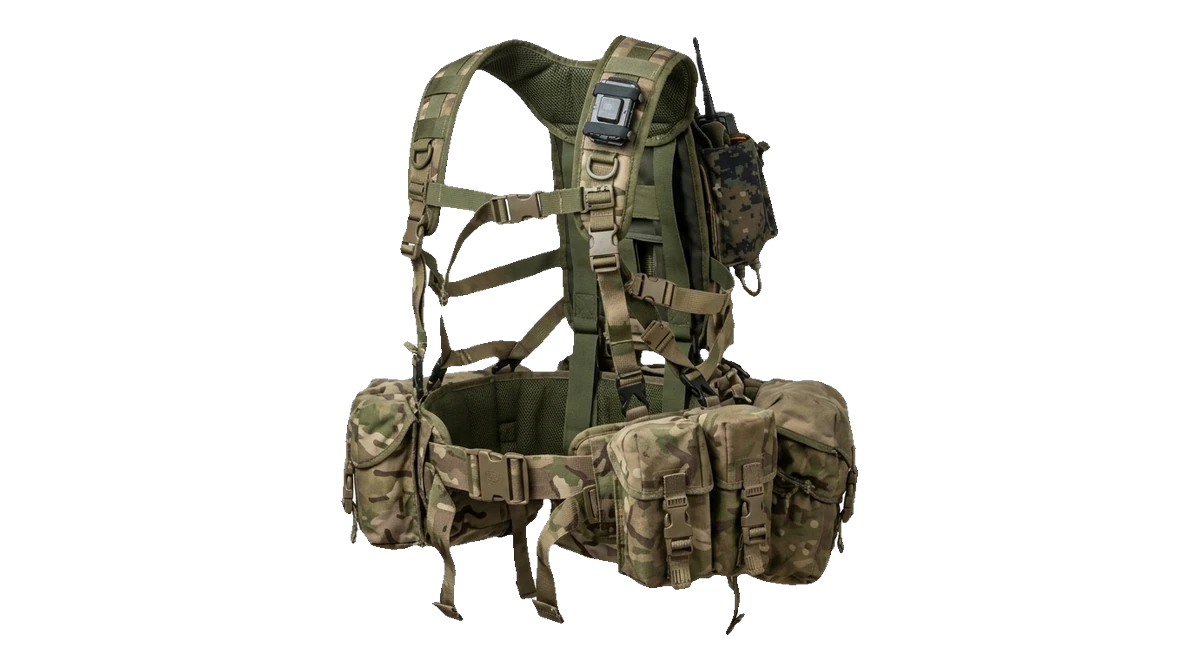
Introduced in the late 1980s as the 90 Pattern (and refined into 95 Pattern alongside Combat Soldier 95) to replace the obsolete 58 Pattern cotton webbing, which absorbed water and rotted during the 1982 Falklands War. PLCE perfected the British "belt-order" doctrine—keeping survival essentials, water, rations, and ammunition on the soldier's hips independent of body armor or rucksack removal.
AI render based on photo by Original MOD photo by Cpl Simon Lucas, cropping by User:Dvaderv2, OGL 3
Community
Loading…
Specifications
- Category
- Load bearing & packs
- Country
- United Kingdom
- Manufacturer
- UK Ministry of Defence / CQC Ltd / Remploy / Solo International
- Introduced
- —
- Status
- Active (Reserve / Training & Commonwealth Forces; supplemented in frontline UK service by Virtus)
- Protection level
- —
- Material
- Water-repellent polyurethane-coated 1000-denier Cordura nylon (initially Olive Drab in 90 Pattern, transitioning to IRR Disruptive Pattern Material — DPM in 95 Pattern)
- Weight
- ~ 1.6 kg (3.5 lb) empty belt-order webbing rig; ~ 3.5 kg (7.7 lb) empty PLCE Bergen with side pouches
- Users
- —
- Introduction dates
- 1988 (90 Pattern), 1995 (95 Pattern)
- System Architecture
- Low-slung hip-mounted belt-order webbing rig consisting of a 50 mm waist belt, padded 6-point mesh yoke harness, dual twin-ammunition pouches (holding 6 to 12× 30-round STANAG magazines), utility/water-bottle pouches, bayonet frog, and detachable 10 L side rocket pouches
- Associated Packs
- *PLCE Bergen* (~ 100 L main sustainment rucksack with internal aluminum frame + two zip-on 10 L side pockets that zip together into a 20 L daypack)
- Attachment & Ergonomics
- T-bar and Spanish-tab tuck-under polymer/metal fasteners securing pouches to the belt; positions ammunition and sustainment pouches around the lower waist/hips so the massive PLCE Bergen rests cleanly on top of the rear belt pouches during long marches
- Variants & modernizations
- 90 Pattern PLCE (Olive Green), 95 Pattern PLCE (Woodland DPM), Desert DPM PLCE, and *MTP PLCE* (2010+ Multi-Terrain Pattern update).
History
Worn across every British military deployment from the 1991 Persian Gulf War, Bosnia, Kosovo, and Sierra Leone to Iraq and Afghanistan, and adopted across numerous Commonwealth and allied militaries.
Related systems
—
Sources
- Data trust: Verified (UK Ministry of Defence Clothing & Textiles Specifications & British Army Infantry Manuals)
Community
Loading…
