Body armor & plates
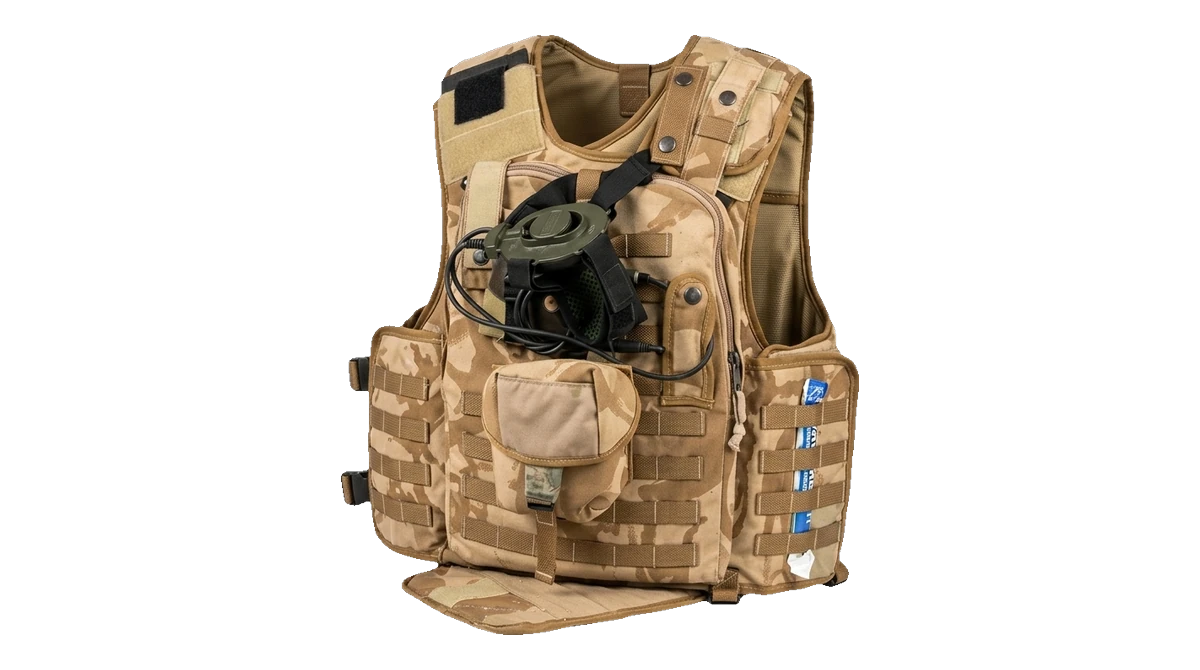
Osprey body armour
Developed by the UK Ministry of Defence Defence Clothing Integrated Project Team as the fourth and final evolution of the Osprey body armor family. Osprey Mk 4 introduced the Multi-Terrain Pattern (MTP) camouflage, redesigned narrower shoulder straps for better rifle buttstock placement, and an internal cummerbund that dramatically reduced sagging compared to the earlier Osprey Mk 2/3.
Based on reference: https://commons.wikimedia.org/wiki/File:Osprey_body_armour.jpg
Community
Loading…
Specifications
- Category
- Body armor & plates
- Country
- United Kingdom
- Manufacturer
- CQC Ltd / Cooneen Watts & Stone / NP Aerospace
- Introduced
- 2010
- Status
- Retired / Reserve Service (Replaced by UK Virtus Scalable Tactical Vest)
- Protection level
- STANAG 2920 fragmentation soft armor + NIJ Level IV equivalent hard plate protection (stops 7.62×51 mm NATO and 7.62×54 mm R armor-piercing rounds)
- Material
- Multi-layer woven para-aramid soft ballistic filler panels inside Multi-Terrain Pattern (MTP) Cordura nylon carrier
- Weight
- ~10.5–13.5 kg (23–30 lb) depending on brassard, collar, and plate configuration
- Users
- —
- Hard Plate Compatibility
- Front and rear pockets for Enhanced Combat Body Armour (ECBA) / Osprey ceramic-composite hard plates + side-plate cummerbund pockets
- Modularity & Load Carriage
- Full PALS/MOLLE webbing grid, internal elastic waist cummerbund, detachable half/full ballistic collar, and detachable upper-arm brassards
- Variants & modernizations
- Osprey Mk 1 (2006 Desert DPM), Mk 2, Mk 3, Osprey Mk 4 (2010 MTP), Mk 4A (minor sizing/collar refinements).
History
Served as the primary combat body armor of the British Army and Royal Marines throughout Operation Herrick in Afghanistan (2010–2014) before being superseded by the lighter, weight-distributing Virtus soldier system starting in 2015.
Related systems
—
Sources
- Data trust: Verified (UK Ministry of Defence Acquisition Documentation & Osprey Technical Manuals)
Community
Loading…