Ballistic helmet
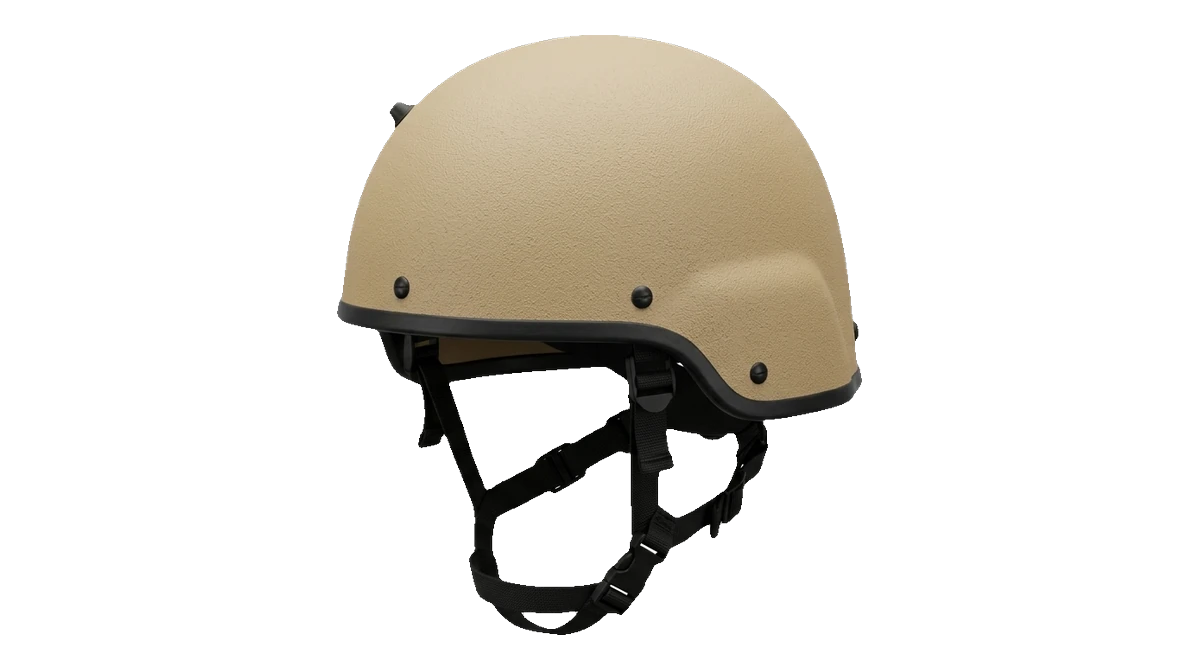
Mk 7 helmet
Introduced as an Urgent Operational Requirement (UOR) in June 2009 to replace the bulky Mk 6 and Mk 6A helmets for British forces deploying to Afghanistan. The Mk 7 raised the front rim slightly to prevent the helmet from tipping over the soldier's eyes when firing prone in Osprey body armor, while improving lateral stability under night-vision goggles.
Community
Loading…
Specifications
- Category
- Ballistic helmet
- Country
- United Kingdom
- Manufacturer
- NP Aerospace
- Introduced
- 2009
- Status
- Active (Transitioning to Virtus Cobra Plus helmet)
- Protection level
- Enhanced fragmentation standard (V50 ≥ 650 m/s against 17-grain FSP; NIJ Level IIIA equivalent)
- Material
- Advanced woven para-aramid composite shell
- Weight
- ~1.00–1.30 kg (2.20–2.87 lb) — significantly lighter than the predecessor Mk 6A (~1.5 kg)
- Users
- —
- Suspension / Liner
- Internal webbing cradle with foam crown pad and 4-point quick-release chinstrap
- Accessories & Mounting
- Front night-vision mount (for HMNVS / AN/PVS-14), MTP (Multi-Terrain Pattern) cloth cover, compatible with Bowman personal role radio headsets
- Variants & modernizations
- Mk 7 (standard issue in tan finish), superseded by the Virtus Batlskin Cobra Plus.
History
Served as the primary combat headgear of the British Army and Royal Marines during Operation Herrick in Helmand Province, Afghanistan, before beginning replacement by the Revision/Galvion Virtus Cobra helmet system in 2015.
Related systems
—
Sources
- Data trust: Verified (UK Ministry of Defence Urgent Operational Requirement Specifications & NP Aerospace Data)
Community
Loading…