Ballistic helmet
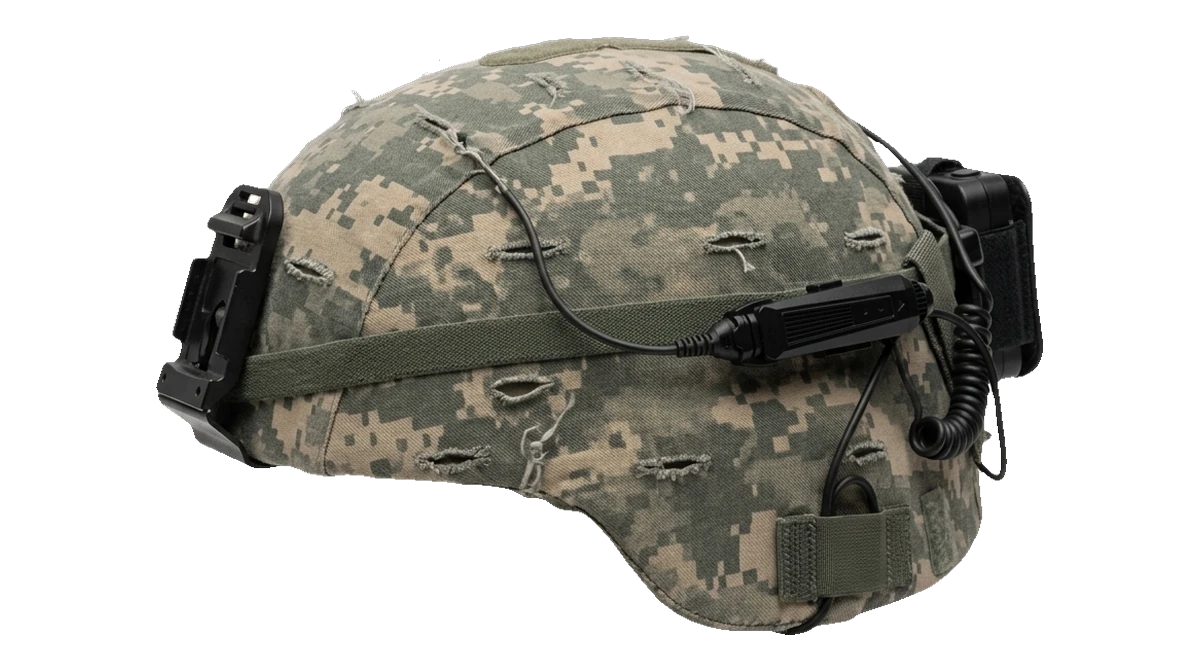
Advanced Combat Helmet (ACH)
Derived directly from USSOCOM's MICH TC-2000, the ACH was adopted by the U.S. Army in 2003 to replace the heavier PASGT helmet across conventional infantry and support units. Eliminating the front visor improved sightlines when firing in the prone position with body armor, while the internal pad system dramatically enhanced impact protection and stability under heavy night-vision devices.
Community
Loading…
Specifications
- Category
- Ballistic helmet
- Country
- United States
- Manufacturer
- Gentex Corporation / MSA / Rabintex / BAE Systems
- Introduced
- 2003
- Status
- Active (Being phased out in frontline units by IHPS/ECH)
- Protection level
- NIJ Level IIIA + enhanced fragmentation (V50 ≥ 670 m/s (2,200 ft/s) against 17-grain FSP; rated against 9×19 mm 124 gr FMJ at 425 m/s with strict backface deformation limits)
- Material
- High-tenacity Kevlar KM2 / Twaron para-aramid composite matrix
- Weight
- ~1.36–1.63 kg (3.0–3.6 lb) depending on size (S to XXL)
- Users
- —
- Suspension / Liner
- Moisture-wicking 7-pad impact liner system (Zorbium / Skydex) with 4-point X-back chinstrap retention
- Accessories & Mounting
- Single-hole front NVG bracket, UCP/OCP/M81 camouflage covers, nape pad ballistic attachment, tactical goggles
- Variants & modernizations
- ACH Gen I (baseline), ACH Gen II (Lightweight ACH — ~24% weight reduction using UHMWPE/aramid hybrid shell introduced in 2017).
History
Served as the primary combat helmet of the U.S. Army for nearly two decades across Operation Iraqi Freedom, Operation Enduring Freedom, and global deployments, saving thousands of soldiers from IED blast fragments and ballistic impacts.
Related systems
—
Sources
- Data trust: Verified (U.S. Army PEO Soldier Specifications & AR/PD 10-02 Purchase Description)
Community
Loading…